Thursdays With Spurgeon—Light In A Dark Cave

This is a weekly series with things I’m reading and pondering from Charles Spurgeon. You can read the original seed thought here, or type “Thursdays With Spurgeon” in the search box to read more entries.

Light In A Dark Cave

     Now I must have an illustration. I must compare truth to some cave or grotto that you have heard of, with wondrous stalactites hanging from the roof and others starting from the floor—a cavern, glittering with spar and abounding in marvels. Before entering the cave you inquire for a guide, who comes with his lighted flambeau. He conducts you down a considerable depth and you find yourself in the midst of the cave. He leads you through different chambers. Here he points to a little stream rushing from amid the rocks and indicates its rise and progress. There he points to some peculiar rock and tells you its name. Then he takes you into a large natural hall, tells you how many persons once feasted in it, and so on. Truth is a grand series of caverns. It is our glory to have so great and wise a Conductor. Imagine that we are coming to the darkness of it. He is a light shining in the midst of us to guide us. And by the light He shows us wondrous things. In three ways the Holy Spirit teaches us—by suggestion, direction, and illumination. 

     First, He guides us into all truth by suggestion. There are thoughts that dwell in our minds that were not born there but that were exotics brought from heaven and put there by the Spirit. It is not a fancy that angels whisper into our ears and that devils do the same. Both good and evil spirits hold converse with men. …  

     Sometimes He leads us by direction. … The Spirit gives a direction and tendency to our thoughts. Not suggesting a new one but leading a particular thought, when it starts, to take such and such a direction. …  

     Perhaps the best way in which the Holy Spirit leads us into all truth is by illumination. … Beloved, you may read to all eternity and never learn anything by it, unless the Holy Spirit illuminates it. And then the words shine forth like stars. … Blind men may read the Bible with their fingers, but blind souls cannot. We want a light to read the Bible by; there is no reading it in the dark. Thus the Holy Spirit leads us into all truth by suggesting ideas, by directing our thoughts, and by illuminating the Scriptures when we read them. 

From The Holy Spirit: The Great Teacher 

A good prayer every time you open your Bible is this: “Open my eyes to see wonderful things in Your Word” (Psalm 119:18). 

The illumination of the Holy Spirit helps us connect the written Word to our real-life, every-day settings. 

When times are confusing, the Holy Spirit can illuminate the Scriptures to help us evaluate both our feelings and the facts around us through the filter of God’s truth. 

But perhaps most importantly, the Holy Spirit helps us take captive all of those thoughts. Whether they were whispered by angels or devils, or just thought from our own carnal minds, we can take all of those thought captive and make them obedient to God’s Word (see 2 Corinthians 10:3-5). We need to learn to think about what we’re thinking about, utilizing the truth of Scripture that the Holy Spirit will illuminate to us.

 

Major Lessons From Minor Prophets (continued)

Sometimes the naming of things gives us an inaccurate picture of the thing being named. For instance, many people think the “old” in Old Testament means outdated or perhaps updated by the “new” in the New Testament. When in fact, both Testaments are needed to give us the full picture of God’s love and glory. 

A similar thing happens with the headings “major prophets” and “minor prophets.” It makes it sound like the major prophets have something major to say to us, while we could take or leave the minor messages of the minor prophets. 

In reality, they were given these headings simply because of the volume of writing—the five major prophets consist of 182 chapters, whereas the 12 minor prophets only have 67 chapters. The volume of their writing may be minor, but their content carries major messages of meteoric power! 

Join me this Sunday as we rejoin this highly informative series. You can check out the topics we covered last year by clicking here.

If you have missed any of the messages in this current session, check them out here:

The Attitude That Thwarts God’s Blessings

Two of Israel’s king Jehoahaz and his son Jehoash perpetually hung on to an attitude that limited what God wanted to do for Israel. That attitude can be summed up in a single word: but. 

Jehoahaz “sought the Lord’s favor” during a time Israel was under the oppression of their enemies, and “the Lord listen to him”! God raised up a deliverer who brought them freedom. Israel, under Jehoahaz’s leadership, could have used this newly won freedom to live closer to God and remain in a place of renewed worship. “But” they used their freedom as a license to sin and God reduced Jehoahaz’s army to a mere skeleton of what it had been (2 Kings 13:4-7). 

Jehoash went to visit Elisha. It doesn’t appear he went with a prayer request but merely to pay his respects to this dying prophet. God in His graciousness gave Jehoash something he didn’t even ask for: a promise of victory over Aram! Jehoash was invited to boldly ask for God’s help “but” he thought God had a limited supply and he asked for just a small portion. As a result, his victory over Aram was small—much smaller than God wanted for Israel (13:14-19). 

Once again, enemies surround Israel and we read a statement pregnant with possibility: “But the Lord was gracious to them and had compassion and showed concern for them because of His covenant” (13:22-23). Despite their sin, God still wanted to bless them! 

God wants so much more for us than we even want ourselves! But our sinfulness, stubbornness, and unbelief will limit the fullness of what God wants to do. 

Jesus fulfilled God’s covenant. If God did not spare His own Son, how can I ever continue to remain skeptical that He wants to bless me?! He is glorified when I am abundantly blessed in Him. What do I do with God’s gracious concern? Will I squander it and live hemmed in by oppressors? Or will I embrace everything God has for me in Jesus and live in a way that He delights to bless? 

My attitude will determine the blessing I receive. 

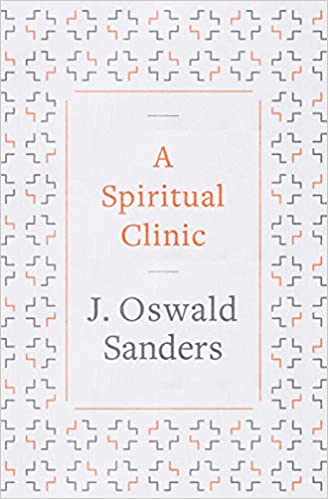
A Spiritual Clinic (book review)

Some of the most formative leadership books I read early in my leadership journey were written by J. Oswald Sanders. Books like Spiritual Maturity and Spiritual Leadership. It’s my desire to be a lifelong learner, and in that pursuit, I need an external, objective source to help keep me on track. Sanders’ book A Spiritual Clinic is just the check-up I needed! 

In the physical world, we may get a check-up from our primary care physician, a counseling session with a mental health professional, or perhaps a regular check-up with a spiritual advisor like a pastor or mentor. All of these are healthy if they are all grounded in the principles in God’s Word. 

Sanders brings us to his spiritual clinic for a well-rounded check-up of our spiritual leadership. He says, “[This book’s] thesis is that the complex strains and problems which the Christian worker encounters in the contemporary world find their answer, not in tranquilizers or stimulants, but in a correct understanding and application of scriptural principles, and effectiveness in Christian work is the natural outcome of conformity to spiritual laws enunciated in the Scriptures.” 

So “doctor” Sanders holds up the mirror of God’s Word to our activities to see how we are performing in light of God’s standards. He addresses topics like stress, learning, suffering, depression, spiritual ups-and-downs, and our conscience. He zeros-in on leadership topics like ambition, authority, discipleship, use of time, and understanding God’s calling. 

Each chapter is short but packed with so many principles that it should take you quite a while to evaluate and implement. This is time well spent! 

I am a Moody Publisher book reviewer. 

Knowing God’s Will

My dear friends Josh and Judy are moving. They feel like God has been calling them to Nebraska, and I affirm that God is directing them into this new chapter for their lives. I will miss them dearly, but I know God has indeed called them. 

During times like this many people will often ask, “How do I know that God is directing me?” 

In the Bible we see God speaking to people in several ways: 

  • An audible voice 
  • Through His prophets 
  • Sending an angel 
  • In a dream or vision 
  • One time God’s finger wrote a message on a wall
  • One time God spoke through a donkey 

But most often God speaks through the inner voice of the Holy Spirit.

The Holy Spirit is a Person. He is described as having a mind, a will, and emotions. Although He doesn’t have a physical body, He is still a Person. Just like any person you could get to know, you can get to know the Holy Spirit more and more personally, becoming increasingly more acquainted with His voice. 

All of us are unique individuals. God has never, ever duplicated a person. Your combination of genes, talents, personality, and personal experiences make you a one-of-a-kind in all of human history. That means that God speaks uniquely to each of us. 

Even though the exact manner God will speak to us will be unique, there are some clear principles that we can know from the Bible. 

1. Humbly listen for God’s voice.

Solomon wrote, “Trust in the Lord with all your heart and lean not on your own understanding; in all your ways acknowledge Him, and He will make your paths straight” (Proverbs 3:5-6). Let me unpack three key phrases:

  • lean not on your own understanding really means humbly exchanging an “I know best” posture for a “God, You know best” posture. 
  • acknowledge Him is the Hebrew word yada. This word means knowledge that comes from personal experience. This is where you act on something you think the Holy Spirit is saying to you and then evaluate it. It’s how you get to know the Person of the Holy Spirit better and better. 
  • He will make straight your paths might be better stated, “He will make your paths agreeable to His will.” In other words, you begin to feel in-sync with the Holy Spirit. The opposite of this would be grieving the Holy Spirit, where you feel out-of-step with God. 

2. Consult with godly friends. 

In Acts 16, the apostle Paul and his companions are attempting to go into new territories to share the good news about Jesus but Luke records twice that the Holy Spirit wouldn’t allow them. Perhaps they felt out-of-sync with the Spirit when they attempted to make their plans. Ultimately, God did open a door for them to move forward and Luke writes, “Concluding that God had called us.” Notice that word “us.” Paul shared his heart with his godly friends and they affirmed God’s voice, much as I affirmed the call on Josh and Judy’s lives in their move. 

3. Don’t be overly concerned about making a mistake. 

In Romans 8, Paul reminds us that God is working all things together for your good and for His glory. “All things” means even your mistakes—like not noticing that the Spirit was prompting you to move, or perhaps temporarily heading down a wrong path. The Holy Spirit can help you look back and see how these experiences have prepared you for your present moment. Even those missteps can be used for God’s glory. But most importantly, those missteps have never diminished God’s love for you! 

Your journey will be unique from everyone else’s journey, but these three principles are applicable to everyone who wants to walk in the paths God has set for them. 

Poetry Saturday—A Lost Opportunity

It came and went so quickly,
   My sluggish soul saw not
The Master stand and beckoning
   Toward one of humble lot.

And I rose not up to follow,
   So slow was I to see,
Till the help I might have given
   Forever fled from me.

And often I am grieving,
   And longing all in vain,
For a blessed opportunity
   That will not come again.

Dear Lord, give Thine anointing,
   And make mine eyes to see;
And make me swift in doing
   The work Thou givest to me. —L. Adda Nichols

Think On This…

Here’s the seed thought for this episode of Think On This

Do to others what you would like them to do to you. (Matthew 7:12)

Think on this: Do I apply the Golden Rule negatively (just trying to avoid offending)? Or do I apply it positively (creatively trying to find ways to help others)?


Leadership And Grumbling

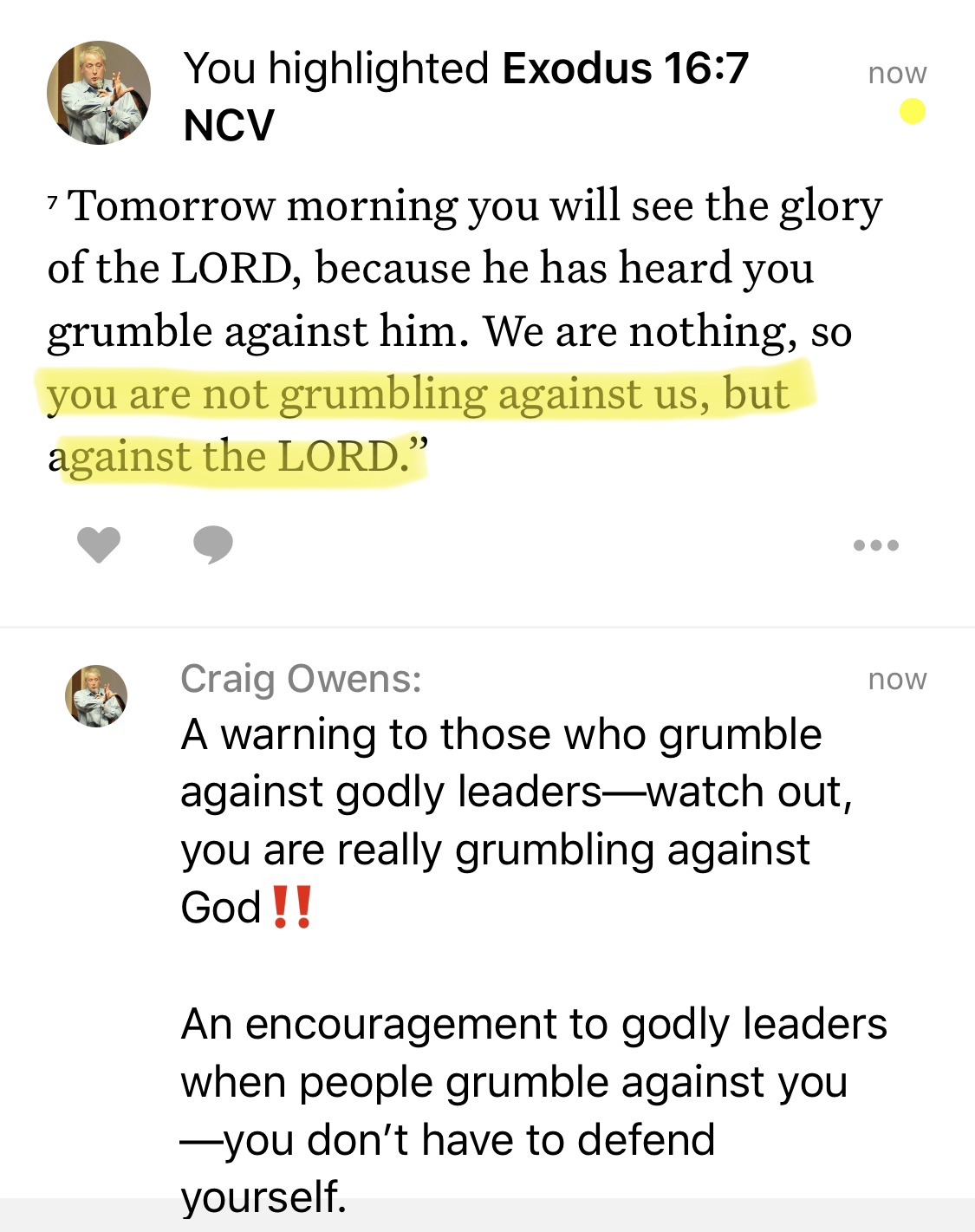
It seems like these two things go together: leadership and grumbling. Sadly, it is usually an ugly, downward spiral: people grumble against those in leadership, the leaders feel the need to defend themselves and typically respond angrily, which causes even more grumbling against those in leadership. And down goes the spiral!

It doesn’t have to be this way. And it should never be this way among Christians!

Moses reminded those who grumbled against him that they were really grumbling against God. Moses didn’t have to respond, but he let God take care of it.

Grumbling can be deadly for grumblers, but it doesn’t have to be for godly leaders.

(What does it mean to be a “godly leader”? I have an ongoing series of posts with the consistent theme “A mark of a godly leader is…” catalogued here.)

Thursdays With Spurgeon—Getting Into The Truth

This is a weekly series with things I’m reading and pondering from Charles Spurgeon. You can read the original seed thought here, or type “Thursdays With Spurgeon” in the search box to read more entries.

Getting Into The Truth 

     The difficulty is the truth is not so easy to discover. There is no man born in this world by nature who has the truth in his heart. … Then since we are not born with the truth, we have the task of searching for it. … But here is the difficulty, that we cannot follow without a guide the winding path of truth. Why is this?

     First, because of the very great intricacy of truth itself. Truth itself is no easy thing to discover. … The most earnest student of Scripture will find things in the Bible that puzzle him. However earnestly he reads it, he will see some mysteries too deep for him to understand. He will cry out, ‘Truth! I cannot find you.’ … But we bless God it is said, ‘When the Spirit of truth has come, He will guide you into all truth’ [John 16:13]. … 

     We also need a guide because we are so prone to go astray. … David says, ‘I have gone astray like a lost sheep’ (Psalm 119:176). … If grace did not guide a man, he would go astray though there were hand-posts all the way to heaven. 

     The ‘Spirit of truth’ [is] not an influence or an emanation but actually a Person. ‘When the Spirit of truth has come, He will guide you into all truth.’ … He is infallible. … He is ever-present. …  

     Man can guide us to a truth, but it is only the Holy Spirit who can guide us into a truth. ‘When He, the Spirit of trying has come, He will guide you into’—mark that word—‘truth.’ … You may be brought to a chamber where there is an abundance of gold and silver, but you will be no richer unless you effect an entrance. It is the Holy Spirit’s work to unbar the two-leaved gates and bring us into a truth so we may get inside it. 

From The Holy Spirit: The Great Teacher 

I have often said that the greatest Expositor of Scripture is the Holy Spirit. He is the One who inspired the biblical authors, and He is also the One living in a Christian to illuminate the biblical texts. 

Before you open your Bible, pray this prayer from the psalms, “Open my eyes to see wonderful things in Your Word” (Psalm 119:18). And then listen to the Spirit’s voice as He takes you into the truth that will enrich your life and bring God greater glory. Just like those first Christians who were baptized in the Holy Spirit became skilled in their understanding of Scripture, you can experience the exact same thing today!

I have a whole series of messages on the power of Pentecostal Christians that you can read by clicking here and here.

Never Overruled, Never Overwhelmed

…Ben-Hadad king of Aram mobilized his entire army … [King Joram said] “May God deal with me, be it ever so severely, if the head of Elisha son of Shaphat remains on his shoulders today” (2 Kings 6:24, 31). 

Two kings who both think that their overwhelming force can override God’s plan.

Ben-Hadad had already experienced God’s power when his previous plans were disclosed by God to Elisha, and when his “strong force” has been thwarted by God’s power (vv. 8-10, 14-20). As a result, Ben-Hadad temporarily stopped sending his small raiding parties into Israel. Now, he somehow believes that sending his “entire army” can overwhelm God’s plan?! 

King Joram also had first-hand experience is of God’s power. Not only in the above incident with King Ben-Hadad, but also in the desert when God miraculously provided water for his army. Now, he somehow thinks “this disaster is from the Lord” and Elisha is the cause. He thinks that killing Elisha will somehow intimidate God into lifting the Aramean siege?!

Here are the facts:

  • God brought the Aramaeans together to demonstrate His power.
  • God left Israel without any resources on their own to demonstrate His power.
  • God foretold events yet to come through Elisha to demonstrate His power.

And then God fully demonstrated His power!

God’s plans can never be overruled. That means that when I place my trust in God, I can never be overwhelmed by the enemy’s plans. 

No matter the circumstances, God is in control. Let me say that again: GOD IS IN CONTROL.

God will demonstrate His unequaled love and His unmatched power at just the right moment. He will bring about “a day of good news” and superabundance for all who fear and trust Him (7:9, 16). 

Don’t ever despair, no matter how dark the battle is. Don’t ever try to coerce God into doing something you want Him to do. Don’t ever become frustrated with God’s timing. Only wait in eager expectation for His answer: His all-loving, all-powerful answer. 

God is never overruled so you are never overwhelmed!