Talking With Your Best Friend

john-14-16I would like for you to get a really clear picture in your mind of your best friend. This is someone you have opened your heart to, and they have opened their heart to you as well. This is the friend that encourages you when you’re down, but never when you’re on a self-destructive path. This is the companion that cries with you when something is broken, but who also challenges you to accept responsibility if you are the one who broke it.

Do you have that friend clearly in mind?

Now I’d like you to imagine if your interaction with your friend went something like this. Every day around 7 o’clock in the morning, you call your friend and say…

“Good morning! I’m so grateful you took my call. Listen, I’ve got a few things that I’d love for you to help me with today. I’ve been fighting a cold and I’d really like you to help me feel better. My Aunt Sally is in the hospital, and it would be great if you could stop in to see her. Also, that guy at work has really been on my nerves lately and so I need some insight on how to deal with that. It would so great if you could help me with all of this. If you do, I’ll be singing your praises to everyone I meet. Have a great day. Thanks!”

And then you hang up and never talk to your friend again until the next morning when the exact same scenario is repeated. How do you think your relationship would progress? Do you see your relationship getting deeper over time, or becoming more distant? I’m guessing that, like me, you don’t see a future in this relationship.

Sadly, this is how many people treat prayer! We come to God once a day with our list of concerns, ask Him for His help, then say “goodbye” and never think about Him again until the next day. Or until we find ourselves in desperate need.

But we forget: God never leaves us!

We also forget something even more vital—God wants us to talk with Him, and He wants to talk with us, as a friend to a friend.

Abraham was called a friend of God—Abraham believed God, and it was credited to him as righteousness, and he was called God’s friend (James 2:23).

Moses, too, was also God’s friend—The Lord would speak to Moses face to face, as one speaks to a friend (Exodus 33:11).

This isn’t something that was just for them, but it’s relationship that’s available for ALL of us—For since our friendship with God was restored by the death of His Son while we were still His enemies, we will certainly be saved through the life of His Son. So now we can rejoice in our wonderful new relationship with God because our Lord Jesus Christ has made us friends of God (Romans 5:10-11).

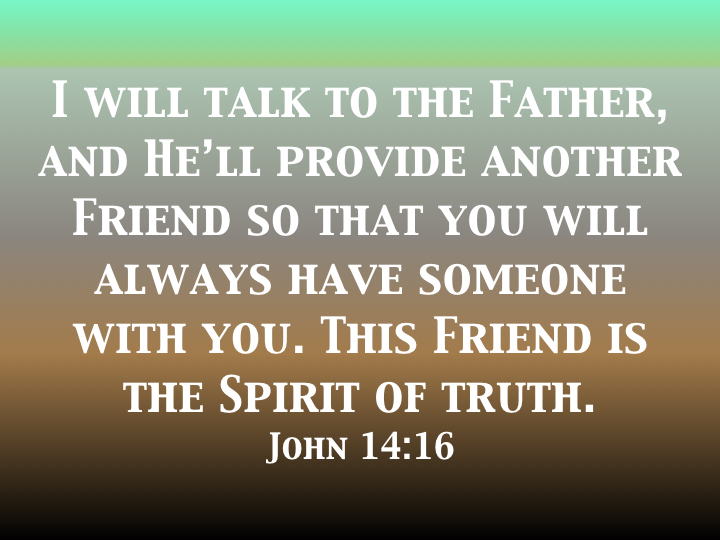
From the moment we accepted Jesus as our Lord and Savior, His Holy Spirit took up residence in our heart. Before Jesus ascended to Heaven, He promised us, “I will talk to the Father, and He’ll provide you another Friend so that you will always have someone with you. This Friend is the Spirit of Truth” (John 14:16).

Amazing! Astounding! Mind-blowing! But totally true—Prayer is conversation with a Friend!

How would your day go differently if you kept up a conversation with your Best Friend all day long? How much more wisdom do you think you would receive? How many mistakes could you avoid if He was telling you which way to go and what to say?

You don’t have to live with the “what ifs.” He IS your constant Companion, your most loyal Friend, your wisest Counselor. All you have to do is keep the lines of conversation open!

Application questions:

  1. How can I know God wants to be my Friend?
  2. Have I been introduced to God?
  3. How can I make the time to deepen my friendship with God?
  4. What does it mean to me to have God as my Friend?
Poetry Saturday—The Hour Of Prayer

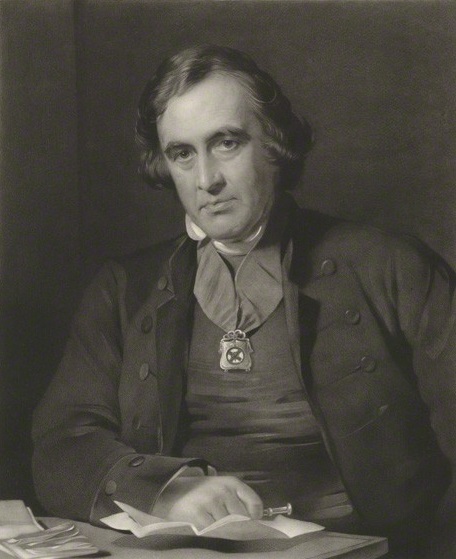
Richard TrenchLord, what a change within us one short hour 
Spent in Thy presence will prevail to make! 
What heavy burdens from our bosoms take; 
What parched grounds refresh as with a shower. 
We kneel—and all around us seems to lower; 
We rise—and all, the distant and the near 
Stands forth in sunny outline brave and clear; 
We kneel: how weak!—we rise: how full of power! 
Why, therefore, should we do ourselves this wrong, 
Or others—that we are not always strong? 
That we are ever overborne with care; 
That we should ever weak or heartless be, 
Anxious or troubled, while with us is prayer, 
And joy, and strength, and courage, are with Thee? —Richard Trench

Thursdays With Oswald—What Makes Life Worth Living?

Oswald ChambersThis is a weekly series with things I’m reading and pondering from Oswald Chambers. You can read the original seed thought here, or type “Thursdays With Oswald” in the search box to read more entries.

What Makes Life Worth Living? 

     Think of the devastations and havoc throughout the world just now. What is going to make up to the people who are broken? To say that “every cloud has a silver lining” is a kind lie. Unless a man can get into a relationship with the God Whom the Bible reveals, life is not worth living. …  

     Solomon says whether you are wise or foolish, upright or not, a king or tyrannized over by a king, successful or a failure, in society or solitary, stubborn or sagacious, all alike ends the same way. All is passing, and we cannot find our lasting joy in any element we like to touch. It is disastrous for a man to try and find his true joy in any phase of life, or in the fulfillment of ambition, or in physical or intellectual solitariness, or in society; he will find his joy only in a personal relationship to God. …

     When once a man is there, he receives a hundredfold more of all he gave up to get there, and he never demands an infinite satisfaction from those other relationships. The man or woman who does not know God demands an infinite satisfaction from other human beings they cannot give, and in the case of the man, he becomes tyrannical and cruel. It springs from this one thing, the human heart must have satisfaction, but there is only one Being Who can satisfy the last abyss of the human heart, and that is the Lord Jesus Christ.

From Shade Of His Hand

As a Christian, you have an opportunity to show people how much joy there is for a life in Christ. And then Peter tells us to be ready to tell people the Source of your joy (see 1 Peter 3:15-16).

Do you have the spiritual courage and moral backbone to show and tell? Chambers says, “The Christian faith is exhibited by the man who has the spiritual courage to say that that is the God he trusts in, and it takes some moral backbone to do it.”

Let’s do this!

9 Quotes From “Leadership Promises For Every Day”

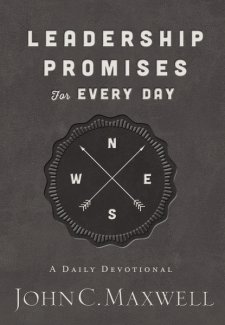
leadership-promisesLeadership Promises For Every Day is a devotional book for leaders and aspiring leaders. A passage from the Bible is combined with a passage from one of John Maxwell’s outstanding books. It’s an excellent way to start your day! If you haven’t already, check out my review of this book here, and then enjoy a few quotes—

“How many leaders have ruined their lives and damaged the lives of others through immorality? Character has become a crucial issue today precisely because of the myriad of leaders in the political, business, and religious worlds who have fallen morally. No doubt they fall partly because the enemy has targeted leaders for attack. Leaders need to remember that they influence many others beyond themselves; they never fall in a vacuum. They also need to realize that replacing fallen leaders is a slow and difficult process.”

“Our goal among brothers should not be to punish or excommunicate, but to restore. Confrontation is a redemptive act of leadership.”

“Leaders need to respond to individuals based on their needs rather than their faults. … Good leaders do this well. They don’t lead out of a predetermined package of behaviors, but size up every situation and discern what must happen to reach the desired goal.”

“People rise or fall to meet our level of expectations for them. If you express skepticism and doubt in others, they’ll return your lack of confidence with mediocrity. But if you believe in them and expect them to do well, they’ll wear themselves out trying to do their best.”

“Leaders must constantly ask if their plans fit God’s revealed will for them and their organization. Then they must ask if their plans remain relevant to the needs of their mission, their values, their vision, and their long-range objectives. Finally, they need to ask if their plans fit the needs of their culture and time.”

“We need to remember that when people follow behind us, they can only go as far as we go. If our growth stops today, our ability to lead will stop along with it. Neither personality nor methodology can substitute for personal growth. We cannot model what we do not possess. Begin learning and growing today, and watch those around you begin to grow.”

“Servanthood is not about position or skill. It’s about attitude.” 

“People who blame others for their failures never overcome them. They simply move from problem to problem. To reach your potential, you must continually improve yourself, and you can’t do that if you don’t take responsibility for your actions and learn from your mistakes.”

“Laughter breeds resilience. Laughing is the quickest way to get up and get going again when you’ve been knocked down.”

I am always sharing great quotes from John Maxwell and others on Twitter and Tumblr. If you’re not following me there, please do so!

Practical Prayer

Practical PrayerI remember when I was searching for my first job, and I kept getting turned down because I didn’t have any “experience.” And I kept thinking, “How am I supposed to get any experience if you won’t hire me?!” It’s frustrating being in a place where the only way you can get the job is to have experience, which you can’t get because you don’t have the job!

Sadly, I think this is how many people—even many Christians—feel about prayer. Read the rest of this entry »

Leadership Promises For Every Day (book review)

leadership-promisesJohn Maxwell wisely noted, “The secret to your success can be found in your daily agenda.” He also says, “All’s well that begins well.” With those two thoughts in mind, his Leadership Promises For Every Day can be a key component to a leader’s success.

For 20+ years John Maxwell has written extensively and persuasively on leadership development. In fact, my library has an entire shelf devoted to his wisdom! I have benefited from all of his books, as they have helped me go deeper into various leadership topics.

But Leadership Promises is a different way of presenting Maxwell’s wisdom. Instead of a deep dive into specific topics, this devotional presents a broad foundation across the entire leadership spectrum. Each day’s leadership thought is introduced with a passage from the Bible, and then a relevant passage from one of Maxwell’s outstanding books.

As I have included Leadership Promises in my beginning-of-the-day routine, I have found timely insights I have needed for each day. I have also found that discussing each day’s thought with a friend who is also reading this book has added a deeper dimension to both of our leadership development.

Whether reading this on your own or as means of starting a discussion with other leaders-in-training, Leadership Promises will help you soar in your personal leadership growth. It takes just a few minutes to read each day’s lesson, but I’m sure you will find, as I have, that you will be contemplating the wisdom all day long.

I am a Thomas Nelson book reviewer.

The Blood Of Jesus

Horatius Bonar‘They have washed their robes and made them white in the blood of the Lamb.’ Not only the man, but his garments are made white. This is more than cleansing. It is the word used regarding Christ’s transfiguration-garments (Matthew 17:2); the angel-robes (Matthew 28:3); the heavenly clothing (Revelation 4:4); the judgment throne (Revelation 20:2). Whiter than snow or wool, white as the garments of Christ—nay, the ‘head and hair’ of Christ (Revelation 1:14). This is the result of the application of the blood to those who were ‘blacker than the coal,’ redder than crimson. What potency, what virtue, what excellency does this blood contain! How it beautifies and glorifies!

“He gives us this blood as our right of entrance is sprinkled and consecrated by His blood. Let us draw near! The blood removes all cause of dread, all possibility of rejection, nay, gives the certainty of reception. Let us go in! We are sure of a welcome. It gives boldness as well as right of entrance. It says, ‘Draw near boldly.’” —Horatius Bonar, in Light And Truth—Revelation

Other quotes from this book may be read here and here.

Can We Really Know If The Bible Is God’s Word?

inspired-scriptureHave you ever been stumped by someone’s argument against Christianity or the Bible? Has anyone ever made fun of you because the Bible sounds like a fairy tale? Over 100 years ago Oswald Chambers described how our post-Christian world was beginning to treat Christianity and the Bible on which it’s based—

“We have made ambition and competition the very essence of civilized life. No wonder there is no room for Jesus Christ, and no room for the Bible. We are all so scientifically orthodox nowadays, so materialistic and certain that rationalism is the basis of things, that we make the Bible out to be the most revolutionary, unorthodox and heretical of books.”

It’s that “rationalism” that we need to address. We need to ask scoffers and seekers alike, “What makes you so sure of your beliefs? How did you come to that conclusion?”

Every human being exercises some sort of faith—that the chair will hold them when they sit down, that their spouse will honor their marriage vows, and that their worldview is correct. We need to explore what kind of faith they (and we) have:

  • Unreasonable faith—believing in something in spite of the evidence.
  • Blind faith—believing in something without any evidence.
  • Reasonable faith—believing in something because of the evidence.

I want to show evidence that makes it reasonable to believe in the Bible.

Empirical evidence—

  1. The bibliographical test: determining whether the text of the historical record has been transmitted accurately.

Josh McDowell states, “No other work in all literature has been so carefully and accurately copied as the Old Testament.” He can make this claim because the profession of “scribe” was one of the most professional and exacting of all professions. The rigorous standards employed to prove the accuracy of a copy of a biblical manuscript was higher than for any other literature.

Most of our modern-day Bibles are based on a 1000-year-old manuscript. But after the Dead Sea scrolls were discovered, we found biblical manuscripts going back to 250 B.C. that confirmed the accuracy of the manuscripts we already had. This led Dr. Peter Flint to conclude: “The biblical Dead Sea Scrolls are up to 1,250 years older than the traditional Hebrew Bible, the Masoretic text. We have been using a one-thousand-year-old manuscript to make our Bibles. We’ve now got scrolls going back to 250 BC. … Our conclusion is simply this—the scrolls confirm the accuracy of the biblical text by 99 percent.

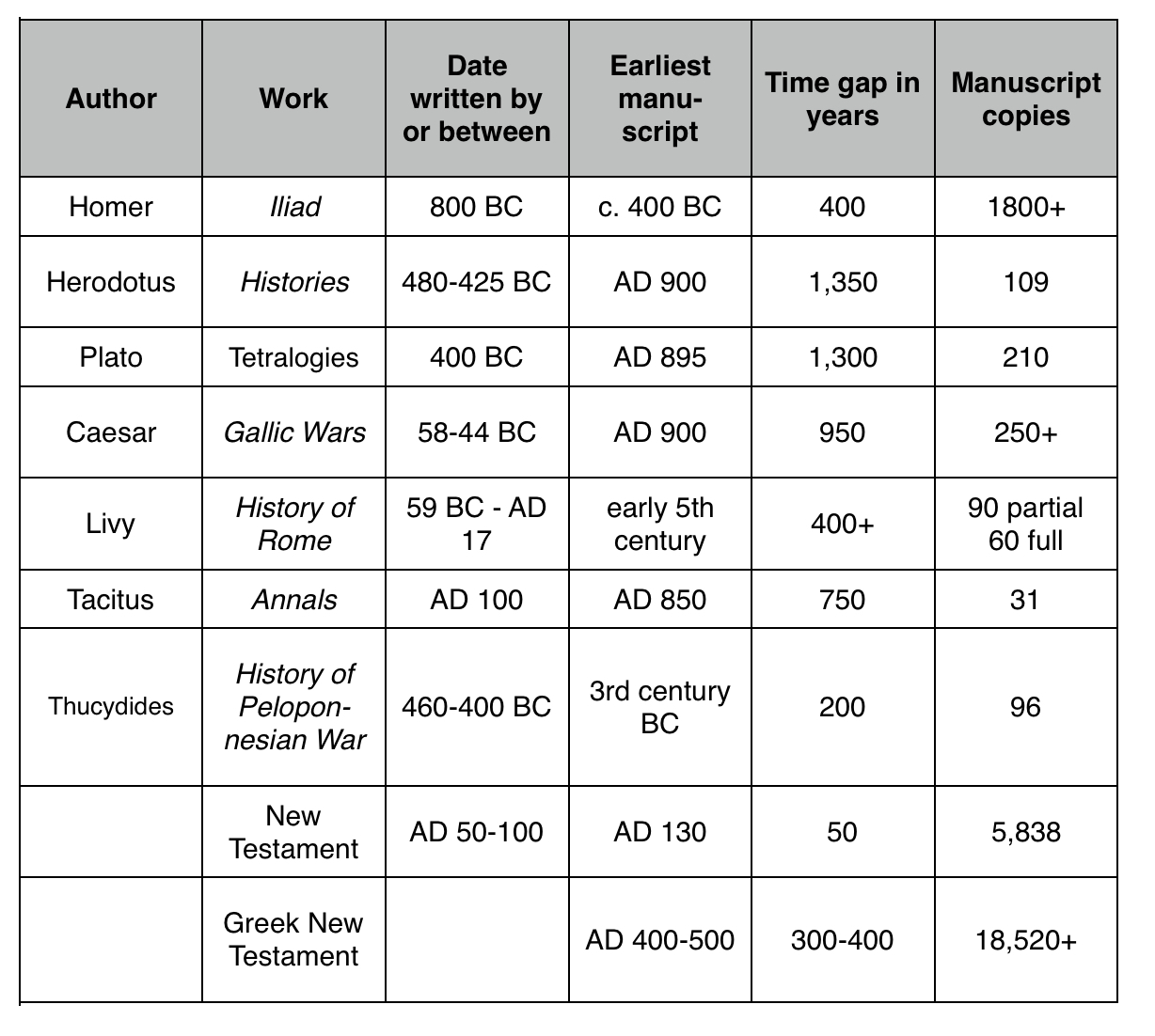
manuscript-evidenceThen regarding the New Testament, Josh McDowell says, “I believe there is more evidence for the reliability of the New Testament than for any other ten pieces of classical literature put together.” Check out this chart reproduced from McDowell’s book God-Breathed to see by comparison to other literature, how close in dating the earliest biblical manuscripts are, and how many of those manuscripts have been discovered!

2.  The external evidence test: determining whether the historical record has been verified or affirmed by data outside of itself.

Over one-fourth of the Bible is prophetic, and two-thirds of its prophesies have already been fulfilled. For example, 700 years before His birth, the city in which Jesus was to be born was identified by a man named Micah.

Time and time again archeologists discover articles that verify the claims in the Bible. This led archeologist Nelson Glueck to conclude, “It may be stated categorically that no archeological discovery has ever controverted a single biblical reference. Scores of archeological findings have been made which confirm in clear outline or in exact detail historical statements in the Bible.”

3.  The internal evidence test: determining how of the historical record stands up to the test of internal validity.

The Bible was written by 45 different authors, over a span of 1500 years, on 3 different continents, and in 3 different languages. Yet there are no contradictions!

Anecdotal evidence—

  1. Changed lives. My life is one that has been amazingly impacted by the God of the Bible, as was a man named Saul, who had a total about-face after encountering Jesus. As a result, Christianity was spread far and fast through his writings and world travels.

2.  Changed societies. Wherever the Christian faith of the Bible has been put into practice, societies improve. Leonard Sweet notes—

“Before Christianity, there were cults that practiced all sorts of human sacrifice as well as self-mutilation and self-castration. Before Christianity, the weak were despised, the poor maligned, the handicapped abandoned. Before Christianity, infanticide was rampant, slavery run-of-the-mill, and gladiatorial combat a form of entertainment. In Jesus’ day, Corinth was famous for its temple prostitutes, continuing a long-standing tradition symbolized by the Corinthian athlete Xenophon.… Aristotle…not only condoned institutionalized slavery but provided an elaborate argument in favor of it. As if that weren’t enough, Aristotle called man ‘begotten’ and woman ‘misbegotten,’ and because a woman’s reasoning was ‘without authority’ accepted no female students.

“Only Jesus and His followers known as the church insisted on the concept of human dignity and the value of every human soul. Only the church built hospitals and took care of the abandoned and disabled. Only the church celebrated charity and selflessness as the highest virtue and elevated the status of women.”

Is all of this “proof positive” that the Bible is God’s Word? No, it’s not. But I think the evidence is compelling enough that it is certainly reasonable to reach this conclusion.

Here are some great application questions from this lesson:

  1. Other than because it says so in the Bible, how do I know that it is God’s Word?
  2. How can I let the Bible “thoroughly equip” me (2 Timothy 3:14-17)?  
  3. Is my worldview pragmatic or biblical? Does it really make a difference?

Poetry Saturday—Jesus Is

JesusTo the artist… Jesus is the One altogether lovely.
To the architect… Jesus is the Chief Cornerstone.
To the astronomer… Jesus is the Sun of Righteousness.
To the baker… Jesus is the Living Bread.
To the banker… Jesus is the Hidden Treasure.
To the biologist… Jesus is the Life.
To the builder… Jesus is the Strong and Sure Foundation.
To the carpenter… Jesus is the Door.
To the doctor… Jesus is the Great Physician.
To the educator… Jesus is the Great Teacher.
To the engineer… Jesus is the New and Living Way.
To the farmer… Jesus is the Sower and Lord of the Harvest.
To the florist… Jesus is the Rose of Sharon, Lily of the Valley.
To the geologist… Jesus is the Rock of Ages.
To the horticulturist… Jesus is the True Vine.
To the judge… Jesus is the Righteous Judge, Judge of All.
To the juror… Jesus is the Faithful and True Witness.
To the jeweler… Jesus is the Pearl of Great Price.
To the lawyer… Jesus is the Counselor, Lawgiver, Advocate.
To the journalist… Jesus is the Good Tidings of Great Joy.
To the optometrist… Jesus is the Light of the Eyes.
To the philanthropist… Jesus is the Unspeakable Gift.
To the philosopher… Jesus is the Wisdom of God.
To the preacher… Jesus is the Word of God.
To the sculptor… Jesus is the Living Stone.
To the servant… Jesus is the Good Master.
To the statesman… Jesus is the Desire of All Nations.
To the student… Jesus is the Incarnate Truth.
To the theologian… Jesus is the Author and Finisher of Faith.
To the toiler… Jesus is the Giver of Rest.
To the sinner… Jesus is the Lamb of God that takes away the sins of the world.
To the Christian… Jesus is the Son of the Living God, the Savior, the Redeemer, and Lord. —W. B. Dunkum

Thank God For The Hammers And Axes

romans-8-28“If you should get up some morning and hear men on your house tearing off the tiles and taking down the roof with hammers and axes, you might think a gang of vicious enemies had come to destroy your home. But as soon as you understand that these workmen have been sent by your father to mend your house, you gladly endure the noise and trouble. Indeed, you thank your father for his care and expense. The very hope of the advantage that will come from the repairs makes you willing to dwell awhile in the inconvenient rubble of the old house.

“The promise [in Romans 8:28] assures the believer that the Heavenly Father intends no harm, only good, as He rebuilds the ruined frame of your soul into a glorious temple. And afflictions have a hand in the work. This insight frees you to pray, ‘Lord, cut and shape me however You will, that at last I may be framed according to the pattern which Your love has drawn for me!’” —William Gurnall (emphasis added)