If (Blank), Then (Blank)

Listen to the podcast of this post by clicking on the player below, and you can also subscribe on AppleSpotify, or Audible.

Let me set the stage. Jesus is explaining to some of His new followers about finding their identity in God, not in a man. He says to them,

If You hold to My teaching, you are really My disciples. Then you will know the truth, and the truth will set you free. (John 8:31-32)

Notice the order of the if-then: If you hold to my teaching, then you will know the truth.

You see, later on in this discussion Jesus says, “Do you want to know why you can’t hear what I am saying? It’s because you are not listening with an ear to obey” (see vv. 43-47).

In other words, their tendency—and ours too—is to say, “If I hear truth from You, then I will obey.”

But this attitude is pragmatic—it’s like saying, “It has to ring true with what I already know.” But the problem is, Jesus’ teachings are so counter-cultural and counterintuitive that they may never ring true with what you already know.

Instead, my attitude should be, “I will obey. No matter what You say to me, I will do it. Even if it sounds uncomfortable, I will do whatever You tell me.”

If you HOLD to my teaching, then you will KNOW the truth.

God will not speak a word I can hear and understand UNLESS I am committed to obeying every word He speaks. My attitude of obedience must come before His truth will be revealed. Let’s not get this mixed up with, “If You speak the truth, then I will obey.”

►► Would you please prayerfully consider supporting this ministry? My Patreon supporters get behind-the-scenes access to exclusive materials. ◀︎◀︎

Growing Up

Yesterday was an historic day at Calvary Assembly of God, and I’m still buzzing about it!

The Assembly of God fellowship has several classifications for churches, the highest one being “general council status.” Yesterday our membership voted unanimously to move into this category!

Here are some of the miracles of the day:

  • My predecessor, Joel Baxter and his wife Kristina, were in attendance. They live and minister in Wisconsin now, so I didn’t think they would be able to attend, but they showed up and surprised us all. Pastor Joel laid the foundation on which we can now build, and I am so grateful for him. I’m also grateful for the prayer of blessing he prayed over us.
  • Pastor Joel shared a couple of prophesies that had been spoken over this church. One is that we would be a light to northern Kent County, and the other was that ministry would flow from this church to the cities and communities surrounding us. Amen!
  • Two precious ladies in our church have been at Calvary since its beginning decades ago, and they got to be the first two signers of our general council resolution.
  • We had several people visiting for the first time that stuck around to watch this historic vote. I love the testimony that this was for them.
  • Every vote we have taken among our membership has been unanimous. Truly this is a group of people who are one in spirit and purpose.

Notice that I said that we are growing up—not grown up. I’m thrilled with where we are, but we still have a long way to go to…

…prepare God’s people for works of service, so that the body of Christ may be built up until we all reach unity in the faith and in the knowledge of the Son of God and become mature, attaining to the whole measure of the fullness of Christ. (Ephesians 4:12-13)

And in case you haven’t heard me say it lately:

I My Church!

If you live in West Michigan and don’t have a church home, I would love for you to join us next Sunday!

My Healer

In yesterday’s “Where’s God?” series, I looked at the very difficult question: Where’s God in my sickness?

The word disease has an interesting origin. In the Old French the word literally means without ease. So we could call any disease our place of dis-ease. Whether it’s in the physical, the emotional, or the spiritual part of us, we have all experienced times of dis-ease.

God did not create disease. He did not create sickness. He did not create sin. We did. When we push our physical bodies too far, when we exploit our natural resources, when we rebel against God’s design, we are opening ourselves up to dis-ease. When we experience the painful results of this, God would be perfectly justified in standing aloof from our situation.

But this is the absolute miracle of the Incarnation—

Jesus choose to step into our pain!

He choose to personally experience our dis-ease!

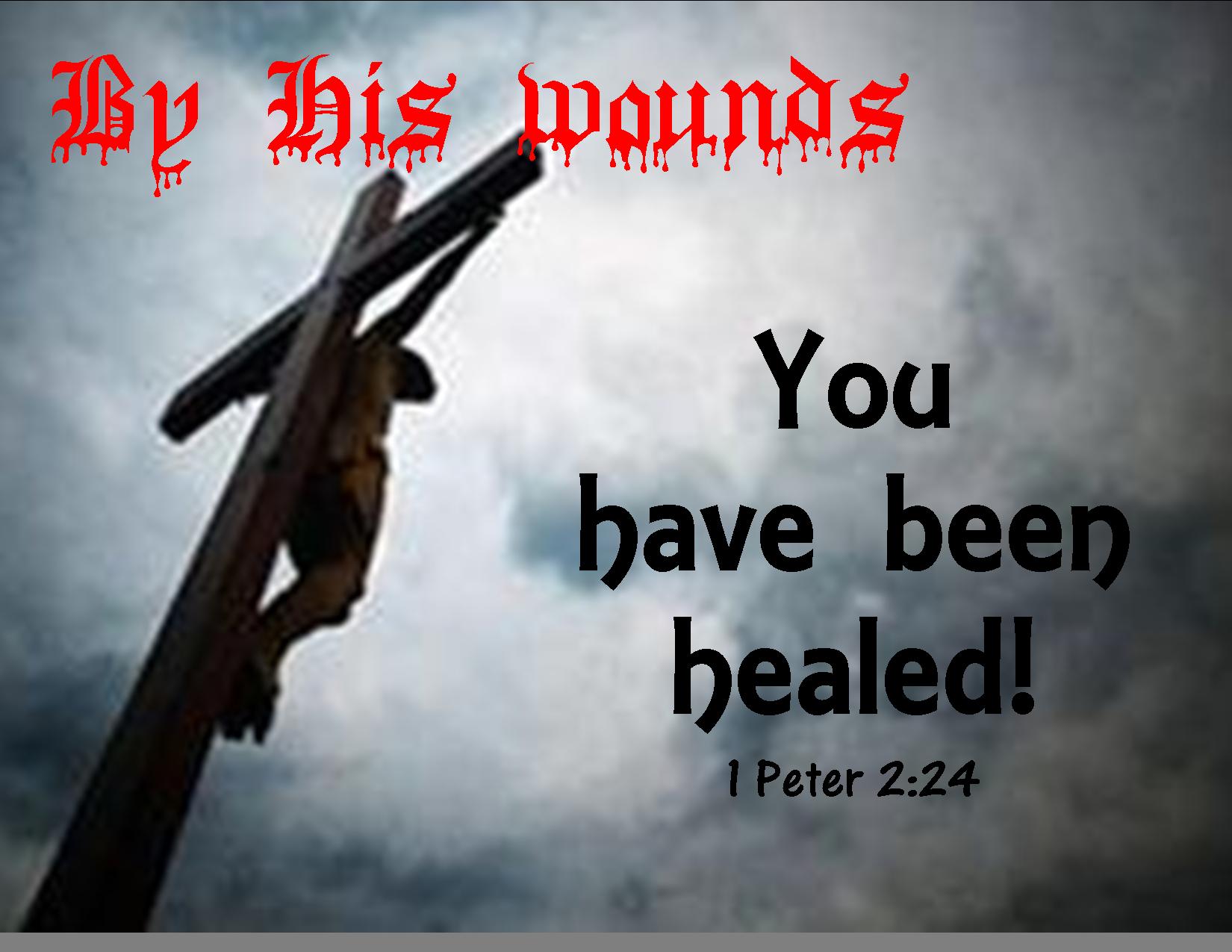
But the fact is, it was our pains He carried—our disfigurements, all the things wrong with us. We thought He brought it on Himself, that God was punishing Him for His own failures. But it was our sins that did that to Him, that ripped and tore and crushed Him—our sins! He took the punishment, and that made us whole. (Isaiah 53:4-5, The Message)

Only One who is fully Man and fully God could know our dis-ease and heal our dis-ease. Jesus is our Healer!

If you’ve missed any of the messages in this series, please check them all out by clicking here.

What’s Your Point?

As I am preparing my message for each Sunday, I have one point that I want everyone to have clear in their hearts and minds when they leave. It’s sort of my “finish line.” I say, “If they get only one thing from this message, what should it be?” This is the part where I spend quite a bit of time.

Then I read this from the Apostle Paul:

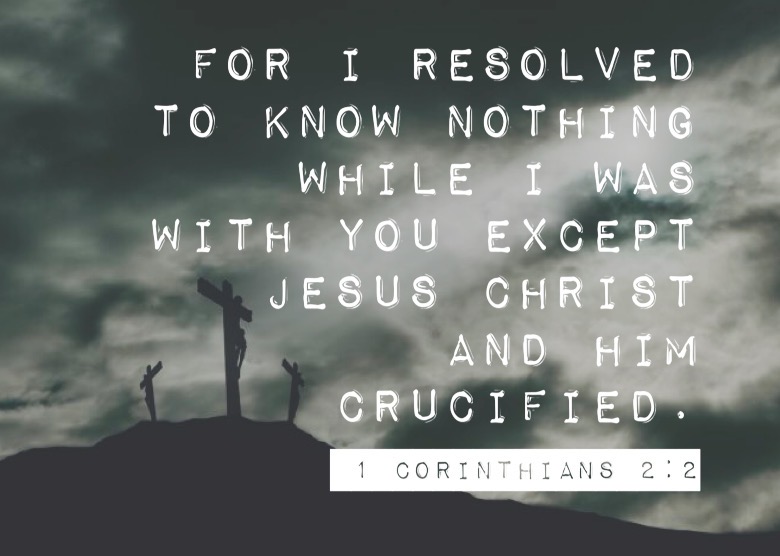
When I came to you, brothers, I did not come with eloquence or superior wisdom as I proclaimed to you the testimony about God. For I resolved to know nothing while I was with you except Jesus Christ and Him crucified. (1 Corinthians 2:1-2)

So what’s my point?

Something clever and witty?

Something that shows how eloquent I am?

Perhaps another rule to follow?

Or another application to make?

Oswald Chambers says, “To say that we are called to preach holiness or sanctification is to miss the main point. We are called to proclaim Jesus Christ….” (emphasis mine)

My point should be only this:

To help people see Jesus more clearly.

Anything less than this is to miss the point.

Anything more than this is attempting to make myself sound eloquent.

Thursdays With Oswald—Why Do I Go To God?

This is a weekly series with things I’m reading and pondering from Oswald Chambers. You can read the original seed thought here, or type “Thursdays With Oswald” in the search box to read more entries.

Why Do I Go To God?

     We have become so self-centered that we go to God only for something from Him, and not for God Himself. It is like saying, ‘No, Lord, I don’t want You; I want myself. But I do want You to clean me and fill me with Your Holy Spirit. I want to be on display in Your showcase so I can say, “This is what God has done for me.”’ Gaining heaven, being delivered from sin, and being made useful to God are things that should never even be a consideration in real surrender. Genuine total surrender is a personal sovereign preference for Jesus Christ Himself.

From My Utmost For His Highest

This quote smacked me right between the eyes: “We have become so self-centered that we go to God only for something from Him, and not for God Himself.”

This is one of those statements that caused me to put down my book, and take a hard look in my spiritual mirror. Why do I turn to God? Is it just so I can get something? When do I seek Him? Only when I’m in trouble?

The prayer that Jesus taught us to pray should be an everyday, heartfelt surrender: I surrender completely to You. Even Jesus Himself prayed: Not My will be done, but Yours.

My attitude as a disciple must be a daily decision to take my cross and follow Him.

How arrogant and self-centered of me to say, “God this is how I’m going to live today, and I want You to bless it. If things don’t go well, I will call on You for what I need.”

Instead I must pray: “Lord, I am totally surrendered to You today. Let me do only Your will. Let me walk more closely with You today. This is the only way I can be useful for You today.”

Why do I go to God: For His glory? Or for my comfort?

The Danger Of Turning Back

Jesus never hesitated to speak the truth. After one such time, a sad verse appears: From this time many of His disciples turned back and no longer followed Him. (John 6:66)

The words of Jesus are so countercultural, so counterintuitive, that they might be shocking to our human ears. We get used to thinking along certain lines, and then Jesus says, “That’s not the way. I AM the only way.”

Why do these statements ruffle us so much? I think they remind us that He is Lord, and there is no other. We like to think that we have options … we think, “Surely He means this” … we convince ourselves that there is some wiggle room. But we are wrong.

Jesus says: I AM. His way is the only way.

Some people turn back when they hear this. That’s to say, they don’t deny Jesus is Savior, but they no longer want to do the hard work of being His disciple. “Turn back” means to separate; it’s the opposite of coming alongside or following Jesus.

No longer followed” in this verse is translated “walked no more” in the King James Version. They stood still. If we choose to stand still or to turn back, we miss out. Those who turned back missed out on the miracles, on the personal conversations, on the deeper intimacy with Jesus.

Those who turn back say believing in Jesus is enough, but they think discipleship is just too hard. Can they still have salvation that leads to eternal life? Yes, but it becomes harder and harder because they want to try to pursue it on their own.

I’d rather keep on walking, keep on learning, keep on maturing, keep on following.

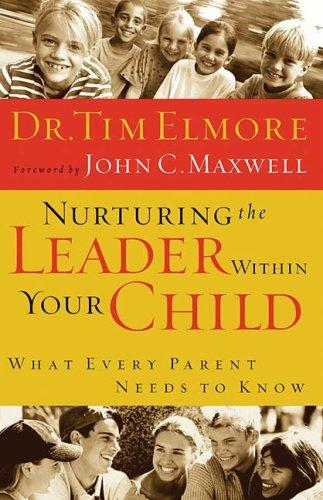
Nurturing The Leader Within Your Child (book review)

I make no attempt to hide my admiration for Dr. Tim Elmore. I read his blog throughout the week, I subscribe to his newsletter, and I find his books right on target. As a parent, I always want to raise my game, and Nurturing The Leader Within Your Child is the perfect resource for me.

Tim’s desire in this book is two-fold: (1) Help parents see the enormous potential in their children, and (2) Help parents see how crucial their role is in releasing that leadership potential. One of his premises is this:

“Children want parents who:

  • communicate their interest in me;
  • express appreciation for each member of our family;
  • structure their lives to spend time together;
  • welcome my friends into our home;
  • answer my questions;
  • are committed to each other;
  • deal with crisis in a positive way;
  • are honest;
  • correct kids when needed, but not in front of friends;
  • don’t argue in front of me;
  • concentrate on strengths instead of weaknesses; and
  • are consistent.”

The concepts Dr. Elmore presents are clear, concise, and simple to implement. But they are not microwaveable concepts; that is to say, you shouldn’t expect an overnight success story. But if you want to see your children discover and tap into the leadership potential resident inside them, you—Mom and Dad—will have to nurture it. If you are ready, this book can help!

On The Record

Listen to the podcast of this post by clicking on the player below, and you can also subscribe on AppleSpotify, or Audible. 

When Jesus is getting ready to feed the multitude that had gathered to hear Him speak, Jesus asked Philip a question: “Where shall we buy bread for these people to eat?” (John 6:5). It seems like a fair question, but the next verse gives us insight into Christ’s motivation behind the question:

Jesus asked this only to test him, for He already had in mind what He was going to do.

Jesus had something in mind, but He wanted to know what Philip had in mind. If Jesus had not asked Philip to be on the record up front, Jesus could have multiplied the loaves and fish, and then Philip could have said, “I knew You could do it! I knew it all the time!”

But to test us, Jesus needs to get us on the record. The word test means to know the value of something; to know its strength; to know what it’s capable of.

My faith cannot be grown if it’s not tested. It cannot be accurately tested if I’m not on the record first. Jesus knows what He’s going to do: Glorify the Father. I can say that’s what I wanted all along after the miracle is done, but then my faith hasn’t grown one iota.

I can only see my faith grow when I am on the record (as Philip was) in saying, “How in the world could we get enough money to fix this problem?” Especially when Jesus isn’t even going to use money to fix that problem!

Here’s the principle:

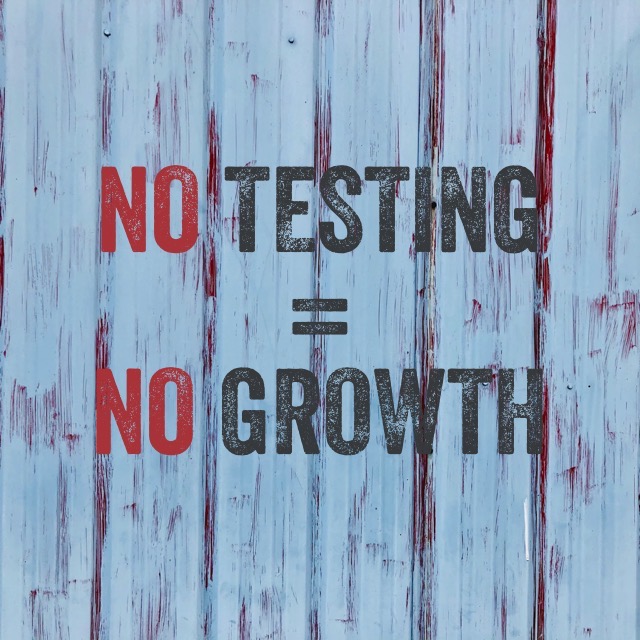
NO testing = NO growth

It’s only when I see that my faith is not as big as it should be that I can say, “Lord, I believe You, but help my unbelief.” He will bring me into a test so that I can grow, and the Father can be glorified. It’s scary being on the record, because only then can I see how much more growth I need!

►► Would you please prayerfully consider supporting this ministry? My Patreon supporters get behind-the-scenes access to exclusive materials. ◀︎◀︎
My Mediator

If anyone ever felt his pain was undeserved, it was Job! His life is so invaluable for us to be able to answer the question, “Where’s God in the midst of my dark times?”

Job tried to makes sense of what was happening to him. Sometimes he thought God was so awesome and so powerful that He was completely unknowable. God was a faceless, unapproachable Being. At other times Job thought God was so righteous that He would have nothing to do with him. So in the depth of his despair he called out for someone to be his mediator (see Job 9:33-35).

An effective mediator has to be someone who can understand and relate to both parties. He cannot be partial to one side, nor unsympathetic to one side. He has to be able to relate to both parties. In this case, he would have to be able to relate to both God and man—he would have to be able to be able to understand this Indefinable Power and this Supreme Morality and man’s struggle to come to grips with both of these views of God. Jesus is that Mediator.

[Jesus] gave up His divine privileges; He took the humble position of a slave and was born as a human being. (Philippians 2:7)

God Himself chose to step into all of our pain!!

The Bible describes Jesus as a Man of sorrows, One familiar with suffering, One acquainted with grief.

Jesus knows your pain even more acutely than you know it yourself. He wants to take all of your pain, and bear it for you. Jesus is not some faceless, unknowable Entity; He’s not aloof, He’s not unapproachable, He’s not unmoved by your pain. Will you let Him carry your pain?

He wants you to know Him as your Mediator:

Jesus understands every weakness of ours, because He was tempted in every way that we are. But He did not sin! So whenever we are in need, we should come bravely before the throne of our merciful God. There we will be treated with undeserved kindness, and we will find help. (Hebrews 4:15-16)

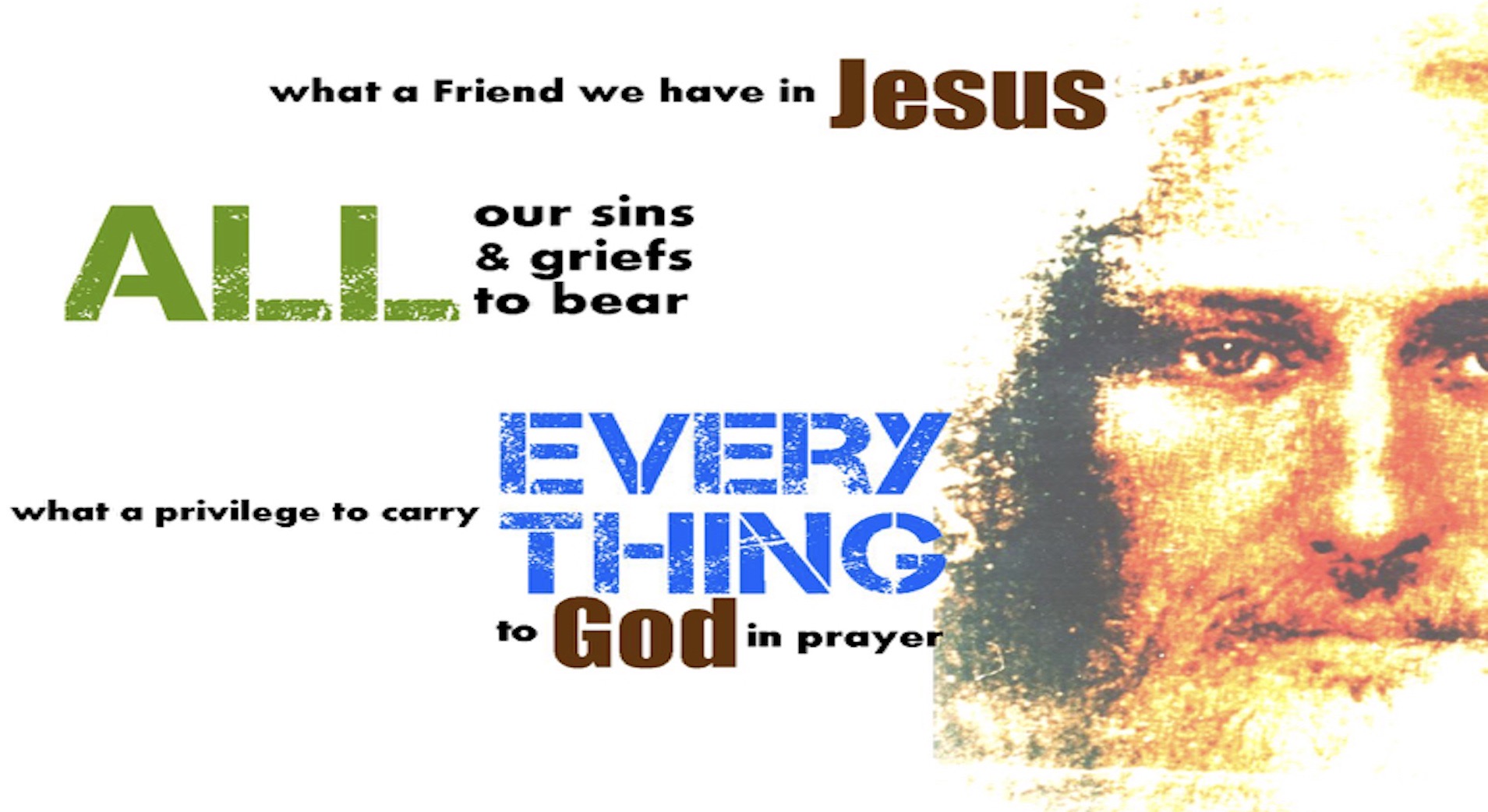
What a Friend we have in Jesus

All our sins and griefs to bear

What a privilege to carry

Everything to God in prayer

Pet (Pastoral) Peeve

One of my biggest pet peeves is hearing pastors say, “Ministry would be great if it weren’t for the people.”

Pastor: People ARE your ministry!

After Christ’s resurrection, He wanted to help restore Peter. Jesus asked Peter a simple question, “Do you love Me?” When Peter acknowledged that he did, Jesus gave Peter a way to show it: “Feed My sheep.” I believe this exchange is what Peter had in mind when he penned the words,

Be shepherds of God’s flock that is under your care, serving as overseers—not because you must, but because you are willing, as God wants you to be; not greedy for money, but eager to serve; not lording it over those entrusted to you, but being examples to the flock. (1 Peter 5:2-3)

Is it hard to be a shepherd? Yes.

Are some sheep difficult to shepherd? Yes.

Is it worth it to shepherd them? Yes, yes, YES!!

I love Oswald Chambers’ insight on this:

“Jesus has some extraordinarily peculiar sheep: some that are unkempt and dirty, some that are awkward or pushy, and some that have gone astray! But it is impossible to exhaust God’s love, and it is impossible to exhaust my love if it flows from the Spirit of God within me. The love of God pays no attention to my prejudices caused by my natural individuality. If I love my Lord, I have no business being guided by natural emotions—I have to feed His sheep.”

Jesus, increase my capacity to love Your sheep. All of Your sheep—the ones that bite; the ones that are nice; the ones that are untidy; the ones that are clean; the ones that are thankful; the ones that are ungrateful; the ones that “get it”; the ones that don’t. All of YOUR sheep. Thank You, Lord, for the supreme honor and heavy responsibility of serving as Your under-shepherd.

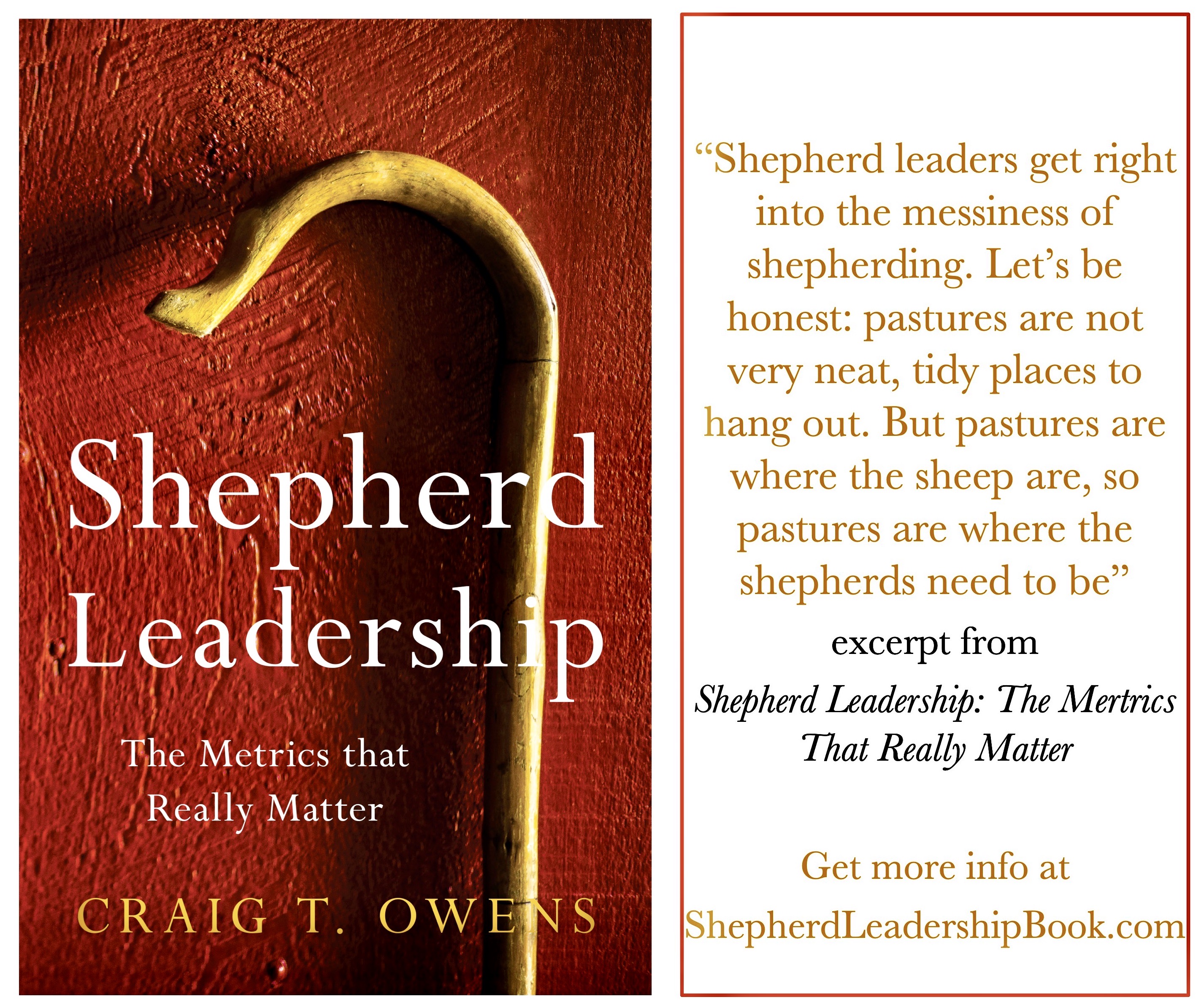
UPDATE: This idea of pastors as shepherds is what drove me to write my book Shepherd Leadership: The Metrics That Really Matter. I hope you will pick up a copy today!