Listen to the podcast of this post by clicking on the player below, and you can also subscribe on Apple, Spotify, or Audible.
It is quite disheartening for me to hear how many pastors contemplate their resignation on Monday morning. Just one day after pouring out their heart to their congregation, they are thinking about throwing in the towel.
I think one of the major contributing factors to this is our inaccurate measurements of success.
Far too many pastors measure success by noses and nickels: what was the attendance and what was the offering? When either of these dip, pastors tend to feel unsuccessful.
But no where in the Bible do we see these metrics of success.
I wrote Shepherd Leadership: The Metrics That Really Matter to help ministry leaders refocus on what God calls success. If you are a pastor—or if you love your pastor—please pick up a copy today.
In 1 Timothy 3:1, Paul writes, “This is a faithful saying: If a man desires the position of a bishop [overseer], he desires a good work.” T.M. Moore commented on this verse—
“The Greek word for ‘bishop’ translates literally to ‘overseer.’ Overseers—pastors, elders, anyone in a leadership role in the congregation—is charged with watching over the souls of God’s people for good (Hebrews 13:17; Acts 20:28; 1 Thessalonians 5:12-13). While the primary duty of watching over the Lord’s flock falls on pastors and elders, all who serve with them function in a role of overseeing, that all the members of the congregation might benefit from the continuous care and shepherding of those who lead them.”
I am so grateful for T.M.’s endorsement of my book Shepherd Leadership: The Metrics That Really Matter in which I expound more on this 1 Timothy verse, and talk about how shepherd leaders should be raising up more leaders around them.
Tiny bacteria declare loudly the genius of the Creator. This new study on the ability of bacterium to protect its own DNA from mutations is fascinating!
Listen to the podcast of this post by clicking on the player below, and you can also subscribe on Apple, Spotify, or Audible.
At a Q&A event for my my book Shepherd Leadership: The Metrics That Really Matter, I explained how I started writing this book. The bottom line is you learn to write by writing!
Check it out…
In all seriousness, the process of writing goes something this:
Start writing.
Write something every day.
Read your work to others who really care about you.
Baruch was a faithful scribe and friend to Jeremiah. Not only did he transcribe all of Jeremiah’s dictation (twice!), but he also read all of Jeremiah’s words at the temple when the prophet was under house arrest. By identifying with Jeremiah, Baruch became the target of the false prophets’ vitriol.
Perhaps Baruch had big plans for his life, but those plans seemed thwarted because he was obedient to Jeremiah and to God. He was having a bit of a pity party which seemed to stem from his unrealized plans for himself.
I love the juxtaposition between two phrases in this chapter:
“You [Baruch] have said…” (v. 3)
“The Lord says…” (v. 4)
Baruch said, “My plans are failed.” God said, “My plans always prevail.”
Baruch said, “I’m done for.” God said, “Wherever you go, you will live.”
I have to stop listening to me. When I listen to me, my thwarted plans bring about a pity party. I have to keep listening to God. When I do, He brings life wherever He sends me.
I believe that shepherd leaders can learn a valuable lesson from Baruch’s life. In fact, in my book I talk about a time that God and my wife had to deal with me about my own pity party.
Shepherd Leadership: The Metrics That Really Matter is available in print or ebook, and in audiobook through either Audible or Apple.
Listen to the podcast of this post by clicking on the player below, and you can also subscribe on Apple, Spotify, or Audible.
Isaiah 52–53 contain a description of Jesus as a servant leader. One phrase describes Him like this: “See, My Servant will act wisely” (Isaiah 52:13).
That phrase “act wisely” is translated in some other translations of the Bible as “deal prudently.” I like that word prudently. It’s not a word that we use very often today, but it’s one that sets God’s servant leaders apart from worldly leaders.
Prudent can be described as…
circumspect
intelligently speaking and acting
teaching skillfully
having increasing understanding and insight
helping others grow in understanding
behaving appropriately
living wisely
guiding oneself and others willingly
What happens to the leader who lives and leads this way? Listen to the entire verse that I only quoted a portion of earlier—
See, My Servant will act wisely; He will be raised and lifted up and highly exalted.
Notice that this exalted person is described as a servant—not just anyone’s servant, but Jehovah’s servant. As a servant of God, Jesus becomes a servant of all. And as a servant of God, He is exalted and honored above all.
Jesus is every leader’s Ultimate Example of this. Jesus set aside every prerogative He had that would give Him the right to do things His way, in order to make Himself a servant of God and a servant of mankind (Philippians 2:6-11; Mark 10:45). Jesus gave all of His followers this example to emulate (John 13:15-17), so Paul tells us our “mindset should be the same as that of Christ Jesus” (Philippians 2:5).
I need to ask myself a question—and I would invite you to ask yourself this too: As a leader, am I growing in Christlike prudence?
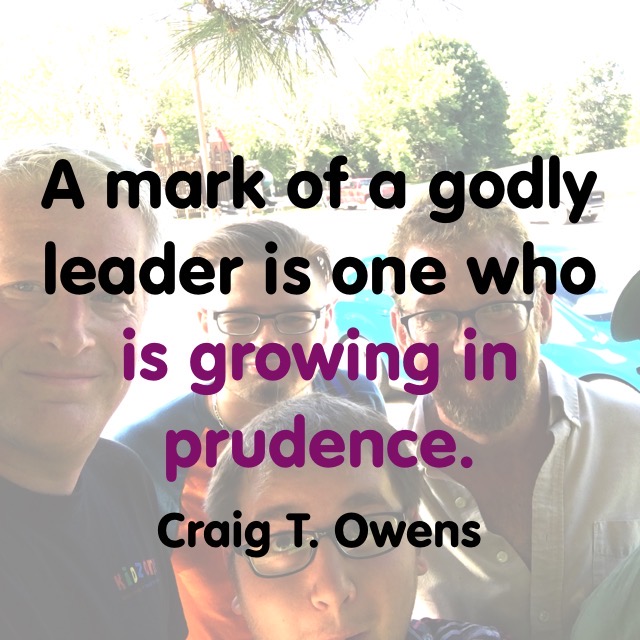
A mark of a godly leader is one who can see his growth in prudence.
Jesus, may You be pleased as I follow Your example of living and leading prudently. Holy Spirit, help me see the areas in my life where I need to submit to You. Father, may You be pleased to bless my leadership as it aligns with Your heart. I want to act wisely, lead prudently, and help others to follow this example of Jesus for themselves.
This is part 61 in my series on godly leadership. You can check out all of my posts in this series by clicking here.
Listen to the podcast of this post by clicking on the player below, and you can also subscribe on Apple, Spotify, or Audible.
I had a great time on the Thriving In Ministrypodcast with Kyle Willis and Dace Clifton.
Kyle asked me how I lead myself so that I can stay effective in my leadership roles.
Effective and long-lasting leadership really does start with the leader’s self-leadership practices. I have to know myself well, so I am a big proponent of taking as many assessments as I can. These give me a window of insight into how I’m thinking and how I’m communicating. As I get to know myself better, I can get to know the sheep around me better as well.
We all have a native way of thinking, speaking, and leading. It’s arrogant to think we can just “say it like it is” and everyone around us will immediately understand. Instead, I need to understand how my thinking and speaking “dialects” are unique to me, and that everyone on my team and every sheep in my pasture also have their own unique dialects. It’s as I get a window of insight into the way God has uniquely wired me, that I will also begin to appreciate the uniqueness of those around me. This will allow me to lovingly speak in their native dialect.
I’ll be sharing more clips from this Thriving In Ministry interview soon, so please stay tuned. Shepherd Leadership: The Metrics That Really Matter is available in print or ebook, and in audiobook through either Audible or Apple.
Listen to the podcast of this post by clicking on the player below, and you can also subscribe on Apple, Spotify, or Audible.
God needed to use Philip to steer a God-seeking government official to Jesus Christ. After this brief one-on-one encounter, God removed Philip from the scene and almost entirely from the pages of history.
Philip had just been leading a huge revival in Samaria, but he didn’t count success by the nickels-and-noses metrics of the world. He obeyed God even to the point of “taking a step backwards” in the world’s eyes, but in God’s eyes it was the most successful of moves.
Don’t try to grow your ministry. First, because it’s not yours, it’s His; and second, because your measure of success is probably more slanted toward quantitative measurements than qualitative. Jesus wasn’t concerned about bigger numbers: “What do you think?” He asked, “If a man has a hundred sheep, and one of them goes astray, does he not leave the ninety-nine and go to the mountains to seek the one that is straying?” (Matthew 18:12). …
What’s the value of one government official’s life? God says that his value is incalculable. Apparently, God knew that Philip was the perfect shepherd to lead this Ethiopian to the pasture where he would accept Jesus as his Savior. Philip was obedient, a sheep was saved, and God was pleased. …
The Chief Shepherd made this commitment to His sheep: “And I will give you shepherds according to My heart, who will feed you with knowledge and understanding” (Jeremiah 3:15). My prayer is that we would much rather feed a few sheep where God has directed us and given us His heart than for us to try to manufacture success that is measured by how many nickels and noses we can count.
I’ll be sharing more clips from this book signing event soon, so please stay tuned. Shepherd Leadership: The Metrics That Really Matter is available in print or ebook, and in audiobook through either Audible or Apple.
I wrote Shepherd Leadership: The Metrics That Really Matter to encourage pastors who are tired and struggling with feelings of failure. One of the most powerful sources of encouragement is more leaders surrounding a tired pastor.
I have a chapter dedicated to this called “Going Farther.” Here’s a short excerpt—
You will not only extend your leadership by having other servant-hearted shepherds around you, but you will also have a guard against the aloneness that led to such ugly warts on the biography of otherwise powerful leaders such as David, Elijah, and Peter.
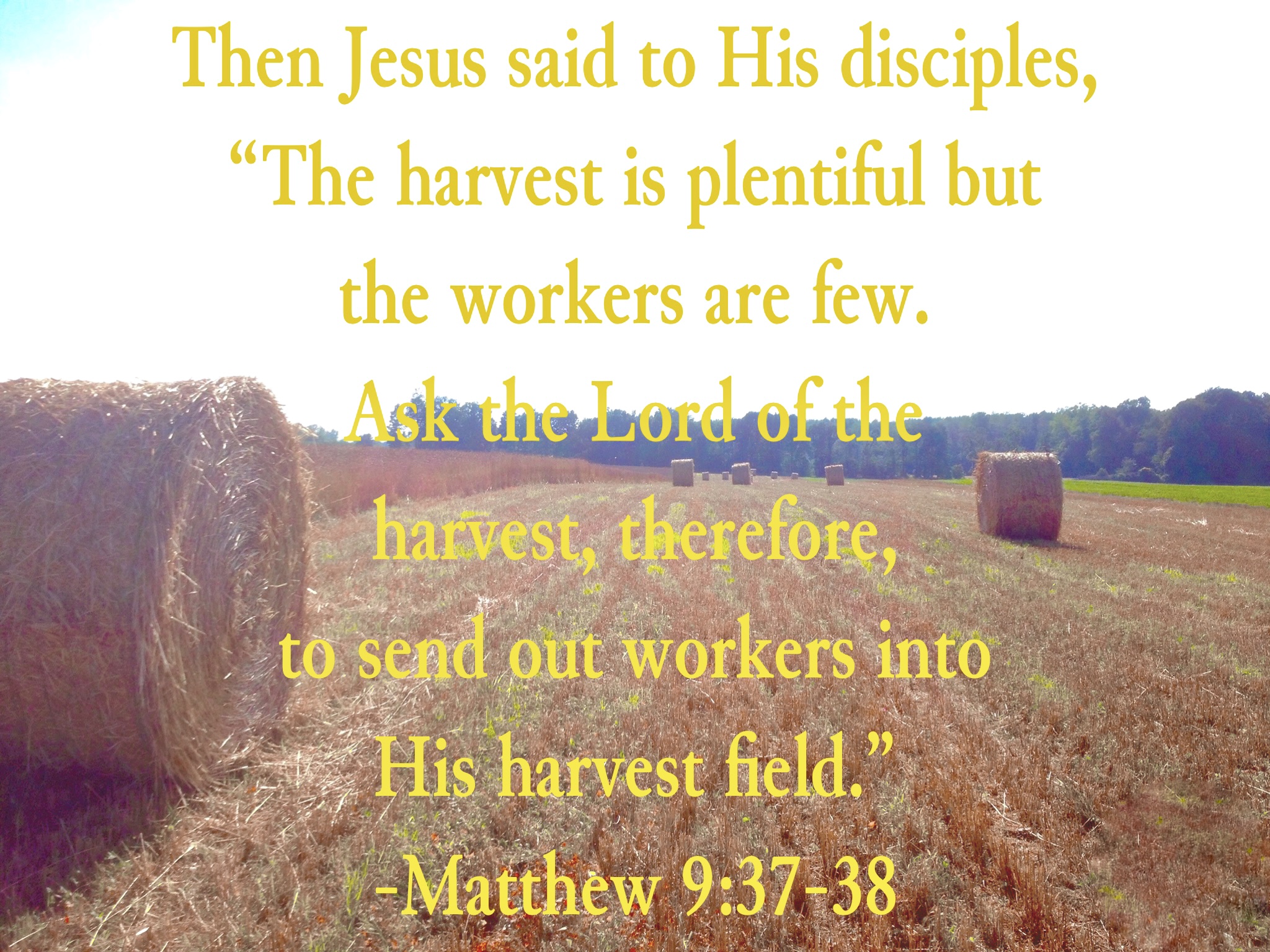
Jesus told us to pray to the Lord of the Harvest to send out more workers into the field (Luke 10:2). In a similar attitude, I believe we can pray to the Chief Shepherd to send out more under-shepherds into the pastures; specifically, we can pray for those under-shepherds to be sent into the pasture where we labor. The early church showed us the example of prayer being the priority when new shepherds were needed (Acts 1:21-26, 6:3-6, 13:1-3; 2 Timothy 1:3-6). We would do well to make it a priority to pray for God to send us godly leaders that can serve alongside us.
If you are a pastor, please pick up a copy of this book, as I truly believe it will encourage you. If you love your pastor, please give him or her a copy as a gift. I promise you that this book will bring such a fresh perspective to their ministry.
And whether you are a pastor or a lay leader in your church, please continue to pray for God to send more laborers into your harvest field.
Listen to the podcast of this post by clicking on the player below, and you can also subscribe on Apple, Spotify, or Audible.
I had a great time on the Ailbe Podcast with Rusty Rabon.
Usually leaders want their lives and their organizations to be tension-free. But I’m advocating that healthy shepherd leaders actually embrace the tension.
God has wired us all uniquely, but I’ve found that many leaders are slightly unbalanced in their wiring. That is, most of us are naturally more confident or naturally more humble. God made you that way on purpose, but confident leaders are allowing the Holy Spirit to temper their confidence with humility, and humble leaders are allowing the Holy Spirit to bolster their humility with confidence.
The seed thought for this concept that figures prominently in my book Shepherd Leadership was one that I’ve been wrestling with for over a decade. If you’re interested, you can check out this post.
I’ll be sharing more clips from this interview soon, so please stay tuned. Shepherd Leadership: The Metrics That Really Matter is now available in print or ebook, and in audiobook through either Audible or Apple.
Listen to the podcast of this post by clicking on the player below, and you can also subscribe on Apple, Spotify, or Audible.
…They have turned their backs to Me and not their faces; yet when they are in trouble, they say, “Come and save us!” (God in Jeremiah 2:27)
In so many ways the USA today resembles ancient Israel. Abortion, prostitution, idolatry, envy, greed, atheism, dirty politics, self-serving church leaders. Our culture calls itself “Christian” but we live anything but.
God is not allowed to be mentioned in our schools, but the moment there is a school shooting, people cry, “Where was God?! Why didn’t He stop this?!”
God is banished from the town square, but as soon as a tornado or hurricane or flood levels the town, the people yell, “How could God let this happen?!”
This was exactly the same lifestyle and same response in Jeremiah’s day.
When these painfully tragic things happen, there should be a different response: “Consider then and realize how evil and bitter it is for you when you have forsaken the Lord your God and have no awe of Me” (v. 19).
Typically, this considering takes place post-tragedy. But it really should be considered before disasters strike. Four times in this chapter God calls us to consider “the word of the Lord” (vv. 1, 4, 5, 31). In order for that considering to take place, loving pastor-shepherds need to hold up the mirror of God’s Word to the ungodly lifestyles people are living.
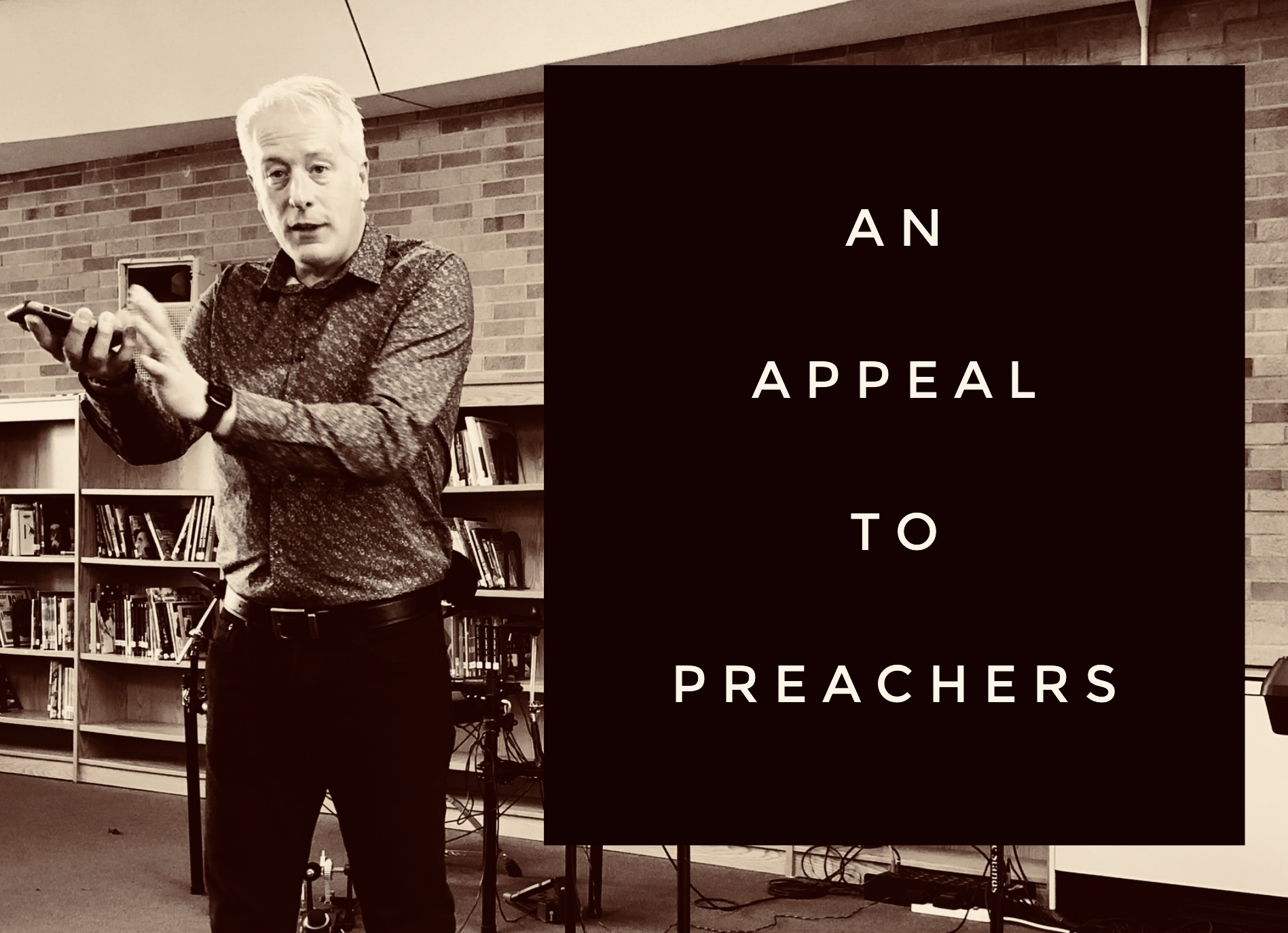
To all of my fellow pastors, I appeal to you to boldly and lovingly proclaim the full counsel of God’s Word. Not just the “pleasant” parts that speak of God’s blessings, but also the calls to repentance that will allow your people to avoid God’s righteous judgment. And don’t wait to only speak about these topics post-tragedy, but make this message a consistent part of your teaching.
Pastor, if you don’t speak these truths to your flock, how will they know how to live in the way that pleases God? I am praying that God will help you in this.



 It is quite disheartening for me to hear how many pastors contemplate their resignation on Monday morning. Just one day after pouring out their heart to their congregation, they are thinking about throwing in the towel.