Jim pastors a very large church, I pastor a small church, and John coaches pastors who pastor every size church in between. We are all in agreement that when it comes to the vitality of both the church and the pastor, the size of the church or its budget is not the best metric to monitor. Take a listen…
None of us are anti-growth when it comes to the church, but we are pro-health. Jim said it well: We will get what we focus on. If we just want numbers, the numbers may explode, but people may explode (or implode) in the process. But if we focus health, we will get healthy—both the pastor and the congregation.
This idea is the reason behind my book Shepherd Leadership, especially the subtitle “The metrics that really matter.” I am so grateful to hear that my book is helping pastors and church boards realign their thinking along biblical practices, and that Shepherd Leadership is even being used as a textbook in a pastoral training school. I believe my book can be of assistance to you too.
I’ll be sharing more clips from this Leading From Alignment interview soon, so please stay tuned. Shepherd Leadership: The Metrics That Really Matter is available in print or ebook, and in audiobook through either Audible or Apple.
Listen to the podcast of this post by clicking on the player below, and you can also subscribe on Apple, Spotify, or Audible.
I had a great time on the Thriving In Ministry podcast with Kyle Willis while his podcast partner Dace Clifton was on sabbatical.
From all of the podcasts and interviews they had done, Kyle shared with me how so many pastors find it difficult to take a Sabbath break. Kyle noted that a pastor’s day of rest seems to bump into everyone else’s day of work.
That passage in Mark 6 that I mentioned is instructive for leaders in a couple of ways. First, Jesus was looking out for His teammates. He saw that they were tired and He called them to a place of rest. Good shepherds are always tuned in to the needs of the flock around them. As David said in Psalm 23, the Good Shepherd knows when to lead us to quiet pastures and still waters.
Second, I see that Jesus was also tuned in to Himself. Even though He was trying to get to a quiet place, He took time to minister in teaching and food to a crowd that was described as “sheep without a shepherd.” When this time was finished, Jesus took time alone to pray (Mark 6:46).
I think sometimes leaders have sabotaged their own health and effectiveness by saying things like, “This is quitting time” or “This is my day off.” Instead, we should listen to the Holy Spirit giving us insight like, “Take a break now. It’s time to go to a quiet pasture. It’s time to recharge in prayer.”
Leaders, don’t stick rigidly to your schedule but stay tuned in to yourself. Listen for the unmistakable voice of the Holy Spirit giving you wisdom. I have a section of five chapters in my book Shepherd Leadership that deal with every aspect of a leader’s health. Please pick up a copy today.
I’ll be sharing more clips from this Thriving In Ministry interview soon, so please stay tuned. Shepherd Leadership: The Metrics That Really Matter is available in print or ebook, and in audiobook through either Audible or Apple.
Listen to the podcast of this post by clicking on the player below, and you can also subscribe on Apple, Spotify, or Audible.
I’ve discussed quite a bit the two ways that organizations—especially churches and non-profit ministries—can measure success: By quantity or by quality. And I think a good case can be made for both of these metrics from the Bible.
My bigger concern is when we try to use bigger numbers as the sole gauge of success. In a training time I had with some ministry interns, we took a deep dive into the reasons why the metric of bigger and ever-increasing numbers became the sole measurement for success in our churches. During this training time, I took these interns to Paul’s teaching in 1 Corinthians and two Old Testament examples where people got this wrong. Take a listen…
This is a weekly series with things I’m reading and pondering from Charles Spurgeon. You can read the original seed thought here, or type “Thursdays With Spurgeon” in the search box to read more entries.
Listen to the podcast of this post by clicking on the player below, and you can also subscribe on Apple, Spotify, or Audible.
Cutting The Root Of The Weed Of Sin
I acknowledged my sin to You, and my iniquity I have not hidden. I said, “I will confess my transgressions to the Lord,” and You forgave the iniquity of my sin. Selah. (Psalm 32:5)
We must confess the guilt as well as the fact of sin. It is useless to conceal it, for it is well known to God; it is beneficial to us to own it, for a full confession softens and humbles the heart. I will confess my transgressions to the Lord. Not to my fellow human beings or to the high priest, but to Jehovah. …
When the soul determines to lay low and plead guilty, absolution is near at hand; hence we read, “And You forgave the iniquity of my sin.” Not only was the sin itself pardoned, but so was the iniquity of it; the virus of its guilt was put away at once, as soon as the acknowledgment was made. God’s pardons are deep and thorough: the knife of mercy cuts at the roots of the ill weed of sin.
But the devil loves to condemn us, to whisper the lie that we’ve sinned one too many times for God to forgive us again. This is truly a lie because a forgiven sin is a forgotten sin. So in essence when we ask God to forgive us for our most recent sin, He views it as our only sin!
In my book Shepherd Leadership, I challenged pastor-shepherds to make good use of confession:
When your reactions aren’t Christlike, admit it. Someone might want to push back, “But if I say I was wrong, then I may lose some leadership credibility.” I would agree that you will lose credibility if you believe you are a self-made leader and if you are climbing up a career ladder that you designed. But if you are truly living and leading as a servant that God has equipped and placed among this flock, admission of an un-Christlike action or reaction triggers something extraordinary: God’s help. Peter said it this way: “All of you, clothe yourselves with humility toward one another, because, ‘God opposes the proud but shows favor to the humble’” (1 Peter 5:5).
Did you catch that? God stands back from the proud person who will not admit his error nor ask for help, let alone ask for forgiveness. On the other hand, God lavishes His grace on the humble one who admits both his error and his need for help. Admission of an inappropriate action or reaction brings God’s help!
Friends, the mark of a maturing shepherd is not one who never misspeaks or never makes a mistake. No, the mark of a maturing shepherd is the one who is closing the gap between his mess up and his confession, and one who is experiencing fewer mess ups over time because the Holy Spirit is helping him get healthier and more mature. —an excerpt from chapter 12 of Shepherd Leadership
Don’t listen to the devil’s lies, but hear the loving voice of the Holy Spirit calling you to confess your sin and receive immediate absolution from it. As Spurgeon said, “God’s pardons are deep and thorough: the knife of mercy cuts at the roots of the ill weed of sin.”
If you would like to know more about Shepherd Leadership, please click here.
Jim asked me to share the motivation behind my book Shepherd Leadership. I especially wanted to highlight why we used the subtitle “The metrics that really matter.” Check this out…
As Jim pointed out, far too many pastors get frustrated because “my church hasn’t 10x’d in the last 10 years” and so they feel like a failure. Nowhere is this type of measurement for church effectiveness found in the New Testament. Instead, pastors are called to faithfulness and excellence.
If you are a pastor, please pick up a copy of my book. I have recently been joining church staff meetings as they use Shepherd Leadership as a discussion starter. If you would like me to join you either in person or via a Zoom meeting, please get in touch with me.
I’ll be sharing more clips from this Leading From Alignment interview soon, so please stay tuned. Shepherd Leadership: The Metrics That Really Matter is available in print or ebook, and in audiobook through either Audible or Apple.
Jeff and I spent a good chunk of our time talking about the health of pastors. I think it is very important for shepherd leaders to be wholly healthy because we cannot give to our flocks what we don’t possess ourselves.
One of the things that is very interesting to me is the parallels between maintaining our physical health and maintaining our spiritual health. When it comes right down to it, our physical health can be optimized by getting a handle on four key elements: (1) proper diet, (2) regular exercise, (3) appropriate rest and recovery, and (4) regular times of evaluation and adjustment.
Our spiritual health is optimized with these same four elements.
As my friend Josh Schram reminded me, “Health is not just a big one-time choice. Health is small daily choices.” Jesus made these daily choices to eat well, exercise regularly, rest when needed, and make the adjustments His Father spoke to His heart. He set us an example for healthy spiritual growth that will keep us in a place to grow our shepherd leadership capacities.
I have found that we are much more likely to make and stick to a plan to get physically healthy when we have a workout friend or someone who is holding us accountable. The same is true for our spiritual health. So pastor, don’t try to get and stay healthy on your own, but get a trusted friend or two working out alongside you.
In my book Shepherd Leadership, I have five chapters that focus on a leader’s mental, physical, spiritual, and relational health. I hope you will pick up a copy to help you operate at peak healthiness.
If you want to catch up on some of the other clips I’ve already shared from this interview, you can find them here, and I’ll be sharing more clips from this 200churches interview soon, so please stay tuned. Shepherd Leadership: The Metrics That Really Matter is available in print or ebook, and in audiobook through either Audible or Apple.
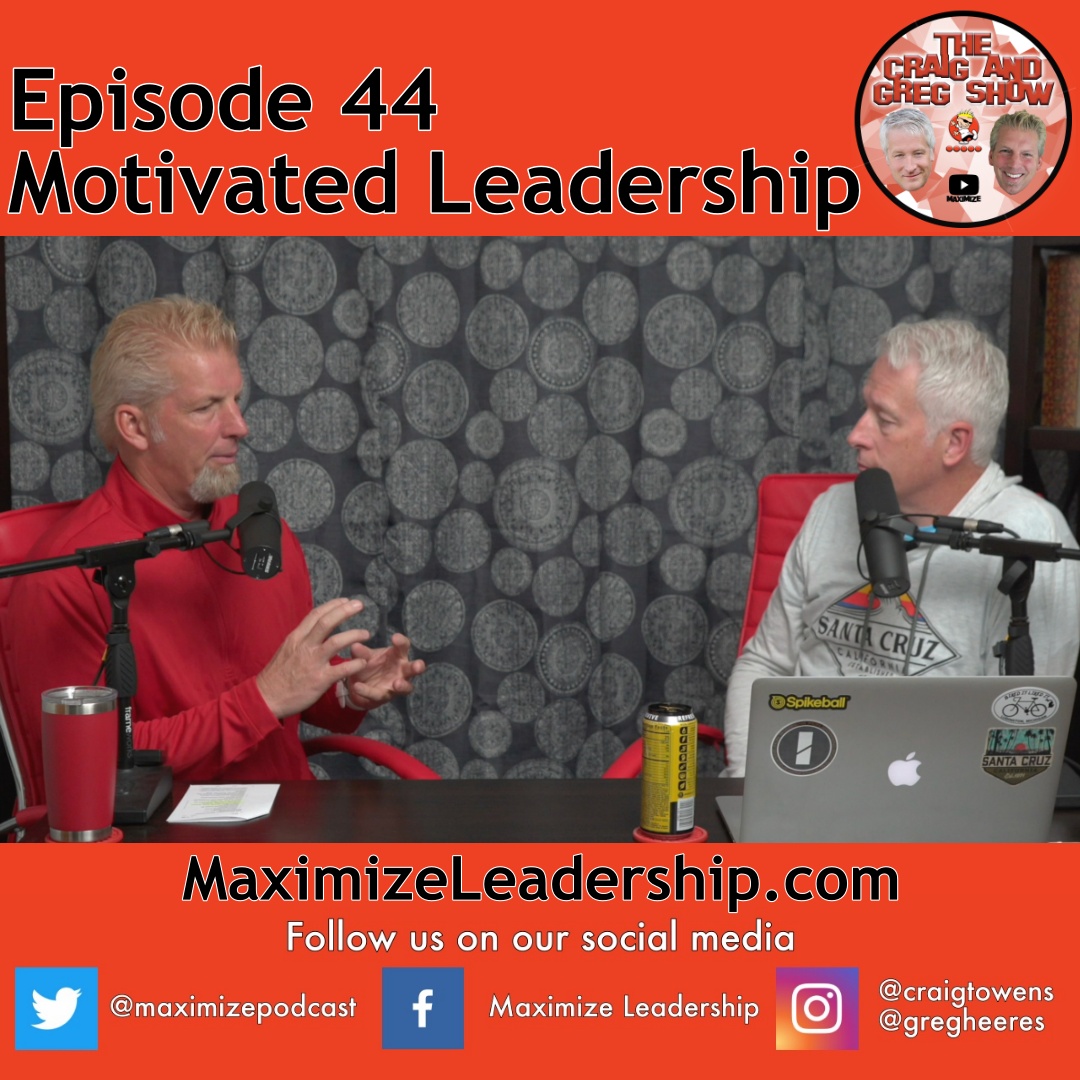
[13:56] How do leaders “call out” what’s in our team members?
[16:01] A leader’s self-assessment is key to how well we motivate others.
[18:23] Are company-wide benefits demotivating? How can we switch this up?
[20:30] Does the carrot-or-stick method of motivation actually work?
[21:10] Greg shares a quote about how dreams can help motivation.
[22:51] Great leaders don’t assume, but they ask important questions.
[23:53] Our coaching huddles can help you individualize your leadership motivational skills and practices.
Check out this episode and subscribe on YouTube so you can watch all of the upcoming episodes. You can also listen to our podcast on Spotify and Apple.
After I had shared a little of my background about how God directed me into the pastorate, John asked us our thoughts about pastors working some sort of vocational job before stepping into the role as a pastor.
I thought this exchange of ideas was pretty solid. Check this out…
One of the things I highlight in my book Shepherd Leadership is the danger of business metrics creeping into our churches. I think a pastor who has both vocational and ministry training is better equipped at spotting this shift of metrics and then making the necessary adjustments. If you are a pastor, I highly recommend that you pick up a copy of my book.
I’ll be sharing more clips from this Leading From Alignment interview soon, so please stay tuned. Shepherd Leadership: The Metrics That Really Matter is available in print or ebook, and in audiobook through either Audible or Apple.
Listen to the podcast of this post by clicking on the player below, and you can also subscribe on Apple, Spotify, or Audible.
Perhaps you’ve heard the phrase, “The best laid plans of mice and men often go awry.”
This is a line from a poem written by Robert Burns in 1785 called To A Mouse. The story behind the poem is Burns had been plowing his field and destroyed a nest that a mouse had been working all day to build. His poem was written as an apology. The famous line from the Scottish poet actually is written like this—
The best laid schemes o’ Mice an’ Men
Gang aft agley,
An’ lea’e us nought but grief an’ pain,
For promis’d joy!
That phrase “gang aft agley” means often go awry.
Do you ever feel this way? Like your perfectly planned agenda got derailed before you even finished breakfast? Or that your To Do list never quite gets “To Done” by the end of the day?
I had a great time on the Thriving In Ministry podcast with Kyle Willis while his podcast partner Dace Clifton was on sabbatical. We had planned to discuss how to help pastors get some rest so they could be at their optimal health, but our best laid plans definitely “gang aft agley”! We had multiple technical issues before we could even start recording, and then just as we talked about how pastors could find a way to rest, well, this happened…
Ah yes! Plans gone awry, indeed!
But here is an important principle for all of us to remember. The Bible says this: We can make our plans, but the Lord determines our steps (Proverbs 16:9). That means the thing that I call “an interruption” may be something or someone God has sent my way.
I used to really struggle with this, saying things like, “My plans never work out.” Until one day I heard the distinct voice of the Holy Spirit ask me, “Whose plans?”
Now listen, you who say, “Today or tomorrow we will go to this or that city, spend a year there, carry on business and make money.” Why, you do not even know what will happen tomorrow. What is your life? You are a mist that appears for a little while and then vanishes. Instead, you ought to say, “If it is the Lord’s will, we will live and do this or that.” (James 4:13-15)
Pastor, look at the life of Jesus. He often tried to get away for a time of rest, but people with needs showed up. His well-laid plans appeared to go awry. But He had compassion on them because He viewed them “like sheep without a shepherd” (Matthew 9:36; Mark 6:34). Jesus then found time to sabbath later.
Don’t view people with needs as an interruption or as something that derails your plans, but thank God for sending them your way. Then listen to the Holy Spirit showing you how and when you can get the rest you need to be energized to accomplish the rest of the items on your agenda.
I’ll be sharing more clips from this Thriving In Ministry interview soon, so please stay tuned. Shepherd Leadership: The Metrics That Really Matter is available in print or ebook, and in audiobook through either Audible or Apple.
Listen to the podcast of this post by clicking on the player below, and you can also subscribe on Apple, Spotify, or Audible.
In a recent teaching time with some ministry interns, I discussed the two main metrics that we can use to measure growth: quantity and quality. Sadly, too many churches and ministries have gotten so caught up in the “numbers game” of more-more-more being the only metric of success, that they’ve forgotten about quality. Or maybe they do focus on quality, but only as a means to the end of more-more-more.
This is never a metric of success that is discussed in the Bible. Check this out…
In the chapter entitled ‘Don’t Try to Grow Your Ministry’ in my book Shepherd Leadership: The Metrics That Really Matter I wrote this—
Businesses think in terms of quantitative gains—things they can count—but churches and nonprofits should be thinking in terms of qualitative gains—a quality improvement that isn’t as easily counted. I think we all know this, and yet we still persist in wanting to define success in a church or a nonprofit by those quantitative standards such as attendance growth, donations, and the like. When we think qualitative over quantitative, suddenly what seemed “small” is so significant and so valuable that it cannot be calculated! What if one of those babies that weren’t aborted discovers a cure for cancer, or deciphers a dialect to take the Gospel to an unreached people group, or becomes the loving next-door neighbor that leads your son or daughter to a relationship with Jesus?
Just as you cannot put a price tag on a life, you cannot put a price tag on a sheep. Make no mistake about it, God views His sheep—every single one of them—as invaluable. Because His valuation is so high, we can understand why He gets so angry at those who are more concerned about their success than they are about the health of the sheep. When God uses the word “Woe!” we should definitely take that seriously. He uses that very word to warn shepherd leaders who were shirking their responsibility when He said, “Woe to those shepherds who only take care of themselves” (Ezekiel 34:2).
When we map out our plan for success, or when we try to define success solely by quantitative measurements, we ultimately become more committed to our plans than to God’s sheep. God pulls no punches when He calls leaders with this attitude evil, mere hired hands, or even thieves (Jeremiah 23:3; John 10:8, 12). And most sobering of all, God says, “I will hold them accountable” (Ezekiel 34:10).
Friends, let’s make sure we are focused on the metrics that really matter. Recently, a pastor shared honestly with me about his frustration with the “numbers game,” and purchased five copies of my book to use as a discussion starter with his church staff. I hope you will consider using Shepherd Leadership in a similar way. If I can be of assistance, please let me know.



 I had a great time on the Leading From Alignment podcast with Jim Wiegand and John Opalewski.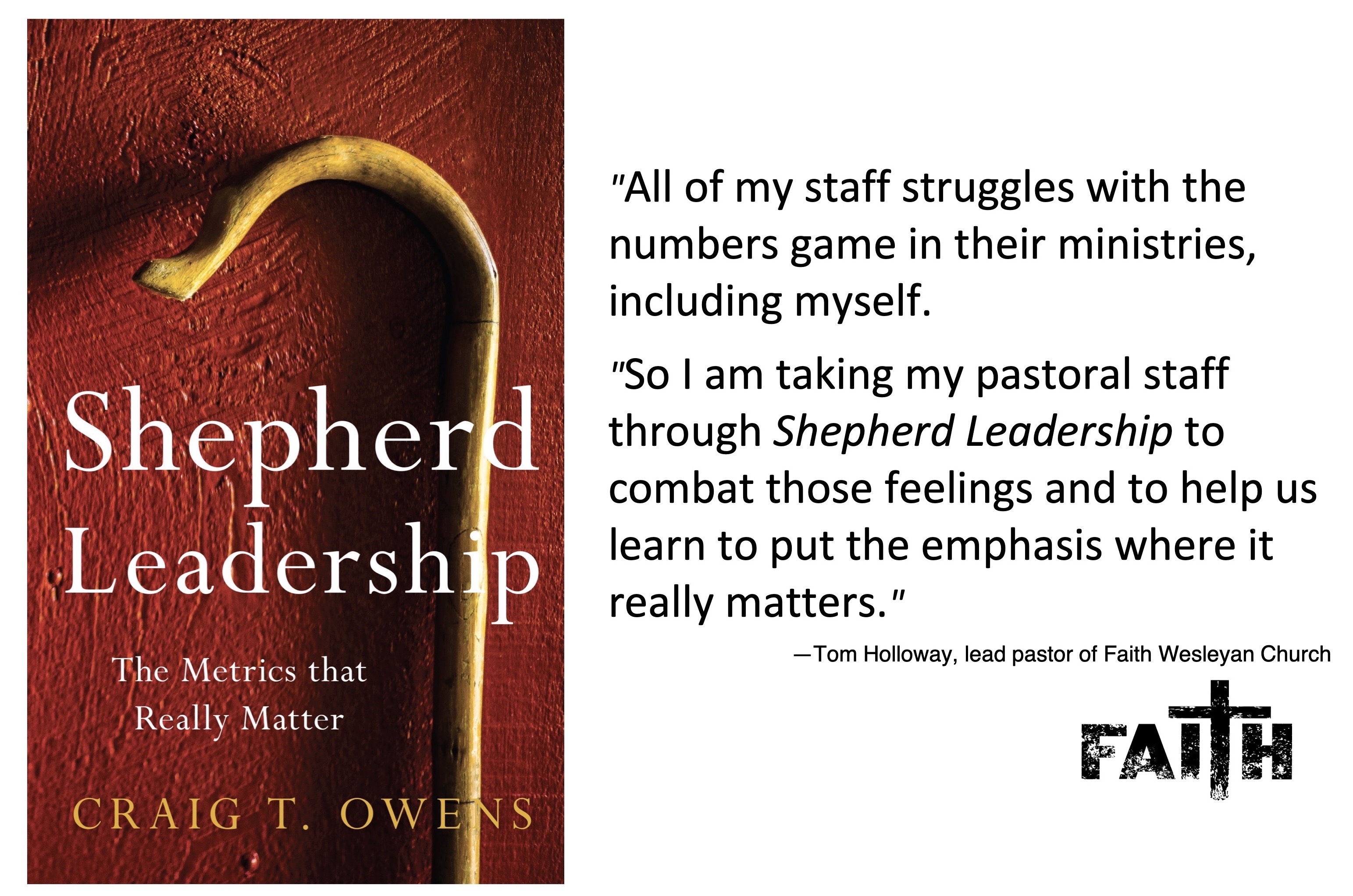







 Craig T. Owens