My books are for my fellow pastors. Shepherd Leadership will help us keep the biblical metrics in mind when we are thinking about our leadership roles. When Sheep Bite is an invaluable resource to help pastors continue to serve their flock, even after being painfully attacked. And Amen Indeed is a book of prayers for pastoral effectiveness.
If you are a pastor—or if you love your pastor—please pick up copies of these books today!
Listen to the podcast of this post by clicking on the player below, and you can also subscribe on Apple, Spotify, or Audible.
Paul salutes his friend Titus, “Grace, mercy, and peace from God the Father and the Lord Jesus Christ our Savior” (Titus 1:4).
I’m not sure why several English translations of the Bible leave the word mercy out of this verse, because the Greek clearly says charis, eleos, eirene. Especially when we consider that this was an intentional word Paul was inspired to pen to a specific person.
In every letter Paul writes to a church (plus in his personal letter to his friend Philemon), he greets the saints with “grace and peace” (Romans 1:7; 1 Corinthians 1:3; 2 Corinthians 1:2; Galatians 1:3; Ephesians 1:2; Philippians 1:2; Colossians 1:2; 1 Thessalonians 1:1; 2 Thessalonians 1:2; Philemon 3). This is also the greeting of Peter and John to the churches (1 Peter 1:2; 2 Peter 1:2; Revelation 1:4).
But in Paul’s three pastoral letters, he says, “Grace, mercy, and peace” (1 Timothy 1:2; 2 Timothy 1:2; Titus 1:4). Only John in the New Testament uses this salutation in a personal correspondence to another church leader (2 John 3).
From this, I think we would be wise to note that Paul feels his pastoral proteges need to keep mercy in the forefront of their minds. Not that pastors—and the “dear lady” in John’s second letter—don’t know that God has been merciful to them, but as a reminder of just how importantmercy truly is to both pastors and to the saints under their care.
Charles Spurgeon wrote that pastors need to be reminded of mercy “as if the higher the office, the greater the liability to sin.” I think one of the biggest temptations for leaders is to believe their elevated title means they are to be served by others, rather than to continually take the role of a servant serving others.
Pastoral leaders will also do well to recall that “all we like sheep have gone astray” (Isaiah 53:6; 1 Peter 2:25), and that “all” includes both pastors and saints. Pastors need to quickly recognize anytime they may be straying from their servant’s role, repent, and receive God’s mercy.
Shepherd leaders also need to guard against the frustration that can creep into their heart when they see the sheep in their flock going astray. Paul and John are reminding these pastors to keep in mind how merciful the Chief Shepherd has been to them, and how this should stir up their mercy toward the flock around them.
Shepherd leaders have a vital need to keep mercy always in mind.
I think a good prayer for pastors might be—
Holy Spirit, in my moments of frustration, remind me of the “grace, mercy, and peace from God the Father and the Lord Jesus Christ [my] Savior” which has been extended to me innumerable times. May that recollection awaken in me increased depths of mercy toward the flock around me, despite how frequently they may stray. In Jesus’ name. Amen!
P.S. If you are interested in going deeper on the topic of pastors as leaders, please check out my book Shepherd Leadership.
Listen to the podcast of this post by clicking on the player below, and you can also subscribe on Apple, Spotify, or Audible.
Leadership is influence.
Influence doesn’t try to get a following, but people naturally follow a leader who quietly, consistently, and effectively shows up for them.
Jesus saw the needs of people and was moved by compassion to relieve their distress. Peter said He simply went around doing good (Acts 10:38). He gave value to the overlooked, He touched the so-called untouchable, He embraced the rejected.
Jesus said, “I didn’t come to be served but to serve and to give My life away” (Mark 10:45).
This commentary from the folks at He Gets Us is spot-on:
So often our idea of leadership is about asserting dominance and wielding authority; Jesus on the other hand revealed a radically different approach to greatness.
Jesus chose a path that seemed almost counterintuitive, especially to many of those around Him. He showed that true influence doesn’t come from throwing your weight around or flexing your authority—it comes from genuine empathy, authentic care, and intentionally seeing people and going toward them.
Instead of building a platform or demanding attention, Jesus moved quietly through communities, transforming lives through genuine relationships.
He didn’t network with the powerful or chase prestigious connections.
He sat with the overlooked.
He listened to the ignored.
He gave dignity to those society had dismissed.
Jesus’ approach to influence and greatness wasn’t about commanding rooms or dominating conversations—it was about creating spaces where others felt seen, heard, and valued, demonstrating great love in those moments.
When He had opportunities to grasp power, He chose instead to empower others.
His visible leadership wasn’t built on titles or positions, but on authentic relationships He cultivated and the lives He transformed through His genuine care and concern. (‘What is Greatness?’)
Jesus showed us how to remain faithful as a shepherd even in the face of painful attacks. If you are a pastor—or if you love your pastor—please check out my books Shepherd Leadership and When Sheep Bite.
Every year I see the same unsubstantiated claims that the Christian celebration of Christmas is a hodgepodge of pagan and cultic myths cobble together and hijacked by Christians. Here are three myths refuted by archeological evidence.
Dr. Allen Tennison points out how Luke emphasizes the work of the Holy Spirit all throughout his Gospel, and then continues that theme as he moves into the Book of Acts.
“One of the first gospel blessings is that of complete justification. A sinner, though guilty in himself, no sooner believes in Jesus than all his sins are pardoned. The righteousness of Christ becomes his righteousness, and he is accepted in the Beloved.” —Charles Spurgeon
“For the apostle Paul, as, indeed, for all the apostles and early Christians, the Church is the Body of Christ, the continuing incarnation of the reigning and conquering King of Glory. The Church, according to the apostles, is the centerpiece of Christ’s historical agenda (Matthew 16:18). Whatever Christ intends to do on earth prior to His imminent return, the focal point of that work will be in and through His Church. … We do not have the mind of Christ if we are not thinking the same way about His Body, the Church. We need the Church, and if we do not think this is so, then we do not have the mind of Christ. We need the Church. But we need it according to the purpose with the guidance and blessing of the Lord Jesus Christ.” —T.M. Moore
What an amazing story of faithfulness! The faithfulness of God is seen in the loving actions of an unnamed Sunday School teacher and in a lifelong missionary.
Cold-case detective J. Warner Wallace contrasts blind belief and unreasonable belief with what he calls forensic faith. His conclusion: “A forensic faith gives you confidence in uncertainty, strength in adversity, and the ability to engage intellectually with both believers and skeptics. It transforms faith from mere hope into informed trust, and that makes all the difference in how you live out your beliefs in a world that’s constantly questioning them.”
“Depression is one of satan’s most dynamic weapons to divert you from God’s purpose for your life. If he can scatter a little dejection here and there in your thoughts—and even in your prayers—he can convince you to remove your breastplate of righteousness because it is too cumbersome and will go against your material and temporal interest. Do not give in that easily!” —William Gurnall, The Christian In Complete Armor
When people start throwing mud at you, your natural response is to throw the mud back at them or to run away so the mud can’t reach you. Instead of the natural fight-or-flight response, Jesus shows us a supernatural response. I talk about all sorts of attacks—gossip, slander, betrayal, and more—in my book When Sheep Bite as well as the supernatural, biblical response to these attacks.
“The minute you start talking about what you’re going to do if you lose, you have lost.” —George Schultz
“A decent picture of good leadership: Air-traffic controllers have authority, but they use their authority to enable others to fly.” This is a thoughtful post, but as frequent visitors to my blog might expect, I prefer the term shepherd leader over servant leader.
This post recounts some of the stories people told of how Charles Spurgeon’s sermons led them from the bad news to the Good News. Spurgeon himself noted, “If you really long to save men’s souls, you must tell them a great deal of disagreeable truth. The preaching of the wrath of God has come to be sneered at nowadays, and even good people are half-ashamed of it; a maudlin sentimentality about love and goodness has hushed, in great measure, plain gospel expostulations and warnings. But, if we expect souls to be saved, we must declare unflinchingly with all affectionate fidelity, the terrors of the Lord.”
“Men have not got tired of Christianity; they have never found enough Christianity to get tired of.” —G.K Chesterton
“Advancing the Kingdom economy is not exactly a cakewalk. It’s hard work, like running a marathon, going to war against spiritual adversaries, cultivating a field, or embarking on a long and arduous journey. We may expect to encounter many obstacles and challenges along the way as we seek first the Kingdom of God and His righteousness. … We must neither run from these challenges nor give in to them. Instead, advancing the Kingdom economy requires that we face evil head-on, and determine to overcome it by good works of righteousness, peace, and joy in the Holy Spirit (Romans 14:17-19).” Check out the rest of T.M. Moore’s post Overcoming Evil.
Listen to the podcast of this post by clicking on the player below, and you can also subscribe on Apple, Spotify, or Audible.
On an episode of The Craig and Greg Show, Greg and I discussed some toxic behaviors that can creep into your workplace and cause major discord. Two attitudes to watch out for are confidence without humility, and humility without confidence.
Check out this full Craig and Greg Show episode here.
Listen to the podcast of this post by clicking on the player below, and you can also subscribe on Apple, Spotify, or Audible.
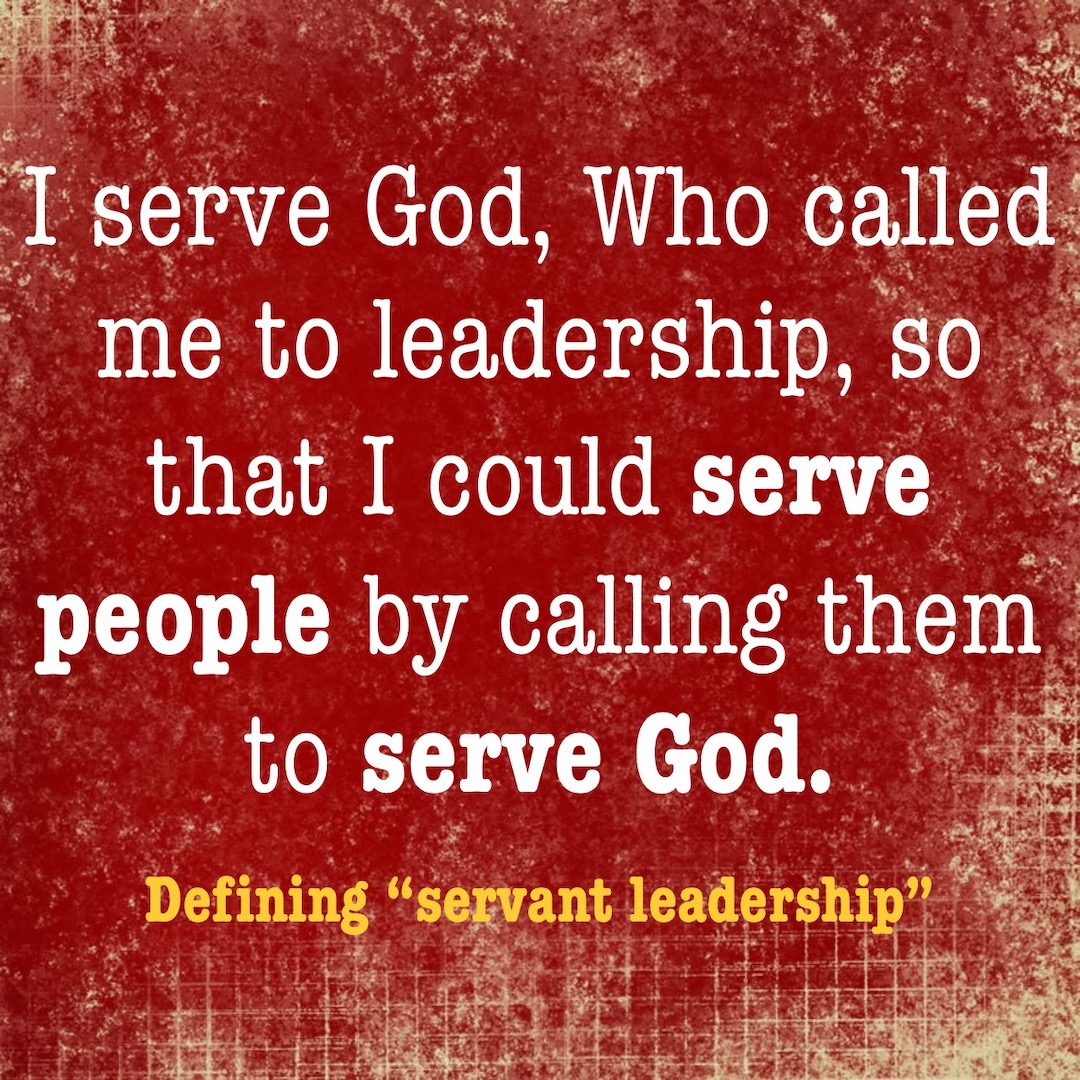
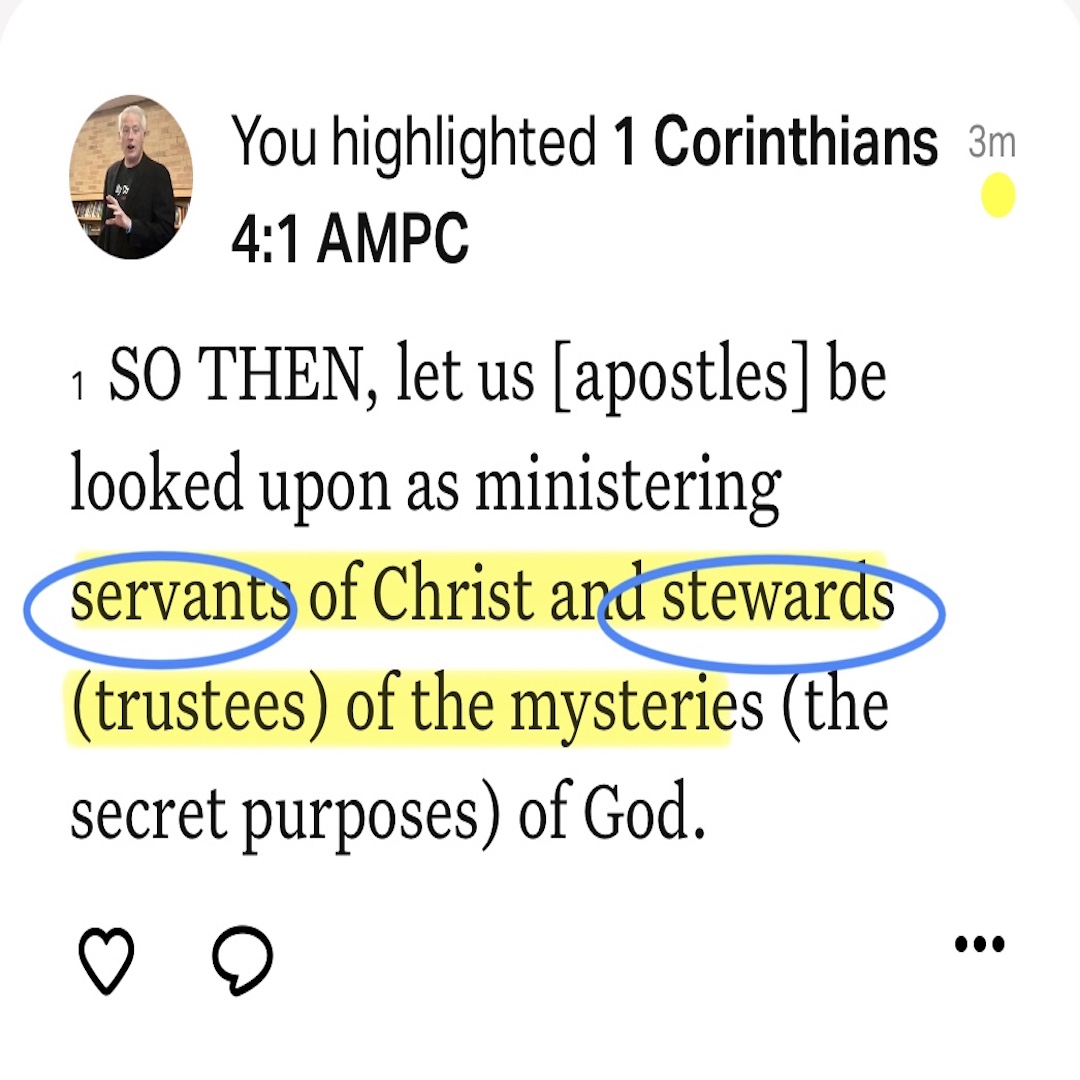
Godly leaders should be secure enough to think of themselves as servants and stewards—nothing more, nothing less. And people in the church should look on their leaders as servants and stewards—nothing more, nothing less.
So then, let us apostles be looked upon as ministering servants of Christ and stewards (trustees) of the mysteries (the secret purposes) of God. (1 Corinthians 4:1 AMPC)
Q: How do I know if I am a servant?
A: People treat me like one.
Q: How do I know I have a servant’s attitude?
A: I don’t mind being treated like a servant.
Paul lived this out—Now, brothers and sisters, I have applied these things to myself and Apollos for your benefit, so that you may learn from us the meaning of the saying, “Do not go beyond what is written.” Then you will not be puffed up in being a follower of one of us over against the other(1 Corinthians 4:6).
I closed the chapter ‘Secure to Serve’ in my book Shepherd Leadership like this—
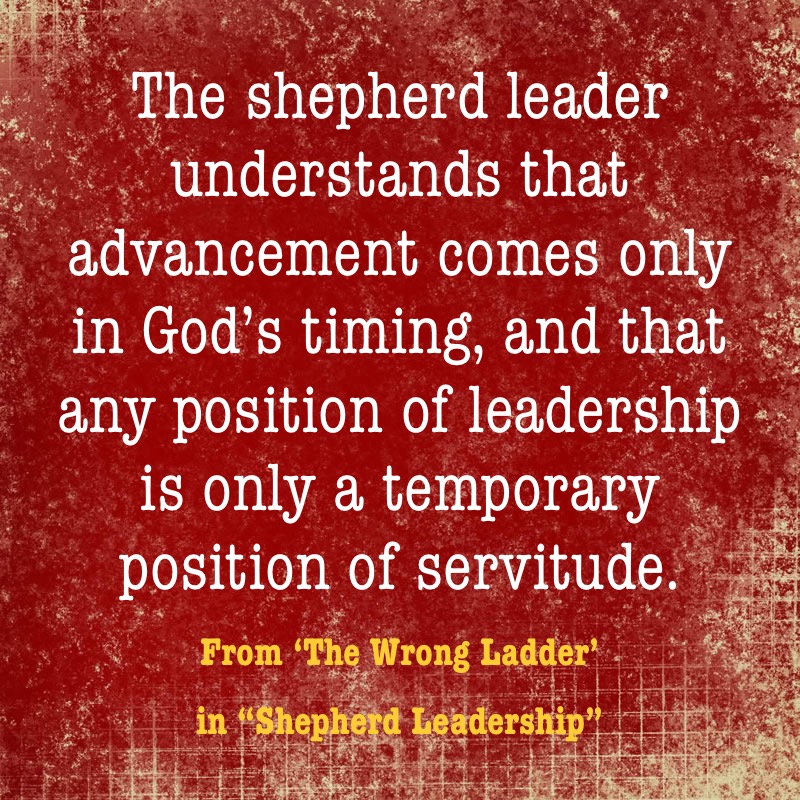
God wants to use you as a leader. He has called you to great things. Just remember that He does the calling and the equipping so that you can serve and shepherd others. It may be a prominent, noticeable position, or it may be an obscure position unseen by very many. It may be a position God keeps you in until the day He calls you home, or it may be a temporary position. A humbly confident leader doesn’t fight to climb a ladder nor strive to keep a position on a higher rung of the ladder. The shepherd leader is confident to serve where God places him, and humble enough to be moved, or even removed, as God sees best. But most of all, a secure shepherd leader knows that God’s desire for His leader in any position is a heart to serve others.
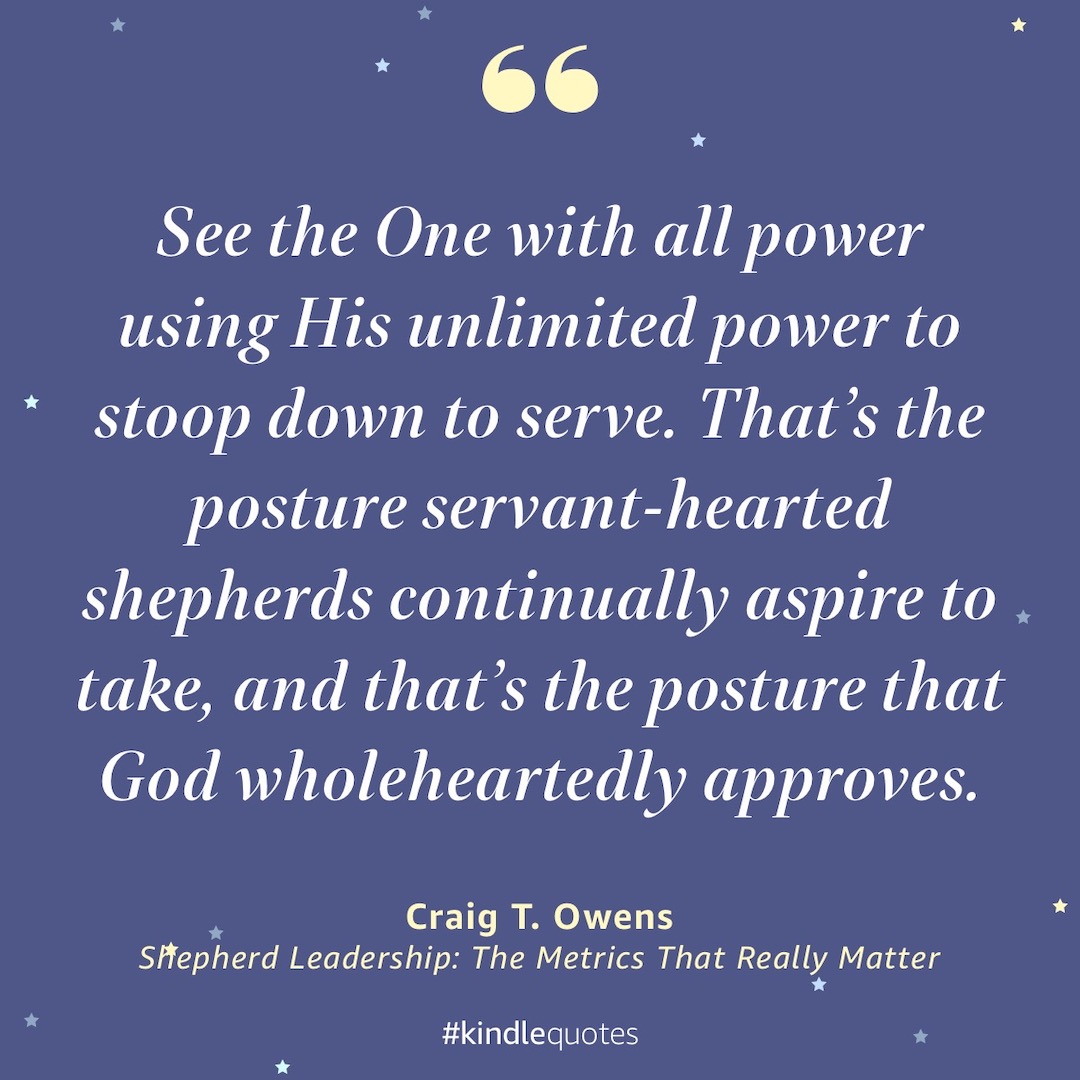
“If we truly want to be considered successful, we must turn our backs on what is typically termed ‘success’ so that we can keep our eyes on our Chief Shepherd. See the One with all power using His unlimited power to stoop down to serve. That’s the posture servant-hearted shepherds continually aspire to take, and that’s the posture that God wholeheartedly approves.” (From the chapter ‘The Wrong Ladder’ in my book Shepherd Leadership)
Controlling leaders shut down creativity among their teammates, which leads to higher turnover. If your team isn’t sharing their good ideas with you or if they are leaving you, that may be an indicator that you are too controlling. Check out the full conversation on The Craig and Greg Show
“As a fact, men only become greedily and gloriously material about something spiritualistic. … Take away the supernatural, and what remains is the unnatural.” —G.K. Chesterton
Astronomical technology like the James Webb Space Telescope (JWST) are providing breathtaking images. They are also creating problems for the scientific theories of the origins of our universe. University of California Santa Barbara physicist Caitlin Casey, said, “It makes sense—the Big Bang happens and things take time to gravitationally collapse and form, and for stars to turn on. There’s a timescale associated with that…. And the big surprise is that with JWST, we see roughly 10 times more galaxies than expected at these incredible distances.” There is a more straightforward answer found in Genesis 1:1, “In the beginning, God created the heavens and the earth.”
“Knowing where God wants people to be and taking the initiative to use God’s gifts and God’s methods to get them there, in reliance on God’s power through Christ, with God’s appointed people following.” —John Piper, giving his definition of godly leadership
The Bible records the names of five Persian kings. One of them called “Darius the Persian” in Nehemiah 12:22 requires some historical cross-referencing to identify. The Bible Archeology Report presents another one of their fascinating archeological biographies on this Persian king.
“The greatness of a leader is in his humility before God, not in his eloquence before men.” —Anonymous
The most viewed and downloaded resource on my blog is my chart of the kings of the united kingdom of Israel and the divided kingdoms of Israel and Judah. I was thrilled to discover this week that Jacob Edson at Biblegateway has taken my chart even deeper!
T.M. Moore has vital counsel for pastors, “Jesus must increase in us, and we must decrease. But that doesn’t just happen by carrying out whatever our ‘spiritual work’ requires of us week-in and week-out. Our ‘natural gifts’ cannot replace spiritual ones, and ‘mental powers’ are no match for the mind of Christ. It is a shepherd’s ‘duty’ to attend to the care and nurture of his soul, for unless we are diligent in this, we will not be able to lead the Lord’s sheep into a greater experience of our great salvation or a fuller realization of His Kingdom.”
Listen to the podcast of this post by clicking on the player below, and you can also subscribe on Apple, Spotify, or Audible.
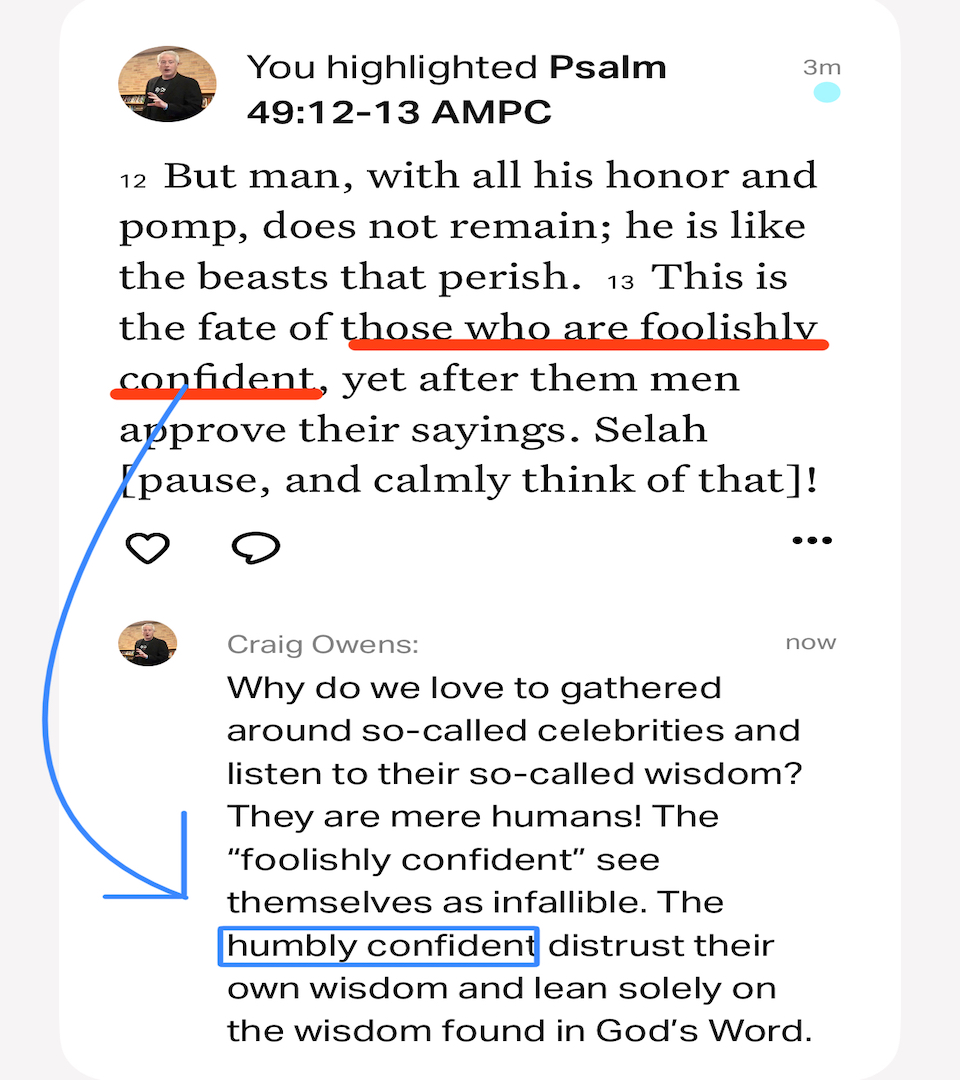
We live in a celebrity-obsessed culture. Sadly, this unbiblical pursuit has infected our churches too. Let’s talk about this on this episode of The Podcast.
In my book Shepherd Leadership, I have two chapters that address a godly leader’s confident humility and humble confidence. You can also check out several blog posts on videos on this subject by clicking here.



 A couple of other blog posts that may help you on this topic of servant leadership are:






 Craig T. Owens