Mighty Deliverer

Listen to the podcast of this post by clicking on the player below, and you can also subscribe on AppleSpotify, or Audible. 

The world can marshal its weapons of war. They may gain a temporary victory. They may build strongholds, and cast spells, and appear to be the unquestioned ruler. But God always gets the final word, the decisive word, and the best word! 

Don’t despair in the middle of the Story! All of History is His Story. No matter how dark it seems, we are assured of God’s victorious outcome! 

Bethlehem is our proof:

  • 700 years before it happened, Bethlehem is named as the birthplace of Jesus (Micah 5:2; Luke 2:1-7) 
  • 700 years before Jesus was born in Bethlehem, His titles were given and then fulfilled in the way that Jesus lived (see for example Isaiah 9:6 and Hebrews 13:20) 

Sometimes God has to let the darkness fall so heavy so that it seems hopeless. In fact, in human power alone it is hopeless and impossible. So God foretells His victory—

“Listen to this, you descendants of Jacob, you who are called by the name of Israel and come from the line of Judah, you who take oaths in the name of the Lord and invoke the God of Israel—but not in truth or righteousness—you who call yourselves citizens of the holy city and claim to rely on the God of Israel—the Lord Almighty is His name: I foretold the former things long ago, My mouth announced them and I made them known; then suddenly I acted, and they came to pass. … Therefore I told you these things long ago; before they happened I announced them to you so that you could not say, ‘My images brought them about; my wooden image and metal god ordained them.’” (Isaiah 48:1-5) 

We have seen how Micah prophesied our Messiah coming as the Great Shepherd and as the Prince of Peace, but He also comes as our Mighty Deliverer (Micah 5:1-6). He comes at an incredibly dark time that is described like this: “He will rescue us from the Assyrians when they pour over the borders to invade our land” (Micah 5:6 NLT). 

Darkness may appear to have a stranglehold even now in our time. One of the verses in the New Testament that pretty accurately sums up a Christ-less culture says, “The god of this world has blinded the unbelievers’ minds that they should not discern the truth, preventing them from seeing the illuminating light of the Gospel of the glory of Christ” (2 Corinthians 4:4 AMP) . 

But this is only temporary darkness. When the mob came to arrest Jesus, He said, “This is your hour—when darkness reigns” (Luke 22:53). Darkness only gets an hour, but the Light of God shines for all of eternity! 

One of my favorite Advent texts is found in Hebrews 2:14-15:

Since the children have flesh and blood, [Jesus] too shared in their humanity so that by His death He might destroy him who holds the power of death—that is, the devil—and free those who all their lives were held in slavery by their fear of death. 

Our Mighty Deliverer came to destroy satan’s power and free those held hopelessly in darkness. The word “destroy” is a powerful, all-encompassing word. Imagine a tyrannical ruler who sent one of his strongest police officers with an arrest warrant, who then grabbed onto you and subdued you with his vice-like grip. 

Only someone stronger than that officer can release you from that grip. That’s what Jesus did when He destroyed satan’s ironclad grip on your soul. Paul asks mockingly, “Where, O death, is your victory? Where, O death, is your sting? The sting of death is sin, and the power of sin is the law. But thanks be to God! He gives us the victory through our Lord Jesus Christ!” (1 Corinthians 15:55-57)

Now you may be free of the grip of that officer, but the arrest warrant still remains—you are still subject to the penalty. But that word “destroy” also means that the charges against you have been set aside so that there is no penalty outstanding against you. The apostle Paul again addressed this when he wrote, “For we know that our old self was crucified with [Jesus] so that the body ruled by sin might be done away with, that we should no longer be slaves to sin. … Who will bring any charge against those whom God has chosen? It is God who justifies” (Romans 6:6, 8:33). 

You are now set completely and irrevocably free! “But it has now been revealed through the appearing of our Savior, Christ Jesus, who has destroyed death and has brought life and immortality to light through the gospel” (2 Timothy 1:10). 

The Messiah—our Mighty Deliverer—destroys darkness and delivers those who believe in Him! 

No matter how hopeless it may seem, the Mighty Deliverer always prevails! Jesus has destroyed every enemy that has opposed God’s people! Jesus our Champion shines a light so brightly that nothing in satan’s arsenal can ever diminish it. 

The Light shines in the darkness, and the darkness can never extinguish it (John 1:5 NLT). 

So allow me to repeat: Don’t despair in the middle of the Story! All of History is His Story. No matter how dark it seems, Bethlehem is our proof that Jesus has destroyed our enemy and removed from him all grounds for charging us with sin. Bethlehem is our proof that we can live assured of God’s victorious outcome! 

What a great Christmas gift that truly is! 

If you’ve missed any of the messages in this Advent series, you can find a list of all of those messages by clicking here. 

►► Would you please prayerfully consider supporting this ministry? My Patreon supporters get behind-the-scenes access to exclusive materials. ◀︎◀︎

The Prince Of Peace

Listen to the podcast of this post by clicking on the player below, and you can also subscribe on AppleSpotify, or Audible. 

Last week we saw the dark times in which Micah lived as he prophesied the advent of the Messiah. Israel was both surrounded by enemies as well as lots of practices within their borders that were heartbreaking to God. Many times, our lives can feel the same way: enemies of God all around us and our own turmoil and doubts inside our hearts and minds.      

In this dark, hopeless time, the Messiah came as our Great Shepherd. Take a look at what this Shepherd brings us:

He will stand and shepherd His flock in the strength of the Lord, in the majesty of the name of the Lord His God. And they will live securely, for then His greatness will reach to the ends of the Earth. And He will be their peace. (Micah 5:4-5)

We see this idea of Jesus our Great Shepherd bringing peace to our hearts in the New Testament as well: 

May the God of peace, who through the blood of the eternal covenant brought back from the dead our Lord Jesus, that Great Shepherd of the sheep, equip you with everything good for doing His will, and may He work in us what is pleasing to Him, through Jesus Christ, to Whom be glory for ever and ever. Amen. (Hebrews 13:20-21) 

This peace is also implied in Psalm 23:1 when David wrote, “The Lord is my Shepherd, I shall not be in want.” That phrase “I shall not be in want” really captures the definition of peace. 

The Hebrew word for peace is shalom. An easy-to-remember definition of shalom is “nothing lost, nothing missing.” Our Great Shepherd makes sure nothing is lost or missing that would cause us anxiety or doubt, so we can have total peace—we can have shalom!

Jesus said the devil’s agenda was for everything to be lost or missing—“the thief comes only to steal and kill and destroy”—but our Great Shepherd’s agenda is for there to be nothing lost or missing—“I have come that they may have life, and have it to the full” (John 10:10). 

Isaiah, who was prophesying at the same time as Micah, sounded a similar note:

Therefore the Lord Himself will give you a sign: The virgin will conceive and give birth to a Son, and will call Him Immanuel. … And He will be called Wonderful Counselor, Mighty God, Everlasting Father, Prince of Peace. (Isaiah 7:14, 9:6) 

When this Great Shepherd was born in Bethlehem, the shepherds in the field were the first to hear the good news. Notice what the angels announced: “Glory to God in the highest heaven, and on earth peace to those on whom His favor rests” (Luke 2:14). 

Who has God’s favor? Those with faith in Him: “Without faith it is impossible to please God” (Hebrews 11:6). So those with faith in God have God’s favor. 

Faith in what? In all that Jesus purchased for us by His blood shed on the Cross: “Therefore, since we have been justified through faith, we have peace with God through our Lord Jesus Christ” (Romans 5:1). 

Check this out: The root word of shalom is a word that means, “It is finished.” These are the exact same words our Price of Peace announced from the Cross! Jesus finished the work that brings us peace from the turmoil and anxiety of sin! 

Faith comes from believing that God has made the promise of peace, that God has fulfilled the promise of peace through Jesus, and that God is bringing us to His eternal peace. So now our lives of peace in a world of turmoil can serve as a testimony to others. 

Jesus called His followers to be peacemakers (Matthew 5:9) but we cannot do this while we are experiencing anxiety or doubts. To be peacemakers we must be full of peace because of our relationship with the Prince of Peace, who has ensured that nothing is lost and nothing is missing! 

If you feel anxious, remember that Bethlehem is your proof that the Prince of Peace has come to remove doubts, anxiety, fear, and inner turmoil. Let every pang of anxiety be immediately a call to run to the Prince of Peace. He has paid an incalculable price to purchase your peace, so don’t leave this gift unopened and unused. A dark, anxious world is looking for peace. Know the author of shalom so that you can introduce others to this Prince of Peace. 

If you’ve missed any of the message in this series, please check them out by clicking here. 

►► Would you please prayerfully consider supporting this ministry? My Patreon supporters get behind-the-scenes access to exclusive materials. ◀︎◀︎

The Christmas Carols

During the Advent seasons of 2014-2019, I shared a series of messages called The Carols Of Christmas. I was concerned at how many “old familiar carols” we hear so often Christmas after Christmas until the words have almost lost their meaning. If we’re not careful, any song repeated too often can lose the richness of its original intent. And so we went on a journey to (re)discover the beautiful Advent messages in these old familiar carols.

To make it a little more convenient, I wanted to group all of the messages here for you. In the list below you will find both the title I gave to my message and the title of the Christmas carol in italics.

The Great Shepherd

Listen to the podcast of this post by clicking on the player below, and you can also subscribe on AppleSpotify, or Audible. 

God delights to show up when the situation seems hopeless from any human standpoint. When He does what no one else can do, He alone is glorified!

A very notable dark time took place in Israel about 700 BC as the nation was surrounded by enemies. Micah prophesied the arrival of the Messiah. But he also prophesied that before He came, there would be dark days. He talks about the siege of enemies surrounding them, Israel’s ruler being stuck on the cheek with a rod, not to mention the strongholds, witchcraft, and idolatry that plagued the nation within its own borders (Micah 5:1, 11-13). 

But whenever it seems darkest, God is not the least diminished! He always gets the final word, the decisive word, the best word. 

So into this inky darkness, Micah prophesies a ray of light—“But you, Bethlehem Ephrathah, though you are small among the clans of Judah, out of you will come for Me One who will be Ruler over Israel, whose origins are from of old, from ancient times” (Micah 5:2). 

I’m sure many people thought that Bethlehem was too small of a village for anyone of significance to be born there.

The Last Battle is the final book in C.S. Lewis’ Narnia series. This story also portrays a similar dark time. Shift the ape has convinced Puzzle the donkey to wear an ill-fitting lion skin to pretend to be the great king Aslan. Through tricks, sleight of hand, deception, and the plans of some evil schemers, many of the Narnians come to believe that Puzzle is Aslan. But it’s confusing because this “Aslan” is not the kind, strong king they believed in, so many begin to just look out for themselves. 

In a fitting setting, Puzzle is being hidden inside an old stable. A great battle takes place with the true Narnians ending up inside the stable, and yet once inside they discover not a dark stable, but a sunlit land spreading farther than their eyes can see. Lord Digory observes, “Its inside is bigger than its outside.”  

But I love this line from Queen Lucy, “In our world too a stable once had something inside it that was bigger than our whole world.” 

Inside that Bethlehem stable was born the Great Shepherd! Who was inside that stable and what He would accomplish became so much grander and more beautiful than any human had ever imagined! 

Jesus is our Great Shepherd—He will stand and shepherd His flock in the strength of the Lord, in the majesty of the name of the Lord His God. And they will live securely, for then His greatness will reach to the ends of the earth (Micah 5:4). 

Jesus is strong, majestic, and great (John 10:10-15). 

Jesus equips us to be victorious (Hebrews 13:20-21). 

Jesus walks with us every step of the way (Psalm 23:1-6). 

And Jesus takes us Home to be with Him forever (1 Peter 5:4). 

(Check out all of these passages by clicking here.) 

Our faith is not rooted in some mysterious thing with an uncertain history. It is a faith rooted in real historical events. The Great Shepherd being born in the town that was prophesied 700 years beforehand is one more proof that God is in control, that God loves you, and that God always gets the final word, the decisive word, the best word! 

If you’ve missed any of the messages in our Advent series Bethlehem Is Proof, you find the full list by clicking here. 

►► Would you please prayerfully consider supporting this ministry? My Patreon supporters get behind-the-scenes access to exclusive materials. ◀︎◀︎

Bethlehem Is Proof

The prophet Micah foretells that the Messiah will arrive in dark times. Enemies will surround Israel, and Israel’s ruler will receive a nasty punch to the jaw. Demonic strongholds, witchcraft, and idolatry will appear to be gaining the upper hand. 

And then Micah turns his attention to a small village just south of Jerusalem—a village so small that it is often overlooked—a village from which no one would expect Israel’s Deliverer. 

And yet, Micah writes, “But you, Bethlehem Ephrathah, though you are small among the clans of Judah, out of you will come for Me One who will be Ruler over Israel, Whose origins are from of old, from ancient times” (Micah 5:2). 

Jesus the Deliverer was born in the little town of Bethlehem, and His birth there 700 years after Micah foretold it is our proof that God always gets the last word, the decisive word, and the best word! 

Please join me this Sunday for our Advent series Bethlehem Is Proof! I would love to have you join me in person, but you can also watch the sermons on Facebook or YouTube.

If you’ve missed any of the messages in this series, check them out here:

The Gratitude That Influences

Listen to the podcast of this post by clicking on the player below, and you can also subscribe on AppleSpotify, or Audible. 

Last week I mentioned over-dramatic kids complaining, “I’m starving!” Or people with expensive phones complaining about a slow internet connection. We’re really good at expressing what we want, aren’t we? In fact, we’re really good at loudly letting everyone around us know that we want something. 

But here’s a good question: Are we just as quick to loudly express our gratitude?     

It’s innate human nature to behave this way. No one has to teach a child to express their desires—loudly! But we do have to teach our children to say, “Thank you.” And sometimes it takes even more prompting to get them to say it loud enough for others to hear, and sincere enough for others to believe that they are truly grateful. 

So why would we expect it to be any different just because we happen to be older? That’s why we’ve noted that the attitude of gratitude is a great attitude, and it’s also an attitude that makes the grateful person stand out from the crowd. 

G.K. Chesterton noted, “In life you can take things one of two ways: you can take them for granted or you can take them with gratitude.” Sadly, it seems that “for granted” is what is typically exhibited. In fact, I think the granted-to-grateful ratio is 10-to-1. 

Luke alone tells a story in his Gospel about ten men with leprosy (Luke 17:11-19). All ten lepers had no problem calling out their need for healing “in a loud voice.” And they called out to the right Person, as they called Jesus “Master.” This word shows that they believed He could do something no one else could do. Indeed, Jesus shows His authority over leprosy with just the word, “Go” and “as they went, they were cleansed.” 

All ten were quick to loudly express their desire for healing and to call on the authority of Jesus, but only “one of them…came back, praising God in a loud voice.” Both Luke and Jesus affirm that all ten men were cleansed on the outside—their skin no longer showed the ravages of leprosy, but only to the one grateful man did Jesus say, “Your faith has healed and saved you” (v. 19 MSG). 

The Greek word here is sōzō. This is the same word used for the eternal salvation that Jesus alone can bring. Check out John 3:17, John 10:9, Acts 2:21, and Romans 10:9. This is better than just physical cleansing, it’s wholeness that lasts for eternity! 

E.M. Bounds wrote, “Gratitude and murmuring never abide in the same heart at the same time.” Sadly, the ratio of grumblers-to-praisers is only going grow as we move closer and closer to the end of the age, culminating in people who have the outward appearance of godliness (like the nine cleansed lepers) but ignore the true power of God for salvation (see 2 Timothy 3:1-5). 

In this take-everything-for-granted, focus-on-the-outward culture, those 1-in-10 stand out. Those who have gone beyond skin-deep cleaning to soul-deep salvation, and who loudly express their gratitude, are the ones the apostle Paul declares shine brightly and influence those around them (Philippians 2:14-16). 

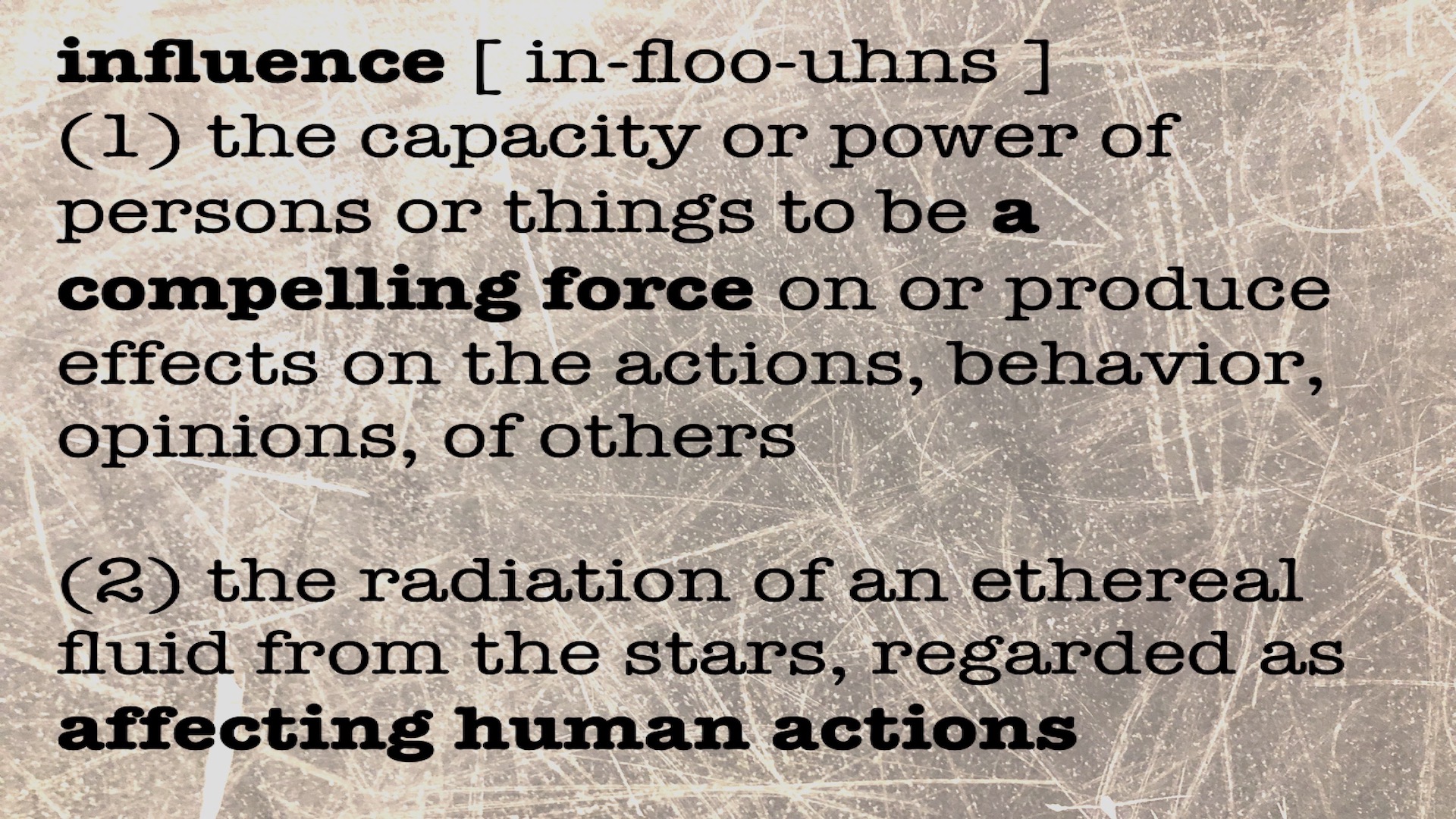
The origin of the word influence comes from a power people thought those bright stars had to affect the lives of humans. So your consistent gratitude is influencing those around you, and giving them a star to chart their course, more consistently than almost anything else you can do. 

So shine on! Praise God loudly, quickly, and sincerely for what He has done for you! Be the 1-in-10! And then watch your influence impact everyone who encounters you.

If you’ve missed any of the messages in our series The Great Attitude of Gratitude, you can find a list of all of the messages by clicking here. 

►► Would you please prayerfully consider supporting this ministry? My Patreon supporters get behind-the-scenes access to exclusive materials. ◀︎◀︎

Grateful For What You Have

Listen to the podcast of this post by clicking on the player below, and you can also subscribe on AppleSpotify, or Audible. 

We said last week that nobody likes to be around a complainer, although many complainers would say they’re not complaining but just sharing facts. In their mind, they have a legitimate right to let everyone know how they’ve been short-changed, gotten a bad deal, or experienced something that no one else has gone through.    

Have you ever heard your kids say, “I’m starving”? And perhaps you think, “Do you really know what starving is?” Or what about people waving their very expensive phones around as they complain, “Isn’t there any WiFi here?!” 

This isn’t a glass half-full or half-empty thing. This is really closing your eyes to the fact that many people don’t even have a glass, or if they do have a glass, they don’t have access to the water that they need. 

I was delivering some Christmas toys to a family and I discovered they had lost everything they owned. When I came to their house their furniture was mismatched, their food and clothes were donated, and their kids only had a couple of simple toys to play with. And yet this family was happy to be together! 

That sort of puts things in perspective, doesn’t it? 

We have to choose grumbling or gratefulness, but as E.M. Bounds noted, “Gratitude and murmuring never abide in the same heart at the same time.” So if you are complaining about what you don’t have, you cannot be grateful for what you do have. 

There is a fascinating story told in all four Gospels of a woman named Mary. She was an uninvited guest at a house where Jesus and His disciples had been invited to dinner. Jesus was not there because someone was grateful to have Him in his home, but because Simon the Pharisee and his cronies were trying to find a reason to accuse Jesus of wrongdoing. 

Simon was so focused on his “gotcha” moment that he completely overlooked his host duties. He didn’t wash Jesus’ feet, nor greet Him with a kiss, nor anoint Him with perfume, as the custom of the day demanded. But Mary, standing behind Jesus at the dinner table, washed Jesus’ feet with her tears, kissed His feet, and anointed Him with an entire bottle of costly perfume! She did all of this out of gratitude for what she had received from Jesus. 

First, I would like you to consider what Mary didn’t have:

  • a seat at the table—even though the dinner was in her hometown of Bethany, her brother Lazarus was invited to the meal, and her sister Martha was serving the meal 
  • a good reputation—twice Simon the Pharisee said, “Does Jesus even know what kind of woman she is? Does He know she is a sinner?” 
  • the acceptance or approval of others—even the disciples thought her gesture of anointing Jesus with so much perfume was a wasted extravagance 

Next, let’s look at what Simon did have:

  • an elevated position as a Pharisee 
  • considerable wealth—he had servants and a home large enough for a big dinner party 
  • healing from leprosy—the Gospels refer to him as “Simon the leper” which tells us that he had been healed of his leprosy 

Now, let’s consider what the disciples did have:

  • an enviable position as disciples of Jesus
  • a dinner invitation to Simon’s house
  • access to the financial resources that people gave to Christ’s ministry
  • and let us never overlook the fact that they had access to Jesus Himself like no one else had

Finally, let’s look at what Mary did have:

  • forgiveness—Luke says this about her, “A woman who HAD lived a sinful life” 

Gratitude is truly a great attitude. Grateful people stand out because they don’t grumble about what they don’t have, but they are focused on what they do have.  

Mary knew that she didn’t have the outward marks of success or favor or approval, but she did have the assurance that she had been forgiven. For that, she was more than willing to give everything she had to Jesus in thankful worship! 

And as a result, look what Mary now has:

  • the kind words of Jesus—He assured her that she was forgiven (Luke 7:47)
  • Jesus as her defender—He told His disciples, “Leave her alone” (John 12:7)
  • an eternal testimony—Jesus said that wherever the Gospel was preached, people would tell Mary’s story (Matthew 26:13) 

I think a good way to sum up the distinguishing way grateful people live is like this: They don’t grumble about what they don’t have, but they are extremely grateful for what they do have. 

When you find grumbling slipping out of your mouth, remind yourself of just how much you have been given. Even if you think to yourself, “I don’t have much,” you can be assured that you have Jesus, and He is more than enough! And with that assurance, let your gratitude be lifted up in extravagant, fragrant praise to God. 

If you’ve missed any of the messages in our series The Great Attitude of Gratitude, you can find the full list by clicking here. 

►► Would you please prayerfully consider supporting this ministry? My Patreon supporters get behind-the-scenes access to exclusive materials. ◀︎◀︎

Magnifying God

Listen to the podcast of this post by clicking on the player below, and you can also subscribe on AppleSpotify, or Audible.

No one likes to be around a complainer! 

Complainers, ironically, find things wrong everywhere else but with themselves. Complainers know how everyone else should raise their kids, run their businesses, operate their government, lead their sports teams to victory, but they seldom apply their so-called wisdom to their own lives. Complainers find the one thing that’s wrong in an otherwise perfect situation.   

Complaining is easy because it comes so naturally. What do I mean by that? Take a look at the magazine covers at your grocery store—do they have good news or complaints? Take a look at the lead news stories—are they celebrations or complaints? Those magazines want to sell copies. Those news stations want viewers. Those websites want clicks. They wouldn’t promote the complaints if they didn’t get them the attention (and the advertising revenue) they desire! 

Let me see a show of hands on this: How many of you want to be around complainers? 

I noticed no one raised their hand, so I need to ask a follow-up question: Why do you complain? If you don’t like to be around a complainer, why do you do what others obviously don’t like either? 

I think we complain because we think our situation is unique—no one has experienced anything quite like what we’re going through. We often make a list to “prove” to everyone that we have earned the right to complain. This is what Job did. Check out his list in Job 7:1-11, and then notice his conclusion where he says, “Therefore I will not keep silent; I will speak out in the anguish of my spirit, I will complain in the bitterness of my soul.” 

But we need to be careful because the Bible makes it clear that complainers make God angry (see Numbers 11:1; 1 Corinthians 10:10-11). Why? I think there are two reasons. 

First, I think God gets angry about complaints because of how quickly they spread to everyone around them—like cancer cells they destroy the whole body. 

Second, complainers take everyone’s eyes off God and point their attention to the lousy situation about which they are complaining. 

On the other hand, grateful people stand out because they can find the one thing worthwhile in an otherwise lousy situation. Being a grateful person takes discipline to overcome the downward pull of everyone else’s complaints. 

Paul wrote a letter to the church at Philippi that is bursting with thankfulness! We only have to get three verses in when he says, “I thank my God every time I remember you” (Philippians 1:3). 

Paul stood out because of his great attitude of gratitude. Consider what happened the very first time he visited the city of Philippi. He and Silas were wrongly accused, beaten, and locked in prison. Paul didn’t start a petition, he didn’t give the jailer a bad review on Yelp, he didn’t organize a rally, he didn’t call the Roman governor. Instead, Paul and Silas were praying and singing hymns to God while the other prisoners listened in (Acts 16:16-25). 

In a lousy, unfair, dark situation, Gratitude says, “God is still God, and He is still worthy of abundant praise!” 

So in the middle of his letter to the Philippians, Paul instructs these Christians to: Do all things without murmurings and disputings (Philippians 2:14 KJV). Murmurings are the vocalizing of the faults we have found. Disputings, though, are internal. In the Greek, this word almost always refers to complaining and grumbling thoughts, and many times it’s translated as “evil thoughts.” 

When the complaining comes out of our mouths, that is just the ugly weed. The root of that complaint is in our hearts. We don’t need a vocabulary change, we need a heart change. 

When we praise God, we magnify Him. That doesn’t make God bigger because He is infinite. But it does put a “telescope” on Him. Telescopes bypass everything that is close by and focus on something majestic. Our praise—like Paul and Silas’ song from prison—invites others to look through our telescope to see the God we are magnifying. 

Gratitude can start with one person, and then it can spread. Gratitude can counteract the cancerous complaints. Will you be that one grateful person at this Thanksgiving season and beyond? Will you be the one that says, “No matter what, God is still God, and He is still worthy of abundant praise”? Will you be that one that sings praise at the exact moment everyone else expects complaints? If you do, your gratitude will entice others to want to worship this all-good God too! 

Follow along with all of the messages in our series called The Great Attitude Of Gratitude by clicking here. 

►► Would you please prayerfully consider supporting this ministry? My Patreon supporters get behind-the-scenes access to exclusive materials. ◀︎◀︎

The Great Attitude Of Gratitude

There’s something about gratitude that distinguishes people. Think about it: would you rather hang around with grumblers or grateful people? 

The gratitude of Paul and Silas certainly made them stand out from the crowd when they were in Philippi. Wrongly accused, beaten, and thrown in prison, but instead of bellyaching, they were praising God. Later on, when Paul wrote his letter to the Christians in Philippi, the theme of gratefulness permeates his letter. 

The distinguishing mark is actually in the title: The GReat ATTITUDE spells out GRATITUDE! 

Join us this Sunday as we launch a series of messages perfectly timed for this season of Thanksgiving where we’ll be learning how great the attitude of gratitude truly is! We would love to have you join us in person, but you can also check out the messages at 10:30 each Sunday morning on Facebook and YouTube. 

If you’ve missed any of the messages in this series, check them out here:

More Than Worth The Wait

Listen to the podcast of this post by clicking on the player below, and you can also subscribe on AppleSpotify, or Audible. 

Our cravings are implanted by God and are fulfilled solely in our relationship with Him. Sometimes the journey seems long. If you have been in the car with kids, you know they are infamous for asking, “Are we there yet?” just a couple of minutes into the trip. We adults aren’t much better. Perhaps we have a little more patience but if we’re honest we may find ourselves asking, “How long is this going to take? It seems like it’s soooo long!”  

We’ve discussed that a maturing attitude shift for us is exchanging “have to” for “get to.” This is when we begin to understand that something good—something far better than what we have now—is coming. This is the starting point to help us to wait well, to not get frustrated and bail out. 

Jesus did this: “For the joy set before Him He endured the Cross” (Hebrews 12:2). He could see what was coming so He wouldn’t accept any lesser substitutes. But that same verse also calls us to be “looking away from all that will distract to Jesus” (Hebrews 12:2 AMP). 

This attitude exchange helps us in three ways: 

  1. Maturing self-control 
  2. Understanding the rewards of delayed gratification 
  3. Having a joyful expectation of both what’s coming and what’s happening now 

Self-control, delayed gratification, and joyful expectation are also the key components of a satisfying relationship. These then allow me to make another important exchange: “don’t” for “won’t.” 

For example, in my relationship with my wife Betsy, no one has to tell me, “Don’t speak to her unkindly.” I won’t speak to her unkindly because that would damage our relationship. No one has to tell me, “Don’t flirt with other women.” I won’t do that because I know that would jeopardize our relationship, perhaps causing me to look elsewhere to satisfy my craving for a meaningful relationship. 

In the book called Song of Solomon, the word “lovely” is used frequently between lovers who only have eyes for each other. Paul uses this keyword when he talks about us only having our eyes, and heart, and mind on Jesus—“Whatever is true, whatever is noble, whatever is right, whatever is pure, whatever is lovely, whatever is admirable—if anything is excellent or praiseworthy—think about such things” (Philippians 4:8). 

David, who is described as a man after God’s own heart, wrote several psalms expressing his longing to be in God’s presence both now and for all eternity. Especially in Psalm 16 and Psalm 37, David shows us the don’t-for-won’t exchange (Psalm 16:1-11; 37:1-4). 

Sometimes we will experience some lovely things here on earth, but those are nothing compared to the eternal rewards awaiting us. C.S. Lewis wrote, “Our Father refreshes us on the journey with some pleasant inns, but will not encourage us to mistake them for home.” 

Even if we experience unpleasant things here, the apostle Paul reminds us, “But what of that? For I consider that the sufferings of this present time—this present life—are not worth being compared with the glory that is about to be revealed to us and in us and for us and conferred on us!” (Romans 8:18 AMP). 

The marshmallow test is a famous experiment. Kids were given the choice to eat one marshmallow immediately or be rewarded with a second marshmallow if they waited. Researchers found that those who practiced self-control, delayed gratification, and joyful expectation faired much better later in life. 

So I would encourage you to keep your marshmallow somewhere you will see it often. It will harden, but it will not mold or spoil. Every time you look at it, let it remind you that what’s coming is so much more than anything you could ever find here! Let this reminder help you exchange don’t for won’t as the Holy Spirit helps you keep your eyes only on Jesus. 

If you’ve missed any of the messages in our Craving series, you can find a list of all of those messages by clicking here. 

►► Would you please prayerfully consider supporting this ministry? My Patreon supporters get behind-the-scenes access to exclusive materials. ◀︎◀︎