
Uncomfortably Quiet

Yesterday we dove into part two of our series The Stranglehold Of Worry by looking at anxiety. The medical dictionary defines anxiety as “worry compound by our own self-doubts about our ability to cope with worry.” Wow, talk about a double whammy!

You’re already worrying about something, and then you worry about what you’re worrying about!

Or for many people, anxiety boils down to worrying about what others are thinking about what you’re worrying about.

There’s a story in Luke 10 where Dr. Luke notices Martha’s anxiety. She is trying to be the best hostess she can for Jesus and His disciples, but it has gone beyond that. She is worrying about what Jesus thinks about her hospitality. She’s tied up in knots. What makes it even worse for Martha is that her sister (who was helping Martha get everything ready for the meal) is sitting at Jesus’ feet listening to Him speak.

Jesus tells Martha, “You are all worked up over trying to make a good impression. You are worried and upset. Look at Mary: she’s sitting quietly and listening to Me.”

Sitting quietly…

We don’t do that very well, do we? Our lives are bombarded with noise. In fact, when Jesus tells Martha she is worried, the Greek word means overly-busy. That’s how too many of us try to cope with worry, but the noise and busyness just lead to more anxiety.

We closed our service on Sunday in a very unusual, very uncomfortable way. We were silent. No music, no singing, no closing prayer. Just sitting silently at Jesus’ feet and listening to Him. It was uncomfortable but so beneficial.

Listen to King David:

I’ve cultivated a quiet heart. Like a baby content in its mother’s arms, my soul is a baby content.

It might be uncomfortable, but it is just what the Lover of your soul ordered. Find some time to switch off the radio, leave the mp3 player and cell phone behind, and get someplace where you can just sit quietly at Jesus’ feet and hear the loving words He has to say to you.

A-to-Z Love

You probably have heard that Psalm 119 is the longest chapter in the Bible (176 verses). The anonymous author clearly loved God’s Word—everything about it from aleph to taw (that’s Hebrew for “from A to Z”).

The psalm’s 176 verses are divided into 22 sections, with eight verses in each section (the Hebrew alphabet has 22 letters). All of the verses except three mention God’s Word in some way (law, statutes, commands, etc.). In other words, this author loved God’s Word from start to finish, and everything in-between!

How about if we continue the A-to-Z love?

I love that God’s Word is…

A—An attitude adjustor

B—Bright hope

C—Comforting

D—Direction for life

E—Educational

F—Fulfilling my deepest longings

G—Good and good for me

H—Historically accurate

I—Illuminating

J—Just what I need, when I need it

K—Keeping me from sin’s grip

L—Liberating me from anxiety

M—Making me the God-fearing man I should be

N—Never condemning, always encouraging

O—Opening my understanding

P—Purifying my motives

Q—Quality time

R—Revealing God’s love for me

S—Strength for today

T—Temptation defeater

U—Unfailing truth

V—Visionary

W—Worth more than all my other books

X—Xenografted into my heart (James 1:21)

Y—Yahweh’s love letter to me

Z—Zoe (1 John 1:1)

Go ahead and add your A-to-Z love of God’s Word in the comments…

I also shared a series of 22 messages looking at each of the sections of Psalm 119. You can find the complete list of those messages by clicking here.

I’m Just Not Feelin’ It

Ever been here?

My job is boring…

My finances are barely making ends meet…

My relationships seem stagnant…

I’m bored…

Church just doesn’t thrill me anymore…

My devotions are lackluster…

My prayer life is sporadic…

I just don’t feel like praising God…

What do you do? You certainly can’t listen to your feelings because they will betray you as many times as they help you. My experience has been that you cannot wait until you feel like doing something to start doing something. But if you just do the right thing, then the good feelings will usually follow.

King David was in a similar position—no job, no prospects, no income, strained relationships, no chance to even go to church. Psalm 34 has this introduction, “When he pretended to be insane before Abimelech, who drove him out, and he went away.” In other words, David was not having a good day. He certainly wasn’t feelin’ it! How did he get out of this funk?

STEP 1: Use your will to praise God.

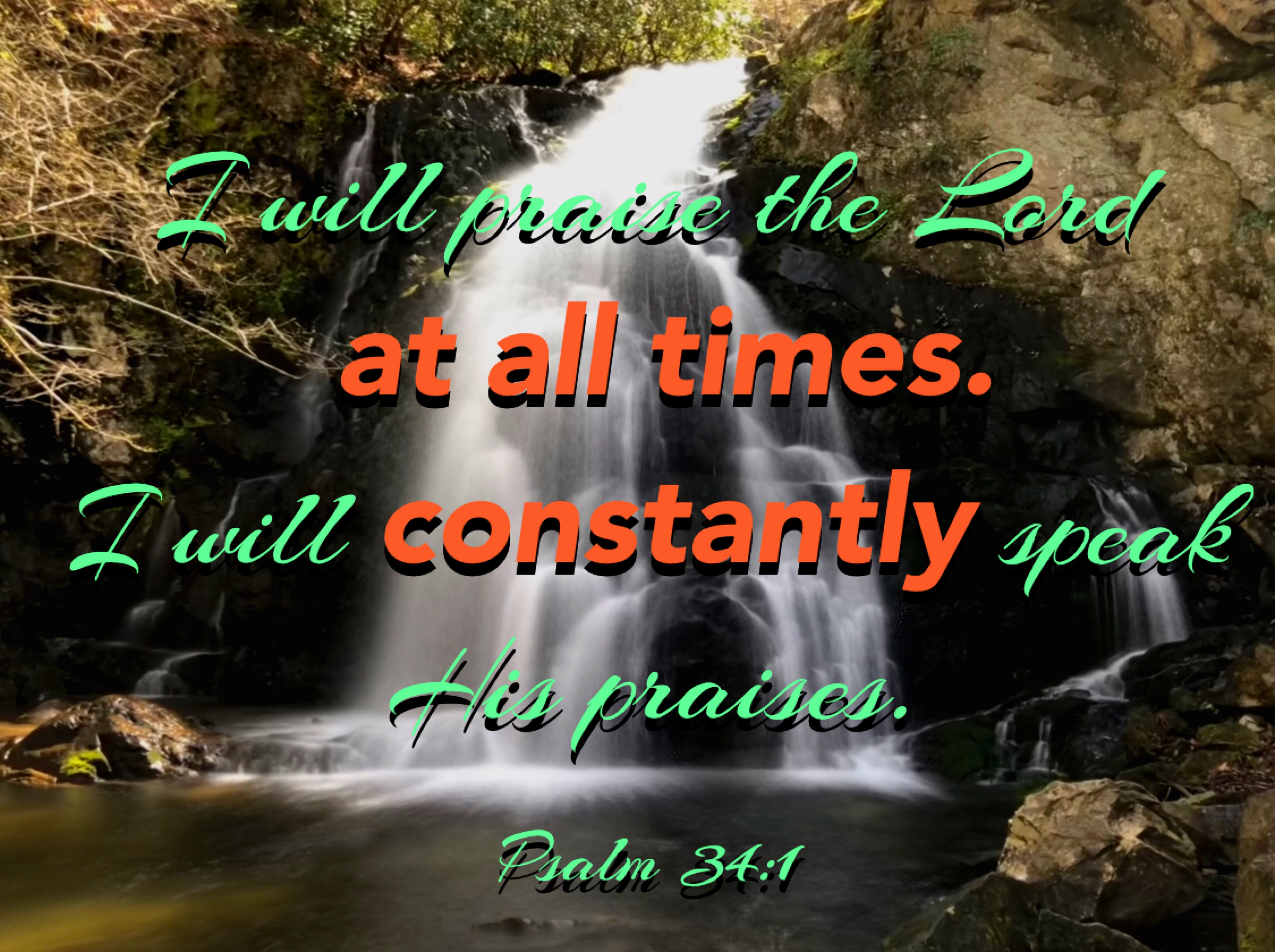
I will praise the Lord at all times. I will constantly speak His praises. I will boast only in the Lord.

David said, “I’m not really feelin’ it, but I’m gonna praise God anyhow!”

STEP 2: Be prepared for your emotions to engage.

My soul will boast in the LORD.

The soul is the seat of the emotions. It started off as an act of David’s will, but then it got down into his soul and he started feelin’ it.

STEP 3: Become an encouragement to others.

Let all who are helpless take heart. Come, let us tell of the Lord’s greatness; let us exalt His name together.

When David used his will to praise God, other helpless, hurting people began to join in. Soon it was a choir of praise!

You may not be feelin’ it, but if you’ll just use your will to praise God, you will begin to feel better, and you’ll help others to feel it as well.

Anger That Crosses The Line

Last night in our Bible study we looked at some words that David penned when he was angry. He was on the run from his son Absalom, and it seemed like everywhere he turned people were after him, or slandering him, or just doing their best to make him miserable. Yet in two back-to-back Psalms David says, “I lay down every evening and get a great night of rest.”

His sweet sleep comes from a moment of reflection before dozing off. He says:

In your anger do not sin; when you are on your beds, search your hearts and be silent. Selah.

  • Did my anger today cross the line into sin?
  • Am I allowing the time for the Holy Spirit to search my heart?
  • When the Holy Spirit points out where my anger crossed the line, do I justify my anger, or am I silent?

How do we know if our anger has not crossed that line and become sin?

Aristotle wrote, “Anybody can become angry—that is easy; but to be angry with the right person, and to the right degree, and at the right time, and for the right purpose, and in the right way—that is not within everybody’s power and is not easy.”

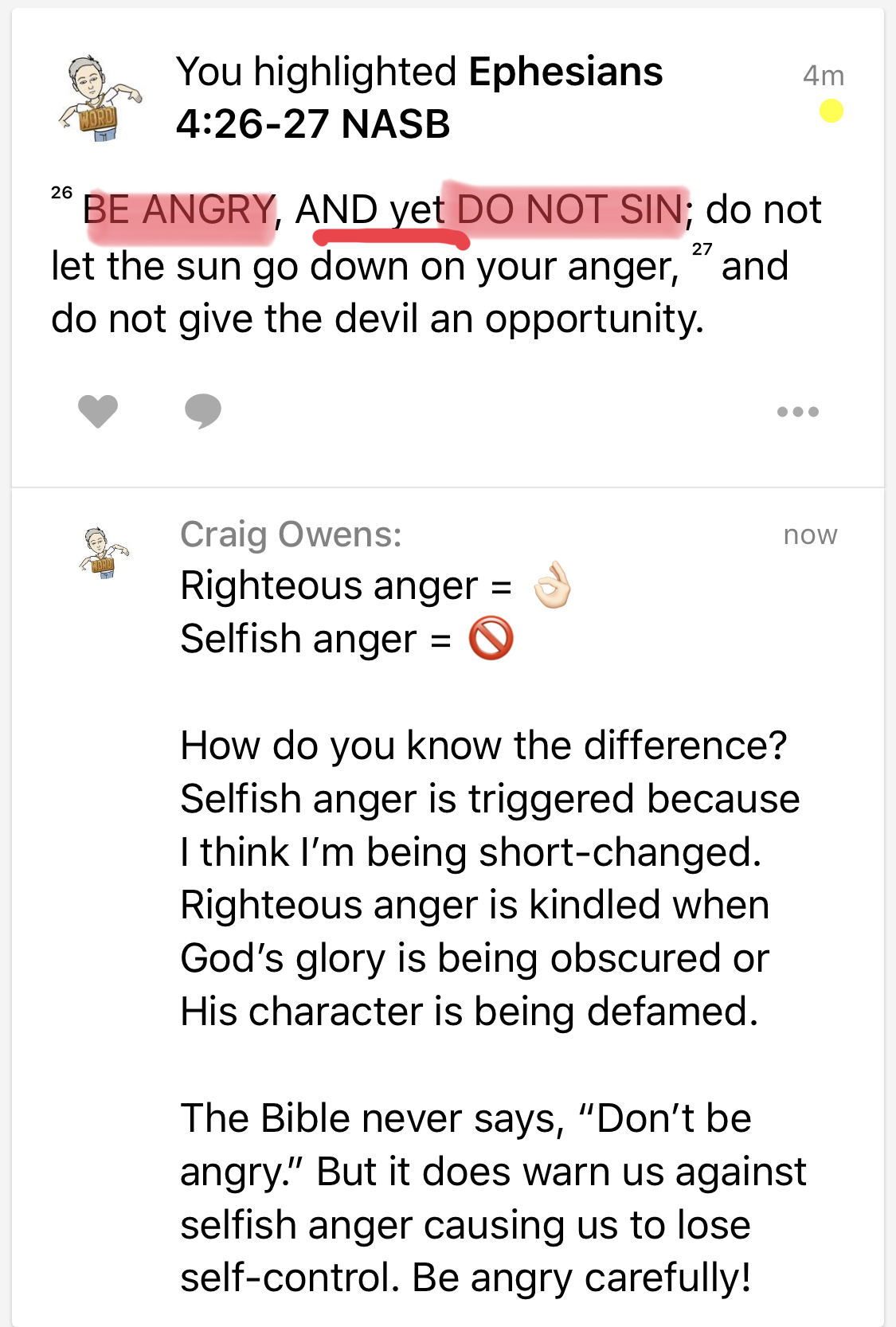
Being angry is not the issue. David said it (and Paul quoted it in Ephesians 4:26): “Be angry; just don’t sin.” God gets angry, but He does not sin. Jesus, in His public ministry, got angry, but He did not sin. We need to search our hearts to make sure our anger has not crossed the line to sin. We have to be angry in a godly way.

I see at least four ways to become angry without crossing the line into sin:

1.  Selfless Anger = anger at sin, but not angry at the sinner.

Love is not rude, it is not self-seeking, it is not easily angered, it keeps no record of wrongs. Love does not delight in evil but rejoices with the truth. (1 Corinthians 13:5, 6)

2.  Slow Anger = lengthen your fuse a bit.

Do not be quickly provoked in your spirit, for anger resides in the lap of fools. (Ecclesiastes 7:9)

My dear brothers, take note of this: Everyone should be quick to listen, slow to speak and slow to become angry, for man’s anger does not bring about the righteous life that God desires. (James 1:19, 20)

Good advice from Thomas Jefferson: “When angry, count to ten before you speak; if very angry, a hundred.”

3.  Protective Anger = when sinners entice others to join them in their sin. God is sad when people leave Him; He is angry at them when they take others with them.

But they put God to the test and rebelled against the Most High; they did not keep His statutes. Like their fathers they were disloyal and faithless, as unreliable as a faulty bow. They angered Him with their high places; they aroused His jealousy with their idols. When God heard them, He was very angry; He rejected Israel completely. (Psalm 78:56-59)

4.  Righteous Anger = against those who are keeping others from coming closer to God.

For I endure scorn for Your sake, and shame covers my face. I am a stranger to my brothers, an alien to my own mother’s sons; for zeal for Your house consumes me, and the insults of those who insult You fall on me. (Psalm 69:7-9)

This verse was recalled by Jesus’ disciples when they saw Him get angry and clear out the Temple in Jerusalem. Jesus was angry because of the religious clutter that was keeping God’s house from being a house of prayer for all nations.

I think everyone is familiar with the acrostic WWJD = What Would Jesus Do?

I’d like to propose something similar: WGGA = Would God Get Angry?

This is a great question to ask to make sure our anger does not cross that line into sin. Get angry—in a godly way—and do not sin.

Standing On A Promise

Just before Joshua’s farewell address to the Israelites, he makes one final comment to sum up the whole campaign that secured Israel’s borders—

Not one of all the Lord’s good promises to the house of Israel failed; every one was fulfilled.

Every one.

You can trust God! You can stand on His promises. They will not fail; they will all be fulfilled.

Dr. Robert Lockyear estimates that there are 7,457 promises of God in the Bible!

Which one are you standing on today? Get into God’s Word, and let His promises get into you. Write them down. Memorize them. Repeat them again and again. Believe that not one of all the Lord’s good promises will fail.

Here are a few you can stand on:

  • He forgets your forgiven sins.
  • He will give you abundant life now, and eternal life later.
  • Nothing can separate you from His love.
  • All things are working together for the good for those who love God.
  • He will never leave or forsake you.
  • He will continue to develop the best in you.
  • He will never place you in a situation where you cannot stand.

(check out all of the biblical references for these promises by clicking here)

“We take away from this most precious promise, and, by refusing to take it in its fullness lose the fullness of its application and power. Then we limit God’s power to keep: we look at our frailty more than His omnipotence. Where is the line to be drawn, beyond which He is not ‘able’? Why should we pare down the promises of God to the level of what we have hitherto experienced of what God is ‘able to do,’ or even what we have thought He might be able to do for us? Why not receive God’s promises, nothing doubting, just as they stand?” —Frances Ridley Havergal

What promise are you standing on today?

The Pits

I recently finished reading two books that both have “the pits” in their title, and they both are solidly based on Scripture. But they couldn’t be more different.

Get Out Of That Pit by Beth Moore is based on three verses in Psalm 40: I waited patiently for the LORD; He turned to me and heard my cry. He lifted me out of the slimy pit, out of the mud and mire; He set my feet on a rock and gave me a firm place to stand. He put a new song in my mouth, a hymn of praise to our God. Many will see and fear and put their trust in the LORD.

Beth’s book is all about getting out of a pit. Those places we’ve slipped into, been shoved into, or keep going back to. Those things that limit our perspective on life. Those hurts that keep us from enjoying the full life Jesus wants to give us. In a word, this book is all about deliverance from a pit.

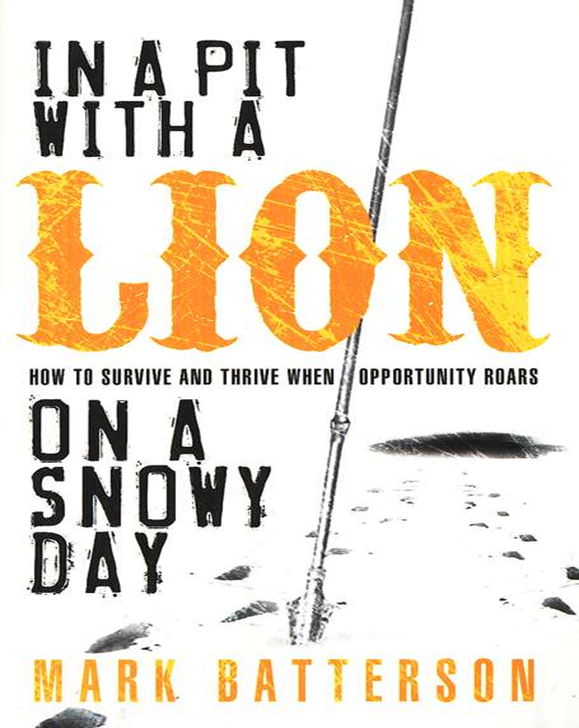
In A Pit With A Lion On A Snowy Day by Mark Batterson is based on two verses in 2 Samuel 23: Benaiah son of Jehoiada was a valiant fighter from Kabzeel, who performed great exploits. He struck down two of Moab’s best men. He also went down into a pit on a snowy day and killed a lion. And he struck down a huge Egyptian. Although the Egyptian had a spear in his hand, Benaiah went against him with a club. He snatched the spear from the Egyptian’s hand and killed him with his own spear.

Mark’s book is all about going into a pit. Benaiah was an initiator. Mark leads us through Benaiah’s life to show us that sometimes problems come as opportunities disguised as Moabite warriors or roaring lions or huge giants. And in order to live the full life God has in mind for us, we have to seize those roaring opportunities. In a word, this book is all about taking the initiative to go into a pit.

The pits can limit your life. Either you can be stuck in one, or you can be afraid to go into one. God wants you to live a victorious life. Whether you are stuck and need deliverance, or you are stuck and need initiative, these books can help awaken in you the great things God wants to do through you.

Both books have discussion questions to go along with each chapter, which makes them excellent for use as either an individual or small group study.

Ready? Go get out of that pit—or dive headlong into one—to live the full life God has for you!

Don’t Just Sit There

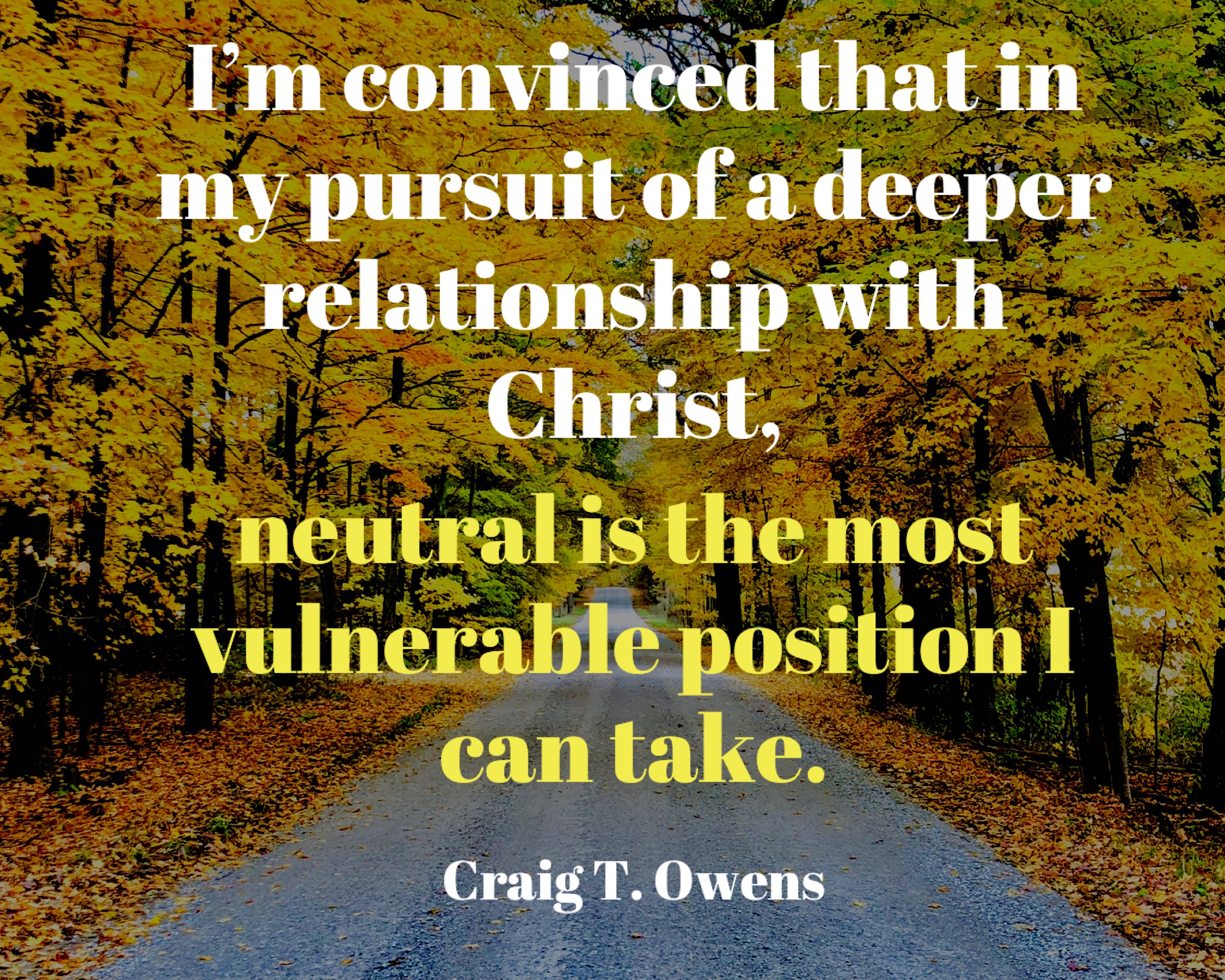
I’m convinced that in my pursuit of a deeper relationship with Christ, neutral is the most vulnerable position I can take.

I can pursue God with all I’ve got. Every day I can learn a little more what it means to love God with all my heart, with all my soul, with all my mind, and with all my strength.

Or I can make a decision that I’ve gone as far as I can in my relationship with Jesus. I can say, “I’m not willing to be stretched any further. I’m comfortable with where I am.” But when I get into this neutral position, I’m more likely to slide away from God than I am to move closer to Him. It’s hard to even stay where I was. Check this out:

BLESSED—HAPPY, fortunate, prosperous, and enviable—is the man who walks and lives not in the counsel of the ungodly—following their advice, their plans and purposes—nor stands submissive and inactive in the path where sinners walk, nor sits down to relax and rest where the scornful and the mockers gather.

It’s when I become inactive that I am vulnerable to ungodly counsel.

It’s when I sit down to relax that I can easily slip into the cynical banter of the scornful.

If I want to avoid the downward slide away from God, I can’t just sit still. I’ve got to be actively, passionately, wholeheartedly moving toward Him. Solomon wrote:

Make your ear attentive to skillful and godly Wisdom and incline and direct your heart and mind to understanding—applying all your powers to the quest for it.

Don’t just sit there! Keep on moving closer and closer to Jesus every day.

Knowing What To Look For

On Sunday afternoon Betsy left our house to meet with our KidZone team. She had only been gone for a few minutes when she called me. “I just had to pull over to the side of the road,” she said. “It sounds like something is dragging underneath my van.”

I quickly threw my coat on and drove to meet her. Sure enough, as I pulled up behind her van I could see something hanging down. I laid down next to the van to look underneath and discovered that the band which holds up the gas tank was missing a bolt. I’m not a mechanic, but even I know that’s not a good thing!

I called a friend at church who’s got a lot of hands-on experience with cars. He said, “I’ll be right there.” He arrived quickly with a metal coat hanger, which he used to take the place of the missing bolt.

We turned around to head back to my house. Jeff was in front of me and had only driven about 150 feet when he jammed on his brakes, pulled to the side of the road, and leaped out of his car. I then watched as he ran across the road, bent down, and picked up the missing bolt!

When we got back to my house I said, “You must have the eye of an eagle to spot a rusty bolt on wet pavement.”

“No,” he said, “I just knew what to look for.”

In Genesis 45, Joseph reveals himself to his brothers. Twice he tells them, “Don’t be afraid. God sent me here.”

“Wait a minute,” you might protest, “God sent him to Egypt?! I thought his brothers sold him as a slave. God put Joseph in the position as prime minister of Egypt?! I thought his special dream-interpreting skills did that.”

Joseph went from a prince in Jacob’s family, to a slave in Egypt, to comptroller of Potiphar’s affairs, to a falsely-accused rapist, to a prisoner, to a prison trustee, to a forgotten man, to Pharaoh’s dream interpreter, to Egypt’s prime minister.

Joseph knew what to look for along the way. He knew God had given him a direction for his life, so he was constantly looking for it.

Prayer does this for me, too. I may know verses like…

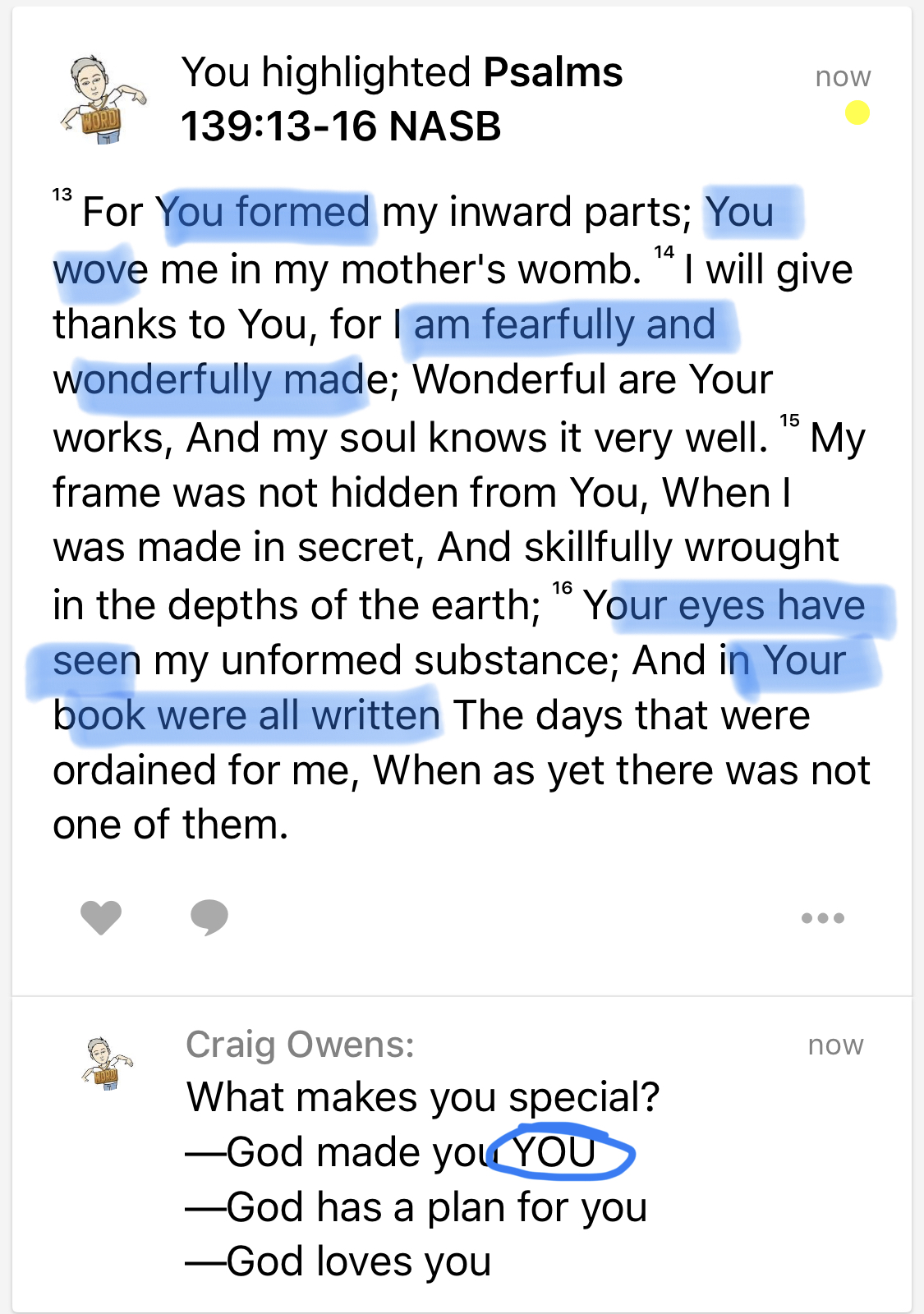
  • I am fearfully and wonderfully made.
  • Before I was born, God knew me.
  • All things are working together for good for me because I love God and called me for a purpose.
  • I should rejoice in my trials because God is developing something in me.

…but it’s only when I’m praying these verses that the Holy Spirit trains my eyes to know what to look for.

God was placing Joseph and preparing Joseph to be just where he needed to be, at just the right time, and with just the right skills.

God is doing something with me: He’s preparing me and placing me in His perfect timing to fulfill His perfect plan. When it seems my life has become derailed, I need to know what to look for. Prayer does this: Prayer trains my heart and my mind and my eyes to know what to look for.

I can also assuredly tell you that God is doing something with YOU: He’s preparing YOU and placing YOU in His perfect timing to fulfill His perfect plan. Prayer will help you know what to look for too.

Rats In My Cellar

We started our Love To The Fourth Power series yesterday morning, looking at what it means to Love God with all your heart… and to love your neighbor the same way. As usual, I’m speaking more to myself than I am to our congregation. During my study time, the Holy Spirit usually does a number on me!

So here’s the recap from yesterday:

  • Loving actions are fine, but loving REactions are more important.
  • The way I REact may say more about my love-with-all-my-heart level than the way I act.
  • In order to know if my REaction is compassion, I have to take the time to reflect on my REactions.

I love this picturesque quote from C.S. Lewis:

“When I come to my evening prayers and try to reckon up the sins of the day, nine times out of ten the most obvious one is some sin against charity; I have sulked or snapped or sneered or snubbed or stormed. And the excuse that immediately springs to mind is that the provocation was so sudden or unexpected. I was caught off my guard, I had not time to collect myself…. Surely what a man does when he is taken off guard is the best evidence of what sort of man he is. Surely what pops out before the man has time to put on a disguise is the truth. If there are rats in the cellar you are most likely to see them if you go in very suddenly. But the suddenness did not create the rats; it only prevents them from hiding. In the same way, the suddenness of the provocation does not make me an ill-tempered man: it only shows what an ill-tempered man I am….”

I’m working on looking for the rats in my cellar without making any excuses for how they got there. I just want the Holy Spirit to reveal them and help me eliminate them.

I want my REaction to be compassion all the time.

The Power Of -Ing

Have you ever heard someone say something like:

  • “Wow, look at her. She arrived in style!”
  • “I think I’ve finally arrived.”

This is weird because arriving implies stopping. When I’m driving to the store and I arrive at the store, I don’t keep on driving; I stop at the store. That’s the whole reason I left my house in the first place.

So when we talk about people arriving, do we really mean that they are supposed to stop and park? Correct me on this, but I think the only time we stop in life is when life stops. In other words: We’re dead!

We don’t really want to arrive, do we? We want to hit goals and then keep on going. We want to keep on “ing”ing. Here’s how I’m trying to leverage the power of ing:

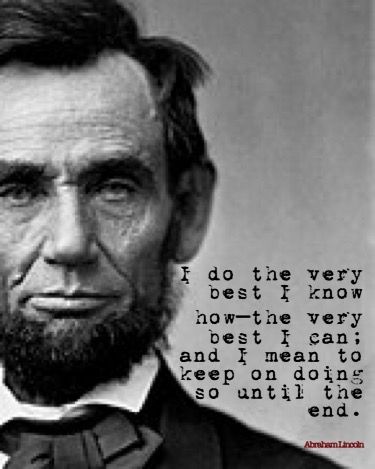
I love the words of Abraham Lincoln, who knew the power of ing:

“I do the very best I know how—the very best I can; and I mean to keep on doing so until the end.”

Don’t arrive. Don’t stop. Keep on “ing”ing the right things—God’s things—and see how God will bless your efforts. There is an incredible power in ing!