Unexpected Praise

Well, this isn’t what I expected! David says his song in Psalm 9 is supposed to be sung to the tune of “Death Of The Son,” so I’m expecting a prayer that is loaded with minor notes. But instead, David gives us … this! 

The opening verses show us David exploding in praise to God. Check out his vocabulary—

  • I will praise You—this literally means David is pumping his hands in the air
  • I will tell of all Your wonders—David is not doing this just one time but is ticking off a long list of God’s praiseworthy deeds and attributes
  • I will be glad—his face lights up with joy 
  • I will rejoice—this word means a roar of praise (see 1 Chronicles 16:32)
  • I will sing praise—there is a new melody with every praise David lifts to God

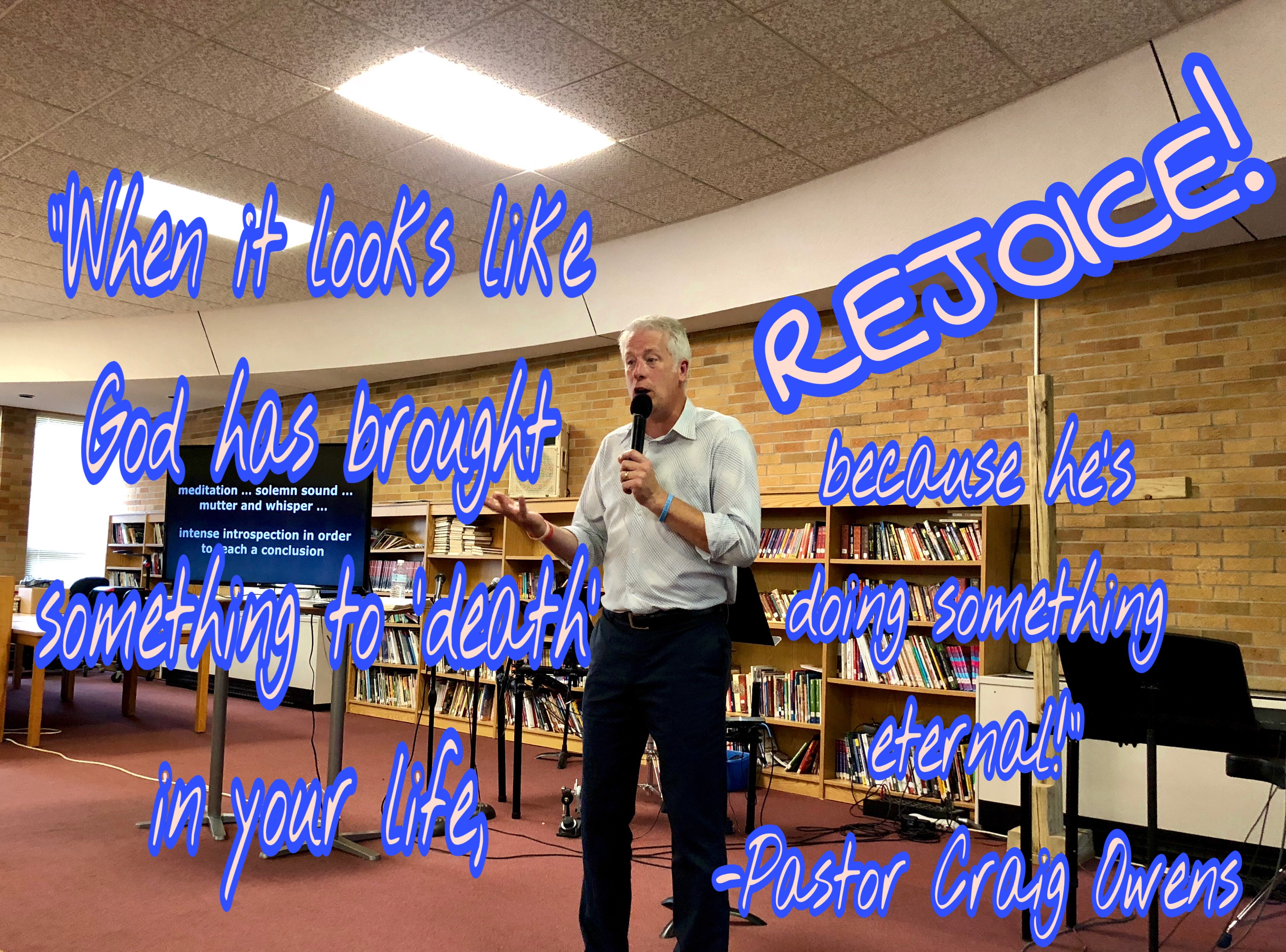
Why this loud, exuberant, unexpected praise? Because David has noticed that whatever has “died” on earth is only a temporary loss, but God is forever! 

There is an unusual word pairing at the end of verse 16: Haggaion and Selah. This is the only time these two words appear like this in all of Scripture, and it’s also the only time Haggaion is used without being translated. 

Haggaion appears just four times in the Bible—(a) in Psalm 19:14 where it is translated meditation; (b) in Psalm 92:3 where it is translated solemn sound; (c) in Lamentations 3:62 where it is translated whisper and mutter; and (d) here in Psalm 9 where it is untranslated. 

By combining Haggaion and Selah, David is wanting us to solemnly meditate on an important contrast: God’s way vs. man’s way. In verses 3-16, David uses huge and eternal terms for God like righteous Judge, reigns forever, refuge, stronghold, merciful, and prayer-answerer. 

Side-by-side with these eternal terms for God, David lists the temporary terms for man like stumble, perish, ruined, forgotten, and trapped. In fact, David ends this Psalm by reminding us evil men who do evil things are “mere men.” Other translations fill in the details: 

  • make them realize their frail nature (AMP)
  • show them how silly they look (MSG)
  • merely human (NLT) 
  • puny men (TLB)

Then David ends with a final Selah—one more call for us to allow this message to resonate with us, especially during the times others may call dark, depressing times. The message that should resonate in our hearts and cause us to throw our hands up in joyful celebration of God is…

these earthly things are temporary and God is eternal. He has never forsaken those who seek Him, and He has never forgotten those who call on Him for help. 

When a dark time—a “death of a son”—tries to rock your world, don’t do what puny mortals expect, but throw your hands up in the air, and sing and roar a praise to the Almighty God Who cares for you! 

Join me this coming Sunday as we continue our looks at the Selahs in the Book of Psalms. You can join me in person or on Facebook Live.

God Is The Sun

John Piper said, “We were made to live with God as the all-satisfying center of our lives, with everything else in good, godly, happy orbit. Instead, we have a solar system with competing gravitational centers, and nothing else flying in its right orbit.” 

In Psalm 16:11 David wrote, “In Your presence there is fullness of joy; at Your right hand are pleasures forevermore.” Lasting joy and guilt-free pleasure are found in God’s presence. If He is the “sun” of our universe, everything else stays in its proper “orbit.” How do we make sure God is our sun? The first phrase in Psalm 16:11 is the key: “You make known to me the path of life.”

Did you catch that? Not only is God the sun-center of our universe, but He tells us when our sun-center has become (or is becoming) something other than Himself. That’s why David also prayed, “Search me, O God,” and why Paul told us to regularly examine ourselves.

The Holy Spirit will keep us properly centered and in the place of ultimate joy!

Grudges Can Block God’s Blessings

In Psalm 7, some guy named Cush is giving David trouble. How much trouble? David felt like Cush was a lion about to rip him apart! 

We would naturally expect David to cry out for God’s help from this tormentor (which he does in the opening verses), but then what David does next is quite unexpected—he asks to God to search his heart to see if he might be the cause for Cush’s attack: 

  • Have I done something wrong?
  • Is there guilt on my hands?
  • Have I done such an evil to cause him to attack? 
  • Have I somehow robbed Cush of something? 

This introspection in God’s presence was apparently a regular habit for David. He made this a regular habit when the heat was on, and also when he was at peace (see Psalm 139:23-24). 

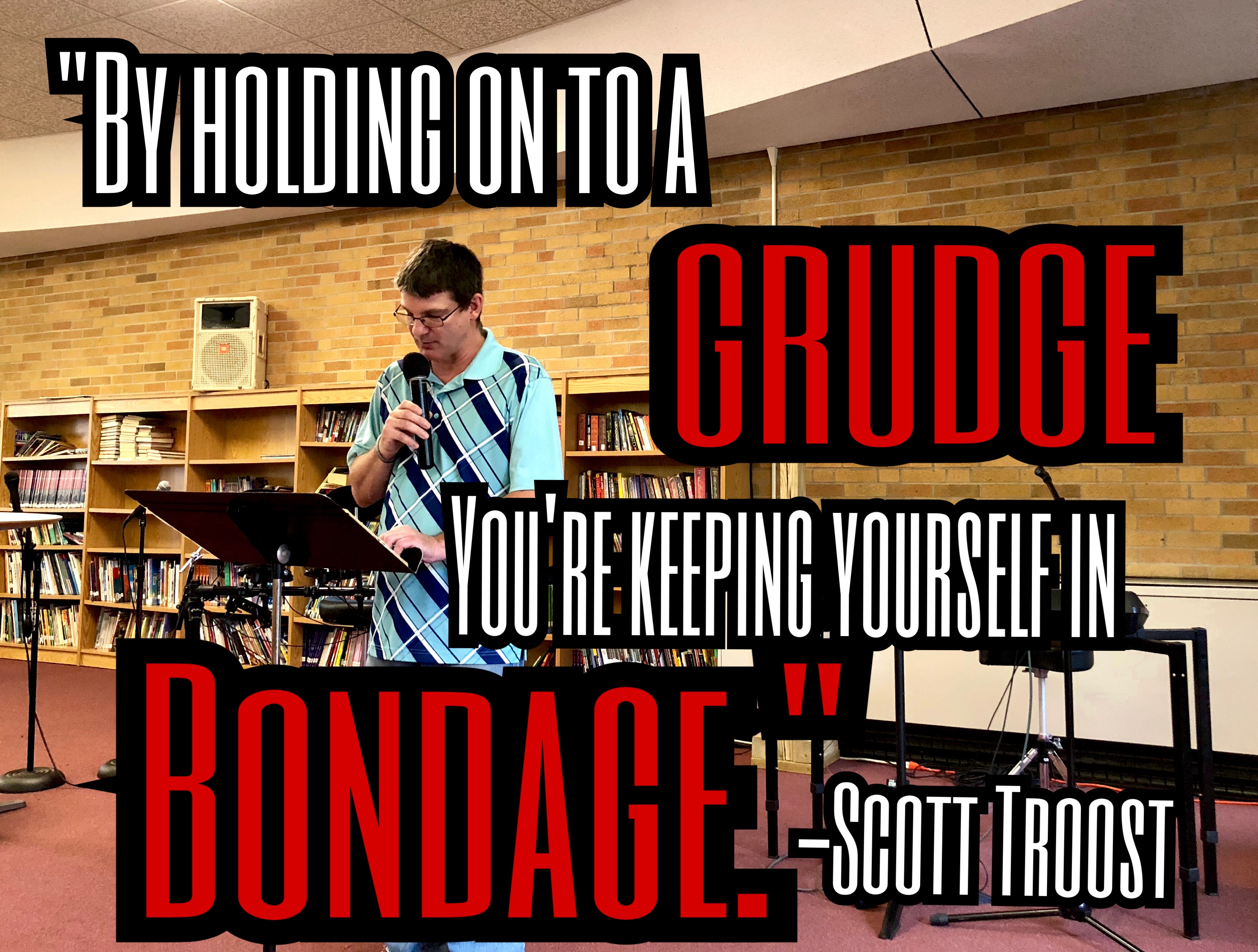
Not only did David want to make sure his hands were clean, but he also wanted to make sure he wasn’t carrying a grudge against Cush. A grudge is a feeling of anger or resentment toward someone who has wronged us. But the most devastating thing about a grudge is that it takes our eyes off God and places them on our tormentor. 

In other words, as long as we hold a grudge, we continue to give our tormentor power over our lives. 

So after asking those introspective questions, David writes Selah. One definition of this word—which is probably quite appropriate here—is pause, and calmly think of that. 

After this Selah pause of introspection in God’s presence, David must have felt clear of any guilt (because we don’t see him repenting, as is his habit), but we also see him being very careful of not holding on to a grudge against Cush. 

David then begins to affirm in the remaining verses that God is more than capable of handling evil people and keeping the righteous protected. David determines that he will give thanks to the Lord because of His righteousness, and will sing praise to the name of the Most High (v. 17). 

Here’s an important thing for anyone who has been injured by someone else to remember—

By holding on to a grudge, you’re holding yourself in bondage! 

How can your hands be free to receive God’s blessings if your hands are full of the grudges you are holding? 

Learn from David’s Selah these two lessons when someone torments you: 

  1. Ask God: am I to blame? If so, repent. If not, ask question 2.
  2. Ask God: am I holding on to a grudge? If so, let it go so your hands are free to receive God’s blessings! 

Join me next Sunday as we continue our look at the Selahs in the Psalms. 

The Selah That Keeps Us From Sinning

There is a very natural emotion that we humans have when someone has hurt us, but if we don’t pause (Selah), that natural emotion can lead us into sin. David has good counsel for angry people in Psalm 4. 

Many scholars think that Psalm 4 is a continuation—or a part 2—of Psalm 3. As you will notice in the preface of Psalm 3, David is on the run from his son Absalom, who is trying to steal the kingdom of Israel from him. 

Look at the swing of David’s emotions:

  • Troubled/sad (v. 1) 
  • Anger (v. 4)
  • Contentment (v. 7)
  • Peace (v. 8)

The first time David tells his readers to Selah pause is between verses 2 and 3. The change is almost an about-face: 

Look at this: look who got picked by God! He listens the split second I call to Him. Complain if you must, but don’t lash out. Keep your mouth shut, and let your heart do the talking. Build your case before God and wait for His verdict (vv. 3-5 in The Message). 

My friend Josh Schram shared these truths: 

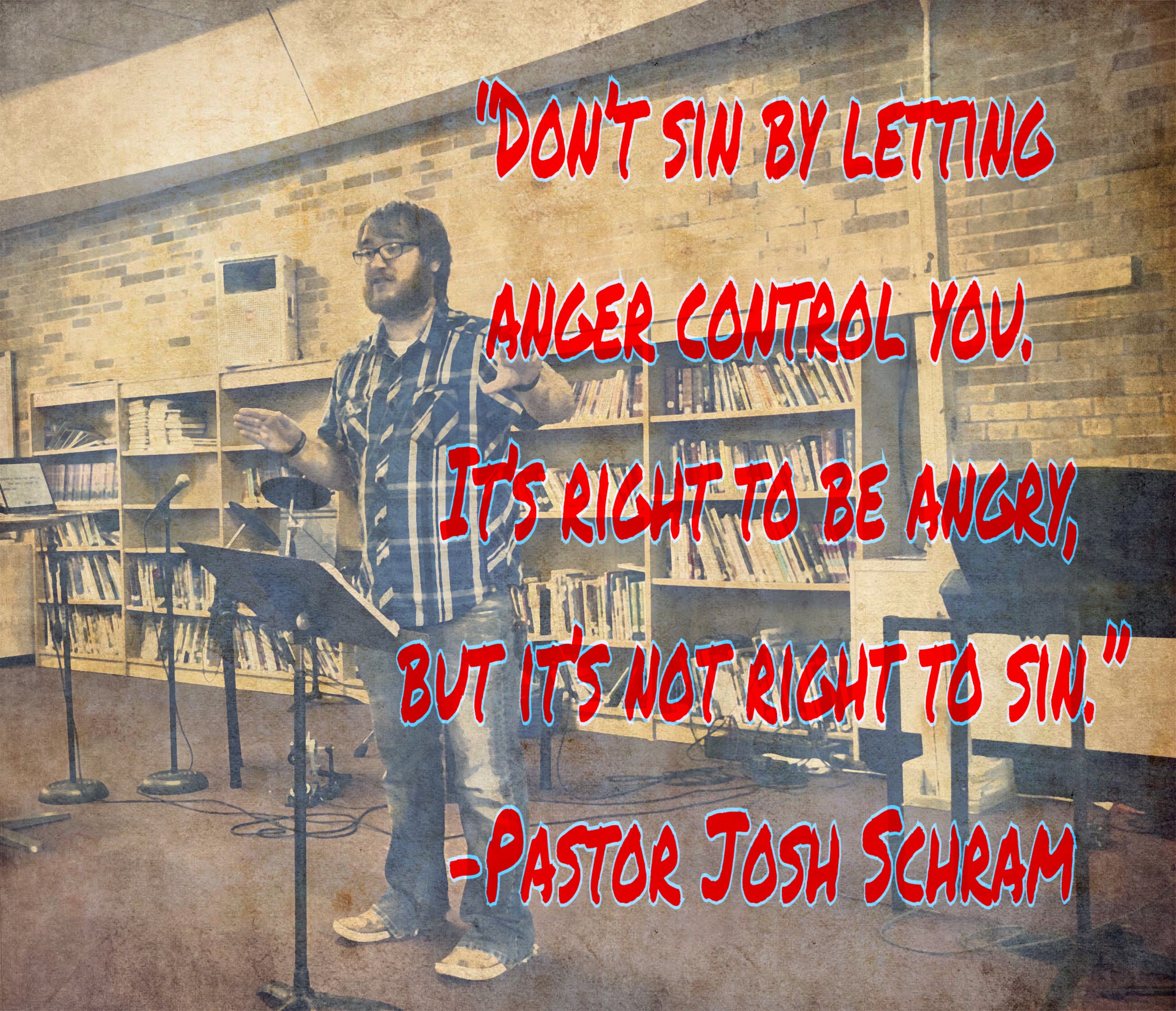
  1. Don’t sin by letting anger control you. 
  2. It’s right to be angry, but it’s not right to sin. 
  3. When someone hurts us, it’s tempting to break God’s law. We can almost justify it, but it is a sin to give in to anger. 

“Search your heart and be silent”Selah. This pause gives us hope that we can “build your case before God and wait for His verdict.” 

In Romans 12:17-21, Paul gives similar counsel when dealing with enemies:  As far as it depends on you…

  • Don’t repay evil for evil. 
  • Do repay evil with doing what’s right. 
  • Don’t take revenge. 
  • Do let God handle it. 
  • Don’t mistreat your enemies. 
  • Do bless your enemies. 
  • Don’t be overcome by evil. 
  • Do overcome evil by doing good. 

Since David let his anger go, that also means he didn’t sin! His clear conscience meant he could lie down and sleep in peace. 

You cannot hold a grudge and peace in the same heart. 

Please join me next week as we continue our look at the Selahs in the Book of Psalms. 

The Blessing Of Quiet Humility

“When you’re full of yourself, God can’t fill you. But when you empty yourself, God has a useful vessel. Your Bible overflows with examples of those who did.

“In his gospel, Matthew mentions his own name only twice. Both times he calls himself a tax collector. In his list of apostles, he assigns himself the eighth spot.

John doesn’t even mention his name in his gospel. The twenty appearances of ‘John’ all refer to the Baptist. John the apostle simply calls himself ‘the other disciple’ or the ‘disciple whom Jesus loved.’

Luke wrote two of the most important books in the Bible but never once penned his own name.

Paul, the Bible’s most prolific author, referred to himself as ‘a fool’ (2 Corinthians 12:11).

King David wrote no psalm celebrating his victory over Goliath. But he wrote a public poem of penitence confessing his sin with Bathsheba (see Psalm 51).

“And then there is Joseph. The quiet father of Jesus. Rather than make a name for himself, he made a home for Christ. And because he did, a great reward came his way. ‘He called His name Jesus’ (Matthew 1:25).” —Max Lucado, in You!

Check out my book review of You! by clicking here, and you can read some other quotes from this book here.

Argument Vs. Experience

There is a curious word that shows up about 70 times in the Bible (almost all of them in the Psalms)—Selah. The best scholars can figure is that this word has some sort of musical meaning: 

  1. Pause / Interlude—to rest in silence. This might even be where the singers stopped while the music continued. 
  1. Accentuation—to lift up or exalt; as in the renewed vigor of the singer or musician after pausing for a deep breath. 
  1. Consideration—the root word for Selah means to weigh on a balance, with the idea of despising the things that are light or trivial, and valuing the things that carry weight or substance. The Amplified Bible uses the phrase “pause and calmly think of that.” 

All three are valid definitions, and all three are used in the Psalms. I think the context of the Psalm makes it clear which one is meant. Sometimes more than one meaning is implied, and sometimes all three meanings are implied. 

Selah first shows up in Psalm 3. This is also one of the few psalms that uses Selah multiple times. We also get a clue to the context in the introduction: A psalm of David. When he fled from his son Absalom [see 2 Samuel 15]. 

David has a lot of enemies ganging up on him? The Message says, “enemies past counting!” And David laments that his enemies are whispering something very negative: “There is no God” or “God is too disinterested or weak to help you” or “You don’t deserve to have God’s help.” 

In the midst of this noise, David pens his first  SELAH—David needs a pause. The enemies past counting have got his thoughts swirling. He needs to pause and calmly think: “I KNOW God can and will help me because He has already helped me in the past. You may have your arguments and reasons, but I have my personal experience with God!” 

Notice the very next word: But (v. 3). You ARE [not were or will be] a shield around me…. To the Lord I CRY aloud [not I used to cry or I will cry], and He ANSWERS [not He answered or He will answer] me… (v. 4).

The second SELAH (v. 4) is the renewed vigor after the pause. The Message says, His answers thunder from the holy mountain. This corresponds with what David wrote when God delivered him previously (see Psalm 18:4-13). Then in the next four verses, David lists all the blessings that come when God answers: 

    • sleep 
    • sustaining power 
    • no fear of the tens of thousands on every side
    • deliverance
    • retribution for enemies 
    • God’s blessing—Real help comes from God. Your blessing clothes Your people! (v. 8 in MSG) 

David concludes this psalm with one final SELAH (v. 8)—to weigh on a balance. On one side: accusations and threats (only words). On the other side: personal experience of past deliverance and confident assurance of God’s present presence and rock-solid hope in God’s future grace. Pause and calmly consider those scales: which side are you on? Do you have only words, or do you have personal experience? 

The one with an experience with God is NEVER at the mercy of the one with only an argument against God. 

Join me next Sunday as we continue our look at the Selahs in the Book of Psalms. You can join me in person or on Facebook Live. 
Knitted Together

“‘Knitted together’ is how the psalmist described the process of God making man [Psalm 139:13]. Not manufactured or mass-produced, but knitted. Each thread of personality tenderly intertwined. Each string of temperament deliberately selected.

God as Creator. Pensive. Excited. Inventive.

An Artist, brush on pallet, seeking the perfect shade.

A Composer, fingers on keyboard, listening for the exact cord.

A Poet, pen poised on paper, awaiting the precise word.

The Creator, the Master Weaver, threading together the soul.

Each one different. No two alike. None identical.” —Max Lucado, in You!

(Check out my review of You! by clicking here. You can also read some other inspiring quotes from this book here.)

God’s Gift To The World

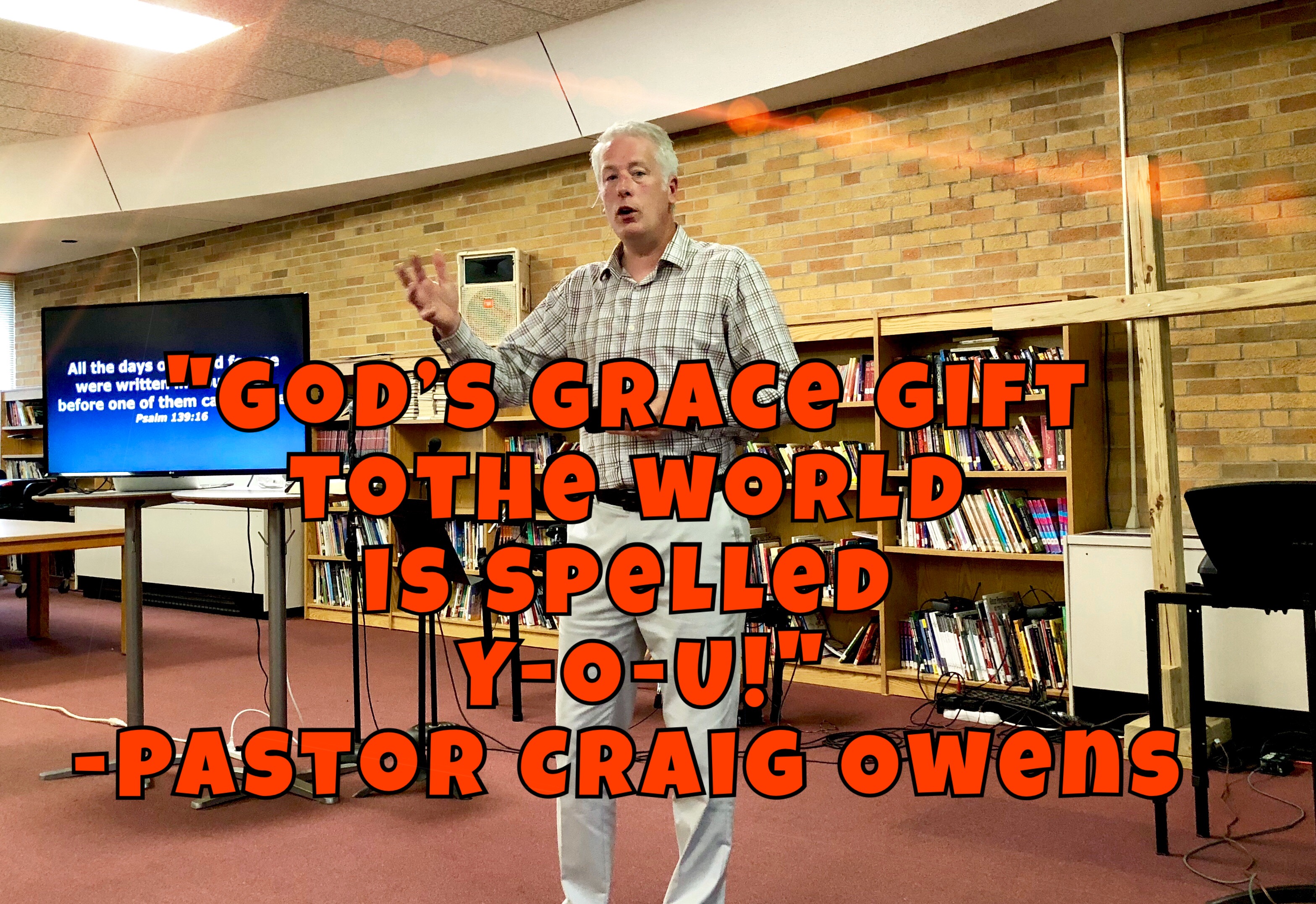
You are a gift. You are God’s grace gift to the world. 

Max Lucado said it this way: “You are you-nique. 

God made you on purpose and for a purpose.

God implanted unique abilities in you from conception (see Psalm 139:13). And check out what God said to Jeremiah, “Before I formed you in the womb I knew and approved of you…” (Jeremiah 1:5). Before you were even conceived, God already knew all about you AND He approved of you! 

Why did God implant these unique abilities in you? Because He knew of the unique opportunities you would face during your lifetime (see Psalm 139:16). Because God is for you, He gave you all that you would need to successfully face every opportunity that came your way. 

Every one of us has been given these grace gifts of unique talents and opportunities. The Bible says, “to each one of us grace has been given as Christ apportioned it” (Ephesians 4:7). If God is for you, and God is for me, then that means that you have been gifted to be a blessing to me and I have been gifted to be a blessing to you (Romans 12:3-6; 1 Corinthians 12:4-7).

Let me state it again: every one of us has been entrusted by God with unique talents in order to successfully face the unique opportunities that He knew we would face. Jon Bloom reminds us, “Some are given more, some are given less, but all are given much.” 

So what do we do with what we’ve been entrusted? There are two possibilities: (1) We can invest our talents and abilities in a way that glorifies God, or (2) We can squander the talents God has given us. 

How do you squander the grace gift of your life? 

  1. Not discovering it—I have a gift?
  2. Devaluing it—I’m nothing special.
  3. Overvaluing it—I’m super-important. I don’t need anyone else.
  4. Laziness—I don’t want to mess it up, so there’s no need for me to invest my gift.
  5. Short-sightedness—My gift is just for me, so it doesn’t matter what I do with it.

I hope we can all say what Erma Bombeck wrote: “When I stand before God at the end of my life, I would hope that I would not have a single bit of talent left but could say, ‘I used everything You gave me.’”

How do you honor God with your you-niqueness? I can tell you in just three simple words—You be you! 

If you will just be who God made you—not downplaying your talents, not wishing you had someone else’s talents—that’s when you will feel fulfilled, and God will be glorified, and the rest of the world will be blessed! So…

YOU BE YOU! 

The Integrity Of A Godly Leader

I will instruct you and teach you in the way you should go; I will guide you with My eye. (Psalm 32:8)

“God does not expect leaders to be perfect, but to be whole. To have integrity means to be whole, as in a whole number (an ‘integer’). Despite their human frailties, leaders can effectively guide those who follow.

“This Scripture reminds us that leaders must closely observe the flock for its needs and problems. God expects spiritual leaders to serve as guides. A guide takes a person or group safely to a planned destination. The Hebrew words for ‘guide’ gives us several clues as to what God expects from those He uses as leaders:

  • A guide is a spiritual head who unites and directs people in their walk with God.
  • A guide takes people on the straight path that leads to fellowship with God.
  • A guide gives accurate and godly counsel to those who need it.
  • A guide leads with gentleness and trustworthiness, making others feel safe.
  • A guide bases his or her direction on the Spirit and the Word of God.” —John Maxwell, in The Maxwell Leadership Bible

Having Conversations With Yourself

Why are you cast down, O my soul…? (Psalm 42:5, 11). 

There can be no healing if there isn’t first an admission of need. 

This psalmist recognizes: 

  • the dryness of his soul
  • his depression
  • the taunts of his enemies
  • the ‘good ol’ days’ 

He not only questions his soul, but he admits to himself and to God, “My soul is cast down within me.” But each time he has this conversation with himself, he reminds himself of the same conclusion—“God is worthy of praise and I can put my hope in Him!” 

We have to stop listening to crippling self-pity and begin talking to ourselves about our well-placed confidence in God. He is worthy of our praise! He will satisfy me like nothing else can. He is the only One in whom I can put my hope. 

As Augustine reminded himself, “Thou hast formed us for Thyself, and our hearts are restless till they find rest in Thee.”

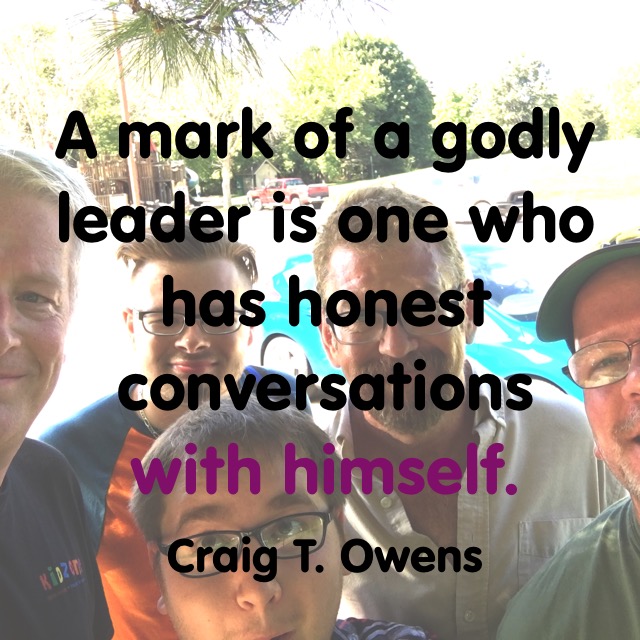
A mark of a godly leader is one who has honest conversations with himself. 

Don’t listen to your downcast thoughts; talk back to your downcast thoughts and tell yourself the only place where real hope can be found. 

This is part 23 in my series on godly leadership. You can check out all of my posts on this topic by clicking here.