Links & Quotes

God gave us a Book (the Bible) that tells us all we need to know about praying.

I have a lot of new video content on my YouTube channel every week. Please check it out and subscribe so you don’t miss anything.

T.M. is beginning a series on the ministry of the apostle Paul. He writes, “Paul was able to accomplish great things against great odds not because he was such an enthralling preacher (he was not) or had so many resources to invest in his work (he did not), but because he had such great confidence in his message and his Lord.” Check out this series.
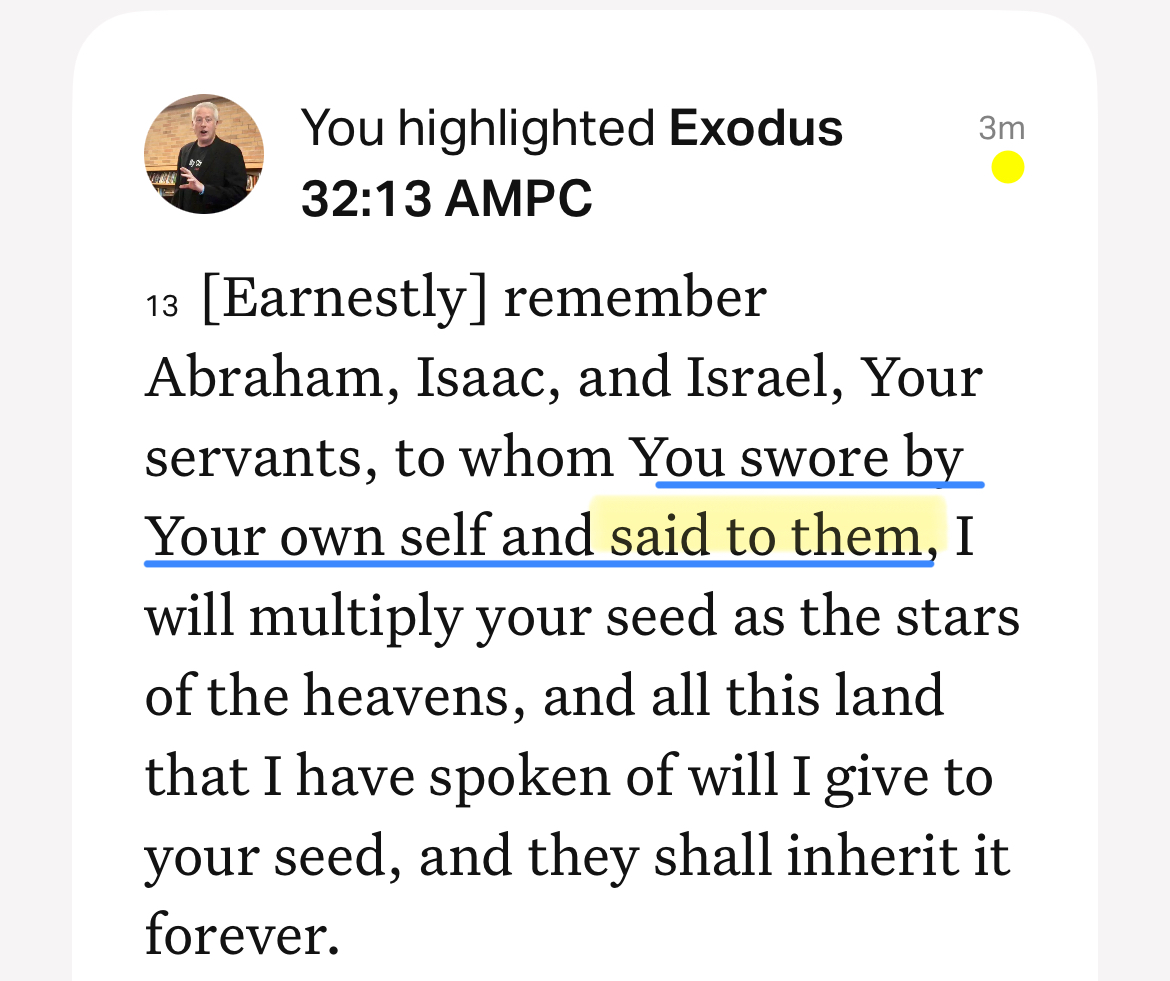
As a father, it always got my attention when my kids would remind me, “Dad, you said….” Not that God ever forgets anything He has promised, but when He hears Moses say, “You swore by Your own self and said to them,” He is pleased because this means that Moses is banking his faith on God’s unchangeable word. Let’s follow this example from Moses and use God’s Word to form our prayers to Him.

The ICR reports, “If the earth is 4.6 billion years old, virtually every square inch of the Earth’s surface would experience a host of erosive events.” But the fact that paleontologists have found so many well preserved foot tracks is a testament to both the Creation and Flood accounts recorded in biblical history.

“When ‘Aunt’ Fanny Lack, a 100-year-old Hoopa Indian woman, accepted Christ and was healed in 1920, she became a local sensation on the Hoopa Indian Reservation in northern California.” This is an amazing story!

“When you hate, the only person that is suffering is you because most of the people you hate don’t know it and the rest don’t care.” —Medgar Evers

AxisCulture Translator reported, “A study from World found that 26% of respondents admitted to flirting with a chatbot or AI, either for fun or unknowingly.” I love Axis’ conclusion: “Although social media was initially pitched as a supplement to real-life social interactions, the slope from supplement to replacement is steep. This Valentine’s Day, remind your teens that although real-life relationships can be difficult, we need both the affirmation and pushback that comes with them.”

Greg Morse shares the very real danger of shepherding God’s flock. He writes, “I enlisted to teach, preach, shepherd, and guide—but also to suffer, defend, and die, if the Lord should choose. As a son with his mother, a husband with his wife, a father with his children, so a pastor with his sheep. I am to defend them against all enemies foreign and domestic—spiritual and physical.” Pastors, I encourage you to read this article.

The Best Sermons

Listen to the podcast of this post by clicking on the player below, and you can also subscribe on AppleSpotify, or Audible. 

This one is for my fellow pastors. I want to give you THE question to ask to help you in crafting the most applicable and memorable sermons. 

It’s a question that Paul asks in Romans 4: “What does the Scripture say?” (v. 3). Preachers must make sure they get their ideas from the text of the Bible, not just from their own good ideas. Look at this amazing example from Paul in just this one chapter of his letter to the saints at Rome. 

He starts off with a question: “What then shall we say?” (v. 1). 

Then he answers his question with another question: “What does the Scripture say?” and he proceeds to give his answer by quoting from the Book of Genesis. 

From this, Paul makes a conclusion in vv. 4-5 that is signaled by the word “Now…”. 

In order to support his conclusion, Paul then quotes from Psalm 32: “David says the same thing” (vv. 6-8).

Next Paul alternates between questions and answers in vv. 9-12, bringing this Q&A to a logical conclusion in vv. 13-16. 

He supports his conclusion with even more Scripture: “As it is written” (v. 17), and “Just as it had been said” (v. 18). 

Finally, Paul wraps up this part of his sermon by both quoting more Scripture (vv. 22-23) and then reminding his audience, “The words ‘it was credited to him’ were written not for him alone, but also for us” (vv. 23-24). This shows that God’s words weren’t just for Abraham, nor just for Paul’s audience, but for anyone reading the Scripture today.

This is a short, masterful, and powerful sermon! Why? Simply because it is totally banked on God’s timeless words. 

The way that preachers can design THE perfect sermon—that is both applicable and memorable—is to start with the same question Paul did: “What does the Scripture say?” 

►► Would you please prayerfully consider supporting this ministry? My Patreon supporters get behind-the-scenes access to exclusive materials. ◀︎◀︎

Links & Quotes

Leaders need to give others confidence to try something new. We need to help people get moving so that we can coach what they are doing. For more great leadership insights, check out The Craig and Greg Show.

I have lots of new content every week, which you can check out on my YouTube channel.

A couple of thought-worthy quotes for pastors. First from David Mathis: “Pastors, observe that in and of itself, mocking is no clear reflection of the faithfulness or fruitfulness of preaching Christ. Wise preachers do not take mocking as an indicator of failure, nor as an indicator of success. Twice in Athens some mock Paul, which may seem like a failure compared to his homiletic triumphs elsewhere. However, others say, ‘We will hear you again.’ And then, in the end: ‘some men joined him and believed’ [Acts 17:32-34]. … How foolish it would be to distract ourselves with the mockers. Or to call special attention to the mocking as some great badge of our own faithfulness. Rather, we have the example of Paul at Mars Hill, who, so far as we can tell, wholly overlooks, with a holy disregard, these mockers and concerns himself instead with those asking honest questions.”

…and then one from John Piper: “Preaching is a happy business. Because even if the text is a hard word that devastates the hearers, the preacher connects the hard word with the gracious word and the hopeful word, and he catches them as they fall. So, in the end, all preaching is a happy business.

“A people that values its privileges above its principles soon loses both.” —Dwight D. Eisenhower

“For condemnation to work, we must say to God what the devil has said to us and believe it. If I want to stand before God with excuses that make what He said to me void, I’ll have to quote the devil to God. Does that sound like a good thing to do? God’s will for me is not to condemn me, but to liberate me from everything that holds me back from being what He created me to be through an ongoing relationship. To accomplish that, I need to do the opposite of what I used to do when I walked in condemnation. Instead of quoting to God what the devil is saying, I quote to the devil what God has said.” —Jim Wiegand, in Recruiting To Releasing 

Thinking about “how Martin Luther, a professor at Wittenberg University, helped to spark the 16th century Protestant Reformation,” J. Calvin Holsinger conceived the idea of preparing missionaries to US colleges and universities—a ministry called Chi Alpha.

Another great story from the “Here We Stand” series of biographies of notable people during the Reformation. “An attendant asked [King Henry VIII] whom he wished to have at his bedside. The king asked for Thomas [Cranmer]. By the time Cranmer arrived, King Henry was unable to speak. Foxe tells the story. ‘Then the archbishop, exhorting him to put his trust in Christ, and to call upon His mercy, desired him though he could not speak, yet to give some token with his eyes or with his hand, that he trusted in the Lord. Then the king, holding him with his hand, did wring his hand in his as hard as he could (Foxe’s Book of Martyrs, 748).’ The scene sweetly punctuates the most important friendship in the English Reformation. Whatever King Henry believed when he squeezed Cranmer’s hand that day, God used the bond between them to break England free from Roman Catholicism and to recover the one true gospel.”

The ICR reports, “Genesis claims that people in the pre-Flood world routinely attained 900-year lifespans. The best-known example is Methuselah, who had the longest recorded lifespan of 969 years (Genesis 5:27). Skeptics dismiss these great ages as fanciful legends, but recent fossil data are providing unexpected, albeit indirect, corroboration of the Bible’s testimony.” Check out this full report.

“In my experience, each failure contains the seeds of your next success—if you are willing to learn from it.” —Paul Allen, cofounder of Microsoft

Links & Quotes

Godly men honor their wives by having eyes only for them. Fellas, if you find your eyes wandering you need to tell yourself, “That’s not mine!” and then quickly put your eyes back where they belong. Check out my full message to men on Father’s Day.

I have lots of new content every week, which you can check out on my YouTube channel.

From a recent article at The Institute for Creation Research: “Astronomers using the James Webb Space Telescope have recently confirmed that two galaxies are extremely distant, with one becoming the new record holder as the most distant galaxy from Earth. … By uniformitarian reckoning, this galaxy existed just 290 million years after the supposed Big Bang, yet it looks too mature for its age. … This new record-breaker is just the latest example of the ‘distant mature galaxy problem’ that has long plagued the Big Bang model.” These galaxies are all the masterpiece of one Creator! Here is another resource from a biblical perspective that outlines what the “in the beginning” moment (Genesis 1:1) may have looked like.

“Give me the preacher who opens the folds of my heart; who accuses me, convicts me, and condemns me before God; who loves my soul too well to suffer me to go on in sin, unreproved, through fear of giving me offence; who draws the line with accuracy, between the delusions of fancy, and the impressions of grace; who pursues me from one hiding place to another, until I am driven from every refuge of lies; who gives me no rest until he sees me, with unfeigned penitence, trembling at the feet of Jesus; and then, and not till then, soothes my anguish, wipes away my tears, and comforts me with the cordials of grace.” —Samuel Pearce

Matthew Emadi writes, “The New Testament quotes Psalm 110 more than any other Old Testament passage. The apostles and the early church loved Psalm 110 for its majestic depiction of the Lord Jesus Christ and His reign over all nations.” Here’s how to read Psalm 110 in light of the words and works of Jesus.

J. Warner Wallace, at a Q&A session, answers questions about why some Bible translators have marked a couple of passages as unreliable, and why some books that claim to be authentic accounts aren’t included in the canon of Scripture. 

I always love when archeological discoveries confirm once again the historicity of the Bible! Here is an archeological biography of Esarhaddon.

“So the writer [of the Book of Hebrews] urges his readers, as part of being faithful to Him Who called them, to consider Jesus, to strive for the glory of Jesus, and to fix their minds on Jesus as the key to knowing daily strength for faithfulness (Hebrews 12:1-2). What does this entail? … The writer of Hebrews admits that he learned to look to Jesus by paying attention to those who had known Him, listening carefully to their words, and laying hold on them with faith (Hebrews 2:1-4). As he heard the apostles and studied the Scriptures of the Old Testament, the picture of Jesus presented there began to become increasingly clear. … The lesson is plain: Jesus is being revealed in the Scriptures of the Old and New Testament. Wherever we read or study in the Scripture, Jesus is present, making Himself known. We can see Jesus throughout the Bible, and consider Him as He is presented to us, in all His majesty, beauty, and power. Our responsibility is to read the Bible in such a way as to recognize what God is revealing about His Apostle and our High Priest, Jesus Christ.” —T.M. Moore

Andrew Murray On Preaching

“When the Lord chose His twelve disciples, it was ‘that they might be with Him and that He might send them out to preach’ (Mark 3:14). A life in fellowship with Him prepared them for the work of preaching. … 

“The law of their first calling remained unchanged: their unbroken fellowship with Him was the secret of their power to preach and to testify of Him. … 

“The same principle stands for all His servants, for all time: without the experience of His presence with us, our preaching has no power. The secret of our strength is the living testimony that Jesus Christ is every moment with us, inspiring, directing and strengthening us. … 

“But remember that this power is never meant to be experienced as if it were our own. It is only as Jesus Christ as a living Person dwells and works with His divine energy in our own hearts and lives that there can be power in our preaching as a personal testimony. … 

“For it’s only when His servants show in their lives that they obey Him in all His commands can they expect the fullness of His power and His presence to be with them. Only when they themselves are living witnesses to the reality of His power to save and to keep from sin can they expect to experience His abiding presence, and the power to train others to the life of obedience that He asks.

“The living experience of the presence of Jesus is an essential element in preaching the gospel. If this becomes clouded, work becomes a human effort, without the freshness and power of the heavenly life. Nothing can bring back the power and blessing but a return to the Master’s feet so that He may breathe into the heart, in divine power, His blessed word, ‘I am with you always!’” —Andrew Murray

Preaching To Yourself

Listen to the podcast of this post by clicking on the player below, and you can also subscribe on AppleSpotify, or Audible. 

When was the last time you preached a really good sermon to yourself?

Check out this episode of The Podcast.

Some resources to go along with this video:

►► Would you please prayerfully consider supporting this ministry? My Patreon supporters get behind-the-scenes access to exclusive materials. ◀︎◀︎

Power-Packed Sermons

Listen to the podcast of this post by clicking on the player below, and you can also subscribe on AppleSpotify, or Audible. 

Jesus began to speak to them in parables… (Mark 12:1). 

What Jesus relates here in the 12th chapter of Mark’s Gospel is only the fourth parable that Mark records, and as the final parable that Jesus shares, it brings His public ministry to a close. 

Jesus concludes this parable by quoting from Psalm 118. This Psalm is the last of the “Hallel Psalms” that were sung at the conclusion of the Passover celebration. This song specifically looks eagerly forward to the arrival of the Messiah. It contains the words that the crowd used on Palm Sunday: “Lord, save us! Lord, grant us success! Blessed is He who comes in the name of the Lord” (Psalm 118:25-26). By quoting from the same Psalm—that was perhaps hundreds of years old, but had just been sung and shouted by the crowd—Jesus was claiming to be the Messiah longed for in that Hallel Psalm. 

As you may recall, these shouts from the crowd and the activities of Jesus as He cleansed the temple got the religious leaders riled up! They, in essence, asked Jesus, “Who do You think You are?!” His answer is contained in this parable of Mark 12. 

At the conclusion of this parable, the religious leaders “knew He had spoken this parable against them” (Mark 12:12).

Mark’s observation about the response of the religious leaders is, in a nutshell, the essence of a Holy Spirit-anointed sermon. The connection of Scripture to current events is powerful! The Holy Spirit is also the One who brings the application of Scripture to bear on the hearts of the audience.

Pastors, if you want to deliver soul-shaking, life-transforming, eye-opening, heart-melting sermons, you must follow this example of Jesus: Stick with the Scripture! 

We don’t need to try to be clever or witty or even memorable. We just need to speak the Word of God that is inspired by the Holy Spirit, and then allow the Holy Spirit to illuminate that inspired Word to each person’s needs. As Randy Pope noted, “Preaching is not talking to people about the Bible; it is talking to people about themselves from the Bible.” 

I don’t want to try to make my voice impress people, but I am desperate for God’s voice to impact people. Nearly every week as I prepare a sermon, I’ll pray this prayer from Oswald Chambers: “In my preaching, cause Thy glorious voice to be heard, Thy lovely face to be seen, Thy pervasive Spirit felt.” My dear pastor, I would encourage you to make this your prayer as well. 

►► Would you please prayerfully consider supporting this ministry? My Patreon supporters get behind-the-scenes access to exclusive materials. ◀︎◀︎

Links & Quotes

When you say, “I don’t know how to do this,” your mind stops looking for answers. But if we simply add one word—“I don’t know how to do this yet”—your mind will stay active. Adding this one word will unleash the creative, solution-finding part of your mind.

“Our preaching ought to have a voice for all classes, and all should have an ear for it. To suit our word to the rich alone is wicked sycophancy, and to aim only at pleasing the poor is to act the part of a demagogue. Truth may be so spoken as to commend the ear of all, and wise teachers seek to learn that acceptable style.” —Charles Spurgeon, Spurgeon And The Psalms

“How did Jesus live among us? He was different things to different people. See if you find yourself on this list.
To the victim, Jesus defended.
To the rebel, He held out mercy.
To the brutalized, Jesus comforted with kindness.
To the questioning, He spoke truth.
To the fearful, Jesus stood beside.
To the lonely, He nodded, ‘I’ve been there.’
To the sick, Jesus revitalized.
To the outlier, He welcomed in.
To the forgotten, Jesus remembered in detail.
To the filthy, He washed clean.
To the broken, Jesus empathized.
To the doubting, He listened.
To the isolated, Jesus joined company.
To the discouraged, He drew near.
To the cynic, Jesus answered.
To the rejected, He restored.
To the anxious, Jesus calmed.
To the betrayed, He identified.
To the betrayer, Jesus forgave.
To the wounded, He sympathized.
To the wanderer, Jesus pointed the way.
To the shattered, He rebuilt dreams.
To the lost, Jesus led home.
To the abandoned, He was home.
To the destitute, Jesus deepened.
To the single again, He completed.
To the tempted, Jesus was available.
To the courageous, He gave purpose.
To the one in trouble, Jesus led out.
To the exhausted, He was wholeness.
To the hurried, Jesus patiently waited.
To the over-committed, He built margin.
To the weak, Jesus fortified.
To the one in debt, He released.
To the searching, Jesus satisfied.
To the foolish, He said, ‘Turn around.’
To the pure in heart, Jesus blessed.
To the one who keeps on going, He rewarded.” —He Gets Us (part 2) reading plan on YouVersion

This is a pretty long article, but it’s quite fascinating to see the engineering behind the artificial intelligence (AI) of ChatGPT.

“God is not afraid of my questions. Am I afraid of His answers?” —Betsy Owens

C.M. Ward was the speaker for the Revivaltime radio broadcast for a quarter of a century. Dan Betzer, who was also involved in these broadcasts, once said that he heard Rev. Ward preach on the story of the prodigal son in Luke 15 more than a dozen times without ever repeating himself. Here is a quick biographical sketch of this influential man’s ministry. I have also shared before my brief encounter with Rev. Ward when I was a young man.

A bonus quote from Charles Spurgeon: “‘No God’ means no law, no order, no restraint to lust, no limit to passion. Who but a fool would be of this mind? What a bedlam, or rather what a battleground, would the world become, if such lawless principles came to be universal!” —Charles Spurgeon, commenting on Psalm 53:1

A reminder of just how amazing our Sun is! Our Creator perfectly fashioned our Sun and Earth and solar system to sustain the life we enjoy. Check out this amazing article from The Institute for Creation Research.

Preaching To Bring Freedom

Listen to the podcast of this post by clicking on the player below, and you can also subscribe on AppleSpotify, or Audible. 

The biblical references I mention in this video:

If you are a pastor (or if you really want to encourage your pastor), I’ve got a super-special deal on my book Shepherd Leadership. Check it out by clicking here. 

►► Would you please prayerfully consider supporting this ministry? My Patreon supporters get behind-the-scenes access to exclusive materials. ◀︎◀︎

Thursdays With Spurgeon—Judging By First Appearances

This is a weekly series with things I’m reading and pondering from Charles Spurgeon. You can read the original seed thought here, or type “Thursdays With Spurgeon” in the search box to read more entries.

Listen to the podcast of this post by clicking on the player below, and you can also subscribe on AppleSpotify, or Audible. 

Judging By First Appearances 

     A good horse cannot be a bad color, and a really good preacher can wear what he likes, and none will care much about it; but though you cannot know wine by the barrel, a good appearance is a letter of recommendation even to a plowman. Wise men neither fall in love or take a dislike at first sight, but still the first impression is always a great thing even with them; and as to those weaker brethren who are not wise, a good appearance is half the battle.

     What is a good appearance? Well, it’s not being pompous and starchy and making oneself high and mighty among the people, for proud looks lose hearts, and gentle words win them. … When a man is as proud as a peacock, all strut and show, he needs converting himself before he sets up to preach to others. The preacher who measures himself by his mirror may please a few silly girls, but neither God nor man will long put up with him. The man who owes his greatness to his tailor will find that needle and thread cannot long hold a fool in a pulpit. …  

     At the same time, the preacher should endeavor, according to his means, to dress himself respectably; and, as to neatness, he should be without spot, for kings should not have dirty footmen to wait at their table, and they who teach godliness should practice cleanliness. … A worn coat is no discredit, but the poorest may be neat, and the men should be scholars rather than teachers till they are so.

From John Ploughman’s Talks of Plain Advice For Plain People

Like it or not, people do form first impressions on external appearances, and all leaders (and especially pastors) would do well to measure these words from Charles Spurgeon. 

I think Spurgeon is talking about honesty here. I need to be honest with who I am, while at the same time being honest about the office that I hold. I’m not playing dress-up, but I also need to be aware that I am representing the King of kings so an appropriate dress and lifestyle are required. 

I also need to be honest that people are forming first impressions the moment they see me, but also that I cannot try to dress or act in a way to please or attract people. 

I remember meeting a group of “seasoned saints” who all showed up at our church one morning. When I engaged them in conversation, they told me that their new pastor appeared to be too young for their style. They formed an opinion about him before ever giving him a chance. I told them that I knew their pastor and that I liked him a lot. I directed them to return to their home church and give their best support to their pastor for at least six months before they made any decisions. Thankfully, during that time they got to know this pastor and remained in that church with him. 

I am in the position I am in because God placed me there. I am working to hear Him say, “Well done, good and faithful servant.” I don’t want my appearance to get in the way of people hearing the message. I don’t want to try to be someone I’m not. I need to remain sensitive to the Holy Spirit’s direction in how I should dress, talk, and live. If my conscience is clear before God, then I won’t have to pay attention to the opinions of others.

►► Would you please prayerfully consider supporting this ministry? My Patreon supporters get behind-the-scenes access to exclusive materials. ◀︎◀︎