When God Says “No”

Listen to the podcast of this post by clicking on the player below, and you can also subscribe on AppleSpotify, or Audible. 

Last week I asked you to recall a time that your children were asking you for something they really, really wanted. How many times did they ask? If you said, “No” to their first request, did they immediately stop asking? Probably not. And that’s good, because Jesus tells us to keep PUSHing (Luke 11:9-10).

(Check out all of the Scriptures in this post by clicking here.)

Let’s recall the story Jesus told to illustrate the kind of importunity that God responds to. Jesus used the example of a friend going to his neighbor’s house with a request for bread. No matter how many times the neighbor said, “No,” the man continued to ask and knock (vv. 5-8). Jesus concluded by saying that the neighbor would eventually get us and give his friend “as much as he needs.”

That is the key word: needs vs. wants. 

Jesus told us “your Father knows what you need, but He wants to give us so much more than what we are asking for—He wants to give us His Kingdom (Luke 12:30-32). A need is a necessity (Psalm 34:10 AMPC; Matthew 6:8), but wants are merely selfish desires (James 4:3). 

Loving parents know the difference between needs and wants and therefore they know how to respond to the requests from their children. Jesus pointed out that if we “evil” parents know this, how much more does our all-wise, all-loving, all-knowing Heavenly Father know this (Luke 11:11-13)! 

When my kids ask me for something—when they are asking, seeking, knocking—I want to give them the best. But sometimes the best thing means I have to say, “No.” I don’t give them candy for breakfast. I don’t let them drive a car when they’re 7 years old. I don’t give them responsibilities which they are unprepared to manage. They may want all of these things, and they may even enjoy these things for a fleeting moment. But they don’t need them and the end result could be dangerous or even disastrous! 

Jesus says that we human parents even in our very limited wisdom know that giving our children their immediate wants may prevent them from receiving what they really need. My “No” may really mean a better “Yes,” if they will trust me. 

Do you know a surefire way to determine if what you are PUSHing for is a want or a need? A temper tantrum! When we start throwing a fit, it probably means we are looking for a want to be supplied, not a need. Psalm 25:9 tells us that God loves to supply the needs of the humble who say, “Father, You know best.” 

What if I changed “suffering” with “God’s loving ‘no’” in this passage—

Not only so, but we also glory in God’s loving “No,” because we know that God’s loving “No” produces perseverance4 perseverance, character; and character, hope. And hope does not put us to shame, because God’s love has been poured out into our hearts through the Holy Spirit, who has been given to us. (Romans 5:3-5)

Our hope in our heavenly Father’s best “Yes” is vital for our ongoing prayer live (Isaiah 30:18)! 

Our all-wise, all-loving Father KNOWS what is best for us. But still, Jesus directs us to continue asking, seeking, and knocking. Keep PUSHing until His best “Yes” is given, found, and opened. 

God’s loving “No” is only so that He can give you His best “Yes”! 

If you’ve missed any of the other messages in this series, you can find them all here. 

►► Would you please prayerfully consider supporting this ministry? My Patreon supporters get behind-the-scenes access to exclusive materials. ◀︎◀︎

The Wait Of Parenting

Listen to the podcast of this post by clicking on the player below, and you can also subscribe on AppleSpotify, or Audible. 

I’ve been called to some challenging leadership roles in my life—many of which made me feel like I was in way over my head! But without a close second, the heaviest mantle I’ve ever felt is the one called “Father.” Holding my firstborn son in my arms was indescribable, and it didn’t feel any lighter or less daunting when our other children arrived.  

The rabbis saw something significant in the Ten Commandments. Some people have noted that the first four Commandments are about our vertical relationship with God, while the next six are about our horizontal relationships with people. But the rabbis saw the Fifth Commandment as the linchpin—with parents in a creator-like role and as the first leader our children will be exposed to, and parents taking on the role as the first and most significant instructor for our children to know God for themselves. 

God gives us the example to follow: He instructs us gently but firmly, anticipating our needs, and giving us exactly what we need (Psalm 103:13-14; Luke 6:36, 12:32; Matthew 6:8).  

And then Jesus tells us to follow this example: “Be perfect, therefore, as your heavenly Father is perfect” (Matthew 5:48). Yikes, talk about a heavy weight! 

In the only song of ascent attributed to King Solomon (Psalm 127) we read both a longing for our families to be with us at the end of our journey to Zion, but also a hint of the difficulty of this. 

In the middle verse of this song, we are assured that our children are given to specific parents by God on purpose. He knew what He was doing in giving them into our care. That means each parent is uniquely equipped for each child’s unique personality, temperament, and gift package. 

Twice in the opening verse, Solomon uses the word “unless.” Unless we seek God’s help in building our children and watching over them, our efforts on their own will be “in vain.” That phrase (“in vain”) is used three times in the opening two verses. Solomon wrote a lot about vanity in the Book of Ecclesiastes. But it’s important to note that Solomon always uses this word in association with the phrase “under the sun.” Unless we get help from God—unless we lift our eyes up higher than this earth—our efforts alone will be frustrating and anxiety-inducing. 

Remember that parents are the linchpin in the Ten Commandments? Those first four Commandments tell us to put God first, don’t create any idols to rival Him, don’t misuse His name, and trust Him enough to rest from your labors (Exodus 20:1-11). That means that we parents cannot put our kids ahead of God (Luke 14:26). Unless God is our first priority, we won’t have the spiritual, emotional, or mental stamina to parent well. Or, as C.S. Lewis noted,  “When I have learned to love God better than my earthly dearest, I shall love my earthly dearest better than I do now.” 

In his collection of proverbs, Solomon told us, “Start children off on the way they should go, and even when they are old they will not turn from it” (Proverbs 22:6). Jesus said there is only one sure foundation, and that is knowledge and obedience of God’s Word (Matthew 7:24-27). 

The final two verses of Psalm 127 assure parents that when we commit our children to God’s hands, He blesses them and uses them as His weapons, His leaders, and His culture changers. 

There is not only a weight in parenting, but there is also a wait in parenting. In the last song of ascent we studied, we learned that we have a promise two times that we will (not “might”) reap a harvest, even if we have to sow seeds in tears (Psalm 126:5-6). 

In the Bible, waiting is never passive. It’s an active watching to see how God will move. We see this in the story of the prodigal son (Luke 15:11-32) where the father waited expectantly for his wayward son to return. This Dad had given his son a firm foundation at the start of his life, and then he waited in prayer until his son “came to his senses”—until he realized that all other ways of living away from God were vanity. 

In the midst of her prayers for her own prodigal son, Monica shared her concerns with Ambrose, bishop of Milan, and he said, “It cannot be that the son of those tears be lost.” Monica continued to wait for her son Augustine, sowing her seeds in tears but fully expecting the song of joy that would come with the harvest. 

Years later, in his autobiography called Confessions, Augustine wrote of his mother, “My mother, Your faithful servant, wept to You for me, shedding more tears for my spiritual death than others shed for the bodily death of a son. You heard her.” 

Parents, as you call out to God on behalf of your children, shed those tears in the joy of the anticipated harvest, knowing that God hears you! 

If you’ve missed any of the other messages in our series looking at these songs of ascent in the Book of Psalms, you can find them all here.  

►► Would you please prayerfully consider supporting this ministry? My Patreon supporters get behind-the-scenes access to exclusive materials. ◀︎◀︎

The Craig And Greg Show: Live An Honor-Filled Life

Listen to the audio-only version of this podcast by clicking on the player below, or scroll down to watch the video.

On this episode of “The Craig And Greg Show” we talk about: 

  • [0:45] Honor should be an everyday practice
  • [2:05] Greg’s pet peeve for leaders
  • [2:45] Advice from my grandpa
  • [3:20] Leaders look for ways to honor those around them
  • [3:48] Can you honor too much?
  • [4:29] How can we honor our parents and grandparents?
  • [5:13] Greg has a book releasing soon called Sage Advice 
  • [9:44] Greg explains that application is the real compliment
  • [10:36] Honor starts with noticing others and then expressing what was noticed
  • [11:49] Honoring calls out great potential in others
  • [12:32] What does it mean to “trust the person with a limp”?
  • [14:15] Honor is for people who gave, not for people who received
  • [15:28] Why is hard for leaders to acknowledge the success of others?
  • [16:27] Leaders need to looking around for opportunities to honor others
  • [17:11] Hand out compliments publicly for maximum effect
  • [17:55] Leaders receive honor by first honoring others
  • [19:45] Our leadership challenge to you 

Check out this episode and subscribe on YouTube so you can watch all of the upcoming episodes. You can also listen to our podcast on Spotify and Apple.

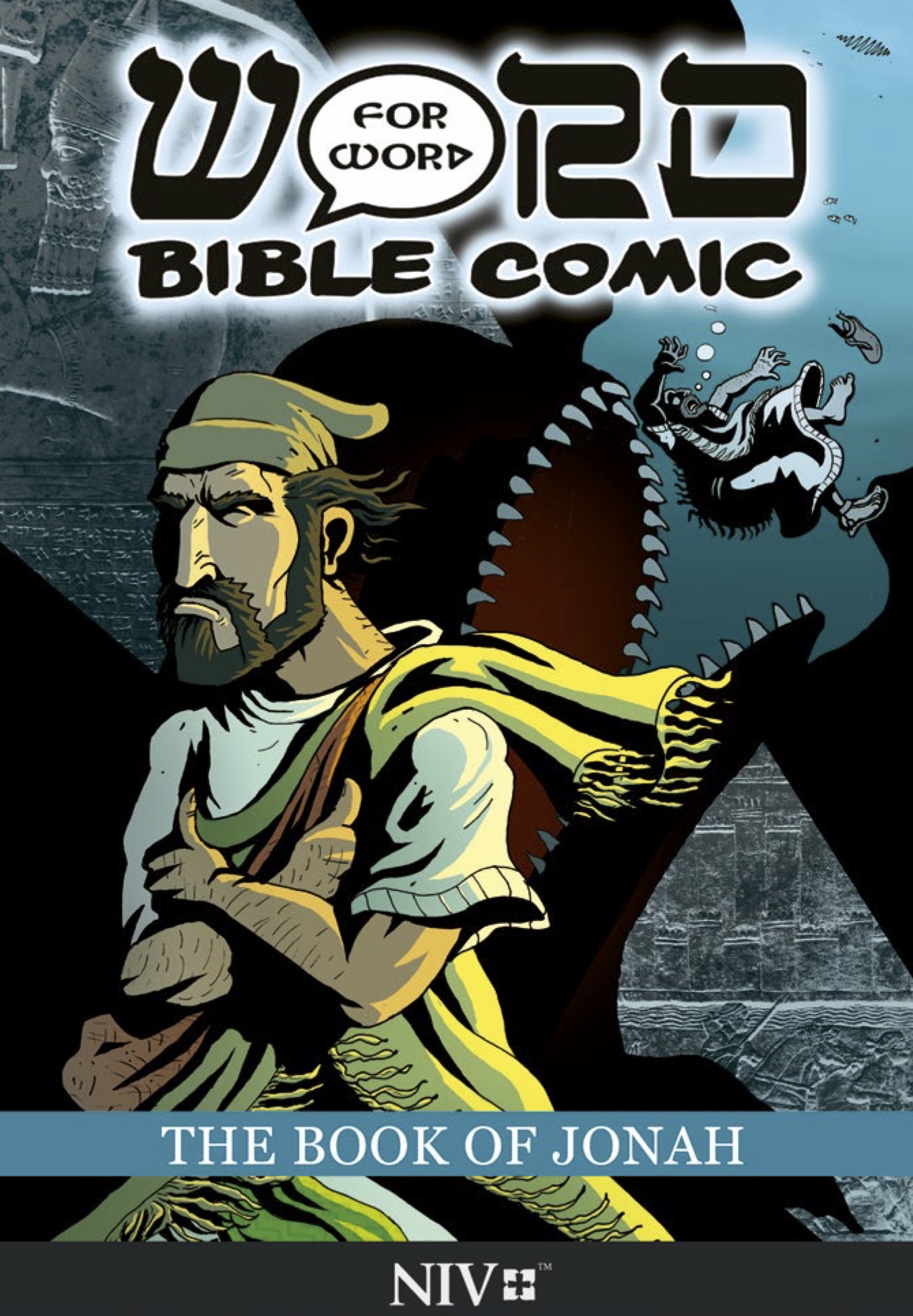
Word-For-Word Bible Comic: Jonah (book review)

Listen to the podcast of this post by clicking on the player below, and you can also subscribe on AppleSpotify, or Audible. 

Some of my regular readers who check out my book reviews might be saying, “A comic book? Craig read and reviewed a comic book?” That’s because I’ve stated many times that with all of the wonderful books there are to read, I had to make a choice to be very discriminating in my reading. As a result, I almost exclusively read non-fiction books. 

But Simon Amadeus Pillario has done something so wonderful with my all-time favorite Book—the Bible—by graphically illustrating the people, places, expressions, and activities of the biblical storyline. The Word-For-Word Bible Comic I read was The Book of Jonah. 

When I was a parent with young children, I would tell them the story of Jonah in a very dramatic way, by giving voices to the characters and adding my own sound effects to the events. This is how Simon Pillario has helped all of us. He’s taking the amazing stories of Scripture, and helping us read and tell these accounts in memorable ways. I can envision these comic books engaging people into reading the Bible like nothing else has before. 

Part of the title of this series of comic books is “word-for-word.” That is precisely what this comic book does. It contains every word of the story from the Bible, but Simon does it in such a clever way, that some of the descriptive text that is captured in a drawing is so seamlessly integrated into the page design that it never becomes distracting. Then at the back of the comic book you will find some additional historical information that went into the creative process of illustrating these books. 

There are several books of the Bible already completed in word-for-word comic books, which you can check out here. Parents and youth pastors will especially want to check these out as a compelling way to draw young people into reading the Bible for themselves. 

I am a Zondervan book reviewer. 

►► Would you please prayerfully consider supporting this ministry? ◀︎◀︎

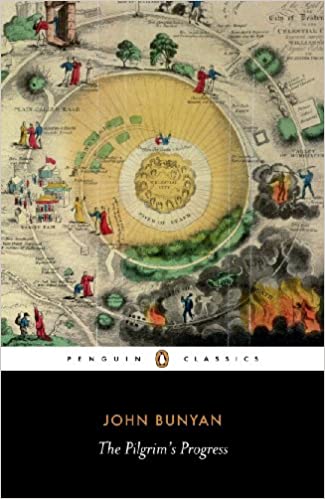
The Pilgrim’s Progress (book review)

Listen to the podcast of this post by clicking on the player below, and you can also subscribe on iTunes or Spotify.

Charles Spurgeon said of John Bunyan, “Prick him anywhere—his blood is Bibline, the very essence of the Bible flows from him. He cannot speak without quoting a text, for his very soul is full of the Word of God.” Although this can be said of all Bunyan’s books and sermons, it is abundantly clear in The Pilgrim’s Progress. 

In my mind it’s easy to classify this book as “a classic” because of its enduring message. The journey through life for pilgrims like Christian, Hopeful, Faithful, Christiana, and you and me resonate with readers all over the world. In over the nearly 350 years since this book was first published, the pilgrimage has connected with Christians and seekers alike because it is the pilgrimage we are all on. 

In The Pilgrim’s Progress it’s not hard to identify the biblical messages because Bunyan literally names them for what they are, using names like Talkative, Mr. Worldly Wiseman, the Giant Despair, Mr. Great-heart, the Interpreter, and many more. Some biblical stories are portrayed in this book just as they are in the Bible, while others are fairly easily seen for all modern-day pilgrims to learn their lessons. 

As I’ve said before about this book, it’s an excellent one for parents to read aloud to their children. Then as their kiddos get a bit older, there is an easy-to-read version called Little Pilgrim’s Progress for them to read on their own. But I still highly recommend the original version of Bunyan’s classic in its 17th-century English. To me, the Old English in a story like this makes it feel like an epic adventure story, which, in fact, it is because it is every Christian’s story still to this day. 

I can’t urge you enough to make The Pilgrim’s Progress a friend that you visit often.

7 More Quotes From “Start With The Heart”

Dr. Kathy Koch has given parents—and anyone else who works with children—a marvelously helpful resource in her latest book Start With The Heart. Be sure to check out my full book review by clicking here. 

“God created you and your children with five core, basic needs that must be met. These needs are interrelated. The health of one influences the others:

  • Security—who can I trust?
  • Identity—who am I?
  • Belonging—who wants me?
  • Purpose—why am I alive?
  • Competence—what do I do well?” 

“Children who know their purpose will often choose to look for peers with similar goals and interests. They will want to hang out with people who affirm them and their purpose and be willing to end relationships that are not joyful and purposeful.” 

“When you parent so your children believe three things, their hearts will be impacted and they will be motivated to succeed. This translates into less stress and anxiety and more peace. … Children who believe these things don’t want to be average. They are willing to work for more. … Children’s character will be more Christlike. They’ll want to be more others-centered than self-centered. They’ll be compassionate, brave and able to stand up for themselves and others. 

  1. I have value. Children who do know they have value are often motivated intrinsically, from the inside. They internally recognize what is good for them and respond accordingly.
  2. Learning matters. When children believe they have worth, they are more likely to value learning. … Children who value learning will exhibit many positive character traits, including teachability. This will be true even when they are not convinced that your requests or planned activities are relevant. They’ll pay attention anyway because they know they matter and learning matters. These beliefs strengthen children’s purpose and give rise to competence.
  3. My future can be bright.” 

“Which is better: ‘Be on time!’ or ‘Don’t be late!’? Do you hear the difference? Which one is positive? ‘Be on time’ communicates ‘I believe you’re capable of this.’ It’s more hopeful. It’s about what you want your children to do. ‘Don’t be late’ reminds them of how they’ve frustrated you.” 

“Carol Dweck…has consistently found that children praised for using effort tackled more challenging tasks than those praised just for ability or for the quality of their work.” 

“Sometimes have children tell you what they think they did before you offer your opinions. If they are relatively accurate, affirm them specifically. When they’re not, have the conversation.” 

“Working to provide feedback that can be described with the following attributes will serve you and your children well—specific, believable, helpful, and thoughtful.” 

You can also check out the first set of quotes I shared from Start With The Heart by clicking here.

10 Quotes From “Start With The Heart”

Kathy Koch has given parents, teachers, and anyone who works with younger children, and excellent resource to improve your relationship with your kiddos and empower them to greater success. Check out my full book review of Start With The Heart by clicking here. 

“For your children to want what you want for them, for changes to occur, and for improvements to remain, your hearts must be intertwined. Your motivational power and influence over their obedience comes out of the love you have for each other.” [see Proverbs 23:26] 

“Affirm your children when they do use the character qualities you’re emphasizing and correct them when they don’t. … Specifically, look for gratitude and joy. The lack of one or both of these emotions causes children (and adults) to use character qualities inconsistently.” 

“Here is my list of understandings that can secure children’s hearts and increase your influence so you’ll be able to motivate them to be responsible, brave, and so much more.

  • Parent by faith
  • Parent with grace and mercy
  • Forgive quickly and often
  • Ask to be forgiven quickly and often
  • Tell your children you are confident in God
  • Prioritize children, not their behavior
  • You can dislike what children do while you still like and love them
  • Be who you want your children to be
  • Raise the children you were given, not the children you wish you had
  • Remember needs and wants are different
  • Listen when children are little if you want them to talk with you when they’re older
  • When children have a problem, remember they are not the problem
  • Teach children to fail well
  • Prioritize progress, not perfection” 

“Children are even more susceptible to the influences around them. We should have and model solid character so our behavior, attitudes, and decisions glorify God. We should also prioritize our character so we don’t lead a child astray. Making every effort to use these qualities ourselves matters. And, of course, apologizing when we don’t is key to maintaining a positive relationship.” 

“The desire to develop self-control is birthed in self-respect. Self-control makes it possible to use other character qualities successfully.” 

“Do we choose to see our children’s circumstances and respond appropriately? Although consistency is usually appropriate when raising and motivating children, if we don’t have compassion and individualize our reactions and decisions when it’s appropriate, why would our children? Modeling this character quality matters tremendously.” 

“Initiative: Children may never develop this quality if you remind them of everything they must do. Rather, it’s birthed when you help them grow in appropriate independence. … Is it possible that your children may not be motivated as you’d like because you rescue them to early, too often? … I know you value the things you worked hard for. Don’t rob children of that same satisfaction. Allow them to persevere.” 

“Prayer is a powerful tool—use it! Your personal and specific prayers for your children communicate your deep love for them and your dependence on God. Your prayers are a significant way your children learn who you hope they’ll be and what you hope they’ll do. Pray they’ll develop a heart for Christ. Model and teach what they need for their heart to be transformed into His likeness. This will change their character and, therefore, their motivation and motives, too.” 

“Just making statements like these can be empowering:

  • I need to take off arguing and put on first-time obedience.
  • I need to take off bullying and put on kindness.
  • I need to take off distractions and put on focus.
  • I need to take off ‘I don’t want to’ and put on ‘do it anyway.’” 

“This might surprise you, but all children are motivated. … It doesn’t help to ask, ‘How do I get my kids motivated?’ Rather, we need to ask, ‘How can I redirect their motivation?’” 

Stay tuned: more quotes coming soon…

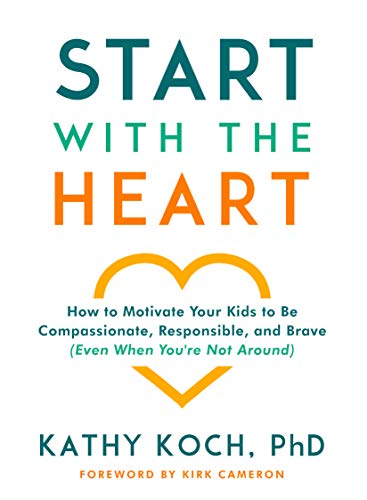
Start With The Heart (book review)

Dr. Kathy Koch has parenting insights that are unlike few others. Her ministry is called Celebrate Kids, and that’s exactly what she teaches parents and teachers to do in her book Start With The Heart.

Not only does Dr. Kathy lean into her formal training in education—as an elementary teacher, a middle school coach, and a university professor—but she supports all of her instructional insights with an unabashed reliance on the wisdom found in the Bible. This is a winning combination!

Dr. Kathy explains the rationale behind the title and message of her latest book, “Capturing your child’s heart and parenting to keep it may be more important than anything else you do. Your love for your children and your desire for them to trust Christ for their salvation matters greatly. For you to have motivational power to help them make that commitment, mature in their faith, and love God more fully, you must start with their heart.” 

Start With The Heart isn’t about manipulating children or coercing them into a more desirable behavior. The focus is on your child’s heart so that he or she will be internally motivated to make good choices even when you aren’t around. 

Every chapter introduces a new concept which is built on the chapter before it. As the book progresses, you will begin to see how each parenting principle is interdependent and reinforcing with all the other principles. The close of each chapter turns the mirror back on us parents as Dr. Kathy asks, “What about you?” She also shares some helpful “Things To Do” and “Things To Think About” bullet points to wrap up each chapter. 

I would recommend Start With The Heart for parents and teachers of younger children. And not just the book, but check out the Celebrate Kids website for ongoing insights from Dr. Kathy. 

I am a Moody Publishers book reviewer.

Saturday In The Proverbs—Setting Myself Up For Failure (Proverbs 20)

[Each chapter in the Book of Proverbs contains thoughts that fit into a theme; they are not just random thoughts gathered together. In this “Saturday In The Proverbs” series, I will share a theme that I see in each chapter. But the cool thing about God’s Word is that you may see an entirely different theme. That’s great! If you do, I would love for you to share it in the comments below.]

Wine is a mock, strong drink is a brawler, and whoever is led astray by it is not wise (Proverbs 20:1).

This collection of proverbs warns against things that impair a person’s judgment, or things that set us up for failure. Things like…

  • intemperance (v. 1)
  • making leaders angry (vv. 2, 8, 26)
  • starting petty quarrels (v. 3)
  • laziness (vv. 4, 13)
  • shallow thinking (vv. 5, 12, 25)
  • unfaithfulness or a lack of integrity (vv. 6, 7, 11, 27)
  • unconfessed sin (vv. 9, 24)
  • duplicity or favoritism (vv. 10, 14, 17, 23)
  • not valuing wisdom (vv. 15, 18. 25)
  • risky business deals (vv. 16, 25)
  • gossiping (v. 19)
  • dishonoring your parents (vv. 20, 21)
  • holding a grudge (v. 22)
  • unkindness or dishonesty (v. 28)
  • not valuing life (v. 29)
  • not allowing anyone to correct you (v. 30)

Now that you know these items that set you up for failure, ask the Holy Spirit to help you root any of these out of your life before failure happens to you! 

Marching Off The Map (book review)

In my mind, Tim Elmore stands head-and-shoulders above the rest in giving the most meaningful insights into the minds of today’s youth. Parents, coaches, teachers, and youth pastors will do themselves and the students with whom they work a huge service by using Dr. Elmore’s newest book—Marching Off The Map—as their guiding light in working with this young generation.

Never before have so many youth been exposed to so much information at such young ages. As a result, today’s students are both more prepared and less prepared to take on the future than any generation before them. Does this sound contradictory to you?

Consider the case of Alexander the Great. He conquered territory so quickly that he literally marched off the map; that is to say, there were no known maps for the new territory in to which he took his armies. Alexander’s mapmakers were pressed into duty to draw the maps as they were discovering new lands. They were both more and less prepared to move forward, just like today’s generation of students.

Those who work with today’s students can probably relate! Parents and teachers are attempting to write new maps as they go. They are being called upon to be both timeless and timely; to bring timeless principles into a territory where they’ve never been before in a timely way.

“This book is about moving into unknown territory as caring adults, and leading the way for the younger generations behind us. It’s all about inspiring students to learn in this brand new world. Whether you are an educator, a parent, a coach, an employer, a youth worker or just someone who cares about kids, this book was created to help you chart the course into the future.” —Tim Elmore 

Along the way Dr. Elmore will introduce you to some of today’s youth, help you see the world through their eyes, and give you invaluable insight into how best to educate, train, and equip them to be the leaders of the next generations. All of Dr. Elmore’s books are well-documented with research, statistics, graphics, and suggestions which are guaranteed to open your eyes and your mind.

If you truly care about seeing the next generation of youth be as prepared to face the future as possible, Marching Off The Map has to be a must-read! 

I am a Poet Gardener Publishing book reviewer.