He Shall Glorify Me (book review)

He Shall Glorify MeI am continually astounded at the insight Oswald Chambers has on the Scripture and its practical applications to our lives! In He Shall Glorify Me, Chambers elaborates on the immensely important role the Holy Spirit plays in the lives of Christians.

The title of the book is taken from a statement Jesus made about the Holy Spirit: He will glorify Me because it is from Me that He will receive what He will make known to you (John 16:14). Chambers begins with the advent of the Holy Spirit, leads us through a thorough doctrine of the Spirit, and then shares practical applications for Spirit-directed living.

These were originally lectures he gave at college, then they were turned into articles for a magazine, and finally complied into a book form. As far as we know, Oswald Chambers didn’t plan for these lectures to be published as a book, so he had no say in a proposed title. But the title—He Shall Glorify Me—is perfect, as every single lecture/chapter shows us how the Holy Spirit wants to bring out of our lives only what will bring glory to Jesus.

For anyone serious about allowing the Holy Spirit to work more deeply in their lives, He Shall Glorify Me is an indispensable resource.

Thursdays With Oswald—Sanctified Specimens

This is a weekly series with things I’m reading and pondering from Oswald Chambers. You can read the original seed thought here, or type “Thursdays With Oswald” in the search box to read more entries.

Sanctified Specimens

     May God save us from the selfish meanness of a sanctified life which says, “I am saved and sanctified, look what a wonderful specimen I am.” If we are saved and sanctified we have lost sight of ourselves absolutely, self is effaced, it is not there. 

     …We are saved and sanctified for God, not to be specimens in His showroom, but for God to do with us even as He did with Jesus, makes us broken bread and poured-out wine as He chooses. 

From Bringing Sons Unto Glory

The apostle Paul said it this way, “You were bought with a price [purchased with a preciousness and paid for, made His own]. So then, honor God and bring glory to Him in your body” (1 Corinthians 6:20, AMPC). And he wrote later, “God paid a high price for you, so don’t be enslaved by the world” (1 Corinthians 7:23, NLT).

If God has changed you, don’t try to remain a specimen on the shelf, don’t posture and pose. In fact, stop thinking about how good you look because that only glorifies you.

Instead, let God by glorified as you allow Him to use you as a living, breathing example of how He can totally change someone’s life.

Thursdays With Oswald—Redemption

This is a weekly series with things I’m reading and pondering from Oswald Chambers. You can read the original seed thought here, or type “Thursdays With Oswald” in the search box to read more entries.

Redemption

   Redemption is easy to experience because it cost God everything, and if I am going to be regenerated it is going to cost me something. I have to give up my right to myself. I have deliberately to accept into myself something that will fight for all it is worth, something that will war against the desires of the flesh, and that will ask me to go into identification with the death of Jesus Christ, and these things produce a struggle in me. …

   The result of the Redemption in my life must be that I justify God in forgiving me. …In what way are you different in your life? does the reality of the Redemption at work in you justify God in having forgiven you?

From Baffled To Fight Better and Biblical Ethics

I like to think of the death and resurrection of Jesus this way: It cost Him so much, and He wants everything He paid for.

Jesus didn’t coast through, He wasn’t wishy-washy about His decision to go to the Cross, neither was He forced into such a horrific death by crucifixion.

Jesus willingly and lovingly went “all in” to pay the redemption price for our sins. So I’m challenged by Oswald Chambers’ question: Does the reality of the Redemption at work in you justify God in having forgiven you? Does my life show how grateful I am for the price Jesus paid?
Read More And Read Better

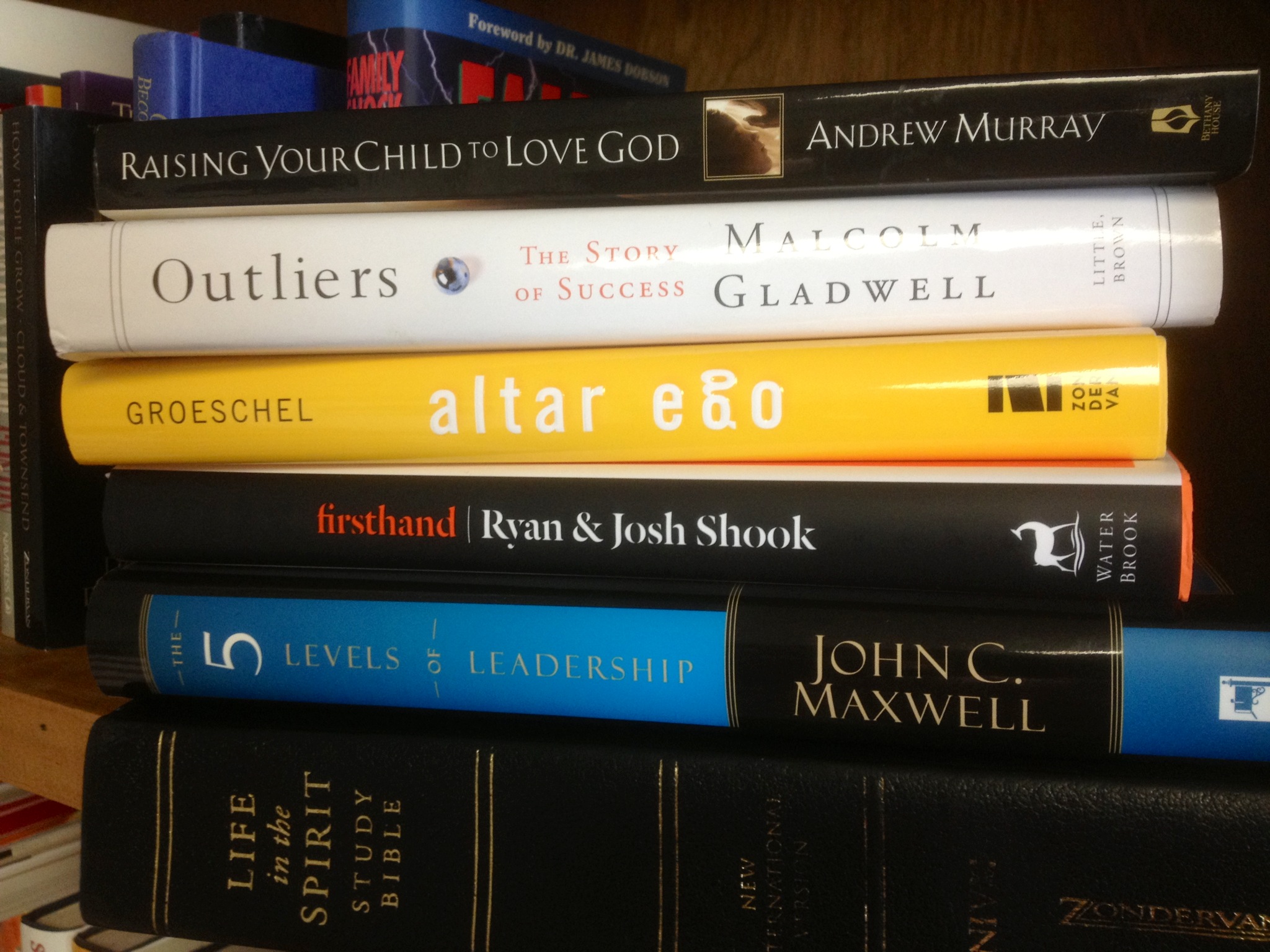
It’s no secret that I like to read. I read a little for pleasure, but mostly I read because it makes me a better Christian, a better husband, a better dad, a better preacher. It expands my horizons. It gives me new ideas. It teaches me life lessons. It gives me insights to share with others.

My first priority is to read my Bible every day, and then all of my other reading is filtered through that prism of Scripture. I don’t read only “Christian” books, but I do only read good books.

It’s true: Leaders are readers. If you want to lead more and lead better, read more and read better.

“When a very young minister, I asked the famous holiness preacher, Joseph H. Smith, whether he would recommend that I read widely in the secular field. He replied, ‘Young man, a bee can find nectar in the weed as well as in the flower.’ I took his advice (or, to be frank, I sought confirmation of my own instincts rather than advice) and I am not sorry that I did. John Wesley told the young ministers of the Wesleyan Societies to read or get out of the ministry, and he himself read science and history with a book propped against his saddle pommel as he rode from one engagement to another.” —A.W. Tozer

“Keep yourself full with reading. Reading gives you a vocabulary. Don’t read to remember; read to realize.” —Oswald Chambers

“It is a dreadful deception that learning and mental growing are strictly associated with school. Good reading should be the vocation of a lifetime.” —John Piper

“Paul says to Timothy, so he says to everyone, ‘Give yourself to reading.’ He who will not use the thoughts of other men’s brains proves that he has no brains of his own. You need to read. Renounce as much as you will all light literature but study as much as possible sound theological works, especially the Puritans and expositions of the Bible. The best way for you to spend your leisure is to be either reading or praying.” —C.H. Spurgeon

“The reading of all good books is like conversation with the finest men of past centuries.” —Rene Descartes 

“After all that professors may do for us, the real University is a collection of good books.” —Thomas Carlyle

“Ignoring good books enfeebles vision and strengthens our most fatal tendency; the belief that the here and now is all there is.” —Allan Bloom

Leaking Influence

Leaking influenceJim Collins has great advice for leaders: When things are going well, look out the window (at your people); when things aren’t going well, look in the mirror (at yourself). This is as true for business CEOs as it is for pastors.

Pastor, you leak.

I leak.

We all leak.

It’s impossible to just maintain where we are. There needs to be a constant refreshing, a constant refilling. We need to keep learning, keep changing, keep renewing. If we don’t, well, this is how Oswald Chambers described it—

“If you are in a position of authority and people are not obeying you, the greatest heart-searching you can have is the realization that the blame does not lie with them, but with you; there is always leakage going on spiritually. Get right with God yourself, and every other one will get in touch with God through you.” (my emphasis)

Pastor, don’t wait: Look in the mirror today, get right with God, replenish what’s leaked out of you, and then watch to see how others in your congregation will begin to move toward God themselves.

Thursdays With Oswald—Stair-step Growth

Listen to the podcast of this post by clicking on the player below, and you can also subscribe on AppleSpotify, or Audible. 

This is a weekly series with things I’m reading and pondering from Oswald Chambers. You can read the original seed thought here, or type “Thursdays With Oswald” in the search box to read more entries.

Stair-step Growth

     There are stages in spiritual development when God allows us to be dull, times when we cannot realize or feel anything. It is one of the greatest mercies that we have those blank spaces, for this reason, that if we go on with spiritual perception too quickly we have no time to work it out; and if we have no time to work it out, it will react in stagnation and degeneration. 

From Bringing Sons Unto Glory

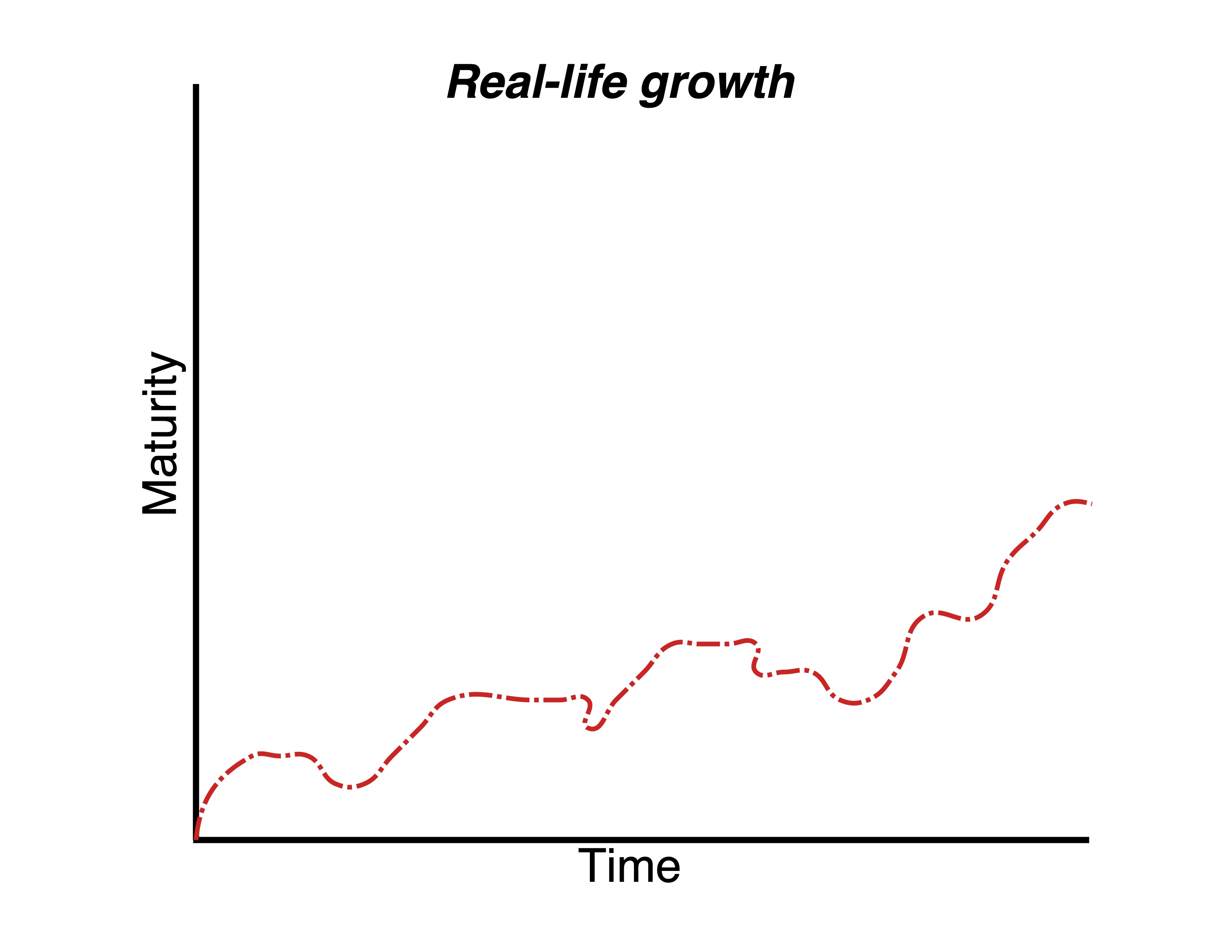
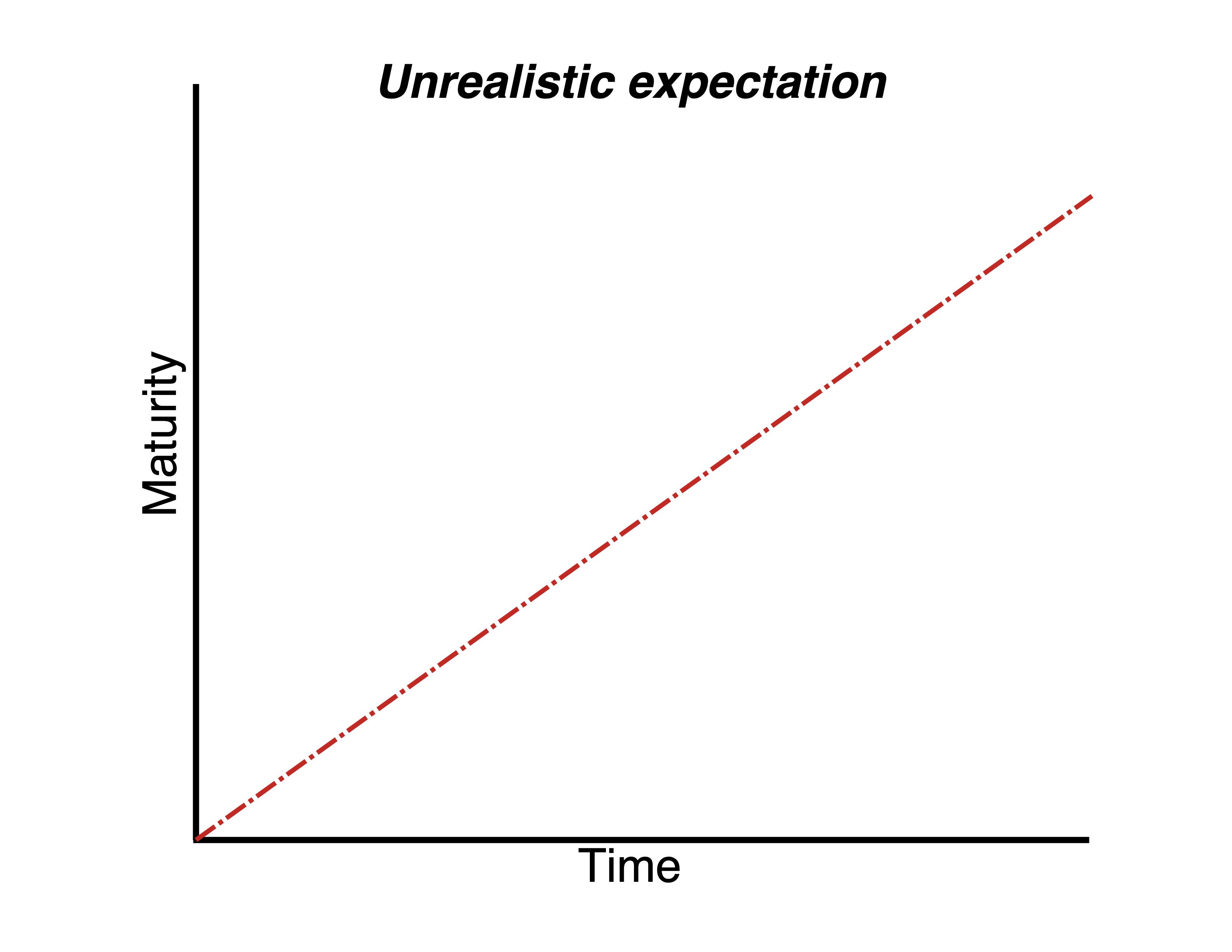
Many people mistakenly think that their growth in spiritual maturity should be a steady, unbroken climb. They think that the line on the “spiritual growth graph” should always move upward and to the right. This is not only an inaccurate view, but an unhealthy view as well. It simply isn’t possible.

In reality, our growth looks more like a staircase. There are times of growth, times of relapse, and times of plateau. Growth and relapse we usually understand, but many of us have a hard time with the “blank spaces” when we don’t feel anything going on one way or the other. But God purposely gives us these flat times.

I’ve learned that these God-given plateaus are for two things:

  1. Assimilating what we have learned <or>
  2. Preparing for the next upward climb

So don’t get frustrated by the plateaus, for they are, as Chambers say, one of the greatest mercies God gives us.

►► Would you please prayerfully consider supporting this ministry? My Patreon supporters get behind-the-scenes access to exclusive materials. ◀︎◀︎

Thursdays With Oswald—Our Father

This is a weekly series with things I’m reading and pondering from Oswald Chambers. You can read the original seed thought here, or type “Thursdays With Oswald” in the search box to read more entries.

Our Father

     Think for one minute, have you behaved today as though God were your Father or have you to hang your head in absolute shame before Him for the miserable, mean, unworthy thoughts you have had about your life? 

     It all springs from one thing, you have lost hold of the idea that God is your Father. Some of us are such fussy, busy people, refusing to look up and realize the tremendous revelation in Jesus Christ’s words—Your heavenly Father knows what you need…. 

From He Shall Glorify Me 

What an amazing thought that when Jesus taught us to pray, He said we could address Almighty God with the affectionate title of “Our Father.” In his book Who Do You Think You Are?, Mark Driscoll points out:

     “In the thirty-nine books of the Old Testament, God is referred to only as Father roughly fourteen times—and each time it’s impersonally, in reference to the nation of Israel, not to individuals. Everything radically changed with Jesus. He spoke of God as Father more than sixty times in the New Testament.

Your heavenly Father loves you more than you can possibly imagine! Let that truth sink in. Don’t give in to the thoughts that your life is not very valuable, or even that God doesn’t like you very much.

God loves you as if you were the only person on earth to love! And He sent Jesus to earth to make it possible for you to be adopted into His family, to call Him Father. Even more than that, to call Him “Daddy God” (see Romans 8:15-17).

Live in your heavenly Father’s love today.

Thursdays With Oswald—Bitter, Dogmatic, Intolerant, And Utterly Un-Christlike

This is a weekly series with things I’m reading and pondering from Oswald Chambers. You can read the original seed thought here, or type “Thursdays With Oswald” in the search box to read more entries.

Oswald ChambersBitter, Dogmatic, Intolerant, And Utterly Un-Christlike

     Spiritual maturity is not reached by the passing of the years, but by obedience to the will of God. Some people mature into an understanding of God’s will more quickly than others because they obey more readily, they more readily sacrifice the life of nature to the will of God, they more easily swing clear of little determined opinions. 

     It is these little determined opinions, convictions of our own that won’t budge, that hinder growth in grace, and makes us bitter and dogmatic, intolerant, and utterly un-Christlike. 

From Bringing Sons Unto Glory 

Ouch! It’s so important that I read God’s Word with a heart ready to obey whatever the Holy Spirit shows me, even if it means sacrificing what I’ve always thought to be true. I must not cling to my own “little determined opinions” if I want to grow in spiritual maturity.

The contrast is crystal clear: Either I am maturing through complete obedience to God, or I am becoming bitter and dogmatic, intolerant, and utterly un-Christlike.


Thursdays With Oswald—Venting In Prayer

This is a weekly series with things I’m reading and pondering from Oswald Chambers. You can read the original seed thought here, or type “Thursdays With Oswald” in the search box to read more entries.

Venting In Prayer 

     When you are worked up to a pitch emotionally, read some of the Psalms, and the Spirit of God will gradually teach you how to form a spiritual nous*, a mind whereby you will not only understand but will slowly and surely get to the place where you can express your spirit, you will have a totally new language. 

* To read what Chambers means by the Greek word nous, click here. 

From Biblical Psychology 

Sometimes we’re too timid in our prayers. We think we need to hold back, or not really say what’s on our mind. We probably think that some of the language we use might be too offensive for God’s ears.

Have you ever read some of the Psalms? As Oswald Chambers suggests, this is a great place to form your prayer vocabulary. David really “lets loose” in some of his prayers, calling his enemies all sorts of names, and basically saying, “Get ‘em, God!”

So you don’t want to say those kinds of things to God? Don’t you think He already knows what you’re thinking? Wouldn’t it be much more effective to “vent” in prayer—in the safe presence of your loving Heavenly Father? It’s really only after you “get it out” that the Holy Spirit can help you work it out.

Express yourself—vent in God’s presence instead of the presence of those who are troubling you—and then listen to how God’s Spirit will help you slowly and surely get a brand new perspective on your situation.

UPDATE: I have a whole chapter called ‘Your Emergency Release Valve’ about these types of prayers in my book When Sheep Bite.

Did God Send Me Into This?!

Listen to the podcast of this post by clicking on the player below, and you can also subscribe on AppleSpotify, or Audible. 

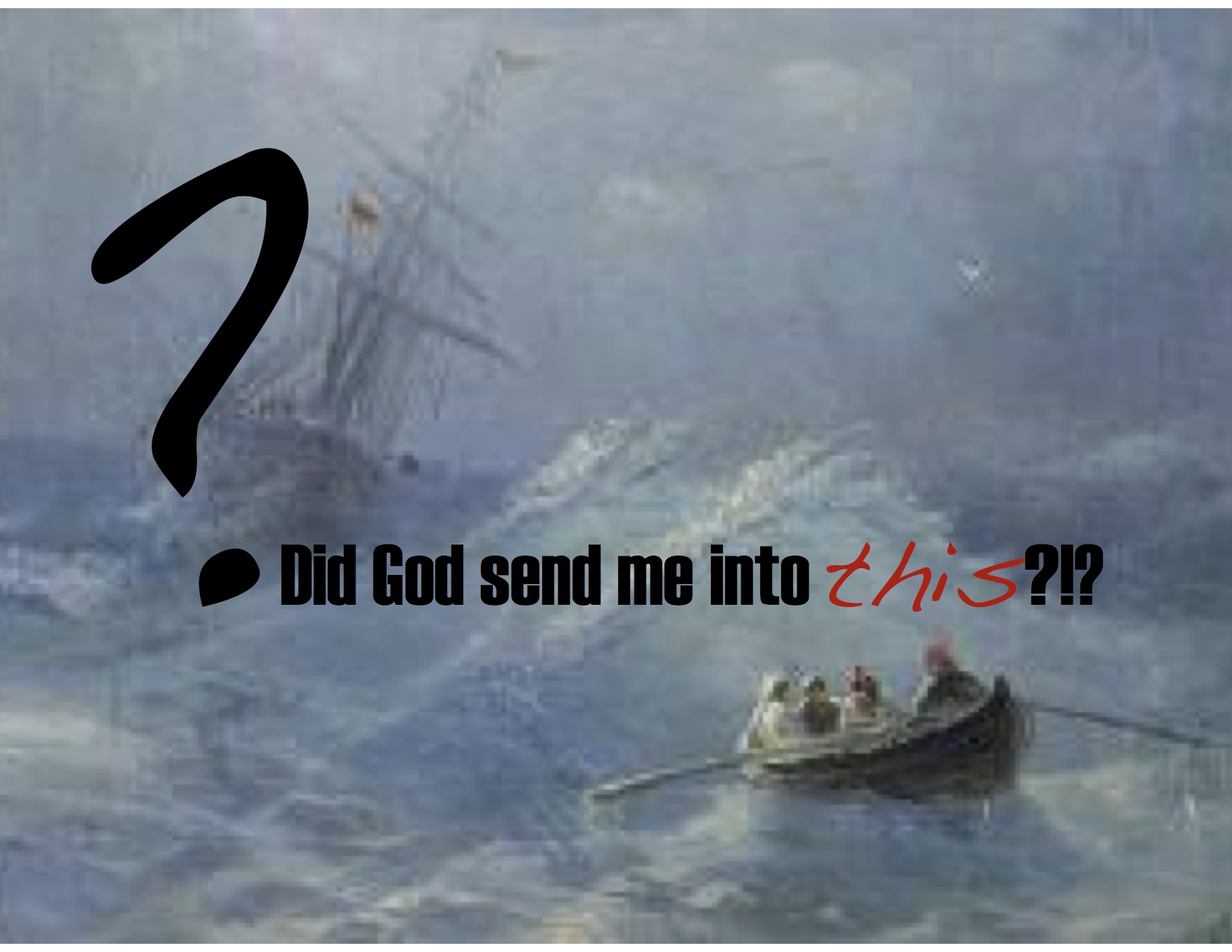
Have you ever experienced this? You are certain that God has spoken to you. You’ve launched out in obedience, things are sailing along smoothly, and then <wham!> a storm threatens to swamp you. And you begin to second-guess what you thought God said to you. You begin to wonder if perhaps you misunderstood the directions God spoke: “Did God send me into this?!”

Ever been there?

The disciples of Jesus must have felt that way. Jesus says, “Let’s get into the boat and head over to the other side of the lake.” The disciples obeyed Jesus only to have a huge storm come crashing down on them, to the point that their boat was about to be swamped (see Luke 8:22-25).

What were they thinking then? What would you have been thinking? Perhaps you might have thought, “Did I miss something God said?”

I love this thought from Oswald Chambers—

You say, “If I had not obeyed Jesus I should not have got into this complication.” Exactly. The problems in our walk with God are to be accounted for along this line, and the temptation is to say, “God could have never told me to go there, if He had done so this would not have happened.” We discover then whether we are going to trust God’s integrity or listen to our own expressed skepticism. 

God knows what He’s doing. He knows what He needs to accomplish.

Too many times I get focused on the destination, while God is focusing on the process. I often will learn more about my faith, and about the power and faithfulness and love of my God, during these storms than I will in an incident-free journey.

If you are on a journey on which God sent you and your boat’s rocking, don’t second-guess what God said. Keep your eyes on Jesus, and watch to see what He’s developing in you during your stormy trip.

You may also like to check out:

►► Would you please prayerfully consider supporting this ministry? My Patreon supporters get behind-the-scenes access to exclusive materials. ◀︎◀︎