13 Quotes From “Dear Abba”

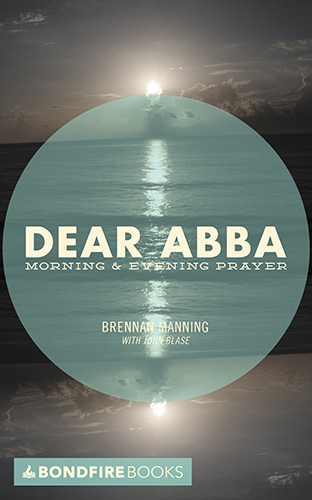
Dear AbbaDear Abba is an intimate book of prayer and personal reflection; it’s thought-provoking and emotionally-moving. You can read my full book review by clicking here. Below are some of the quotes and prayers I found especially meaningful.

“Dear Abba, I’ve come to the place where I’m letting You love me more each day, but I still struggle with letting You like me.” 

“It would be comical if it wasn’t so sad: all of our desires to make ourselves worthy of this world but unfit for the world to come.”

“Peace and joy go a-begging when the heart of a Christian pants for one sign after another of God’s merciful love. Nothing is taken for granted, and nothing is received with gratitude.”

“I feel like the psalmist tonight—downcast. I was upcast, bright, enjoying the warmth of the day and then suddenly my joy was pickpocketed. It was a small thing, a minor misunderstanding that I could have let roll off like water, but I held on to it and nursed it awhile, and like sin always does, it grew. Now I find my mind completely disturbed, anxious, angry, and my imagination is conjuring up all sorts of somebody-done-me-wrong songs. Why do I not trust You? After so many demonstrations of Your infinitely tender hand, why do I not trust You?”

“Sin does not magnify the suffering of man’s plight; instead, it mitigates it. When I sin, I seek an escape from my humanity. I used to say to myself, ‘Well, you’re only human!’ But sin does not make me human; it compromises my humanity. The philandering husband with his mistress on business trips, the chemically addicted, the thieves who build ivory towers out of stolen money, the sensation-seekers and power brokers who seek substitutes. They do not drink the poverty of the human situation down to the last drop. They dare not stare it full in the face.” 

Yet. Those three letters stop me in my rutted tracks of besetting sins. For You were tempted as I am, yet You did not sin. The humbling point is that on a scale from 1 to 10, I usually give in when the heat reaches 3 or 4, yet You experienced the 10—the full-in-the-face of temptation—and did not give in. You are the friend of sinners, yet You are also the Great High Priest who invites us to come with confidence to Your throne and receive both our daily bread and extra rations for emergencies.”

“To practice poverty of spirit calls us not to take offense or be supersensitive to criticism.

“When the gift of a humble heart is granted, we are more accepting of ourselves and less critical of others. … For the humble person there is a constant awareness of his or her own weakness, insufficiency, and desperate need for God.”

“My friends in Christ, the simple truth is that the Christian Church in America is divided by doctrine, history, and day-to-day living. We have come a long sad journey from the first century, when pagans exclaimed with awe and wonder, ‘See how these Christians love one another!’” 

“Christ’s breakthrough into new life on Easter morning unfettered Him from the space-time limitations of existence in the flesh and empowered Him to touch not only Nepal, but New Orleans, not only Matthew and Magdalene, but me. The Lion of Judah in His present risenness pursues, tracks, and stalks us here and now.”

“I realized today that there is a third character who goes up to the temple to pray: the pharisaic tax collector—a ragamuffin who knows she’s a ragamuffin and wants to make sure everyone else knows she’s a ragamuffin. So she ends up using her sinner status not to cry out for mercy to You, but rather to seek out the attention of others as one who is real and authentic, when in reality she is nothing more than hubris in thrift-shop fashions. I realized this today because I looked in the mirror. God, be merciful to me.” 

“The tendency to continually berate ourselves for real or imaginary failures, to belittle ourselves and underestimate our worth, to dwell exclusively on our dishonesty, self-centeredness, and lack of personal discipline, is the influence of our negative self-esteem. Reinforced by the critical feedback of our peers and the reproofs and humiliations of our community, we seem radically incapable of accepting, forgiving, or loving ourselves.”

“If nobody remembers my name or the works of my hands, if everything that I’ve worked so hard to build over the years crumbles into insignificance, if I lose my health and my wits and even, heaven forbid, my memory, You are still my refuge and strength.” 

10 Quotes From “Alive To Wonder”

Alive To WonderIn this collection of essays John Piper shares how C.S. Lewis impacted his thinking about God. You can read my book review (and get the link to download the free ebook version of this book) by clicking here.

I could have highlighted and underlined nearly the entire book, but here are some of my favorite quotes—

“I shall not demean my own uniqueness by envy of others. I shall stop boring into myself to discover what psychological or social categories I might belong to. Mostly I shall simply forget about myself and do my work.” —Clyde Kilby

“Although Lewis owned a huge library, he possessed few of his own works. His phenomenal memory recorded almost everything he had read except his own writings—an appealing fault. Often when I quoted lines from his own poems he would ask who the author was. He was a very great scholar, but no expert in the field of C.S. Lewis.” —Walter Hooper

“The work of a charwoman and the work of a poet become spiritual in the same way and on the same condition.” —C.S. Lewis 

“God is not worshipped where He is not treasured and enjoyed. Praise is not an alternative to joy, but the expression of joy. Not to enjoy God is to dishonor Him. To say to Him that something else satisfies you more is the opposite of worship. It is sacrilege.” —John Piper

“How sweet all at once it was for me to be rid of those fruitless joys which I had once feared to lose…! You drove them from me, You who are true, the sovereign joy. You drove them from me and took their place, You who are sweeter than all pleasure, though not to flesh and blood, You who outshine all light, yet are hidden deeper than any secret in our hearts, You who surpass all honor, though not in the eyes of men who see all honor in themselves. … O Lord my God, my Light, my Wealth, and my Salvation.” —Augustine

“Would it not be an encouragement to a subject, to hear his prince say to him, ‘You will honor and please me very much, if you will go to yonder mine of gold, and dig as much gold for yourself as you can carry away’? So, for God to say, ‘Go to the ordinance, get as much grace as you can, dig out as much salvation as you can; and the more happiness you have, the more I shall count Myself glorified.’” —Thomas Watson

“Consider this question: In view of God’s infinite power and wisdom and beauty, what would His love for a human being involve? Or to put it another way: What could God give us to enjoy that would prove Him the most loving? There is only one possible answer: Himself.” —John Piper 

“We praise what we enjoy because the delight is incomplete until it is expressed in praise.” —John Piper

“You cannot hope and also think about hoping at the same moment; for in hope we look to hope’s object and we interrupt this by (so to speak) turning round to look at the hope itself. … The surest means of disarming an anger or a lust is to turn your attention from the girl or the insult and start examining the passion itself.” —C.S. Lewis 

“God is glorified in His people by the way we experience Him, not merely by the way we think about Him. Indeed the devil thinks more true thoughts about God in one day than a saint does in a lifetime, and God is not honored by it. The problem with the devil is not his theology, but his desires. Our chief end is to glorify God, the great Object. We do so most fully when we treasure Him, desire Him, and delight in Him so supremely that we let goods and kindred go and display His love to the poor and the lost.” —John Piper

22 Quotes From “The Ragamuffin Gospel”

Ragamuffin GospelThe Ragamuffin Gospel by Brennan Manning really resonated with me. You can read my full book review by clicking here, but below are some of the quotes I especially appreciated.

“The institutional church has become a wounder of the healer rather than a healer of the wounded.” 

“Personal responsibility has replaced personal response. We talk about acquiring virtue as if it were a skill that can be attained, like good handwriting or a well-grooved golf swing. In the penitential seasons we focus on overcoming our weaknesses, getting rid of our hang-ups, and reaching Christian maturity. We sweat through various spiritual exercises as if they were designed to produce a Christian Charles Atlas. Though lip service is paid to the gospel of grace, many Christians live as if only personal disciplines and self-denial will mold the perfect me. The emphasis is on what I do rather on what God is doing. In this curious process God is a benign old spectator in the bleachers who cheers when I show up for morning quiet time.”

“God has a single relentless stance toward us: He loves us. He is the only God man has ever heard of who loves sinners. False gods—the gods of human manufacturing—despise sinners, but the Father of Jesus loves all, no matter what they do.” 

“Jesus comes not for the super-spiritual but for the wobbly and the weak-kneed who know they don’t have it all together, and who are not too proud to accept the handout of amazing grace.”

“The Word we study has to be the Word we pray.”

“We must never allow the authority of books, institutions, or leaders to replace the authority of knowing Jesus Christ personally and directly. When the religious views of others interpose between us and the primary experience of Jesus as the Christ, we become unconvicted and unpersuasive travel agents handing out brochures to places we have never visited.”

“Whatever past achievements might bring us honor, whatever past disgraces might make us blush, all have been crucified with Christ and exist no more except in the deep recess of eternity.” 

“It is unimaginable to picture a wooden-faced, stoic, joyless, and judgmental Jesus as He reclined with ragamuffins.”

“We miss Jesus’ point entirely when we use His words as weapons against others. They are to be taken personally by each of us.” 

“The saved sinner is prostrate in adoration, lost in wonder and praise. He knows repentance is not what we do in order to earn forgiveness; it is what we do because we have been forgiven. It serves as an expression of gratitude rather than an effort to earn forgiveness. Thus the sequence of forgiveness and then repentance, rather than repentance and then forgiveness, is crucial for understanding the gospel of grace.”

“Maybe this is the heart of our hang-up, the root of our dilemma. We fluctuate between castigating ourselves and congratulating ourselves because we are deluded into thinking we save ourselves. We develop a false sense of security from our good works and scrupulous observance of the law. Our halo gets too tight and a carefully disguised attitude of moral superiority results. Or we are appalled by our inconsistency, devastated that we haven’t lived up to our lofty expectations of ourselves. The roller coaster ride of elation and depression continues. Why? Because we never lay hold of our nothingness before God, and consequently, we never enter into the deepest reality of our relationship with Him. But when we accept ownership of our powerlessness and helplessness, when we acknowledge that we are paupers at the door of God’s mercy, then God can make something beautiful out of us.” 

“Honesty is such a precious commodity that it is seldom found in the world or the church. Honesty requires the truthfulness to admit the attachment and addictions that control our attention, dominate our consciousness, and function as false gods. I can be addicted to vodka or to being nice, to marijuana or being loved, to cocaine or being right, to gambling or relationships, to golf or gossiping. Perhaps my addiction is food, performance, money, popularity, power, revenge, reading, television, tobacco, weight, or winning. When we give anything more priority than we give to God, we commit idolatry. Thus we all commit idolatry countless times every day.”

“To be alive is to be broken. And to be broken is to stand in need of grace. Honesty keeps us in touch with our neediness and the truth that we are saved sinners. There is a beautiful transparency to honest disciples who never wear a false face and do not pretend to be anything but who they are. … Getting honest with ourselves does not make us unacceptable to God. It does not distance us from God, but draws us to Him—as nothing else can—and opens us anew to the flow of grace.” 

“When we wallow in guilt, remorse, and shame over real or imagined sins of the past, we are disdaining God’s gift of grace. Preoccupation with self is always a major component of unhealthy guilt and recrimination. … Yes, we feel guilt over sins, but healthy guilt is one which acknowledges the wrong done and feels remorse, but then is free to embrace the forgiveness that has been offered.”

“The evil one is the great illusionist. He varnishes the truth and encourages dishonesty. ‘If we say, “We have no sin,” we are deceiving ourselves, and the truth has no place in us’ (1 John 1:8). satan prompts us to give importance to what has no importance. He clothes trivia with glitter and seduces us away from what is real. He causes us to live in a world of delusion, unreality, and shadows.” 

“At Sunday worship, as in every dimension of our existence, many of us pretend to believe we are sinners. Consequently, all we can do is pretend to believe we have been forgiven. As a result, our whole spiritual life is pseudo-repentance and pseudo-bliss.”

“The way we are with each other is the truest test of our faith. How I treat a brother or sister from day to day, how I react to the sin-scarred wino on the street, how I respond to interruptions from people I dislike, how I deal with normal people in their normal confusion on a normal day may be a better indication of my reverence for life than the antiabortion sticker on the bumper of my car.” 

“A little child cannot do a bad coloring; nor can a child of God do bad in prayer.”

“The call asks, Do you really accept the message that God is head over heels in love with you? I believe that this question is at the core of our ability to mature and grow spiritually. If in our hearts we really don’t believe that God loves us as we are, if we are still tainted by the lie that we can do something to make God love us more, we are rejecting the message of the Cross.” 

“There are some real problems with projecting the perfect image. First of all, it’s simply not true—we are not always happy, optimistic, in command. Second, projecting the flawless image keeps us from reaching people who feel we just wouldn’t understand them. And third, even if we could live a life with no conflict, suffering, or mistakes, it would be a shallow existence. The Christian with depth is the person who has failed and who has learned to live with it.”

“We project into the Lord our own measured standard of acceptance. Our whole understanding of Him is based in a quid pro quo of bartered love. He will love us if we are good, moral, and diligent. But we have turned the tables; we try to live so that He will love us, rather than living because He has already loved us.” 

“No greater sinners exist than those so-called Christians who disfigure the face of God, mutilate the gospel of grace, and intimidate others through fear. They corrupt the essential nature of Christianity.”

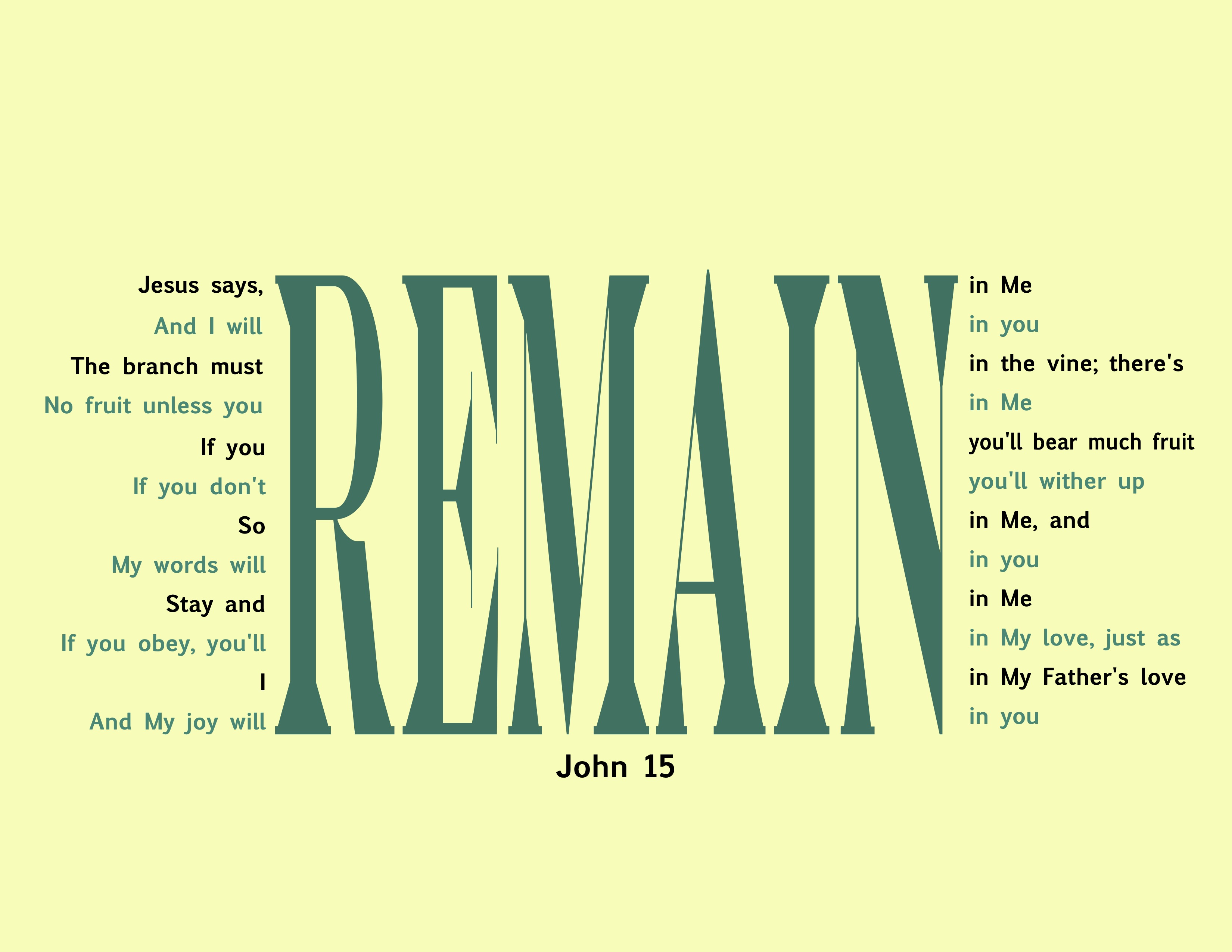
Remain

Jesus says, REMAIN in Me,
And I will REMAIN in you.
The branch must REMAIN in the vine; there’s
No fruit unless you REMAIN in Me.
If you REMAIN, you’ll bear much fruit;
If you don’t REMAIN, you’ll wither up.
So REMAIN in me, and
My words will REMAIN in you.
Stay and REMAIN in Me.
If you obey, you’ll REMAIN in My love, just as
I REMAIN in My Father’s love
And My joy will REMAIN in you. (John 15)

Thursdays With Oswald—Happy Or Holy?

This is a weekly series with things I’m reading and pondering from Oswald Chambers. You can read the original seed thought here, or type “Thursdays With Oswald” in the search box to read more entries.

Oswald Chambers

Happy Or Holy?

     I have told you this so that My joy may be in you and that your joy may be complete. (John 15:11) 

     It is an insult to God and to human nature to have as our ideal a happy life. Happiness is a thing that comes and goes, it can never be an end in itself; holiness, not happiness, is the end of man. The great design of God in the creation of man is that he might “glorify God and enjoy Him forever.” A man never knows joy until he gets rightly related to God. satan’s claim is that he can make a man satisfied without God, but all he succeeds in doing is to give happiness and pleasure, never joy. 

From Bringing Sons Until Glory

We tend to pursue so many things that we think will make us happy, and quickly abandon anything that loses its “sparkle.” Yet Jesus promised us His joy. Think about that: His joy. Who could be more joy-filled than the One who knows the Father’s heart completely!

Don’t pursue happiness; pursue holiness, and joy will follow.

“The joy of the Lord is your strength and stronghold.” (Nehemiah 8:10)

Life Together

Life TogetherOne of the things that stands out so clearly about the first century church is this—they really liked being around each other! Even though the early Christians faced persecution, rejection by the Jewish religious leadership, and even martyrdom, they truly enjoyed a special bond with one another.

In fact, that’s the key phrase: one another. The New Testament says they were devoted to one another, they helped one another, they prayed with one another, they confessed their sins to one another, they opened up their homes to one another, and on and on. This doesn’t mean they were without problems and personality clashes at times, but they found that one another was so much more enjoyable and productive than being on their own.

This Sunday at Calvary Assembly of God as I begin a brand new series called Enjoying Life Together With One Another. If you missed any of the messages, you can check them out here:

Attaboy!

October has been designated as Clergy Appreciation Month. Some pastors live from “Attaboy!” to “Attaboy!” from their congregation, so October is like a feast for them!

But the apostle Paul has a slightly different perspective on this. More than getting an “Attaboy!” from a church congregation, he is joyful over the “Attaboy!” he hears from God.

For what is our hope, our joy, or the crown in which we will glory in the presence of our Lord Jesus when He comes? Is it not you? Indeed, you are our glory and joy.

For now we really live, since you are standing firm in the Lord. How can we thank God enough for you in return for all the joy we have in the presence of our God because of you? (1 Thessalonians 2:19-20; 3:8-9)

Paul’s goal is seeing people who have been changed because of their relationship with Jesus. And these changed lives are all the reward he desires!

YOU ARE OUR GLORY AND JOY! 

Pastor, it’s nice when you get the “Attaboys!” from your congregation. But what’s even better is to help your congregation enter into a deeper relationship with Christ, and then hear the “Attaboy!” from God Himself!

What an amazing joy that we get to play a small role in helping people stand firm in the Lord!

Pastor, Do You Enjoy Pastoring?

Phillips Brooks was a pastor, teacher, and songwriter. These words of his should be read very carefully and thoughtfully by every pastor…

     “I think, again, that it is essential to the preacher’s success that he should thoroughly enjoy his work. I mean in the actual doing of it, and not only in its idea. No man to whom the details of his task are repulsive can do his task well constantly, however full he may be of its spirit. He may make one bold dash at it and carry it over all his disgusts, but he cannot work on at it year after year, day after day. Therefore, count it not merely a perfectly legitimate pleasure, count it an essential element of your power, if you can feel a simple delight in what you have to do as a minister, in the fervor of writing, in the glow of speaking, in standing before men and moving them, in contact with the young. The more thoroughly you enjoy it, the better you will do it all. 

    “This is all true of preaching. Its highest joy is in the great ambition that is set before it, the glorifying of the Lord and the saving of the souls of men. No other joy on earth compares with that. The ministry that does not feel that joy is dead. But in behind that highest joy, beating in humble unison with it, as the healthy body thrills in sympathy with the deep thoughts and pure desires of the mind and soul, the best ministers have always been conscious of another pleasure which belonged to the very doing of the work itself. As we read the lives of all the most effective preachers of the past, or as we meet the men who are powerful preachers of the Word today, we feel how certainly and how deeply the very exercise of their ministry delights them.” (emphasis mine)

Pastor, what unspeakable joy should thrill us to know that God Himself called us to do what we do!!

I know that being in full-time ministry is tough. I know the demands on our time. I know that we are often targets for criticism. But still, this should never diminish our joy in being God’s ministers!

Heavenly Father, I thank You for the calling to be a pastor! Today I pray for pastors who don’t feel the joy they once felt. Holy God, will You reconfirm Your call on their lives. Reassure them that they are doing what they are doing because You called them to do it. And I ask that Your Holy Spirit would reinvigorate them with holy joy. Let the hands that hang low be lifted up in praise! Let mouths that have been tightly shut open wide in holy laughter! Let Your joy be their strength and encouragement. May You be glorified in joy-filled pastors!

More Glory For God

You may be aware of this statement from the Westminster Catechism: The chief end of man is to glorify God and enjoy Him forever.

I love how John Piper elaborates on this in his book Desiring God

“In view of God’s infinite power and wisdom and beauty, what would His love to a human being involve? Or, to put it another way: What could God give us to enjoy that would prove Him the most loving? There is only one possible answer: Himself! … So if God loves us enough to make our joy full, He must not only give us Himself; He must also win from us the praise of our hearts—not because He needs to shore up some weakness in Himself or compensate for some deficiency, but because He loves us and seeks the fullness of our joy that can be found only in knowing and praising Him, the most magnificent of all Beings.”

The cycle here is similar to the cycle I talked about last week, but it looks something like this: Glorifying God helps us enjoy Him, and enjoying Him helps us glorify Him.

God is delighted when we’re delighted in Him.

Why? If we are enthralled with Him, why would seek enjoyment in anything else? So as we glorify Him, He shows us more of Himself for us to delight in. And as we delight in the newly-revealed view of Himself—as we are more and more captivated by His greatness—we glorify Him even more.

Which starts the glorifying God and enjoying Him forever cycle all over again. I LOVE IT!! 

Getting Back Up When Life Has Knocked You Down

The Bible never presents life as some sort of pie-in-the-sky, walk-in-the-park, everyday-is-always-rosy picture. If it did, we would reject the Bible because our experiences would immediately tell us otherwise. Instead, the Bible realistically portrays the challenges, and the pain, and the heartache, and the disappointments of life. But as it does so it also shows us that God’s way is the only way out of our sorrow and into His joy!

In our P119 Spiritual Workout series, we saw the bookends of the section daleth (Psalm 119:25-32) are:

I am laid low in the dust (v. 25) → You have set my heart free (v. 32).

How do we get this freedom when we are knocked down and laid low in the dust?

The Jews saw the Hebrew letter daleth as a door. Specifically, a door through which humble people stepped into a greater realization that He is God, and I’m not … that He has the answers, and I don’t … that He is in control, and I’m not. So part of going from down in the dust to a free heart is humbly acknowledging that you need God’s help!

In verses 26 and 27, the psalmist recalls his past history, and in so doing he is reminded that God has always been there. God has never left him nor forsaken him, so here’s what the psalmist resolves to do:

  • Teach me = I learned something before, so let me learn again.
  • Let me understand = help me to discern, distinguish; tell things apart. This word is used for things that are divinely disclosed; in other words, they’re things you and I cannot figure out on our own.
  • Meditate = talk with my soul about these new things the Holy Spirit has disclosed to me.

In verse 28, the psalmist says that his soul is weary with sorrow (or as the King James Version states it: my soul melteth for heaviness). The only way to overcome this is to ask for God’s help to energize us to go forward.

In the final four verses of this section you can sense the psalmist’s strength returning as he makes these bold statements:

  • keep me from deceitful ways (v. 29a) = keep me from lying to myself (NLT).
  • be gracious to me (v. 29b) = give me the privilege of knowing Your instructions (NLT).
  • I have chosen (v. 30a) = I have determined (NLT).
  • I have set (v. 30b) = I am long-sighted (on God), not short-sighted (on my problems).
  • I hold fast (v. 31) = the KJV says I have stuck to it!
  • I run (v. 32) = I will [not merely walk, but] run the way of Your commandments (AMP).

So when you are sad/disappointed/injured, run TO God. Don’t cling to your own (old) ways of thinking. Let Him take you from I am laid lowYou have set my heart free.

If you have missed any of the messages in our P119 series, you can access them all by clicking here.