History Matters

The minor prophets cover a span of about 300 years, from 760-450 BC, and Jonah appears right in the middle of that. Jonah overlaps Amos and Hosea in northern Israel, and he finishes his ministry just before Isaiah’s ministry begins in southern Judah. 

Jonah is the only narrative in the minor prophets. He was a prophet during the reign of Jeroboam II when Israel was temporarily growing in strength. He is the first of Israel’s prophets to be sent to a non-Jewish population. 

Critics have raised questions about this book. Questions like: Did Jonah write this book himself or is it just a story about him? Is this book historical or allegorical? 

The five biggest objections that are raised to Jonah’s historicity are: 

  1. The hyper-nationalistic feel is more like when Ezra and Nehemiah led people back to Jerusalem after their captivity in Babylon, and not during the time of Jeroboam II. 
  2. Parts of Jonah appear copied from the prophet Joel. 
  3. There are no (or incorrect) details about the major city of Nineveh that Jonah visited. 
  4. There are no extra-biblical historical records of a revival in Nineveh. 
  5. Jonah was swallowed by a fish?! 

I think there are very good reasons to believe that Jonah was both autobiographical and historically accurate. 

First, there was a revival of sorts (although not religiously) in Israel during the time of Jeroboam II. This was a time that Israel felt like it could flex its muscles again, so Jonah would not be acting out of character to be so pro-Israel. 

Second, Jonah 3:9 and Joel 2:14 sound similar, but scholars cannot tell which was written first. Couldn’t God amplify a message? Consider how many parts of the Gospel of Mark are used in the Gospels of Matthew and Luke. And it’s a regular practice for authors even today to directly quote other sources. 

Third, regarding the lack of details about Nineveh, the biblical writers give very few details of any places outside of Israel or Judah. The only “incorrect” detail skeptics point to is Jonah 3:3 stating that the city was so big that it would take three days to walk around it. Nineveh was a city of about 120,000 inhabitants, so it could easily take three days of walking and preaching in order to get the message to everyone. 

Fourth, the revival in Nineveh was clearly short-lived. Jonah was probably in Nineveh around 760 BC. Assyria was rising politically and militarily during that time and defeated Israel just 40 years after Jonah’s preaching. Assyria itself was then defeated in 605 BC. 

Finally, Jonah was swallowed by a fish?! The root word for fish in Hebrew means something that has grown to such an enormous size that it overshadows everything else. But notice that what caused the sailors to be in awe of God was not the whale/fish swallowing Jonah, but the immediate calming of the ocean when Jonah was thrown overboard (Jonah 1:15-16). Miracles appear throughout this book. And throughout the entire Bible! 

Why should the appearance of miracles surprise us? Some people have a bias against the supernatural, where they wrongly believe that we can know everything through naturalistic means. C.S. Lewis pointed out, “I use the word Miracle to mean an interference with Nature by supernatural power. … Nature as a whole is herself one huge result of the Supernatural: God created her.” 
I don’t think this story is a parable or an allegory because nowhere else in the Bible are such details given in the form of a parable. 

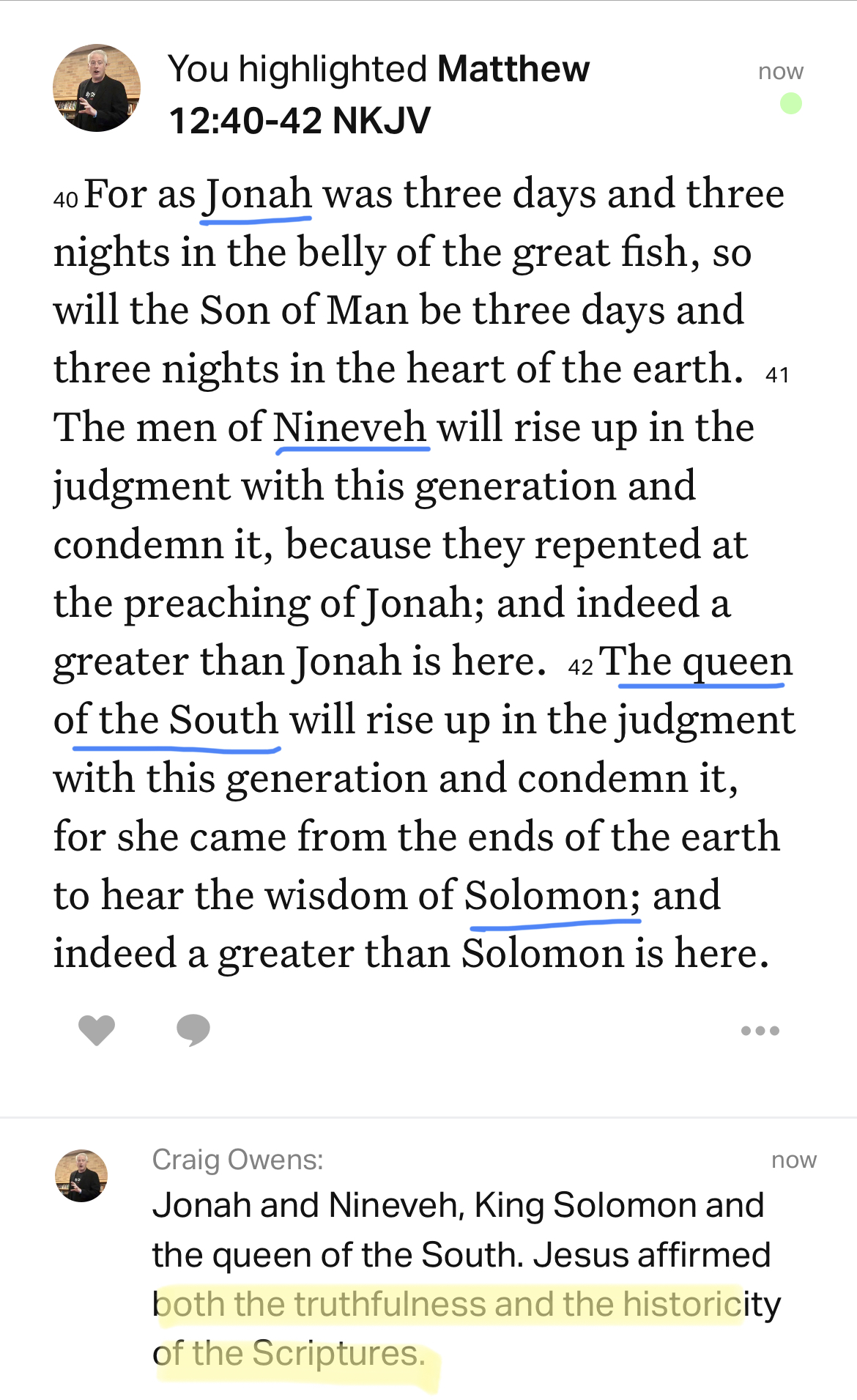
I believe this story is historical because Jesus talked about the historicity of Jonah in the same breath as He talked about other historical people: the Queen of the South and Solomon (Matthew 12:38-42). Jesus clearly viewed Jonah as historically reliable and accurate. To call Jonah into question is to call into question the truthfulness of Jesus Himself! 

History matters because all of History is God’s story! 

Our belief in the message of the Bible is not based upon “once upon a time” or “a long time ago in a galaxy far, far away.” It’s based upon real people in real places, especially the historicity of Jesus (notice all of the historical details Luke lists in the birth account of Jesus). 

Jonah was clearly one of those historical people, in an historic place, and at a precise moment in world history that tells the story of Jesus and our redemption which He purchased! 

If you want to check out all of the messages in our series on the major lessons from the minor prophets, you can find that list by clicking here.

The Attitude That Thwarts God’s Blessings

Two of Israel’s king Jehoahaz and his son Jehoash perpetually hung on to an attitude that limited what God wanted to do for Israel. That attitude can be summed up in a single word: but. 

Jehoahaz “sought the Lord’s favor” during a time Israel was under the oppression of their enemies, and “the Lord listen to him”! God raised up a deliverer who brought them freedom. Israel, under Jehoahaz’s leadership, could have used this newly won freedom to live closer to God and remain in a place of renewed worship. “But” they used their freedom as a license to sin and God reduced Jehoahaz’s army to a mere skeleton of what it had been (2 Kings 13:4-7). 

Jehoash went to visit Elisha. It doesn’t appear he went with a prayer request but merely to pay his respects to this dying prophet. God in His graciousness gave Jehoash something he didn’t even ask for: a promise of victory over Aram! Jehoash was invited to boldly ask for God’s help “but” he thought God had a limited supply and he asked for just a small portion. As a result, his victory over Aram was small—much smaller than God wanted for Israel (13:14-19). 

Once again, enemies surround Israel and we read a statement pregnant with possibility: “But the Lord was gracious to them and had compassion and showed concern for them because of His covenant” (13:22-23). Despite their sin, God still wanted to bless them! 

God wants so much more for us than we even want ourselves! But our sinfulness, stubbornness, and unbelief will limit the fullness of what God wants to do. 

Jesus fulfilled God’s covenant. If God did not spare His own Son, how can I ever continue to remain skeptical that He wants to bless me?! He is glorified when I am abundantly blessed in Him. What do I do with God’s gracious concern? Will I squander it and live hemmed in by oppressors? Or will I embrace everything God has for me in Jesus and live in a way that He delights to bless? 

My attitude will determine the blessing I receive. 

Think On This…

Here’s the seed thought for this episode of Think On This

Do to others what you would like them to do to you. (Matthew 7:12)

Think on this: Do I apply the Golden Rule negatively (just trying to avoid offending)? Or do I apply it positively (creatively trying to find ways to help others)?


Thursdays With Spurgeon—Getting Into The Truth

This is a weekly series with things I’m reading and pondering from Charles Spurgeon. You can read the original seed thought here, or type “Thursdays With Spurgeon” in the search box to read more entries.

Getting Into The Truth 

     The difficulty is the truth is not so easy to discover. There is no man born in this world by nature who has the truth in his heart. … Then since we are not born with the truth, we have the task of searching for it. … But here is the difficulty, that we cannot follow without a guide the winding path of truth. Why is this?

     First, because of the very great intricacy of truth itself. Truth itself is no easy thing to discover. … The most earnest student of Scripture will find things in the Bible that puzzle him. However earnestly he reads it, he will see some mysteries too deep for him to understand. He will cry out, ‘Truth! I cannot find you.’ … But we bless God it is said, ‘When the Spirit of truth has come, He will guide you into all truth’ [John 16:13]. … 

     We also need a guide because we are so prone to go astray. … David says, ‘I have gone astray like a lost sheep’ (Psalm 119:176). … If grace did not guide a man, he would go astray though there were hand-posts all the way to heaven. 

     The ‘Spirit of truth’ [is] not an influence or an emanation but actually a Person. ‘When the Spirit of truth has come, He will guide you into all truth.’ … He is infallible. … He is ever-present. …  

     Man can guide us to a truth, but it is only the Holy Spirit who can guide us into a truth. ‘When He, the Spirit of trying has come, He will guide you into’—mark that word—‘truth.’ … You may be brought to a chamber where there is an abundance of gold and silver, but you will be no richer unless you effect an entrance. It is the Holy Spirit’s work to unbar the two-leaved gates and bring us into a truth so we may get inside it. 

From The Holy Spirit: The Great Teacher 

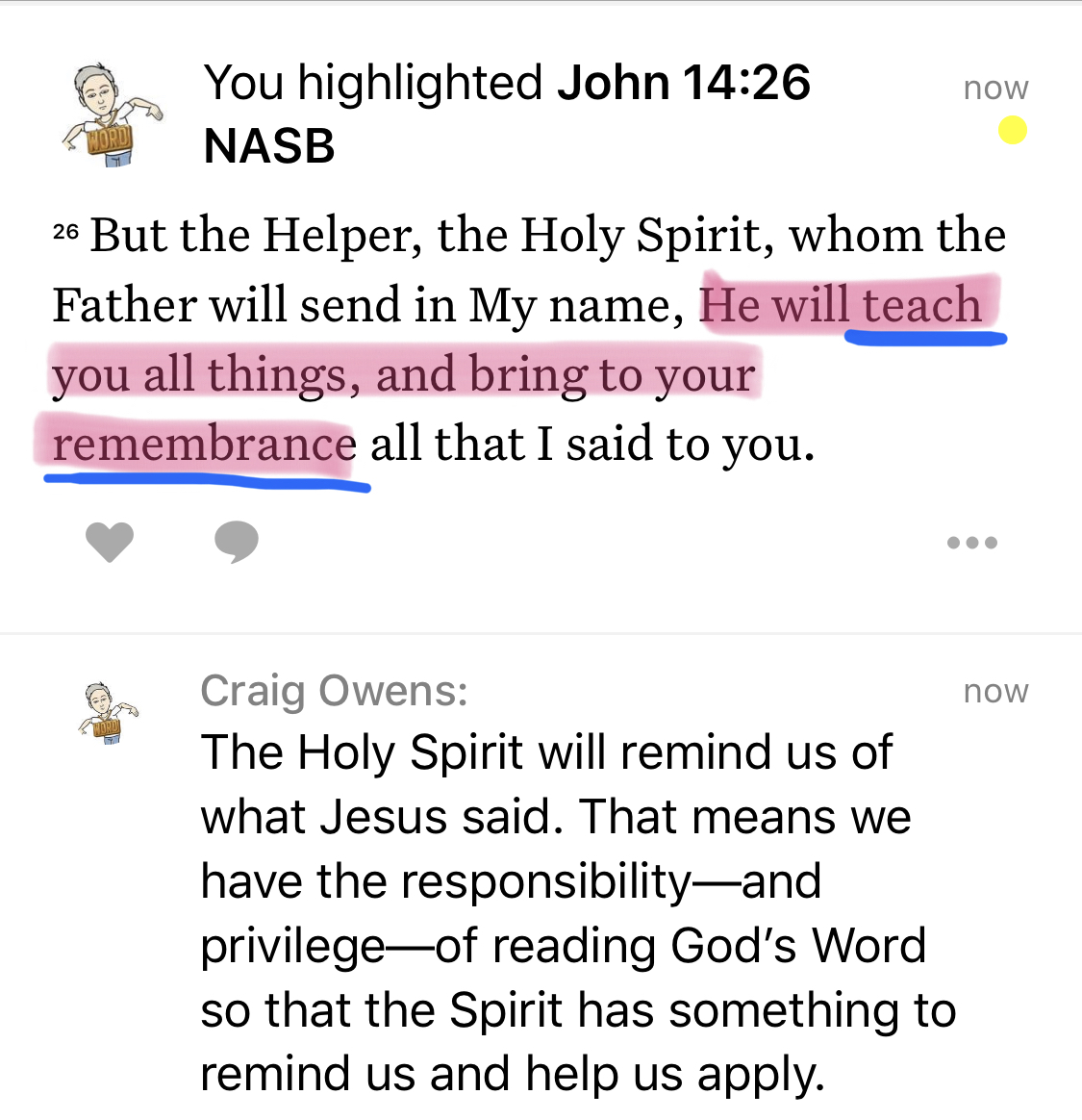
I have often said that the greatest Expositor of Scripture is the Holy Spirit. He is the One who inspired the biblical authors, and He is also the One living in a Christian to illuminate the biblical texts. 

Before you open your Bible, pray this prayer from the psalms, “Open my eyes to see wonderful things in Your Word” (Psalm 119:18). And then listen to the Spirit’s voice as He takes you into the truth that will enrich your life and bring God greater glory. Just like those first Christians who were baptized in the Holy Spirit became skilled in their understanding of Scripture, you can experience the exact same thing today!

I have a whole series of messages on the power of Pentecostal Christians that you can read by clicking here and here.

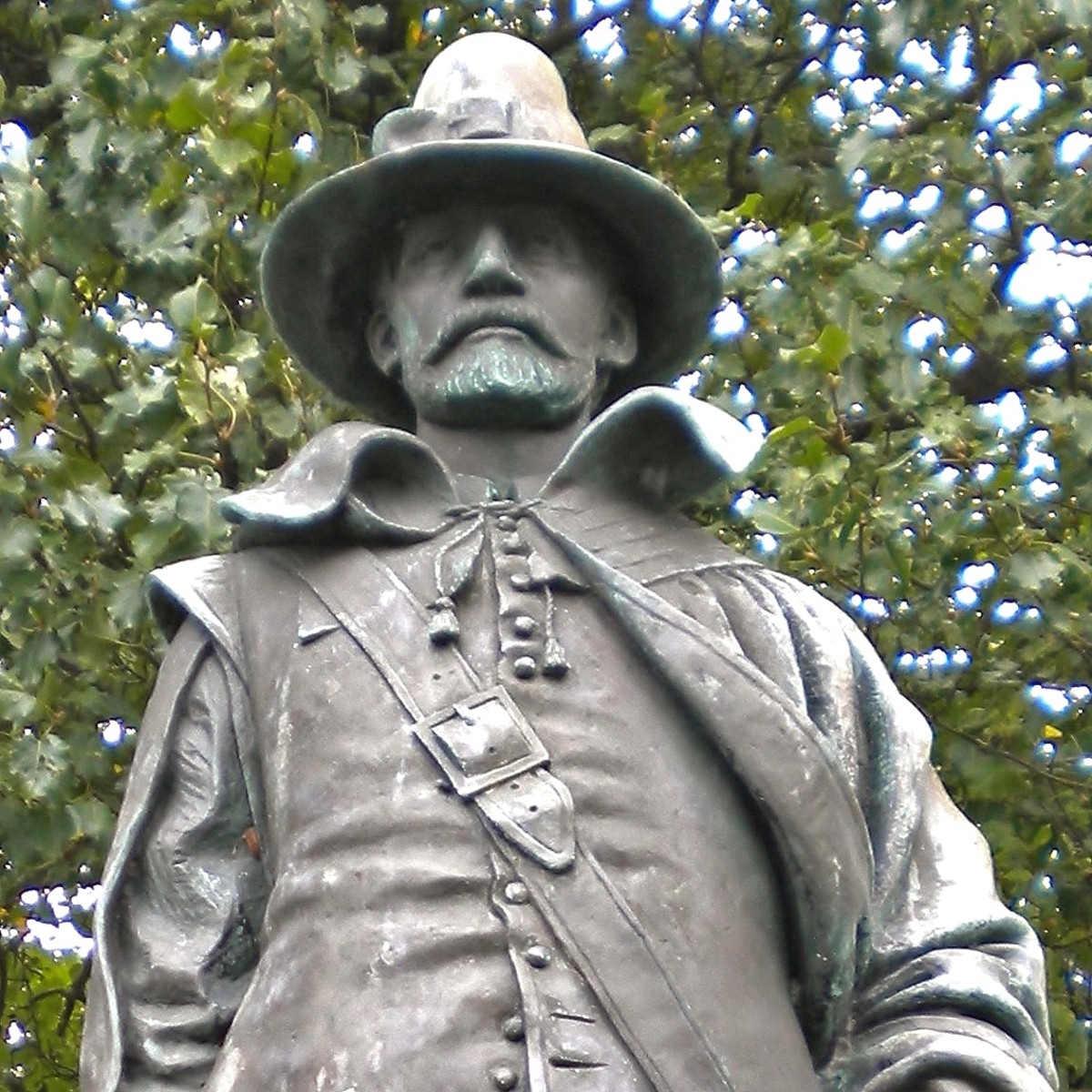
Poetry Saturday—Epitaphium Meum

From my years young in days of youth,
God did make known to me His truth,
And call’d me from my native place
For to enjoy the means of grace
In wilderness He did me guide,
And in strange lands for me provide.
In fears and wants, through weal and woe,
As pilgrim passed I to and fro:
Oft left of them whom I did trust;
How vain it is to rest on dust!
A man of sorrows I have been,
And many changes I have seen.
Wars, wants, peace, plenty have I known;
And some advanc’d, others thrown down.
The humble, poor, cheerful and glad;
Rich, discontent, sower and sad:
When fears with sorrows have been mixed,
Consolations came betwixt.
Faint not, poor soul, in God still trust,
Fear not the things thou suffer must;
For, whom He loves He doth chastise,
And then all tears wipes from their eyes.
Farewell, dear children, whom I love,
Your better Father is above:
When I am gone, He can supply;
To Him I leave you when I die.
Fear Him in truth, walk in His ways,
And He will bless you all your days.
My days are spent, old age is come,
My strength it fails, my glass near run:
Now I will wait when work is done,
Until my happy change shall come,
When from my labors I shall rest
With Christ above for to be blest. —William Bradford

Thursdays With Spurgeon—In Pursuit Of Truth

This is a weekly series with things I’m reading and pondering from Charles Spurgeon. You can read the original seed thought here, or type “Thursdays With Spurgeon” in the search box to read more entries.

In Pursuit Of Truth 

     The disciples had been instructed concerning certain elementary doctrines by Christ, but He did not teach His disciples more than what we should call the ABCs of religion. He gives His reasons for this in the twelfth verse: ‘I still have many things to say to you, but you cannot bear them now’ [John 16:12]. His disciples were not possessors of the Spirit. They had the Spirit so far as the work of conversion was concerned, but not as to the matters of bright illumination, profound instruction, prophecy, and inspiration. Jesus says, ‘I am now about to depart, and when I go from you, I will send the Comforter to you. You cannot bear these things now. Howbeit, when He, the Spirit of truth, is come, He will guide you into all truth’ [John 16:13]. The same promise that He made to His apostles stands good to all His children. …  

     We think it is right that the Christian ministry should be not only arousing but instructing, not merely awakening but enlightening, that it should appeal not only to the passions but to the understanding. We are far from thinking doctrinal knowledge to be of secondary importance. We believe it to be one of the first things in the Christian life, to know the truth and then to practice it. …  

     What we call curiosity is something given us of God impelling us to search into the knowledge of natural things. That curiosity, sanctified by the Spirit, is also brought to bear in matters of heavenly science and celestial wisdom. … A true Christian is always intently reading and searching the Scriptures that he may be able to certify himself as to its main and cardinal truths. …  

     Depend on this: The more you know of God’s truth, all things being equal, the more comfortable you will be as a Christian. …  

     Knowledge of truth will make us very serviceable in this world. We will be skillful physicians who know how to take the poor distressed soul aside, to put the finger on his eye and take the scale off for him that heaven’s light may comfort him. … There is nothing like the real truth and the whole truth to make a man useful.  

From The Holy Spirit: The Great Teacher 

Throughout the public ministry of Jesus, the Gospels tell us of His apostles simply not understanding that Jesus was fulfilling Old Testament prophecy in all that He was doing. But all of that changed after the Day of Pentecost when then followers of Jesus were baptized in the Holy Spirit! 

Beginning with Peter’s sermon on the Day of Pentecost and throughout the rest of the New Testament, we see how the Christians took Old Testament Scriptures and applied them in the new understanding the Holy Spirit gave them of the work of Jesus. As a result, radical changes began to take place not only within the Church but throughout society as well. 

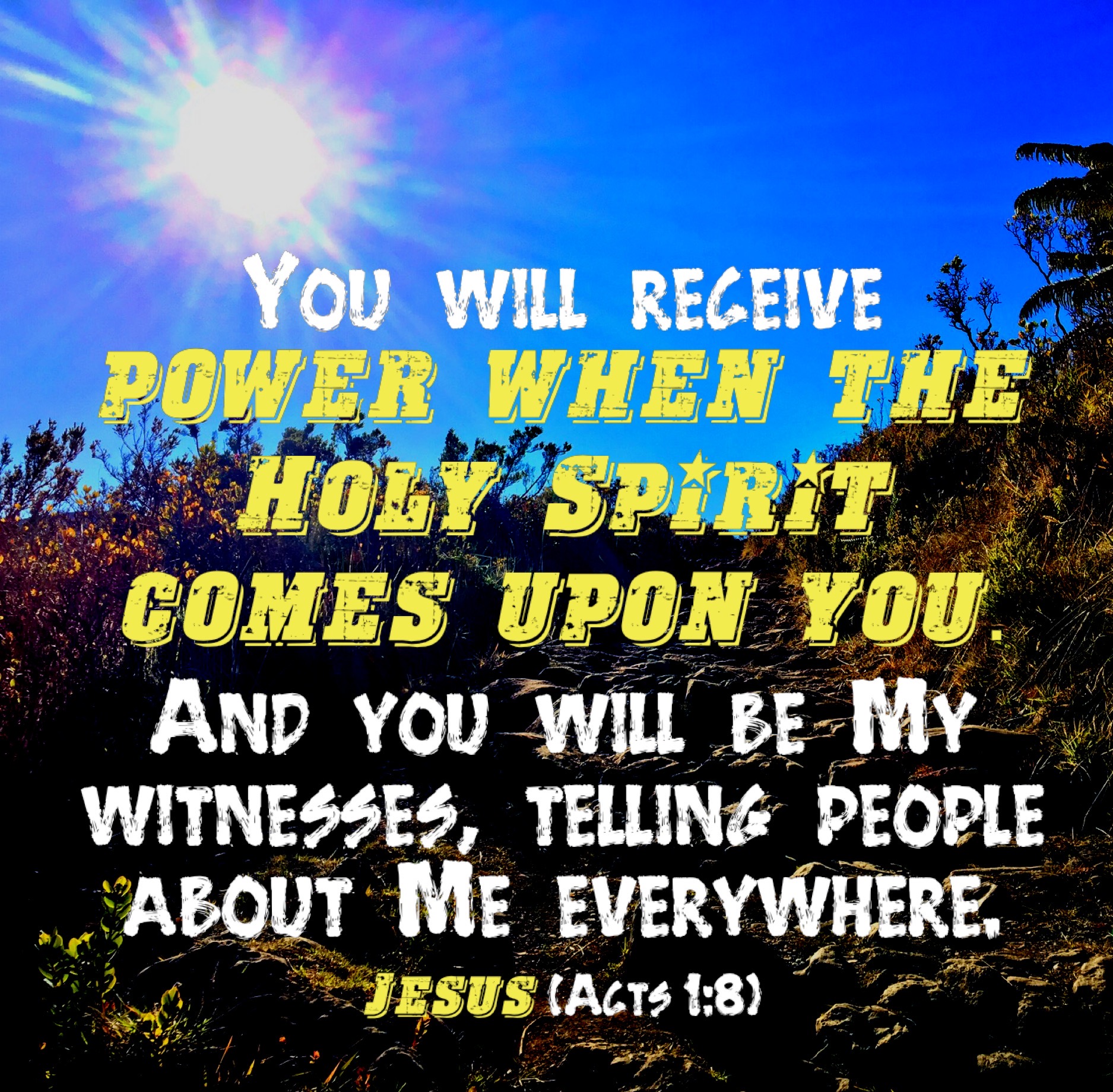
As Spurgeon noted, “The same promise that He made to His apostles stands good to all His children.” That promise of the Holy Spirit’s empowerment, illumination, creativity, and application of Scripture is still available for all Christians today! 

Don’t limit your Christian testimony or your effectiveness in the world by keeping the Holy Spirit relegated to some unknowable, mysterious work. Allow Him to be the driving force in all that you think and do! 

I have a whole series of messages on the power of Pentecostal Christians you can read by clicking here and here.

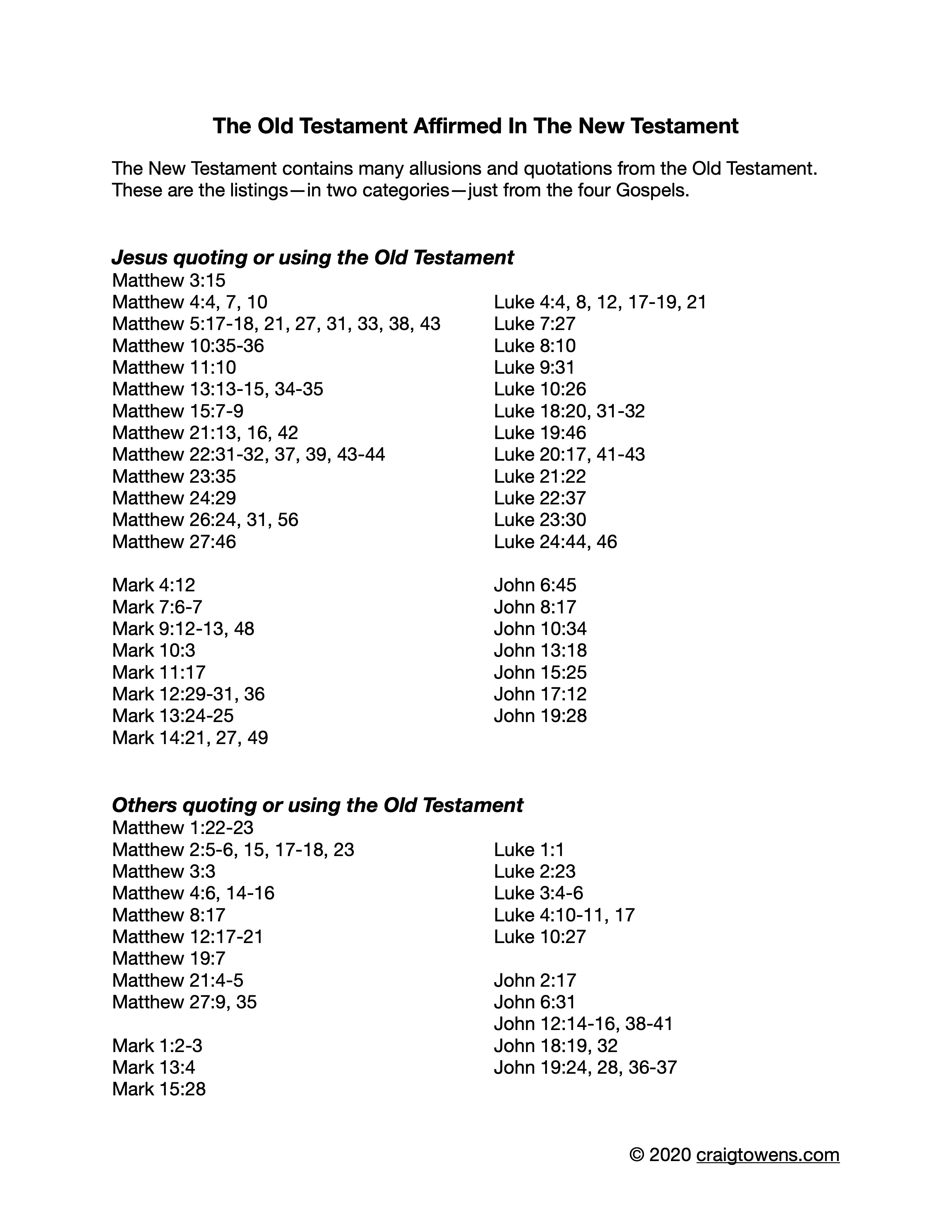
The Old Testament Affirmed In The New Testament

(click image for a larger view)

Sometimes, instead of referring to the two major divisions of the Bible as the Old Testament and the New Testament, I prefer to use the First Testament and the Second Testament. This helps me remember that “Old” doesn’t mean outdated and “New” doesn’t mean forgetting what came before it. 

I love how B.B. Warfield describes the First Testament as being like a mansion with richly-decorated, beautifully-ornate rooms, but which are dimly lit. With Christ’s Advent described in the Second Testament, the light is turned on and we can now appreciate the beauty that was always there! 

Sadly, there are far too many people who see the two divisions of the Bible as separate. In reality, the First Testament is affirmed over and over again in the Second Testament. In fulfilled prophesy alone, there is an abundance of evidence! 

But let’s get even more obvious: In just the four Gospels there are at least 100 direct mentions or quotations of passages from the Old Testament. Clearly, both Jesus and the Gospel writers saw the First Testament as an integral part of Christ’s ministry. 

Check out this list that I compiled and look up the references for yourself (a great place to look up Scriptures is on BibleGateway.com). 

If you would like to download a PDF version of this list, click here → Old Testament affirmed in the New Testament ← If you would like to use this document in a teaching session, just be sure to mention that you downloaded it from craigtowens.com. Thanks! 

More resource for your Bible study: 

Now And Not Yet

Psalm 68 is a Christological Psalm. That means it points to Jesus and it is fulfilled through Christ’s First and Second Advents. These types of psalms don’t make sense if they are restricted strictly to the Old Testament. 

As I have explained previously, Hebrew literature often puts the key point in the middle—in the case of this psalm, that’s verses 18-20. The opening verse sets the stage, or the scene of battle, and then right in the middle of this psalm of David is the description of God’s victory won through Jesus. 

There are three Selahs in this psalm, and I want you to notice what’s happening at each one: 

  • When You marched through the wasteland (v. 7) 
  • Who daily bears our burdens (v. 18) 
  • Sing praise to the Lord (v. 32) 

Do you remember the three definitions of Selah? A pause to consider; a breath before the crescendo; a time to weigh what’s valuable. In this case, I believe we should lean more to the second definition. Why? Because all three of these Selahs shows us what God has done, what He is still doing, and what He will ultimately do in the eternity of Heaven. I believe we are living in the breath/Selah after Christ’s First Advent and leading up to the crescendo of His Second Advent. 

Jesus is BOTH the Immanuel that came to earth at His First Advent AND the returning King at His Second Advent. We are living in an era of BOTH “now” AND “not yet.” 

The apostle Paul looks back to this psalm (especially those middle verses of 18-20) even as he looks forward to the Second Advent. He captures the essence of “now” and “not yet” in all these passages:  

Jesus paid the price for our sin.
He broke the bonds of hell and death.
He prepared the way to Heaven.
He showed the way to Heaven.
He built our mansions in Heaven.
He WILL return to take us to be with Him in Heaven!


So how shall we now live in this time of “now” and “not yet”? In a word: AWARE… 

  • …of His ultimate victory (Psalm 68:1) 
  • …of the desperation of the enemy. Death, sin, and the devil have been defeated! We now deal with a broken army, a scattered foe in the final death throes, a wounded, dying warrior desperately lashing out. The prince of this earth is quickly failing, while God is liberally pouring out rewards that were purchased by Christ our King! 
  • …of the brevity of this life (v. 2)
  • …of the joy of living in God’s presence (v. 3) 
  • …of the power of worship (v. 4) 
  • …of our confidence in being heirs of God and co-heirs with Christ (vv. 5-6) 

Now is not the time for fainting, but fighting the good fight. Our Immanuel has won the battle, He will continue to strengthen us every day that we walk this Earth, and He will keep us by His side as He reigns for all eternity as King of kings and Lord of lords! 

If you’ve missed any of the previous posts in this series, you can check out the full list by clicking here. 

Thursdays With Spurgeon—Be A Reflector

This is a weekly series with things I’m reading and pondering from Charles Spurgeon. You can read the original seed thought here, or type “Thursdays With Spurgeon” in the search box to read more entries.

Be A Reflector 

For it is the God who commanded light to shine out of darkness, who has shone in our hearts to give the light of the knowledge of the glory of God in the face of Jesus Christ. (2 Corinthians 4:6) 

     It is by the heart that we know God and Christ, and as our affections are purified, we become sensible of God’s presence in Christ. … Our beholding Him has purified the eyes that have gazed upon His purity. His brightness has helped our eyesight so that we see much already and will yet see more. …  

     Why did not everybody see the glory of God in Jesus Christ when He was here? It was conspicuous enough. Answer: It matters not how brightly the sun shines among blind men. … What, then, has happened to us? To eternal grace be endless praise! God Himself has shined into our hearts. That same God who said, ‘Light be,’ and light was, has shined into our hearts! … If you can delight in God in Christ Jesus, then remember, no man can say that Jesus is the Christ but by the Holy Spirit, and you have said it [Matthew 16:13-17]! …  

     You must not hoard up the light within yourself—it will not be light to you if you do. Only think of a person when his room is full of sunlight saying to his servant, ‘Quick, now! Close the shutters and let us keep this precious light to ourselves.’ Your room will be in the dark, my friend! … 

     A man of God, when he receives the light of Christ, can become so perfect a reflector that to common eyes, at any rate, he is brightness itself! … Scatter your light in all unselfishness. Wish to shine, not that others may say, ‘How great he is,’ but that they, getting the light, may rejoice in the Source from which it came to you and to them.

From The Glory Of God In The Face Of Jesus Christ

As the old hymn reminds us, “’Twas grace that taught my heart to fear, and grace my fears relieved; how precious did that grace appear the hour I first believed.” It is by God’s grace alone that we have been given light to see Jesus and to place our faith in Him! 

That light continues to grow within us the longer we gaze at the glory of God in the face of Jesus. Immerse yourself in the Gospels. Don’t read your Bible just to know the Word of God, but read to get to know the God of the Word better. Let the Holy Spirit purify your vision. 

Then you will become a reflector of God’s glory. The love and light of God are too wonderful to hoard to yourself! Ask God to bless you with a greater capacity to reflect the light of His Son to a dark, groping world.


He Who Laughs Last

Traced back to a play in the early 1600s, it still rings true: “He who laughs last, laughs best. 

The distraught father named Jairus hurriedly left his home. He was looking for this Man named Jesus. People said Jesus could perform miracles, and Jairus needed one. 

He found Jesus and quickly explained that his 12-year-old daughter was dying. They had tried everything they knew to do, but she kept inching closer and closer to death’s door. Jesus readily agreed to go with Jairus to his home. 

Along the way, Jesus was interrupted by another woman in desperate need, and He stopped to heal her. As Jairus was (im)patiently waiting for Jesus to continue on the journey, one of his servants ran up to Jairus with the sad news, “Your daughter is dead.” 

Jesus looked at this heartbroken father and simply said, “Don’t be afraid. Just believe, and your daughter will be well.” 

Jairus took Jesus at His word and continued walking with Jesus to his home. 

While Jairus was gone, family members and friends had shown up to mourn the death of this sweet girl. They were wailing loudly, but the clear voice of Jesus could be heard even over their woeful cries: “Stop crying. She is not dead, only asleep.” 

There was a pause, and then there was a totally unexpected and out-of-place response: laughter. 

Not joy-filled laughter, but mocking, derisive laughter at the utter foolishness of the words of Jesus. 

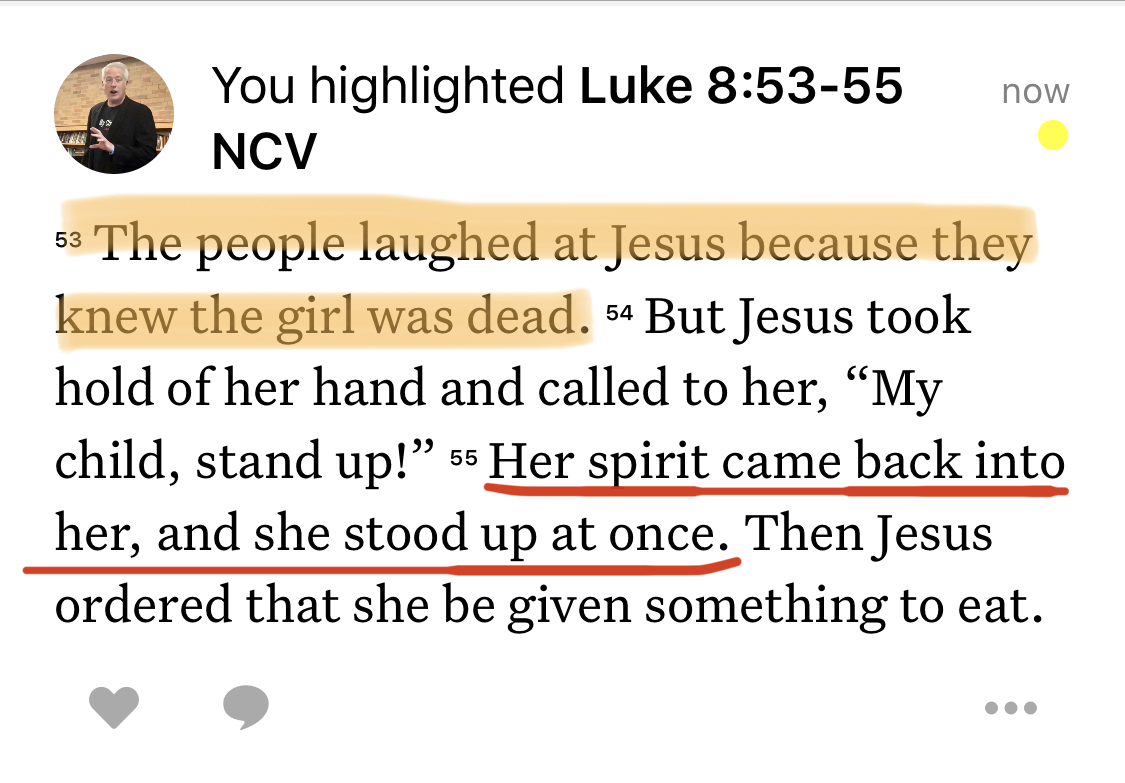
“What do you mean, ‘She isn’t dead’” they yelled. “We’ve been in her room. We’ve seen the cold, lifeless body! She is absolutely, undeniably dead!” And they continued to laugh at the sheer ridiculousness of what Jesus had pronounced. Many of the laughs probably turned to jeers as they began to mock His foolish, insensitive statement. The historian Luke wrote, “They knew the girl was dead.” 

Jesus took the grieving yet believing parents into the girl’s room, He took her lifeless hand in His hand, and simply said, “Little girl, get up.” 

And she did. Fully alive! 

Let me ask you something: Who was laughing now?! 

I’m sure the uncontainable joy of these parents burst out into laughter. And I think Jesus shared in the joyful laughter as well. 

“He who laughs last, laughs best.” 

Friend, what do you “know” right now? What’s gone wrong that cannot be fixed? What terminal diagnosis have the doctors given? What is approaching death’s door? What has already died? 

Listen again to the words of Jesus: “Don’t be afraid. Just believe.” 

Jesus gets the final word. Jesus gets the final laugh. Jesus will make all things new! 

The Sovereign Lord will wipe away the tears from all faces; He will remove His people’s disgrace from all the earth. (Isaiah 25:8) 

He will wipe every tear from their eyes. There will be no more death or mourning or crying or pain, for the old order of things has passed away. He who was seated on the throne said, “I am making everything new!” (Revelation 21:4-5) 

Don’t be afraid. Just believe. 

Jesus has secured the last—and best—laugh for both you and Himself! A laughter that will reverberate through all of eternity!