7 Quotes From “The Ministry Of God’s Word”

The Ministry Of God's WordThe Ministry Of God’s Word by Watchman Nee is a MUST READ for all pastors, preachers and evangelists. You can read my book review by clicking here. Over the next few Fridays, I’m going to share some powerful quotes from this book.

“In incarnation … the Word instead was dressed in Man; therefore it had human feeling, thought and opinion, though it remained God’s Word. … In this do we find a great principle of the Bible: that it is possible for the Word of God to be unimpaired by man’s feeling. The presence of human feeling does not necessarily ruin God’s Word; it does so only when such feeling is inadequate. Herein lies a tremendous problem. The great principle is that human elements must not be of such a nature as to hinder God’s Word.”

“God will work in man until his human elements do not damage God’s Word. … The Holy Spirit so operates in man, so controls and disciplines him, that the latter’s own elements can exist without impairing God’s Word; on the contrary, they fulfill it.”

“To be the one who delivers God’s Word we must be pruned and refined. God has to lay aside those whose human makeup contains many uncleannesses, fleshly things, and matters condemned by God. Others He has to bypass because they have never been broken before God, or their thoughts are not straightforward, or their lives are undisciplined, their necks stiff, their emotions untamed, or they have a controversy with God.”

“We need to be daily disciplined. Any defect in us will defile the Word and destroy its power. … The greatest difficulty we confront in preaching the Word is not whether the subject is proper or the phraseology correct, but whether the man is right.”

“God chooses men to be His ministers in order that His Word may carry a human flavor.” 

“The Bible is not a collection of devotional articles; it is men performing or living out the Word of God.”

“God puts His Word in us that we may meditate on it, feel after it, be afflicted by it, or rejoice in it, before the Word is released by us. … Thus the ministry of the Word is not the mere delivery of sermons we memorize. We must allow the Word to come to us, to drill and to grind us, until it flows out with—yes, our personal elements in it—and yet not spoiled or corrupted in the least. The Lord wishes to use us as a channel of living water.”

Thursdays With Oswald—The Spirit Of Antichrist

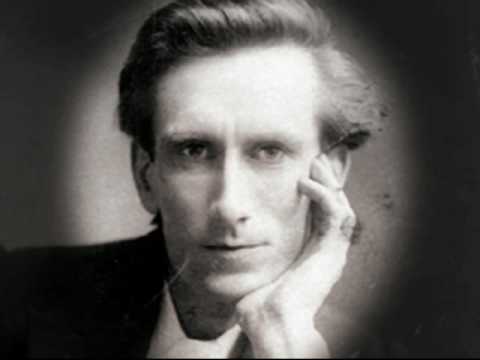
Oswald ChambersThis is a weekly series with things I’m reading and pondering from Oswald Chambers. You can read the original seed thought here, or type “Thursdays With Oswald” in the search box to read more entries.

The Spirit Of Antichrist 

     The spirit of antichrist is that spirit which “dissolves by analysis” the Person of Jesus—“someone unique, but not what the New Testament claims.” To preach the Jesus of the Gospels at the expense of the Christ of the Epistles is a false thing, such a false thing that it is antichrist to the very core, because it is a blow direct at what Jesus said the Holy Spirit would do, viz.: expound Him to the disciples, and “through their word” to innumerable lives to the end of Time. 

     If I say, “Of course God would never convey a right interpretation of Himself through a handful of men like the disciples,” I am casting a slur on what Jesus said, telling Him that His reliance on God’s promise of the Spirit was without justification; that His basis of confidence on the Holy Spirit’s revelation of Himself to the disciples was misplaced. 

From Conformed To His Image 

The spirit of antichrist is any thought that diminishes God’s Word, or diminishes the Person of Jesus Christ. But I don’t want to spend my time trying to spot the counterfeit, antichrist teachings. I want to know the Original—the Authentic—so well, that I can easily spot the antichrist forgeries.

This means that I must study all of the Bible. I cannot exclude the Old Testament; nor can I choose the Epistles and ignore the Gospels, or vice versa. As I study, I must rely on the Holy Spirit’s help. He breathed on the men that wrote the inspired Word, so He is the only One Who can breathe on my heart and mind the truth of the Word as I study it.

If the spirit of antichrist was already being discussed in the New Testament, and again by Oswald Chambers 100+ years ago, how much more prevalent must it be now! I must know the Authentic Word and the Authentic Christ so well that I can immediately identify the masquerading antichrist.

7 Quotes From “Did Jesus Rise From The Dead?”

Did Jesus Rise From The DeadDid Jesus Rise From The Dead? is an excellent apologetic for both the biblical skeptic and the biblical student. You can read my full book review by clicking here. Below are seven noteworthy quotes and one infographic from this fascinating book.

“One of the most noteworthy facts about the early Christian belief in Jesus’ resurrection was that it flourished in the very city where Jesus had been publicly crucified. So long as the inhabitants of Jerusalem thought that Jesus’ corpse lay in the tomb, few would have been prepared to believe such silliness as the claim that God had raised Jesus from the dead.”

“We have the extraordinary number of at least five independent sources for Jesus’ burial, some of which are extremely early. The Gospels describe Joseph as a rich man, a member of the Jewish Sanhedrin. As a member of the Jewish Sanhedrin that condemned Jesus, Joseph of Arimathea is unlikely to be a Christian invention. The Sanhedrin was a sort of Jewish high court made up of seventy of the leading men of Judaism, which presided in Jerusalem. There was an understandable hostility among early Christians toward the Jewish Sanhe-drists, for Christians blamed the Sanhedrists for engineering a judicial murder of Jesus at the hands of the Romans. … Therefore, Jesus’ burial by Joseph is very probably historical, since it would be almost inexplicable why Christians would invent a story about a Jewish Sanhedrist who gives Jesus a proper burial.”

“Matthew is clearly working with an independent source, for he includes the story of the guard at the tomb, which is not derived from Mark and is unique to his Gospel; moreover, his comment that the rumor that the disciples had stolen Jesus’ body, ‘And this story has been spread among the Jews to this day,’ (Matthew 28:15) shows that the guard is not Matthew’s own creation, but was part of prior tradition. Luke also has an independent source, for he tells the story, not found in Mark, of two disciples’ inspecting the tomb to verify the women’s report that the tomb was vacant. This story cannot be regarded as Luke’s own creation, since the incident is independently reported in John’s Gospel. And, again, given John’s independence of the other three Gospels, we have yet another independent report of the empty tomb.”

Did Jesus Rise From The Dead infographic

(click image for a larger view)

“To appreciate how restrained Mark’s narrative is, we need only read the account in the second-century apocryphal Gospel of Peter. It describes Jesus’ triumphant exit from the tomb as a gigantic figure whose head reaches above the clouds, supported by giant angels, followed by a talking cross, heralded by a voice from heaven, and all witnessed by a Roman guard, the Jewish leaders, and a multitude of spectators! This is how real legends look: They’re richly decorated with theological and apologetical motifs. By contrast, Mark’s account is stark in its simplicity.”

“Think about that: ‘His disciples came by night and stole Him away’ [Matthew 28:13]. The Jewish authorities did not deny the fact that Jesus’ tomb was empty; instead they entangled themselves in a hopeless series of absurdities, trying to explain it away. In other words, the Jewish claim that the disciples stole the body presupposes that the body was, in fact, missing. Therefore, we have evidence from the very adversaries of the early Christian movement for the fact of the empty tomb.”

“All the followers of those first century messianic movements were fanatically committed to the cause…. But in no case right across the century before Jesus and the century after Him do we hear of any Jewish group saying that their executed leader had been raised from the dead, and he really was the Messiah after all.” —N.T. Wright

“A supernatural explanation of the empty tomb, the resurrection appearances, and the origin of the Christian faith is not contrived given the context of Jesus’ own unparalleled life, ministry, and personal claims.”

Did Jesus Rise From The Dead? (book review)

Did Jesus Rise From The DeadDr. William Lane Craig is a brilliant Christian apologist. Part of his brilliance is in the way he can make complex subject matters so accessible for everyone. This is fully on display in his book Did Jesus Rise From The Dead?

This book is a fairly quick read, but it is packed with powerful information. Point-by-point Dr. Craig leads us through the evidence for the empty tomb of Jesus, laying out all of the independently-corroborated evidence for Christ’s resurrection, and dismantling the arguments against His resurrection.

Next he lists several hypotheses—including the conspiracy hypothesis, the apparent death hypothesis, the displaced body hypothesis and the hallucination hypothesis—and gives us the criteria to analyze each of these hypotheses on our own. These criteria include the explanatory scope, the explanatory power, plausibility, less contrived theories, and the disconfirmation factors. Quite fascinating!

The book is well footnoted to give the reader ample sources to dig deeper on any of the points Dr. Craig covers. I could see this being an ideal book for those skeptical of the biblical claims of Christ’s resurrection, as well as a good study tool for Christians to prepare themselves to answer the objections others may have about the good news of Jesus being raised from the dead.

You Are God’s Favorite Place On Earth

Favorite placeUndoubtedly you have a favorite place. It might be a special friend’s house, or a summer cabin. Perhaps it’s your favorite wooded path around a lake, or even a comfy chair in your home where you find rest.

In our favorite places we might hear from God or reconnect with friends. Maybe in our favorite place we de-stress and get re-energized for life’s challenges. Wherever the place is, and whatever happens there, one thing is certain: We cannot stay there forever. At some point we’ll have to leave that favorite place.

But we can take that favorite place with us. That energizing, affirming, consoling, encouraging feeling we gained in our favorite place can go with us in our hearts and minds.

The people of Bethany and the disciples had a favorite Person in Jesus Himself. Jesus, too, had a favorite place—the village of Bethany—and favorite people—a special family in Bethany and His disciples—but He said, “It is for your good that I go away, so that I can send the promised Holy Spirit to you” (see John 16:7). Just before He ascended to Heaven, Jesus took His followers with Him to Bethany and instructed them to wait for the baptism of the Holy Spirit (Luke 24:49 and Acts 1:4-8). This time of waiting was the only time that Jesus instructed His followers to wait, after this we were to GO!

Indeed, this empowerment of the Holy Spirit was for us to go into all the world with the message of Jesus; it was not for us to hunker down in our favorite place. So the empowerment of the Holy Spirit helps us take our favorite place and Person with us. When we GO, we GO with a message of hope for the world.

We become God’s favorite place on earth, as we GO with an invitation for others to know this favorite relationship as well!

Being baptized in the Holy Spirit means that you’ve given Him unlimited access to your thoughts, your talents, your personality, your opportunities—your all—so that He can show the love of Jesus to others through you.

If you haven’t experienced this empowerment of the Holy Spirit, remember that it is a promised gift God wants to pour out on you (see Luke 11:11-13; 24:49; and Acts 1:4). All that is needed is for your willing heart to wait on Him to pour out this gift on you. What are you waiting for?!

Links & Quotes

link quote

Some great reading I found this weekend.

“God’s work on this earth languishes when God’s people give up their ministries of prayer and supplication.” —A.W. Tozer

Very thoughtful: Why We Should Say “Yes” To A Culture Of Marriage.

Hmmm … Teen Pregnancy Rates Drop When Planned Parenthood Locations Close.

An informative article about the Holy Spirit: Jesus’ Closest Companion.

“Grace is given to heal the spiritually sick, not to decorate spiritual heroes.” —Martin Luther

It becomes those to be generous who are the children of a gracious God.” —Charles Spurgeon

Debunking 7 Myths About Marijuana.

This is so cool! Laser surgery conducted on twins girls while they were still in the womb.

Where is the outrage in the mainstream media?! Pakistani married couple sentenced to death for their “anti-Islam” texts.

Do You Smell Like Jesus?

Christ's aromaScientists tell us that the sense of smell contributes to more vivid and clear memory recall than any of the other human senses. Have you ever thought about the things Jesus smelled? Or about the memories others recalled about Jesus because of the way He smelled?

Less than a week before His crucifixion, Mary anointed Jesus with a highly-scented spice called spikenard (see John 12:1-8; Mark 14:3-9; and Matthew 26:6-13). Let me rephrase that: Mary didn’t just “anoint” Jesus as we think about that word today, she doused Him in a lifetime supply of this fragrance. Some people complained, but Jesus told those sour people that it was absolutely beautiful what she had done, as Jesus carried this aroma with Him to the Cross.

After He died on the Cross, Joseph and Nicodemus prepared Jesus for burial with 75 pounds of myrrh and aloes (see John 19:38-40). Think about that: seventy-five pounds! In doing so they actually fulfilled a prophesy from the Old Testament about King Jesus’ triumphal return to life—

Your throne, O God, will last for ever and ever; a scepter of justice will be the scepter of Your kingdom. You love righteousness and hate wickedness; therefore God, Your God, has set You above Your companions by anointing You with the oil of joy. All Your robes are fragrant with myrrh and aloes and cassia… (Psalm 45:6-8).

Jesus carried a powerful aroma with Him all the way to the Cross, into the tomb, and when He burst forth alive from the tomb! 

Without Christ, our lives carry the stench of death. We cannot come into our Heavenly Father’s presence because of that putrid smell clinging to us. But when God forgives us of our sins as we place our faith in Jesus, we are wrapped in the robes of Christ: we smell like Him and are welcomed into the Father’s presence.

Easter is a reminder of how a forgiven Christian should now live—

Live a life filled with love, following the example of Christ. He loved us and offered Himself as a sacrifice for us, a pleasing aroma to God (Ephesians 5:2).

…Now [God] uses us to spread the knowledge of Christ everywhere, like a sweet perfume. Our lives are a Christ-like fragrance rising up to God (2 Corinthians 2:14-15).

How do you smell? Do you smell like Jesus? Are others attracted to the aroma of Christ because of what they smell in you? Smelling good honors the work Jesus did on the Cross and in overcoming the grave.

Poetry Saturday—When I Survey The Wondrous Cross

Isaac WattsWhen I survey the wondrous Cross
On which the Prince of glory died,
My richest gain I count but loss,
And pour contempt on all my pride.

Forbid it, Lord, that I should boast,
Save in the death of Christ my God!
All the vain things that charm me most,
I sacrifice them to His blood.

See from His head, His hands, His feet,
Sorrow and love flow mingled down!
Did e’er such love and sorrow meet,
Or thorns compose so rich a Crown?

Were the whole realm of nature mine,
That were a present far too small;
Love so amazing, so divine,
Demands my soul, my life, my all. —Isaac Watts


Links & Quotes

link quote

Some great reading (and watching) from the past couple of days.

“This generation has yet to prove all that prayer can do for believing men and women.” —A.W. Tozer

Come, my heart, be calm and hopeful today. Clouds together, but the Lord can blow them away. Since God will not fail me, my faith shall not fail; and as He will not forsake me, neither will I forsake Him.” —Charles Spurgeon

[VIDEO] This is priceless! Watch as a young man with Down Syndrome reads a special letter.

John Piper shares The Greatest Prayer In The World.

Tim Elmore discussing Generation Y: The Inverse Relationship Between Empathy And Narcissism.

This is why I love loving on our missionaries: Home Without A Home.

Some powerful Good Friday quotes compiled by Chilly Chilton in his post Cross Walk.

“Right now you may feel abused and unloved. The devil would have you believe that God has left you to your own devices—that you deserve to suffer, that it’s all over for you, that there is no hope. Beloved, those are lies from hell. God wants more than anything else to rid you of your perverted concept of Him.” —David Wilkerson

The Horrors Of Crucifixion

Good FridayWilliam Barclay, in his commentary on the Gospel of John, wrote graphically about the horrors of crucifixion—

   There was no more terrible death than death by crucifixion. Even the Romans themselves regarded it with a shudder of horror. Cicero declared that it was “the most cruel and horrifying death.” Tacitus said that it was a “despicable death.” It was originally a Persian method of execution. It may have been used because, to the Persians, the earth was sacred, and they wished to avoid defiling it with the body of an evil-doer. So they nailed him to a cross and left him to die there, looking to the vultures and the carrion crows to complete the work. The Carthaginians took over crucifixion from the Persians; and the Romans learned it from the Carthaginians.

   Crucifixion was never used as a method of execution in the homeland, but only in the provinces, and there only in the case of slaves. It was unthinkable that a Roman citizen should die such a death. Cicero says: “It is a crime for a Roman citizen to be bound; it is a worse crime for him to be beaten; it is well nigh parricide for him to be killed; what am I to say if he be killed on a cross? A nefarious action such as that is incapable of description by any word, for there is none fit to describe it.” It was that death, the most dreaded in the ancient world, the death of slaves and criminals, that Jesus died.

   The routine of crucifixion was always the same. When the case had been heard and the criminal condemned, the judge uttered the fateful sentence: Ibis ad crucem, “You will go to the cross.” The verdict was carried out there and then. The condemned man was placed in the centre of a quaternion, a company of four Roman soldiers. His own cross was placed upon his shoulders. Scourging always preceded crucifixion and it is to be remembered how terrible scourging was. Often the criminal had to be lashed and goaded along the road, to keep him on his feet, as he staggered to the place of crucifixion. Before him walked an officer with a placard on which was written the crime for which he was to die and he was led through as many streets as possible on the way to execution. There was a double reason for that. There was the grim reason that as many as possible should see and take warning from his fate. But there was a merciful reason. The placard was carried before the condemned man and the long route was chosen, so that if anyone could still bear witness in his favor, he might come forward and do so. In such a case, the procession was halted and the case retried. (emphasis added)

Always remember that Jesus willingly went through this for you and me.

Surely He took up our pain
    and bore our suffering,
yet we considered Him punished by God,
    stricken by Him, and afflicted.
But He was pierced for our transgressions,
    He was crushed for our iniquities;
the punishment that brought us peace was on Him,
    and by His wounds we are healed. (Isaiah 53:4-5, emphasis added)