Links & Quotes

The armor of God is not for us to fight in but to shield us while we pray. Prayer is the weapon!

I have a lot of new video content on my YouTube channel every week. Please check it out and subscribe so you don’t miss anything.

“Psychologists, since the beginning of the discipline, have argued about the essence of what it means to be human. Some, like [Sigmund] Freud, insist that we are motivated by physical pleasure, while others, like Victor Frankl or Abraham Maslow, believe that some higher purpose…. Human beings, made in the image and likeness of God, only realize their full potential and pleasure as they participate in the very being of God and know and experience the pleasure He takes in Himself and His glory.” —T.M. Moore 

“If you are persevering in faith today, you owe it to the blood of Jesus. The Holy Spirit, who is working in you to preserve your faith, is honoring the purchase of Jesus. God the Spirit works in us what God the Son obtained for us. The Father planned it. Jesus bought it. The Spirit applies it—all of them infallibly.” —John Piper

“The Hebrew word Davar (דבר, pronounced ‘daw-var’) reveals something profound about God’s Word—it’s not merely information, but transformation. … Throughout Scripture, God’s Word consistently proves both living and active. It has the power to create worlds (Genesis 1), transform lives (Psalm 119:105), and accomplish God’s purposes (Isaiah 55:11).” —Dave Adamson 

More fascinating archeology that supports the Bible’s historicity. This is a look at the library of letters found at Tell el-Amarna in Egypt. “The most obvious connection between the Amarna Letters and biblical history is that some of the letters appear to be describing, in real-time, the attacks of the Israelites during the period of the conquest. Remember, the initial conquest battles took a period of some 5–6 years, but the attempts by various tribes to conquer their allotted territories lasted into the period of the Judges. The letters from the rulers of some of the very cities named in the biblical conquest calling for help from the attacking ʿapîru/ḫa-bi-ru, provide a poignant backdrop to this period of biblical history.”

“Because I am your constant Companion, there should be a lightness to your step that is observable to others. Do not be weighed down with problems and unresolved issues, for I am your burden-bearer.” —Jesus in Sarah Young’s Jesus Calling, based on Psalm 31:19–20; John 16:33
The Malicious Attack

Listen to the podcast of this post by clicking on the player below, and you can also subscribe on AppleSpotify, or Audible.  

You may have noticed that the intensity of the pain of these sheep bites has been escalating—from flattery, to criticism, to gossip. Now we come to probably the most painful of bites: slander. This is the bite that will have the strongest pull toward the natural response, which will require our greatest reliance on the Holy Spirit to respond supernaturally. 

Remember that gossip has a veneer of truth on it; slander has no truth at all. They are outright lies. They are flimsy lies. They are malicious lies. One of the Hebrew words translated slander means scandal-monger: someone who trades in lies (Jeremiah 6:28 NLT; Leviticus 19:16).

(Check out all of the biblical references in this post by clicking here.) 

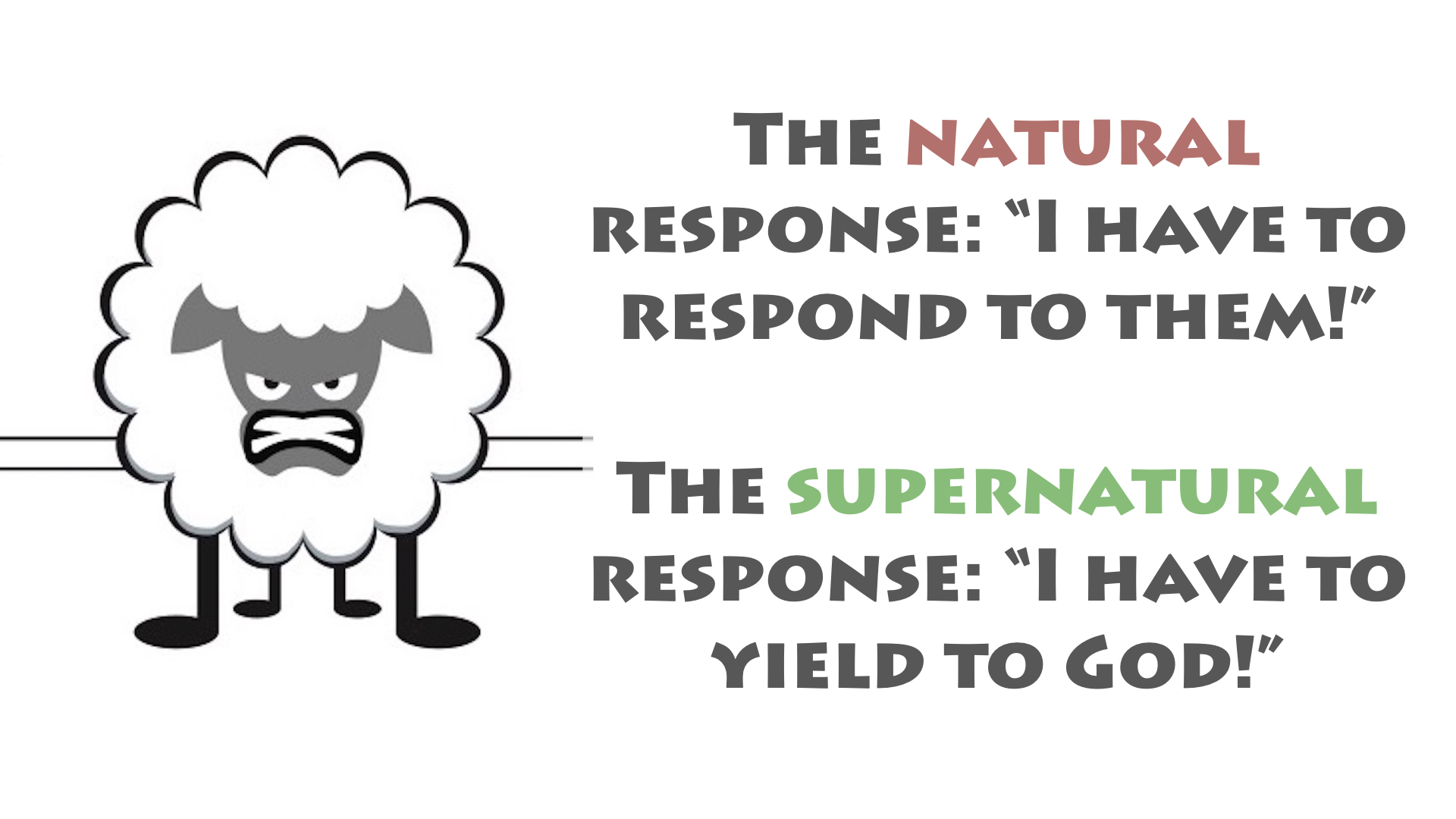
The natural response to slander is, “I have to respond to them!” The supernatural response to slander is, “I have to yield to God!” 

The natural response, however, is fueled by my wounded pride. On the other hand, the supernatural response is fueled by humility toward God. 

Slanderers are arrogant people too (remember Jeremiah said “they are as hard as bronze and iron” [Jeremiah 6:28]). God’s people are learning to humble themselves to wait for God (Psalm 38:12-15). These humble people are the ones who get God’s help, and not His laughter (James 4:6; Proverbs 3:34 NLT). 

Look at how Jesus dealt with the very natural urge to respond to those who slandered Him. After Jesus was arrested by the temple guards, He was hauled before one group after another and each time the slanderous lies were spitefully spit at Him. In front of the Sanhedrin, before Roman governor Pontius Pilate, and in the throne room of King Herod Antipas, angry men unleashed their venomous claims—none of which were true.  

There are two common themes we can notice in all of these settings.

  1. The lies were seen for what they were: complete fabrications without any truth behind them—Mark 14:55. Governor Pilate said “I find no basis for a charge against Him” (Luke 23:4), and he added, “Herod came to the same conclusion and sent Him back to us” (v. 15). 
  2. The silence of Jesus: “Jesus remained silent and gave no answer” (Matthew 27:13-14; Mark 14:61, 15:5). The only red letters in this interaction with both the Sanhedrin and Pilate are when Jesus is asked a direct question. Jesus quickly answers the questions, “Are You the Messiah,” “Are You a King,” and “Don’t You know the power I have?” (Mark 14:61, 15:2; John 19:10), but He never responds to the slander. 

Let me repeat: Our supernatural response can only come from yielding to the Holy Spirit’s influence. 

  1. We cannot treat slanderers as anything less than people created in the image of God (Genesis 1:27; Psalm 15:1, 3). 
  1. We must take our pain into God’s presence. This is what Jesus did (1 Peter 2:21-23). We can help ourselves by praying imprecatory prayers. These are words for God’s ears only (Jude 1:9; Psalm 58:6-8). 
  1. We have to learn to pray for our slanderers. We have to mature from praying against them to praying for them. Look at how Jesus interceded for His slanderers (Luke 23:34), which He calls us to as well (Luke 6:28). 
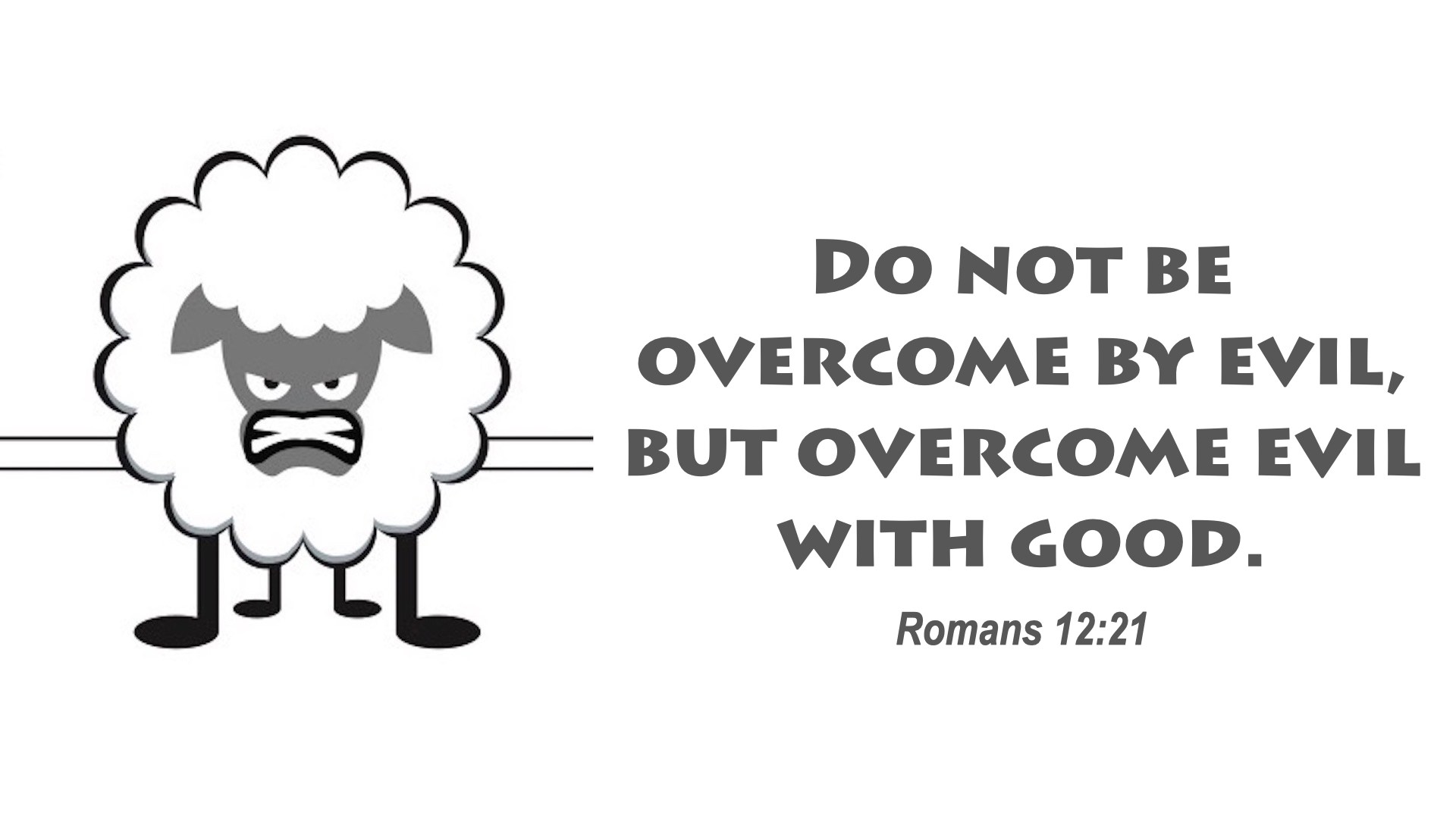
  1. We have to live as overcomers. We overcome by NOT responding to slander in the natural way (Romans 12:21). But we allow our supernatural response to be used as a powerful testimony (2 Corinthians 6:3-10; Colossians 3:1-2, 8, 12-14). 

We can do this—the Holy Spirit is empowering us to do this. Let’s not get down in the mud with those who slander us, but let’s yield to God and allow Him to handle this painful situation far better than we ever could. 

If you’ve missed any of the messages in this series, you can find them all here. And if you are a pastor, please check out my book When Sheep Bite, which will help you both respond to sheep bites and teach others how to respond as well. 

►► Would you please prayerfully consider supporting this ministry? My Patreon supporters get behind-the-scenes access to exclusive materials. ◀︎◀︎

Poetry Saturday—Brothers And Sisters The Same

Look around at the sign of the times,
churches are closing their doors.
Is it because God has left them
or because of internal wars?

There‘s people trying to find the Savior
but they don’t know where to go.
One says, “This church is a good one,”
another says, “No, it ain’t so.”

What happens when the doors lock?
What happens to the lost soul?
Is this what Jesus was all about?
Was fancy carpet His real goal?

Does anyone know where God truly is?
Did He tell you while deep in prayer?
Does He need stained glass windows
for Him to be present there?

If Jesus Himself came to your church
do you think that they’d let Him in?
Or would they say, “That‘s outrageous,
the people He’s with commit sin!”

Do you think that you’ve overcome,
that you‘re a sinner no more?
If that’s what you think, I’m sorry,
Jesus has something for you in store.

We all are sinners each and everyone.
None of us are innocent and pure;
if you think that you are different,
I don’t think that you are so sure.

So before you go pointing your finger,
before you go laying the blame,
remember what it says in the Bible:
we are brothers and sisters the same. —Barney Fritcher

Poetry Saturday—Jesus, Saviour, Grow In Me

O Jesus, Saviour, grow in me,
and all things else recede:
to You my heart would nearer be,
from sin be daily freed.

Each day embrace my weakness, Lord,
with Your supporting might;
and let my death be lost in life,
my darkness in Your light.

Let faith in You and in Your strength
my every motive move;
may You alone be my delight,
my passion and my love.

Fill me with gladness from above,
hold me by strength divine.
Lord, let the glow of Your great love
through my whole being shine.

Show me Your glory more and more,
Lord, holy, wise, and true!
Your living image I would be,
in joy and sorrow too.

Make this poor self grow less and less,
and be Yourself my aim;
and through Your grace, make me each day
more worthy of Your name. —Johann K. Lavater

Don’t __________ One Another

Listen to the podcast of this post by clicking on the player below, and you can also subscribe on AppleSpotify, or Audible.

Check out James 4:11, “Brethren…

  • …do not speak evil of one another” (NKJV) 
  • …do not accuse or malign one another” (AMP)
  • …do not bad-mouth one another” (MSG)
  • …do not slander one another” (GW)
  • …do not criticize one another” (NLT)
  • …do not defame one another” (Greek definition for katalaleo) 

Why not? James gives us three good reasons:

  1. All humans are made in God’s image. So to defame another person is to defame God. 
  2. All humans are a part of my family. “One another” (Greek allelon) and “brethren” (Greek adelphos) includes me too! 
  3. It only set me up to be judged in the same way—“What right do you have to judge or criticize others?” (TLB) … “Who are you that you presume to pass judgment on your neighbor?” (AMP) … “Who do you think you are to meddle in the destiny of others?” (MSG). 

The bottom line—

If I don’t want someone to ___________ me, I shouldn’t ___________ them! 

(see Luke 6:31 and James 2:8)

►► Would you please prayerfully consider supporting this ministry? ◀︎◀︎

Truth Is The Source Of Freedom

“The university has traditionally been a unified place (Latin unum) where faculty and students gather in order to discover truth (Latin veritas). A generation ago, college was expected to be a place of freedom, particularly for expression of and engagement with different—even disagreeable—ideas. Sadly, recent events and numerous statistical surveys reveal that such days may be over. Today, many on university campuses expect to be protected or shielded from speech and ideas that could be deemed offensive, even if the free speech rights of others—as well as the pursuit of truth—are sacrificed in the process.

“The current climate, in which people are forcibly prevented from sharing ideas, has arisen because the Culture of Confusion has mistaken autonomy for freedom. In a post-truth culture, where preferences and opinions are elevated over facts and truth, anything that challenges our preferences, even if a challenge is laced with facts, is deemed offensive and oppressive. The Western contemporary concept of freedom is all about the ability to do, feel, and say whatever one wants, as long as it doesn’t hurt someone else. But this isn’t freedom—it’s autonomy (which literally means being a law unto one’s self). Freedom operates at its best within the confines of truth. The pursuit of autonomy is the root of the post-truth mindset that fuels the current Culture of Confusion. If each of our personal preferences is celebrated without truth as our guide, if we are all ‘laws unto ourselves,’ confusion is inevitable in at least three important ways.

“First, the culture seems to have lost its ability to reason—to think and act clearly and wisely. When feelings are vaunted over facts in the quest for autonomy, reason dies in the process. If the facts get in the way of unrestrained autonomy, then the facts will have to be ignored and any opposition will be silenced.

“Second, the Culture of Confusion has lost its moral accountability. If it’s true that ‘man is the measure of all things,’ as Protagoras proclaimed centuries ago, then we make the rules, not God. If there is no God to help us, then we have to help ourselves. There are atheists who claim that the ‘better angels of our nature’ will result in us reaching a rough agreement about moral values. But history has shown us that it’s only a short leap from secular humanism to self-worship and supreme authority. Moral clarity shows us the objective truth beyond our preferences. And we have to mold our desires and preferences to the truth’s boundaries. Because we don’t want to conform, moral clarity has become the vice of the day, and moral confusion the virtue.

“Third, in striving to go from bearing the Imago Dei (with accountability to God) to Deus Homo (with accountability to no one), we have lost what it means to be human and to value other human beings. When we become the measure of all things, then we determine which humans are valuable and which ones are not, meaning our sense of objective human value is lost in the process.

“There is a fundamental difference between limitless individual autonomy and true freedom. The Bible opposes the former and champions the latter (James 1:25; 2:12). The book of Judges demonstrates this well. Each time the people’s thirst for autonomy landed them in trouble, God sent a judge—a person who took his authority from God—to guide the people. But they rejected God’s authority time and again in favor of their personal sovereignty until the resultant chaos became too much. When we jettison truth as our guide, we will end up with autonomy and then chaos, but not freedom. Each one of us, individually in our hearts, needs to search for the source of freedom—truth.” —Abdu Murray, Saving Truth

What Do The Good Works Of Jesus Mean?

“Jesus was well-known for His many good works, which were primarily works of restoration. The good works of Jesus restored a measure of the good order God intended when He created the world and all things, and point forward to a day of complete renewal, of heaven and earth and all things. People, who are the image-bearers of God, were not meant to be deaf or blind, bent or beset by demons, riven with diseases, or at one another’s throats. Indeed, they were not even meant to die.

“Good works were an essential component of Jesus’ plan for restoring the goodness of creation, and He promised His followers that they would do many more good works than He had done, as they seek His Kingdom and live in the power of His Spirit (John 14:12). …

“And Jesus told His followers to tune up a similar harmony of words and works in their own lives, to follow Him as His witnesses, living and speaking the truth in love. For it is in such harmony, consistently sung into the world by every follower of Christ, that the Kingdom of God and His goodness advances on earth as it is in heaven.” —T.M. Moore

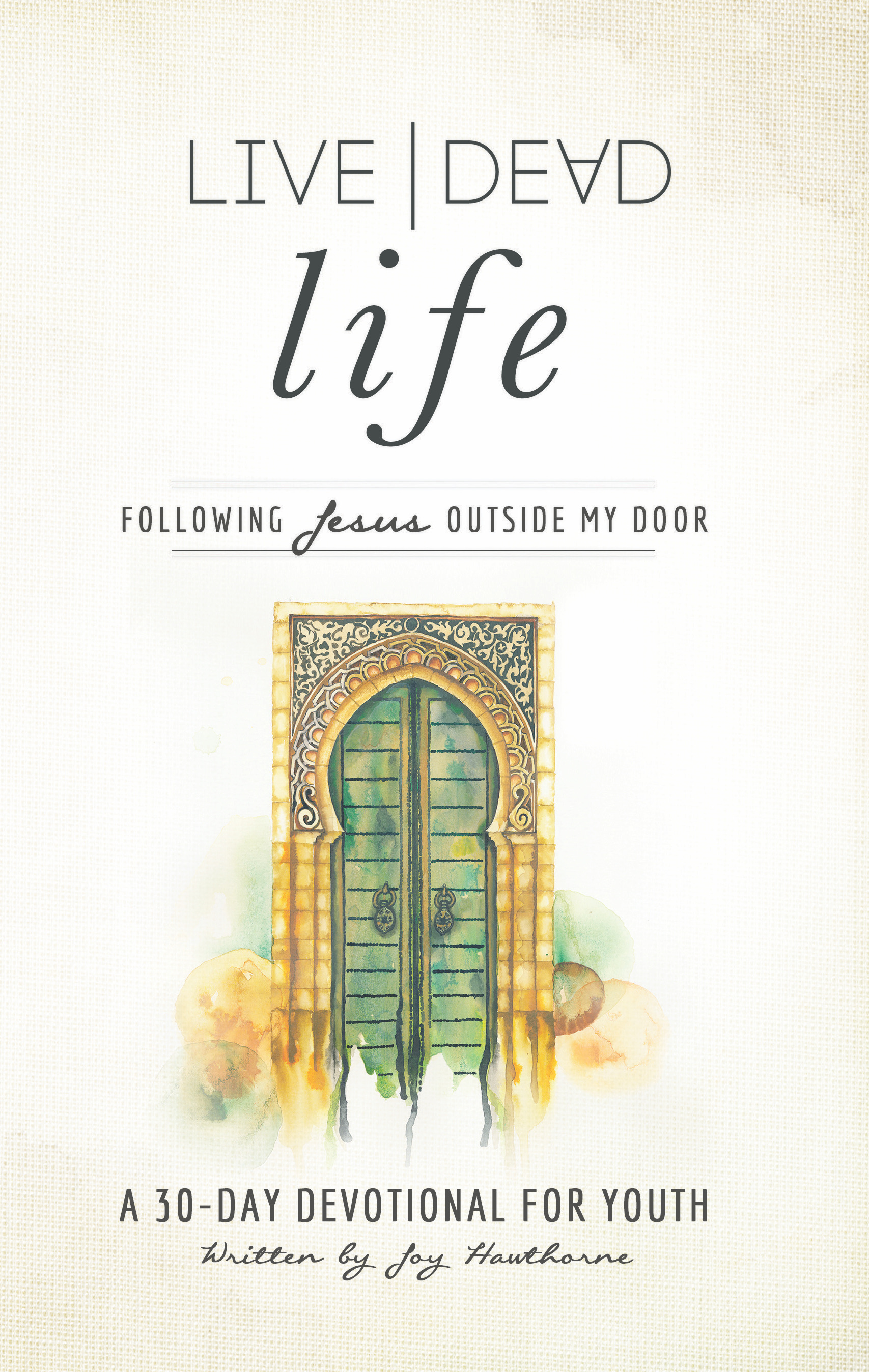
10 Quotes From “Live Dead Life”

Joy Hawthorne is a 16-year-old living with her parents in a radically Islamic Middle East country. Live Dead Life is her personal journal that she is sharing with other students in the same setting, but I find her words compelling, challenging, and encouraging for readers of all ages! Check out my full book review of Live Dead Life by clicking here.

“I step outside my door and follow Jesus where He leads. I seek to keep my feet on the path with Jesus, knowing a great adventure awaits.”

“To go through my day for Jesus, I need to spend time with Him. I can only give for Jesus what I received from Him. That is why I need time with Him daily.”

“I discovered that it’s easier to walk with Jesus all day when I think of Him as a friend I live with and not a duty I spend time with.” 

“It takes a lot of practice to intentionally involve Jesus in all part of my day, and I often forget, but I keep trying. And maybe that’s what Jesus wants—not perfection in a moment but persistence over time.”

“To reflect the image of God to the world, I have to know what He looks like and sounds like, right? I can’t do that without spending time with Him, and so it’s through my abiding time that I see Jesus and know Him and hear His voice. As I spend time with Him, I get a picture of Him to reflect to others. Jesus in me naturally flows out of me. Abiding affects everything and everyone around me.”

“I didn’t pick this place, but I can decide how I am going to live here.”

“All I have to do is look around. I might not be perfect, but I can follow Jesus and be there for others. I can be their first Christian friend. I can live with them. I can share my heart and the Gospel with them. All I have to do is say, ‘Yes.’ Yes to whatever Jesus has for me and wherever He wants to take me, whether I feel ready or not.”

“As God gives me life, He doesn’t give it so I can keep it for myself. God gives it so I can give it back. This is my chance to express the love that He shows to me, back to Him. I have one life to spend, and one death to give, so what happens when I stop trying to steal the gift He has given and instead offer it back? What happens when I let go of my plan and follow His, no matter how inconvenient? Choosing to live dead points me in that direction, to constantly turn things over to Jesus.”

“Jesus is too good to keep to myself. He’s worth telling the whole world. He’s worth sharing with my unreached neighbors.”

“When I cry out to Jesus, God delights to give an answer, and the answer is Himself—His heart in us. Then when I cry out for more, the answer is again Himself! When I cry for a broken world, hurt people, evil things, a deep wound, or gaping holes in hearts, God delights to be the answer to my prayers. He is the answer. I was never meant to be the answer to a lost, broken world. I am just meant to be in the place God calls me to be, to be able to tell the lost that He hears, that He hasn’t forgotten, that He knows.”

More quotes from this amazing book are coming soon, so stay tuned. In the meantime, I would highly encourage all Christians to download a free copy of Joy Hawthorne’s book (the download link is in my book review).

True Beauty vs. Pornography

God’s design for sex is truly the most beautiful thing that exists between two people. Its counterfeit is called pornography. Porn is simulated, imitated, and purchased; but no price tag can ever buy true beauty.

God demonstrates the purest love in Himself, when one part of the Godhead is the Lover and the other parts of the Godhead are the Beloved. The Lover is constantly discovering the beauty in the Beloved, and then praising that beauty. The Beloved then reciprocates back to the Lover. It’s a love dance! 

Humans are created in God’s image. We are first created to be God’s beloved. Then we are designed to be both lover and beloved in the bonds of marriage. True beauty—real, lasting beauty that pleases God—is discovered. It’s something that starts inside and radiates outside. A true lover takes the time to discover who the beloved truly is.

To see this in action, just look at some of the compliments between husband and wife in the Song of Songs—How beautiful you are, my darling! Oh, how beautiful! … How handsome you are, my lover! Oh, how charming! … Like a lily among thorns is my darling among the maidens. … My lover is mine and I am his. … All beautiful you are, my darling; there is no flaw in you.

True love that sees this kind of beauty cannot be imitated, purchased or simulated. If someone attempts to, it’s called pornography.

The dictionary gives this definition of pornography: sexually explicit materials whose purpose is to elicit sexual arousal. In other words, porn tries to imitate and simulate true beauty at a purchase price.

Jesus identified this sell-out of true love with the Greek word porneia (see Mark 7:14-23). This word means any sexual involvement outside the marriage between a husband and wife. Porneia comes from words that fill out its definition: things like prostitution, idolatry, and slavery.

Your body was not made for porneia but for God (1 Corinthians 6:13). You were made in His image: to be His Beloved, and He your Lover, and then to have a marriage relationship with another image-bearer of God, where you are both lover and beloved, and where you focus on true beauty.

Anything else is imitated, purchased, and simulated. It’s pornography. It’s idolatry.

Christians are told to fight many temptations, but there are only two that we are told not to fight, but to flee: pornography (1 Corinthians 6:18) and idolatry (1 Corinthians 10:14). So our prayer for the purity and enjoyment of God’s true beauty should be: Turn my eyes away from worthless things (Psalm 119:37).

Don’t sell out to the fake beauty in pornography. Discover true beauty exclusively in your spouse!

We’ll be looking at more relationship builders and killers, and I’d love to have you along for this journey of discovery.

Jon Bloom On Humility

Jon Bloom“Humble people view other people as God’s marvelous image-bearers, windows to God’s glory, not as mirrors that enhance or diminish their own self-image. But this also means they aren’t absorbed by how others view them. …

“Humble people are unusually unaffected by this pressure to conform. They can be hard to categorize because they often don’t fit neatly into any cultural mold. They tend to eschew using trendy fashions or interests or social media as means of personal branding. They have preferences about those things, but they hold those preferences as ways of enjoying God’s manifold goodness rather than image-enhancers. …

“One of the things that can surprise us about truly humble people, which can sometimes be mistaken for pride, is that they can be quite offensive. Humble people, being without guile, say it like it is. And saying it like it is can sting, and even sound condemning. … But there is a qualitative difference between the offensiveness of the proud and the offensiveness of the humble. The proud offend to exalt or defend themselves and control or manipulate others. The humble offend in order to advance the truth for the glory of God and ultimate good of others. Humble offensiveness may not be popular, but it’s always loving.” —Jon Bloom