The Help Of Humility

HumilityJesus was talking to His disciples about what was ahead for Him, and they responded in an all-too-typical way: “They kept the matter to themselves, discussing what ‘rising from the dead’ meant” (Mark 9:10).

There are times that Jesus interrupts His disciples’ musings with a question like, “What are you talking about among yourselves?” But in this instance, He kept quiet.

Why?

I think Jesus likes for us to ask Him for help.

There is a certain level of pride that says, “I can figure this out all by myself.” This pride leads to ignorance, and ignorance leads to fear (we tend to fear what we don’t know), and fear leads—more times than not—to poor choices.

“They didn’t understand what He meant and were afraid to ask Him about it” (v. 32). This fear probably led to their confusion in between the time of Christ’s crucifixion and His resurrection.

Think about it, we have two choices:

  • Confusion → Pride → Ignorance → Fear → Poor choices
  • Confusion → Humility → Answers → Boldness → God-honoring choices

Oh, for the humility to ask for God’s help when I am confused!

Ministers Are Standard-Bearers

Pastor, this is a challenging word to us all…

McCheyne“Your sermon on Sabbath lasts but an hour or two; your life preaches all the week. Remember, ministers are standard-bearers. satan aims his fiery darts at them. If he can only make you a covetous minister, or a lover of pleasure, or a lover of praise, or a lover of good eating, then he has ruined your ministry forever. Ah! Let him preach on fifty years, he will never do me any harm. Dear brother, cast yourself at the feet of Christ, implore His Spirit to make you a holy man. Take heed to yourself and to your doctrine.”

—Robert Murray McCheyne

16 Quotes From “Firsthand”

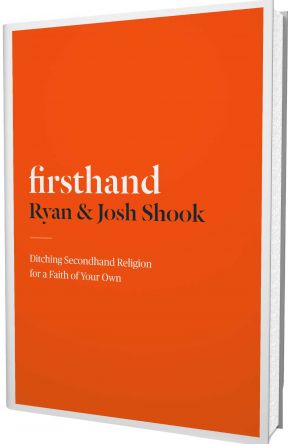
FirsthandI strongly encourage Christian parents to put a copy of Firsthand into the hands of their children, high school age and older. This book will help them think through making their faith in Jesus something personal to them. You can read my book review by clicking here. Below are some quotes that stood out to me. All of these quotes are by the authors, unless otherwise noted.

“You must be emptied of that of which you are full, so that you may be filled with that of which you are empty.” —Augustine

“One of the most liberating and powerful statements of all time comes from the lips of Jesus: ‘You will know the truth, and the truth will set you free’ (John 8:32). And we’re writing this chapter to tell you something that will set you free. The only way we’ve been able to experience freedom is by making the choice to get completely gut-level honest with God and others.

“God can use you and me through our brokenness, but first we have to get real and vulnerable with Him and with others. I think this powerful ‘get real’ dynamic works for a few reasons. First of all, being real with God and those around us invites us to drop the pride and pretense and to walk in humility. Second, honesty invites us to live every day in gratitude for the incredible grace that Lord has shown us. And third, since now we know we can’t make it on our own—and that’s okay—we’re ready to invite God’s power to do for us what we can’t do for ourselves. Paul said in 2 Corinthians 12:9, ‘I will boast all the more gladly about my weaknesses, so that Christ’s power may rest on me.’ This turns the concept of weakness and vulnerability on its head. We are saying that God makes up for our weaknesses. We are admitting that He is ready to work through them. Our weaknesses can actually become our greatest assets because they draw us closer to the Lord. And once we see how God can use them, we have all the more reason to be open about our struggles.”

“When all you see is a life in pieces, remember: the Remodeler wants to change you from the inside out. And He’s at work building your character to match His great calling and purpose for your life.”

“We have to decide, moment by moment, if we want to act changed or be changed.”

“It is more important to live one word of Scripture than it is to memorize volumes.” —Tim Hansel

“When our faith looks like a long list of things we should do, it’s usually a sign we’re not really focused on knowing God today for ourselves. Firsthand faith is all about a relationship with the God who is always faithful.”

“God is no less with you in your doubts that He is with you in your certainties.”

“Firsthand faith means we’re not afraid to bring our burning questions directly to God. But it also means that we’re not afraid to simply relax in His love. Even when all our questions haven’t yet been answered.”

“The needs of this world are endless. So whenever we feel a divine disturbance, it’s essential that we respond with firsthand action. If we don’t, it will quickly turn into secondhand bitterness.”

“James tells us that faith without works is dead (James 2:26). The most certain way to go back to living a secondhand faith is to refuse to act upon the Holy Spirit’s movement in your heart…. When you do not respond to a divine disturbance of the Holy Spirit, you get bitter and you criticize. That helps no one. … When you don’t respond to a divine disturbance in your life, you become the greatest obstacle between an unbelieving world and a loving God—a judgmental Christian.”

“Your eternal footprint—the impact you make on this earth—will be determined by whether you respond to the calling of the Spirit of the Lord in your heart to love a broken world, to step into the gifts and passions the Lord has blessed you with yo meet the needs that others overlook.”

“When we set out to discover our own firsthand faith, we were disillusioned with church. We had seen how imperfect the church could be, and we were certain that church was the problem. Coming full circle with our firsthand faith, we now realize that church was not the problem. The problem was out view and definition of the church itself. It took us a long time to understand that church wasn’t a building or a pastor or a sermon series. It’s easy to point out everything wrong with the church when you stand outside it and approach it with a consumer mentality. We thought the church had given us a secondhand faith, when in reality we had chosen to avoid a firsthand relationship with the community of Christ follower we claimed to care about.”

“The church is messy and imperfect because it is made up of broken and imperfect people. Are you sitting on the sidelines because the people in your church are imperfect or ‘just not like you’? … God designed you to be in community with your local church. He designed you to have firsthand relationships not only with Him but also with the people in your church. You can come up with plenty of excuses not to get involved and reasons that your church has it wrong, but when was the lat time you looked inside yourself and really searched your own heart for issues?”

“You can try to live out a firsthand faith on your own for as long as you want, but until you live out that faith in a community, you will never realize your full potential in Christ.”

“As a Christian, you are part of a movement that will outlast you, and you are part of the Firsthand Generation. As communities of believers rise up, we will gain momentum and create a movement that is stronger than anything we could ever accomplish on our own. Perhaps God is calling you to gather people and become a leader in the Firsthand Generation. Take up the challenge.”

Growing Pains

Listen to the podcast of this post by clicking on the player below, and you can also subscribe on AppleSpotify, or Audible. 

I remember when I was a teenager having such an ache in my legs at night. I’d be laying on my bed trying to sleep, but I couldn’t get comfortable because of that dull, unrelenting ache in my legs. I’d go ask my Mom what was going on, and her reply was simple: “Those are growing pains.”

In order to grow in any area of our lives—physically, emotionally, mentally, relationally—we have to go through a certain amount of pain.

No pain, no gain.

The process is not always a lot of fun, but that’s why we have to keep our eyes on the goal. The process may not be something we like, but the end results will make the pain worth it.

For instance, you may not like dieting but you like the weight loss or lower cholesterol numbers, so you stick with it. You may not like saying, “I’m sorry, I was wrong, please forgive me” but you like the healed relationship, so you say it.

Throughout the New Testament the phrase one another is frequently used to address how members of the Body of Christ should relate to each other. God desires that all of us operate interdependently with one another. In order to get there, we must get ready for some growing pains!

In Ephesians 4:2, Paul tells us what is required to get to a place of unity and maturity in the Church:

  • Be completely humble (the King James Version says lowliness). This Greek word means not letting our thoughts rise far from the ground. In other words, we are thinking of ourselves as God thinks of us, not independently as a self-made man or woman, but viewing all of my success as God-appointed. This process toward interdependence starts in our thoughts—in our attitudes about ourselves and about others.
  • Gentle means strength under control. Gentleness says, “I could do this, but for your sake I won’t.”
  • Patient interaction (KJV: longsuffering) with others is allowing them the freedom to grow just as others allowed me the freedom to grow.
  • Bearing with one another in love. Think of a load-bearing wall in a building that is holding up the weight of the roof and walls. When we bear with one another we are helping to share the burdens.

Being humble with ourselves and gentle and patient with others is the way we go through the growing pains of bearing with one another in love. The process may not be a lot of fun, but the end result is something that glorifies God, that’s why we must stick with one another through all our growing pains.

Check out all of the other messages in our series Live Together by clicking here.

►► Would you please prayerfully consider supporting this ministry? My Patreon supporters get behind-the-scenes access to exclusive materials. ◀︎◀︎

I Am Doulos

Listen to the podcast of this post by clicking on the player below, and you can also subscribe on AppleSpotify, or Audible.

In this era of LinkedIn, Facebook, X, Instagram, and the like, we are so concerned about connections, friends, followers, and likes that it consumes our thoughts.

We self-promote and pray for popularity.

Well, I don’t think anyone is actually brazen enough to pray, “God, make me popular.” But we often live as if popularity was the answer to a prayer.

We gain our status by who we know, what we’ve done, what we are doing, the places we’ve worked, and the number of “friends,” “followers” and “connections” we have accumulated.

James wrote a book of the Bible. As he opened the letter he introduced himself. He could have said:

  • I am the half-brother of Jesus
  • I am the leader of the Christian Church
  • I chaired the Jerusalem Council

Instead he simply said, “James, a servant of God and of the Lord Jesus Christ.”

Not even the servant, as if he were distinguished among others, but the indefinite article a servant. The Greek word here (doulos) means:

  • A slave
  • “One who gives himself up to another’s will for Christ to use his service to advance His cause among men” (Strong’s Greek Dictionary)
  • Devoted to another to the disregard of one’s own interests

Any connections, friends, followers, skills, talents, or opportunities I have are wholly God’s. He gave them to me so I could serve Him and serve others. I am merely a steward of what He’s given me—I AM DOULOS.

(To see a negative example of this, check out my post Trading Truth for Popularity.)

My desire for my eulogy and my tombstone is for it to simply say: “He was a servant.”

I am living to hear my Master say, “Well done, good and faithful servant.”

►► Would you please prayerfully consider supporting this ministry? My Patreon supporters get behind-the-scenes access to exclusive materials. ◀︎◀︎

Thursdays With Oswald—The Vices And Virtues Of Vowing

This is a weekly series with things I’m reading and pondering from Oswald Chambers. You can read the original seed thought here, or type “Thursdays With Oswald” in the search box to read more entries.

The Vices And Virtues Of Vowing 

     The vices of vowing outweigh the virtues, because vowing is built on a misconception of human nature as it really is. If a man had the power to will pure will it would be different, but he has not. There are certain things a man cannot do, not because he is bad, but because he is not constituted to do them. We make vows which are impossible of fulfillment because no man can remain master of himself always; there comes a time when the human will must yield allegiance to a force greater than itself, it must yield to God or to the devil. 

     Modern ethical teaching bases everything on the power of the will, but we need to recognize also the perils of the will. The man who has achieved a moral victory by the sheer force of his will is less likely to want to become a Christian than the man who has come to the moral frontier of his own need. It is the obstinate man who makes vows, and by the very fulfillment of his vow he may increase his inability to see things from Jesus Christ’s standpoint. …

     It is not our vows before God that tell, but the coming to God exactly as we are, in all our weakness, and being held and kept by Him. Make no vows at this New Year time, but look to God and bank on the Reality of Jesus Christ. 

From God’s Workmanship

When considering your New Year’s resolutions (or vows, as Chambers calls them), remember these sobering words: “It is the obstinate man who makes vows, and by the very fulfillment of his vow he may increase his inability to see things from Jesus Christ’s standpoint.”

Don’t let your resolutions blind you to seeing how Jesus Christ wants to work through your weaknesses.

You Need “Grey Heads”

Tim DilenaI know that all of us can benefit from an older, wiser person speaking into our lives, but I am especially concerned about pastors. Too many times pastors are seen by others as the “go-to guy” for anyone who needs help, and we pastors begin to believe that we don’t need to go to anyone else for help.

This is a dangerous attitude of pride!

Check out this short 4-minute teaching from my friend Rev. Tim Dilena about the value of “grey heads” in our lives—

My fellow pastor, humble yourself and accept the help of a wise mentor. It will not only enhance your ministry, it could literally save your ministry from crumbling.

Thursdays With Oswald—Don’t Try To Be Humble

This is a weekly series with things I’m reading and pondering from Oswald Chambers. You can read the original seed thought here, or type “Thursdays With Oswald” in the search box to read more entries.

Don’t Try To Be Humble

     Whoever therefore shall humble himself as this little child, the same is the greatest in the kingdom of Heaven. (Matthew 18:4)

     If humility were put up as an ideal it would serve only to increase pride. Humility is not an ideal, it is the unconscious result of the life being rightly related to God and centered in Him. … 

     If we are born again and obeying the Holy Spirit, we shall unconsciously manifest humility all along the line. We shall easily be the servant of all men, not because it is our ideal, but because we cannot help it. Our eye is not consciously on our service, but on our Savior. 

From Biblical Psychology

Humility is so very fragile. If you look at your humility, you cannot help feeling pride at how humble you are. And—poof!—your humility disappears.

Oswald Chambers says in essence, “Don’t try to be humble. Don’t look at your humility. Just keep your eyes on Jesus, and serve only Him.” By doing so, you cannot help but live humbly.

“If we are born again and obeying the Holy Spirit, we shall unconsciously manifest humility all along the line. We shall easily be the servant of all men, not because it is our ideal, but because we cannot help it.”

Absolutely Amazing

I know I’ve read this verse before, but today it just seemed to leap off the page…

Both the One who makes men holy and those who are made holy are of the same family. So Jesus is not ashamed to call them brothers. (Hebrews 2:11)

Did you catch that word BOTH? This places me in the same category as God Himself!

I am the one made holy because Jesus died in my place. Jesus paid the price for the forgiveness of my sins, and for the righteousness of God to be given to me!

Then notice it doesn’t say we are being made holy, but made holy. It is finished.

Now Jesus is pleased to call us His brothers and sisters!

ABSOLUTELY AMAZING!!

When I read something like this, an important question comes to mind: How should I now live?

Confidently—because I am accepted into God’s family.

Humbly—because I didn’t pay the price, but Jesus paid it on my behalf.

Thankfully—because there is no greater gift I could ever receive.

The Height Of Arrogance

Warning: this post may step on your toes.

Oswald Chambers wrote, “We have to find out God’s methods, not try to get God to approve our methods.”

Pastor, are you telling God what your church is going to do, and then asking God to bless your efforts?

Sadly, many churches innocently slide into this mode. But watch out: this is the height of arrogance!

Don’t fall into the trap of thinking you know how to reach your community, or organize your church, or even accurately select your next sermon. You can’t do it!

But God can!

He knows your community and your church better than you do. So try a better approach by starting with humility.

Don’t tell God what you’re going to do and then ask Him to bless your plans. Instead, ask God what He is already blessing, and then go do that.