Links & Quotes

Some human employers may ask us to do business for them without giving us a good example or enough resources. But when Jesus told us to be about the Father’s business, He gave us an example and the full empowerment of the Holy Spirit! Check out this full sermon.

I have a lot of new video content on my YouTube channel every week. Please check it out and subscribe so you don’t miss anything.

“Compromise is a costly word; non-compromise, even more so.” —Bono 

Shane Morris said, “But as much as AI’s potential can cause harm, blaming it alone misses the point and likely makes these problems worse. Humans are the fallen ones, and that fallenness manifests in all kinds of destructive ways. Machines, strictly speaking, don’t have morals or intentions. They can only reflect ours.” Check out his podcast AI is not the problem, we are.

“I do not believe that a nation dies save by suicide. To the very last every problem is a problem of will; and if we will we can be whole. But it involves facing our failures as well as counting our successes.” —G.K. Chesterton 

I love reading and I have a long list of what I would like to read next. Scott Hubbard addresses this question: “Perhaps the question ‘What should I read or listen to?’ would come into sharper focus if we had a better sense of why we read at all. ‘Why read?’ has more than one right answer. We read to learn, to rest, to deepen friendship with fellow readers, to enjoy the craft of skilled wordsmiths. But alongside these good reasons, consider three others that put our reading into the service of greater loves.” 

“I only hope that we never lose sight of one thing—that it was all started by a mouse.” —Walt Disney 

“The scientific man does not aim at an immediate result. … His duty is to lay the foundation for those who are to come, and point the way.” —Nikola Tesla 

This week marked the 100th anniversary of a court case that was known as “the trial of the century,” perhaps you have heard it called the Scopes Monkey Trial. It was, and has been, more sensation than substance. Check out this post that puts this trial in its proper perspective.
The Benefits Of Humility

(1) God allows the humble to know Him more intimately. For though the Lord is high, yet has He respect to the lowly—bringing them into fellowship with Him—but the proud and haughty He knows and recognizes only at a distance (Psalm 138:6). 

(2) God gives the humble help to overcome evil. But He gives us more and more grace—power of the Holy Spirit, to meet this evil tendency and all others fully. That is why He says, “God sets Himself against the proud and haughty, but gives grace continually to the lowly (those who are humble enough to receive it)” (James 4:6). 

(3) God gives His favor to the humble. …Clothe (apron) yourselves, all of you, with humility—as the garb of a servant, so that its covering cannot possibly be stripped from you…. For God sets Himself against the proud—the insolent, the overbearing, the disdainful, the presumptuous, the boastful—and He opposes, frustrates, and defeats them, but gives grace (favor, blessing) to the humble (1 Peter 5:5). 

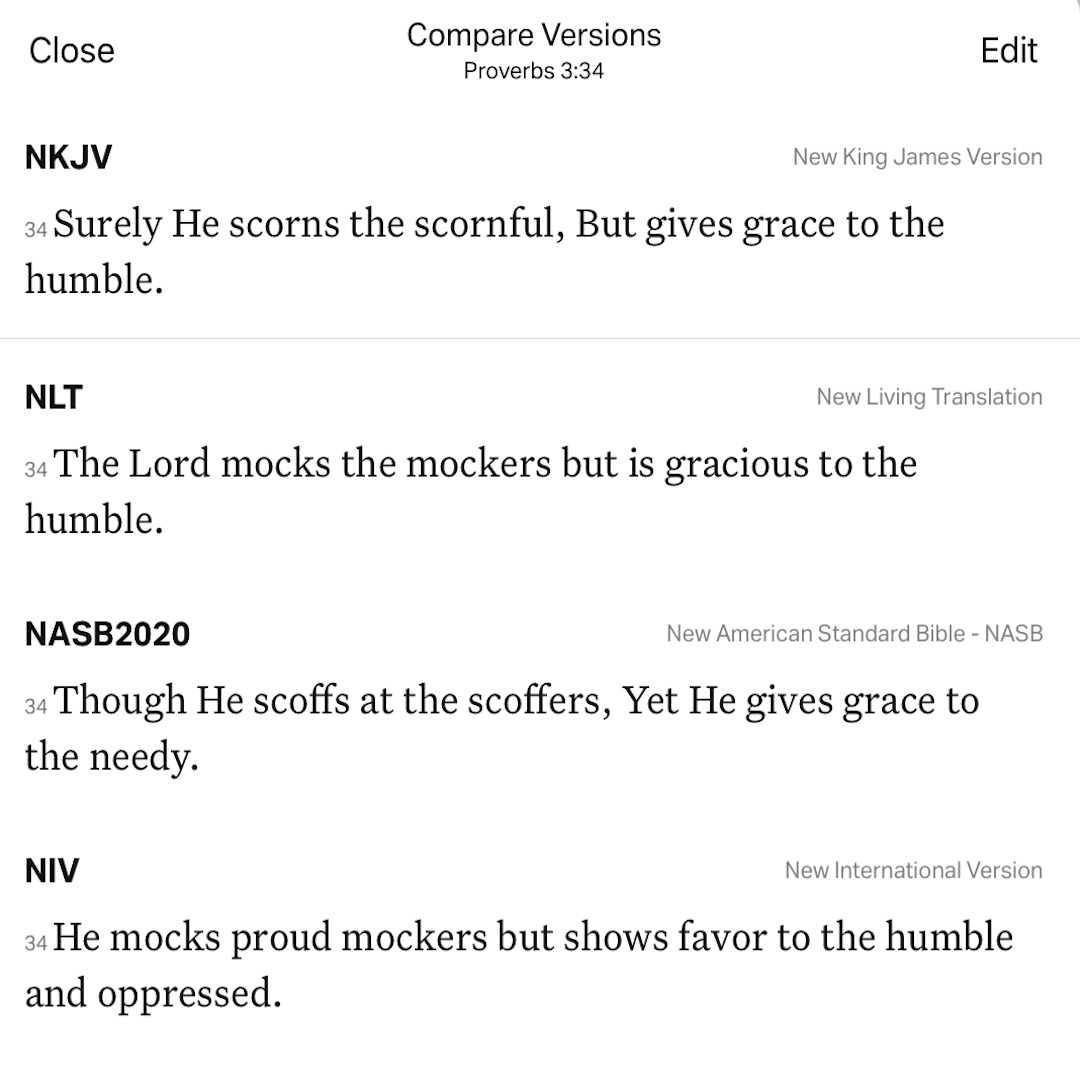
The bottom line—God mocks proud mockers but shows favor to the humble and oppressed (Proverbs 3:34).

Links & Quotes

Controlling leaders shut down creativity among their teammates, which leads to higher turnover. If your team isn’t sharing their good ideas with you or if they are leaving you, that may be an indicator that you are too controlling. Check out the full conversation on The Craig and Greg Show

I have a lot of new video content on my YouTube channel every week. Please check it out and subscribe so you don’t miss anything.

“As a fact, men only become greedily and gloriously material about something spiritualistic. … Take away the supernatural, and what remains is the unnatural.” —G.K. Chesterton 

Astronomical technology like the James Webb Space Telescope (JWST) are providing breathtaking images. They are also creating problems for the scientific theories of the origins of our universe. University of California Santa Barbara physicist Caitlin Casey, said, “It makes sense—the Big Bang happens and things take time to gravitationally collapse and form, and for stars to turn on. There’s a timescale associated with that…. And the big surprise is that with JWST, we see roughly 10 times more galaxies than expected at these incredible distances.” There is a more straightforward answer found in Genesis 1:1, “In the beginning, God created the heavens and the earth.”

“Knowing where God wants people to be and taking the initiative to use God’s gifts and God’s methods to get them there, in reliance on God’s power through Christ, with God’s appointed people following.” —John Piper, giving his definition of godly leadership 

The Bible records the names of five Persian kings. One of them called “Darius the Persian” in Nehemiah 12:22 requires some historical cross-referencing to identify. The Bible Archeology Report presents another one of their fascinating archeological biographies on this Persian king. 

“The greatness of a leader is in his humility before God, not in his eloquence before men.” —Anonymous

The most viewed and downloaded resource on my blog is my chart of the kings of the united kingdom of Israel and the divided kingdoms of Israel and Judah. I was thrilled to discover this week that Jacob Edson at Biblegateway has taken my chart even deeper!

T.M. Moore has vital counsel for pastors, “Jesus must increase in us, and we must decrease. But that doesn’t just happen by carrying out whatever our ‘spiritual work’ requires of us week-in and week-out. Our ‘natural gifts’ cannot replace spiritual ones, and ‘mental powers’ are no match for the mind of Christ. It is a shepherd’s ‘duty’ to attend to the care and nurture of his soul, for unless we are diligent in this, we will not be able to lead the Lord’s sheep into a greater experience of our great salvation or a fuller realization of His Kingdom.”

A Leader Worth Following

Listen to the podcast of this post by clicking on the player below, and you can also subscribe on AppleSpotify, or Audible. 

We live in a celebrity-obsessed culture. Sadly, this unbiblical pursuit has infected our churches too. Let’s talk about this on this episode of The Podcast. 

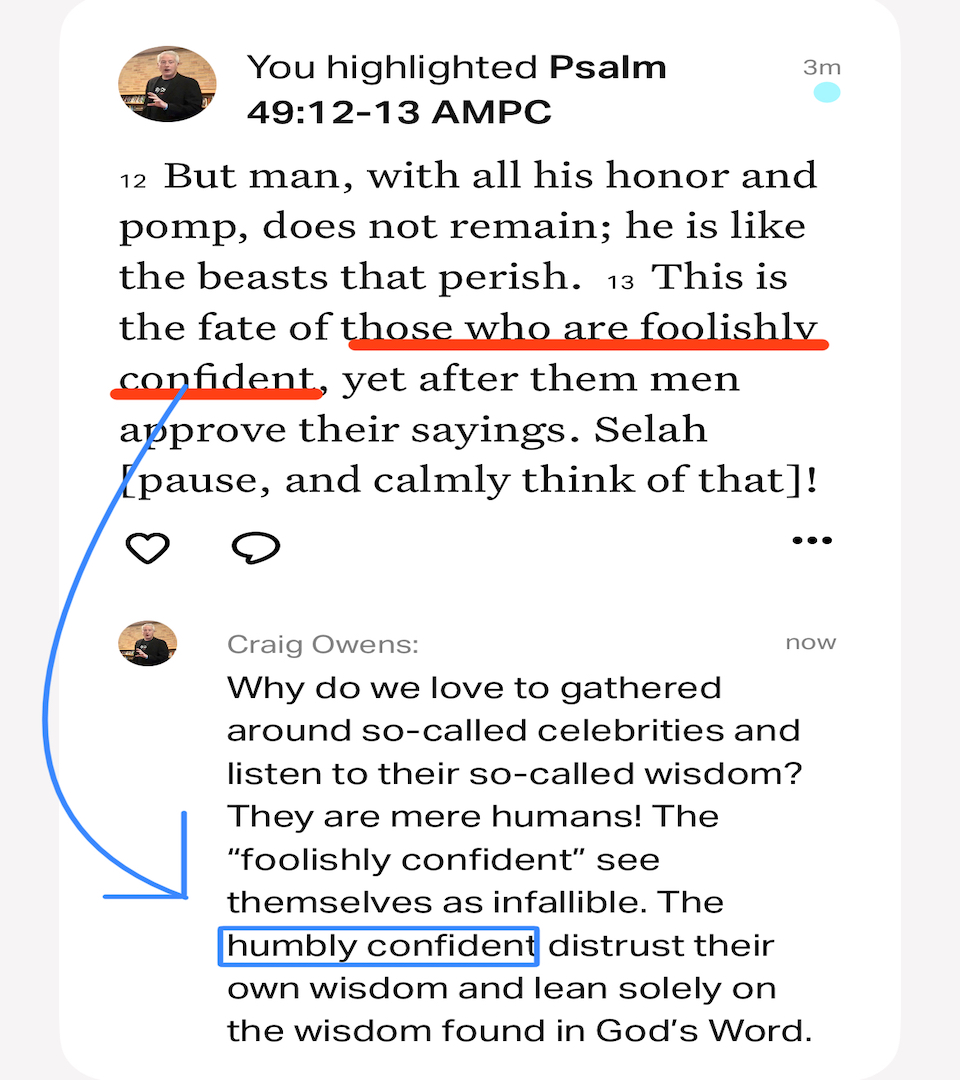
The Scriptures I reference in this episode are Psalm 49:12-13; 1 Corinthians 11:1; and John 3:30. 

If you want to check out the blog posts that I mentioned: 

In my book Shepherd Leadership, I have two chapters that address a godly leader’s confident humility and humble confidence. You can also check out several blog posts on videos on this subject by clicking here. 

►► Would you please prayerfully consider supporting this ministry? My Patreon supporters get behind-the-scenes access to exclusive materials. ◀︎◀︎

More Popular Than Jesus?

Listen to the podcast of this post by clicking on the player below, and you can also subscribe on AppleSpotify, or Audible. 

In March 1966, at the height of Beatlemania, John Lennon was quoted—

“Christianity will go. It will vanish and shrink. I needn’t argue about that; I’m right and I will be proved right. We’re more popular than Jesus now; I don’t know which will go first—rock ’n’ roll or Christianity. Jesus was all right but His disciples were thick and ordinary. It’s them twisting it that ruins it for me.” 

Maureen Cleave, the reporter who included this quote in her article about the Beatles, tried to clarify that John was talking specifically about the Church of England, especially when John mentions the disciples of Jesus twisting the words and example of Jesus as it is recorded for us in the New Testament. 

But I wonder if the same argument could be made today about the “stars” in the evangelical movement? Many of those who claim to be preachers of the Gospel have both an online and in-person following that rivals that of the Beatles of the 1960s. Their gatherings are rock concert-esque, with their fans spending lavishly on their books, videos, and seminars. 

But here’s my question: Are these “rock star preachers” making Jesus famous or themselves famous? 

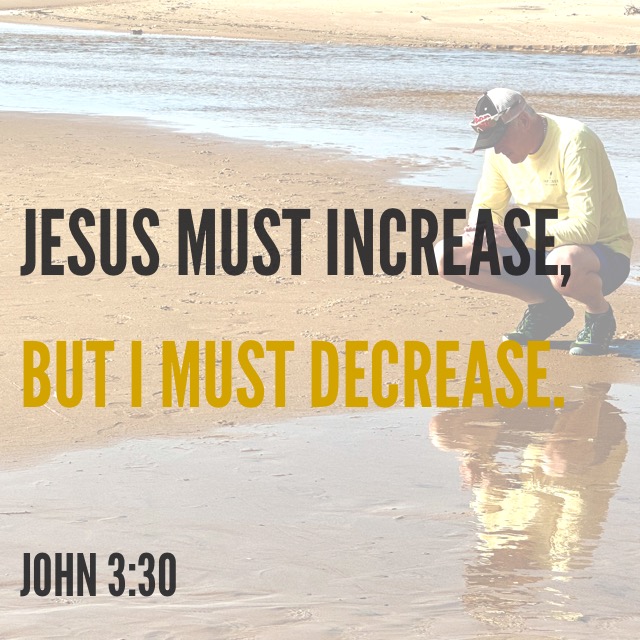
How would John the Baptist’s words sound coming out of the mouths of these mega-stars: “[Jesus] must increase, but I must decrease. He must grow more prominent; I must grow less so” (John 3:30 AMPC)? 

Before John was born, the angel Gabriel told Zechariah that John “will be great in the eyes of the Lord” (Luke 1:15). 

Notice: “Great in the eyes of the Lord” is so infinitely better than “great in the eyes of the world”! 

John’s whole life was one of confident humility (or humble confidence). He spoke God’s Word confidently, but wasn’t seeking the praise of men nor intimidated by the criticism of men. As a result, God’s Spirit remained on him in an unmistakable way. 

God will use anyone in the way that He used John, if they will only have the same attitude John had: “I must decrease and Jesus must increase.”

May I suggest this attitude-adjusting prayer for everyone who has been called by God to herald the Good News about Jesus—

Heavenly Father, as I preach today may all eyes move past me and turn to Jesus. “He must increase, but I must decrease. He must grow more prominent; I must grow less so.” Thank You for this opportunity You have given me today to point people to You. May I only be seen as great in Your eyes, but may the world view me only as Your humble servant. 

►► Would you please prayerfully consider supporting this ministry? My Patreon supporters get behind-the-scenes access to exclusive materials. ◀︎◀︎

Who Is Your Provider?

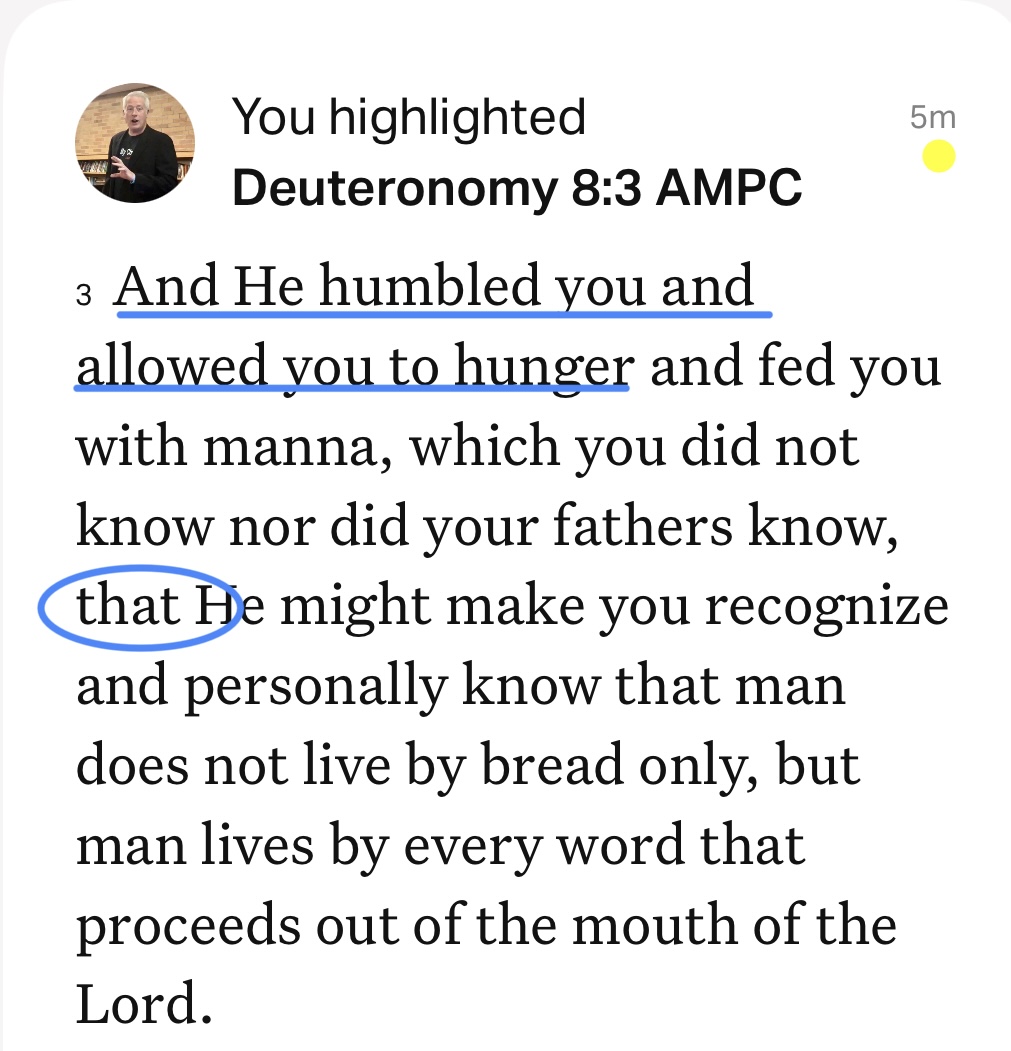
And [God] humbled you and allowed you to hunger and fed you with manna, which you did not know nor did your fathers know, that He might make you recognize and personally know that man does not live by bread only, but man lives by every word that proceeds out of the mouth of the Lord. … Know also in your [minds and] hearts that, as a man disciplines and instructs his son, so the Lord your God disciplines and instructs you. (Deuteronomy 8:3, 5 AMPC)

God allows us to be humbled and hungry so that we can learn that He is our only source. Proud people will not open their hearts and minds to learn because they see themselves as know-it-alls. 

Because He loves us, God humbles us. If we will yield, we can learn from God and grow in intimacy with Him. “Know also in your minds and hearts that, as a man disciplines and instructs his son, so the Lord your God disciplines and instructs you” (Deuteronomy 8:5). But the proud are deprived of all of these blessings. 

Verses 11-20 add a warning about forgetfulness. Success tends to make us think we have accomplished something in our own power, which stokes our pride. Twice we are told to “beware”…

  • …of forgetting that God is our Provider 
  • …of thinking we are our own provider 

Humility keeps us dependent on God and increasingly intimate with Him. Pride pushes God away. 

Check out my series of posts about forgetfulness called Fading Gratitude. 

I address the pride issue for leaders in a post called Don’t Putrefy Your Leadership, and in a video Healthy Leaders Ask For Help.

What Fills Me?

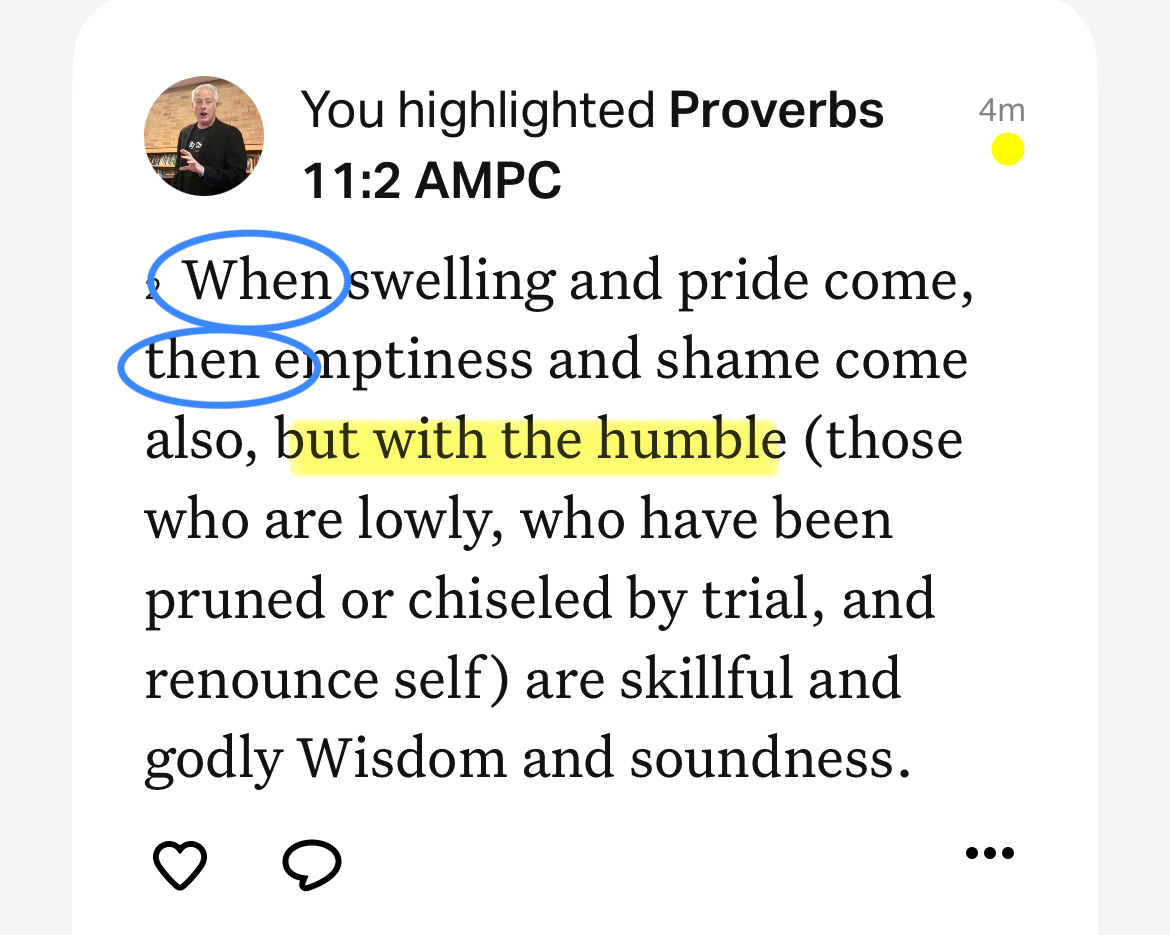
When swelling and pride come, then emptiness and shame come also, but with the humble (those who are lowly, who have been pruned or chiseled by trial, and renounce self) are skillful and godly Wisdom and soundness. (Proverbs 11:2 AMPC) 

The pruning, trials, and discipline the Lord allows us to experience are for an important purpose: To allow ourselves to be emptied of ourselves. This humility that empties us of ourselves makes room for us to be full of the presence of God. 

On the other hand, remaining full of yourself—also called “pride”—will also bring an emptiness. But this emptiness comes with shame and is absent of God’s fulfilling presence. 

You and I must choose one or the other: humility before God or pride in ourselves.

Murmuring Sheep

Listen to the podcast of this post by clicking on the player below, and you can also subscribe on AppleSpotify, or Audible. 

If you’re a shepherd leader, what do you do when the sheep under your care go, “Grrrr!”? 

To make sure that you haven’t done anything that caused the murmuring, you should humbly pray, “Search me, O God” (Psalm 139:23-24). And then, if you see you have done something wrong, repent and make things right. You may want to check out my blog post A Leader’s Sincere Apology. 

After this, Moses has given us in Exodus 16:8-9 two actions to take with murmuring sheep:

  1. If it wasn’t anything that you did, you need to remind yourself that the people are murmuring against God. 
  2. If it wasn’t anything that you did, you need to remind the sheep that they are murmuring against God. 

The other Scriptures I reference in this episode are Ephesians 4:15; Proverbs 27:5; Numbers 20:2-12. And the blog post I referred to in this video is How Are Godly Leaders To Use Their Authority. 

I would also encourage you to pick up a copy of When Sheep Bite to help you handle your murmuring sheep in a productive and God-honoring way. 

►► Would you please prayerfully consider supporting this ministry? My Patreon supporters get behind-the-scenes access to exclusive materials. ◀︎◀︎

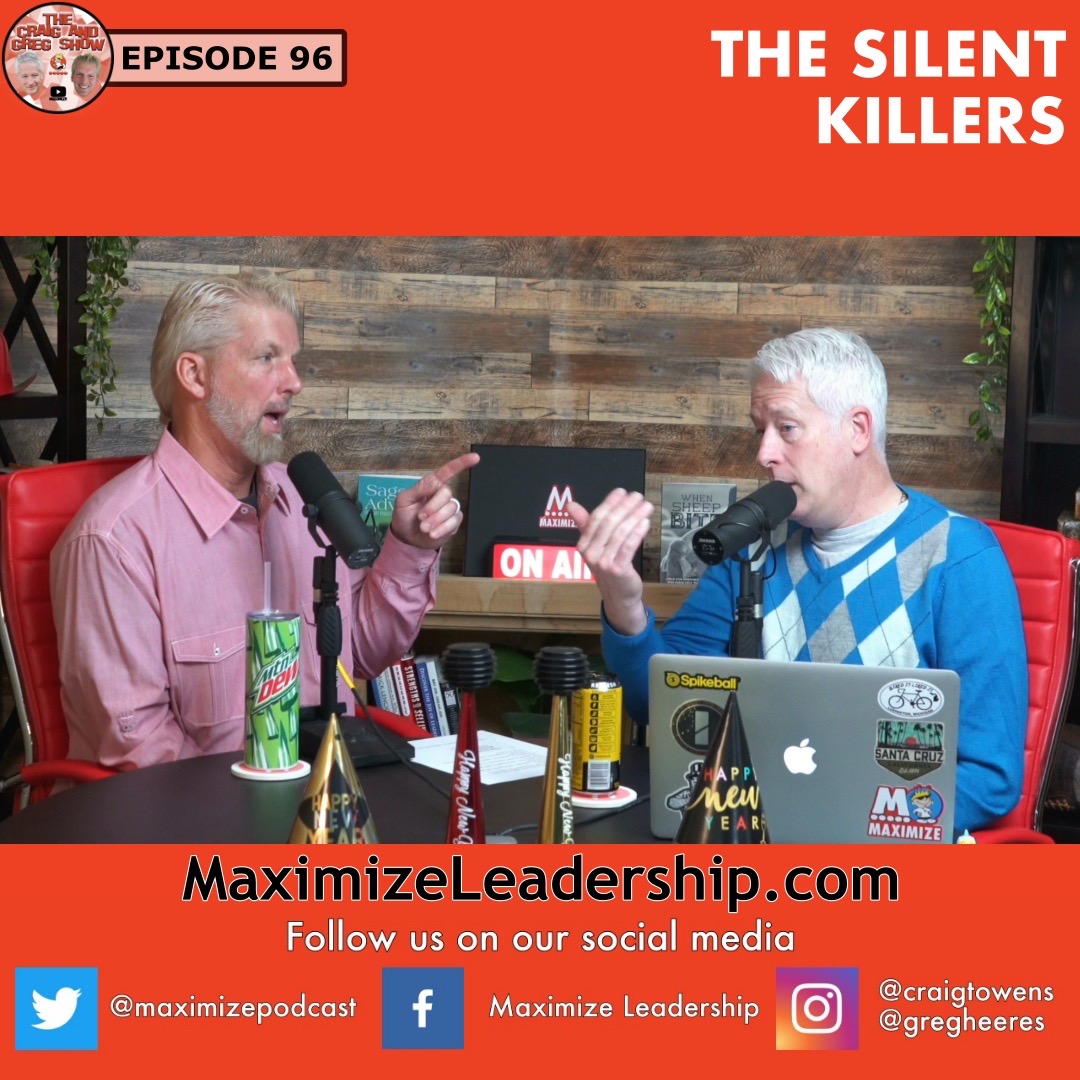
The Craig And Greg Show: The Silent Killers

Listen to the podcast of this post by clicking on the player below, and you can also subscribe on AppleSpotify, or Audible.

To you the term “silent killer” might conjure visions of a lone assassin from a spy movie, or perhaps more mundane but equally deadly things like high blood pressure or carbon monoxide leaks. In today’s episode Greg and I are discussing toxic behaviors that creep into the workplace. They aren’t quite as deadly as the ones listed above, but can still cause massive anger, frustration, and discord in your organization. Join us as we discuss some of the most prevalent toxins we’ve seen, and highlight how you as the leader are responsible for being the safeguard against them.

  • [0:20] Toxic things can sneak into our workplace unless we proactively look for them.
  • [1:35] Leaders need to be honest with their team so their team feels they can be honest with them in return.
  • [3:43] Greg and I discuss some of the toxic behaviors we have seen that create problems in the workplace.
  • [3:54] -Gossip
  • [4:51] -Office Politics
  • [6:42] -Negative Competition
  • [8:37] -Negativity
  • [10:20] -Bureaucracy
  • [12:46] -Braggadocio
  • [14:12] -Bashing
  • [14:46] Toxicity will come to every organization. We as leaders shine in the way we deal with it.
  • [17:47] When I wrote Shepherd Leadership, I spent two chapters discussing the balance between confidence and humility because of how important it is.
  • [19:08] One of our main jobs as leaders is to develop others, but toxicity squashes that.
  • [20:26] A coach can come alongside you to be the “detector” for the silent killers that might be lurking in your organization.

Check out this episode and subscribe on YouTube so you can watch all of the upcoming episodes. You can also listen to our podcast on Spotify and Apple.

The Maturing Steward

Listen to the podcast of this post by clicking on the player below, and you can also subscribe on AppleSpotify, or Audible.

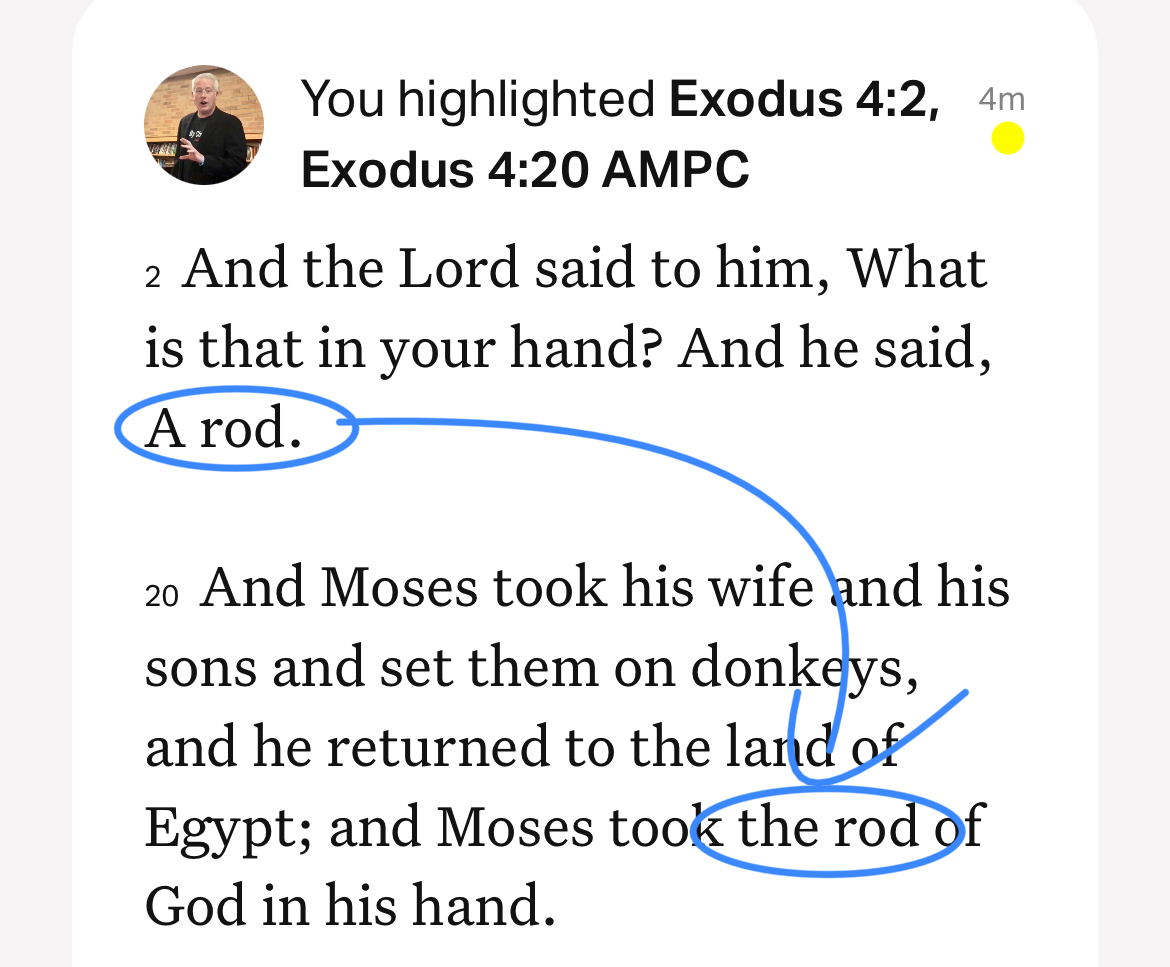
And the Lord said to [Moses], “What is that in your hand?” And he said, “A rod.” … And Moses took his wife and his sons and set them on donkeys, and he returned to the land of Egypt; and Moses took the rod of God in his hand. (Exodus 4:2, 20 AMPC) 

What Moses originally called merely “a rod” he later called “the rod of God.” He recognized that what he thought was his was in actuality what God had given him to use. 

When we recognize that what’s in our hands isn’t our creation, but a God-given talent, it marks a defining moment in both our maturity and our humility. Or to borrow a phrase I elaborate on in my book Shepherd Leadership, this helps us view our God-given talents or positions with confident humility (or, if you like, humble confidence). 

With this shift in Moses’ understanding and language in mind, this is how we should treat every strength God has given us:

• It’s not mine, but God’s 

• I am only a steward of this talent 

I must use this God-given strength only for God’s glory 

• I will have to give an account to God for how I invested or squandered what He entrusted to me

When we realize that we are not self-made men or women, but that any talents, abilities, or opportunities we have are God-appointed, we show a marked maturity in our understanding of our stewardship of God’s gifts. As our maturity grows, our confidence and our humility will grow proportionately. And as we become more confidently humbled in the way we steward God’s gifts, our leadership cannot help but exhibit more of God’s blessing on it. 

All of this growth starts with just the simple recognition that what’s in my hands is there only because God placed it there. 

►► Would you please prayerfully consider supporting this ministry? My Patreon supporters get behind-the-scenes access to exclusive materials. ◀︎◀︎