Links & Quotes

link quote

Some good reading from today…

“Sleep is a daily reminder from God that we are not God.” —John Piper

Mark Atteberry says, “One way to tell how you’re doing in the Christian life is to count your ‘except you’ moments.” Read more of his post entitled Except You.

Some interesting facts about stem cell research.

Augustine died on this day in 430 A.D. Here are 15 memorable quotes from the Bishop of Hippo.

The way Christians cared for the sick, the elderly, the young and the poor was counter-cultural in the ancient Roman world. Check out The Witness Of Christian Compassion.

Who really believes Lois Lerner’s IRS computer lost all her emails? Probably no one! Now we hear that her devices were intentionally wiped clean.

“One of the ways the Spirit helps us change is by teaching us that God is merciful with our inadequate notions of Him and is willing not only to commune with us, but also bless others in spite of our flawed conceptions. Paul reminds us, ‘for our knowledge is imperfect…but when the perfect comes, the imperfect will pass away. … For now we see in a mirror dimly, but then face to face. Now I know in part; then I shall understand fully, even as I have been fully understood’ (1 Corinthians 13:9-12). So we may be relieved that our walk with God has been authentic and people have been blessed by our ministry even if we have had flawed ideas about God and His ways.” —John Piper

Christian & Hopeful From “Pilgrim’s Progress”

Pilgrim's ProgressI love Pilgrim’s Progress! You can read my full book review by clicking here. I’m sharing some of my favorite passages from this classic.

This is part of a dialogue between Christian and Hopeful—

Christian: “Then I say, sometimes (as I think) they may; but they being naturally ignorant, understand not that such convictions tend to their good; and therefore they do desperately seek to stifle them, and presumptuously continue to flatter themselves in the way of their own hearts. … True or right fear is discovered by three things: (1) By its rise: it is caused by saving convictions for sin. (2) It driveth the soul to lay fast hold of Christ for salvation. (3) It begetteth and continueth in the soul a great reverence of God, His word, and ways; keeping it tender, and making it afraid to turn from them, to the right hand or to the left, to any thing that may dishonour God, break its peace, grieve the Spirit, or cause the enemy to speak reproachfully. … Now the ignorant know not that such convictions that tend to put them in fear, are for their good, and therefore they seek to stifle them.”

Hopeful: “How do they seek to stifle them?”

Christian: “(1) They think that those fears are wrought by the devil (though indeed they are wrought of God), and, thinking so, they resist them, as things that directly tend to their overthrow. (2) They also think that these fears tend to the spoiling of their faith; when, alas for them, poor men that they are, they have none at all! and therefore they harden their hearts against them. (3) They presume they ought not to fear, and therefore in despite of them, wax presumptuously confident. (4) They see that those fears tend to take away from them their pitiful old self-holiness, and therefore they resist them with all their might.”

Read a dialogue between Faithful, Christian, and Talkative by clicking here.

Links & Quotes

link quote

Some great reading & watching from this weekend…

TOMORROW is our annual United Service in Cedar Springs. I have the privilege of sharing the Word this year. Stoked!

“You that have ability, and have talents, devote yourselves to God’s cause. Give yourselves up to his ministry. I would to God there were more of those who are successful in professions, men who either in medicine or law would attain eminence, who would consecrate their talents to the ministry….” —Charles Spurgeon

“There is a reason why Jesus not only calls us to simplicity and brevity, but also to persistence and tenacity [in prayer]. The demand for prevailing prayer exposes those who pray in a passing away, as if they are just trying to cover all their bases. They are not looking to God as their only hope. They are trying God out alongside other resources. Such praying does not prevail.” —John Piper

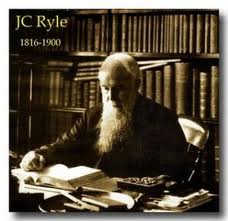
“Above all, grieve not the Spirit. Quench not the Spirit. Vex not the Spirit. Drive Him not to a distance, by tampering with small bad habits and little sins. Little jarrings between husbands and wives make unhappy homes; and petty inconsistencies, known and allowed, will bring in a strangeness between you and the Spirit. … The man who walks with God in Christ most closely, will generally be kept in the greatest peace. The believer who follows the Lord most fully and aims at the highest degree of holiness will ordinarily enjoy the most assured hope, and have the clearest persuasion of his own salvation.” —J.C. Ryle

Amazing discoveries! Life under Antarctic’s ice.

A great reminder from Steve Lindeman, the newest pastor in Cedar Springs: Rules.

[VIDEO] John Maxwell talks about the advantages of endurance.

I love Sarah Palin’s classy response to Richard Dawkins’ crude and insensitive tweet.

9 Quotes From “Bible Reading”

J.C. RyleJ.C. Ryle’s book Bible Reading has a question repeated all throughout the book: What are you doing with the Bible? do you read it? how do you read it? This is a book that will challenge and encourage both the Bible-reading novice, and the Bible-reading veteran. You can read my full book review by clicking here. Below are some quotes that I highlighted in this powerful little book.

“This is the Book to which the civilized world is indebted for many of its best and most praiseworthy institutions. Few probably are aware how many good things that men have adopted for the public benefit, of which the origin may be clearly traced to the Bible. It has left lasting marks wherever it has been received. From the Bible are drawn many of the best laws by which society is kept in order. From the Bible has been obtained the standard of morality about truth, honesty, and the relations of man and wife, which prevails among Christian nations, and which—however feebly respected in many case—makes so great a difference between Christians and heathen.” 

“The Bible applied to the heart by the Holy Spirit is the grand instrument by which souls are first converted to God. That mighty change is generally begun by some text or doctrine of the Word, brought home to a man’s conscience. In this way the Bible has worked moral miracles by the thousands. It has made drunkards become sober—immoral people become pure—thieves become honest and violent-tempered people become meek. It has wholly altered the course of men’s lives.”

“The Bible can show a believer how to walk in this world so as to please God. It can teach him how to glorify Christ in all the relationships of life, and can make him a good leader, employee, subordinate, husband, father, or son. It can enable him to bear misfortunes and loss without murmuring, and say, ‘It is well.’ It can enable him to look down into the grave, and say, ‘I will fear no evil’ (Psalm 23:4). It can enable him to think about judgment and eternity, and not feel afraid. It can enable him to bear persecution without flinching and to give up liberty and life rather than deny Christ’s truth.” 

“The Lord God knows the weakness and infirmities of our poor fallen understandings. He knows that, even after conversion, our perceptions of right and wrong are extremely vague. He knows how artfully satan can overlay error with an appearance of truth, and can dress up wrong with plausible arguments, till it looks like right. Knowing all this, He has mercifully provided us with an unerring standard of truth and error, right and wrong, and has taken care to make that standard a written Book—the Scripture.”

“A man must make the Bible alone his rule. He must receive nothing and believe nothing which is not according to the Word. He must try all religious teaching by one simple test—Does it square with the Bible? What does the Scripture say?” 

“A false minister may say, ‘You have no right to use your private judgment: leave the Bible to us who are ordained.’ A true minister will say, ‘Search the Scriptures, and if I do not teach you what is scriptural, do not believe me.’ A false minister may cry, ‘Listen to the Church,’ and ‘Listen to me.’ A true minister will say, ‘Listen to the Word of God.’”

“Love of the Word appears preeminently in our Lord and Savior Jesus Christ. He read it publicly. He quoted it continually. He expounded it frequently. He advised the Jews to search it. He used it as His weapon to resist the devil. He repeatedly said, ‘The Scripture must be fulfilled.’ Almost the last thing He did was to ‘open their minds so they could understand the Scriptures’ (Luke 24:45). I am afraid that man cannot be a true servant of Christ, who has not something of his Master’s mind and feeling towards the Bible.” 

“Read the Bible with Christ continually in view. The primary object of all Scripture is to testify about Jesus: Old Testament ceremonies are shadows of Christ; Old Testament judges and deliverers are types of Christ; Old Testament history shows the world’s need of Christ; Old Testament prophecies are full of Christ’s sufferings; Old Testament prophecies are full of Christ’s glory yet to come. … All these shine forth everywhere in the Bible. Remember this clue, if you would read the Bible right.”

“Let us resolve to read the Bible more and more every year we live. Let us try to get it rooted in our memories, and engraved into our hearts. … Let us resolve to be more watchful over our Bible reading every year that we live. Let us be jealously careful about the time we give to it, and the manner that time is spent. Let us be aware of omitting our daily reading without sufficient cause. Let us not be gaping, and yawning and dozing over our book, while we read. … Let us be very careful that we never exalt any minister, or sermon, or book, or tract, or friend above the Word. Cursed be that book, or tract, or human counsel, which creeps in between us and the Bible, and hides the Bible from our eyes! … Let us resolve to talk more to believers about the Bible when we meet them. Sorry to say, the conversation of Christians, when they do meet, is often sadly unprofitable! How many frivolous, and trifling, and uncharitable things are said! Let us bring out the Bible more, and it will help to drive the devil away, and keep our hearts in tune.”

Links & Quotes

link quote

Some good reading from today…

“Nothing stirs God’s heart more than a humble heart and a merciful spirit. God responds to mercy, because it is through compassion that we fully come to know Him. This is the defining quality of a true follower of Christ. We are never closer to the heart of God than when we are forgiving someone. And we are never farther from it than when we are holding a grudge.” —Nicky Cruz

“God’s Majesty can never delight in that which polluteth man’s dignity.” —Augustine

“If God takes away from us the old, wrinkled, beat-up dollar bill we have clutched so desperately, it is only because He wants to exchange it for the whole Federal mint, the entire treasury! He is saying to us, ‘I have in store for you all the resources of heaven. Help yourself.’” —A.W. Tozer

“From many modern sermons would you know that there was a Holy Spirit? If it were not for the benediction or the doxology you might go in and out of many churches and meeting-houses by the year together, and scarcely know that there was such a Person as that blessed, blessed giver of all good, the Holy Spirit. Sometimes we hear a little about His influences, as if the Holy Spirit were not as truly a Person as even Jesus Christ Himself, Who in flesh and blood trod this earth. Oh, dear friends, I fear the first danger, that of running wild with whimsies and fancies about inner lights and new revelations; but I equally dread this last, this going forth to work with the sword, forgetting that it is the sword of the Spirit, and only mighty as the Holy Spirit makes it mighty ‘to the pulling down of strongholds.’” —Charles Spurgeon

5 Things Christians Should Know About Depression & Anxiety

“I reject a heaven that I must enter by shutting my eyes to the sufferings of my fellow men. I choose a broken heart rather than any happiness that ignores the tragedy of human life and human death. Though I, through the grace of God in Christ, no longer lie under Adam’s sin, I would still feel a bond of compassion for all of Adam’s tragic race, and I am determined that I shall go down to the grave or up into God’s heaven mourning for the lost and the perishing.” —A.W. Tozer

Links & Quotes

link quote

Some good reading from today…

I was totally blown away when I saw this morning that BibleGateway featured my chart The Kings & Prophets Of Judah & Israel!

[INFOGRAPHIC] 22 Surprising Facts About Sleep from the Cleveland Clinic. Here’s a great book resource: Sleep: It Does A Family Good.

Very powerful: An open letter to my friends struggling with eating disorders.

“In times of extraordinary crisis ordinary measures will not suffice. The world lives in such a time of crisis. Christians alone are in a position to rescue the perishing. We dare not settle down to try to live as if things were ‘normal.’ Nothing is normal while sin and lust and death roam the world, pouncing upon one and another till the whole population has been destroyed.” —A.W. Tozer

“I want you to know how to study theology in the right way. I have practiced this method myself. … The method of which I am speaking is the one which the holy king David teaches in Psalm 119. … Here you will find three rules. They are frequently proposed throughout the psalm and run thus: Oratio, meditatio, tentatio [prayer, meditation, trial]. …

“You should completely despair of your own sense and reason, for by these you will not attain the goal. … Rather kneel down in your private little room and with sincere humility and earnestness pray God through His dear son, graciously to grant you His Holy Spirit to enlighten and guide you and give you understanding. [Psalm 119:18, 27, 33, 34-37]. …

“Second, you should meditate. This means that not only in your heart but also externally you should constantly handle and compare, read and reread the Word as preached and the very words as written in Scripture, diligently noting and meditating on what the Holy Spirit means. … Therefore, you observe how in this psalm David always says that he will speak, think, talk, hear, read, day and night and constantly—but about nothing else than God’s Word and Commandments. For God wants to give you His Spirit only through the external Word. [119:11, 15, 48, 24, 47, 93, 97] …

“Third, there is the tentatio, the trial. This is the touchstone. It teaches you not only to know and understand, but also to experience how right, how true, how sweet, how lovely, how mighty, how comforting God’s Word is: it is wisdom supreme. This is why you observe that, in the psalm indicated, David so often complains of all sorts of enemies. … For as soon as God’s Word becomes known through you, the devil will afflict you, will make a real [theologian] of you.” [119: 67-68, 71] —Martin Luther, on the 119th Psalm

Don’t Forget The Most Important Thing

Pastor JoshPastor Josh continued the Boating Lessons series yesterday, which Pastor Tom began last week. What a great word Josh brought us! Here are my “raw notes” just as I took them during his message.

Boating Lessons—part 2 (Psalm 103:1-5Matthew 8:23-27)

How many of us have been in a storm where we felt out of control or distant from God? When we are in the midst of that storm, we must remember Who’s in the boat with us.

Jesus challenged the disciples, “Have you forgotten Who I am?” They had seen Him heal leprosy (8:1-4), heal paralysis (8:5-13), raise up the sick and set the demon-possessed free (8:14-17). But now they were more focused on the situation than on the Savior.

One symptom of forgetting Who God is: complaining (the disciples asked Jesus, “Don’t You care about us?!” [Mark 4:38]).

The storm is part of God’s process to change us and to bring glory to God—Be strong, courageous, and firm; fear not nor be in terror before them, for it is the Lord your God Who goes with you; He will not fail you or forsake you (Deuteronomy 31:6).

Don’t forget Who’s in the boat … He never leaves us. The most important thing is not the storm rocking the boat but Who is in the boat with me!

I might feel like I have no control, but I must remember that Jesus is in the boat with me and He has all control!

Storms may come “without warning” to me (Matthew 8:24), but remember God Who is in my boat is All-Knowing and He’s never taken by surprise. 

Pastor Josh closed his message the same way I’d like to close this post: in prayer. If you are in the midst of a storm—or if you feel like God is distant—this is the best time to cry out to Him in prayer. The Holy Spirit can remind you of Who is in the boat with You. He will never leave you nor forsake you!

Please join us next Sunday as Pastor Tom and Pastor Josh continue this series.

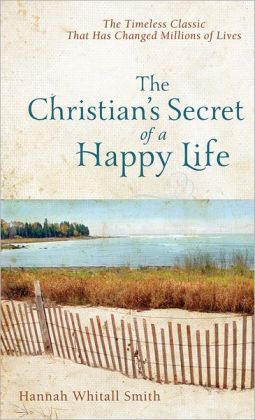
8 Quotes From “The Christian’s Secret Of A Happy Life”

The Christian's SecretSometimes people slap the label “timeless classic” on a book just because it’s old. But in the case of The Christian’s Secret Of A Happy Life by Hannah Whitall Smith, the label is well-deserved. The thoughts she shares are so biblically-grounded that they truly are timeless. You can read my full book review by clicking here. I highlighted way too many things to share them all, but here are a few quotes that I especially liked.

“You have been forced to settle down to the conviction, that the best you can expect from your religion is a life of alternate failure and victory, one hour sinning, and the next repenting, and then beginning again, only to fail again, and again to repent. … Can we dream that the Savior, who was wounded for our transgressions and bruised for our iniquities, could possibly see of the travail of His soul and be satisfied in such Christian lives as fill the Church today? … Can we, for a moment, suppose that the holy God, who hates sin in the sinner, is willing to tolerate it in the Christian, and that He has even arranged the plan of salvation in such a way as to make it impossible for those who are saved from the guilt of sin to find deliverance from its power?” 

“Positive transformation is to take place. So at least the Bible teaches. Now, somebody must do this. Either we must do it for ourselves, or another must do it for us. We have most of us tried to do it for ourselves at first, and have grievously failed; then we discover, from the Scriptures and from our own experience, that it is something we are unable to do, but that the Lord Jesus Christ has come on purpose to do it, and that He will do it for all who put themselves wholly into His hands and trust Him without reserve. … The Lord’s part is to do the thing entrusted to Him. He disciplines and trains by inward exercises and outward providences. He brings to bear upon us all the refining and purifying resources of His wisdom and His love. He makes everything in our lives and circumstances subservient to the one great purpose of causing us to grow in grace, and of conforming us, day by day and hour by hour, to the image of Christ.”

“Sanctification is both a step of faith, and a process of works. It is a step of surrender and trust on our part, and it is a process of development on God’s part. By a step of faith we get into Christ; by a process we are made to ‘grow up into Him in all things.’ By a step of faith we put ourselves into the hands of the Divine Potter; by a gradual process He makes us into a vessel unto His own honor, meet for His use, and prepared to every good work. … The maturity of a Christian experience cannot be reached in a moment, but is the result of the work of God’s Holy Spirit, who, by His energizing and transforming power, causes us to grow up into Christ in all things. And we cannot hope to reach this maturity in any way other than by yielding ourselves up, utterly and willingly, to His mighty working.” 

“Just as we reconcile the statements concerning a saw in a carpenter’s shop when we say, at one moment, that the saw has sawn asunder a log, and the next moment declare that the carpenter has done it. The saw is the instrument used; the power that uses it is the carpenter’s. And so we, yielding ourselves unto God, and our members as instruments of righteousness unto Him, find that He works in us to will and to do of His good pleasure, and we can say with Paul, ‘I labored; yet not I, but the grace of God which was with me.’ … Just as the potter, however skillful, cannot make a beautiful vessel out of a lump of clay that is never put into his hands, so neither can God make out of me a vessel unto His honor unless I put myself into His hands.”:

“Most Christians are like a man who was toiling along the road, bending under a heavy burden, when a wagon overtook him, and the driver kindly offered to help him on his journey. He joyfully accepted the offer but when seated in the wagon, continued to bend beneath his burden, which he still kept on his shoulders. ‘Why do you not lay down your burden?’ asked the kind-hearted driver. ‘Oh!’ replied the man, ‘I feel that it is almost too much to ask you to carry me, and I could not think of letting you carry my burden too.’ And so Christians, who have given themselves into the care and keeping of the Lord Jesus still continue to bend beneath the weight of their burdens, and often go weary and heavy-laden throughout the whole length of their journey. … It is generally much less difficult for us to commit the keeping of our future to the Lord than it is to commit our present. We know we are helpless as regards the future, but we feel as if the present is in our own hands, and must be carried on our own shoulders; and most of us have an unconfessed idea that it is a great deal to ask the Lord to carry ourselves, and that we cannot think of asking Him to carry our burdens too.”

“He is our Father, and He loves us, and He knows just what is best, and therefore, of course, His will is the very most blessed thing that can come to us under any circumstances. I do not understand how it is that the eyes of so many Christians have been blinded to this fact. But it really would seem as if God’s own children were more afraid of His will than of anything else in life—His lovely, lovable will, which only means loving-kindnesses and tender mercies, and blessings unspeakable to their souls!”

“You have trusted Him as your dying Savior; now trust Him as your living Savior. Just as much as He came to deliver you from future punishment did He also come to deliver you from present bondage. Just as truly as He came to bear your stripes for you has He come to live your life for you.” 

“The one chief temptation that meets the soul at this juncture is the same that assaults it all along the pathway, at every step of its progress; namely, the question as to feelings. We cannot believe we are consecrated until we feel that we are: and because we do not feel that God has taken us in hand, we cannot believe that He has. As usual, we put feeling first, and faith second, and the fact last of all. No, God’s invariable rule in everything is, fact first, faith second, and feeling last of all; and it is striving against the inevitable when we seek to change this order.”

Links & Quotes

link quote

Some good reading (and watching) from this weekend…

This was a bit convicting: 7 Signs You’re Spending Too Much Time Looking At Your Phone (I am trying to improve on this!).

This post from Chilly Chilton was also a bit convicting: My Take On President Obama.

“Jesus builds His Church, not by programs, facilities, budgets, and good ‘branding,’ but by living His life in and through each of the members of His Body, beginning with their shepherds.” —T.M. Moore

[VIDEO] John Maxwell says being growth oriented is better than being goal oriented.

“The popular notion that the first obligation of the church is to spread the gospel to the uttermost parts of the earth is false. Her first obligation is to be spiritually worthy to spread it. Our Lord said ‘Go ye,’ but He also said, ‘Tarry ye,’ and the tarrying had to come before the going.” —A.W. Tozer

“I believe that our Lord wants us to learn more of Him in worship before we become busy for Him. He wants us to have a gift of the Spirit, an inner experience of the heart, as our first service, and out of that will grow the profound and deep and divine activities which are necessary.” —A.W. Tozer

Eye Exam

EyechartProbably at one time or another everyone has gone through some sort of eye exam where you read an eyechart to get information about your vision. This simple exam gives your doctor a standard by which to measure the visual acuity of your eyes. After all, without an objective standard for your vision, who’s to say whether your eyesight really is good or bad?

After taking the exam, the doctor can determine whether you have…

  • emmetropia—normal vision where light from your eye’s lens is properly focused on the retina at the back of your eye; or
  • myopia—also called short-sightedness, where the light is focused in front of the retina; or
  • hyperopia—or far-sightedness, where the light is focused behind the retina.

Both myopia and hyperopia can be corrected by lenses. Glasses, contact lenses, or even corrective surgery can correct your focal point, restoring emmetropia again. But notice this:

Lenses don’t change what you see, but how you see it. 

By refocusing the light into the right place, you are now looking at the same object, but the focal point is corrected. You are able to see things that were there all along, but that your out-of-focus vision caused you to miss. For a Christian, the Bible works the same way—

Scripture doesn’t change the events or circumstances in your life, but it does change how you see them. 

The eye is the lamp of the body. If your eyes are good, your whole body will be full of light. But if your eyes are bad, your whole body will be full of darkness. (Matthew 6:22-23)

Vision problemsWhat’s true for an eye exam is also true for a spiritual exam: If you don’t read the eyechart, it’s hard to tell if your vision is out-of-focus.

Far too many people don’t read the Bible for themselves, so they never have given the Holy Spirit a chance to show them where their attitude or lifestyle is out of focus with God’s design. However, if you are reading the Bible, here are three warning signs that you may have blurry spiritual vision that needs to be corrected:

  1. You try to rationalize what the Holy Spirit is saying to you through the Bible, instead of simply obeying what He says.
  2. You discount the wisdom of other God-fearing people who are saying the same thing God’s Spirit is saying.
  3. You frequently find yourself saying, “I know that’s what the Bible says, but….”

You don’t have to live with blurry spiritual vision. Read the Bible for yourself, and let the Holy Spirit point out how your vision can be corrected.

If you have missed any of the messages in our P119 series, you can access them all by clicking here.