12 Quotes From “Notes On Isaiah”

Oswald Chambers always has more insights than I can possibly share with others: he is a true treasure-trove of biblical illumination! Check out my review of his Notes On Isaiah by clicking here. Below are a few shorter quotes from this book. If you would like to read some longer passages, check out my weekly series called Thursdays With Oswald. 

“What we are apt to call interruptions are God’s way of introducing us to a new knowledge of Himself.” 

“The supernatural power of satan never reasons, it appeals to man’s superstition, not to his conscience.”

“I have no right to have anything less than the hope and the belief of Jesus Christ with regard to the worst and most hopeless of men.” 

“We have to keep the call of God alive, and continually recall to our minds what we are here for. … There is no danger of spiritual retrogression if we will keep in mind the times, one or more, when the Spirit of God has touched us.” 

“God’s dates are not man’s. God seems to pay no attention to our calendars; He has a calendar of His own in which He suddenly surprises a man in the midst of his days. Leave room for God. We expect God only on special days, in particular meetings; that is not God’s way. He comes suddenly, at midnight or at noonday.” 

“We are to be in the world while not of it, and to denounce by lip and life the things that are wrong.” 

“The mark of the beast is already here, and it will grow clearer before the man of sin is revealed (see 2 Thessalonians). It is slighting no one to say that prosperity in this order of things along with godliness is impossible, and growingly more impossible.” 

“Undisciplined imagination is the greatest disturber not only of growth in grace, but of spiritual sanity [Isaiah 26:3].” 

“Conscience does not shout in thunderclaps, you can easily drown its record, but it goes on, and if you do not heed it for a while because of sensational sinning, as soon as the sensation exhausts itself, back comes the monotonous tick, tick, that nearly drives a man mad. God will never make us listen to Him; we have to will to listen.” 

“Belief in God will always manifest itself in right principles, but if you put principles first you will end in disbelief in God.” 

“The only place of confidence is personal trust in God and patient waiting for Him. … To trust in the goodness of God is not enough, it is not eternal and abiding; we have to trust God Who is infinitely more than goodness.” 

“If in the face of all the appeals of common sense you remain true to God, that is the ‘proof of your faith’ which will be found to the glory of God.” 

Notes On Isaiah (book review)

I’m always astounded by the depth of insight that God gave to Oswald Chambers on spiritual matters; especially on concepts that seem confusing to a great many people. His God-given insights are on full display in his Notes On Isaiah.

I’ll share one disappointment right up front: There is not nearly as much information in this book as I would have hoped for. Chambers’ books, with only a couple of minor exceptions, were not initially written as books. Instead, the books are a collection of sermons or lectures that his wife recorded shorthand as he spoke, and then they were transcribed and compiled later. Apparently during this series of lectures on Isaiah, Biddy Chambers had taken on more responsibility at the Bible Training Institute (even teaching a class of her own), and she gave birth to their only child. These things kept her from taking the extensive notes we readers have become accustomed to. 

Although limited, the content is still as insightful and mind-expanding as ever! David Lambert, a friend of the Chambers who helped get this book into print, marveled at how masterfully Oswald could make the words of Isaiah accessible to his students. Lambert noted, “The only mind for the author of the Bible is the Mind of God, and the only Interpreter is the Spirit of God.” Clearly, Oswald Chambers was deeply dependent on both the Mind and Spirit of God in all of his work! 

In introducing this class to his students, Chambers reminded them what was at stake. He said, “God will never have us follow Him blindly,” unlike satan. He pointed out, “The supernatural power of satan never reasons, it appeals to man’s superstition, not to his conscience.” If ever a book of Scripture appealed to our conscience to open our eyes and hearts to the ways of God, it is the book of Isaiah. And Oswald Chambers is a marvelous companion for our journey through this book! 

The Scriptures And Our Temperament

“We naturally tend to interpret Scripture in the light (or shadow) of our own temperament and let our peculiar mental cast decide the degree of importance we attach to various religious doctrines and practices. …

“The minister above all others should look deep into his own heart to discover the reason for his more pronounced views. It is not enough to draw himself up and declare with dignity that he preaches the Bible and nothing but the Bible. That claim is made by every man who stands in sincerity to declare the truth; but truth has many facets and the man of God is in grave danger of revealing only a limited few to his people, and those the ones he by disposition favors most. …

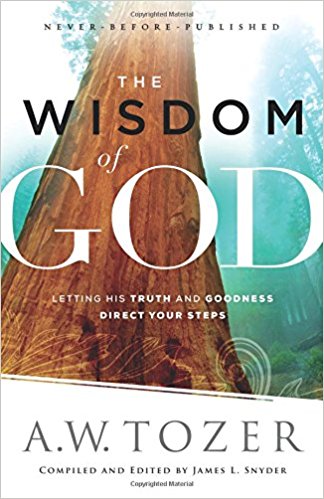
“The Scriptures, critical self-discipline, honesty of heart and increased trust in the inward operations of the Holy Spirit will save us from being too greatly influenced by temperament.” —A.W. Tozer, in Man—The Dwelling Place Of God

Thursdays With Oswald—Isaiah 6

Oswald ChambersThis is a weekly series with things I’m reading and pondering from Oswald Chambers. You can read the original seed thought here, or type “Thursdays With Oswald” in the search box to read more entries.

Isaiah 6

[These are the notes on Oswald Chambers’ lecture on Isaiah 6.]

     My vision of God depends upon the state of my character. Character determines revelation. … Until I am born again and enter the Kingdom of God I see only along the line of my prejudices. …  

     The purpose of the vision is to enable me to see “the arm of the Lord” behind all circumstances (see Isaiah 53:1). God never gives a man the power to say “I see” until his character proves itself worthy of its purification. What hinders the purging of our perception is that we will build our faith on our experiences instead of on the God who gave us the experiences. My experience is the evidence of my faith, never the ground of it, and is meant to reveal to me a God who is bigger than any experience. …  

     The symbol of the live coal ‘from off the altar’ represents the twofold nature of the substitution of Christ, not only Christ for me, but Christ in me. … 

     God only gives us visions of Himself for one purpose, that we may work them out into character. … After God has given us a time of face-to-face contact with Himself and then puts us into tumults, the temptation is to sit down and say “Where is the blessedness I had when I first knew the Lord?” The Spirit of God holds us steady until we learn to know God, and the details of our lives are established before Him, then nothing on the outside can move us.

From Notes On Isaiah

There are specific reasons God will give us a clearer revelation of Himself—

  1. to purify godly character in us
  2. to help us deal with our own sin
  3. to see God at work in everyday affairs
  4. to keep us energized through trying times
  5. to make us more aware of what Jesus has done for us and in us
  6. to be His messenger among needy people

God doesn’t give visions or revelations just to thrill us or give us an experience. God is perfectly purposeful in everything He does. His visions are for His glory.

A Crime To Be Weak

“The devil would like us to believe that we are in a losing battle; nothing of the sort! We are ‘more than conquerors,’ hilariously more than victors, ‘through Him that loved us’ [Romans 8:31-37].

“No power on earth or in hell can conquer the Spirit of God in a human spirit; it is an inner unconquerableness. If you have the whine in you take it out ruthlessly. It is a positive crime to be weak in God’s strength.” —Oswald Chambers, in Run Today’s Race

Saturday In The Psalms—Childlike Not Childish

Lord, my heart is not haughty… (Psalm 131:1).

This psalm is only three verses long, but they are three verses of immense trust in God. Truly these verses reveal extraordinary childlike dependence on God.

My heart is not haughty—I am subduing my pride.

My eyes are not lofty—I’m not looking for great things for myself.

I do not concern myself with great matters—I stay away from burdens I don’t need to carry.

I have no interest in things too profound for me—I don’t spend time on the “what ifs,” but I quietly trust God to provide for me.

I have calmed and quieted my soul—if my emotions start running too far ahead, I remind myself that God knows best what I need.

Childlike not childish!

Childlike is lovingly dependent. Childish is selfishly independent.

Childlike is trusting someone wiser. Childish is believing I know best.

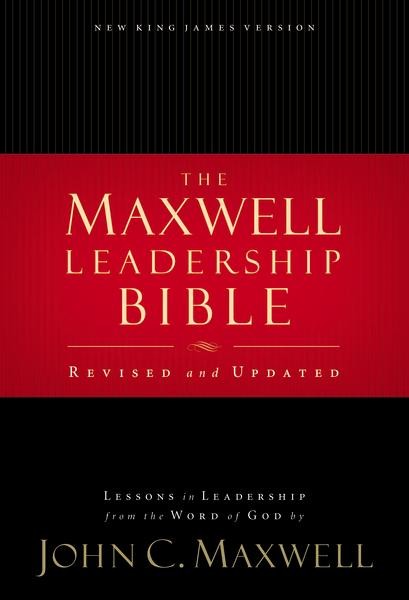
John Maxwell said, “The Christian leader is mature enough to not act childish, yet remains trusting enough to stay childlike.”

Think of it this way: a “weaned child” (v. 2) is able to eat more grown-up food than an infant, but it is still dependent on a loving parent to provide that food—food that is best. It’s not necessarily food I want, but it is food I need.

David implores us to adopt this childlike dependence on God, and give up our childish independence apart from God. This attitude, David says, starts in a humbled heart.

Holy Spirit, work in my heart today. Drive out any childish selfishness for what I want, and create in me a childlike trust in my God Who gives me all that I need. Amen.

Thursdays With Oswald—Don’t Argue!

Oswald ChambersThis is a weekly series with things I’m reading and pondering from Oswald Chambers. You can read the original seed thought here, or type “Thursdays With Oswald” in the search box to read more entries.

Don’t Argue!

     The reason Paul tells Timothy not to argue [1 Timothy 4:7], and the reason he tells me not to argue, and the reason he tells you not to argue, is that we argue from our own point of view. We argue not for the truth’s sake, we argue to prove we are right. God grant that we may learn to take heed lest we get switched off on arguing. … 

     “Oh, the unmitigated curse of controversy! Oh, the detestable passions that corrections and contradictions kindle up to fury in the proud heart of man! Eschew controversy, my brethren, as you would eschew the entrance to hell itself. Let them have it their way; let them talk; let them write; let them correct to you; let them traduce you; let them judge and condemn you; let them slay you. Rather let the truth of God suffer itself, than that love suffer. You have not enough of the divine nature in you to be a controversialist.” —Dr. Alexander Whyte … 

     For example… “sanctification” is not a man’s term; it is God’s: “the baptism with the Holy Ghost” is not man’s conception, it is God’s, and when a soul begins to argue on these matters, remember, worker for God, it is the Holy Spirit they are arguing with, the Word of God they are haggling about. God grant we may not hinder those who are battling their way slowly into the light. …  

     “Heal me of this lust of mine of always vindicating myself.” —Augustine … 

     If we are living rightly with God, living holy lives in secret and in public, God puts a wall of fire round about us.

From Workmen Of God

How true it is that we argue not because we’re standing up for the truth, but because we want to prove that we are right! This is a tactic of the devil which keeps us focused on less important matters.

Our only line of defense needs to be something Oswald Chambers said earlier: “the Word of God, the Word of God, the Word of God, first second and last.” If we stick to the Word, people who want to argue aren’t arguing with us, but with God. That is an argument in which we never have to participate!

8 Quotes From “Workmen Of God”

Although written over 100 years ago, Workmen Of God is still a treasure-trove for anyone in pastoral ministry today. I have shared longer passages from this book in my weekly series called “Thursdays With Oswald,” but here are a few other gems from this book. You can read my full book review of Workmen Of God by clicking here.

“We must keep ourselves in touch, not with theories, but with people, and never get out of touch with human beings, if we are going to use the Word of God amongst them, and if the Holy Spirit is to apply the Word of God through us as workmen meeting not to be ashamed.”

“Men’s minds will always assent that Jesus Christ is right—why? Because Jesus Christ is Incarnate Reason. There is something in Jesus Christ that appeals to every man, no matter what condition he is in. If once Jesus Christ is brought into contact with the man, let that man seem to us dead and indifferent, destitute of anything like goodness—let him come in contact with Jesus Christ by the Holy Spirit, and you will instantly see that he can grasp something about Him in a way we cannot understand unless we know the Holy Spirit.”

“Unless your religion will go to the lowest and the worst and the most desperate case you know of, your religion is of no use.”

“Intercessory prayer for a backslider is a most instructive but most trying work for God, it will teach the worker that prayer is not only making petitions, but that prayer is breathing and atmosphere.”

“When the message you have to deliver, brother preacher, strikes straight home, don’t water it down just a little. Go straight for God if you come from Him. Neither for fear nor favor alter the message.”

“Love for men as men will never stand the strain. In order to catch men for the Lord Jesus Christ, you must love Jesus Christ absolutely, beyond all others. You must have a consuming passion of love, then He will flow through you in a passion of love and yearning and draw all men to Himself.”

“We need to live steadfastly in the presence of God so that when we are praised we don’t arouse the spirit of envy, the spirit that makes a man want to do something, not because he loves God, but because he wants to emulate us. … God grant we may see that the great need of every worker is a first-hand acquaintance with Jesus Christ which puts to death the spirit of ambition.”

“You cannot have holiness without a chaste physical life. Oh, the sapping power of God because of unchaste men and women who preached His Gospel.”

How Should Christians Handle Objections?

It’s no secret that when a Christian says, “This is what I believe,” or “This is what the Bible says,” or even something as simple as, “I believe in God,” that there will be people who disagree. Sometimes their disagreement may even become an outright attack.

How are Christians to respond?

Here are five ways I’ve found to be effective and Christ-honoring—

1. Don’t argue. Arguments tend to create an “I don’t want to lose” feeling in the other person, which makes them unable to truly hear what you’re saying. Solomon wrote, “Do not answer a fool according to his folly, or you will be like him yourself” (Proverbs 26:4).

2. Ask questions. Jesus was a master at this. Look through the Gospels and you will see Jesus asking questions to clarify others’ positions. Questions stimulate further conversation, while statements tend to shut down the conversation. Questions develop a relationship, while definitive statements make you seem superior to the other person.

3. Don’t argue. Yes, this is good enough to repeat! Paul’s advice to Timothy was, “Do not waste time arguing over godless ideas and old wives’ tales” (1 Timothy 4:7).

4. Pray for mercy. Remember that if you are really speaking truths from the Bible, the person arguing against those truths is arguing with God, not with you.

5. Pray for light. Paul said that the “god of this age” has blinded people (see 2 Corinthians 4:2-4), so we should pray that the Holy Spirit would grant them light to see the truth.

“Oh, the unmitigated curse of controversy! Oh, the detestable passions that corrections and contradictions kindle up to fury in the proud heart of man! Eschew controversy, my brethren, as you would eschew the entrance to hell itself. Let them have it their way; let them talk; let them write; let them correct to you; let them traduce you; let them judge and condemn you; let them slay you. Rather let the truth of God suffer itself, than that love suffer. You have not enough of the divine nature in you to be a controversialist.” —Dr. Alexander Whyte

Let’s be passionate for people, not passionate to win an argument!

I go into more detail in this video…

Thursdays With Oswald—When You Can’t Do Anything To Help

This is a weekly series with things I’m reading and pondering from Oswald Chambers. You can read the original seed thought here, or type “Thursdays With Oswald” in the search box to read more entries.

When You Can’t Do Anything To Help

     One of the first things a worker for God has to learn by experience is that strangely obvious lesson, that none of us can understand the cases we meet to work with. Then how can we work for the cure of them? Remember the first principles we laid down: By knowing Jesus Christ for ourselves experimentally, and then by relying on the Holy Spirit. …  

     In Goethe’s writings, in 1824 he writes: “I will say nothing against the course of my existence, but at the bottom of it has been nothing but pain and burden, and I can affirm that, during the whole of my seventy-five years, I have not had four weeks of genuine well-being. It has been the perpetual rolling of a rock that must be raised up again.”

     Robert Louis Stevenson said that three hours out of every five he was insane with misery. John Stuart Mill said that life was not worth living after you were a boy.

     This is not fiction, these are human facts. What does Christian Science do—ignores them! New Thought—ignores them! Mind Cure—ignores them! Jesus Christ opens our eyes to these facts, but here comes the difficulty: how am I to get Jesus Christ in contact with these sick souls?

In the first place, will you realize that you do not know how to do it? … If you get your little compartment of texts, and search them out and say, ‘I know how to deal with this soul,’ you will never be able to deal with it; but if you realize your absolute helplessness and say, ‘My God, I cannot touch this life, I do not know where to begin, but I believe Thou canst do it,’ then you can do something. …  

     God grant us the grace so to rely on the Holy Ghost, to so know our ignorance, so to get out of the way with our knowledge, that we will let the Holy Ghost bring the Majestic Christ face to face with the diseased, sick folk we meet. … God grant we may so rely on the Holy Spirit that we allow Him to introduce through the agony of our intercession…the Living, Mighty Christ! … Blessed be the name of God, there is no case too hard for Jesus Christ! …  

     God grant that we may be so centered in Him that He can use us in that wonderful way.

From Workmen Of God

How to help those in need:

  1. Admit that we can’t help them
  2. Ask the Holy Spirit to enable us to help them
  3. Share only what the Spirit tells us to share
  4. Intercede in prayer for our friend

“God grant that we may be so centered in Him that He can use us in that wonderful way.” Amen!