This is a weekly series with things I’m reading and pondering from Oswald Chambers. You can read the original seed thought here, or type “Thursdays With Oswald” in the search box to read more entries.
Symphonizing In Prayer
Again, truly I tell you that if two of you on earth agree about anything they ask for, it will be done for them by My Father in heaven. (Matthew 18:19)
We need to know this simple, direct truth about praying in public. It is perilously easy to make public prayer the mere fringe of devotion to what we are pleased to think of as the real center of the meeting. Agreement in purpose on earth must not be taken to mean a predetermination to agree together to storm God’s fort doggedly till He yields. It is far from right to agree beforehand over what we want, and then go to God and wait, not until He gives us His mind about the matter, but until we extort from Him permission to do what we had made up our minds to do before we prayed; we should rather agree to ask God to convey His mind and meaning to us in regard to the matter.
Agreement in purpose on earth is not a public presentation of persistent begging which knows no limit, but a prayer which is conscious that it is limited through the moral nature of the Holy Spirit. It is really “symphonizing” on earth with our Father Who is in Heaven.
From Christian Disciplines
When Jesus taught us to pray He said we should say, “Your will be done on earth as it is in Heaven.” God has a perfect plan in mind, and He wants us to be a part of that plan. So before we make up our mind to pray a certain way, and rally others around us to “agree in prayer” with us, we need to find out what God’s mind is on the matter. Our agreement needs to be with God, not with others.
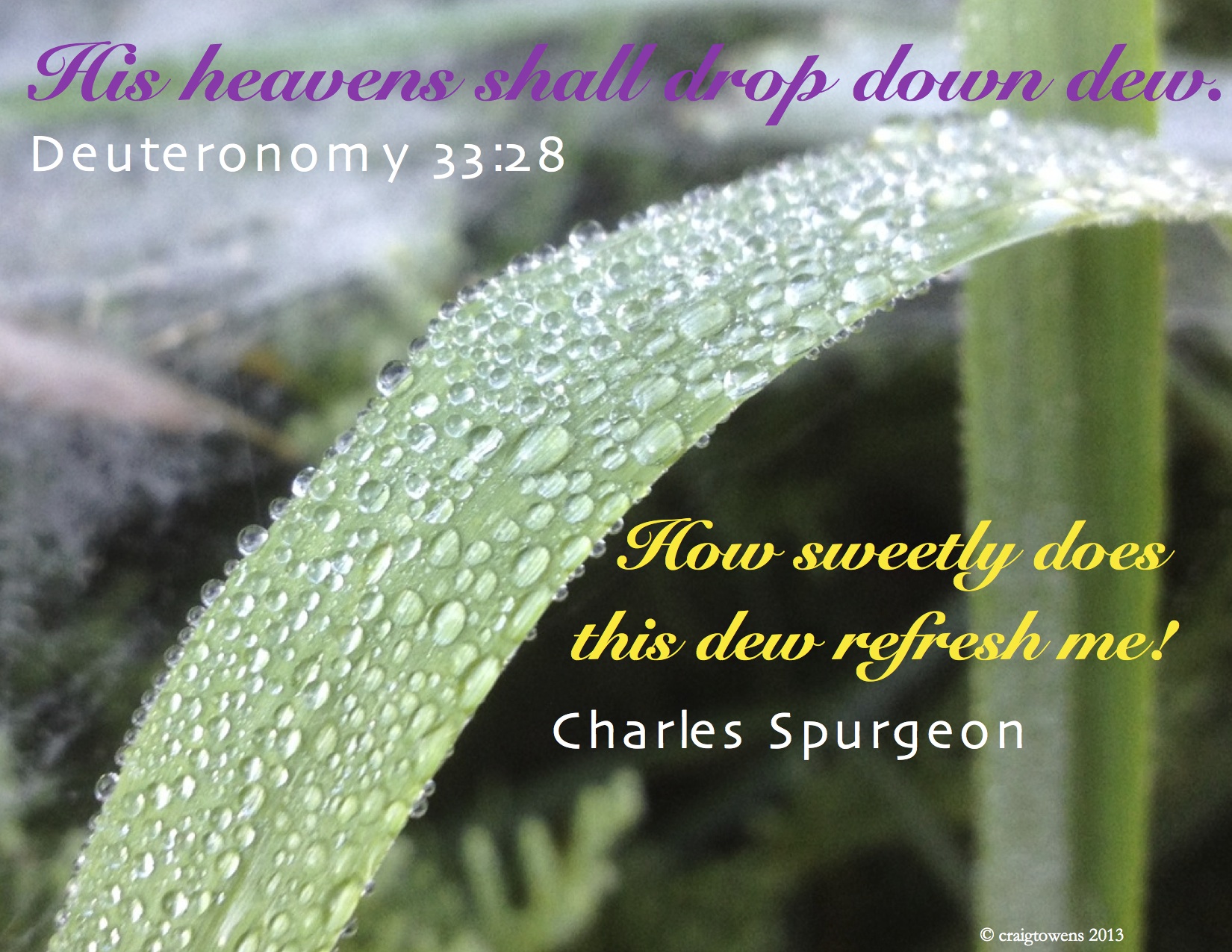
His heavens shall drop down dew (Deuteronomy 33:28).
“What the dew in the East is to the world of nature, that is the influence of the Spirit in the realm of grace. How greatly do I need it! Without the Spirit of God I am a dry and withered thing. I droop, I fade, I die. How sweetly does this dew refresh me!” (Charles Spurgeon)
May you find the refreshment of the dew of God’s Holy Spirit today!
A nice touch I appreciated in Andrew Murray’s book Raising Your Child To Love God was the prayers he included at the end of each of the 52 chapters of this book. Below are some of the lines of prayer which I found noteworthy. If you would like to read some other quotes from this book, click here. If you would like to read my book review of this book, click here.
“Give us a deep sense of our holy calling to train their immortal souls for You and for our glory.”
“By my life, by my words, by my prayers, by gentleness and love, by authority and instruction, I would lead them in the way of the Lord. Be my helper, Lord.”
“As we see the power of sin and the world threatening our children, may we plead for them as for our own life.”
“O Father, open the eyes of all Your people, that in each little one You give them their faith may see an extraordinary child.”
“I acknowledge, Lord, that I do not sufficiently realize the value of my children or the danger to which they are exposed from the prince and the spirit of this world. Lord, teach me fully to recognize the danger and yet never to fear the commandment of the King. Open my eyes to see that in the light of heaven each child is a special child, entrusted to my keeping and training for your work and kingdom. Help me in the humility and watchfulness and boldness of faith to keep him sheltered, to hide him from the power of the world and of sin. May my own life be the life of faith, hid with Christ in God, that my child may know no other dwelling place.”
“O God, teach us to feel deeply that You have need of our children. For the building up of Your temple, in the struggle of Your kingdom with the powers of darkness, in the gathering of Your people from the millions of lost, You have need of our children. We give them to You. We will train them for You. We will wait in prayer and faith, and we beseech You to inspire them with a holy enthusiasm for the kingdom and its conquests.”
“Grant that I may always live worthy of all honor. And may the holy power to train young souls to keep Your commandments, to honor and serve You, be the fruit of Your own Spirit’s work in me.”
“Make our home a blessing to others, encouraging them to take a stand for You.”
“Teach me always to speak to him of Your love so that his heart will early be won to You. May my whole life be an inspiration, guiding him to what is pure and lovely, to what is holy and well pleasing to You.”
“Dear God, help me to teach my children the fear of the Lord by instruction, example, and the spirit of my own life. May thoughtfulness, truthfulness, and lovingkindness mark the conversation of my home. May the life of all in my care by holy unto the Lord. Daily I would show them, through Your grace, how departing from every evil, doing every good, and following after peace and holiness is what true fear of the Lord produces.”
“I am weak, but I know Your almighty power is working in me to keep me humble yet hopeful, conscious of my weakness yet confident in You.”
“O Lord, we draw nigh to You to claim the fulfillment of this promise on behalf of our beloved children. Lord, may they from their very youth have Your Spirit poured out upon them that even in the simplicity of childhood they may say, ‘I belong to the Lord.’”
“Because our child has been presented to You as Jesus was, may this be the beginning of a likeness that will take possession of his whole life. Give grace to Your servants. May we be worthy parents, guardians, and guides of this child who has been given to the Lord. For Your name’s sake. Amen.”
“May my daily experience of the way in which Your shepherd-love does its work be a lesson that teaches me how to feed my little flock. … Let Your holy love in my heart be the inspiring power of all my communion with You and with them. And let me so prove how wonderfully You are my Shepherd and blessed I am to be their shepherd.”
“O God, how we bless You for the promise that our home is to be Your home, the abode of Your Holy Spirit, and that in the happy life of love between parents and children, the Spirit of Your divine love is to be the link that binds us together.”
“Set me apart as a parent so to live as one baptized into Christ’s death that first my life and later my teaching may lead my child to experience this blessed life in Christ.”
“I come to You humbly confessing my sin. Often misbehavior in my children has been met by sinful response on my part. I know that this only discourages them. I want to be a parent who models patient love, helping them in their weakness, and by my example encouraging them with the assurance that they, too, can overcome difficulty.”
Listen to the podcast of this post by clicking on the player below, and you can also subscribe on Apple, Spotify, or Audible.
John opens the book of Revelation with this greeting: Grace and peace to you from Him who is, and who was, AND WHO IS TO COME… (Revelation 1:4). This is so significant because of the other descriptive phrases John uses for Jesus:
Jesus was pre-existent before creation (John 1:1).
John was witness to everything Jesus did during His public ministry, including all of the claims Jesus made about Himself (1 John 1:1).
And now John says not only has Jesus existed before time existed, not only is He alive now, but He is coming back again!
This is what makes the resurrection of Jesus so important. Jesus Himself told us exactly what was going to happen with His death by crucifixion and His resurrection three days later. The fact that these statements all turned out to be true gives us greater assurance that His promise that He is coming back is also true.
In His very first sermon, Jesus quoted from Isaiah about how He would conduct His earthly ministry (see Isaiah 61:1-2 and Luke 4:18-19). But when He quotes the passage from Isaiah, He leaves off a phrase “and a day of vengeance of our God.” God’s wrath against sin is being held back for now, but the day of judgment is coming.
John says Jesus is the One Who is to come, and records later on how Jesus will come—
I saw Heaven standing open and there before me was a white horse, whose rider is called Faithful and True. With justice He judges and wages war. His eyes are like blazing fire, and on His head are many crowns. He has a name written on Him that no one knows but He Himself. He is dressed in a robe dipped in blood, and His name is the Word of God. The armies of Heaven were following Him, riding on white horses and dressed in fine linen, white and clean. Coming out of His mouth is a sharp sword with which to strike down the nations. “He will rule them with an iron scepter.”He treads the winepress of the fury of the wrath of God Almighty. (Revelation 19:11-15)
God made Jesus to be sin for us. He suffered and died to pay the penalty for our sins, and those who are still found in their sins—unforgiven, without placing their faith in Jesus Christ’s sacrificial death and resurrection—must face the wrath of God.
Jesus is not only our Risen Savior, but He is the soon-returning King and Judge.
Three times the last book of the Bible records Jesus Himself saying, “I am coming soon!” This isn’t a scare tactic, it’s real. As certainly as Jesus rose from the grave, He is returning soon.
Are you ready for His return? Are you telling others that Jesus is our soon-returning King? I hope you know what it means to have Jesus as your Lord and Savior, and I hope you are telling as many other people as you can about our soon coming King!
Don’t you get annoyed when an overly-religious person spouts off some pie-in-the-sky, feel-goodism that sounds religious, but doesn’t seem to have any grounding in the real world?
Like when a church leader says, “Praise be to the God and Father of our Lord Jesus Christ” when you are in the midst of a painful situation? This is one of those statements that’s great for church, but not so great for the battlefield of life, right?
Actually that statement was made by the apostle Peter (see 1 Peter 1:3).
He didn’t shout it in a church service, but in a letter to Christians who were on the run from their persecutors. Many of them had lost their homes and businesses, had to leave their hometowns, were separated from their families, and were having their very lives threatened. Peter didn’t just shout this praise, he explained its origin, too.
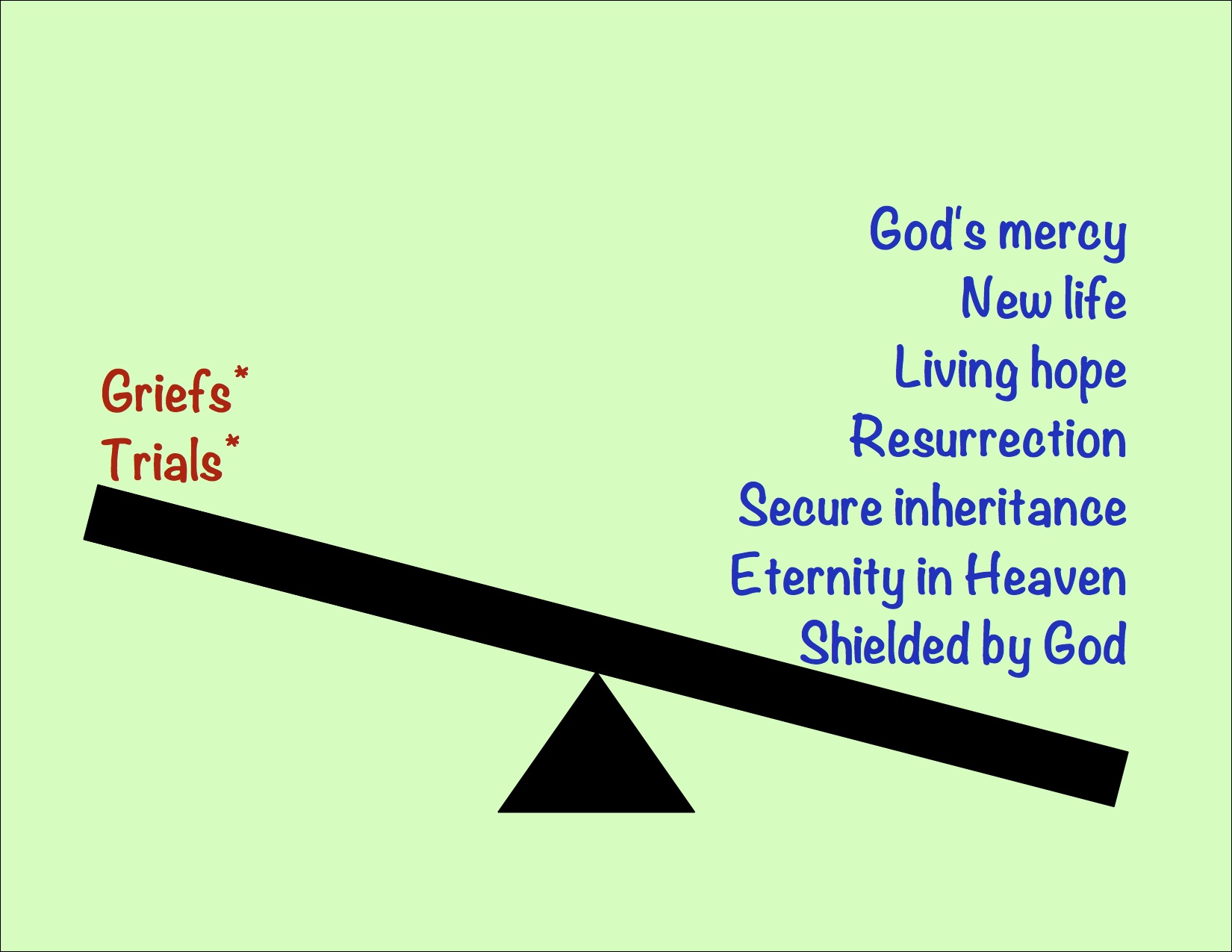
Over the next few verses he asks us to consider what a relationship with Jesus Christ would bring us, and then to put the positives and negatives on a scale—
The Positives
God’s mercy
New life
Living hope
Resurrection from the dead
Secure inheritance
An eternity with God in Heaven
God’s power shielding us
The Negatives*
Grief
Trials
*
So whether we look at the eternal positives or the temporary “negatives” there is cause for rejoicing. When a Christian is in a difficult situation, he must remember this:
This situation is only temporary
This situation will ultimately bring glory to God
Weigh the positives and negatives and you will see that what you are going through now cannot even begin to compare to the glory of God that is coming! The apostle Paul echoed Peter’s words when he wrote, “I consider that our present sufferings are not worth comparing with the glory that will be revealed in us” (Romans 8:18).
So keep your eyes on Jesus, and keep shouting your praise to Him.
Holy Spirit, please help me to look away from the temporary and keep my eyes on my eternal God and Savior.
This world is not my home. I’m just a traveler passing through. At times this world sure is beautiful! I love the sunsets, and the thunderstorms, and the oceans, and the forests. I love the animals, and the art, and the music.
But this is not my home. C.S. Lewis wrote—
“The books or the music in which we thought the beauty was located will betray us if we trust to them; it was not in them, it only came through them, and what came through them was longing. These things—the beauty, the memory of our own past—are good images of what we really desire; but if they are mistaken for the thing itself they turn into dumb idols, breaking the hearts of their worshipers. For they are not the thing itself; they are only the scent of a flower we have not found, the echo of a tune we have not heard, news from a country we have never yet visited.”
And the Apostle John gave me this warning—
Do not love this world nor the things it offers you, for when you love the world, you do not have the love of the Father in you. For the world offers only a craving for physical pleasure, a craving for everything we see, and pride in our achievements and possessions. These are not from the Father, but are from this world. (1 John 2:15-16 NLT)
This is not my home. I’m just passin’ through, and enjoying the scents and echoes of my Heavenly Homeland!
This is a weekly series with things I’m reading and pondering from Oswald Chambers. You can read the original seed thought here, or type “Thursdays With Oswald” in the search box to read more entries.
Heaven & Hell
Hell is the place of angelic condemnation. It has nothing to do primarily with man. God’s Book never says that Hell was made for man, although it is true that it is the only place for the man who rejects God’s salvation. Hell was the result of a distinct condemnation passed by God on celestial beings, and is as eternal as those celestial anarchists.
Jesus makes it quite clear that Heaven is my home— “…take your inheritance, the kingdom prepared for you since the creation of the world” (Matthew 25:34).
He makes it equally as clear that Hell was not made for mankind— “…the eternal fire prepared for the devil and his angels” (Matthew 25:41).
Furthermore, Jesus is completely clear that He is the only way to Heaven, and that the rejection of the forgiveness that is possible by accepting His atonement on the Cross leaves only one destination for the unforgiven: Hell.
This is an important reminder. It reawakens me to be persistent in telling others this truth about Heaven and Hell.
Rescue those who are unjustly sentenced to die; save them as they stagger to their death. Don’t excuse yourself by saying, “Look, we didn’t know.” For God understands all hearts, and He sees you. He who guards your soul knows you knew. He will repay all people as their actions deserve. (Proverbs 24:11-12)
And you must show mercy to those whose faith is wavering. Rescue others by snatching them from the flames of judgment. Show mercy to still others,but do so with great caution, hating the sins that contaminate their lives. (Jude 22-23)
In answering questions that have been submitted for The Q Series, I noticed a recurring trend: How much of our “conventional thought” in church circles is not revelation, but speculation.
Yesterday I had some tough questions on Heaven, Hell, suicide, our resurrected bodies, the after-life, and so on. In answering these questions, I used many passages from the Bible, but I also quoted from Charles Spurgeon, Charles Dickens, and C.S. Lewis. There’s nothing wrong, per se, with quoting from extra-biblical sources, but we have to be very careful what we do with those.
I once heard renowned evangelist C.M. Ward say something like this:
“The Word of God is completely good; you can devour all of it. But reading anything else is like eating chicken. There is some meat that’s good, and there are some bones, and gristle, and fat that you should spit out. Be very careful of what you take in, unless it is the pure Word of God.”
The Bible reveals so much for our lives, and we put ourselves in a place God can bless us when we are obedient to the revelation of His Word. But we put ourselves on shaky ground when we live by speculation of what we think may be truth.
The Apostle Peter said it this way:
For no prophecy ever originated because some man willed it [to do so — it never came by human impulse], but men spoke from God who were borne along (moved and impelled) by the Holy Spirit. (2 Peter 1:21 AMP)
The prophet Jeremiah is often called “the weeping prophet.” Perhaps if we wept a bit more over the lost souls who are staggering toward Hell, we would be compelled to do more to rescue them.
What I love about Jeremiah is his identification with lost humanity. God called Jeremiah to be His prophet, so if anyone could have the opportunity to feel special or superior, it might be Jeremiah. But when the prophet heard about the approaching judgment, he called the residents of Jerusalem my people. Did you get that: MY people.
Not only did he call them my people, but his heart broke for them:
My heart is faint within me (Jeremiah 8:18)
I am crushed (8:21)
I mourn … horror grips me (8:21)
I weep day and night (9:1)
I weep and wail and take up a lament (9:10)
In Soul Work, Randy Harris has a passage that has been pounding on my heart—
Why don’t we cancel all those [church] meetings and make a field trip to the laundromat and the bars and the streets and listen to what makes sinners tick until we love them. I don’t mean try to convert anybody; I mean listen to them until we love them. Listen until we find ourselves in them. Listen to what they’re afraid of, listen to what they hope for, listen to what hurts, until we love them. And then we can try to be the church again. (emphasis added)
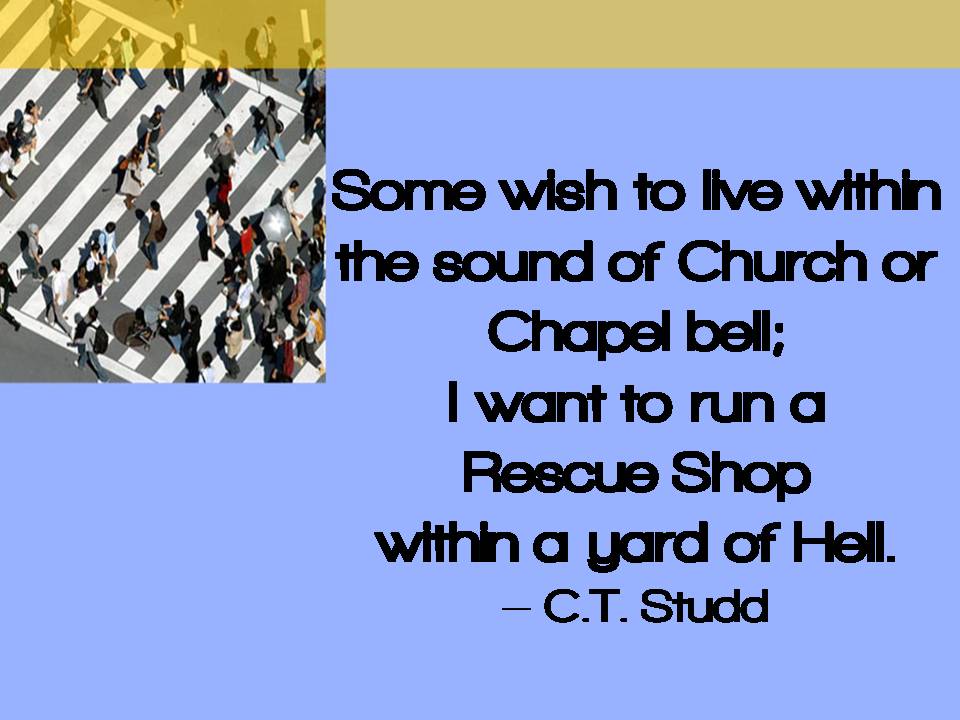
Or as C.T. Studd famously said:
“Some wish to live within the sound of Church or Chapel bell;
I want to run a Rescue Shop within a yard of Hell.”
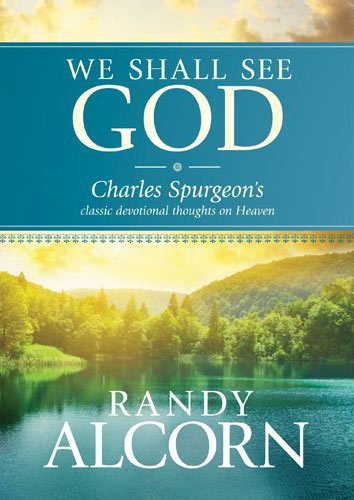
It wasn’t for nothing that Charles Spurgeon was called “the prince of preachers.” In We Shall See God by Randy Alcorn, you can get a taste of Spurgeon’s eloquence, and of Heaven’s majesty.
We Shall See God is a collection of Spurgeon’s sermons about Heaven. Randy Alcorn has done a masterful job of culling through the prince’s sermons to pull out excerpts that talk about the beauty of Heaven and the horrors of Hell. Randy’s comments following each passage from Spurgeon are wonderfully presented. He doesn’t “talk over” Spurgeon, nor does he simply rehash what Spurgeon already said. He eloquently amplifies or briefly explains.
This book is designed to be used as a 50-day devotional reading. But I’ll be honest with you: I couldn’t put it down! I was so enthralled by Spurgeon’s description of Heaven, that I couldn’t wait to read more. And now I can’t wait to tell others more about Heaven.
Lately there have been so many authors and blogger hypothesizing about Heaven and Hell and the after-life. But Spurgeon doesn’t give us his opinion, he gives us biblical insight. And wouldn’t you much rather hear what the Creator of Heaven has to say about it, than what any mere mortal has to say?
I highly recommend this book to you. You will not only look forward to Heaven even more, but you will enjoy your brief journey on this Earth even more too.










 Craig T. Owens