A Radical Change In Perspective

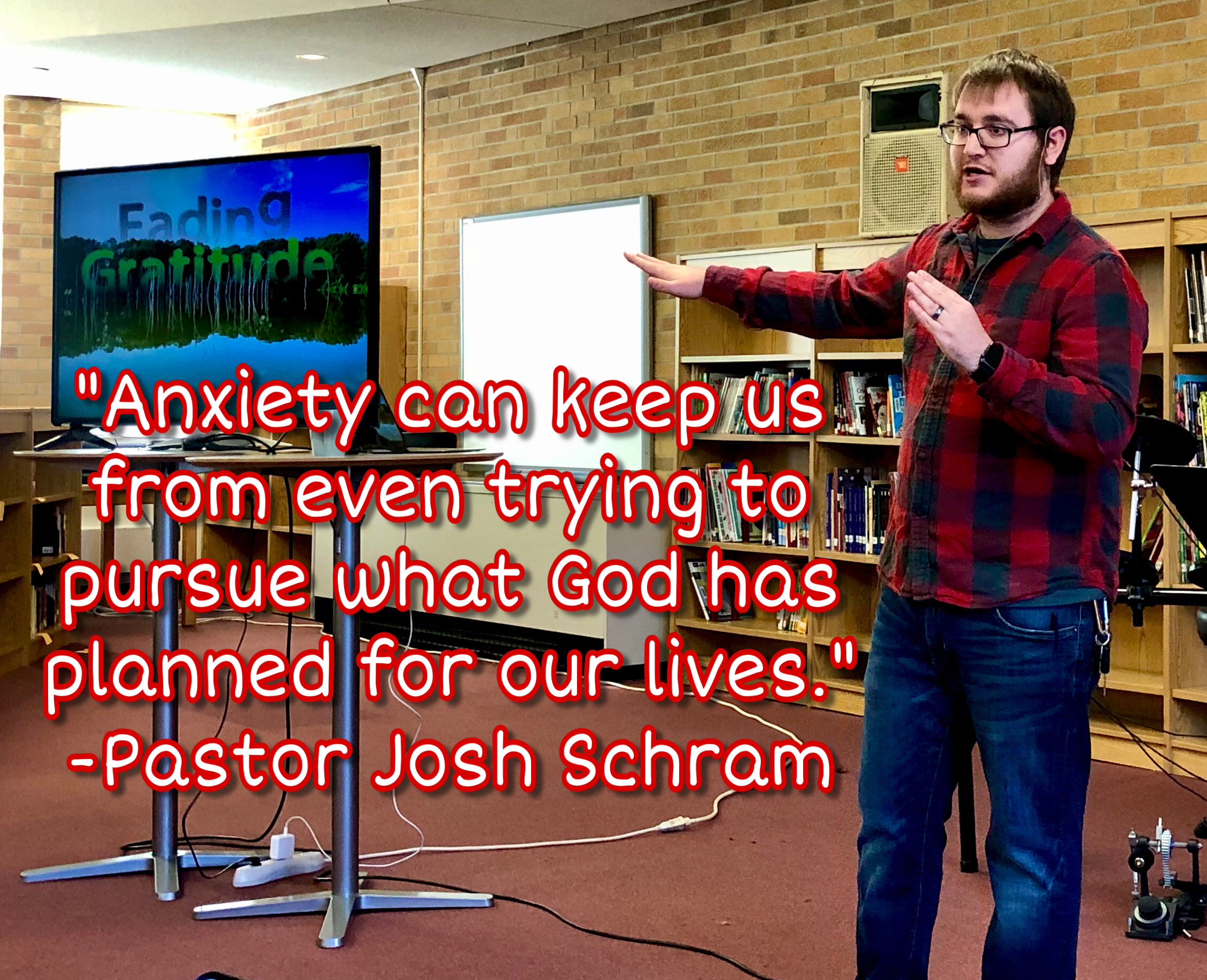
My friend Josh Schram shared a great message yesterday, wrapping up our series called Fading Gratitude. 

Josh was transparent about some of the struggles he overcame during his younger years, explaining how his decision to be grateful even for those roadblocks completely changed his perspective.

When we’re not intentional, our gratitude naturally begins to fade. It’s not that we’re intentionally ungrateful, but we just merely forget to be thankful. 

Our fading gratitude creates a domino effect. When gratitude fades we live with… 

Anxiety can keep us from even trying to pursue what God has planned for our lives. 

When a large group of people needed to be fed, a couple of Jesus’ disciples forgot about the miracles Jesus had already done in the past, and as a result, they became anxious about what to do next. 

Philip replied, “Even if we worked for months, we wouldn’t have enough money to feed them!” Then Andrew, Simon Peter’s brother, spoke up. “There’s a young boy here with five barley loaves and two fish. But what good is that with this huge crowd?” (John 6:7-9)

Yet Jesus multiplied more than enough for everyone to eat AND there were more leftovers than there was food that they originally started with! “So they picked up the pieces and filled twelve baskets with scraps left by the people who had eaten from the five barley loaves” (John 6:13).

That’s why Jesus tells us, “So don’t worry about tomorrow, for tomorrow will bring its own worries. Today’s trouble is enough for today” (Matthew 6:34). When we’re grateful for what God provided yesterday, and we’re thankful for what He’s providing today, it will cut short any feelings of anxiety about what God will do again tomorrow!

“No amount of regret changes the past, no amount of anxiety changed the future, but any amount of gratitude changes the present.” —Ann Voskamp 

Gratitude can radically change our perspective! 

If I’m not choosing gratitude, then gratitude is fading. I can be grateful for things I originally thought were holding me back. I can give those things to Jesus—He is not only more than enough but He also gives back to me more than I gave to Him. 
 

Killing Discontentment

Fading gratitude is a terrible thing. Not being thinkful of our past not only keeps us from being thankful, but it also keeps us stuck in the past. And allowing gratitude to fade also sucks the life out of our every-day experiences.

Asaph told us about the manna that God provided for the Israelites to eat every single day that they were in the wilderness. He called it the bread of angels. But even this wasn’t enough for people who weren’t thinkful nor thankful. Instead, they craved more (Psalm 78:25-30). 

The dictionary defines forgetfulness as “ceasing to think about something.” Gratitude, then, is to continue to think about Someone—that “Someone” being God who daily provides for us.

Fading gratitude brings two ugly realities: 

(1) Discontentment. The dictionary calls this “a restless desire or craving for something one does not have.” In other words, it’s counting up what you don’t have instead of being grateful for what you do have. 

(2) Entitlement. This is discontentment’s sickly twin sister. Where discontentment counts up what it doesn’t have, entitlement says, “I deserve what I don’t have!” Jesus told a story about entitled people who had been given land, a vineyard, and everything they needed to be successful with their farm. Yet when the owner of the farmland asked for his rightful payment, the renters thought they were entitled to keep it all. 

There are serious—and potentially eternal—consequences for our unchecked discontented entitlement. Jesus said, “What then will the owner of the vineyard do? He will come and kill those tenants and give the vineyard to others” (Mark 12:9). And Asaph reported that for the discontented, entitled Israelites, “God’s anger rose against them; He put to death the sturdiest among them, cutting down the young men of Israel. … So He ended their days in futility and their years in terror” (Psalm 78:31, 33). 

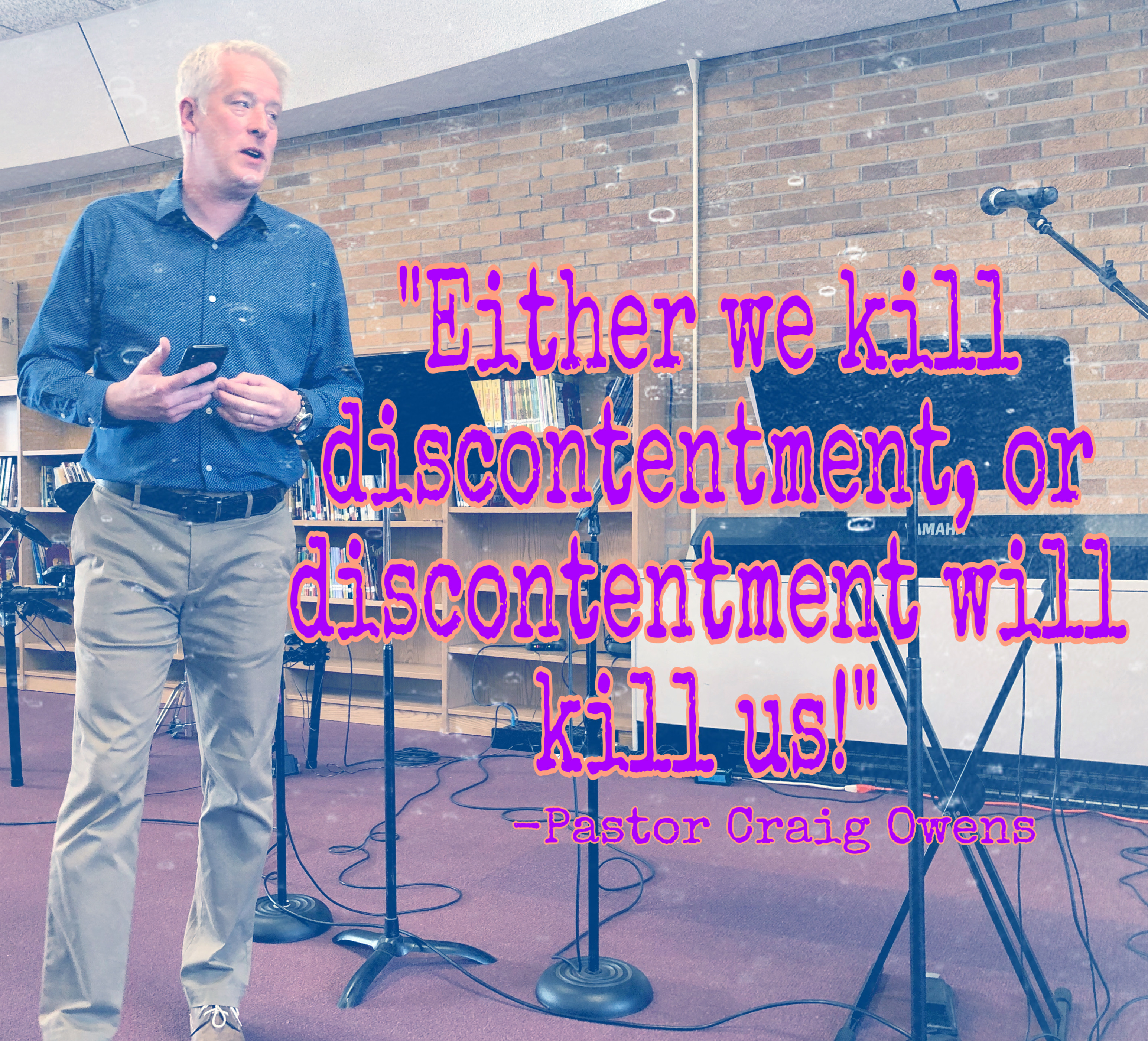
One of two things is going to happen: either we kill discontentment, or discontentment will kill us! 

It’s not complicated to kill discontentment, but it is hard work. We kill discontentment with contentment. We learn to separate the dis from discontentment with the sword of gratitude! 

The apostle Paul wrote “…I have LEARNED to be content whatever the circumstances. I know what it is to be in need, and I know what it is to have plenty. I have LEARNED the secret of being content in any and every situation, whether well fed or hungry, whether living in plenty or in want. I can do all this through Him who gives me strength” (Philippians 4:11-13). 

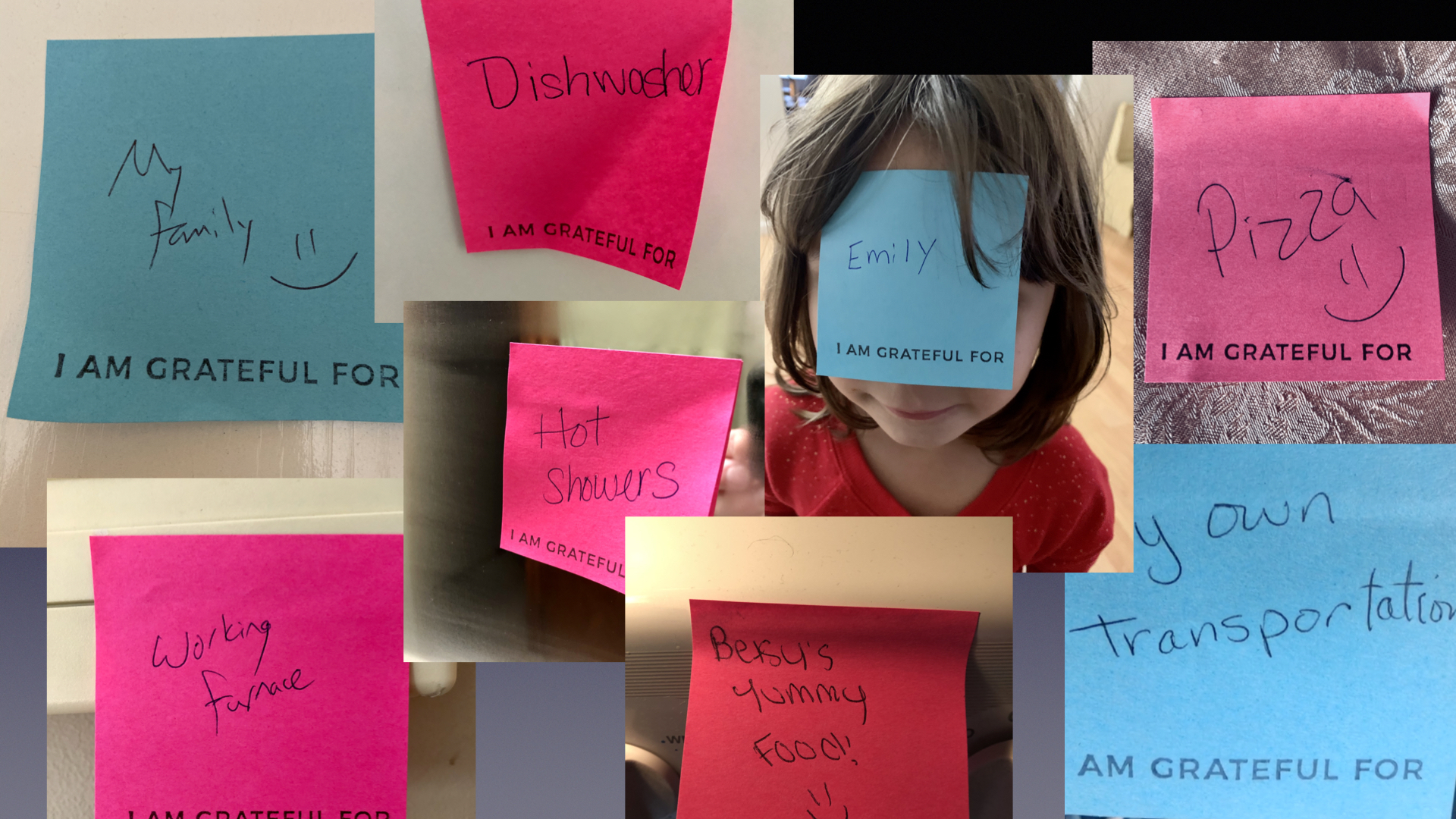
One way to learn contentment is to keep reminders around you of all the things which with God has blessed you. Don’t let your gratitude fade for one moment! 

Next week we will be wrapping up this series by considering what can happen to our future outlook if we let gratitude fade from our hearts and minds. I hope you can join me! 

Honoring Veterans The Right Way [repost]

Disclaimer: I’m a patriotic crier. I love the United States of America, and proudly call her the greatest nation in history. So whenever I watch a patriotic movie, or serve at a veteran’s funeral, or even sing the national anthem before a Cedar Springs football game, I get misty.

I believe we owe a huge debt of gratitude to our veterans. But I also believe we may not be honoring that debt in the right way.

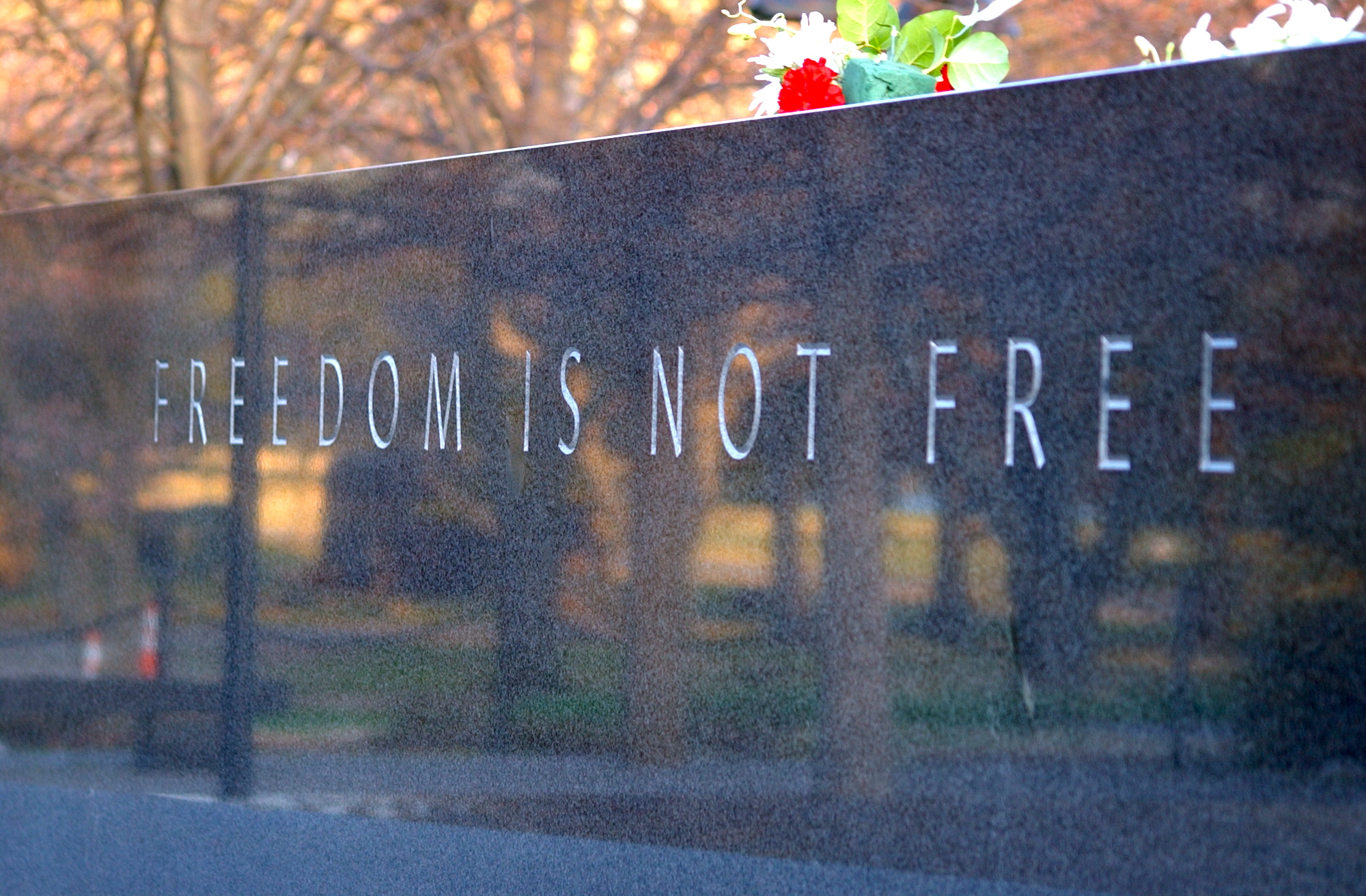
We usually honor our soldiers, sailors, airmen and Marines who have given “their last full measure of devotion” by playing taps at their funeral, firing a 21-gun salute, or even putting a flag in the sacred ground of their burial site every year at Memorial Day.

But what about our vets who are still living? Don’t they deserve more than just an occasional visit on Veterans Day?

In many ways, we treat Veterans Day like we do Thanksgiving Day: it’s just one day on our calendar to take care of our obligations to be grateful, and then we can continue on with business-as-usual until the next year.

Wouldn’t it be more fitting for us to treat Veterans Day—like Thanksgiving Day—as a culmination of another year full of gratitude? After all, it’s very likely that we wouldn’t even be able to enjoy our business-as-usual lives if it were not for the sacrifices of our veterans.

The Apostle Paul gives us a good pattern to follow. Four times in his letters he says, “I thank God for you every time I remember you” (Romans 1:9; Philippians 1:3; 2 Timothy 1:3; Philemon 4). In these times of thanks, he is remembering others who put their lives on the line for freedom, just as our veterans have done for us.

Here are at least three things we can learn from Paul’s thankfulness to apply to our gratitude for our veterans —

  1. Keep mementos of remembrance around you. Perhaps it’s an American flag, or a picture, or a Veterans Day program. Simply find something that will jog your memory frequently about the debt of gratitude we owe to our vets.
  2. Pray for our veterans. Paul often told his friends that when he was filled with thoughts of gratitude about them, he turned those thoughts into prayers for them.
  3. Turn your feelings into actions. When you see one of your mementos and say a prayer for a veteran, take it a step further. Jot a note to a vet, send an email, send flowers, or take them out to lunch. Perhaps you could invite a veteran into your home for Thanksgiving or Christmas or Easter, or “adopt” a veteran on Mother’s Day or Father’s Day.

The point is this: Let’s not make honoring our veterans something we only do on November 11. Let’s remember them often, be thankful for them always, and turn those thoughts and gratitude into action all year long.

Ingratitude Can Mess Us Up

Fading gratitude can negatively impact our past, present, and future. Because when our gratitude to God begins to fade, so does our understanding of what God has already done for us, our appreciation of what He is still doing for us today, and our hope for what He will provide for us tomorrow. But we can flip the script—Our continual gratitude can begin to positively impact our past, present, and future! 

“Gratitude is from the same root word as ‘grace,’ which signifies the free and boundless mercy of God. Thanksgiving is from the same root word as ‘think,’ so that to think is to thank.” —Willis P. King 

The more we THINK about God’s grace in our lives, the more we can give THANKS for all He has done. Or said another way…

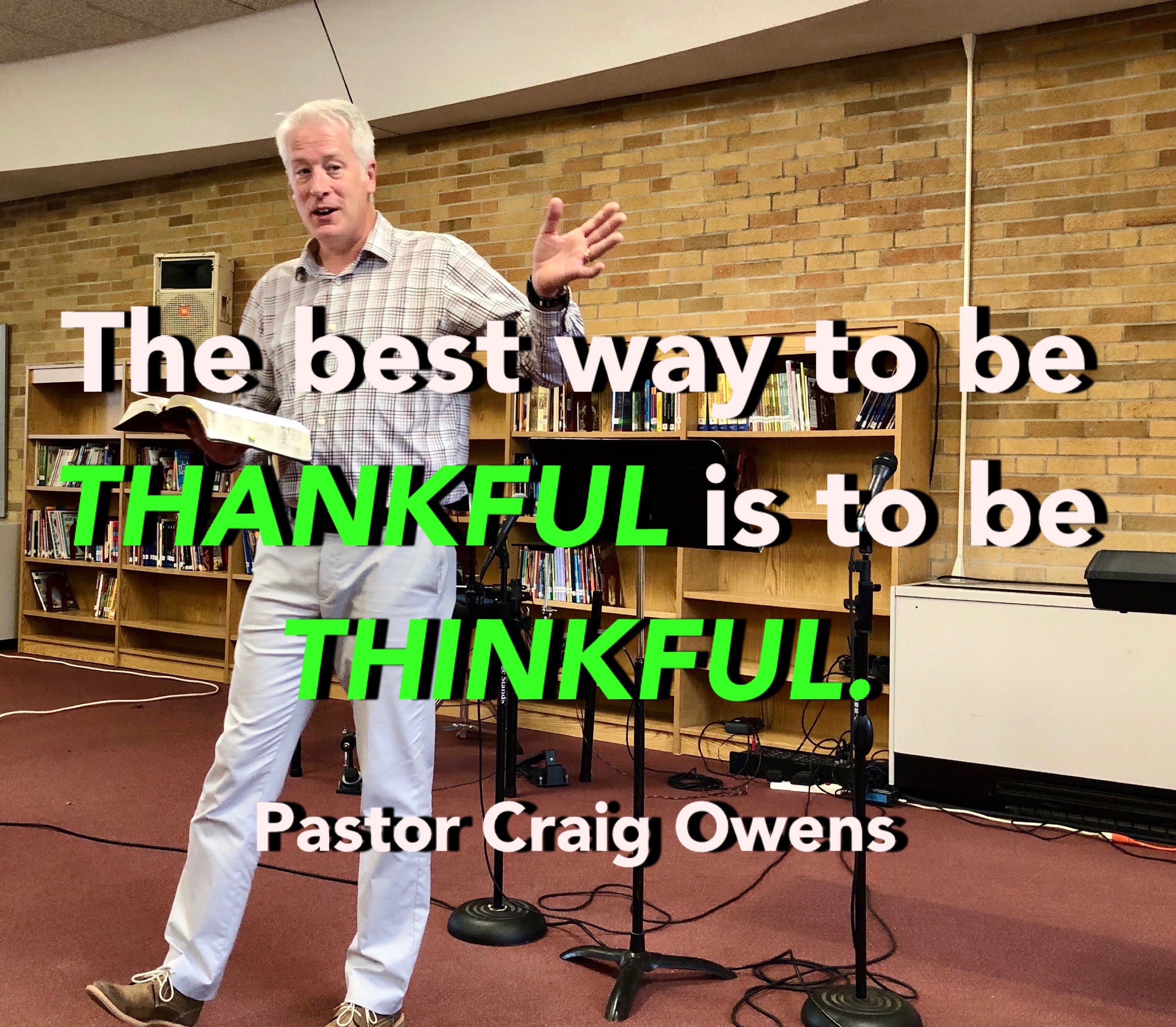
The best way to be THANKFUL is to be THINKFUL!

In Psalm 78, Asaph gives us a two-word reason for the up-and-down history of the Israelites: they forgot. The Israelites’ forgetfulness led to their lack of gratitude, which then caused yet another downward turn away from God. One of the examples he gives us is very informative: the daily provision of manna while the Israelites were in the wilderness (see Psalm 78:11-25; Exodus 16:4, 14-18). 

Every day God’s people had their food needs miraculously supplied for them, yet they begin to take this gift of God for granted. They stopped thinking about His provision, and then they began to ungratefully grumble (Numbers 11:4-6). Their grumbling actually caused them to want to return to slavery in Egypt! 

With fading gratitude, we can get stuck in the past. We even end up looking back at slavery and scarcity and call it “the good old days”! With fading gratitude for the past, sometimes we beat ourselves up. We say things like, “If I would have known then what I know now….” But you couldn’t know then what you know now. You only know now because of what you went through then, which makes another reason to be grateful. After all, God is using everything we have gone through to work out His plan (see Isaiah 46:9-10; Romans 8:28). 

We need to be thinkful about our past so that we can be thankful for what God is doing with it today.

Manna provided food every single day the whole time the Israelites were in the wilderness. It stopped immediately after they entered the Promised Land. For that daily provision, they should have been thankful but it was when they forgot to be thankful that they longed for the past and tried to do things on their own. 

The manna is a picture of Jesus. Not only is He our daily bread for today, but He is also our hope for eternity with God in Heaven. And for that, we should be daily thinkful AND thankful. 

If you’d like a fun idea of how to stay thinkful AND thankful, check this out.

Join us this Sunday as we learn more about the dangers of our fading gratitude. 

Forgetfulness Can Be Fatal

Have you ever noticed the up-and-down track record of the Israelites? We see them worshiping God, enjoying His abundance, with their enemies on the run in one chapter, only to see them worshiping idols, barely scraping by, with their enemies closing in on them.  

What led to the downturn from freedom and abundant blessing to slavery and scarcity? I think it’s summed up in two words: They forgot. 

Asaph captures this idea in the 78th Psalm. And if we’re honest with ourselves, Israel’s history is our history too. 

There is a peril in our forgetfulness!  

“When we have much of God’s providential mercies, it often happens that we have but little of God’s grace, and little gratitude for the bounties we have received. We are full and we forget God: satisfied with earth, we are content to do without Heaven. Rest assured it is harder to know how to be full than it is to know how to be hungry—so desperate is the tendency of human nature to pride and forgetfulness of God.” —Charles Spurgeon (emphasis added)

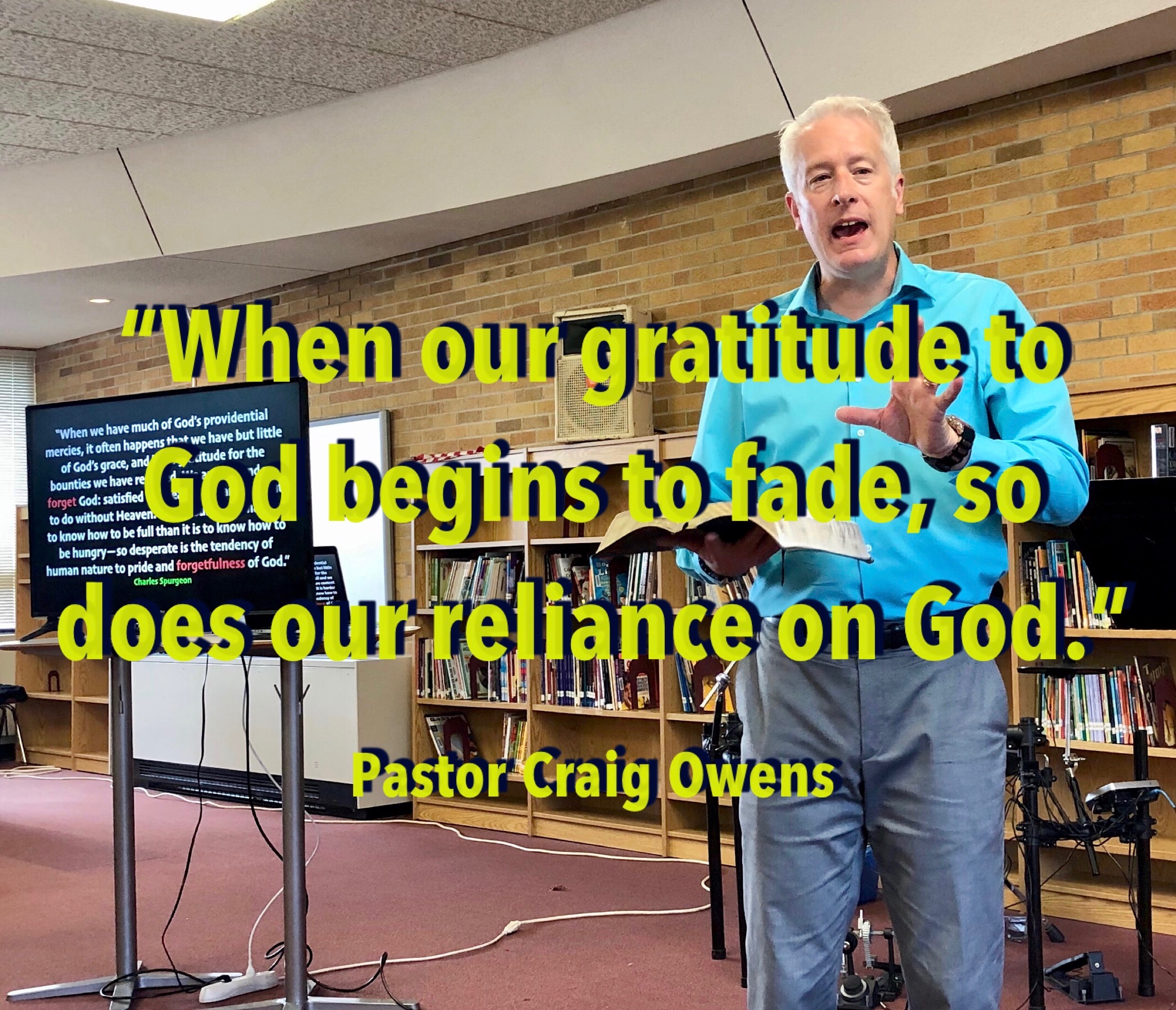
When our thoughts about God begin to fade, so does our gratitude to God. When our gratitude to God begins to fade, so does our reliance on Him. 

The dictionary defines some important terms:

  • Ungratefulness—not giving due return for benefits conferred
  • Unthankfulness—not repaying the blesser with thanks

I don’t think anyone consciously chooses to be ungrateful, but if we don’t choose to actively remember our blessings—and our Blesser—we will become ungrateful. So what if we began to think differently about the definition of gratitude? 

  • Forgetfulness—to cease to think of something
  • Gratitude—to continue to think of Someone (with that Someone being God!) 

When we are continually thankful—when we don’t let our gratitude fade—it keeps God’s blessings at the forefront of our minds. Gratitude—continuing to think of Someone—makes us completely God-reliant. 

Moses had a good idea to help us to continue to think of God’s blessings—

Impress them on your children. Talk about them when you sit at home and when you walk along the road, when you lie down and when you get up. Tie them as symbols on your hands and bind them on your foreheads. Write them on the doorframes of your houses and on your gates. (Deuteronomy 6:7-9) 

What if you posted reminders of God’s blessings all over the place? What if you made it almost impossible to forget God? What if you were constantly thinking of your blessings? 

Join us for our series called Fading Gratitude during the month of November.

Fading Gratitude

Looking back at the history of God’s people in the Bible, there is a distinct up-and-down cycle. The Israelites would be worshiping God and enjoying His blessings, and then we see them turning their back on God and needing Him to rescue them from oppressors. After God rescues them the people praise Him, only to slip right back into the same downward slide again. 

I believe their slipping away from God can be directly linked to their forgetfulness. 

If any of us allows our gratitude for all of God’s blessings to fade, we will experience the same slipping away. 

However, there is good news! If there is a peril in our forgetfulness, there is also a power in our thankfulness! 

If you missed any of the messages in this series, please check them out here:

Poetry Saturday—Before Jehovah’s Awesome Throne

Before Jehovah’s awesome throne,
O nations, bow with sacred joy;
Know that the Lord is God alone,
He can create, and He can destroy.

His sovereign power without our aid
Made us of clay and formed us men;
And when like wandering sheep we strayed,
He brought us to His fold again.

We are His people, we His care,
Our souls and all our mortal frame.
What lasting honors shall we rear,
Almighty Maker, to Your name?

We’ll crowd your gates with thankful songs,
High as the heavens our voices raise;
And earth with all its thousand tongues
Shall fill Your courts with sounding praise.

Wide as the world is Your command,
Vast as eternity Your love;
Firm as a rock Your truth shall stand
When rolling years shall cease to move. —Isaac Watts

Full Of Gratitude And Prayer

I have not stopped thanking God for you. I pray for you constantly. (Ephesians 1:16)

Paul didn’t pray just a one-and-done prayer, but every time he thought of his friends he was grateful and prayerful. 

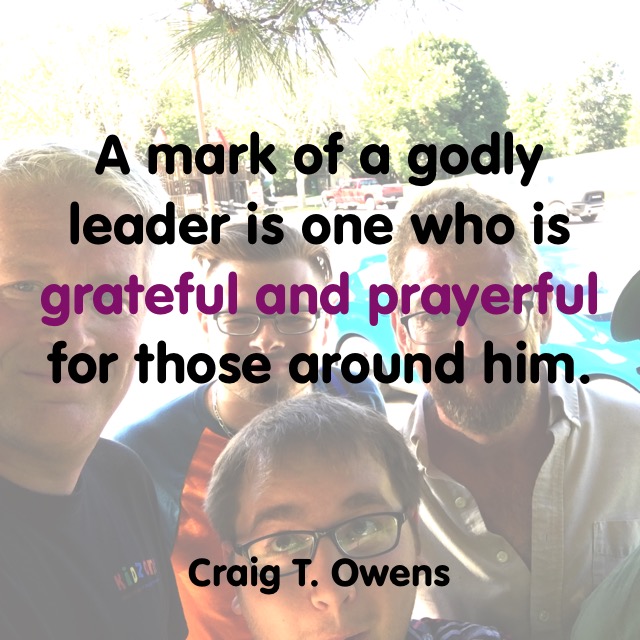
The mark of a godly leader is one who is grateful and prayerful of those around him.

What a prayer Paul prayed! He didn’t want his friends just barely eking out an existence, but he desired for their lives to experience explosive growth and joy! 

He prayed for them to experience…

  • … the full weight of God’s glory
  • … the vast knowledge of God’s revelation wisdom 
  • … an ever-increasing understanding of just who God is
  • … an enlightened mind to grasp God’s nature
  • … an unshakable hope in God
  • … the immeasurable richness of an intimate relationship with God through Jesus Christ
  • … God’s power working both in them and through them 
  • … the rock-solid security they have in Jesus
  • … their inestimable value they were to God
  • … their indispensable place in the Body of Christ 

I like the way Eugene Peterson captures this prayer in The Message:

That’s why, when I heard of the solid trust you have in the Master Jesus and your outpouring of love to all the followers of Jesus, I couldn’t stop thanking God for you—every time I prayed, I’d think of you and give thanks. But I do more than thank. I ask—ask the God of our Master, Jesus Christ, the God of glory—to make you intelligent and discerning in knowing Him personally, your eyes focused and clear, so that you can see exactly what it is He is calling you to do, grasp the immensity of this glorious way of life He has for His followers, oh, the utter extravagance of His work in us who trust Him—endless energy, boundless strength!

Spiritual leaders should be working for and praying for the ever-growing maturity of those under their care. When they see that growth, they should burst out into grateful prayer. And if they don’t see the growth they anticipated, they should pray in faith believing that maturity will soon be visible. 

Let me say it again: The mark of a godly leader is one who is grateful and prayerful of those around him.

This is part 40 in my series on godly leadership. You can check out all of my posts in this series by clicking here.

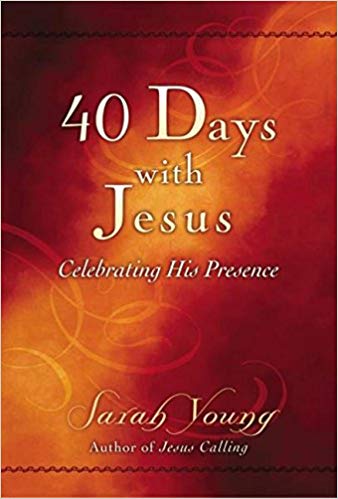
9 Quotes From “40 Days With Jesus”

Sarah Young does a masterful job in helping us hear Jesus speak to us in the first-person, as she weaves Scripture together so beautifully. Check out my full book review by clicking here. 

“Taste and see that I am good. The more intimately you experience Me, the more convinced you become of My goodness.” 

“Follow Me one step at a time. … Keep your mind on the present journey, enjoying My Presence. Walk by faith, not by sight, trusting Me to open up the way before you. … I set the pace in keeping with your needs and My purposes.” 

“Walking in the light of My presence blesses you in many ways. Good things are better and bad things are more bearable when you share them with Me. As you bask in My Love-Light, you are better able to love others and enjoy fellowship with them. You are less likely to stumble or fall because sins are garishly obvious in My holy Light. As you walk in this Light with Me, I encourage you to exult in My righteousness.” 

“Although your new self is being conformed to My image, this process does not erase the essence of who you are. On the contrary, the more you become like Me, the more you develop into the unique person I designed you to be.” 

“Holiness is letting Me live through you. Since I dwell in you, you are fully equipped to be holy. Pause before responding to people or situations, giving My Spirit space to act through you. Hasty words and actions leave no room for Me; this is atheistic living. I want to inhabit all your moments—gracing your thoughts, words, and behavior.” 

“Talk with Me about every aspect of your day, including your feelings. Remember that your ultimate goal is not to control or fix everything around you; it is to keep communing with Me. A successful day is one in which you have stayed in touch with Me, even if many things remain undone at the end of the day.” 

“Do not let your to-do list (written or mental) become an idol directing your life. Instead, ask My Spirit to guide you moment by moment.” 

“Exceeding Joy is for both you and Me. I delight in you now, but this Joy will be astronomically magnified when you join Me in Glory. The Joy you will experience in heaven is so far beyond anything you have known on earth that it is indescribable. Nothing can rob you of this glorious inheritance which is imperishable and will not fade away.” 

“Thankfulness is not some sort of magic formula; it is the language of Love, which enables you to communicate intimately with Me.” 

Poetry Saturday—Thanksgiving

We walk on story fields of white
And do not see the daisies, 
For blessings common in our sight 
We rarely offer praises. 
We sigh for some supreme delight 
To crown our lives with splendor, 
And quite ignore our daily store 
Of pleasures sweet and tender.

Our cares are bold and push their way 
Upon our thought and feeling; 
They hang about us all the day, 
Our time from pleasure stealing. 
So unobtrusive many a joy 
We pass by and forget it, 
But worry strives to own our lives, 
And conquers if we let it.

There’s not a day in all the year 
But holds some hidden pleasure, 
And, looking back, joys oft appear 
To brim the past’s wide measure. 
But blessings are like friends, I hold, 
Who love and labor near us. 
We ought to raise our notes of praise 
While living hearts can hear us.

Full many a blessing wears the guise 
Of worry or of trouble; 
Far-seeing is the soul, and wise, 
Who knows the mask is double. 
But he who has the faith and strength 
To thank his God for sorrow 
Has found a joy without alloy 
To gladden every morrow.

We ought to make the moments notes
Of happy, glad thanksgiving; 
The hours and days a silent phrase 
Of music we are living. 
And so the theme should swell and grow 
As weeks and months pass o’er us, 
And rise sublime at this good time, 
A grand thanksgiving chorus. —Ella Wheeler Wilcox