Saturday In The Proverbs—If … Then (Proverbs 2)

[Each chapter in the Book of Proverbs contains thoughts that fit into a theme; they are not just random thoughts gathered together. In this “Saturday In The Proverbs” series, I will share a theme that I see in each chapter. But the cool thing about God’s Word is that you may see an entirely different theme. That’s great! If you do, I would love for you to share it in the comments below.]

…if you will receive My words… (Proverbs 2:1).

Some people find this hard to fathom, but it’s an undeniable truth—God wants to bless you!

But His blessings will only come in His ways. You cannot do what you want to do and expect God to bless that behavior. Proverbs 2 tells us that IF we will do what God asks, THEN God will pour out His blessings.

IF

  • receive God’s Word
  • treasure His commands
  • incline your ear to His wisdom
  • apply God’s understanding to your life
  • cry out for God’s discernment
  • lift up your voice for God’s understanding
  • seek God’s wisdom
  • search for God like it’s treasure

THEN

  • you will understand the fear of the Lord
  • you will find God’s knowledge
  • you will gain God’s understanding
  • you will have God’s protection
  • you will understand God’s righteousness and justice
  • you will be preserved by discretion
  • you will be saved by understanding
  • you will be delivered from evil
  • you will be kept from immorality

If I will do what God says, then God opens His storehouse of invaluable treasures!

The Scriptures And Our Temperament

“We naturally tend to interpret Scripture in the light (or shadow) of our own temperament and let our peculiar mental cast decide the degree of importance we attach to various religious doctrines and practices. …

“The minister above all others should look deep into his own heart to discover the reason for his more pronounced views. It is not enough to draw himself up and declare with dignity that he preaches the Bible and nothing but the Bible. That claim is made by every man who stands in sincerity to declare the truth; but truth has many facets and the man of God is in grave danger of revealing only a limited few to his people, and those the ones he by disposition favors most. …

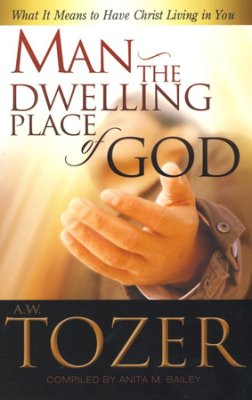
“The Scriptures, critical self-discipline, honesty of heart and increased trust in the inward operations of the Holy Spirit will save us from being too greatly influenced by temperament.” —A.W. Tozer, in Man—The Dwelling Place Of God

Thursdays With Oswald—Don’t Argue!

Oswald ChambersThis is a weekly series with things I’m reading and pondering from Oswald Chambers. You can read the original seed thought here, or type “Thursdays With Oswald” in the search box to read more entries.

Don’t Argue!

     The reason Paul tells Timothy not to argue [1 Timothy 4:7], and the reason he tells me not to argue, and the reason he tells you not to argue, is that we argue from our own point of view. We argue not for the truth’s sake, we argue to prove we are right. God grant that we may learn to take heed lest we get switched off on arguing. … 

     “Oh, the unmitigated curse of controversy! Oh, the detestable passions that corrections and contradictions kindle up to fury in the proud heart of man! Eschew controversy, my brethren, as you would eschew the entrance to hell itself. Let them have it their way; let them talk; let them write; let them correct to you; let them traduce you; let them judge and condemn you; let them slay you. Rather let the truth of God suffer itself, than that love suffer. You have not enough of the divine nature in you to be a controversialist.” —Dr. Alexander Whyte … 

     For example… “sanctification” is not a man’s term; it is God’s: “the baptism with the Holy Ghost” is not man’s conception, it is God’s, and when a soul begins to argue on these matters, remember, worker for God, it is the Holy Spirit they are arguing with, the Word of God they are haggling about. God grant we may not hinder those who are battling their way slowly into the light. …  

     “Heal me of this lust of mine of always vindicating myself.” —Augustine … 

     If we are living rightly with God, living holy lives in secret and in public, God puts a wall of fire round about us.

From Workmen Of God

How true it is that we argue not because we’re standing up for the truth, but because we want to prove that we are right! This is a tactic of the devil which keeps us focused on less important matters.

Our only line of defense needs to be something Oswald Chambers said earlier: “the Word of God, the Word of God, the Word of God, first second and last.” If we stick to the Word, people who want to argue aren’t arguing with us, but with God. That is an argument in which we never have to participate!

Thursdays With Oswald—Dealing With Spiritually Stupid People

Oswald ChambersThis is a weekly series with things I’m reading and pondering from Oswald Chambers. You can read the original seed thought here, or type “Thursdays With Oswald” in the search box to read more entries.

Dealing With Spiritually Stupid People

     I would like you to notice what the word “stupid” means. It does not mean ignorant, but anything formed or done without reason or judgment. Ignorance is being without knowledge “and the times of this ignorance God winked at [‘overlooked’]” (Acts 17:30). Do distinguish between ignorance and stupidity! … 

     [Passages to consider—1 Samuel 26:21 [I have acted like a fool]; Titus 3:3 [at one time we too were foolish, disobedient, deceived and enslaved]; 2 Timothy 3:6-7 [silly and weak-natured and spiritually dwarfed women, loaded down with the burden of their sins and easily swayed and led away by various evil desires and seductive impulses]; and Hebrews 5:12 [you actually need someone to teach you over again the very first principles of God’s Word]]

     What are we to do when we come across stupid souls? Ignorant souls we can deal with, they need knowledge; the stupid soul does not need knowledge; the stupid soul needs to have the Word of God until it is worried by it. … 

     Never water down the Word of God to the understanding of your people. … “The words that I speak unto you, they are spirit, and they are life.” The Word of God is “a lamp” and “a light,” but when people get off on the “stupid” lines, it is all instincts, impressions, vague ideas—“ever learning, and never able to come to the knowledge of the truth.”

From Workmen Of God

I know the word “stupid” seems like an inflammatory word, but don’t get distracted from Chambers’ pertinent point on account of this word. The Bible makes it clear that we will come across people who are stupid in regard to the things of God. Our course of action is not argument or persuasion, but—as Chambers says—“the Word of God, the Word of God, the Word of God, first second and last; no sympathy, no help, only the Word of God.”

Charles Spurgeon Prays For Revival

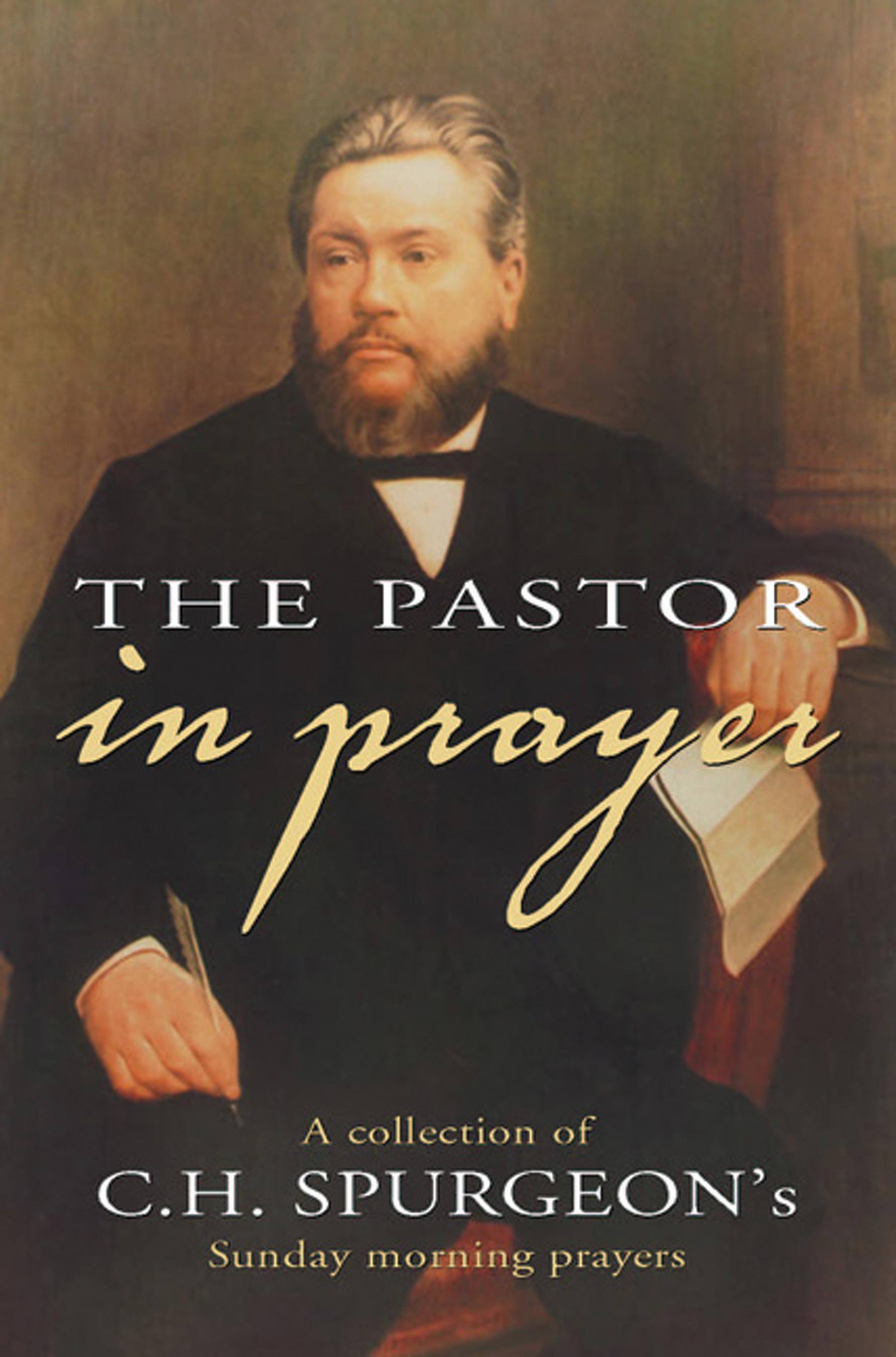
These are from The Pastor In Prayer by Charles Spurgeon…

“Send us, Lord, a mighty ground-swell of intense desire for the glory of God, and may these Thy servants banded together in church fellowship recognize their sweet obligations to their dying Lord, and determine that the prayers of the church shall go up before Him like sweet perfume.”

“We have trusted Thee now for many years, and Thy faithfulness has never been under suspicion, nor Thy love a matter of question. We therefore leave every concern about our families or about ourselves, about our business, or about our souls, entirely with our God. … Still, Lord, we have a burden which we must now lay before Thee, and ask Thee to help us in it. We mourn over the condition of Thy church, for on every side as we look around we see men endeavoring to undermine the doctrines of the everlasting Gospel.”

“O Lord, the multitude delight in sin. Drunkenness defiles our city, and filthy words are heard on every side. Be not wroth with this nation, we beseech Thee. It has been entrusted with wondrous privileges. Forgive it and have mercy upon its aggravated sin. Lay not its heavy responsibilities to its charge, but let this nation be saved. We pray for it as we are in duty-bound to do, and as our love constrains us to do. Oh let the masses of the people yet come to seek after Christ, or by some means, by all means, by every means, may the ears of men be reached and then their hearts be touched. May they hear, that their souls may live; and may the Lord who in everlasting covenant sets forth His Son, glorify Him in the midst of the nations.”

“We ask Thee, O God, at this time to revive religion in our land. Oh that Thou wouldst be pleased to speak by the Holy Ghost that the gospel’s power may be known: there be many that run away from the truth; Lord, hold us fast to it, bind us to it. May there be a people found in this place, and throughout this land, that will abide by the doctrines of the gospel, come what may. May we not be ashamed to be old fashioned and to be thought fanatical. May we not wish to be thought cultured, nor aim to keep abreast of the times. May we be side by side, with Thee, O bleeding Savior; and be content to be rejected, be willing to take up unpopular truth, and to hold fast despised teachings of sacred writ even to the end. Oh make us faithful, faithful unto death.”

“We do repent of sin—give us a deeper repentance! May we have a horror of it, may we dread the very approach of it, may we chastely flee from it and resolve, with sacred jealousy, that our hearts shall be for the Lord alone.”

“We wish that we had greater power in private prayer, that we were oftener wrestling with the covenant angel. We would that the Word of God were more sweet to us, more intensely precious, that we had a deeper hunger and thirst after it.”

“God bless our country! May faith be multiplied in the land! Preserve our nation at this juncture. Guide, we pray Thee, the deliberations of councilors and princes. May peace be preserved, and at the same time may the great purposes of God with regard to the spread of liberty and of the gospel be subserved by every decree of the council. O God, we beseech Thee, ease the world of the sway of every evil principle. Let the day come when all classes of men shall study the interest of others as well as their own, when the various nations shall yield to the one scepter of Christ and like kindred tribes shall melt into one. Yea, hasten His coming and His reign when the shout shall go up to heaven that the ‘Lord God omnipotent reigneth.’”

“We specially pray for our country that God would bless it; and oh, that we might have a season of revival of pure and undefiled religion in the land. We perceive that Thou canst turn the hearts of the people, as the trees of the wood are moved in the wind. Oh that there might come a deep searching of heart, great thoughtfulness of the Scriptures, reverence of God and the principles of justice and peace and may this land make another stride in onward progress, and out of it may there be gathered a people whom Thou hast chosen, who shall show forth Thy praise.”

You can check out my review of The Pastor In Prayer by clicking here, and you can read some other quotes I shared from this book by clicking here.

Thursdays With Oswald—The Hardy Annuals

Oswald ChambersThis is a weekly series with things I’m reading and pondering from Oswald Chambers. You can read the original seed thought here, or type “Thursdays With Oswald” in the search box to read more entries.

The Hardy Annuals

     By “hardy annuals” I mean the healthy-minded sinners. … How are we to get these irreligious people who are quite happy and healthy-minded to the place where they want Jesus? … 

     I want us to look at three types of pagans—Gallio, Herod and Pilate. …. 

     “And Gallio cared for none of those things” [Acts 18:12-15]. He said in effect, “I have nothing whatever to do with your religious quarrels, I am not here to decide questions of your law for you.” The opponents of Christianity are not weak, they are opponents who are able to ignore us; so the first thing to do is to examine and see what kind of Gospel we are preaching. … Have I a pet doctrine I am lifting up? If I have, then these healthy-minded folk will simply heap ridicule on me; but immediately I preach Christ, something happens—the Spirit of God begins to work where I cannot. …

     Herod is a rare type of pagan, he is obscene; he was bad, unmentionably bad, and you will find that when he saw Jesus Christ face to face he was not the slightest bit troubled. Why? He had heard the voice of God before through John the Baptist, and he had ordered that voice to be silent [Mark 6:17-18]. Herod is the presentation of the awful possibility of a fixed character, absolutely fixed in immorality. Jesus Christ did not awaken one tremor of conscience in him….  Did you ever notice what is recorded? “Now when Herod saw Jesus, he was exceeding glad” [Luke 23:8-9]—why? For the same reason that people go to a picture show, they want to see things. We read that Herod questioned Jesus in many words; “but He answered him nothing.” … 

     Pilate represents the type of pagan who always seeks his own interests; that type is known to us all today. People belong to certain churches because it is better for their business; or they shift their membership to other churches because it is more convenient for business. A once-born man, who acts from this point of view is an opportunist. “If it is Jesus Christ’s Gospel that is in the ascendancy, then I will use it to serve my own ends.” You have to bring that man face to face with Christ, not with your experience, but with Jesus Christ Himself. … 

     Rely on the Holy Ghost as the most practical Being you ever knew, and live among the facts of God’s Word and among human facts, and people will recognize Jesus Christ through you. … The next time you come across a ‘hardy annual,’ see that you lay hold of God for that one until Jesus Christ is presented by the power of the Holy Ghost, and then you will see the altered face, the altered attitude, and the altered life. 

From Workmen Of God

Well said!

Help!

David and his men are on the run from King Saul, but they hear that the small town of Keilah is being harassed by the Philistines. The bad guys are stealing the harvest from the people of Keilah, making it a very real possibility that they would starve during the upcoming winter. In his usual habit, David prays and asks God if he should help the people of Keilah, and God gives him the go-ahead to attack.

David and his men defeat the Philistines, not only returning the crops that had been stolen but also delivering some livestock that they took from the defeated Philistines. You might expect that David and his men were given a ticker-tape parade. Instead, as soon as David was within the city’s walls, he finds out that the people of Keilah are planning to sell him out to King Saul. Talk about ingratitude!

David and his men flee to the Desert of Ziph, where they won’t be a bother to anyone. Except the Ziphites get word to King Saul that they will gladly turn him over to the King whenever he asks for it.

What is David’s response? As usual, it’s prayer. His prayer is short and straight to the point—

Help, Lord, for the godly are no more; the faithful have vanished from among men.

In other words, David asks God, “Where have all the decent people gone?” It’s no different in our day, as Paul told his friend Timothy that people will only become more hypocritical liars, with their conscience not bothering them a bit!

What I love about David’s prayer is that he quotes God back to God. Check out the quotation mark: “Because of the oppression of the weak and the groaning of the needy, I will now arise. I will protect them from those who malign them.” And then David is quick to add that God’s words never fail! 

I am convinced that our spiritual battles are largely lost or won in our minds. We need to recall God’s Word—Yet this I call to mind and therefore I have hope: Because of the Lord’s great love we are not consumed, for His compassions never fail (Lamentation 3:21-22).

So we cry, “Help!” to God because He is the only One who can help us: The Lord is my Helper; I will not be afraid. What can man do to me? (Hebrews 13:6).

But David has an important question to ask: “How long do we continue to call for help?” Have you ever asked God that?

Jesus said that the key to our successful praying is for us to remain in Him and for His Words to remain in us, like a branch remains connected to the vine (John 15:7). So let me ask you a question: How long should the branch remain connected to the vine before it’s ready to go off on its own?

The answer is simple—if the branch wants to remain alive and fruitful, it must stay in relationship with the vine forever!

So once again, look at how Jesus answers the “How long?” question—Keep on asking and it will be given you; keep on seeking and you will find; keep on knocking reverently and the door will be opened to you. (Matthew 7:7)

“Help!” is a great prayer that God loves to answer. “How long” do we pray that prayer? Until it’s answered … keep on, keep on, KEEP ON!

Thursdays With Oswald—Using The Sword For Good And Not Harm

Oswald ChambersThis is a weekly series with things I’m reading and pondering from Oswald Chambers. You can read the original seed thought here, or type “Thursdays With Oswald” in the search box to read more entries.

Using The Sword For Good And Not Harm

     The priest replied, “The sword of Goliath the Philistine, whom you killed in the Valley of Elah, is here.…” David said, “There is none like it; give it to me.” (1 Samuel 21:9)

     Now it seems quite obvious that if you are not David and are trying to use Goliath’s sword, you will do far more harm to yourself than damage to the enemy. You must be in the direct line of succession to David. … What is the same family connection in this dispensation? Why, those who are born again of the Spirit of God, and those who are so identified with the Lord Jesus that they have entered into the experience of entire sanctification. When they use the Word of God they do not damage themselves, nor hurt other souls; but they do great damage to the kingdom of the devil and bring benefit to the souls of men. …

    The Christian worker must rely on the Holy Spirit to direct them as to what to say in the case of every soul that comes. Do not rely on your memory, do not remember how you dealt with cases in the past, but recognize and rely on the Holy Spirit that He will bring to your remembrance the particular verse for you to apply at this time. … Beware of anything that does not fling you straight back in reliance on the Holy Spirit as the most practical factor you know in bringing it to your remembrance the Word of God and how to apply it. … 

     For the word of God is living and powerful, and sharper than any two-edged sword, piercing even to the division of soul and spirit, and of joints and marrow, and is a discerner of the thoughts and intents of the heart. (Hebrews 4:12)

     A remarkable thing about this Book of God is that for every type of human being we come across there is a distinct, clear line laid down here as to the way to apply God’s truth to it. 

From Workmen Of God

If Christians are going to help others, they have to start with helping themselves. They do this by immersing themselves in the Word of God and allowing the Holy Spirit to show them how to live out the biblical principles. This equips us to help others.

Then when someone in need comes to us, don’t be too quick to draw your spiritual sword. Listen to them and listen to the Holy Spirit. The Spirit of God can direct you to the right Word of God for that person’s need. This is the only way to use the sword of the Spirit in a way that will help others, glorify God, and make you unashamed before God of your conduct.

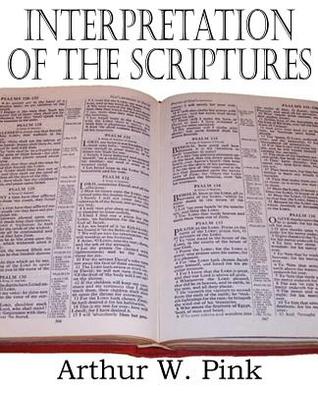
11 Quotes From “Interpretation Of The Scriptures”

In my review of A.W. Pink’s book Interpretation Of The Scriptures, I noted that any student of the Bible will benefit from reading this exceptional book. The quotes I want to share today are for that universal audience, but I will also be sharing some additional quotes soon that are specifically aimed at those who are Bible teachers or pastors.

“God does not ask for blind credence from us, but an intelligent faith, and for that three things are indispensable: that His Word should be read (or heard), understood, and personally appropriated.”

“Moreover, the obscurity is not in them [the Scripture], but in the depravity of our nature which resists the holy requirements of God, and the pride of our hearts which disdains seeking enlightenment from Him.”

“It has pleased God to furnish His people with gifted instructors, and instead of haughtily ignoring them we ought (while testing their teaching—Acts 17:11) to accept thankfully whatever help they can afford us.”

“Methods of Bible study are only of relative importance; but the spirit in which it is studied is all-important. It calls for no argument to prove that a spiritual book calls for a spiritually minded reader. … Only where there is honesty of soul and spirituality of heart will there be clearness of vision to perceive the Truth; only then will the mind be capable of discerning the full import of what is read. … None but the Spirit of Truth can write God’s Law on my heart. Here, then, is the first and most essential qualification for understanding and interpreting the Scriptures, namely a mind illumined by the Holy Spirit.”

“That which conflicts with what is taught, plainly and uniformly, in the Scriptures as a whole, and which whole is set before us as the alone rule of our faith and obedience. This requires from the expositor not only a knowledge of the general sense of the Bible, but also that he takes the trouble to collect and compare all the passages which treat of or have a definite bearing upon the immediate point before him, so that he may obtain the full mind of the Spirit thereon. Having done that, any passage which is still obscure or doubtful to him must be interpreted by those which are clear. No doctrine is to be founded on a single passage.”

“By divorcing a verse from its setting or singling out a single clause, one may ‘prove’ not only absurdities but real falsities by the very words of Scripture.”

“The word for ‘search the Scriptures’ (John 5:39) signifies diligently to track out, as the hunter does the spoor of animals. The interpreter’s job is to bring out the sense and not merely the sound of the Word.”

“To a very large extent, and far more so than any uninspired book, the Bible is a self-explaining volume: not only because it records the performance of its promises and the fulfillment of its prophecies, not only because its types and antitypes mutually unfold each other, but because all its fundamental truths may be discovered by means of its own contents, without reference to anything extra or outside itself.”

“Assuredly God has not subordinated His Word to our reason for us to accept only what commends itself to our judgment. Nevertheless, He has furnished His people with this faculty, and though insufficient of itself it is a valuable aid in the understanding of Truth. While reason is not to be made the measurer of our belief, yet it is to be used as the handmaid of faith, by comparing passage with passage, deducing inferences and drawing consequences according to the legitimate laws of logic.”

“The concordance will stand [the Bible reader] in far better stead than the best dictionary.”

“There is a middle ground between hastily condemning or accepting, namely to weigh carefully and prayerfully what is presented, testing it by other passages and by our own experience.”

Interpretation Of The Scriptures (book review)

Bible reading and Bible study will be of immeasurable benefit to the reader if the Scriptures are interpreted correctly. Fortunately for us, A.W. Pink gives us some timeless principles for doing just this in his book Interpretation Of The Scriptures.

Pink acknowledges something that the Apostle Peter also acknowledged: sometimes the passages we read in the Bible can be challenging to understand. But Pink quickly adds, “God does not ask for blind credence from us, but an intelligent faith, and for that three things are indispensable: that His Word should be read (or heard), understood, and personally appropriated.”

In this book, Pink systematically gives us guidelines for the proper and effective interpretation of the the Scriptures. He does so by using many of the age-old maxims of logic and hermeneutics, but he also emphasizes the invaluable role the Holy Spirit plays in our Bible reading times. After all, the Holy Spirit was the One who inspired the writing of the Scriptures, so He is best able to illuminate the true meaning to our hearts and minds.

This is NOT a book exclusively for pastors and Bible teachers (although both will be greatly benefitted by studying this text), but it is for anyone who wants to read the Bible accurately, with an eye toward correctly applying the principles that God gives us.

I’m not sure how many times I have read through the Bible in my life, but while reading Interpretation Of The Scriptures I noticed a new attention to concepts and insights that I had previously overlooked. I highly recommend that all serious readers of the Bible read this book as well.