Imagine being close enough to hear God’s voice—Your ears will hear a word behind you, “This is the way, walk in it,” whenever you turn to the right or to the left. (Isaiah 30:21)
Here’s a great question I recently heard: “What if God doesn’t want to give us answers, because He wants to give us His presence?”
Perhaps if God showed me my whole path, I might just take off down the path as fast as I could. Maybe I’d even say something like, “Thanks, God, I’ll take it from here!”
But God wants me close to Him. He wants me to hear His voice at every single step saying, “This is the way, walk in it.”
The model prayer that Jesus taught us is all about that closeness and total reliance on God’s close presence:
God wants us THAT close to Him—to rely on Him, to lean into Him, to be empowered by Him, to be protected in Him.
A good question for all of us to ponder: How close to God am I?
O the Spirit-filled life; is it thine, is it thine?
Is thy soul wholly filled with the Spirit Divine?
O thou child of the King, has He fallen on thee?
Does He reign in thy soul, so that all men may see
The dear Savior’s blest image reflected in thee?
Has He swept through thy soul like the waves of the sea?
Does the Spirit of God daily rest upon thee?
Does He sweeten thy life, does He keep thee from care?
Does He guide thee and bless thee in answer to prayer?
Is it joy to be led of the Lord anywhere?
Is He near thee each hour, does He stand at thy side?
Does He gird thee with strength, has He come to abide?
Does He give thee to know that all things may be done
Through the grace and the power of the Crucified One?
Does He witness to thee of the glorified Son?
Has He purged thee of dross with the fire from above?
Is He first in thy thoughts, has He all of thy love?
Is His service thy choice, and is sacrifice sweet?
Is the doing His will both thy drink and thy meat?
Dost thou run at His bidding with glad eager feet?
Has He freed thee from self and from all of thy greed?
Dost thou hasten to succor thy brother in need?
As a soldier of Christ dost thou hardness endure?
Is thy hope in the Lord everlasting and sure?
Hast thou patience and meekness, art tender and pure?
O the Spirit-filled life may be thine, may be thine,
In thy soul evermore the Shekinah may shine;
It is thine to live with the tempests all stilled,
It is thine with the blessed Holy Ghost to be filled;
It is thine, even thine, for thy Lord has so willed. —Lettie Cowman
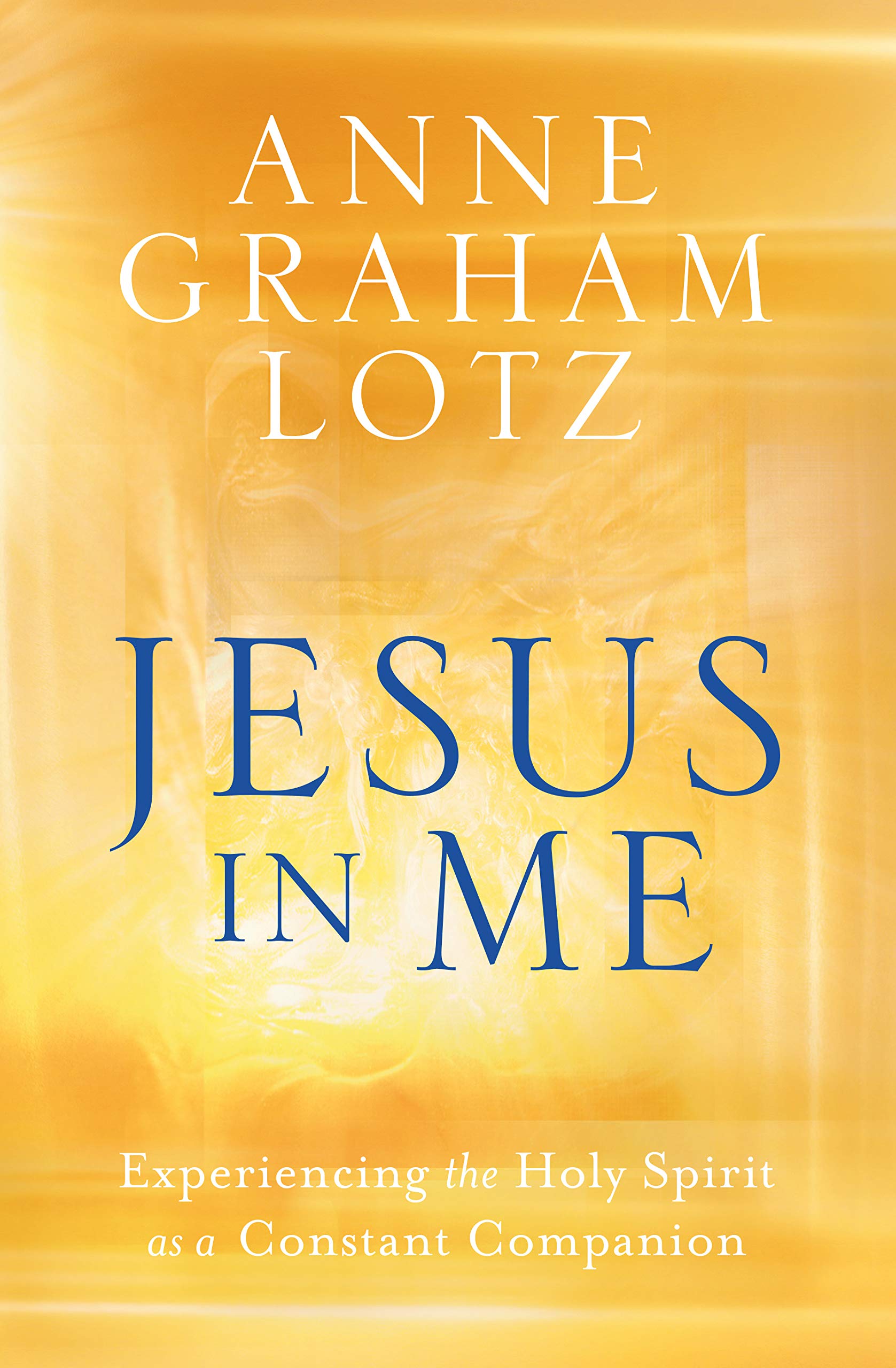
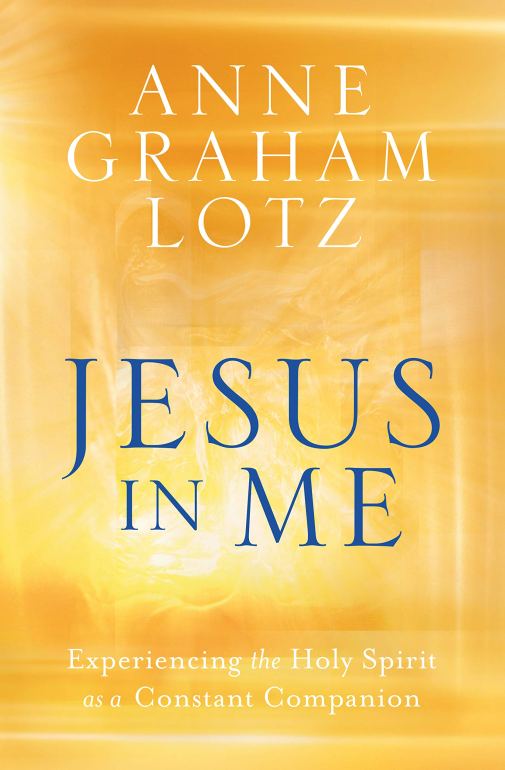
Anne Graham Lotz has given us a delightful book that feels like a living room chat with a friend as we discuss how the Holy Spirit operates in our lives. Check out my full book review of Jesus In Me by clicking here.
“The Holy Spirit is not a thing but a Person. His personhood is emphasized in John 16, when eleven times in eight verses, He is referred to by the personal, masculine pronouns He, Him, or His.”
“Could it be that you have missed the comfort of the Comforter because it has come indirectly through someone or something else? Like Mary Magdalene at the empty tomb, are your tears blinding you to the presence of Jesus right there beside you? Right there within you? My prayer is that He will use these words to comfort you as you experience the constant companionship of the Holy Spirit. Ask Him to open your eyes to the nearness of the One who is, in fact, Jesus in you.”
“Whether your situation involves a misunderstanding with your neighbors, or a disagreement within your church, or tension in your home, or slander in your school, or gossip in your office, the Holy Spirit is able to defend you and plead your cause. Always. Ask Him. He’s never lost a case.”
“Multiple times God has told me He would strengthen me through the howling winds of hardship. In Jeremiah He clearly warned me that people would fight against me but that He would make me an iron pillar. Through Isaiah He told me that people would rage against me and oppose me but that I was not to be afraid because He would strengthen me. He encouraged me from Revelation that if I would endure patiently and with humility, He would make me ‘a pillar in the temple of my God.’”
“It’s a huge relief to know that it’s not my job to convict anyone else of sin. That’s the Holy Spirit’s job. Which leaves me free to love people just as they are. Yes, I can counsel and advise if they are open to it. Yes, I can speak the truth in love. Yes, I can point out the potential consequences of their sin. But in the end the most effective thing I can do is to pray for them with a heart full of love. Because the power to transform is His alone.”
“As we choose to fix our eyes on Jesus, pursue righteousness, live by the truth, and fulfill God’s purpose for our lives, the Holy Spirit will guide us, sharpening our focus in the midst of life’s distractions and confusion.”
“Maintaining the fire requires intentionally establishing some common spiritual disciplines. They are simple choices but not always easy. They include daily prayer, daily Bible reading, sharing the gospel, continuous obedience as you live out what God says in His Word, continuous trust as you relinquish your expectations and let Him have His way, deepening surrender to His authority—especially during times of pain and suffering.”
“He uses all things without exception, not just some things, for my ultimate good. And my ultimate good is not health, wealth, prosperity, happiness, or sometimes the things we associate with ‘good.’ My ultimate good is to fulfill God’s purpose of shaping me into the image of Jesus Christ so I bring glory to Him.”
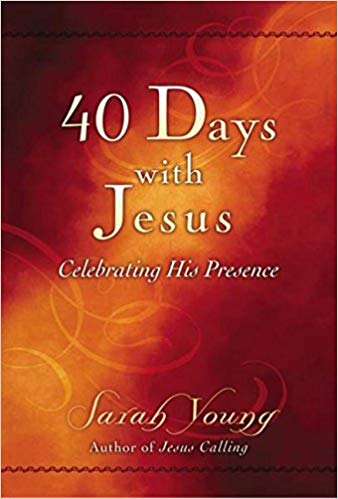
“When you bring Me prayer requests, lay out your concerns before Me. Speak to Me candidly; pour out your heart. Then thank Me for the answers that I have set into motion long before you can discern results. When your requests come to mind again, continue to thank Me for the answers that are on the way. If you keep on stating your concerns to Me, you will live in a state of tension. When you thank Me for how I am answering your prayers, your mind-set becomes more positive. Thankful prayers keep your focus on My presence and My promise.” —Jesus (in Sarah Young’s 40 Days With Jesus)
I have not stopped thanking God for you. I pray for you constantly. (Ephesians 1:16)
Paul didn’t pray just a one-and-done prayer, but every time he thought of his friends he was grateful and prayerful.
What a prayer Paul prayed! He didn’t want his friends just barely eking out an existence, but he desired for their lives to experience explosive growth and joy!
He prayed for them to experience…
I like the way Eugene Peterson captures this prayer in The Message:
That’s why, when I heard of the solid trust you have in the Master Jesus and your outpouring of love to all the followers of Jesus, I couldn’t stop thanking God for you—every time I prayed, I’d think of you and give thanks. But I do more than thank. I ask—ask the God of our Master, Jesus Christ, the God of glory—to make you intelligent and discerning in knowing Him personally, your eyes focused and clear, so that you can see exactly what it is He is calling you to do, grasp the immensity of this glorious way of life He has for His followers, oh, the utter extravagance of His work in us who trust Him—endless energy, boundless strength!
Spiritual leaders should be working for and praying for the ever-growing maturity of those under their care. When they see that growth, they should burst out into grateful prayer. And if they don’t see the growth they anticipated, they should pray in faith believing that maturity will soon be visible.
Let me say it again: The mark of a godly leader is one who is grateful and prayerful of those around him.
This is part 40 in my series on godly leadership. You can check out all of my posts in this series by clicking here.
With “LONG LIVE THE KING!” still reverberating in our ears from Psalm 47, the sons of Korah ask us to zoom out a little farther to see how things begin to change now that the King has assumed His rightful place on the throne.
So Psalm 48 opens with the same praise with which Psalm 47 closed—Great is the Lord and most worthy of praise! The Hebrew word for great means massiveness! God is great beyond comprehension. He is larger than any problem. He is unique. He is uncontainable, unlimited, utterly beyond description. His glory is so bright that no sun is needed (see Revelation 21:23).
His glorious light reveals God’s beauty all around us. As C.S. Lewis noted, “I believe in God as I believe the sun has risen. Not because I can see it, but because by way of it I can see everything else.” Indeed, the psalmist reminds us that the city of our God has become “beautiful in its loftiness”(v. 2).
Look at how majestic our King is, and how majestic He makes His city, with phrases like the city of our God, the city of the Great King, and the city of the Lord Almighty.
God makes His city secure forever.
Selah—pause and consider that.
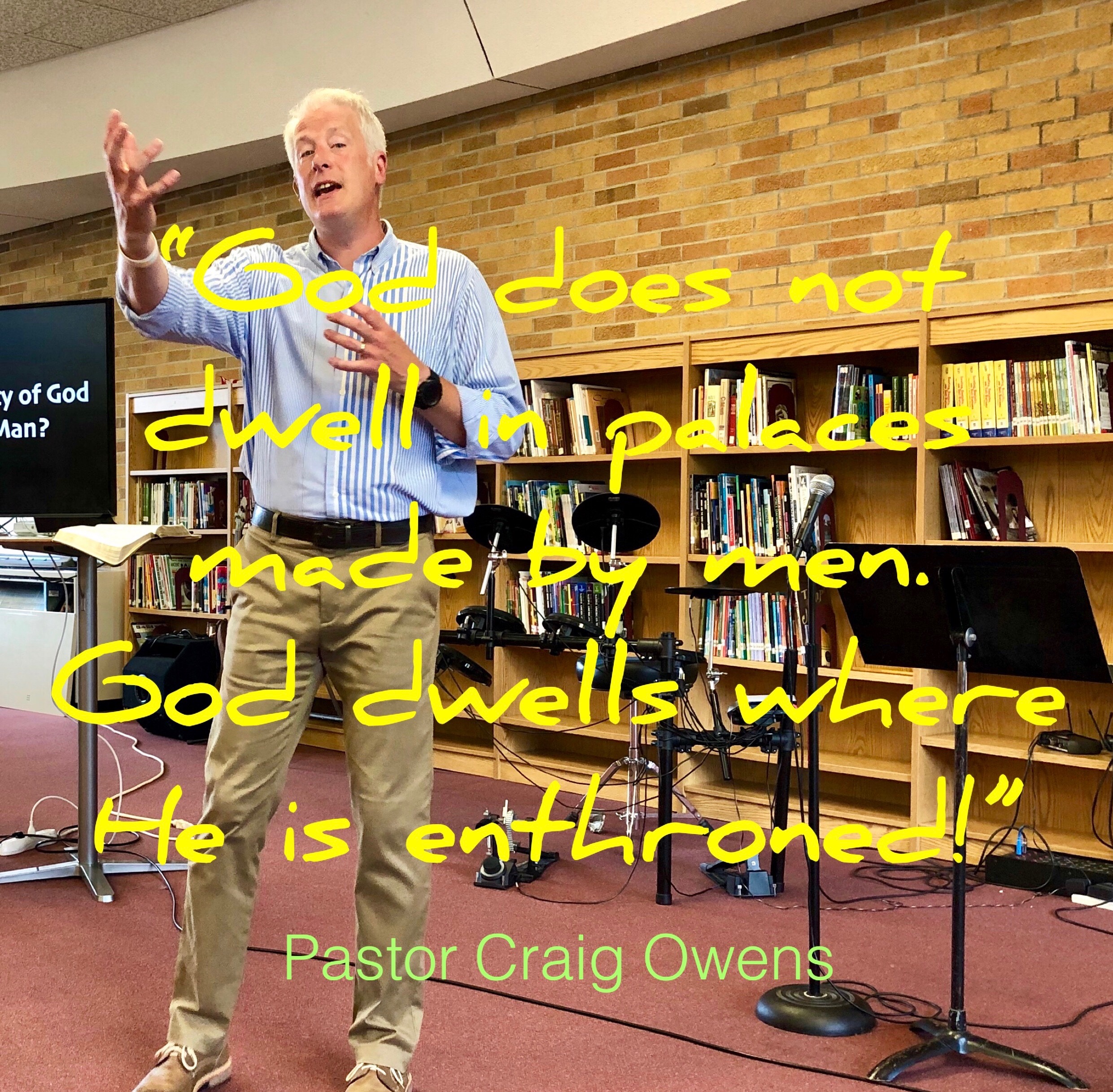
About 1200 years after this psalm was written, Augustine would write his book called The City of God in which he contrasted the City of God with the City of Man. He noted how the Romans had gods they trusted in, but the Romans had to “rescue” their gods from the invading barbarians. Rome ultimately fell to those invading barbarians, but, Augustine said, the City of God can never fall because it isn’t a tangible place. The City of God resides inside God’s people.
So notice that after the Selah the word “city” doesn’t appear anymore. Instead, we read about:
Here’s the question for all of us to ask—Is my heart a City of God or a City of Man?
When people look at the “city” of my life, can they tell God is on the throne? The telling characteristics of a City of God are a city where…
I’ll ask it again—Can people clearly see that God is the unrivaled King of your heart?
Join me next Sunday as we continue our look at the Selahs in the Psalms.