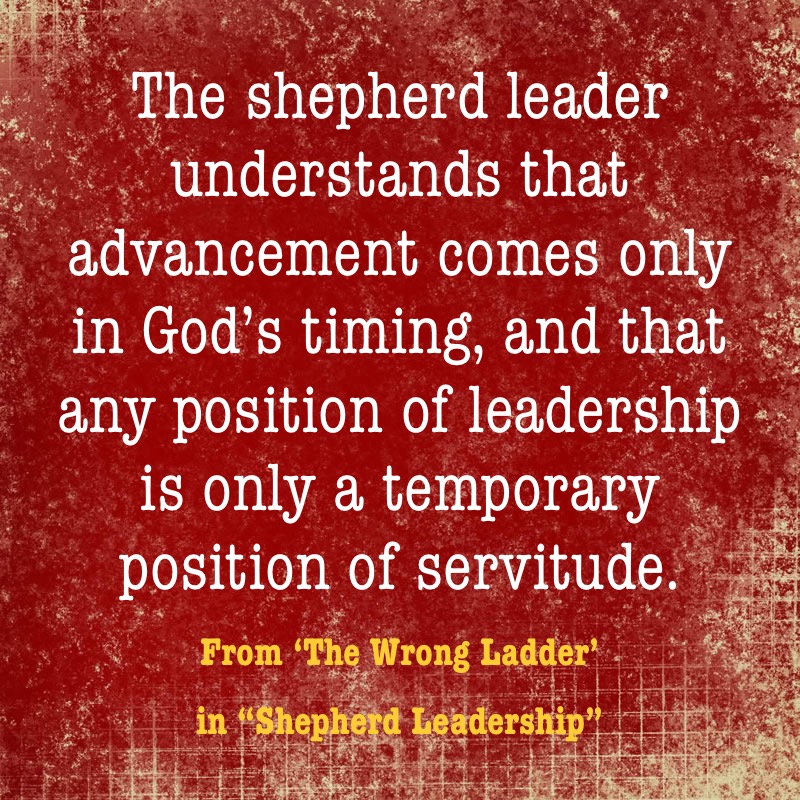
Don’t Fall For This Lose-Lose Gamble

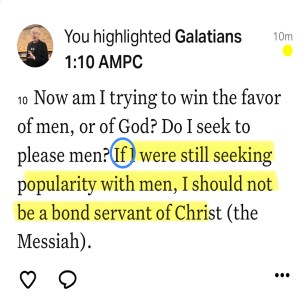
Now am I trying to win the favor of men, or of God? Do I seek to please men? If I were still seeking popularity with men, I should not be a bond servant of Christ (the Messiah). —Galatians 1:10 AMPC

Trying to please men ultimately becomes a lose-lose attempt. 

First, people are fickle and I cannot please all of them all of the time. Second, in attempting to please some people I would have to compromise the truth of the Bible. 

The only favor I should seek is the One who saved me and sent me. It is Christ’s voice alone that I long to hear say, “Well done, good and faithful servant.” 

Related blog post: Impressing People

Impressing People

Listen to the podcast of this post by clicking on the player below, and you can also subscribe on AppleSpotify, or Audible. 

Near the end of his letter to the saints in Galatia, Paul takes a minute to talk about “those who want to impress people” (Galatians 6:12). Check out how some of the other translations render this phrase—

  • NLT: want to look good to others 
  • AMPC: make a good impression 
  • NASB: make a good showing 

There’s only one way that I can think of for men to look good to other men, and that is to create a man-made program that plays to my strength so that others are impressed with how good I am. It’s only playing a game. 

Paul calls out this foolish pursuit, saying, “the only reason they do this is to avoid being persecuted for the Cross of Christ” (v. 12). In other words, they think that if they are popular with men, men will leave them alone, not troubling them for their belief in Jesus. 

In Paul’s letter to the saints at Philippi, he says that these earthly-minded people might make themselves look good to other earthly-minded people, but they really “live as enemies of the Cross of Christ” (Philippians 3:18). 

Doesn’t this put my desire to look good to other people in a different light when I realize that earthly popularity may make me an enemy of the Cross? 

People pleasing is a deadly trap! The approval of Jesus eternally outweighs the approval or even the persecution of men. 

I only want to look good to my Savior!

►► Would you please prayerfully consider supporting this ministry? My Patreon supporters get behind-the-scenes access to exclusive materials. ◀︎◀︎
Walk By The Spirit

Listen to the podcast of this post by clicking on the player below, and you can also subscribe on AppleSpotify, or Audible. 

Paul makes it so clear that the Holy Spirit is a Person with Whom I should be in regular and intimate conversation. In the span of just a few verses in Galatians, Paul uses five different Greek words to fill out the definition for what it means for a Christians to walk by the Spirit. 

(Check out all of the Bible verses in this post by clicking here.) 

(1) Walk by the Spirit (Galatians 5:16). This word means to conduct my life at the Spirit’s speed. Not rushing ahead; not lagging behind. As Solomon might say, “Trust the Holy Spirit with all your heart, and do not depend on your own understanding. Seek His will in all you do, and He will show you which path to take” (paraphrase of Proverbs 3:5-6). 

(2) Led by the Spirit (5:18). This means to be attached to the One Who is conducting my life. Just like Jesus explained about branches staying connected to the Vine in John 15:1-5. 

(3) Live by the Spirit (5:25). To consider the Holy Spirit as my one and only vitalizing Source. He is more important than the air I breathe, the food I eat, or the water I drink. 

(4) Keep in step with the Spirit (5:25). I march obediently as a soldier under direction from my Superior Officer; attuned to His voice to obey His every direction. 

(5) Live by the Spirit (6:1). This describes one who is filled with and governed by the Holy Spirit’s life-force. 

Christians who live this way cannot help but exhibit the fruit of the Spirit in such abundance that their very lives become a living, breathing testimony to others of the delight in walking by the Spirit on every single step of our life’s journey (5:22-23). 

!For me, there’s no other way to live! 

►► Would you please prayerfully consider supporting this ministry? My Patreon supporters get behind-the-scenes access to exclusive materials. ◀︎◀︎

Accountability To Saints

Listen to the podcast of this post by clicking on the player below, and you can also subscribe on AppleSpotify, or Audible. 

Sanctification (saint-ification) is an ongoing process that brings out fruitfulness, joy-fullness, and enhances our testimony to others. And an essential part of this process involves other saints. Notice that this word “saints” it plural. That’s because it is a plural word every place it appears in the Bible. 

Saints have gotten themselves into trouble when they tried to go solo. Like David’s sin with Bathsheba, Elijah’s slide into depression, or Peter’s denial of Jesus. But we also see saints thriving through difficult situations when they have a fellow saint alongside. Like how Barnabas gave Saul his start, Paul and Silas could sing together in prison, Silas and Timothy helped Paul minister, and how Jesus sent out His ambassadors by twos (Luke 10:1).  

(Check out all of the Scriptures in this post by clicking here.) 

I love the names of traveling companions John Bunyan uses in Pilgrim’s Progress: Christian travels with Faithful and Hopeful; Christiana travels with Mercy and Mr. Great-heart. And we get to travel along with some really great people as well (Proverbs 27:17; Ecclesiastes 4:9-12). 

How does accountability to other saints work? Since we see togetherness so much in the early Church (look for the phrases like “each other” or “one another”), think A.C.T.S.—

(1) Admit my need for accountability. James tells us that we all stumble and that even my so-called little slip-ups are major in God’s eyes (James 3:2, 2:10). So I need help. 

John Maxwell said, “Every person is undisciplined in some area of their life; in the area that I am undisciplined, that is the area where I need greatest accountability. I will not do well in my areas of weakness unless I am held accountable for better results.” We all have blind spots, we all have weak areas, and we must be humble enough to admit to those things. 

(2) Choose my accountability partners prayerfully and carefully (Proverbs 12:26; 2 Corinthians 6:14). These should be trustworthy people who have the emotional and spiritual capacity to be able to come alongside me (Proverbs 17:9; Galatians 6:2). 

(3) Trust my friend. Trust their counsel even when it stings a bit (Proverbs 27:6), and trust the effectiveness of their prayers for me (James 5:16). 

(4) Stick with them through thick and thin. Be your brother’s keeper and let them be your keeper (Hebrews 3:12-14). We need to keep at it especially in difficult times. Notice the phrase “let us” that appears five times in Hebrews 10:19-25.  

If we are living with a biblical worldview, we realize that the saints here on earth are those we will also be with for eternity. Our biblical worldview should form our understanding of both being accountable to another saint and holding other saints accountable as well. 

As Jack Hayford so wisely noted, “The believer’s best defense against self-deception is through mutual accountability to one another.” 

If you would like to check out the other messages in our series B.A.S.I.C. Christianity, you can click here. 

►► Would you please prayerfully consider supporting this ministry? My Patreon supporters get behind-the-scenes access to exclusive materials. ◀︎◀︎

Mediator

For God is not a mere man, as I am, that I should answer Him, that we should come together in court. There is no umpire between us, who might lay his hand upon us both—would that there were! That He might take His rod away from threatening me, and that the fear of Him might not terrify me. Then would I speak and not fear Him, but I am not so in myself to make me afraid, were only a fair trial given me. (Job 9:32-35 AMPC) 

The “umpire” or mediator for whom Job was longing is Jesus. 

Both Paul (Galatians 3:19-20; 1 Timothy 2:5) and the writer of Hebrews (8:6, 9:15, 12:24) make it clear that what Job said was true: Man cannot come before God on his own, let alone attempt to argue his case. 

Jesus became fully Man while remaining fully God to satisfy the righteous requirements of the law and become the one and only perfect Mediator of our justification before God! 

Beware Of People Pleasing

Listen to the podcast of this post by clicking on the player below, and you can also subscribe on AppleSpotify, or Audible. 

The apostle Paul asked himself a question which is also a great question for every Christian to ask themselves: “Am I trying to please people?” (Galatians 1:10). 

Trying to please people is a trap, and the inevitable result is frustration. Why frustration? Because it is impossible to please everyone. Even Jesus couldn’t do that!

If I am trying to win support from people, I will have to be like a politician who is angling for votes. I will have to make concessions and modifications based on which group I may be speaking to. For a Christian trying to live by the Bible, there are no concessions or modifications that can be made. 

In Galatians 1:10, Paul goes on to say, “If I were still trying to please people, I would not be a servant of Christ.” That is because trying to please people is not serving people but serving my own ego. 

Let’s zoom-in on the question Paul uses to open this verse: “Am I now trying to win the approval of human beings, or of God?” 

He is not saying, “I hope God approves of me.” When we have welcomed Jesus into our life as our Lord and Savior, we are already fully accepted and approved of by our Heavenly Father—

   Blessed be the God and Father of our Lord Jesus Christ, who has blessed us with every spiritual blessing in the heavenly places in Christ, just as He chose us in Him before the foundation of the world, that we should be holy and without blame before Him in love, having predestined us to adoption as sons by Jesus Christ to Himself, according to the good pleasure of His will, to the praise of the glory of His grace, by which He made us accepted in the Beloved. (Ephesians 1:3-6) 

We do not have to try to earn God’s approval, but we will have to stand before Him someday to give an account of how we lived our lives and how we proclaimed the Gospel to others. Looking ahead to this “finish line” will keep us disciplined (Philippians 3:12–14) so that we can rejoice in our reward as our end draws near (2 Timothy 4:6–8). 

Let us live, and talk, and work for the applause of nail-scarred Hands. There is only one Voice that we want to hear saying, “Well done, good and faithful servant.” Don’t fall into the people pleasing trap, but keep your eyes and ears solely on your Savior. 

Related posts:

►► Would you please prayerfully consider supporting this ministry? My Patreon supporters get behind-the-scenes access to exclusive materials. ◀︎◀︎

God-ability

Listen to the podcast of this post by clicking on the player below, and you can also subscribe on AppleSpotify, or Audible. 

The last time we were together, Pastor Caleb mentioned that I was the only one he knew that put hot sauce on my eggs. But then several of you let him know that you do that too. After the service, someone told me that they like Tabasco sauce on their pizza, which isn’t something I enjoy. 

We all have different tastes. Our tastebuds are just one of the things that makes us unique creations. Unique means one-of-kind, no one else like me. We don’t need to add something like “very unique” because just by itself the word means that God made a once-in-eternity masterpiece when He made you and me. 

It’s a good thing that we are unique. I see what you don’t see, and you see what I don’t see. There are some things I know how to do well, but perhaps you struggle doing them. That’s okay because there are things you can do that I won’t have the opportunity to do. Combined together we saints make an amazing team! 

The apostle Paul understood the value of unique individuals. 

(Check out all of the Scriptures in this post by clicking here.) 

Titus was probably the one who carried Paul’s letter to the Corinthians and then had the responsibility to teach those saints how to carry out what was in the letter (2 Corinthians 2:12-13; 7:6-7, 13-15; 8:6, 16-17). Titus was the pastor that Paul sent to Crete. Paul quoted a poet who said, “Cretans are always liars, evil brutes, lazy gluttons” (Titus 1:12). Titus was confident and bold to stand his ground for what he believed (Galatians 2:1-3). 

Timothy was more soft-spoken and tenderhearted, so Paul had to encourage him more (1 Timothy 4:7, 12), but he was the one who could soothe troubled spots. Timothy stepped in to help behind the scenes (Acts 18:1-5) and he was the one Paul reached out to with his last letter form prison, asking Timothy to come to him (2 Timothy 4:12). 

What a great thing it is to have unique saints in our lives! 

One person—not matter how gifted—cannot do it all. Look at Moses in Exodus 18:13-18. Even an anointed team like the 12 apostles cannot to it all. Look at Acts 6:1-2. 

These leaders recognized the need to other uniquely gifted people to come alongside them. Moses was advised to choose capable men. In other words, those with the ability to judge disputes wisely (Exodus 18:19-25). The apostles chose those who were full of the Holy Spirit and wisdom (Acts 6:3-6). The Greek word for wisdom (sophia) means someone with heaven-sent wisdom that also has the ability to apply that wisdom effectively. 

Israel in the Old Testament and the Church in the New Testament would have been constricted if those other people hadn’t agreed to let their God-given abilities be used. 

God’s talent + My ability = God-ability

In 2 Corinthians 8-9, Paul is specifically talking about the ability of people to give their offerings to help the growing church, but there is a phrase that I think is appropriate for any application of our gifts: They gave themselves first of all to the Lord (2 Corinthians 8:5). 

When what we do is a cheerful “get to” and not an obligatory “got to” it is noticed by everyone. Those two chapters in 2 Corinthians are filled with words like cheerful, eagerness, and enthusiasm. 

In our Hand2Hand food ministry, some people have…

  • Give-ability to give financially 
  • Shop-ability to find deals
  • Organize-ability to make all the parts work
  • Strength-ability to lift and move 
  • Deliver-ability to get the needed items to those who need them

But none of these work without availability. This is the attitude that makes our God-ability a blessing and not a chore. 

There is a place in ministry for every Christian. When you are available, God will allow the talent that He has given you to be a blessing to the Church. You benefit, the other saints benefit, and the watching world sees a living witness that will draw them to Jesus. 

►► Would you please prayerfully consider supporting this ministry? My Patreon supporters get behind-the-scenes access to exclusive materials. ◀︎◀︎

Sanctified Experiences

Listen to the podcast of this post by clicking on the player below, and you can also subscribe on AppleSpotify, or Audible. 

Even with the Voice of the Holy Spirit in our ear and the Mind of God giving us insight, we still “miss it” sometimes. Maybe it’s fear or impatience or immaturity, but we try something on our own and the results are painful. 

I like the maxim, “Sometimes you win, sometimes you learn.” It’s true, but in order to learn I need a proper lens or a wise tutor to help discover those lessons from my experiences. This is what the Holy Spirit does for us: He helps us make senses of our “misses.” Otherwise, if I don’t learn from these painful experiences I will become either arrogant and God opposes this kind of pride (Proverbs 14:7; James 4:6a), or I remain ignorant (Proverbs 15:32; James 4:6b). 

(Check out all of the biblical references in this post by clicking here.) 

Peter heard from Jesus that the baptism of the Holy Spirit was intended to empower the Christians to take the Good News of Jesus to all people—including Gentiles. Peter struggled with this part, as would all good Jews. In their minds, Gentiles weren’t eligible for the blessings of God, especially not the gift of eternal life which would allow them to be in God’s presence forever! 

Before we look at Peter, we need to remember what was happening with Saul/Paul at the same time. Saul met Jesus (Acts 9:3-15), and he then went to Jerusalem (vv. 26-28; Galatians 1:13-19). 

Now let’s go back to Peter. He had just seen a vision from God and heard the Voice of the Spirit (Acts 10:9-16, 19-20). In obedience to this Voice, he went to Cornelius’ house and was given the Mind of God to preach to them. These Gentiles not only accepted Jesus as their Savior but were baptized in the Holy Spirit (vv. 44-48). 

Now let’s switch back to Paul for a moment. Antioch became the home base for Paul and Barnabas (where the believers were first called Christians), and apparently there was a large Gentile population there. At one point, Peter came to visit and struggled with whether or not the Gentile Christians must then convert to Judaism. Peter was struggling with obedience to the vision that God had shown him, his disobedience was beginning to affect others (including Barnabas), and Paul called Peter out on this (Galatians 2:1, 7-14). 

Back in Jerusalem, the Jewish Christians were insisting that the Gentile Christians become Jews. It was this controversy that prompted the Jerusalem Council. At this Council, Peter responded like one who had throughly learned a lesson from his previous “miss” (Acts 15:5-11). 

I like this verse in the Amplified Bible, particularly one phrase: I will praise and give thanks to You with uprightness of heart when I learn by sanctified experiences Your righteous judgments (Psalm 119:7 AMPC). 

Sanctified experiences. A “miss” that the Holy Spirit uses to teach us. The “miss” has been sanctified to become a learning experience. This is what Jesus said the Spirit of Truth would do for us (John 16:13). 

There are things we simply experience, and then there are “sanctified experiences” where the Holy Spirit teaches us an invaluable lesson. These sanctified experiences are what the Holy Spirit uses to bring our thought and conduct into alignment with the perfect standard of God’s Word. 

The Holy Spirit never condemns us for our missteps (Romans 8:1), but uses them for God’s glory (v. 28). 

Just as Paul had to help Peter learn to pay attention to the Voice of the Spirit, the Holy Spirit wants to make us learner-teachers as well. In Psalm 119:7 the Hebrew word for “learn” is lamad which is also the word for “teach.” In other words, I’ve learned it well enough to teach it to another person. Even David with his sinful behavior—a really big “miss”—learned from the lesson from the Spirit of God so well that he could teach others (Psalm 51:10-13). 

Spirit-baptized Christians can lean into the Spirit of Truth to help them learn sanctified experiences from even the difficult things that have happened to them. 

If you’ve missed any of the other lessons in this series, you can find them all here. 

►► Would you please prayerfully consider supporting this ministry? My Patreon supporters get behind-the-scenes access to exclusive materials. ◀︎◀︎

Good Grief From A Friend

Listen to the podcast of this post by clicking on the player below, and you can also subscribe on AppleSpotify, or Audible. 

After God created Adam, He said, “It’s not good for you to be alone.” That’s just as true today: God didn’t intend for us to journey on our own, but He gives us companions along the way. 

Last week we saw that God has to sometimes cause us grief to get our attention when we are straying from His path. He sometimes puts people in our lives to do the same thing. 

There’s a reason God puts the people in our lives that He does. We are called to speak the truth in love (Ephesians 4:15). But that sometimes means people will get upset with us (Galatians 4:16). “Real friends hurt each other. … Truth is the primary way faithful friends should wound each other—it is the help that hurts.” —Dick Brogden 

(Check out all of the verses in this post by clicking here.) 

The Corinthians thought they were super-spiritual, but Paul had to call them out on their foolishness (1 Corinthians 3:3; 5:1-2). Before Pauls’ letter, the Corinthians seemed happy. His letter caused them grief, but it was good grief that led to repentance and true joy (2 Corinthians 7:8-10). 

To keep silent when a brother or sister is straying is not God-honoring. We are not to be the sin police, but we are to address sinful issues (James 5:19-20). 

As King David flirted with the idea of how he could get something that he thought would make him happy, an anonymous attendant tried to get his attention. David ignored this and then tried to sweep it under the rug. In fact, he thought he got away with his sin (2 Samuel 11:1–12:7). 

But God sent Nathan to speak a hard word to David. We don’t know when Psalm 141 was written, but we know that David did write it. Perhaps it was penned at the time of Nathan’s loving confrontation. He said, “Let a righteous man strike me—that is a kindness; let him rebuke me—that is oil on my head” (Psalm 141:5). 

We do know that David wrote Psalm 51 after Nathan’s loving hard word, and in this prayer we see David’s confession, repentance, and a request for God’s joy to replace David’s grief. 

So how do New Testament-era Christians use good grief to help fellow saints? 

  1. Examine yourself first (Matthew 7:1-5). Make sure you aren’t plagued by the same sin you have noticed in a brother or sister. 
  2. Cry before you confront, just as the prophet Samuel did before he had to deliver a hard word to King Saul (1 Samuel 15:10-11). 
  3. Confront in love with the goal of restoration, but make sure you are confronting someone who know you love them and who will receive your loving word  (Proverbs 27:5; 9:8). 
  4. Pray that their grief will be turned to joy (Luke 22:31-32; Galatians 6:1; Psalm 51:12). 

Friendships with fellow saints are precious and they are vital. We need iron to sharpen iron (Proverbs 27:17) so that we will all stand before the throne together for eternity. 

This is the final message in our series Grief Into Joy. If you missed any of the messages, you can check them all out by clicking here. 

►► Would you please prayerfully consider supporting this ministry? My Patreon supporters get behind-the-scenes access to exclusive materials. ◀︎◀︎

Should We Listen To Critics?

Listen to the podcast of this post by clicking on the player below, and you can also subscribe on AppleSpotify, or Audible. 

Do you know this pair of cantankerous men from the Muppets? Statler and Waldorf sit in the balcony of the theatre and criticize everything that is happening on the stage. I mean everything! They have a good laugh at their barbs, but no one on the stage seems to find it humorous. 

Have you ever met people like this? How do you typically respond to their criticism? 

Unfortunately, those who are trying to do the right thing are often the targets of almost constant criticism. Abraham Lincoln said, “If I were to attempt to answer all the criticisms and complaints I receive, I would have no time for any other business.” 

President Lincoln was a great leader but he wasn’t without fault, so to certain extent we could expect a little bit of criticism from people who didn’t like his policies. But what about Jesus? It was prophesied about Him that He would be the target of criticism (Isaiah 53:3). 

(Check out all of the Scriptures in this post by clicking here.) 

Those out to get Jesus even criticized those who attended to Him. In Mark 14:1-5, they are criticizing a woman who poured perfume on Jesus out of her sincere desire to honor Him. Yet they spoke about her and her actions “indignantly” (v. 4), and they rebuked and criticized her (v. 5). The Greek word in this verse literally means he snorting of horses! 

Jesus stepped in to protect this God-fearing woman, “Why are you bothering her? Why are you criticizing this beautiful thing she had done for Me?” 

Notice that Jesus responded to the critics, but the woman did not respond. Does that mean that we never answer critics? Are we supposed to ignore them? 

First, let’s go back in time to the origin of the words critic and criticism. These words originally meant someone capable of giving a meaningful—perhaps even constructive or helpful—judgment. Think of a trained and skilled chef critiquing your recipe, as opposed to someone who cannot tell the difference between nutmeg and ginger. 

The natural response is to ignore all criticism. The supernatural response is prayerfully evaluate criticism. Solomon says there is such a thing as valid criticism (Proverbs 25:12). 

So who is a valid critic? 

(1) Someone who loves me (Proverbs 27:17; Ephesians 4:15). Paul loved Peter and respected his leadership role in the church, but he still criticized Peter when he messed up (Galatians 2:9, 11).  

(2) Someone who has experience or godly wisdom that we don’t yet have (Ecclesiastes 7:5). Micaiah had a word from God, even though King Ahab thought Micaiah simply didn’t like him (1 Kings 22:1-18). 

(3) Someone who wants to hurt me. Really!? Dick Brogden wrote, “The Lord uses critics to show us our own hearts, even if what they say is not fully true, informed, or even fair. There is almost always a germ of truth in what our critics (in their own pain and disappointment) shout at us. The wise [person] will humble himself and look for the truth embedded in every oppositional interaction.” As we saw previously from Psalm 26:2, when we hear words of criticism, we need to make it a matter of prayer. 

Jesus told the woman’s critics to “leave her alone” but He never defended Himself against the childish barbs (Isaiah 53:7; Matthew 27:13-14). I think we would do well to follow His example. So when criticized, take a deep breath, smile, hear them out, ask clarifying questions, and then say, “Thank you for sharing that with me. I’ll make this a matter of prayer.” 

They might accuse you, but you should turn it over to God (Psalm 109:4). 

The natural response is to respond all critics. The supernatural response is to respond like Jesus (see 1 Peter 2:21-23). 

Remember that quote from Abraham Lincoln we saw earlier? Here’s the rest of his quote—

“From day to day I do the best I can and will continue to do so till the end. If in the end I come out all right, then the complaints and criticisms and what is said against me will make no difference. But, if the end brings me out wrong, then ten angels coming down from heaven to swear I was right would still make no difference.” 

Ultimately, we are longing to hear Jesus say, “Well done.” If He cannot say that to us, does it really matter if everyone else praised us? But if Jesus says, “Well cone,” does it really matter the criticism others said about us? 

Let’s ask the Holy Spirit to help us respond supernaturally to our critics—listen prayerfully to ever critic, but only respond to them as Jesus did. 

If you have missed any of the other messages in this series When Sheep Bite Sheep, you can find them all here. And if you’re a pastor, be sure to check out my book When Sheep Bite. 

►► Would you please prayerfully consider supporting this ministry? My Patreon supporters get behind-the-scenes access to exclusive materials. ◀︎◀︎