22 Quotes From “The Ragamuffin Gospel”

Ragamuffin GospelThe Ragamuffin Gospel by Brennan Manning really resonated with me. You can read my full book review by clicking here, but below are some of the quotes I especially appreciated.

“The institutional church has become a wounder of the healer rather than a healer of the wounded.” 

“Personal responsibility has replaced personal response. We talk about acquiring virtue as if it were a skill that can be attained, like good handwriting or a well-grooved golf swing. In the penitential seasons we focus on overcoming our weaknesses, getting rid of our hang-ups, and reaching Christian maturity. We sweat through various spiritual exercises as if they were designed to produce a Christian Charles Atlas. Though lip service is paid to the gospel of grace, many Christians live as if only personal disciplines and self-denial will mold the perfect me. The emphasis is on what I do rather on what God is doing. In this curious process God is a benign old spectator in the bleachers who cheers when I show up for morning quiet time.”

“God has a single relentless stance toward us: He loves us. He is the only God man has ever heard of who loves sinners. False gods—the gods of human manufacturing—despise sinners, but the Father of Jesus loves all, no matter what they do.” 

“Jesus comes not for the super-spiritual but for the wobbly and the weak-kneed who know they don’t have it all together, and who are not too proud to accept the handout of amazing grace.”

“The Word we study has to be the Word we pray.”

“We must never allow the authority of books, institutions, or leaders to replace the authority of knowing Jesus Christ personally and directly. When the religious views of others interpose between us and the primary experience of Jesus as the Christ, we become unconvicted and unpersuasive travel agents handing out brochures to places we have never visited.”

“Whatever past achievements might bring us honor, whatever past disgraces might make us blush, all have been crucified with Christ and exist no more except in the deep recess of eternity.” 

“It is unimaginable to picture a wooden-faced, stoic, joyless, and judgmental Jesus as He reclined with ragamuffins.”

“We miss Jesus’ point entirely when we use His words as weapons against others. They are to be taken personally by each of us.” 

“The saved sinner is prostrate in adoration, lost in wonder and praise. He knows repentance is not what we do in order to earn forgiveness; it is what we do because we have been forgiven. It serves as an expression of gratitude rather than an effort to earn forgiveness. Thus the sequence of forgiveness and then repentance, rather than repentance and then forgiveness, is crucial for understanding the gospel of grace.”

“Maybe this is the heart of our hang-up, the root of our dilemma. We fluctuate between castigating ourselves and congratulating ourselves because we are deluded into thinking we save ourselves. We develop a false sense of security from our good works and scrupulous observance of the law. Our halo gets too tight and a carefully disguised attitude of moral superiority results. Or we are appalled by our inconsistency, devastated that we haven’t lived up to our lofty expectations of ourselves. The roller coaster ride of elation and depression continues. Why? Because we never lay hold of our nothingness before God, and consequently, we never enter into the deepest reality of our relationship with Him. But when we accept ownership of our powerlessness and helplessness, when we acknowledge that we are paupers at the door of God’s mercy, then God can make something beautiful out of us.” 

“Honesty is such a precious commodity that it is seldom found in the world or the church. Honesty requires the truthfulness to admit the attachment and addictions that control our attention, dominate our consciousness, and function as false gods. I can be addicted to vodka or to being nice, to marijuana or being loved, to cocaine or being right, to gambling or relationships, to golf or gossiping. Perhaps my addiction is food, performance, money, popularity, power, revenge, reading, television, tobacco, weight, or winning. When we give anything more priority than we give to God, we commit idolatry. Thus we all commit idolatry countless times every day.”

“To be alive is to be broken. And to be broken is to stand in need of grace. Honesty keeps us in touch with our neediness and the truth that we are saved sinners. There is a beautiful transparency to honest disciples who never wear a false face and do not pretend to be anything but who they are. … Getting honest with ourselves does not make us unacceptable to God. It does not distance us from God, but draws us to Him—as nothing else can—and opens us anew to the flow of grace.” 

“When we wallow in guilt, remorse, and shame over real or imagined sins of the past, we are disdaining God’s gift of grace. Preoccupation with self is always a major component of unhealthy guilt and recrimination. … Yes, we feel guilt over sins, but healthy guilt is one which acknowledges the wrong done and feels remorse, but then is free to embrace the forgiveness that has been offered.”

“The evil one is the great illusionist. He varnishes the truth and encourages dishonesty. ‘If we say, “We have no sin,” we are deceiving ourselves, and the truth has no place in us’ (1 John 1:8). satan prompts us to give importance to what has no importance. He clothes trivia with glitter and seduces us away from what is real. He causes us to live in a world of delusion, unreality, and shadows.” 

“At Sunday worship, as in every dimension of our existence, many of us pretend to believe we are sinners. Consequently, all we can do is pretend to believe we have been forgiven. As a result, our whole spiritual life is pseudo-repentance and pseudo-bliss.”

“The way we are with each other is the truest test of our faith. How I treat a brother or sister from day to day, how I react to the sin-scarred wino on the street, how I respond to interruptions from people I dislike, how I deal with normal people in their normal confusion on a normal day may be a better indication of my reverence for life than the antiabortion sticker on the bumper of my car.” 

“A little child cannot do a bad coloring; nor can a child of God do bad in prayer.”

“The call asks, Do you really accept the message that God is head over heels in love with you? I believe that this question is at the core of our ability to mature and grow spiritually. If in our hearts we really don’t believe that God loves us as we are, if we are still tainted by the lie that we can do something to make God love us more, we are rejecting the message of the Cross.” 

“There are some real problems with projecting the perfect image. First of all, it’s simply not true—we are not always happy, optimistic, in command. Second, projecting the flawless image keeps us from reaching people who feel we just wouldn’t understand them. And third, even if we could live a life with no conflict, suffering, or mistakes, it would be a shallow existence. The Christian with depth is the person who has failed and who has learned to live with it.”

“We project into the Lord our own measured standard of acceptance. Our whole understanding of Him is based in a quid pro quo of bartered love. He will love us if we are good, moral, and diligent. But we have turned the tables; we try to live so that He will love us, rather than living because He has already loved us.” 

“No greater sinners exist than those so-called Christians who disfigure the face of God, mutilate the gospel of grace, and intimidate others through fear. They corrupt the essential nature of Christianity.”

Two Angels

LongfellowThere are two angels, that attend unseen
Each one of us, and in great books record
Our good and evil deeds. He who writes down
The good ones, after every action closes
His volume, and ascends with it to God.
The other keeps his dreadful day-book open
Till sunset, that we may repent; which doing,
The record of the action fades away,
And leaves a line of white across the page.

—Henry Wadsworth Longfellow

14 Quotes From “It Is Finished”

It Is FinishedIt Is Finished was an amazingly confronting and encouraging book. You can read my full book review by clicking here, but below are some of the quotes from David Wilkerson that especially caught my attention…

“Jesus was speaking as co-signer of the covenant. He said, ‘Now I am no longer in the world, but these are in the world, and I come to You. Holy Father, keep through Your name those whom You have given Me, that they may be one as We are’ (John 17:11). He was saying to the Father, ‘We agreed that I could bring into Our covenant everyone who trusts in Me. Now, Father, I ask You to bring these beloved ones under the same covenant promises You made to Me.”

“The covenant, cut before the world was formed, has in it the sworn oath of almighty God to save and deliver His people from the power and dominion of satan. Faith in Christ brings us into God’s covenant oath to keep us as faithfully as He kept His own Son.”

“This is an ongoing problem with many Christians. We look to the Holy Spirit as some kind of booster shot to empower or energize our human will. We expect Him to build up our supply of grit and determination, so we can stand up to temptation the next time it comes. We cry, ‘Make me strong, Lord! Give me an iron will, so I can withstand all sin.’ But God knows this would only make our flesh stronger, enabling it to boast. … Scripture says the Spirit of God actually ‘subdues’ our sins and turns us from them: ‘He will again have compassion on us, and will subdue our iniquities. You will cast our sins into the depths of the sea’ (Micah 7:19). Think of it! Not I, but my God, will subdue and conquer all my sins, by the inner working of the Holy Spirit.”

“God’s Spirit will accomplish in us what our flesh never has been able to do. How? By indwelling us. The New Covenant is all about the Holy Spirit coming to live and work in us, by promise in answer to faith.”

“It is vital for every follower of Jesus not to judge God’s New Covenant promises according to past experiences.”

“God says, ‘There is one work the Spirit must perform in you before any of these others. He is going to put in you the true fear of God concerning sin. He will implant in you a profound awe of My holiness so you will not depart from My commands. Otherwise, your sin will always lead you away from Me.’ Very simply, the Holy Spirit changes the way we look at our sin. … So He shows us how deeply it grieves and provokes Him.”

“Many flesh-driven Christians try to shake off the guilt that God’s convicting arrows produce. They do not want to feel the dread of their sin, so they constantly claim the verse, ‘There is therefore now no condemnation to those who are in Christ Jesus’ (Romans 8:1). But they neglect to read the last part of this verse: ‘who do not walk according to the flesh, but according to the Spirit.’ If you continue in sin, you are walking in the flesh—and you have no claim on God’s promise of ‘no condemnation.’ The guilt we feel under Holy Spirit conviction is actually a work of God’s grace. It is meant to expose the deceitfulness of sin in us.”

“Ask the Holy Spirit to accomplish in you the precedent work of instilling godly fear in you, to keep your heart open and accepting of God’s Word. When you do, the Spirit promises to give you a soft heart, one that is pliable in His hand. … The implantation of godly fear by the Holy Spirit is designed to produce obedience through surrender, rather than through discipline.”

“God the Father gave His Son, Jesus, access to all of His own riches and wealth. In other words, He invested in Him all the wisdom, knowledge, power and glory of Heaven. And by being made wealthy in all these things, Jesus became the only One worthy to be co-signer of the covenant. ‘By so much more Jesus has become a surety [guarantor, sponsor, co-signer] of a better covenant’ (Hebrews 7:22). Could there be any greater mercy than this? God so loved us that He made His Son rich beyond all comprehension. Then He made Him both our kinsman and our co-signer. He has become the person responsible to settle all our debts. He pays when we cannot.”

“In this covenant, God pledges to do the following four things:

  1. He swears to write His law on our hearts and minds.
  2. He takes an oath that He will be God to us, and that we will be His children.
  3. He promises we will know Him and His ways because we will be taught by the Holy Spirit.
  4. He pledges to be merciful to our unrighteousness, forgiving all our sins and iniquities.”

“A stronghold is an accusation planted firmly in your mind. satan establishes strongholds in God’s people by implanting in their minds falsehoods and misconceptions, especially regarding God’s nature.”

“The only weapon that scares the devil and his armies is the same one that scared him in the wilderness temptation of Jesus. That weapon is the truth of the New Covenant—the living Word of God. Only the Lord’s truth can set us free.”

“This is the doctrine of God’s preventing goodness: He has anticipated all our struggles—all our battles with sin, flesh and the devil—and in His mercy and goodness, He has paid our debt before it can even come due. Through the covenant, He has prepaid for all our failures and relapses. His covenant oath assures us of His preventing goodness in our lives.”

“In God’s eyes, our problem is not sin, it is trust. Jesus settled our sin problem once and for all at Calvary. He does not constantly harp on us now, barking, ‘What have you done this time?’ or ‘Now you’ve gone too far,’ or ‘This time you’ve crossed the line.’ No, never! Our Lord’s attitude toward us is just the opposite. His Spirit is constantly wooing us, reminding us of the Father’s lovingkindness—even in the midst of failure.”

It Is Finished (book review)

It Is FinishedDavid Wilkerson was a gentle man (yes, I did intend for that to be two words). The best definition I’ve heard of gentleness is “strength under control,” and that certainly describes Rev. Wilkerson’s words in It Is Finished: Finding Lasting Victory Over Sin.

Pastor Wilkerson’s words carry all of the weight and authority of an Old Testament prophet crying out, “This is what God says!” But his message is delivered with the lovingkindness of a gentle shepherd. Rev. Wilkerson is hard on those things that keep Christians at a distance from God, but loving on those at-a-distance Christians.

It Is Finished is a series of eleven sermons delivered by Pastor Wilkerson just prior to his death. They deliver a powerful message of God’s redemptive love from a man who was constantly learning what that love really meant. He shares his own personal struggles with feeling accepted by God’s love, and then presents a hope-filled message for all of us to accept the Holy Spirit’s invitation to enter into greater intimacy with our loving Heavenly Father.

These sermons are easy to read and will lift your spirits to new heights in God. I recommend this book to all Christians, but especially to those who struggle with feeling accepted by God.

I am a Chosen Books book reviewer.

5 Quotes From “Love To The Uttermost”

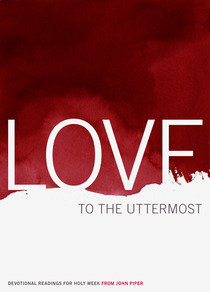
Love To The UttermostI suggested last week that John Piper’s book Love To The Uttermost is an excellent resource to help guide you through the Holy Week with some fresh insights (you can read my review of this book by clicking here). Here are a few of the fresh insights that stood out to me.

“Luke 12:32 is a verse about the nature of God. It’s a verse about what kind of heart God has. It’s a verse about what makes God glad—not merely about what God will do or what He has to do, but what He delights to do, what He loves to do, and what He takes pleasure in doing. ‘Fear not, little flock, for it is your Father’s good pleasure to give you the kingdom.’ … This is what the word means: God’s joy, His desire, His want and wish and hope and pleasure and gladness and delight, is to give the kingdom to His flock.”

“Jesus was not accidentally entangled in a web of injustice. The saving benefits of His death for sinners were not an afterthought. God planned it all out of infinite love to sinners like us, and He appointed a time. Jesus, who was the very embodiment of His Father’s love for sinners, saw that the time had come and set His face to fulfill His mission: to die in Jerusalem for our sake. ‘No one takes my life from Me,’ Jesus said, ‘I lay it down of my own accord’ (John 10:18).”

“First, we know the depth of someone’s love for us by what it costs him. Second, we know the depth of someone’s love for us by how little we deserve it. Third, we know the depth of someone’s love for us by the greatness of the benefits we receive in being loved. Fourth, we know the depth of someone’s love for us by the freedom with which they love us.”

“[God] does not need us. If we stay away He is not impoverished. He does not need us in order to be happy in the fellowship of the Trinity. But He magnifies His mercy by giving us free access through His Son, in spite of our sin, to the one Reality that can satisfy us completely and forever, namely, Himself.”

“The resurrection of Jesus is given to us as the confirmation or evidence that He was indeed free in laying down His life. And so the resurrection is Christ’s testimony to the freedom of His love. … Of all the great things that Easter means, it also means this: it is a mighty ‘I meant it!’ behind Christ’s death. I meant it! I was free. You see how free I am? You see how much power and authority I have? I was able to avoid it. I have power to take up My life out of the grave. And could I not, then, have devastated My enemies and escaped the Cross? My resurrection is a shout over My love for My sheep: It was free! It was free! I chose it. I embraced it. I was not caught. I was not cornered. Nothing can constrain Me to do what I do not choose to do. I had power to take My life from death. And I have taken My life from death. How much more, then, could I have kept My life from death! I am alive to show you that I really loved you. I freely loved you. Nobody forced Me to it. And I am now alive to spend eternity loving you with omnipotent resurrection love forever and ever. Come to Me, all you sinners who need a Savior. And I will forgive you and accept you and love you with all My heart forevermore.”

Thursdays With Oswald—Redemption

This is a weekly series with things I’m reading and pondering from Oswald Chambers. You can read the original seed thought here, or type “Thursdays With Oswald” in the search box to read more entries.

Redemption

   Redemption is easy to experience because it cost God everything, and if I am going to be regenerated it is going to cost me something. I have to give up my right to myself. I have deliberately to accept into myself something that will fight for all it is worth, something that will war against the desires of the flesh, and that will ask me to go into identification with the death of Jesus Christ, and these things produce a struggle in me. …

   The result of the Redemption in my life must be that I justify God in forgiving me. …In what way are you different in your life? does the reality of the Redemption at work in you justify God in having forgiven you?

From Baffled To Fight Better and Biblical Ethics

I like to think of the death and resurrection of Jesus this way: It cost Him so much, and He wants everything He paid for.

Jesus didn’t coast through, He wasn’t wishy-washy about His decision to go to the Cross, neither was He forced into such a horrific death by crucifixion.

Jesus willingly and lovingly went “all in” to pay the redemption price for our sins. So I’m challenged by Oswald Chambers’ question: Does the reality of the Redemption at work in you justify God in having forgiven you? Does my life show how grateful I am for the price Jesus paid?

Such Wondrous Love

CrossAs I am preparing both a Good Friday message and an Easter message, I am immersed in the details of Christ’s passion for us. There are so many thoughts swirling through my head about the amazing, unequaled, undeserved, overflowing love that Jesus has for us.

See from His head, His hands, His feet / Sorrow and love flow mingled down! / Did e’er such love and sorrow meet, / Or thorns compose so rich a crown? (Isaac Watts, When I Survey The Wondrous Cross)

You see, at just the right time, when we were still powerless, Christ died for the ungodly. Very rarely will anyone die for a righteous person, though for a good person someone might possibly dare to die. But God demonstrates His own love for us in this: While we were still sinners, Christ died for us. (Romans 5:6-8)

That Christ should join so freely in the scheme / Although it meant His death on Calvary / Did ever human tongue find nobler theme / Than love divine that ransomed me?

Such love, such wondrous love / Such love, such wondrous love / That God should love a sinner such as I / How wonderful is love like this!

That for a willful outcast such as I / The Father planned, the Savior bled and died / Redemption for a worthless slave to buy / Who long had law and grace defied (C.Bishop, Such Love)

Because of the joy awaiting Him, Jesus endured the Cross, disregarding its shame. Now He is seated in the place of honor beside God’s throne. (Hebrews 12:2)

I hope this week you will reflect on God’s amazing grace, Christ’s great love, and the Holy Spirit’s persistent drawing of your heart. Jesus died for us so that we could be brought into a loving relationship with our Heavenly Father!

If you are in the Cedar Springs area, please join me in celebrating with our churches our combined Good Friday service, or our Easter morning breakfast drama called Conspiracy!

At Last!

Jesus is our atonementThe Day of Atonement was a very special day for the Jewish people. It was called by some the Sabbath’s Sabbath, as it was the most holy day of the year. It was the day everyone looked forward to, because finally they could have forgiveness for their sins.

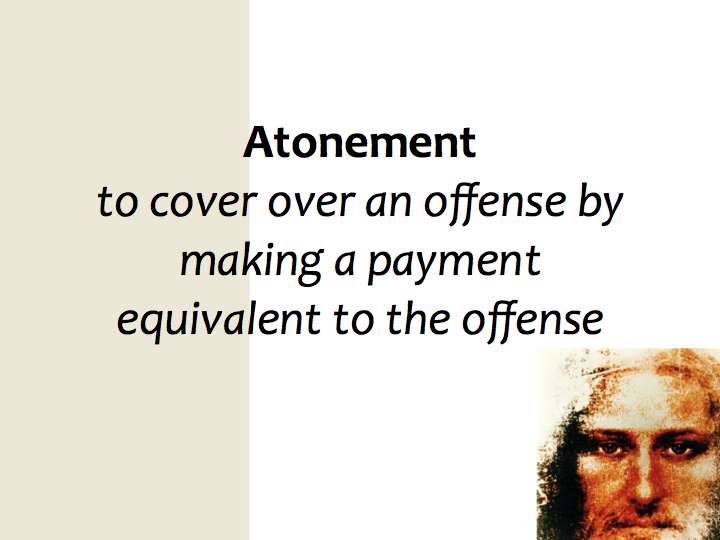
The word atonement in the Hebrew meant that a payment was made that was equivalent to the offense that was committed. The offense was huge: Sin was open rebellion against Almighty God, it was to spit in the face of our Heavenly Father, it was to slap away His hands that were reaching out to embrace us. Nothing short of a death could atone for that sort of offense!

So the high priest would go through an elaborate ceremony of washing himself and putting on special garments that were only to be worn on this Day of Atonement. Because the high priest was also a sinner himself, his first sacrifice was a bull. The blood from this sacrifice was taken by the high priest into the Most Holy Place of the temple to cover his own sins, before he could even approach God to ask for the forgiveness of the sins of anyone else.

After having completed this step, the high priest could then proceed. He would sacrifice a goat as a sin offering for the people. As he did with the bull’s blood, he would take the goat’s blood back into the Most Holy Place to ask God to show mercy toward people who had sinned, to turn away His holy wrath against their rebellion. Then the priest would lay his hands on a second goat, one that was still alive, and confess all of the sins of the people. This goat (called the scapegoat) was then taken out into the desert. This symbolized the removal of the people’s guilt, making it possible for them to be in relationship with God once again.

This was repeated year after year after year. It was repeated because the people continued to sin. It was repeated because these rituals were only a shadow of what God really wanted to accomplish. David wrote about the futility of these sacrifices—

Sacrifice and offering You did not desire—but a body You have given me—burnt offerings and sin offerings You did not require. Then I said, “Here I am, I have come—it is written about me in the scroll. I desire to do Your will, my God; Your law is within my heart.” (Psalm 40:6-8)

A beautiful thing happened through the ministry of Jesus on earth. Jesus came to be both the perfect high priest (one without sin, who did not need to purify Himself), and the perfect sacrifice. Jesus is called the once for all sacrifice of atonement for us, as He embodied the cry David made nearly 1000 years earlier. Hebrews 10:5-7 says that the words uttered by David prophetically were repeated by Jesus: “Here I am, I have come—it is written about me in the scroll. I desire to do Your will, my God; Your law is within my heart. I will be the once for all sacrifice.”

When Jesus told us the the new covenant was in His shed blood on Calvary’s Cross, He was saying that no longer would we have to wait until the Day of Atonement to find forgiveness; no longer would we have to wait upon an imperfect earthly priest to offer a sacrifice for us; no longer would we have to carry around the guilt of our sin and feel separated from God’s presence while waiting for a special ceremony. AT LAST! We can have immediate forgiveness, eternal redemption, and an everlasting relationship with God because of what Jesus did for us once for all!

As you celebrate Holy Week, be thrilled with the truth that Jesus’ death on the Cross makes it possible for you to have complete atonement. Our Savior has redeemed us AT LAST!

If you have missed any of the messages in this series called Who Is Jesus?, you can find them all here.

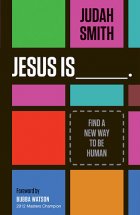
11 Quotes From “Jesus Is _____”

Jesus Is _____Judah Smith has a fresh, clear way for us to view Jesus and His love for us. You can read my full review of Jesus Is _____ by clicking here. Below are 11 quotes from this book that got me thinking—

“The Pharisees were zealous for the law, but they didn’t understand the love of God. They imposed judgment without mercy, punishment without love, criticism without understanding. In the name of hating sin, the Pharisees ended up hating sinners. Perhaps worst of all, they concluded that their aloofness from sinners was what made them holy. The measuring stick of their goodness was the badness of the people they rejected. …Before we get too furious at the Pharisees, though, realize that inside each of us is a Pharisee trying to get out. It’s happened to me. No sooner do I conquer a bad habit than I become the biggest critic of anyone who still does what I just stopped doing. I find that righteous indignation comes a lot easier than humility and compassion. Mentally chastising the bad deeds of other people is more comfortable than dealing with my own.”

“Rather than rejecting people out of a false sense of superiority, rather than judging and condemning those whose lives don’t measure up to my standard of holiness, I need to remember that I am still desperately in need of Jesus’ grace.”

“Besides writing off bad people, we too quickly write off ourselves. We swing from the self-righteous side of the pendulum (That filthy sinner deserves to go to hell!) to the self-condemning side (I’m a filthy sinner who deserves to go to hell!). Both extremes come from focusing on rules rather than on a relationship with Jesus.”

“I think if Jesus had one shot at fixing us, He’d tell us how much He loves us. …Jesus loves us right now, just as we are. He isn’t standing aloof, yelling at us to climb out of our pits and clean ourselves up so we can be worthy of Him. He is wading waist-deep into the muck of life, weeping with the broken, rescuing the lost, and healing the sick.”

“When we realize that grace is a Person, not a principle, abusing grace is no longer an option. It’s easy to abuse a principle, to manipulate a system, or to excuse away a doctrine. But it’s much harder to abuse a person or violate a relationship.”

“Rules are not bad, but they can’t save anyone. The best a rule or a law can do is set a boundary and threaten punishment for crossing that boundary. People still decide to obey the rule or not. …Rules are meant to lead us to relationship, not to replace relationship. …Focusing too much on rules and too little on grace tells children that what they do is more important than who they are. …These principles aren’t just for parenting. This is how our relationship with God works. For God, it’s more about relationship than about rules. Far more.”

“When we make up rules because we are afraid people will sin, we end up doing an end run around faith. It’s not fear that saves us—it’s faith. Fear of failure has a sneaky way of becoming a self-fulfilling prophesy. …Make rules and follow rules as needed, but don’t focus on rules. Focus on faith. Focus on grace. Focus on Jesus. …Here’s the bottom line: everything that rules can do, grace can do better, and more besides.”

“Rules address behavior, but they don’t deal with the heart. They don’t adjust attitudes. They don’t heal the inconsistencies and fractures deep in our souls that could destroy us in the end. Grace, on the other hand, is internal. It works on a heart level. Where rules attempt to force us to do the opposite of what we want, grace actually changes what we want. It creates internal consistency and integrity. Doing what is right becomes much easier. …When we focus on Jesus instead of a code of conduct, when grace changes our desires so we are internally motivated and not just externally restrained, we become a lot more fun to be around.”

“Grace wasn’t free for Jesus. It cost Him everything. That is precisely why we should receive it freely. The most insulting thing we could do is reject this costly gift and say, ‘No thanks, God, I got this.’ Please don’t tell me Jesus was beaten and mutilated and tortured so we could try to save ourselves through our paltry good deeds. Don’t cheapen Jesus’ sacrifice by trying to pay Him back.”

“The point isn’t to quit thinking about sin. It’s to quit thinking about self and to think about Jesus. It’s to become God-conscious, not me-conscious. Do you know what law does? Law makes us self-conscious. When we are self-conscious, we become sin-conscious. We take our eyes off Jesus, and we focus on our failures, our weaknesses, our shortcomings. And we end up sinning even more because that’s all we can think about. But grace makes us God-conscious. When we live by grace, we are continually amazed by the love, goodness, and holiness of God. When we think about Him, that motivates us to act like Him. Are you struggling with sin? You don’t need more willpower. You need more of Jesus. Loving Jesus, not avoiding sin, is the focal point of our lives.”

“Holiness results in happiness, and happiness is an expression of holiness. The two go together. I am happier because I am holy, and it’s easier to be holier because I am happy. Because of the good news, because of Jesus, I can be both holy and happy—what a concept!”

O Lord, Forgive

A friend of mine gave me some solid counsel a number of years ago that has always stuck with me: The mark of a maturing Christian is one who is closing the gap between sin and repentance.

Sin is open treason against God. Why would I want to overlook it or excuse it?! Once I recognize it as sin, why would I want to hold on to it?!

If we freely admit that we have sinned and confess our sins, He is faithful and just (true to His own nature and promises) and will forgive our sins—dismiss our lawlessness—and continuously cleanse us from all unrighteousness—everything not in conformity to His will in purpose, thought, and action. (1 John 1:9 AMPC) 

“Come now, let’s settle this,” says the Lord. “Though your sins are like scarlet, I will make them as white as snow. Though they are red like crimson, I will make them as white as wool.” (Isaiah 1:18) 

May we all take the time to reflect on our words and actions to see if we have sinned, and then to quickly confess that sin and ask for our loving God’s forgiveness.

“If my soul has turned perversely to the dark;

If I have left some brother wounded by the way;

If I have preferred my aims to Yours;

If I have been impatient and would not wait;

If I have marred the pattern drawn out for my life;

If I have cost tears to those I loved;

If my heart has murmured against Your will,

O Lord, forgive.” —F. B. Meyer