Unexpected Faithfulness

Listen to the podcast of this post by clicking on the player below, and you can also subscribe on AppleSpotify, or Audible. 

Imagine you just preached a sermon that was so Holy Spirit-anointed that crowds of people turned to Jesus. This kind of activity made a big stir in town, and some supposedly religious people became quite jealous of the fruit of your ministry. In their jealousy, they begin slandering you to others in town, causing a huge backlash against your ministry. 

How would you respond? Would you give those jealous slanderers a piece of your mind? Would you give them some of their own medicine? Would you leave town?

The scenario I described isn’t make believe; it actually happened to Paul and Barnabas in the city of Iconium (Acts 14:1-2). In the very next verse, Luke describes Paul and Barnabas’ response: some biblical translations use the word “so” and some use the word “therefore” to indicate the natural connection—

So Paul and Barnabas stayed on there for a long time, speaking freely and fearlessly and boldly in the Lord” (v. 3). 

They didn’t fight their slanderers nor did they flee from Iconium; they remained faithful to the task to which God had called them! 

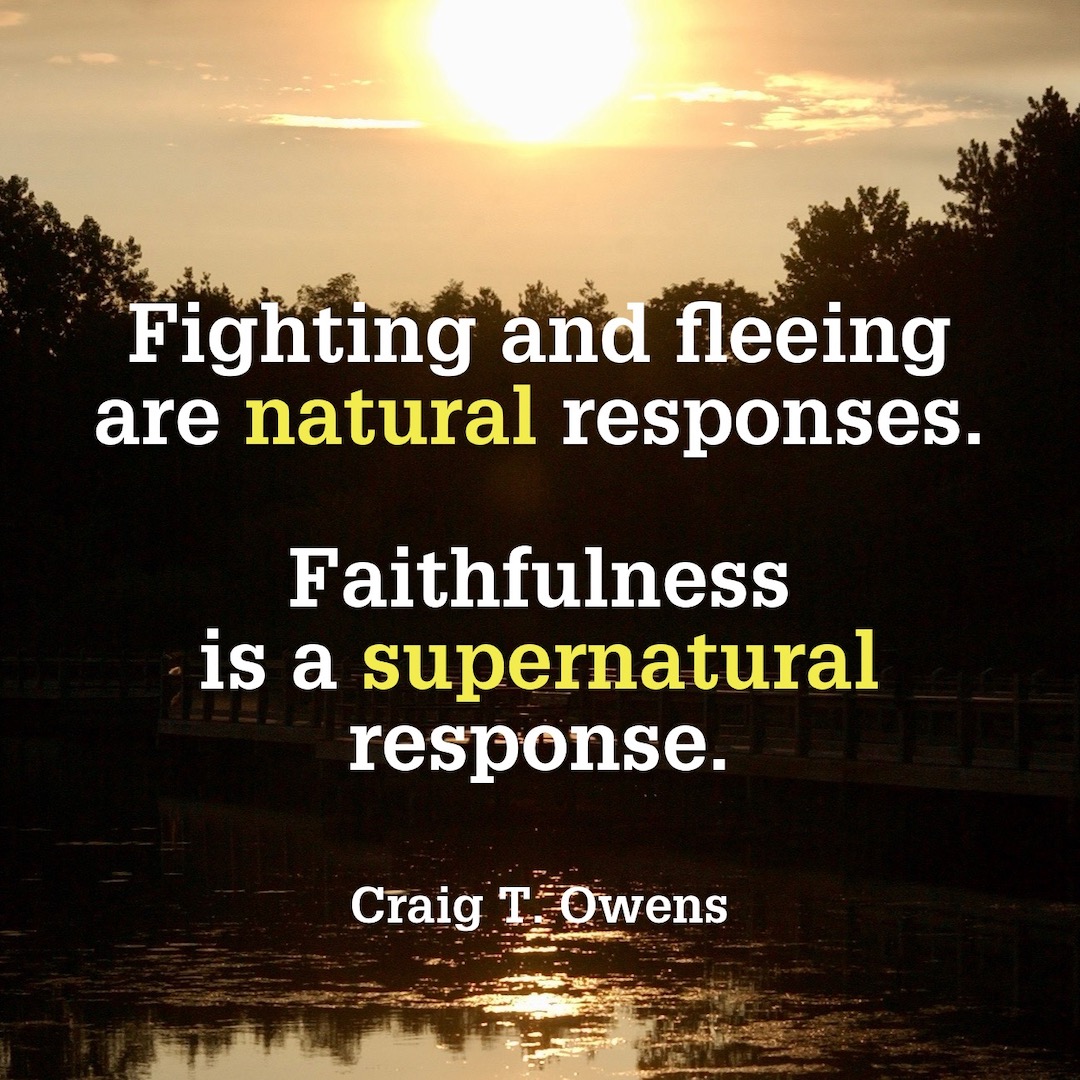
Fighting and fleeing are natural responses. 

Faithfulness, however, is a supernatural response. 

God honored the faithfulness of Paul and Barnabas by demonstrating His own supernatural power through them: “[God] continued to bear testimony to the Word of His grace, granting signs and wonders to be performed by their hands” (v. 3b). 

The scenario I described isn’t just something from long ago history, but it was a scene from my personal history too. In the Introduction of my book When Sheep Bite I wrote—
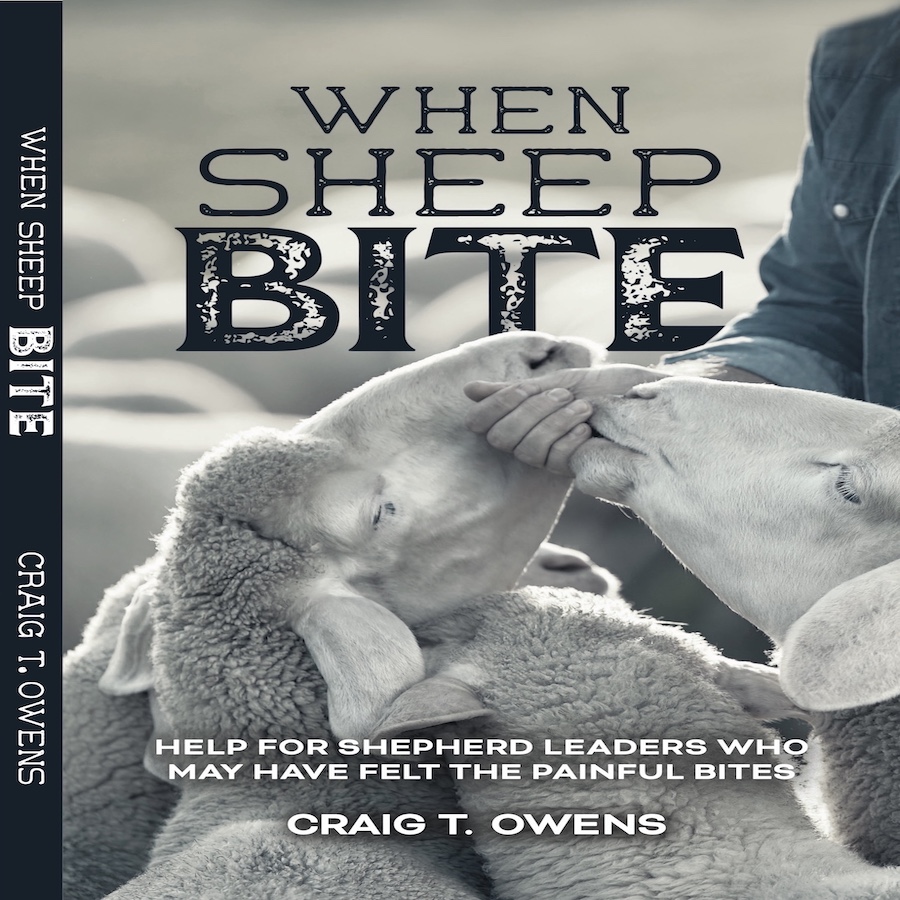
   I cannot pinpoint exactly what triggered their outburst or when their attacks started, but it seemed like almost overnight their teeth were bared. I was completely taken aback! I had assumed that seeing the new life and vitality in this pasture would be celebrated. When the exact opposite happened, I must admit that my knee-jerk reactions probably weren’t very Christlike. … 

     This was something I never imagined. I never saw anything like this in my home, nor had I experienced anything like this in my associate pastor’s role. In fact, even in the business world I had never seen people behave this egregiously. 

In the final chapter of my book I shared this thought, “Yes, fight-or-flight is our natural response, but with the empowerment of the Holy Spirit, we can respond in supernatural faithfulness. We don’t have to sit unmoving and unfeeling, but we can continue to serve even biting sheep until God removes us or them.” 

This whole idea of supernatural faithfulness to God’s calling versus giving in to the natural reactions of fight-or-flight is why I wrote this book. Once again, let me take you back to an excerpt from the Introduction—

     Would I ever want to relive this experience? No way! But there were lessons I learned during this walk through hell that I could have learned in no other way. It is those lessons that I hope to be able to unpack for you, my shepherding friends, in this book. … I would say to you something that C.S. Lewis wrote, “Think of me as a fellow-patient in the same hospital who, having been admitted a little earlier, could give some advice.” 

When you are under attack, I know it seems like you are alone, but you are not. Don’t give in to fight-or-flight, but ask God to supernaturally empower you to remain faithful. I believe When Sheep Bite can be a huge assistance to you as well. Please pick up a copy and reach out to me if I can be of assistance to you. 

►► Would you please prayerfully consider supporting this ministry? My Patreon supporters get behind-the-scenes access to exclusive materials. ◀︎◀︎
When The World Fears Christians

Listen to the podcast of this post by clicking on the player below, and you can also subscribe on AppleSpotify, or Audible. 

Here’s an interesting interaction between King Saul and David—

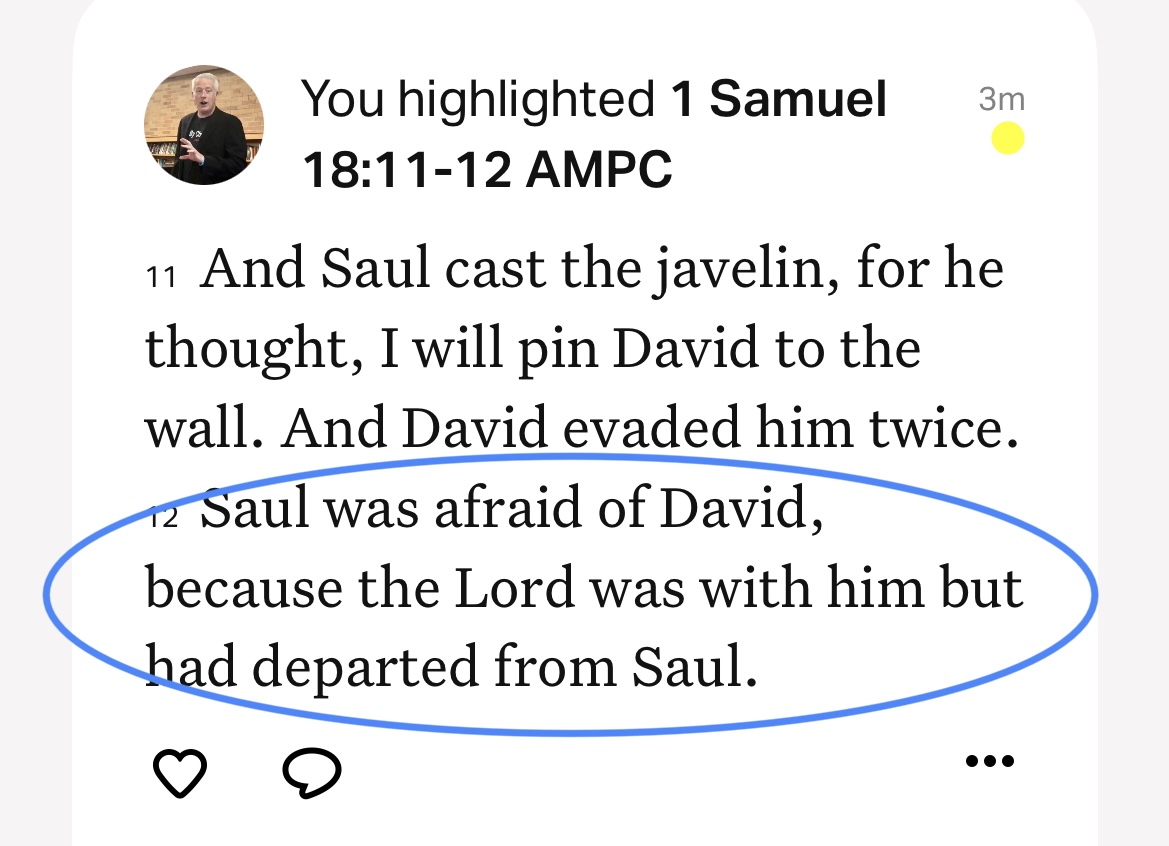
And Saul jealously eyed David from that day forward. … And Saul cast the javelin, for he thought, I will pin David to the wall. And David evaded him twice. Saul was afraid of David, because the Lord was with him but had departed from Saul. (1 Samuel 18:9, 11-12 AMPC)

This exchange in this well-known story got me wondering. I was thinking how Saul had the position of authority over David and he had a javelin in his hand, but the Bible still says that Saul “was afraid of David.” Why would that be? I think even the most atheistic of people intuitively know there is something other-worldly about those in whom the Spirit of God abides, which makes worldly people lash out at them in fear. 

But those who fear God—as David did—don’t fear mortals. Jesus said, “Don’t be afraid of those who want to kill your body; they cannot touch your soul. Fear only God, Who can destroy both soul and body in hell” (Matthew 10:28 NLT). This reverent fearlessness is what galls those who fear the unknown, so they try to silence confident God-followers. 

In these attacks, Jesus tells us not to respond naturally, but supernaturally. “But to you who are willing to listen, I say, love your enemies! Do good to those who hate you. Bless those who curse you. Pray for those who hurt you” (Luke 6:27-28 NLT). 

Peter picked up those words from Jesus and instructed Christians: “Be careful to live properly among your unbelieving neighbors. Then even if they accuse you of doing wrong, they will see your honorable behavior, and they will give honor to God when He judges the world. … For God called you to do good, even if it means suffering, just as Christ suffered for you. He is your example, and you must follow in His steps.” (1 Peter 2:12, 21 NLT). 

Although Saul feared the presence of God in David, he also had to acknowledge the success that came to David because of God’s abiding presence in him, and also, by extension, the success that came to Saul’s kingdom. On the one hand, Saul wanted David dead; on the other hand, he wanted David close by—

So Saul removed David from him and made him his commander over a thousand; and [David] went out and came in before the people. David acted wisely in all his ways and succeeded, and the Lord was with him. When Saul saw how capable and successful David was, he stood in awe of him. (1 Samuel 18:13-15 AMPC) 

When Christians are supernaturally empowered by God, they never have to respond in natural fight-or-flight from those who lash out at them. Let your faithfulness to God be your testimony that points others to Him. 

►► Would you please prayerfully consider supporting this ministry? My Patreon supporters get behind-the-scenes access to exclusive materials. ◀︎◀︎
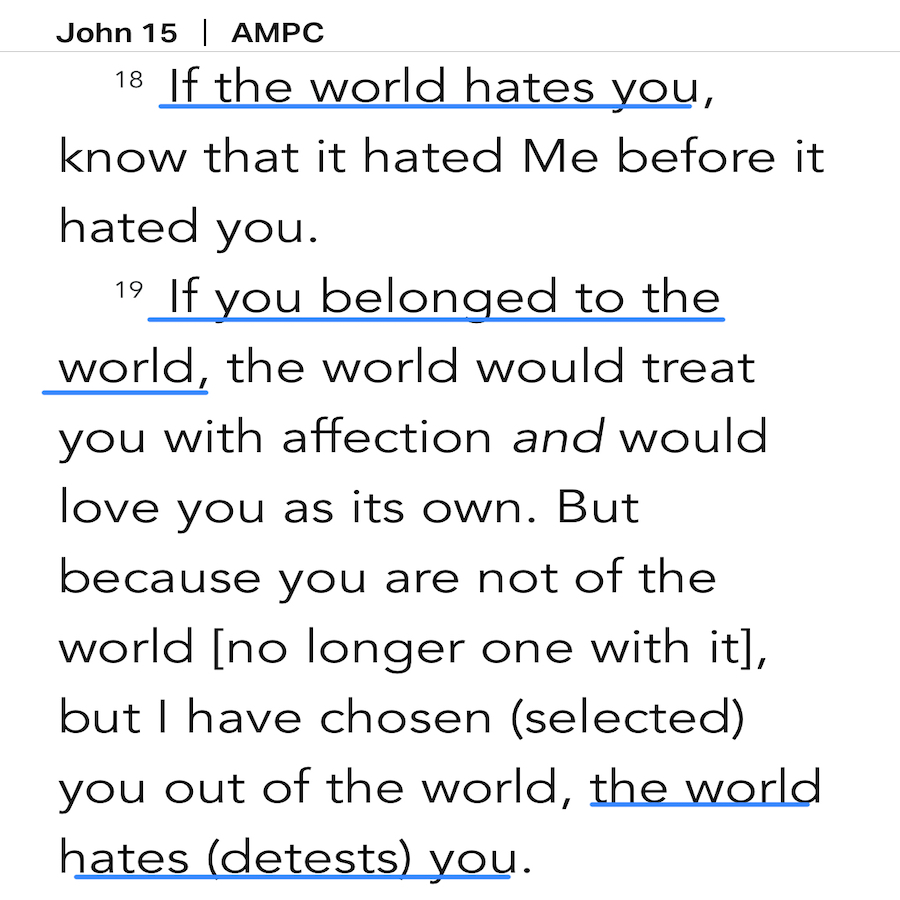
Jesus said, “If the world hates you, know that it hated Me before it hated you. If you belonged to the world, the world would treat you with affection and would love you as its own. But because you are not of the world [no longer one with it], but I have chosen (selected) you out of the world, the world hates (detests) you.” (John 15:18-19)

Who God Rewards

Listen to the podcast of this post by clicking on the player below, and you can also subscribe on AppleSpotify, or Audible. 

Think of the most well-known Christian evangelist you can imagine preaching before tens of thousands of people all over the world, broadcasting his sermons online, selling books, and being invited to pray with the world’s leaders. 

Now think of a pastor you may know in a rural community ministering to a small congregation. He has no online presence, no books, and is hardly known outside of his own town. 

The apostle Paul would say to both of them, “You are only servants of God.”

“What, after all, is Apollos? And what is Paul? Only servants, through whom you came to believe—as the Lord has assigned to each his task. … This, then, is how you ought to regard us: as servant of Christ (1 Corinthians 3:5, 4:1). 

Only servants of Christ.

God calls His servants to do their servant’s work with care and quality (1 Corinthians 3:10, 14). And he also says, “The one who plants and the one who waters have one purpose, and they will each be rewarded according to their own labor (v. 8). 

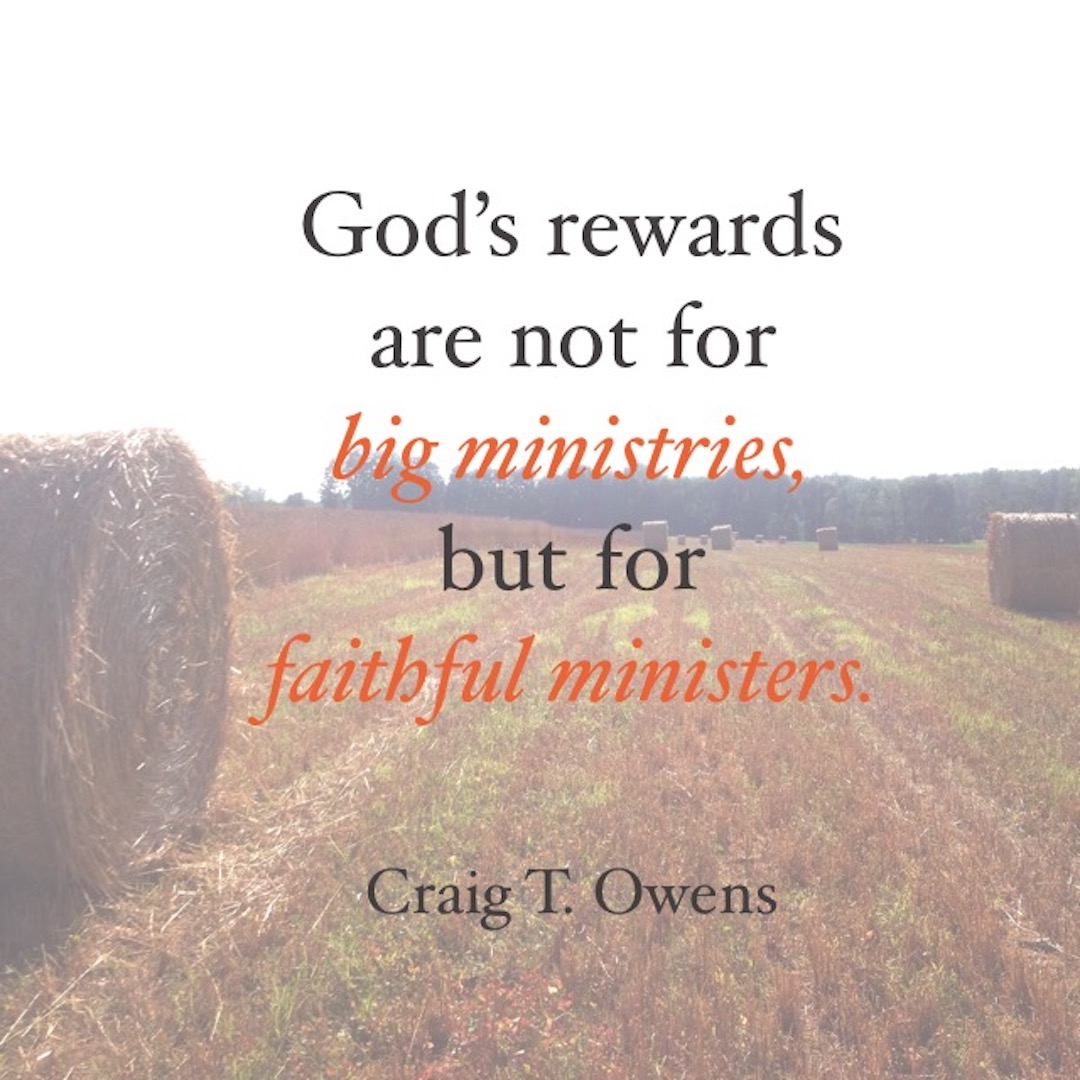
God’s rewards are not for big ministries, but for faithful ministers. 

I talk a lot about faithfulness in my book Shepherd Leadership. In the chapter entitled ‘Stick-to-it-iveness,’ I wrote this—

     Peter instructs us that our example for the flock must be God-honoring. People do what people see. If I would have arrived on that Saturday bent out of shape that things weren’t working out as I had planned, I would have robbed people of the enjoyment that they should have had that day. Remember that when Jesus told us that He had set an example for us (John 13:15), it was an example of putting others’ needs ahead of His own. Did Jesus want to wash those dirty feet? Probably not. But He not only washed them well, but He also had such a good attitude that its impact is still being felt today. 

     Peter was there on that day. He heard Jesus say this about following His example of such others-focused leadership: “Now that you know these things, you will be blessed if you do them.” So Peter reminds his readers that the Chief Shepherd is returning with rewards for the faithful under-shepherds. Occasionally, we will get some rewards here, but keeping our steadfast focus on the rewards and blessings that are still to come will help us stick with our responsibilities, even on those days when no one else seems to notice or even care. 

     Let’s listen to the words of the apostle Paul again: “So, then, no more boasting about human leaders!” (1 Corinthians 3:21).

And let me repeat myself—

God’s rewards are not for big ministries, but for faithful ministers.

►► Would you please prayerfully consider supporting this ministry? My Patreon supporters get behind-the-scenes access to exclusive materials. ◀︎◀︎
Is It Time To Move On?

isten to the podcast of this post by clicking on the player below, and you can also subscribe on AppleSpotify, or Audible. 

No one wants to over-stay their welcome, but it seems that frequently pastors are a little too quick to want to move on to a different pasture. 

This was a question that John Opalewski, Jim Wiegand, and I discussed on the Leading From Alignment podcast. 

The New Testament stories I reference are found in Acts 8:4-8, 26-40; 16:6-10. I blogged about both of these experience in more depth: 

The closing chapter of my book When Sheep Bite is entitled ‘Faithfulness > Fight or Flight.’ In that chapter I wrote—

     Remember that we are all striving to not succumb to the natural fight-or-flight response, but to attain the supernatural response of faithfulness. In this, we have a perfect example in our Good Shepherd. 

     In the Book of Revelation, Jesus is called the One who is “Faithful” (Revelation 19:11), and Paul says that the Faithful One who has called us will empower us to remain steadfast: “He who calls you is faithful, who also will do it” (1 Thessalonians 5:24 NKJV).   

   Yes, fight-or-flight is our natural response, but with the empowerment of the Holy Spirit, we can respond in supernatural faithfulness. We don’t have to sit unmoving and unfeeling, but we can continue to serve even biting sheep until God removes us or them. 

   We glorify God by faithfully serving the sheep He has placed under our care, giving our very best, even if our words and actions are unappreciated or ignored by those we are serving.

If you are in a difficult place in your leadership assignment, I encourage you to check out When Sheep Bite. 

►► Would you please prayerfully consider supporting this ministry? My Patreon supporters get behind-the-scenes access to exclusive materials. ◀︎◀︎

A Different Response To Attacks

Listen to the podcast of this post by clicking on the player below, and you can also subscribe on AppleSpotify, or Audible. 

Sir Isaac Newton may have said for every action there was an equal and opposite reaction, but that’s not true for God-fearing leaders. 

Check out this episode of The Podcast. 

The story of Paul and Barnabas that I reference in this video is found in Acts 14:1-21. 

My book When Sheep Bite is divided into three section. In the first section I talk about a shepherd leader’s heart and section two diagnosis the sheep bites leaders endure. The final section is all about the faithfulness to finish well—not giving in to the natural responses of fight or flight. 

I open that final section of the book like this—

     Psychologists and medical doctors have all described what happens to our minds and bodies when we are under attack. They are universal responses that our loving Creator has implanted in all of us to be able to respond to threats that come at us. When confronted with a biting sheep, without consciously thinking about it our minds and bodies prepare for fight or flight. 

     But let’s consider those responses in the context of a shepherd pasturing his sheep. Is it an effective strategy for the shepherd to fight his sheep? No, of course not. Paul told Timothy that a shepherd is “not quarrelsome but forbearing and peaceable” (1 Timothy 3:3 AMPC). 

     Is it allowable for the shepherd to run away from the threat, leaving the flock without a shepherd? Again, no, as Jesus told us that one who resorts to flight isn’t worthy to be called a shepherd but is considered a mere “hired hand [who] cares nothing for the sheep” (John 10:12-13). 

     So if godly shepherds cannot give in to the natural responses of fight or flight, what are we to do? Since we serve an all-power, all-loving Chief Shepherd we must look to Him for the supernatural response of faithfulness. 

     Not fight. Not flight. But faithfulness. 

Check out some of my other posts about godly leadership too. 

►► Would you please prayerfully consider supporting this ministry? My Patreon supporters get behind-the-scenes access to exclusive materials. ◀︎◀︎
The Unexpected Slap

Listen to the podcast of this post by clicking on the player below, and you can also subscribe on AppleSpotify, or Audible. 

Have you ever walked through a door that God so obviously opened just to get smacked by the people on the other side? Let’s talk about the lessons we can learn from that.

The biblical passages I reference in this video are Acts 16:6-40; Psalm 126:4-5; Hebrews 12:2-3; Galatians 6:9.

The blog post I mentioned in this video is The Value of Journaling.

Get more information on my book When Sheep Bite here.

►► Would you please prayerfully consider supporting this ministry? My Patreon supporters get behind-the-scenes access to exclusive materials. ◀︎◀︎
Faithful Service

Listen to the podcast of this post by clicking on the player below, and you can also subscribe on AppleSpotify, or Audible. 

I couldn’t say it any better than the apostle Paul said it—

   We live in such a way that no one will stumble because of us, and no one will find fault with our ministry. In everything we do, we show that we are true ministers of God. We patiently endure troubles and hardships and calamities of every kind. We have been beaten, been put in prison, faced angry mobs, worked to exhaustion, endured sleepless nights, and gone without food. We prove ourselves by our purity, our understanding, our patience, our kindness, by the Holy Spirit within us, and by our sincere love. We faithfully preach the truth. God’s power is working in us. We use the weapons of righteousness in the right hand for attack and the left hand for defense. 

   We serve God whether people honor us or despise us, whether they slander us or praise us. 

   We are honest, but they call us impostors. We are ignored, even though we are well known. We live close to death, but we are still alive. We have been beaten, but we have not been killed. Our hearts ache, but we always have joy. We are poor, but we give spiritual riches to others. We own nothing, and yet we have everything. (2 Corinthians 6:3-10 NLT) 

A mark of a godly leader is one who faithfully serves God whether people treat him well or not.

We don’t minister faithfully so we can receive human applause, because cheers can quickly turn to jeers. Just ask Jesus who heard everyone speaking well of Him in one moment, and then in the next moment saw that same group ready to throw Him off a cliff. 

Instead, we minister faithfully so that we can hear applause from nail-scarred Hands, and hear His voice saying, “Well done, good and faithful servant.” 

In my book Shepherd Leadership, I talk about these metrics of success. And in my book When Sheep Bite, I talk about how we can respond to the slanders and slings that come our way.

This is part 80 in my series on godly leadership. You can check out all of my posts in this series by clicking here.

►► Would you please prayerfully consider supporting this ministry? My Patreon supporters get behind-the-scenes access to exclusive materials. ◀︎◀︎
A Leader Even Without The Title

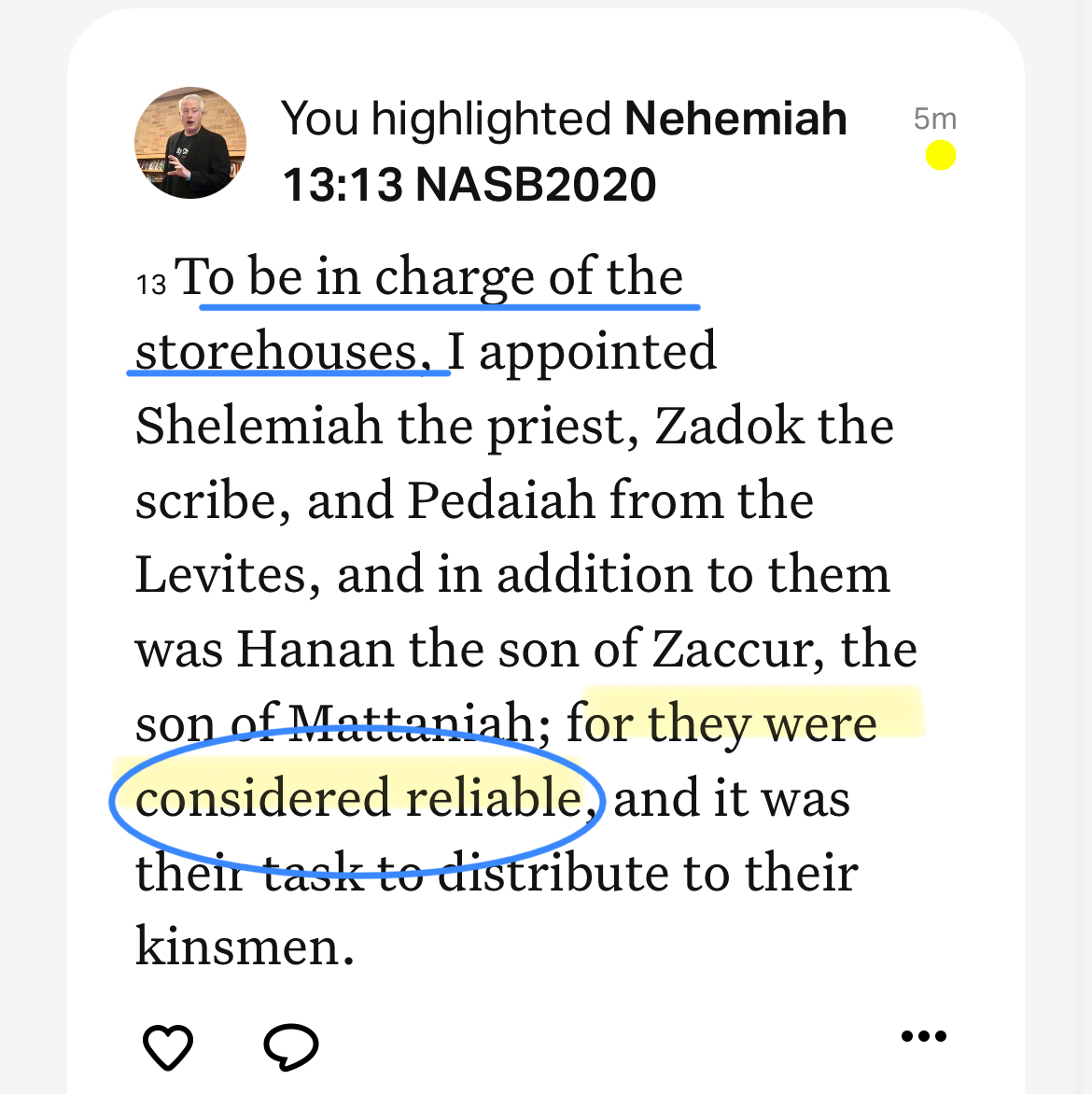
I also discovered that the portions of the Levites had not been given to them, so the Levites and the singers who performed the service had gone away, each to his own field. So I reprimanded the officials and said, “Why has the house of God been neglected?” Then I gathered them together and stationed them at their posts. All Judah then brought the tithe of the grain, wine, and oil into the storehouses. To be in charge of the storehouses, I appointed Shelemiah the priest, Zadok the scribe, and Pedaiah from the Levites, and in addition to them was Hanan the son of Zaccur, the son of Mattaniah; for they were considered reliable, and it was their task to distribute to their kinsmen. (Nehemiah 13:10-13)

According to the Hebrew definitions:

  • “considered” = accountable 
  • “reliable” = trustworthy 

Both words mean someone who has passed the test and someone who is still passing the test. These men were faithful leaders before they were given this important job, and then they continued to prove themselves faithful even as their work was carefully scrutinized. 

A title doesn’t make you a leader, and a title doesn’t sustain you as a leader. Your faithful, God-honoring, trustworthy accountability makes you a leader—even if you never get the title, God sees you and He will reward you. 

Check out my whole series on godly leadership.

Links & Quotes

Having too many items listed as “priorities” on your To Do list can actually paralyze you. You have keep your list manageable to keep your leadership effective. Check out the full conversation Greg and I had on setting goals and making changes. This is also an important aspect of maintaining good mental health.

I have lots of new content every week, which you can check out on my YouTube channel.

According to Leslie T. Lyall, the secret of Hudson Taylor’s life and ministry could be summed up in four simple propositions: “There is a living God. He has spoken in His Word. He means what he says. And He is willing and able to perform what He has promised.”

“Hard times create strong men. Strong men create good times. Good times create weak men. And, weak men create hard times.” —G. Michael Hopf

In lamenting the rise of worldliness in our churches, John Piper said, “About forty years ago, David Wells wrote a book called No Place for Truth, which made the case that in the American church, God rests far too lightly on the people of God. He doesn’t have weight. It was the same heart cry from Dr. Wells as from J.B. Phillips. God is marginal. God has little weight in our worship services and little weight in our lives. He’s taken lightly. He’s simply one among many factors rather than the all-consuming factor, and I have thought that if I were to write a book today with a similar burden, it might have this title: Your Christ Is Too Cheap, Your Heaven Is Too Distant, Your Earth Is Too Big.”

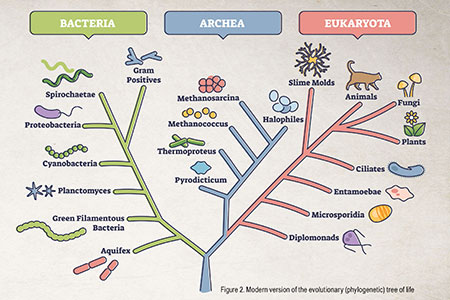
The Institute for Creation Research reported, “In July of 2024, Science magazine confidently reported, ‘The last ancestor shared by all living organisms was a microbe that lived 4.2 billion years ago, had a fairly large genome encoding some 2600 proteins, enjoyed a diet of hydrogen gas and carbon dioxide, and harbored a rudimentary immune system for fighting off viral invaders.’ That’s quite a statement that details an unknown creature living somewhere on this planet 4.2 billion years ago.” Of course, this is an unobservable, unprovable claim, but that’s part and parcel of the evolutionists’ claims. 

Fight The New Drug explains what sextortion is and how to protect yourself and your family from this insidious online threat.

“What we do on some great occasion will probably depend on what we already are; and what we are will be the result of previous years of self-discipline.” —H.P. Liddon, nineteenth-century theologian 

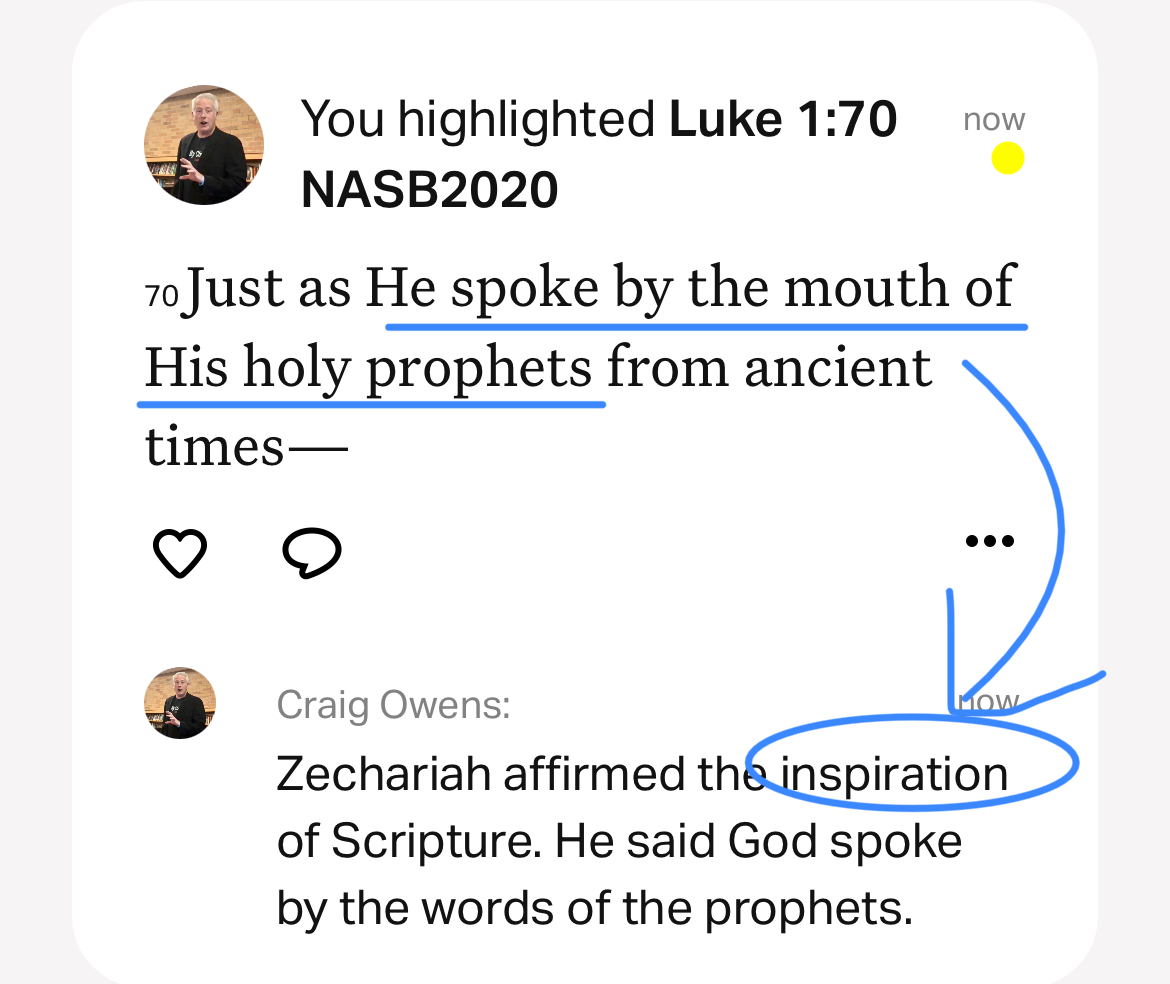
Lenny Esposito has a great podcast for Christian apologists called the Come Let Us Reason podcast. On a recent episode, Lenny used a passage in the Book of Jeremiah to talk about the inspiration of Scripture.

“God will work when He pleases, how He pleases, and by what means He pleases. He is not bound to keep our time, but He will perform His word, honor our faith, and reward them that diligently seek Him.” —Matthew Henry 

As the first Christian church dealt with a serious complaint that could have split the church internally, there are a number of leadership gifts that are in play to provide a wise solution. Most of these leadership gifts get overlooked by the casual observer, but they are all absolutely indispensable. This is new exclusive content I regularly share with my Patreon supporters. Would you prayerfully consider supporting this ministry?

The Craig And Greg Show: When Sheep Bite

Listen to the audio-only version of this podcast by clicking on the player below, or scroll down to watch the video.

As you may have heard, I have written a new book! In this episode Greg and I sit down and chat about When Sheep Bite, and discuss how the valuable lessons it provides are critical for leaders of any organization.

  • [0:21] I have a confession to make…
  • [1:43] This book is for both business leaders and church leaders.
  • [3:07] Attacks usually lead to to fight-or-flight, but When Sheep Bite offers a new response.
  • [5:21] It’s healthy to validate our feelings when we’ve been hurt, but then good leaders go deeper.
  • [8:39] Empathy is health, but making excuses is not healthy.
  • [10:37] Watch out for the sneaky bite of flattery.
  • [11:26] Leaders who have been hurt have to guard against harboring that hurt.
  • [13:23] Leaders need to learn how to confront misbehavior correctly.
  • [14:46] In order for sheep to bite, and in order for the shepherd to lead, they have to be close to each other. How do both sheep and shepherds set boundaries?
  • [17:46] We can disagree but we cannot disrespect!
  • [19:49] Bitterness can rob a leader of vitality, so we have to find effective ways to heal.
  • [22:46] Fight-or-flight is natural, but we need to strive for the supernatural response of faithfulness to our calling.
  • [23:40] In many ways WSB points to what a good coach does. Contact Maximize Leadership about how our coaching huddles can help your leadership soarget in touch with us!

Order a copy of When Sheep Bite here.

Check out this episode and subscribe on YouTube so you can watch all of the upcoming episodes. You can also listen to our podcast on Spotify and Apple.