Listen to the podcast of this post by clicking on the player below, and you can also subscribe on Apple, Spotify, or Audible.

“Be kindly affectionate to one another with brotherly love, in honor giving preference to one another” (Romans 12:10).
What does it mean to give preference to a friend or loved one? Here are a few suggestions to get the ball rolling.
Giving preference means I am…
…speaking their “language.”I am a classic Doer, which means my style is, “Ready, Fire! aim.” I need to give grace to those who move a bit slower than me.
…moving at their “speed.” My temperament is highly choleric, so I get fired up quickly and attack situations head-on. I need to give grace to those temperaments that are less emotional and want to handle things more strategically.
…sensitive to their “fears.” It’s insensitive for me to say, “It’s no big deal” about something that troubles them. Empathy is important so I can see and feel things like they see and feel them.
…helping them battle their “demons.” Perhaps viewing pornography isn’t a temptation for me, but it may be for someone else. So I need to seek out resources and accountability to help them fight this battle like I was fighting my own battle.
…avoiding their “stumbling blocks.” Perhaps I can watch certain genres of movies without compromising my Christian testimony, but it may cause my brother or sister a lot of grief. If I am going to prefer them in love, I will avoid talking about those movies in their presence, and I certainly won’t try to get them to “lighten up” to see things my way.
Agape love is never selfish—it doesn’t want “my way” but it wants others to be edified. So, ultimately, what it means to give preference to another is to only promote those things that will build them up. Remember: saints is always plural in the New Testament, so we must build each other up to bring out the saintliness in all of us.
Listen to the podcast of this post by clicking on the player below, and you can also subscribe on Apple, Spotify, or Audible.
I stay near the door. I neither go too far in, nor stay too far out, The door is the most important door in the world— It is the door through which men walk when they find God. There’s no use my going way inside, and staying there, When so many are still outside, and they, as much as I, Crave to know where the door is. And all that so many ever find Is only the wall where a door ought to be. They creep along the wall like blind men. With outstretched, groping hands, Feeling for a door, knowing there must be a door, Yet they never find it… So I stay near the door.
The most tremendous thing in the world Is for men to find that door—the door to God. The most important thing any man can do Is to take hold of one of those blind, groping hands, And put it on the latch—the latch that only clicks And opens to the man’s own touch. Men die outside that door, as starving beggars die On cold nights in cruel cities in the dead of winter— Die for want of what is within their grasp. They live, on the other side of it—live because they have found it. Nothing else matters compared to helping them find it, And open it, and walk in, and find Him… So I stay near the door.
Go in, great saints, go all the way in— Go way down into the cavernous cellars, And way up into the spacious attics— In a vast, roomy house, this house where God is. Go into the deepest of hidden casements, Of withdrawal, of silence, of sainthood. Some must inhabit those inner rooms, And know the depths and heights of God, And call outside to the rest of us how wonderful it is. Sometimes I take a deeper look in, Sometimes venture a little farther; But my place seems closer to the opening… So I stay near the door.
The people too far in do not see how near these are To leaving—preoccupied with the wonder of it all. Somebody must watch for those who have entered the door, But would like to run away. So for them, too, I stay near the door.
I admire the people who go way in. But I wish they would not forget how it was Before they got in. Then they would be able to help The people who have not even found the door, Or the people who want to run away again from God. You can go in too deeply, and stay in too long, And forget the people outside the door. As for me, I shall take my old accustomed place, Near enough to God to hear Him, and know He is there, But not so far from men as not to hear them, And remember they are there too. Where? Outside the door— Thousands of them, millions of them. But—more important for me— One of them, two of them, ten of them, Whose hands I am intended to put on the latch, So I shall stay by the door and wait For those who seek it. ‘I had rather be a door-keeper…’ So I stay near the door. —Samuel Shoemaker
I’m an up-and-at-em, carpe diem kinda guy. Nothing gets me down for very long—I’m resilient and self-motivated. So I used to have a hard time relating to people who weren’t wired the same way. That is until I went through a time in my life where getting up-and-at-em was one of the hardest things I had to do each day.
In the midst of this dark night, I would ask God, “Why is this happening to me? What did I do wrong?” But I heard the Holy Spirit gently but unmistakably remind me, “This isn’t about you!”
The dictionary says that empathy is nearly a transliterated word from the Greek word empatheia. It means to be in suffering, but the emphasis is more on imaginativeempathy. Something like, “If I was them and I was in that situation, I bet it might feel like this.”
In the New Testament, a different Greek word is translated sympathy, which is also a transliterated word from the Greek sympatheō. This word means to enter into another’s suffering, but the emphasis is on experientialempathy.In other words, I don’t have to imagine how you might feel, but I know how you feel because I’ve gone through the same thing myself.
Just as the Holy Spirit taught me this lesson, let me say the same thing to you: the dark night you are going through isn’t about you. It’s about learning empathy SO THAT you can help others persevere all the way to the end!
Think about the dark night Jesus went through just before His crucifixion. He might have asked His Father, “Why is this happening to Me? What did I do wrong?” But He knew why He was going through this night: it was to prepare Him to be the perfect empathetic High Priest for all of us (check out these verses in Hebrews).
When we invite Jesus to be our Lord and Savior, we become a part of His Body (1 Corinthians 12:13, 26).
Dr. Paul Brand was a renowned hand surgeon and missionary who worked with leprosy patients in India for years. He learned that leprosy doesn’t mangle a person’s foot or hand, but their lack of ability to feel pain does. He wrote, “A body only possesses unity to the degree that it possess pain…. We must develop a lower threshold of pain by listening, truly listening, to those who suffer. … The body protects poorly what it does not feel.”
Sometimes we have to go through the painful, dark nights so that we can learn to feel others’ pain so that we can learn empathy.
Through those nights we can learn to hear what others aren’t saying, and feel what others aren’t expressing. We don’t have to ask, “Can I help?” but rather, “I’m here to help because I know what you’re going through.”
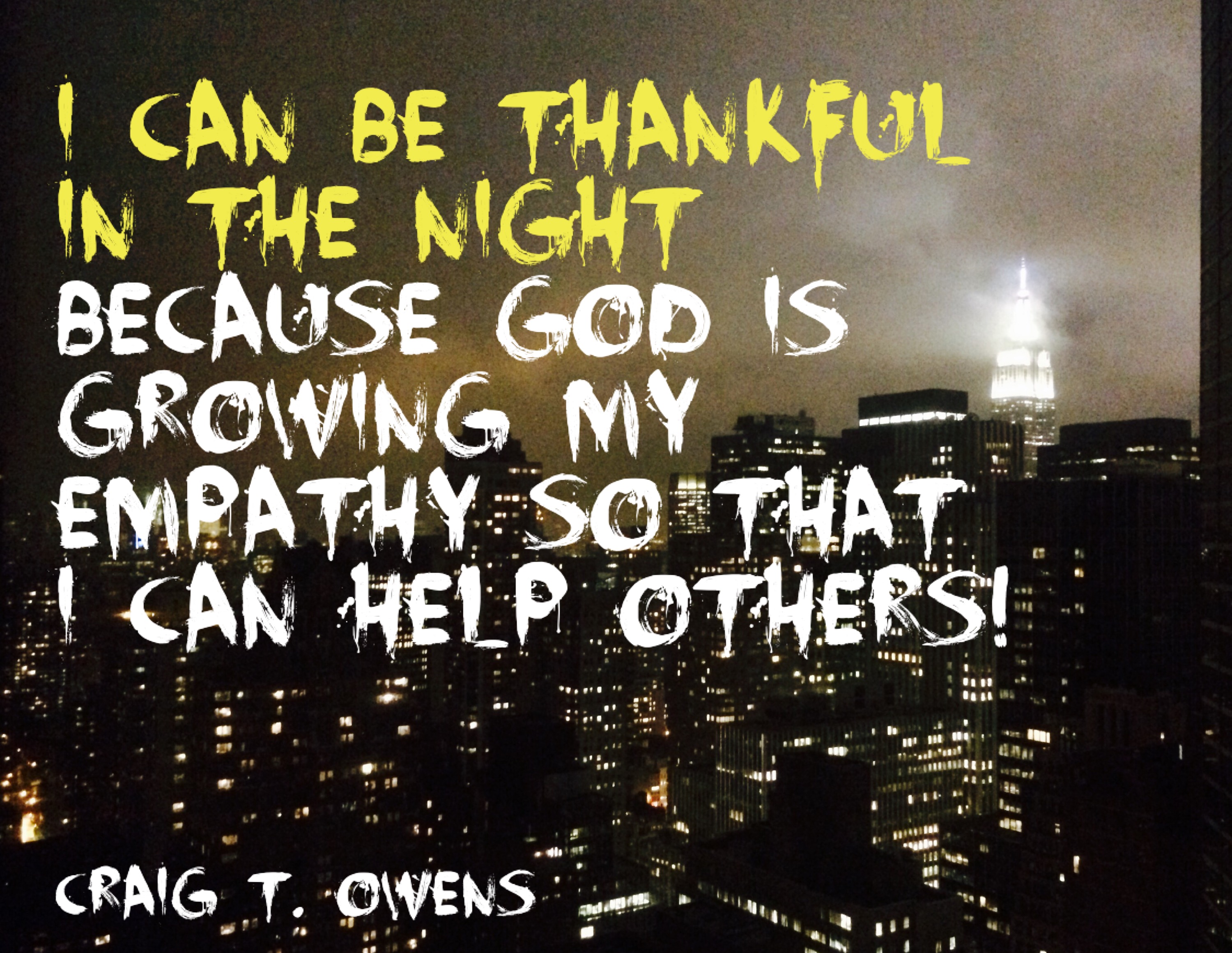
You cannot truly empathize until you go through your own dark night. I can be thankful IN the night because God is growing my empathy so that I can help others!
Where is God in our trials? When we call, Jesus runs to our cry. He is able to help us because He knows exactly what our cries sound like. Aren’t you glad He does?!
While we are in these difficult times, you might find yourself asking a question I have asked, “Okay, God, I believe You are doing something, but what exactly are You doing?”
I can’t tell you specifically what God is doing in your life, because your story is unique and special. But I can tell you that during the hard, painful chapters of our lives, God is accomplishing at least five things in all of us.
God is opening our eyes to new paradigms
We will learn lessons in these fiery trials that we couldn’t possibly learn any other way.
God is building empathy in us which we didn’t have before
One dictionary definesempathy as “the power of understanding and imaginatively entering into another person’s feelings.” It’s only because of our trials that we no longer have to imagine what someone else is feeling, but instead we know exactly what they’re feeling and how we can help.
God is growing our patience
It’s been said that patience is the “mother of all other virtues.” Paul said that “these troubles produce patience” (Romans 5:3). As God grows your patience, He will also help you to grow all of the other Christlike virtues.
God is refining His character in us
Paul went on to add that not only does trouble produce patience, but “patience produces character” (Romans 5:4). During the times of difficulty and uncertainty, we become more aware of deficiencies in our character.
God is building in us an unshakable hope in His future grace
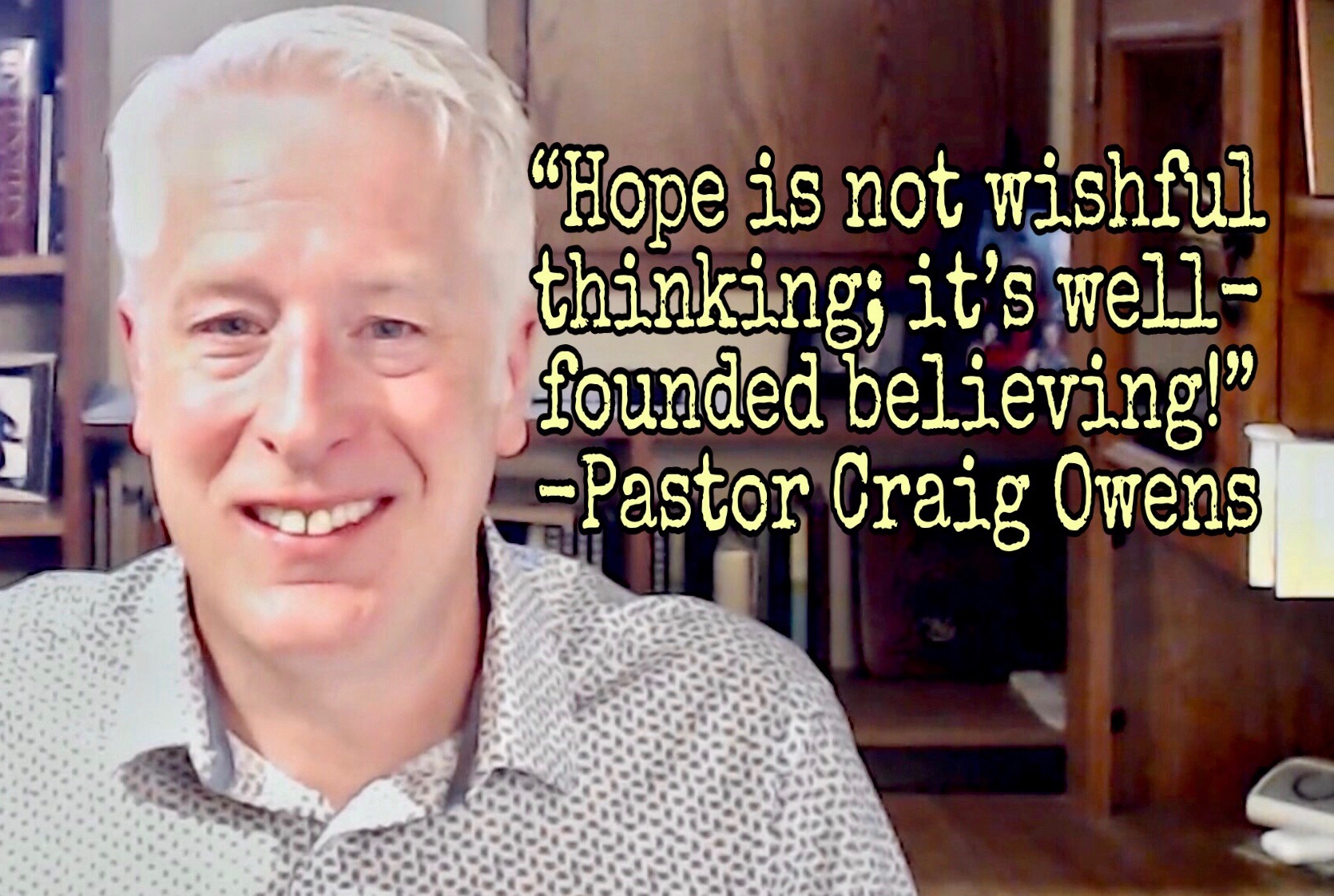
Hope is not wishful thinking; it’s well-founded believing!
I want to circle back to that word refining because I think that best sums up what God is doing in our painful times. Romans 8 tells us—The Spirit Himself thus testifies together with our own spirit, assuring us that we are children of God. And if we are His children, then we are His heirs also: heirs of God and fellow heirs with Christ—sharing His inheritance with Him; only we must share His suffering if we are to share His glory. But what of that? For I consider that the sufferings of this present time—this present life—are not worth being compared with the glory that is about to be revealed to us and in us and for us and conferred on us! (Romans 8:15-18)
So where’s God in this time of fire? He is overseeing our trial as a Perfect Refiner. Do you know how the silversmith knows he has purified the impurities from the silver ore? The silver is pure when he can see his own reflection in the silver!
In the heat of your trial, God is close to you. He knows the perfect temperature and the precise time that it will take to allow His face to be seen in you!
Sometimes you will see what God is doing through your furnace time, sometimes you won’t. But don’t ever bail out! God IS working! He is giving you a new perspective, a deeper empathy, more patience, an unshakable hope, and most of all—He is removing the impurities that will allow His face to be seen more clearly in you!
Notice that the title of this post says “when” not “if.” Maybe this will be a newsflash for some of you (but I highly doubt it): Christians will face trials.
Even the apostle James says, “Dear brothers and sisters, when troubles of any kind come your way, consider it an opportunity for great joy” (James 1:2). Wait, trials are “an opportunity for great joy”? How can that be?!
→ Trials teach us lessons that we can learn in no other way! ←
How much more mature, and wise, and empathetic would we become if instead of trying to get out of the trials that come our way, we would instead see what we could get out of that trial!
We can rejoice, too, when we run into problems and trials, for we know that they help us develop endurance.And endurance develops strength of character, and character strengthens our confident hope of salvation.And this hope will not lead to disappointment. For we know how dearly God loves us, because He has given us the Holy Spirit to fill our hearts with His love. (Romans 5:3-5)
“When trials come we can try to get out of them, or we can learn to get something out of them.”
—Craig T. Owens
So the next time a trial comes your way, ask the Holy Spirit to show you what lessons you can learn by going through the trial.