Book Reviews From 2013

BookshelfHere are the books I read and reviewed in 2013. Click a title to read the review…

10 People Every Christian Should Know

A Harmony Of The Gospels

Alive To Wonder

All In

Alone

Altar Ego

Andrew Murray Daily Reader

Dear Abba

Decision Points

Did The Resurrection Happen … Really?

Draw The Circle

Fight

Firsthand

Francis

God’s Favorite Place On Earth

God’s Workmanship

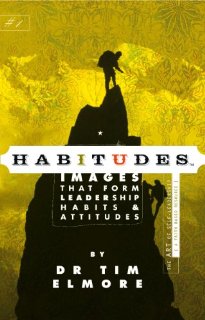
Habitudes

He Shall Glorify Me

I Never Thought I’d See The Day

If Thou Wilt Be Perfect

If Ye Shall Ask

It Is Finished

Jesus Is _____.

Jesus: A Theography

Knocking At God’s Door

Love To The Uttermost

One Year Book Of Personal Prayer

Outliers

Plastic Donuts

Pouring Holy Water On Strange Fire

Promotion

Raising Your Child To Love God

Seven Men

Smith Wigglesworth On Healing

Sometimes You Win, Sometimes You Learn

Stopping Words That Hurt

The 13th Resolution

The Baptism With The Holy Spirit

The Bare Facts

The Five Levels Of Leadership

The Highest Good

The Hobbit

The Man Who Knew Too Much

The Purpose Of Christmas

The Ragamuffin Gospel

The Reagan Diaries

The Secrets Of Intercessory Prayer

Things We Couldn’t Say

Understanding Sexting

Unfinished

Unstoppable

Visioneering

Who Do You Think You Are?

You Don’t Need A Title To Be A Leader

For my book reviews of 2011 click here, and for 2012’s list click here.

10 Quotes From “Habitudes”

HabitudesHonestly, there were amazing things to digest each day that I read a new Habitude (you can read my full book review by clicking here), but here are 10 passages from this book that especially stood out to me.

Unless otherwise noted, all of these quotes are from the author, Dr. Tim Elmore.

“The best leaders almost without exception and at every level, are master users of stories and symbols.” —Tom Peters

“The goal of a leader is to focus, not expand. Growth is a product of focus. Clarify the vision. Focus your people, time, energy and resources. Remember this: just because you can do something doesn’t mean you should. Intensify, don’t diversify.”

“Leaders need people in their lives who don’t take from them, but who replenish them. If they don’t have this network of people in place, they will use their followers to meet this need. This almost always leads to unhealthy situations.”

“Without question, the greatest emotional need of people today is the need to be understood. And to understand we must listen. Leaders have to get this.”

“Bad listening habits:

  • Judgmental listening—jumping to conclusions about the speaker.
  • Selective listening—only hearing what you want to hear.
  • Impatient listening—finishing other people’s sentences.
  • Egocentric listening—thinking about what you will say as others are talking.
  • Patronizing listening—pretending to listen, but really off in your own world.
  • Stubborn listening—listening, but not open, because your mind is already made up.”

“Winning in this game [chess] is all a matter of understanding how to capitalize on the strengths of each piece and timing their moves just right.” —Bobby Fischer

“Great managing is not about control, but about connection and release. It’s not about your power but your empowerment of others.”

“Think about it: a mediocre leader believes values must be taught. An excellent leader believes that the best is already inside of people—they just need to find it. So, while a mediocre leader’s goal is to overcome weaknesses, the excellent leader’s goal is to identify strengths and focus on them.

“Choir directors are a good picture of leadership and team building. They recruit, audition, assign parts, rehearse and direct music. But at the end of the performance, the applause goes to the choir.”

“Look at a man the way he is, and he only becomes worse. But look at a man as if he were what he could be, and he becomes what he should be.” —Goethe

Habitudes (book review)

HabitudesWhen you combine a memorable visual image with the challenge of a new leadership habit you create something powerful: a habitude. That’s exactly what Dr. Tim Elmore does in his series of exceptional books called Habitudes.

Our minds store information in picture format. For example, when you read “elephant,” you don’t think of the letters e-l-e-p-h-a-n-t, but you think of a huge, floppy-eared, tusk-bearing, mammal on the African savannah. So combining visual images (a right-brained exercise) with life-changing data (a left-brained activity) creates a concept that really sticks with us.

For each one of the 13 habitudes in this book, an image is first presented (for instance, a flood-ravaged home, with the brown swirling water flowing through the front door). Then add to this image some powerful insights from Dr. Elmore about a leader’s responsibility to keep everyone’s energies inside the banks for maximum effectiveness. If a leader doesn’t keep the river’s flow within the banks where it can do some good, the flood of misguided energies can lead to devastation.

Each habitude includes some workspace to help you work through the concepts presented with each image. The pictures create a great “hook” for the concepts to hang in your mind, and the follow-up exercises in each chapter help make the concepts applicable to your unique circumstances.

Each chapter is fairly short, but as the cliche goes, “A picture is worth a thousand words,” so expect each habitude to teach you a lot without using a lot of written words.

This is a great resource for anyone wanting to improve his or her leadership capabilities. But it would be especially useful for young leaders-in-training in a mentoring/protege role.

Check out some notable quotes from this book here.

Book Reviews From 2012

BookshelfHere is a list of the books I read in 2012. Click on any title to read the review I posted.

Amazing Grace In The Life Of William Wilberforce

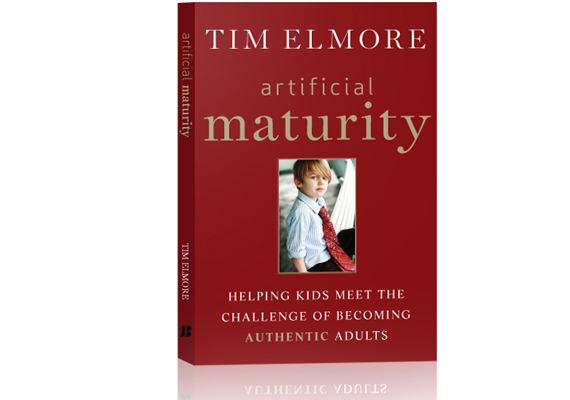
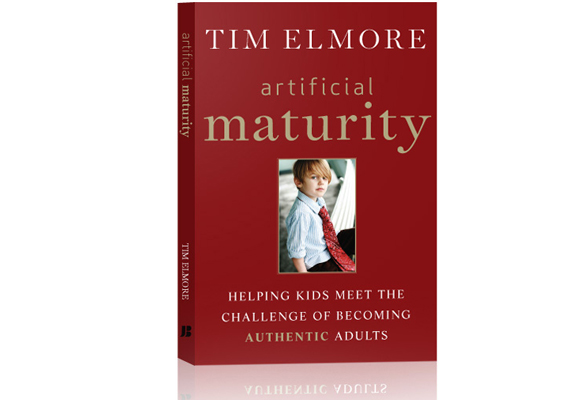
Artificial Maturity

Billy Graham In Quotes

Christian Disciplines

Conformed To His Image

Disciples Indeed

Discovering Your Spiritual Center

Dreaming in 3D

Fearless

Forgotten God

Freedom Begins Here

From Santa To Sexting

Good News Of Great Joy

Grace

Grace Abounding To The Chief Of Sinners

Grant: Savior Of The Union

Helping People Win At Work

I Am A Follower

Live Dead

Love, Sex & Happily Ever After

Men Of The Bible

Morning & Evening

My Utmost For His Highest

Nurturing The Leader Within Your Child

Pastor Dad

Porn-Again Christian

Praying Circles Around Your Children

Relentless

Secret Power

Spirit Rising

The 21-Day Dad’s Challenge

The Book Of Man

The Circle Maker

The Gospel Of Yes

The Greatest Thing In The World

The Inner Chamber & The Inner Life

The Necessity Of An Enemy

The Questions Christians Hope No One Will Ask

The Return Of Sherlock Holmes

The Treasure Principle

The Truth About Forgiveness

Through My Eyes

Today We Are Rich

True Vine

What Is He Thinking??

What Matters Most

What Would Jesus Read?

When Work & Family Collide

Why Jesus?

I am looking forward to sharing more great reads with you in 2013. If there are any books you would like me to review, please let me know. (If you are interested in seeing my list of book reviews for 2011, please click here.)

Prayer Focus: Our Youth

As this week marks the beginning of a “new year,” (as students are heading back to school and we’re all settling in to our fall routines), we are taking time to focus our prayers.

Today’s pray focus is on our youth.

Our future is not “somewhere around the corner”; it’s now! Our future is in the lives of the children in our homes and schools at this very moment. Because the enemy knows how important our kids are, satan is doing all he can to try to thwart their plans, discourage them about their prospects, and get them thinking that their lives are not very valuable.

An American College Health Association survey found:

  • 94% of students feel overwhelmed by their lifestyles.
  • 44% feel so depressed it was almost difficult to function.
  • 10% considered suicide in the past year.

As a result, many of our youth have begun to “check out” of life. This can be deadly for our future. Noted author and researcher Dr. Tim Elmore said of this generation, “In cultures where males stop setting a healthy example, there is trouble. Crime rates rise, the percentage of teen pregnancies and unwed mothers go up, the number of gangs increase, unemployment swells, and depression and delinquency rise.”

Yet Jesus made it clear that the way children received the Kingdom of God in faith is to be the pacesetting example for all of us (see Mark 10:15-16). With this in mind, the Apostle Paul challenged his young protege Timothy to be the example for all others to follow. His charge to Timothy is a part of our prayer focus today:

Don’t let anyone look down on you because you are young, but set an example for the believers in speech, in life, in love, in faith and in purity. Be diligent in these matters; give yourself wholly to them, so that everyone may see your progress. (1 Timothy 4:12, 15)

Please pray with us throughout the day for our youth. And if you can join us tonight, the church will be open for prayer from 5:30-6:30pm.

UPDATE: You can download the PowerPoint of our prayer points for today by clicking here → Week of prayer – students.

Artificial Maturity—How To NOT Move From College To Career

Artificial Maturity is a must-read book by Dr. Tim Elmore for parents, pastors, youth pastors, teachers, coaches, and managers—anyone who works with youth. You can read my full review of this invaluable book by clicking here.

Artificial Maturity—How To NOT Break Up With Your Girlfriend

Artificial Maturity—How To NOT Get A Job

10 Quotes From “Artificial Maturity”

The other day when I posted my review of Artificial Maturity by Dr. Tim Elmore, I said that for anyone working with children, tweens, teens, or young adults this book is a must-read. I don’t say that about very many books, but it is definitely true of this one (you can read my full review here).

Let me share with you ten of my favorite quotes from this book. Unless otherwise noted, all of the quotes are from Dr. Elmore…

“In short, the artificial maturity dilemma can be described this way: (1) Children are overexposed to information, far earlier than they’re ready. (2) Children are underexposed to real-life experiences far later than they’re ready.”

“Steps to take to build authentic maturity:

  1. Provide autonomy and responsibility simultaneously.
  2. Provide information and accountability simultaneously.
  3. Provide experiences to accompany their technology-savvy lifestyles.
  4. Provide community service opportunities to balance their self-service time.”

“For the most part, adults have failed to build true ‘life skills’ in kids. We haven’t helped them self-regulate and make decisions about concerns that matter. Students’ busy schedules often aren’t all that meaningful, and young people spiral downward into despair over relatively trivial issues. Their days are full of artificial activities with artificial consequences, resulting in artificial maturity. The stress is real, but it is often over things that don’t really matter, and it isn’t building mature people.”

“We must be parents, not pals. We must be coaches, not coddlers. And we must lead them, not just lecture them.”

“Analysts say there are increasing signs that a lack of independence fuels stress, anxiety, and depression among young people. …Kids’ early lives today are too full of information and structure, and too empty of innocence and the freedom to play and explore. But by adolescence, it’s almost the opposite. It’s as though they experience a flip-flop. Their lives are too full of freedom, and too empty of accountability.”

“This appears to be a paradoxical trend—[adolescents] expressing a decline in readiness to actually ‘be’ adults that is proportionate to their desire to leave home. …They want to be consumers but not necessarily contributors. …Our job is to prepare the child for the path, not the path for the child.”

“The fact is, kids—all kids—need adults to lead them well. In our mad obsession to remain cool and on the cutting edge of everything, adults have surrendered what may be their most important responsibility: to provide role models to the next generation. We might win at the game of being liked, but we lose at the game of leading well.”

“For our teens, we’ve defined nurturance largely in terms of the things we can do for them, the stuff we can buy them, and the experiences and opportunities we can provide. In reality, what most teens need is neither more stuff, nor more lessons, nor do most teens even need more tender, loving care or quality time. While young children need a great deal of parental nurturance in the form or direct assistance geared toward meeting their needs, adolescents need something different. Unlike children, teens’ bodies and brains most need us to nurture and develop capacities to function on their own in this world. This means expecting things of them, not just giving things to them.” —Drs. Joseph & Claudia Worrell

“Five parental decisions:

  • Decide that you will build a bridge of relationship that can bear the weight of hard truth.
  • Decide that it’s more important for you to have their respect than for them to like you.
  • Decide that it’s more important for you to pass on essential values than to just have fun.
  • Decide that it’s more important for them to be ready for the future than to be comfortable.
  • Decide to pass on the principles (values) you wish you’d known earlier in life.”

“As adults, we have done a poor job in getting this generation of kids ready for life. If they flounder, it is because we’ve focused on preparing the path for the children instead of the children for the path. I believe in this next generation. These kids are great, and they’re capable of much more than we’ve expected. We have not led them well. We’ve allowed them to mature artificially by default. We’re protected them instead of preparing them for life as adults. It’s time we get them ready to lead the way into the future.”

Artificial Maturity (book review)

When I posted my review of Tim Elmore’s previous book Generation iY, I said that book earned a rare “must read” rating from me. Whether you read that book or not, Artificial Maturity has earned the coveted must-read rating again!

If Generation iY described who this current youth generation is, Artificial Maturity describes how to help these youth achieve genuine maturity. Here’s how Dr. Elmore sets the stage for this book from the very first page:

“…I believe in this generation like none before. I believe they have the potential to be the greatest generation—a population Warren Bennis calls the “Crucible Generation.” He and many others believe these young people may just be the ones who transform society globally and restore democracy and goodwill.

I believe this with one caveat. I predict all this is possible if we, the adults, will rethink the way we parent, lead, teach, coach, pastor, and manage them. It’s up to us what kinds of adults our kids will become. So far, many of them are a part of a leaderless generation. The adults have done more protecting than preparing. Some moms and dads want to be pals rather than parents. And many adults are just overwhelmed with the notion of leading kids today—and they surrender their role as leaders.”

So this is not a book that tells you how to change kids, but how we as adults must change.

With persuasive evidence, scientific studies, personal observations, and years of hands-on experience, Dr. Elmore so accurately details how we as parents have contributed to our kids becoming artificially mature. In other words, they know lots of things, but they don’t know how to effectively apply that knowledge to be productive at work, school, and in relationships. 

I, too, share Dr. Elmore’s optimism about this generation. But if I want to see my kids—and other young people with whom I interact—excel and mature, I have to look at myself in the mirror. This generation can’t succeed if we continue to parent, and teach, and pastor, and manage as we have been doing.

I cannot urge pastors, youth pastors, parents, teachers, principals, coaches, and employers to read Artificial Maturity right away! This generation needs us to help them soar!

I am a Jossey-Bass book reviewer.

UPDATE: Read some of my favorite quotes from Artificial Maturity by clicking here.