Links & Quotes

Controlling leaders shut down creativity among their teammates, which leads to higher turnover. If your team isn’t sharing their good ideas with you or if they are leaving you, that may be an indicator that you are too controlling. Check out the full conversation on The Craig and Greg Show

I have a lot of new video content on my YouTube channel every week. Please check it out and subscribe so you don’t miss anything.

“As a fact, men only become greedily and gloriously material about something spiritualistic. … Take away the supernatural, and what remains is the unnatural.” —G.K. Chesterton 

Astronomical technology like the James Webb Space Telescope (JWST) are providing breathtaking images. They are also creating problems for the scientific theories of the origins of our universe. University of California Santa Barbara physicist Caitlin Casey, said, “It makes sense—the Big Bang happens and things take time to gravitationally collapse and form, and for stars to turn on. There’s a timescale associated with that…. And the big surprise is that with JWST, we see roughly 10 times more galaxies than expected at these incredible distances.” There is a more straightforward answer found in Genesis 1:1, “In the beginning, God created the heavens and the earth.”

“Knowing where God wants people to be and taking the initiative to use God’s gifts and God’s methods to get them there, in reliance on God’s power through Christ, with God’s appointed people following.” —John Piper, giving his definition of godly leadership 

The Bible records the names of five Persian kings. One of them called “Darius the Persian” in Nehemiah 12:22 requires some historical cross-referencing to identify. The Bible Archeology Report presents another one of their fascinating archeological biographies on this Persian king. 

“The greatness of a leader is in his humility before God, not in his eloquence before men.” —Anonymous

The most viewed and downloaded resource on my blog is my chart of the kings of the united kingdom of Israel and the divided kingdoms of Israel and Judah. I was thrilled to discover this week that Jacob Edson at Biblegateway has taken my chart even deeper!

T.M. Moore has vital counsel for pastors, “Jesus must increase in us, and we must decrease. But that doesn’t just happen by carrying out whatever our ‘spiritual work’ requires of us week-in and week-out. Our ‘natural gifts’ cannot replace spiritual ones, and ‘mental powers’ are no match for the mind of Christ. It is a shepherd’s ‘duty’ to attend to the care and nurture of his soul, for unless we are diligent in this, we will not be able to lead the Lord’s sheep into a greater experience of our great salvation or a fuller realization of His Kingdom.”

Eternal > Temporal

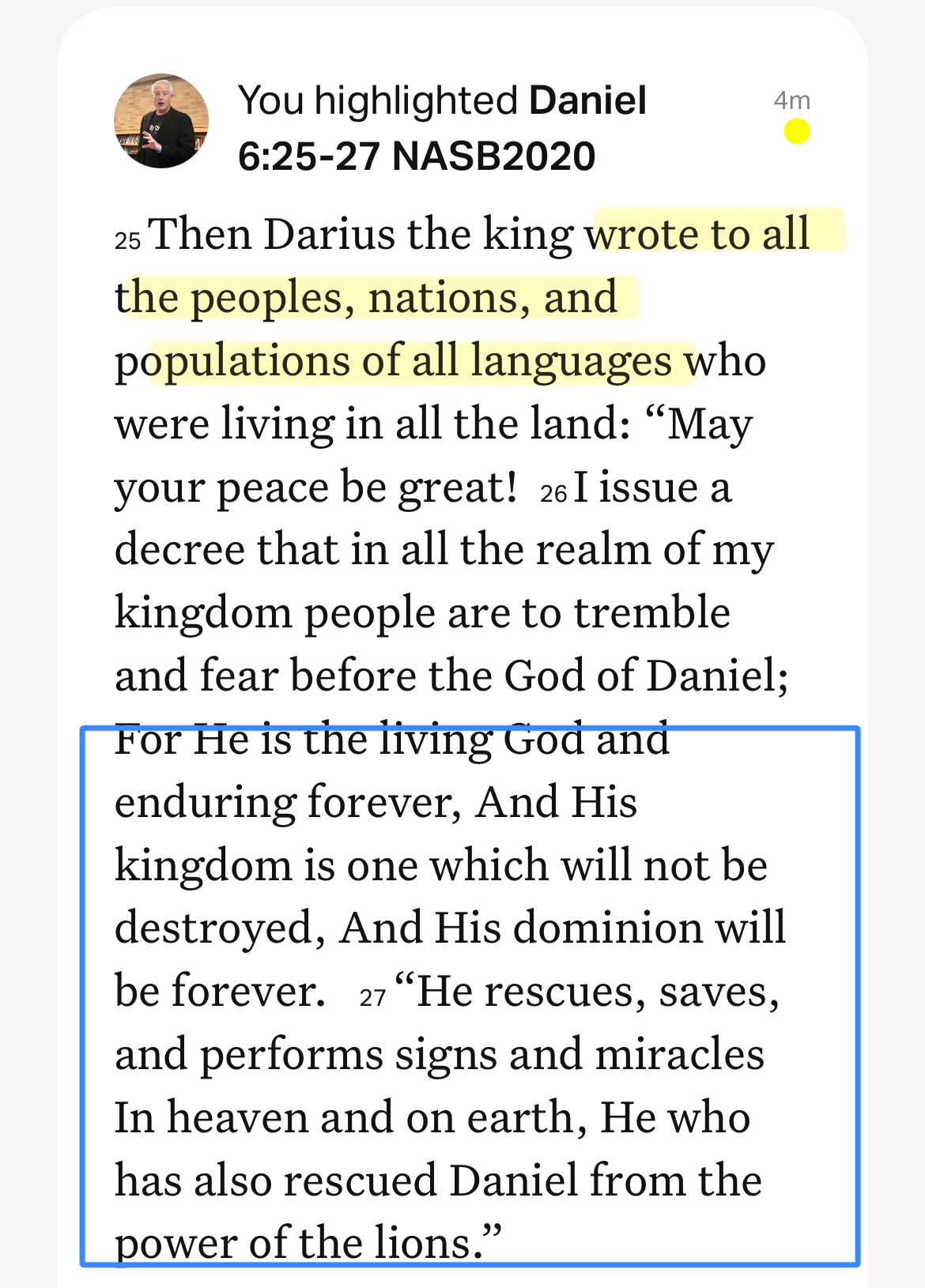
Then Darius the king wrote to all the peoples, nations, and populations of all languages who were living in all the land: “May your peace be great! I issue a decree that in all the realm of my kingdom people are to tremble and fear before the God of Daniel; for He is the living God and enduring forever, snd His kingdom is one which will not be destroyed, snd His dominion will be forever. He rescues, saves, and performs signs and miracles in heaven and on earth, He who has also rescued Daniel from the power of the lions.” (Daniel 6:25-27)

In order for God’s glory and fame to be proclaimed “to all the peoples, nations, and populations of all languages,” Daniel had to spend a single night with ravenous lions. 

When you are facing adversity—even death threats—don’t ask, “God, why is this happening to me?” Instead you can declare, “God, You are going to be highly glorified among all the people! I will remain faithful and steadfast in my trust in You!” 

The extent to which God will reveal His glory is not worthy to be compared to the single night we have to endure. “For I consider that the sufferings of this present time are not worthy to be compared with the glory that is to be revealed to us” (Romans 8:18). 

I talk more about Darius’ change of heart in my post Why We Pray For Government Leaders.

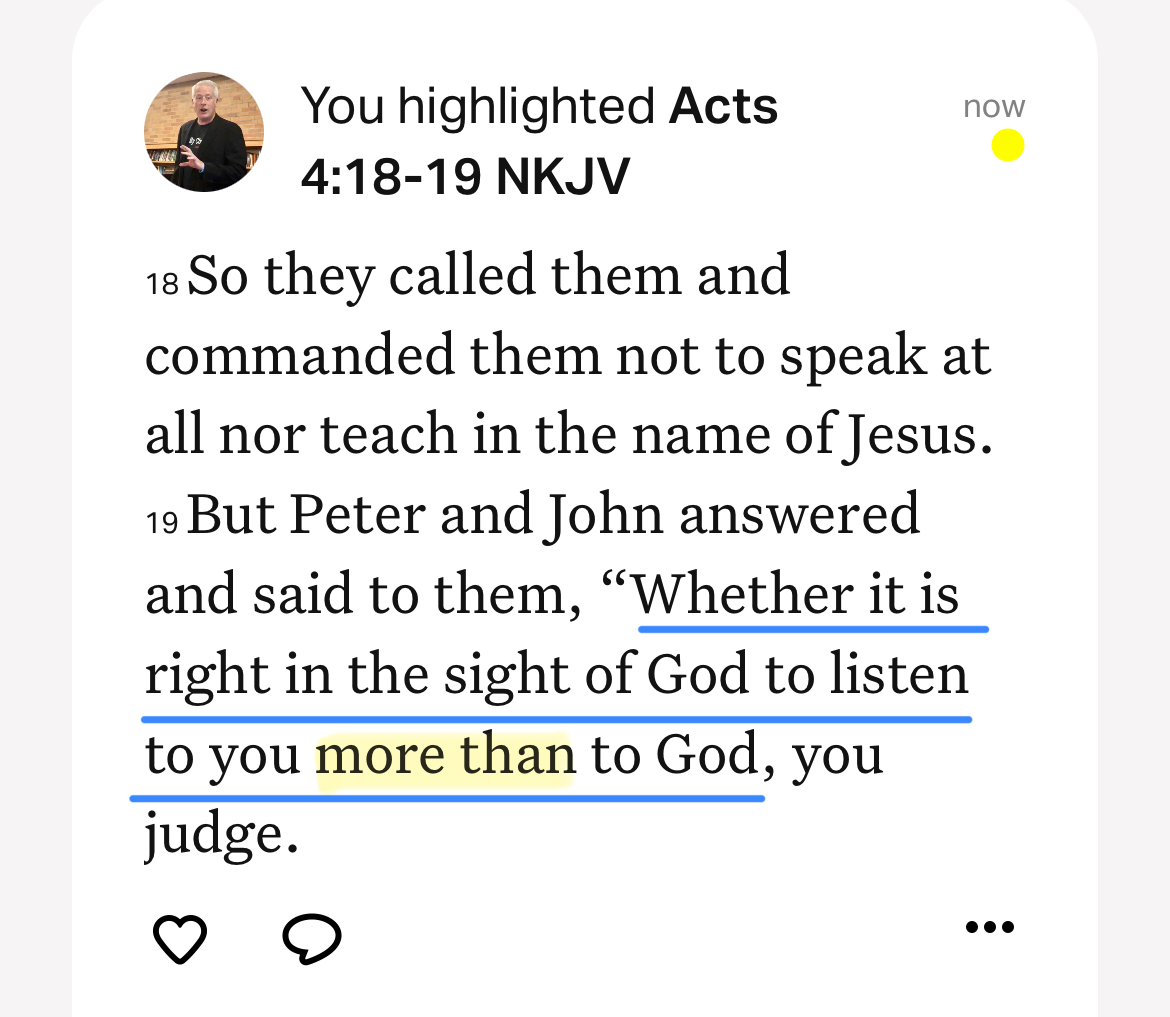
Dr. Henry Halley points out another way the eternal trumps the temporal: “There is no authority apart from God. When human authority rejects God’s authority, it becomes twisted and loses its right to demand compliance (Acts 4:19-20, 5:29). God’s people are responsible to obey the government because it has been set in place by God [Romans 13:1-2; Daniel 4:17], but when government directs against God’s will, the Giver of all authority has the higher claim on our allegiance. We must resist any command that is against God’s will (Exodus 1; Daniel 3; Hebrews 11:23).”

The Key To Staying Power

Listen to the podcast of this post by clicking on the player below, and you can also subscribe on AppleSpotify, or Audible. 

Staying power is something special. It especially stands out to us when someone holds their position for years and continues to remain one of the go-to people in the organization. For Christians, the key to staying power may not be as difficult to obtain as you may think. 

Check out this episode of The Podcast.

Resources to go along with this podcast:

  • The biblical passages I mentioned: Daniel 5-6; 2 Chronicles 36:22-24; Matthew 13:52
    • The timeline between Nebuchadnezzar and Belshazzar:
    • Nebuchadnezzar died in 562 and was succeeded by his son Amel-Marduk.
    • Amel-Marduk was assassinated by his brother-in-law, Nergal-Sharezer, two years later (560 BC), who then assumed the throne.
    • Four years later (556 BC) Nergal-Sharezer died, and he was succeeded by his son, Labashi-Marduk.
    • Before a year had passed, Labashi-Marduk was assassinated by a group of malcontents headed up by Nabonidus, who then assumed the throne.
    • Five years later (550 BC), Nabonidus died and was succeeded by his son, Belshazzar. 
  • Darius—a common name for Medo-Persian rulers. “Darius the Mede” (Daniel 5:31) is a more mysterious figure who, so far, appears only in the Bible. Historians think he may have been Gubaru, an officer in Cyrus’ army who became governor of the Persian province of northern Babylon. In this case, he’s the military leader who invaded Babylon, killed Belshazzar, and effectively ended the reign of Babylon. Persia was now the new world power. 
  • Darius I, called the Great, reorganized the government into satraps and extended the boundaries of the empire (Daniel 6:1-3). Daniel was appointed as one of three presidents over the 120 satraps but was being considered as the chief of the three. 
  • Cyrus the Great was king of Persia from 550-529 BC. When Cyrus became ruler of the Persian district of Anshan, the district was subject to the Medes; five years later he led a rebellion against the Medes that resulted in the capture of King Astyages and the overthrow of the Median Empire. Thereafter Cyrus called himself king of Persia. In 539 BC the kingdom of Babylon fell to Cyrus. 

►► Would you please prayerfully consider supporting this ministry? My Patreon supporters get behind-the-scenes access to exclusive materials. ◀︎◀︎

God’s Precision

Listen to the podcast of this post by clicking on the player below, and you can also subscribe on AppleSpotify, or Audible.

I love how often archeological discoveries absolutely verify biblical accounts. Haggai is a great example of this: He so precisely dates his prophecies, which are then corroborated by extra-biblical records from the Medes and Persians.  

For instance, check out these specific dates:

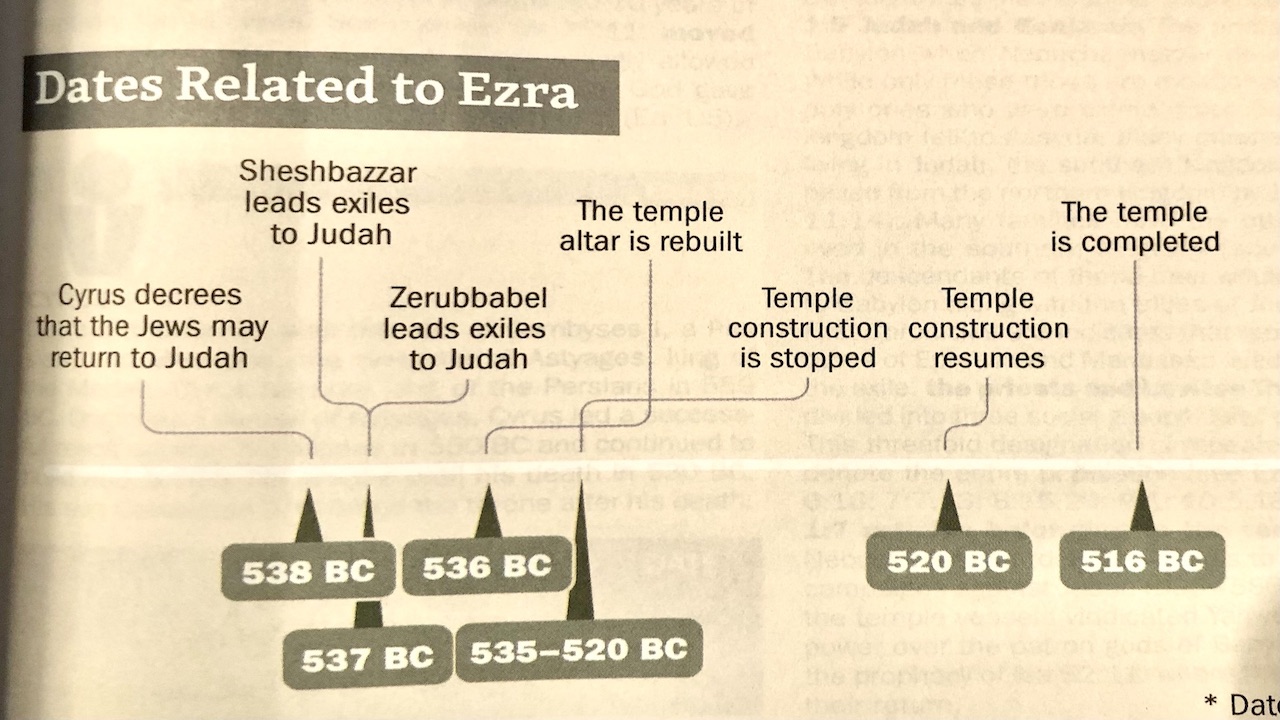
  • 538 BC—Cyrus issues a decree allowing the Jews to return to Israel (Isaiah 45:1-3) 
  • 537 BC—exiles return and in 536 BC they lay the foundation of the temple (Ezra 3:8)
  • 536 BC—opposition arises and the work stops (Ezra 4:1-6) 
  • 520 BC—Haggai and Zechariah arrive and begin ministering (Ezra 5:1-2; Haggai 1:1-15) 
  • 520 BC—opposition arises again and Haggai speaks a word of encouragement (Ezra 5:3-5; Haggai 2:1-9)
  • 516 BC—after receiving a favorable reply from King Darius, the temple is completed (Ezra 6:13-15)

(You can check out all of the above referenced verses by clicking here.) 

The reason these dates are so important is that they precisely align with the prophecy spoken by Jeremiah BEFORE the Israelites were even taken into exile. God said that they would return to worship in Jerusalem 70 years after their exile (Jeremiah 29:10-14; Daniel 9:1-2). Which is exactly what happened: They were taken into captivity in 586 BC, and the temple was completed in 516 BC! 

Haggai’s final prophecy (Haggai 2:20-23) has an unusual ending. It’s unusual in that it doesn’t sound like “The End” that usually ends a book of the Bible. That is precisely because it’s not the end. 

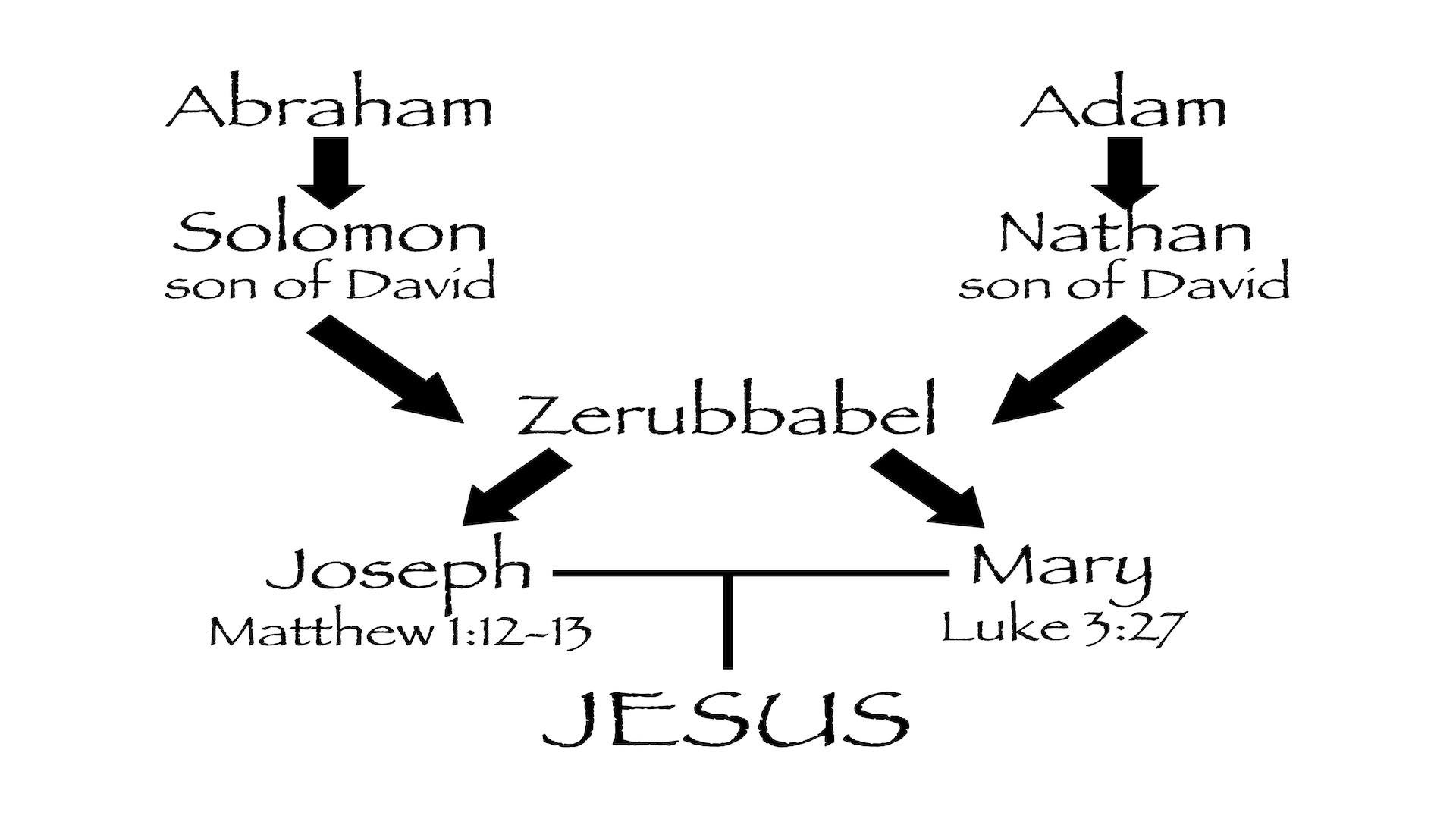
God tells Zerubbabel that he is God’s “signet ring,” a mark of God’s supreme authority. Zerubbabel was not the signet ring, but he was a forerunner—a type—of Jesus. 

So when we trace the genealogies of Jesus in the New Testament, we see that Zerubbabel appears in the family line of both Joseph and Mary—both the family line from Abraham who received God’s covenant, and the family line of Adam who heard God promise that a human offspring would crush satan’s head. 

These genealogies are as precise and exacting as the dates for the return of the exiles. God does everything exactly according to plan. He speaks His promises to us, and we can stand on those promises. Jesus is THE Signet Ring that stamps His “Amen” to every promise of God on which we stand.  

God is not vague; He is precise. He has a plan for all of history—which is His story—and He has a precise plan for your life too!  

So in building on our list from last week, let’s add one more item: 

  1. Hear the Word of God
  2. Consider the Word of God
  3. Obey the Word of God
  4. Stand assured, encouraged, and unmovable on the Word of God.

What God says He will do, He will do! 

If you’ve missed any of the messages in our series looking at the major lessons from the minor prophets, you can access the full list by clicking here. 

►► Would you please prayerfully consider supporting this ministry? ◀︎◀︎

Why We Pray For Government Leaders

…the Lord filled them with joy by changing the attitude of the king of Assyria so that he assisted them in the work on the house of God, the God of Israel (Ezra 6:22).

King Darius didn’t just allow the Israelites to worship God at the temple, he assisted them in reestablishing worship at the temple! He did this because God changed his attitude. 

Nearly 60 years later, King Artaxerxes did the same thing for Ezra: “the king had granted him everything he asked for, for the hand of the Lord his God was on him” (7:6). Artaxerxes gave Ezra and the returning Israelite exiles…

  • … authority 
  • … provisions 
  • … tax exemptions (vv. 14, 20-22, 24) 

Ezra says again that this was all due to God putting this in Artaxerxes’ heart: Praise be to the Lord, the God of our fathers, who has put it into the king’s heart to bring honor to the house of the Lord in Jerusalem this way (vv. 27-28).

Daniel declares that all of the world leaders are in that position of leadership because God placed them there. The apostle Paul teaches us that government officials are God’s servants and that we are to pray for them (Romans 13:1-7; 1 Timothy 2:1-2). 

God can change the attitude of even the most hard-hearted, godless leader. Not just change their attitude, but give God’s people favor with that leader. 

Don’t become frustrated—pray. 

Don’t get discouraged—pray. 

Pray, pray, pray for all of God’s servants who are in leadership over us. God has a plan. All of history is His story, and He will change attitudes so that His servants fulfill His plan.