The apostle Paul lists three indispensable qualities of a godly leader. Remove even one of those qualities, and you no longer have a godly leader. I dive deep on these qualities (and more) in my book Shepherd Leadership.
I have lots of new content every week, which you can check out on my YouTube channel.
T.M. Moore wrote, “We are God’s poems, as Paul says in Ephesians 2:10, where the Greek word for ‘workmanship’ is ποίημα, poiema—poem. Perhaps this is why we find it pleasurable when others take an interest in us and want to get to know us better. They’re asking us to ‘read’ our ‘poem’ to them. What fun! And God wants us to know, love, enjoy, and serve Him by all the things He has freely given to us and which He seeks to ‘read’ to us day by day.”
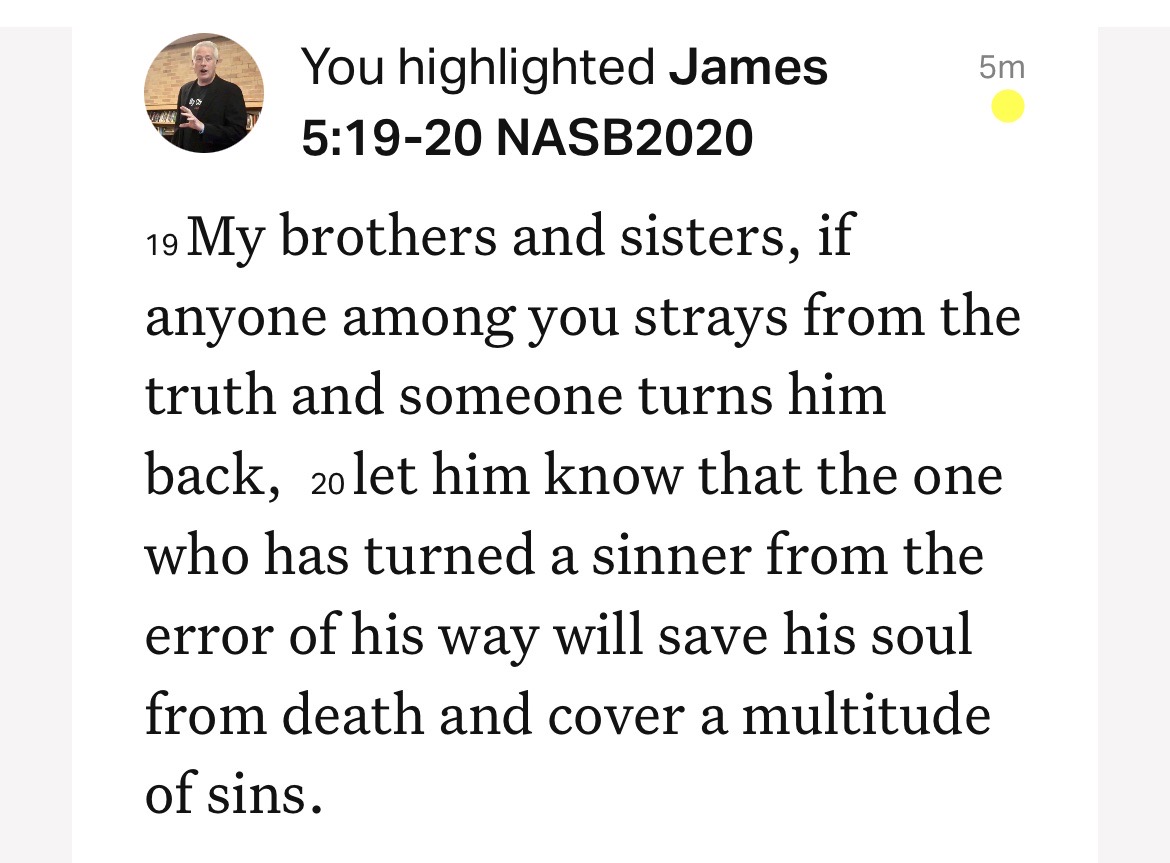
“Saints” is always plural in the Bible. That means we always need to be looking out for our brothers and sisters in Christ. I love the words James uses to close his letter to the saints.
✅ Gather frequently to encourage others
✅ Reach out to those who are absent
✅ Speak the truth in love
✅ Exhort and encourage
✅ Forgive and ask for forgiveness
✅ Restore quickly and gently
Anthony Kidd warns about something I address in my book When Sheep Bite. “Inherent to our calling as shepherds is the task of looking out for the flock of God and protecting it from savage wolves and false shepherds. However, Paul emphasizes here that one of the greatest threats to the church can emerge from within its own leadership ranks, making self-awareness a critical aspect of pastoral leadership.” Read this full article about the earning signs of diseased leadership.
More amazing findings that show the incredible beauty and wisdom of our Creator! The ICR reports, “Insects, such as the winged insects in the order Lepidoptera, continue to reveal incredible abilities with some facets that zoologists thought were reserved only for vertebrates.”
And from there the brothers and sisters, when they heard about us, came as far as the Market of Appius and the Three Inns to meet us; and when Paul saw them, he thanked God and took courage. (Acts 28:15)
We have to be careful of thinking of Paul as some sort of super-evangelist. Yes, he was sustained by his faith in God, but look what happens to him when he is in the assembly of fellow saints—it prompted him to thank God and brought courage to his heart.
Do you have to go to church to be a Christian? Of course not. But you will be encouraged and you will be the source of encouragement to others when you gather together regularly.
As the writer of Hebrews tells us—
Let’s hold firmly to the confession of our hope without wavering, for He who promised is faithful; and let’s consider how to encourage one another in love and good deeds, not abandoning our own meeting together, as is the habit of some people, but encouraging one another; and all the more as you see the day drawing near. (Hebrews 10:23-25)
You may also be interested in these related posts:
Listen to the podcast of this post by clicking on the player below, and you can also subscribe on Apple, Spotify, or Audible.
We’ve now learned about all three circles that help us discover our God-implanted gifts:
Passion—what thrills you?
Pain—what kills you?
Proficiency—what fulfills you?
What do you do with these gifts? What’s the whole purpose in learning about them? I think the goal as saints is to help the Body of Christ mature in ways that brings God glory (Ephesians 4:12-16).
Solomon also gives a great word picture of friends using their gifts for each other—“As iron sharpens iron, so a friend sharpens a friend” (Proverbs 27:17 NLT).
In an earlier message in this series, I talked about the thousands of enzymes in our human bodies. Each enzyme has just one task, and each task is indispensable to the health of the whole body. It is exactly the same in the Body of Christ—your gift-in-action is indispensable to the health of the whole Body.
How do you squander your grace gift? I think these are five basic ways:
Not discovering it—“I have a gift?”
Devaluing it—“My gift is nothing special.”
Overvaluing it—“My gift is super-important.”
Laziness—“My gift is fine just the way it is.”
Selfishness—“My gift is just for me.”
We need to discover our own gifts, but then we need to work on making the switch from “me” to “we.” I want to excel in using my gift so that I can help you excel in using your gift so that we can help another brother or sister excel in using their gift.
Oswald Chambers said, “The Book of God is insistent on this: we cannot develop a holy life alone, it would be a selfish life, without God in it and wrong. … Beware of isolation; beware of the idea that you have to develop a holy life alone. It is impossible to develop a holy life alone, you will develop into an oddity and a peculiarism, into something utterly unlike what God wants you to be. The only way to develop spiritually is to go into the society of God’s own children, and you will soon find how God alters your set.”
Frequently we need another brother or sister in Christ to help nudge us into discovering and using our gifts. For example, look how…
Mordecai assured Esther (Esther 4:13-14)
Matthias was chosen by those in the upper room (Acts 1:21-26)
The first deacons were unanimously chosen by the Church (Acts 6:3-6)
Barnabas and Saul were chosen by the Holy Spirit and confirmed by other prophets and teachers in the church (Acts 13:1-3)
Paul encouraged his proteges to appoint elders who were recognized by others in the church (Titus 1:5; 1 Timothy 3:1f)
Consider this poem—
For want of a horseshoe nail the shoe was lost.
For want of a shoe the horse was lost.
For want of a horse the rider was lost.
For want of a rider the message was lost.
For want of a message the battle was lost.
For want of a battle the kingdom was lost.
And all for the want of a horseshoe nail.
Listen to the Holy Spirit. Listen to the confirming words from fellow saints—words like “You are gifted,” “You are so good at…,” and “How did you know how to do that?” Then step out of your comfort zone and soar into your gift zone!
Listen to the podcast of this post by clicking on the player below, and you can also subscribe on Apple, Spotify, or Audible.
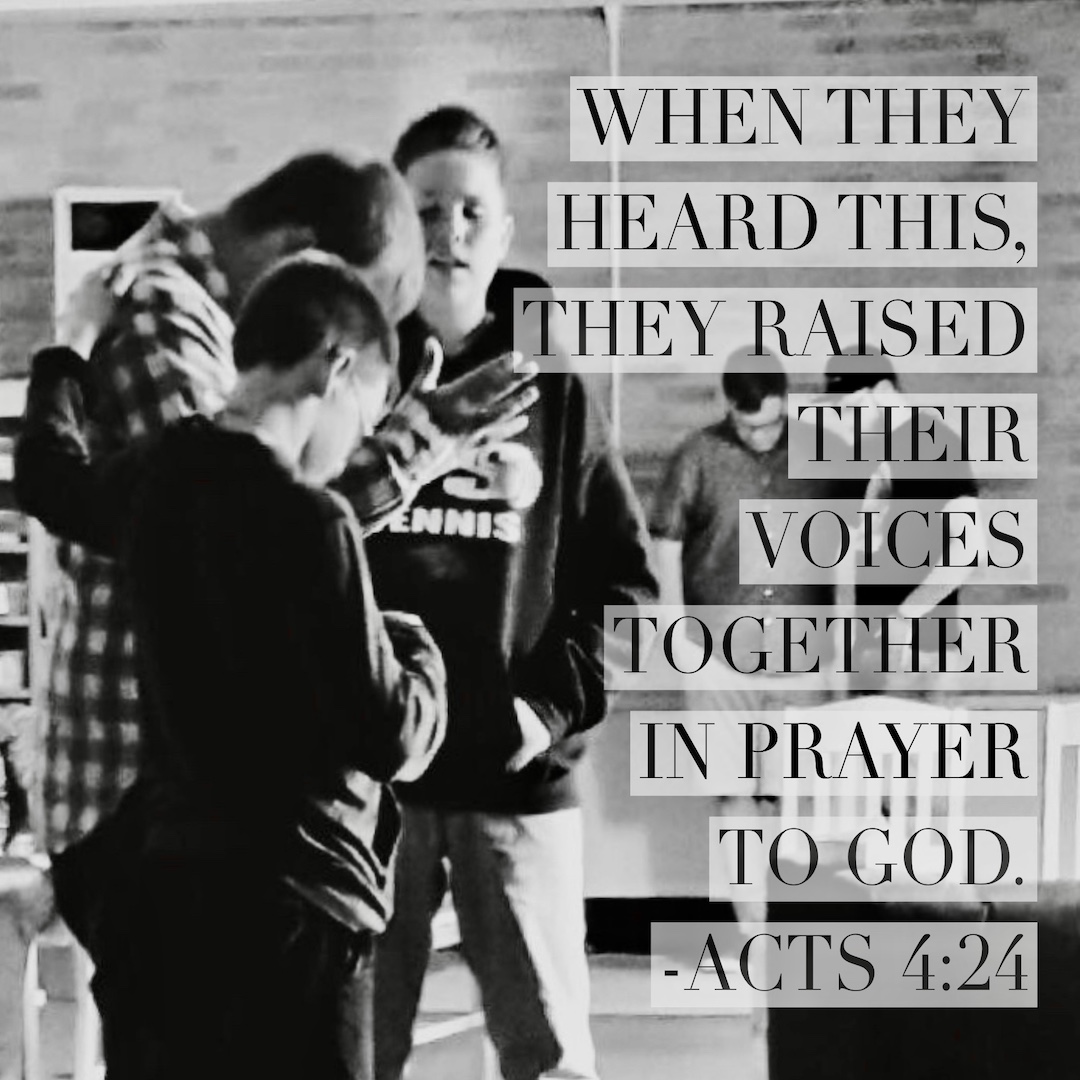
The Church heard the threats from the Sanhedrin, warning them not to talk about Jesus anymore. Their first response was to go to God: “When they heard this, they raised their voices together in prayer to God“ (Acts 4:24).
Not signing a petition or organizing a protest, but praying.
Not telling their friends to gain support, but praying.
Not attacking, but praying.
Not discussing, but praying.
Not strategizing, but praying.
Not complaining, but praying.
Not individually, but together.
Not later, but immediately.
Not going through the motions, but passionately.
Not aimlessly, but guided by Scripture.
Not humdrum, but expecting God’s power from on high.
Not for vengeance, but for a testimony.
God answered the Church powerfully!
Then the people moved out boldly—“And when they had prayed, the place where they were assembled together was shaken; and they were all filled with the Holy Spirit, and they spoke the word of God with boldness” (Acts 4:31).
Oh, for this type of unifying action today! It starts with prayer!
Listen to the podcast of this post by clicking on the player below, and you can also subscribe on Apple, Spotify, or Audible.
As we learned last week, we are not the judge, nor the jury, nor the prosecution, nor even the sin police in deciding appropriate retribution. With that in mind, let’s consider Statement #15 in our series—Do not judge. Is that in the Bible?
Yes, those three words are there, spoken by Jesus, in Matthew 7:1. But then again, we need to say, no, because these words don’t mean we are not to make determination about the rightness or wrongness of something.
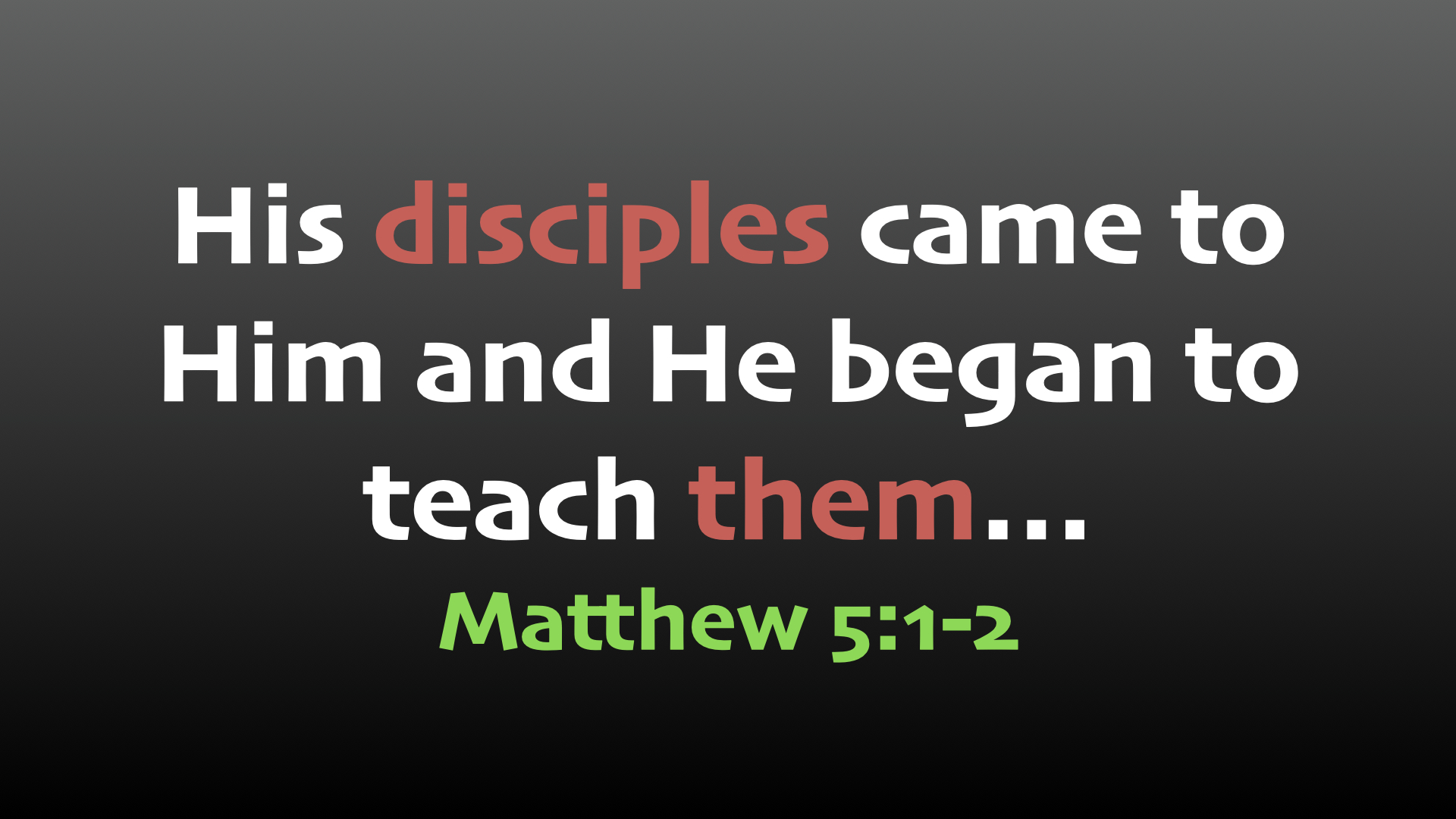
Let’s zoom-out a bit get the context of the words Jesus spoke. Who was His audience for these words? This is a part of the Sermon on the Mount (Matthew 5–7). Notice in the opening words, “His disciples came to Him, and He began to teach them” (5:1-2). So Jesus isn’t speaking to the world at-large, but He is talking with His disciples.
Jesus was very specific in His wording. In talking about the world, He uses words like people (5:11) or men (5:16; 6:1, 5). When talking about His disciples, He uses one word quite frequently: brother (3x in 5:22-24).
Matthew 7:1 is still in this sermon, and the word brother appears 3x in vv. 3-5. So these are instructions primarily for Christians to use with other Christian brothers and sisters.
The words judge here in the Greek means, “Those who judge severely (unfairly), finding fault with this or that in others.” To me, “this or that” sounds like a deliberate searching for something wrong, but Jesus assures us that this will boomerang on the judgmental person (v. 2; Luke 6:37).
In modern psychology, we find terms like:
mirroring = a psychological term the means quickly seeing what’s in others because it’s in me
projection = taking the negative things in me and projecting them onto others
Paul addresses both of these thoughts in Romans 2:1-3, where the word for judging here is the same Greek word Jesus uses in Matthew 7.
Paul concludes his remarks by reminding us that God treats us kindly (Romans 2:4). David echos this same thought in Psalm 103:8-10, 13-14.
When you read the whole passage in Matthew 7:1-5, please notice the words “brother,”“first,” and “then.”
Jesus does not mean that I am not to point out to my brothers and sisters any areas of concern. Jesus did this, as well as nearly every epistle writer. What it does mean is that correction needs to be gentle and never condemning. In other words, I want to lovingly help someone before they have to stand before The Judge.
That’s why I need to first humbly recognize that what I see in others may be apparent to me because I am afflicted with the same thing. That’s why Jesus says first deal with my own plank. Examine myselfbefore I try to correct a brother or sister (1 Corinthians 11:28; 2 Corinthians 13:5).
After I have allowed the Holy Spirit to deal with my plank, I will then have the empathy to help my brother or sister (2 Corinthians 1:3-4). Trying to get someone else to repent of something that still exists in my life is hypocritical.
If I see something wrong in someone else:
First ask the Holy Spirit to search me.
If necessary, confess it, repent from it, ask forgiveness, make things right.
Then lovingly and humbly share with your brother or sister (Ephesians 4:15).
If someone else sees something wrong in me, I should follow the exact same steps!
This is not easy, but it is vital for the Body of Christ to grow in a healthy way.
If you’ve missed any of the other messages in this installment of our series Is That In The Bible?, you can find them all here.
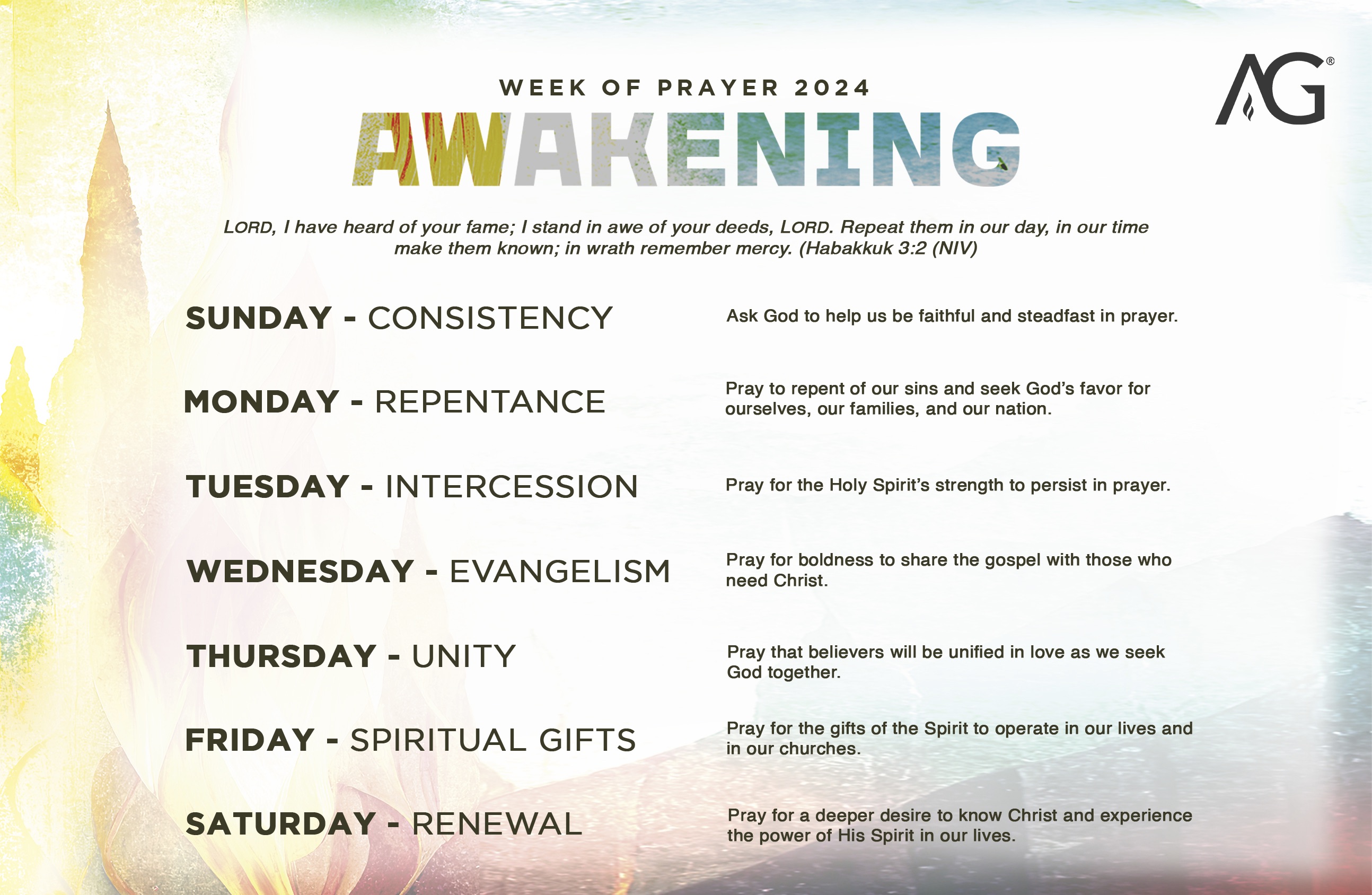
I grew up with a phrase ringing in my ears, “The Church moves forward on its knees.”
I believe this is true! We cannot expect to be effective in any kingdom-building endeavor if we are not empowered by heavenly help. So we like to begin each new year with a dedicated week of prayer. I invite you to join us in kicking off the new year with a renewed passion for prayer.
Listen to the podcast of this post by clicking on the player below, and you can also subscribe on Apple, Spotify, or Audible.
In my book Shepherd Leadership I talk about some strong, godly men who gave into temptation at a moment of weakness—David who behaved so poorly toward Bathsheba and Uriah, Elijah who got depressed and suicidal, and Peter who denied knowing Jesus.
One common factor for all of these guys is that their moment of giving in came when they were alone. They were isolated from others who may have been able to help them overcome the temptations that tripped them up.
Have you ever heard of the law of the weakest link?
If I have a chain with links that can handle 400, 300, 250, 175, and 500 pounds, how much weight can the chain hold? You don’t really need a calculator for this one because the answer is the capacity of the weakest link: 175 pounds. This is why it’s to my advantage to not only strengthen myself, but to help others grow their strength as well.
In Galatians 6:2-5, the apostle Paul talks about the strength we need for ourselves and our fellow Christian brothers and sisters. First, he says that each of us should test our own actions. I can only know my breaking point if I’m tested, and the Holy Spirit knows how to do this perfectly. After this testing, Paul says then I can take pride in myself without saying, “Well, at least I’m better than him!”
Quite simply, Paul tells each of us that we must be able to carry our own loads. Why? Because only a strong Christian can help someone else with their load. We each have to get stronger individually so that we have strength for others!
This is just like what we’ve been learning in our look at the Songs of Ascent: the goal is for all of the pilgrims to get to Zion together!
In this series, we are going to learn about six spiritual disciplines. Much like a physical workout, the Holy Spirit will start with us where we are. Not everyone will be at the same level nor will everyone progress at the same rate. But all of us will need these four things.
(1) Discipline. This is saying no to the easy thing or the thing that brings only fleeting happiness so that I can say yes to the things that bring eternal joy.
(2) Stick-to-it-iveness. I have to be committed to this process for a lifetime.
(3) Grace for yourself. There are going to be moments of struggles, plateaus, and even stumbles. Those are all a part of the journey, so we must extend grace to ourselves to learn, repent, and move forward.
(4) Patience for others. As I just mentioned, we are all on our own journey and we all progress at different rates. Let’s be patient with each other.
All of these spiritual disciplines are to strengthen us individually so that we have something to share with other saints (2 Corinthians 1:3-6).
These spiritual disciplines shouldn’t become legalistic. Don’t make the way you do it the way everyone has to do it. After all, a 175-pound link will be different than a 250-pound link.
What I am calling spiritual disciplines, C.S. Lewis called religious practices. In a letter to a friend, he wrote about the safety and beauty that result from these pursuits—
“I think about the practices what a wise old priest said to me about a ‘rule of life’ in general—‘It is not a stair but a bannister’…i.e. it is, not the thing you ascend by but it is a protective against falling off and a help-up. I think thus we ascend. The stair is God’s grace. One’s climb from step to step is obedience. Many different kinds of bannisters exist, all legitimate. It is possible to get up without any bannisters, if need be: but no one would willingly build a staircase without them because it would be less safe, more laborious, and a little lacking in beauty.” (C.S. Lewis)
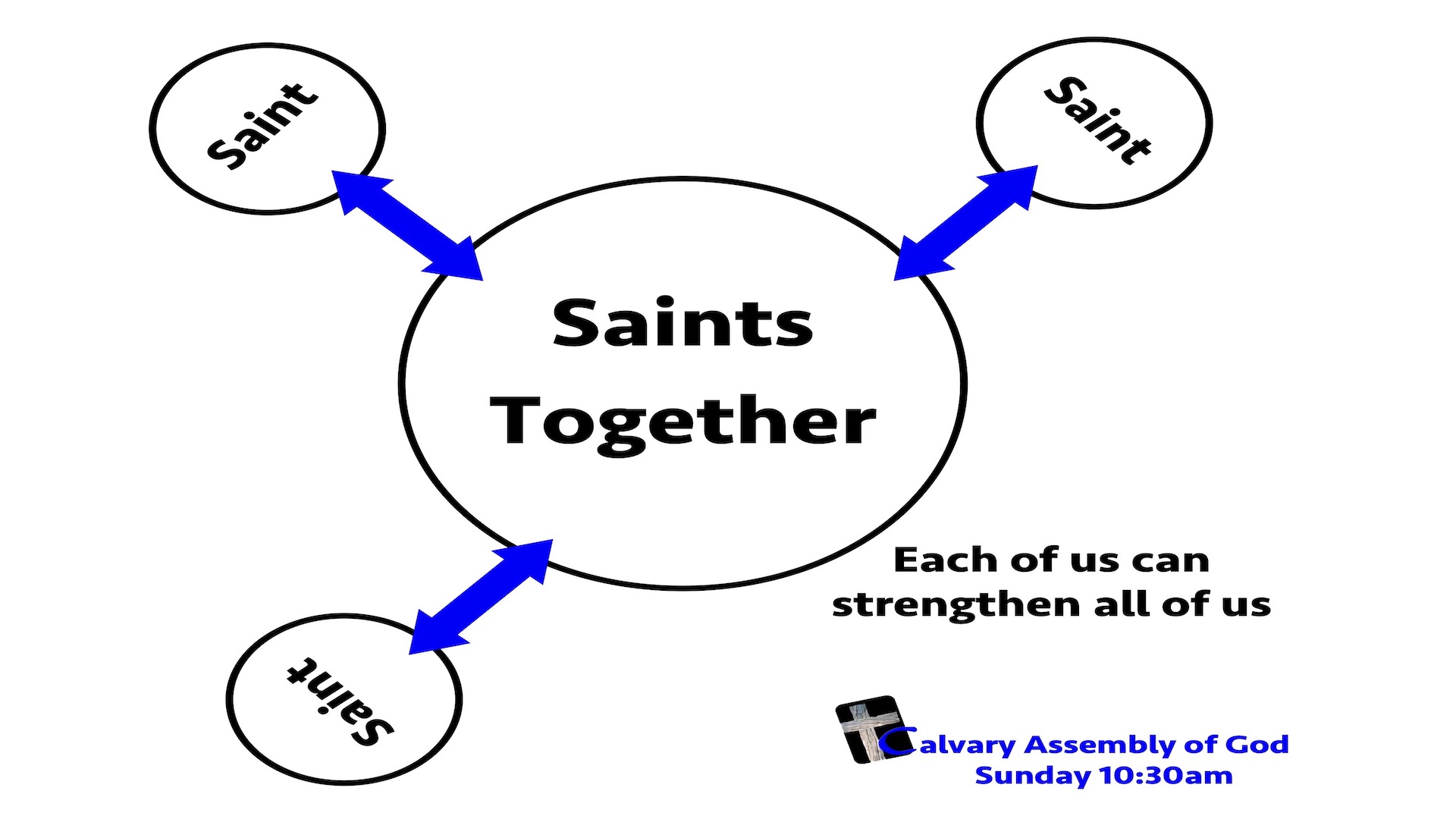
Throughout the New Testament the word “saints” is always in the plural form. This is a clear indication that none of us can develop into the full-fledged Christians we were meant to be on our own.
We all need each other. More specifically, we all need the most mature version of each other.
A key component of an individual saint’s development is the time spent alone being forged by the discipline of the Holy Spirit. Maturing saints then come together with each other to continue to strengthen and sharpen everyone in the church. Strong individual saints make a strong church, and a strong church makes strong individual saints!
Join me for our new series called Saints Together. We will be studying the six spiritual disciplines that each individual saint must put into practice so that they can use their newly developed strengths to help other saints in their own development.
Listen to the podcast of this post by clicking on the player below, and you can also subscribe on Apple, Spotify, or Audible.
Last week we mentioned that one of the things the Holy Spirit did after the Day of Pentecost was to unite individual Christians into the Church. In a world divided by religious and political factions, the unity of the Christians set them apart. Is our culture any different? Of course not! So the unity that the Holy Spirit brings is just as vital today.
In Psalm 133, David longs for this unity among believers. This psalm is in the collection of “Songs of Ascent.” That means that pilgrims to Jerusalem sang these songs as they literally went up the hill to Jerusalem. Psalm 133 opens with David singing, “How good and pleasant it is when brothers and sisters live together in unity” (v. 1).
Maybe David thought back to the time when people were joining him to give him support as king—David went out to meet them and said to them, “If you have come peaceably to me to help me, my heart shall be knit to you…” (1 Chronicles 12:17 AMP). In the next two verses of Psalm 133, David explains how this unity from being knit together is seen as a blessing.
Last week, we talked about the blessing of peace the priests pronounced on the people. That word for “peace” is shalom which could be defined as “nothing missing.” But couldn’t we also say that shalom is “no one missing”? Yes, because each and every part of the Body of Christ is vital and indispensable!
We see this same unity when the followers of Jesus were baptized in the Holy Spirit on the Day of Pentecost. Acts 2:1 says these Christians were “all together” (or some translations say “one accord”). This is one word in Greek (homothumadon)which describes the beauty of unity. One Greek dictionary defines this word,“The image is almost musical; a number of notes are sounded which, while different, harmonize in pitch and tone. As the instruments of a great concert under the direction of a concert master, so the Holy Spirit blends together the lives of members of Christ’s church.”
This picture of a majestic musical is further amplified in the next verses of Acts 2 where people from all over the world heard these Christians praising God in their own native tongues. Luke goes on to use homothumadon again and again throughout Acts to show what a powerful testimony their unity was to the watching world.
Paul emphasized the need for unity in the Church when he wrote—
As a prisoner for the Lord, then, I urge you to live a life worthy of the calling you have received. Be completely humble and gentle; be patient, bearing with one another in love. Make every effort to keep the unity of the Spirit through the bond of peace. There is one body and one Spirit, just as you were called to one hope when you were called; one Lord, one faith, one baptism; one God and Father of all, who is over all and through all and in all. (Ephesians 4:1-6)
How does the Holy Spirit help us handle our differences and keep this unity? We first need the Spirit’s help to distinguish whether it’s a biblical, unbiblical, or non-biblical issue.
Biblical issues must send us back to the Bible to find the truth (2 Timothy 3:16-17).
Unbiblical issues—where a brother or sister is living in a way contrary to Scripture—call on us to speak the truth in love and correct in love only after allowing the Holy Spirit to examine our own lives (Ephesians 4:15; Matthew 7:1-5; James 5:19-20). Notice that we are to do this with fellow brothers and sisters, not with those outside the Church.
Non-biblical issues are the trickiest. These are issues over which we should immediately stop fighting as we defer to the weakest brother or sister (Romans 12:10, 14:19-21).
The Church needs this unity today. We need to be in “one accord.” In a world divided by religious and political factions, our unity enhances our witness.




 “Saints” is always plural in the Bible. That means we always need to be looking out for our brothers and sisters in Christ. I love the words James uses to close his letter to the saints.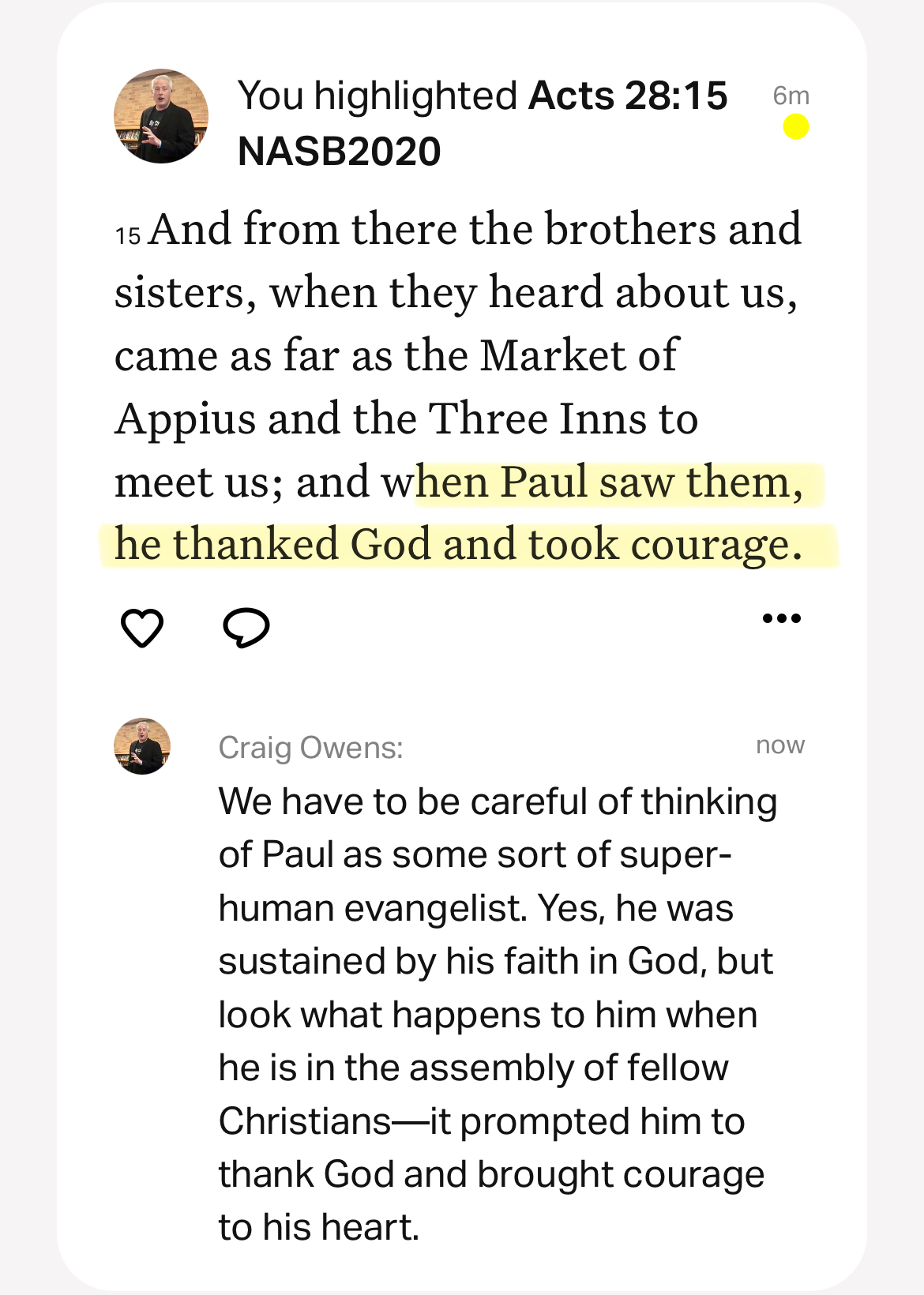







 Craig T. Owens