Living Between The Advents

We live in an amazing time—the First Advent of Jesus has already happened in Bethlehem, and yet we are eagerly anticipating Christ’s Second Advent at any moment! 

The fourth stanza of Charles Wesley’s classic Christmas carol Hark! The Herald Angels Sing is a wonderful between-the-Advents look at what happened at the First Advent, and what we have to look forward to in the Second Advent. The key thing to note in this stanza is the verbs: come, fix, rise, bruise, efface, stamp, and reinstate. 

COME, Desire of nations—What is the “desire of nations”? It’s the restoration of God’s glory on earth, so it’s not really a what but a Who. The prophet Haggai informs us that our Desire is realized in the Advent of Jesus (2:1-9).  

FIX in us Thy humble home—At His First Advent, Jesus came and humbly made His home among us, even dying to pay the penalty for our sins (Hebrews 2:14, 17; Philippians 2:7-8). 

RISE, the woman’s conquering seed—Although Jesus was obedient to death—even death on a Cross, He didn’t stay dead but was resurrected (Philippians 2:8-9; Revelation 1:18)! 

BRUISE in us the serpent’s head—With His death and resurrection, Jesus took away the sting of death from satan, fulfilling one of God’s first prophesies (Genesis 3:15; 1 Corinthians 15:19-26, 54-57).  

Adam’s likeness now EFFACE—That means to wipe out, do away with, expunge. That’s exactly what God does with our forgiven sins (Psalm 103:1-4, 10-12)! 

STAMP Thine image in its place—Although our sin has been effaced, God doesn’t leave us as blank slates, but instead He allows the image of His Son Jesus to be stamped onto our lives (2 Corinthians 1:21-22; 2 Corinthians 3:18). 

REINSTATE us in Thy love—The relationship we longed for is now reborn in us (1 Corinthians 15:49)! 

The Desire of Nations HAS come, and yet He WILL come again! We’re living between the Advents now, so a good question for Christians to ask is: “How are we to live?” I think there are three key things—

  1. In celebration that Jesus came at His First Advent to be our Savior
  2. In anticipation of the Second Advent
  3. In obedience to God’s Word (Revelation 22:7)

To take a look at the other stanzas of this Christmas carol, please click here.
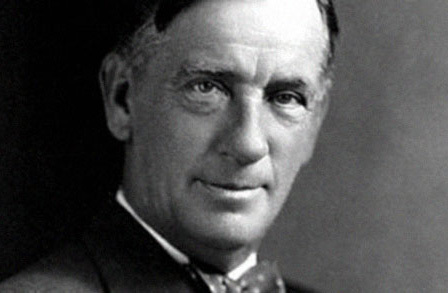
Poetry Saturday—At Christmas

Edgar A. Guest

A man is at his finest
     towards the finish of the year;
He is almost what he should be
     when the Christmas season is here;
Then he’s thinking more of others
     than he’s thought the months before,
And the laughter of his children
     is a joy worth toiling for.
He is less a selfish creature than
     at any other time;
When the Christmas spirit rules him
     he comes close to the sublime.

When it’s Christmas man is bigger
     and is better in his part;
He is keener for the service
     that is prompted by the heart.
All the petty thoughts and narrow
     seem to vanish for awhile
And the true reward he’s seeking
     is the glory of a smile.
Then for others he is toiling and
     somehow it seems to me
That at Christmas he is almost
     what God wanted him to be.

If I had to paint a picture of a man
     I think I’d wait
Till he’d fought his selfish battles
     and had put aside his hate.
I’d not catch him at his labors
     when his thoughts are all of pelf,
On the long days and the dreary
     when he’s striving for himself.
I’d not take him when he’s sneering,
     when he’s scornful or depressed,
But I’d look for him at Christmas
     when he’s shining at his best.

Man is ever in a struggle
     and he’s oft misunderstood;
There are days the worst that’s in him
     is the master of the good,
But at Christmas kindness rules him
     and he puts himself aside
And his petty hates are vanquished
     and his heart is opened wide.
Oh, I don’t know how to say it,
     but somehow it seems to me
That at Christmas man is almost
     what God sent him here to be. —Edgar Guest


Jesus Is Immanuel

I am Immanuel—God with you—and I am enough! When things in your life are flowing smoothly, it is easy to trust in My sufficiency. However, when you encounter rough patches—one after another after another—you may sometimes feel that My provision is inadequate. This is when your mind tends to go into high gear: obsessing about ways to make things better. There is nothing wrong with seeking solutions, but problem-solving can turn into an addiction: your mind spinning with so many plans and possibilities that you become confused and exhausted.

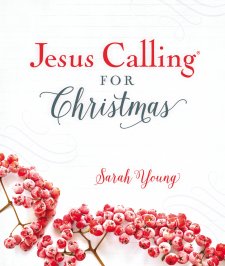
“To protect yourself from this mental exhaustion, you need to remind yourself that I am with you always, taking care of you. It is possible to rejoice in Me—to proclaim My sufficiency—even during the most difficult times. This is a supernatural work, empowered by My Spirit who lives in you. It is also a decision that you make—day by day and moment by moment. Choose to be joyful in Me, your Savior, for I am indeed enough!” —Jesus Christ (in Sarah Young’s Jesus Calling For Christmas)

(You can check out some more quotes from Sarah Young’s book by clicking here.)

Get Up And Get Moving

When Joseph woke up, he did what the angel of the Lord had commanded him… (Matthew 1:24). 

I was reading an article posted on WebMD about how much damage we can do to our hearts by spending more time in front of the TV or computer than we do exercising. You’re probably thinking, “Well, duh! isn’t that obvious?!” It should be, and yet all of us still have a natural tendency to just sit there.

One quote especially stood out to me —

“It’s not even about the exercise. It’s about not sitting,” says Suzanne Steinbaum, DO, a preventive cardiologist at Lenox Hill Hospital in New York City. “I think that sort of points us in a little different direction. In order for you not to cause harm to yourself, you really need to focus on getting up and moving.”

This reminds me of Joseph (Mary’s husband) in the Bible. God spoke to him three times in dreams. After Joseph woke up, instead of just sitting there contemplating the vision, there’s a phrase that shows up after every single vision—“Joseph got up and did.” 

A mark of a godly leader is one who obeys God quickly.

I’m convinced that if Joseph had not obeyed the first God-given vision, he wouldn’t have been given anymore. 

Has God given you a vision for your life? If so, just sitting there may do damage to your heart and limit any other visions from God. So follow Joseph’s example and get up and get moving!

This is part 32 in my series on godly leadership. You can check out all of my posts in this series by clicking here.

The Powerful Name Of Jesus

As we approach Christmas Day and we think about the First Advent, many times our thoughts go to the scene of a lowly manger, tired parents, and a newborn baby wrapped in cloths. We tend to focus on the Baby. 

And rightly so! 

It is fascinating to think that before He was even born an angel appeared to both Joseph and Mary to tell them that this Baby should be named Jesus (Matthew 1:21 and Luke 1:31). But have you also noticed all of the other names and titles given to the Baby at His birth? 

  • a Savior who is Christ the Lord
  • Immanuel which means “God with us” 
  • Son of the Most High 
  • King of the Jews
  • Ruler of God’s people
  • Son of the Most High God
  • God Himself

What do we do with the name of the Lord? 

When I say “the name of the Lord” I’m not talking about the five letters that spell J-E-S-U-S or even C-H-R-I-S-T. The name of the Lord means all of God’s character, His majesty, His personality, His magnificence, everything that makes God God. 

The Bible clearly tells us how to use God’s name properly. We are to use the name of the Lord for

  • salvation
  • protection
  • batting the enemy
  • preaching
  • praying
  • casting out demons
  • healing the sick

The use of the name of the Lord should distinguish us. CHRISTians bear the name of Christ, so they should represent the character of God accurately, and in a way that causes others to glorify Him and want to approach Him. 

If there is a proper way of using the name of the Lord, that also means there are ways we can misuse the name of the Lord, something God expressly forbids in the third of the Ten Commandments (Exodus 20:7). 

We misuse the name of the Lord when we… 

There is a holy balance—Jesus is both King of kings and a Friend of sinners. God paid an incredibly high price so that we could be reconciled to Him, but not so that you could treat Him ignorantly or carelessly. This calls for some serious searching by the Holy Spirit! Perhaps you could pray a prayer that David penned: Search me, God, and know my heart; test me and know my anxious thoughts. See if there is any offensive way in me, and lead me in the way everlasting.

To take a look at the other stanzas of this Christmas carol, please click here.
God Bless Christmas

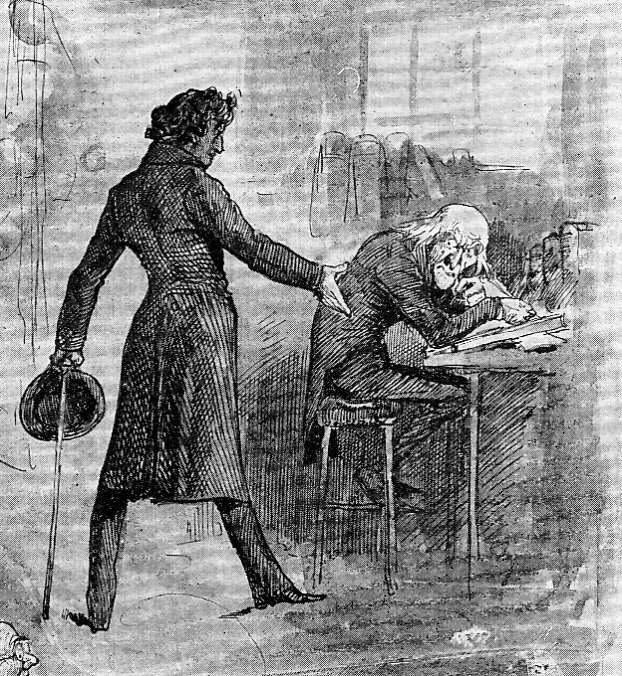
I just finished my annual re-reading of Charles Dickens’ The Christmas Carol. What a masterful author he was! This year I was especially struck by the argument between Ebenezer Scrooge and his nephew Fred—

“A merry Christmas, uncle! God save you!” cried a cheerful voice. It was the voice of Scrooge’s nephew, who came upon him so quickly that this was the first intimation he had of his approach.

“Bah!” said Scrooge, “Humbug!”

He had so heated himself with rapid walking in the fog and frost, this nephew of Scrooge’s, that he was all in a glow; his face was ruddy and handsome; his eyes sparkled, and his breath smoked again.

“Christmas a humbug, uncle!” said Scrooge’s nephew. “You don’t mean that, I am sure?”

“I do,” said Scrooge. “Merry Christmas! What right have you to be merry? What reason have you to be merry? You’re poor enough.”

“Come, then,” returned the nephew gaily. “What right have you to be dismal? What reason have you to be morose? You’re rich enough.”

Scrooge having no better answer ready on the spur of the moment, said, “Bah!” again; and followed it up with “Humbug.”

“Don’t be cross, uncle!” said the nephew.

“What else can I be,” returned the uncle, “when I live in such a world of fools as this? Merry Christmas! Out upon merry Christmas! What’s Christmas time to you but a time for paying bills without money; a time for finding yourself a year older, but not an hour richer; a time for balancing your books and having every item in ’em through a round dozen of months presented dead against you? If I could work my will,” said Scrooge indignantly, “every idiot who goes about with ‘Merry Christmas’ on his lips, should be boiled with his own pudding, and buried with a stake of holly through his heart. He should!”

“Uncle!” pleaded the nephew.

“Nephew!” returned the uncle sternly, “keep Christmas in your own way, and let me keep it in mine.”
“Keep it!” repeated Scrooge’s nephew. “But you don’t keep it.”

“Let me leave it alone, then,” said Scrooge. “Much good may it do you! Much good it has ever done you!”

There are many things from which I might have derived good, by which I have not profited, I dare say,” returned the nephew. “Christmas among the rest. But I am sure I have always thought of Christmas time, when it has come round—apart from the veneration due to its sacred name and origin, if anything belonging to it can be apart from that—as a good time; a kind, forgiving, charitable, pleasant time; the only time I know of, in the long calendar of the year, when men and women seem by one consent to open their shut-up hearts freely, and to think of people below them as if they really were fellow-passengers to the grave, and not another race of creatures bound on other journeys. And therefore, uncle, though it has never put a scrap of gold or silver in my pocket, I believe that it has done me good, and will do me good; and I say, God bless it!”

There is something “special” about the Advent season. You can palpably sense it in the way people talk and act differently. Could it be that the celebration of Christmas—despite all the tinsel and consumerism that has sought to overwhelm it—sounds a familiar chord in people’s heart because the Story is true? God bless it!

Here are a few Christmas Carol observations I shared last year.

The Everlasting Hope In Our Everlasting Lord

It was for our benefit that God came to Earth in His First Advent, not in thunder, and lightning, and all the brilliance of His heavenly glory, but as a Baby. Otherwise, He would have been unapproachable by sinful man. 

But make no mistake about it—although born as a human baby, Jesus was still “Christ by highest heaven adored; Christ the everlasting Lord”! 

The thought of God being everlasting permeates the Scriptures:

  • He is everlasting Lord
  • He fulfills an everlasting covenant
  • so He is worthy of everlasting praise
  • His everlasting arms support us
  • and give us His everlasting love and everlasting kindness
  • His everlasting salvation gives us everlasting life, or rejecting it leads to our everlasting punishment
  • and in His presence is everlasting joy  

Charles Wesley captures this fully-God-fully-Man essence in his song Hark! The Herald Angels Sing by calling Jesus the everlasting Lord and then listing His humanness at His First Advent with phrases like offspring of a virgin’s womb, veiled in flesh, incarnate Deity, pleased as Man with men to appear, and Immanuel. 

Jesus came to earth as Man not because He was forced to, but because it fulfilled the everlasting covenant that God had planned. The writer of Hebrews explains beautifully how He became like us in all of our humanness so that He could be a merciful help to us (see Hebrews 2:10-18). 

When Matthew tells the birth story of Jesus, he includes a line pregnant with meaning: “All this took place to fulfill…” (Matthew 1:22). 

What “all this”? Just take a look at Christ’s genealogy in the opening verses of Matthew 1. You see Abraham who tried to “help” God fulfill the covenant by fathering a child with another woman; Jacob who swindled his birthright from Esau; Judah who fathered Perez through his widowed daughter-in-law, whom he thought was a prostitute; Rahab was a prostitute; Ruth was a non-Jewish foreigner; David committed adultery with Bathsheba and then had her husband killed, and from their relationship came Solomon; Solomon’s son split the kingdom in two; from Abijah to Jeconiah the kings became progressively more and more evil; from Jeconiah forward the kings were without a kingdom; and then Joseph was a prince without a throne or even the glimmer of a hope of a throne. 

Yet ALL THIS took place to fulfill God’s plan. All of history is His story! Every deed and misdeed was used by God to fulfill His everlasting plan of redemption. Jesus had a very human family tree so that none of us could be outside His merciful reach.

What’s your genealogy like? More good than bad? What about your own history? More mess ups than positives? Nothing in your genealogy—past or present—can ever stop our everlasting Lord from fulfilling His everlasting covenant with YOU (Romans 8:28)! 

Christ’s genealogy is proof that your genealogy is no hindrance to His everlasting plan! 

It may appear He is late in time, but behold Him come at just the right time. Accept Him as your everlasting Lord, lean on His everlasting arms, and bask in His everlasting joy. 

Jesus—our Immanuel here—came so you could have all of God’s everlastingness! 

To take a look at the other stanzas of this Christmas carol, please click here.

Putting CHRIST In Christmas

Does it seem like many people substitute “Happy holidays” for “Merry Christmas”? Or that more and more people prefer spelling it “X-mas” instead of Christmas? 

This isn’t something new in our culture. Francis of Assisi dealt with this same situation in the 12th century. 

“Many people spell Christmas without Christ, the glory of a Holy Day being supplanted by the glitz of a holiday—a problem that reaches back to the days of St. Francis of Assisi. 

“Francis was born in 1182 in central Italy, son of a rich merchant. After a scanty education, he joined the army and was captured in war. He came to Christ shortly after his release, and soon he began traveling around the countryside, preaching the gospel. At a February 1209 Mass, Francis was gripped by words being read from Matthew 10: As you go, preach this message: ‘The kingdom of heaven is near.’ Heal the sick, raise the dead, cleanse those who have leprosy, drive out demons. Freely you have received, freely give. Do not take along any gold or silver or copper in your belts; take no bag for the journey, or extra tunic, or sandals or a staff … (NIV). 

“Francis felt that Christ Himself was speaking directly to him. He decided to obey those words as literally as possible, preaching the kingdom and possessing nothing. It is as though a 1,200-year bridge were crossed, putting Francis in the shoes of the original wayfaring apostles themselves. 

“He spent his remaining days making Christ real to everyone he met—a passion leading to history’s first living nativity scene. On December 24, 1223, Francis found a cave near Greccio, Italy, and brought in animals traditionally associated with the birth of Christ. (Francis loved animals and sometimes even preached to them.) He built the crib, arranged the hay, and finished the scene. Crowds gathered full of curiosity and wonder; and there on Christmas Eve Francis preached the wonder of God made man, born a naked infant and laid in the manger. ‘Behold your God,’ he said, ‘a poor and helpless Child, the ox and donkey beside Him. Your God is of your flesh.’ 

“Glitz gave way to glory that evening as the people of Greccio learned afresh how to spell the word Christmas.” —From On This Day 

This Advent season, let us remember that there is no Christmas without Christ! 

The Carols Of Christmas

Carols Of ChristmasI heard the bells on Christmas Day
Their old familiar carols play,
And wild and sweet the words repeat
Of peace on earth, goodwill to men. (Henry Wadsworth Longfellow)

How many “old familiar carols” have you heard Christmas after Christmas until the words have almost lost their meaning? If we’re not careful, any song repeated too often can lose the richness of its original intent.

There are some amazing messages in many of our old familiar Christmas carols because many of those messages are saturated with the old familiar story of Redemption that the Bible tells over and over again.

Please join me this Sunday as we take a new look at the old familiar messages in our Christmas carols. These messages will bring a new appreciation of God’s love that was sung at Christ’s Advent, and reawaken the sweetness of meaning for this Christmas Day.

This has been an ongoing series for us. To take a look at the Christmas carols we’ve already talked about, check them out here, here, here, and here. We have only looked at one Christmas carol this year, but we looked at each stanza:

6 Quotes From “Jesus Calling For Christmas”

Sarah Young helps Christmas come alive as she speaks in the voice of Jesus in her book Jesus Calling For Christmas, helping us to see the First Advent in a whole new light. Check out my full book review by clicking here. 

“I am the greatest Gift imaginable! When you have Me, you have everything you need—for this life and the next. I have promised to meet all your needs according to My glorious riches. Yet My loved ones sometimes fail to enjoy the riches I provide because of an ungrateful attitude. Instead of rejoicing in all that they have, they long for what they do not have. As a result, they become discontented.” 

“Though I was rich, for your sake I became poor, so that you might become rich. No Christmas present could ever compare with the treasure you have in Me! I remove your sins as far as the east is from the west—freeing you from all condemnation. I gift you with unimaginably glorious Life that will never end!” 

“The hope I offer is not wishful thinking. It is absolutely certain…. It is utterly secure because I Myself obtained it through My finished work on the Cross.” 

“During this season of giving and receiving presents, remember that the ultimate present is eternal life.” 

“Do not be like a spoiled child on Christmas Day—hastily tearing open all the presents and then saying, ‘Is that all?’ Every single day is a precious gift from Me! Search for Me within the boundaries of this day, and you will surely find Me. I am present not only in pleasant things but also in unwanted circumstances. My Joy is sufficient for all situations, and I adjust it according to your need. When things are going your way, My gladness intensifies your delight. When you encounter hard things, I give you a deep, bold Joy that clings to Me for help.” 

“One of the most precious gifts imaginable is My robe of righteousness—to cover your sins. This glorious garment of salvation is a priceless blessing for all who trust in Me as Savior. The gift of eternal righteousness, purchased through My blood, provides a firm foundation for both Peace and Joy.”