Bricks And Rungs (book review)

T.M. Moore is a first-rate theologian, so everything he writes is well-grounded in Scripture. However, when most people think of “theology,” they think of a lifeless treatise that is boring to read, or perhaps difficult to grasp. But T.M. totally shakes things up in Bricks And Rungs with rock-solid theology presented in beautiful poetic verse.

Bricks And Rungs is all about finding our purpose or calling in life. T.M. says—

“Most people have a sense of being here for some reason. They must become something, achieve something, or come to know something which they consider to be unique to them. Something is out there for them, beckoning them, drawing and wooing them beyond themselves to realize more of something, however that is envisioned or whatever it may be.

“Calling is experienced as a summons from without, a beckoning which resonates with something within, something deeply personal, leading us to aspire to more than what we know or are or have at present. …

“Everyone has a sense of calling. Christians know this to be a summons from God, a command which their lives are intended to fulfill by knowing God and serving Him. The Christian knows that each human being is called to know God and, knowing Him, to serve Him gladly and fruitfully. Calling thus involves our need to be blessed and to be a blessing to others.”

Some of these poems are autobiographical to T.M. Moore, some are reflections on Scripture, and some are musings about how each of us discovers our own calling. But all of these poems will open a window in your soul to hear God’s voice speaking to you about your own unique calling.

Take some time to linger over these insightful words.

What’s The Best That Could Happen?

I’ve had a good friend recommend a musical artist to me and I haven’t enjoyed the music.

I’ve had a good friend take me to a restaurant I haven’t liked.

I’ve had a good friend tell me how wonderful a certain movie was, and I thought it was a dud.

And I’m sure some of my good friends could say the same thing about my recommendations.

But you know what? All of these folks are still my friends.

I’ve never had one person say to me, “Your restaurant suggestion was awful. I’m unfriending you on Facebook and blocking your number from my phone. I never want to see or hear from you again!”

Yet sometimes I think church-going Christians feel like this might happen if they invite a friend to come to their church.

Seriously?!

Let’s consider the odds—

  • How likely is it that if you invite a friend to church and they say “no” that they are also going to say, “Get out of my life forever”?
  • If they do accept your invitation, but find that your church wasn’t a good fit for them, how likely is it that they’re going to say, “We can never hang out again”?

I think you would agree with me that both of these responses are highly unlikely!

But consider the other side—what if you invite them to your church and they say “yes”? What if after attending your church they like it? And what if by attending your church they enter into a personal relationship with Jesus?

If that happens, you’ve changed the course of their eternal destiny! 

Instead of focusing on the worst-case scenarios (which seem highly unlikely), we should be focusing on the best-case scenario!

If you’re still uneasy about inviting someone to your church, or even trying to have a conversation with them about your personal faith, here is a simple phrase to consider: Come and see.

Invite them to come and see your lifestyle that seeks to glorify Jesus (see Matthew 5:16). Let them see that you live your life like Jesus: doing good (Acts 10:38).

Invite them to come and see the Creator behind the creation (see Psalm 66:5). Whenever there is a discussion about the weather, or nature, or a medical science breakthrough, ask them, “Have you ever thought that if there is such a beautiful design there must also be an intelligent Designer?”

Christian, you have the best news ever! Don’t keep it to yourself. Invite those around you to come and see what a personal relationship with Jesus Christ is all about. Who knows? You may be a part of changing someone’s eternal destiny.

8 More Quotes From “Whisper”

In Whisper, Mark Batterson gives us seven love languages which God uses to speak to us (check out my review of Whisper here). Mark always does a masterful job of weaving together Scripture, quotes from other authors, historical and his own personal accounts. Here are some of the quotes he shared from others.

“The voice of the Spirit is as gentle as a zephyr. So gentle that unless you are living in a perfect communion with God, you never hear it.” —Oswald Chambers

“The sole cause of man’s unhappiness is that he does not know how to stay quietly in his room.” —Blaise Pascal

“The best translation of the Hebrew in Genesis 1 was not ‘and God said’ but ‘and God sang.’” —Leonard Bernstein

“How much happier you would be, how much more of you there would be, if the hammer of a higher God could smash your small cosmos!” —G.K. Chesterton

“Vocatus atque non vacates, Deus aderit. Bidden or not bidden, God is here.” —Desiderius Erasmus

“A Bible that’s falling apart usually belongs to someone who isn’t.” —Charles Spurgeon

“The Christian shoemaker does his duty not by putting little crosses on the shoes, but by making good shoes, because God is interested in good craftsmanship.” —Martin Luther

“No crooked table legs or ill-fitting drawers ever, I dare swear, came out of the Carpenter’s shop at Nazareth.” —Dorothy Sayers

For more quotes from Whisper, click here.

A Christian Should Be Neither Boasting Nor Belittling

“Boasting is an evidence that we are pleased with self; belittling, that we are disappointed in it. Either way we reveal that we have a high opinion of ourselves.

The victorious Christian neither exalts nor downgrades himself. His interests have shifted from self to Christ. What he is or is not no longer concerns him. He believes that he has been crucified with Christ and he is not willing either to praise or deprecate such a man.” —A.W. Tozer, in Man—The Dwelling Place Of God (emphasis mine)

Thursdays With Oswald—The Hardy Annuals

Oswald ChambersThis is a weekly series with things I’m reading and pondering from Oswald Chambers. You can read the original seed thought here, or type “Thursdays With Oswald” in the search box to read more entries.

The Hardy Annuals

     By “hardy annuals” I mean the healthy-minded sinners. … How are we to get these irreligious people who are quite happy and healthy-minded to the place where they want Jesus? … 

     I want us to look at three types of pagans—Gallio, Herod and Pilate. …. 

     “And Gallio cared for none of those things” [Acts 18:12-15]. He said in effect, “I have nothing whatever to do with your religious quarrels, I am not here to decide questions of your law for you.” The opponents of Christianity are not weak, they are opponents who are able to ignore us; so the first thing to do is to examine and see what kind of Gospel we are preaching. … Have I a pet doctrine I am lifting up? If I have, then these healthy-minded folk will simply heap ridicule on me; but immediately I preach Christ, something happens—the Spirit of God begins to work where I cannot. …

     Herod is a rare type of pagan, he is obscene; he was bad, unmentionably bad, and you will find that when he saw Jesus Christ face to face he was not the slightest bit troubled. Why? He had heard the voice of God before through John the Baptist, and he had ordered that voice to be silent [Mark 6:17-18]. Herod is the presentation of the awful possibility of a fixed character, absolutely fixed in immorality. Jesus Christ did not awaken one tremor of conscience in him….  Did you ever notice what is recorded? “Now when Herod saw Jesus, he was exceeding glad” [Luke 23:8-9]—why? For the same reason that people go to a picture show, they want to see things. We read that Herod questioned Jesus in many words; “but He answered him nothing.” … 

     Pilate represents the type of pagan who always seeks his own interests; that type is known to us all today. People belong to certain churches because it is better for their business; or they shift their membership to other churches because it is more convenient for business. A once-born man, who acts from this point of view is an opportunist. “If it is Jesus Christ’s Gospel that is in the ascendancy, then I will use it to serve my own ends.” You have to bring that man face to face with Christ, not with your experience, but with Jesus Christ Himself. … 

     Rely on the Holy Ghost as the most practical Being you ever knew, and live among the facts of God’s Word and among human facts, and people will recognize Jesus Christ through you. … The next time you come across a ‘hardy annual,’ see that you lay hold of God for that one until Jesus Christ is presented by the power of the Holy Ghost, and then you will see the altered face, the altered attitude, and the altered life. 

From Workmen Of God

Well said!

Thursdays With Oswald—Thawing Those ‘Frozen’ Toward God

Oswald ChambersThis is a weekly series with things I’m reading and pondering from Oswald Chambers. You can read the original seed thought here, or type “Thursdays With Oswald” in the search box to read more entries.

Thawing Those ‘Frozen’ Toward God

     The “lost” from the Bible standpoint are not doomed. The lost, Jesus Christ is seeking for… To Jesus Christ, all men are lost, and the worker who is going to work for the cure of souls must have the same outlook. …  

     In Luke 19 we find a specimen of a lost man. “The Son of Man is come to seek and to save that which was lost.” Notice the setting of this statement. Zacchaeus was a chief publican and as such he would be possessed of many ill-gotten gains; he was a man of wealth and position, a dishonorable man, but perfectly content with his dishonor. … This man Zacchaeus was frozen towards God, his conscience did not bother him, he was “lost,” quite contented, quite happy, and quite curious. When Jesus Christ came his way, the man’s nature unfroze, something began to work at once. … 

     Look what happened to Zacchaeus—“Zacchaeus stood up and said to the Lord, ‘Look, Lord! Here and now I give half of my possession to the poor; and if I have cheated anybody out of anything, I will pay back four times the amount.’” Who had been talking to him about his doings? Not a soul. Jesus had never said a word about his evil doings. What awakened him? What suddenly made him know where he was? The presence of Jesus! 

     Wherever a worker for God goes, the same thing will happen if the Spirit of God is getting His way through that man or woman. … The Holy Spirit’s presence through you has brought the atmosphere that Jesus Christ’s presence always brought, and has thawed the ice around their mind in their conscience and they are beginning to be convicted. … 

     Oh, do let us get back to this tremendous confidence in the Lord Jesus Christ’s power! Back to reliance on the Holy Spirit, and to remembering that Jesus came to seek the lost. 

From Workmen Of God

Is this an amazing thought?!

If Christians will just approach their “frozen” friends and loved ones with the knowledge that Jesus Christ loves them and wants to save them—and with the expectation that Jesus can save them—then the Holy Spirit can work through our presence to begin the thaw around their heart.

“Oh, do let us get back to this tremendous confidence in the Lord Jesus Christ’s power! Back to reliance on the Holy Spirit, and to remembering that Jesus came to seek the lost.” Amen!

9 More Quotes From “So Send I You”

So Send I You is a collection of lectures Oswald Chambers delivered to students who felt a call to missions work. But Chambers made clear that every Christian is a missionary—“A missionary and a Christian ought to be one and the same.” Here are a few more quotes from this challenging book.

“It is God who saves men; we have to do the discipling after they are saved.”

“Our Lord calls to no special work; He calls to Himself. Pray to the Lord of the harvest, and He will engineer your circumstances and send you out.”

“Our Lord’s word ‘go’ simply means ‘live,’ and Acts 1:8 describes the ‘going.’ Jesus did not say to the disciples—‘Go into Jerusalem, go into Judea, go into Samaria, go into the uttermost part of the earth’; but—‘You shall be My witnesses’ in all these places: He undertakes to establish the goings. So many people are obsessed with this idea—‘What are you going to do?’ I hope none of us are going to do anything: I hope we are going to be what He wants us to be.”

“We adapt the New Testament to suit our own ideas; consequently we look on Jesus Christ as One Who assists us in our enterprises. The New Testament idea is that Jesus Christ is the absolute Lord over His disciples.”

“One way in which satan comes as an angel of light to Christians today is by telling them there is no need to use their minds. We must use our minds; we must keep the full power of our intellect ablaze for God on any subject that awakens us in our study of His Word.”

“Unless the missionary knows God and trusts in Him entirely, he will step down to a lower level and compromise, and tell the people they need not do certain things in exactly the way that Jesus indicates. But if he stands true to God, he will preach the truth, at whatever cost to the converts. No nervous system can stand that strain, no sensitiveness of mind can stand that test, nothing but the Holy Ghost can stand it, because He has the mind of God.”

“Loyalty to the commission [see Matthew 28:19-20] means, first of all, that the missionary sets himself to find out all that his Lord taught. There is not a greater test for loyal concentration than that. Jesus did not say—‘Teach salvation,’ or ‘teach sanctification,’ or ‘teach divine healing,’ but—‘Teach whatsoever I have commanded you.’ … A missionary is not sent by Jesus Christ to do medical work, educational work, industrial work; all that is part of the ordinary duty of life, and a missionary ought to be so equipped that he does these things naturally. But Jesus Christ never sends His disciples to do these things; He sends His disciples to teach, to ‘make disciples of all the nations.’”

“God does not do anything with us, only through us; consequently the one thing God estimates in His servants is the work of the Holy Spirit.”

“The real center of the disciple’s devotion is watching with Jesus [see Matthew 26:38]. When once we have learned to watch with Him, the thought of self is not kept down because it is not there to keep down; self-effacement is complete. Self has been effaced by the deliberate giving up to another self in sovereign preference, and the manifestation of the life in the actual world of things is—‘I am not my own, but His.’”

My full book review of So Send I You is here, and you can check out the first set of quotes I shared from So Send I You by clicking here. And be sure to check out my weekly series “Thursdays With Oswald” where I share longer passages from his book I am currently reading.

Thursdays With Oswald—Love’s Focus

This is a weekly series with things I’m reading and pondering from Oswald Chambers. You can read the original seed thought here, or type “Thursdays With Oswald” in the search box to read more entries.

Love’s Focus 

     We live in a complex world, a mass of sensibilities and impressionabilities that we are apt to imagine that it is the same with God. … The key to missionary devotion is put in our hand at the outset, “For His name’s sake they went forth” [3 John 7]. The key is amazingly simple, as is everything connected with Our Lord. Our difficulties arise when we lose the key, and we lose the key by not being simple. …  

     “Simon son of John, do you truly love Me?” He answered, “Yes, Lord, You know that I love You” [John 21:16]. In verse 15 Our Lord had made a comparison—“Do you truly love Me more than these?” Here He makes no comparison—“Do you truly love Me?” To demand a declaration of love beyond comparison is to risk losing all. A missionary must be dominated by this love beyond compare to the Lord Jesus Christ, otherwise he will be simply the servant of a denomination or a cause, or a seeker for relief from a crushing sorrow in work. Many go into Christian work not for the sake of His Name, but in order to find surcease from their own sorrow; because of unrequited love; or because of a bereavement or a disappointment. Such workers are not dominated by the Master, and they are likely to strew the mission field with failure and sighs, and to discourage those who work with them. There is only one thing stronger than any of these feelings, and that is love.

From So Send I You

It’s a good question for any Christian to ask themselves: Why do I do what I do?

Does it seem like a good idea? A noble idea? Is it because someone asked me to help? Maybe I saw a need that wasn’t being addressed?

Or do I do what I do as a Christian because I am so in love with Jesus—so focused on Him—that I cannot help but stay “on mission” with Him? His directive was not to DO things, but to BE His witness wherever I went, teaching people whatever He taught me (see Matthew 28:19-20).

Love for Christ should be the only reason we do what we do.

Poetry Saturday—A Private Litany Of Humility

From the desire of being praised, deliver me, Jesus.
From the desire of being honored, deliver me, Jesus.
From the desire of being preferred, deliver me, Jesus.
From the desire of being consulted, deliver me, Jesus.
From the desire of being approved, deliver me, Jesus.
From the desire of comfort and ease, deliver me, Jesus.
From the fear of being humiliated, deliver me, Jesus.
From the fear of being criticized, deliver me, Jesus.
From the fear of being passed over, deliver me, Jesus.
From the fear of being forgotten, deliver me, Jesus.
From the fear of being lonely, deliver me, Jesus.
From the fear of being hurt, deliver me, Jesus.
From the fear of suffering, deliver me, Jesus.
That others may be loved more than I,
Jesus, grant me the grace to desire it.
That others may be chosen and I set aside,
Jesus, grant me the grace to desire it.
That others may be praised and I unnoticed,
Jesus, grant me the grace to desire it.
O Jesus, meek and humble of heart, make my heart like Yours.
O Jesus, meek and humble of heart, strengthen me with Your Spirit.
O Jesus, meek and humble of heart, teach me Your ways.
O Jesus, meek and humble of heart,
help me put my self-importance aside
to learn the kind of cooperation with others
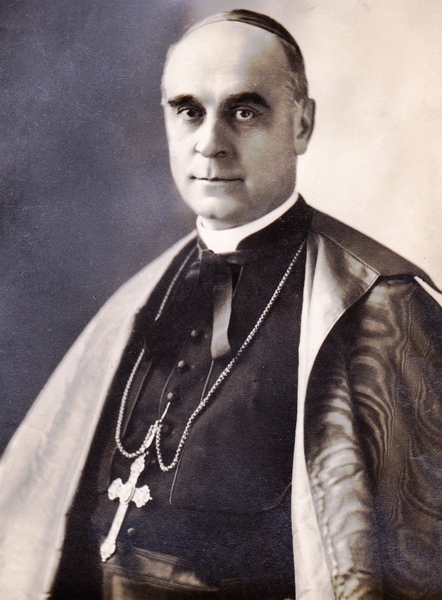
that makes possible the presence of your Abba’s household. Amen. —Rafael Cardinal Merry Del Val

An Ordinary Simple Christian

“An ordinary simple Christian kneels down to say his prayers. He is trying to get into touch with God. But if he is a Christian he knows that what is prompting him to pray is also God: God, so to speak, inside him. But he also knows that all his real knowledge of God comes through Christ, the Man who was God—that Christ is standing beside him, helping him to pray, praying for him. You see what is happening. God is the thing to which he is praying—the goal he is trying to reach. God is also the thing inside him which is pushing him on—the motive power. God is also the road or bridge along which he is being pushed to that goal. So that the whole threefold life of the three-personal Being is actually going on in that ordinary little bedroom where an ordinary man is saying his prayers. The man is being caught up into the higher kinds of life—what I called Zoe or spiritual life: he is being pulled into God, by God, while still remaining himself.” —C.S. Lewis