Renewed Passion For Prayer

If I were to ask you if we should we pray for our friends in need, I think I’d probably get a universal “yes.” Even non-Christians might say we should “send good thoughts” or “best wishes” to our friends.

But if I were to ask, “How long should we pray for them?” we might get a lot of different answers. 

What about if we’re praying for a friend to get a job (and he gets it), or a friend to be healed (and she is), or a marriage to be restored (and it is)—do we stop praying then? 

Psalm 20 and 21 appear to be companion psalms: with Psalm 20 being David’s prayer of petition, and Psalm 21 being his prayer of praise. But there is also something quite interesting in each of these psalms about the placement of the word Selah. 

Remembering that Selah means some sort of pause, I find it very interesting where David tells us to pause in both of these psalms. In Psalm 20 we see the prayer request “may” either 6 or 7 times in the first five verse, but the Selah pause is right in the middle of them. Why would David start making his requests to God, tell us to pause in the middle, and then continue making his requests? 

I believe this Selah means to “pause and consider” that… 

  1. God invites us to participate with Him in fulfilling His plans. 
  2. God loves us so much that He wants to hear from us. 
  3. God is powerful enough to grant what we ask of Him. 

It’s as if in the middle of all of his petitions, David says, “Hold on a second. Do you realize what we are in the midst of doing? We are actually communing with the All-Knowing, All-Loving, All-Power Creator and Sustainer of the Universe!!”

In Psalm 21 David is offering up a prayer of praise for God’s answers to his prayers (note the similar language in Psalm 20:4 and 21:2), and once again he tells us to Selah pause right in the middle of those prayers of gratitude. 

I asked earlier, “When do we stop praying for a friend or for ourselves?” Is it when we get the job, or experience the healing, or have the breakthrough or restoration? What if the job, the healing, the restoration was just the beginning of what God wanted to do? The Selah in Psalm 21 is an accentuation: an explosion into so much more!! 

David prayed for victory in battle, but God gave him an everlasting victory; David prayed for long life, but God gave him eternal life (21:4); David prayed for blessings on his battle, but God gave him His eternal blessings (21:6).

Jesus said our Heavenly Father has gifts for us beyond our asking (Matthew 7:11), and the Apostle Paul said the same thing in Ephesians—

Now glory be to God, who by His mighty power at work within us is able to do far more than we would ever dare to ask or even dream of—infinitely beyond our highest prayers, desires, thoughts, or hopes. (Ephesians 3:20 TLB)

These two Selahs tell me: 

Don’t quit praying when times are tough. 
Don’t quit praying when you’ve prayed a long time. 
Don’t quit praying when it seems like God has answered. 
Keep on praying. Always. About everything!


Please join me this coming Sunday as we continue to look at the Selahs in the Psalms. You can join me in person or via Facebook Live. 
Unexpected Praise

Well, this isn’t what I expected! David says his song in Psalm 9 is supposed to be sung to the tune of “Death Of The Son,” so I’m expecting a prayer that is loaded with minor notes. But instead, David gives us … this! 

The opening verses show us David exploding in praise to God. Check out his vocabulary—

  • I will praise You—this literally means David is pumping his hands in the air
  • I will tell of all Your wonders—David is not doing this just one time but is ticking off a long list of God’s praiseworthy deeds and attributes
  • I will be glad—his face lights up with joy 
  • I will rejoice—this word means a roar of praise (see 1 Chronicles 16:32)
  • I will sing praise—there is a new melody with every praise David lifts to God

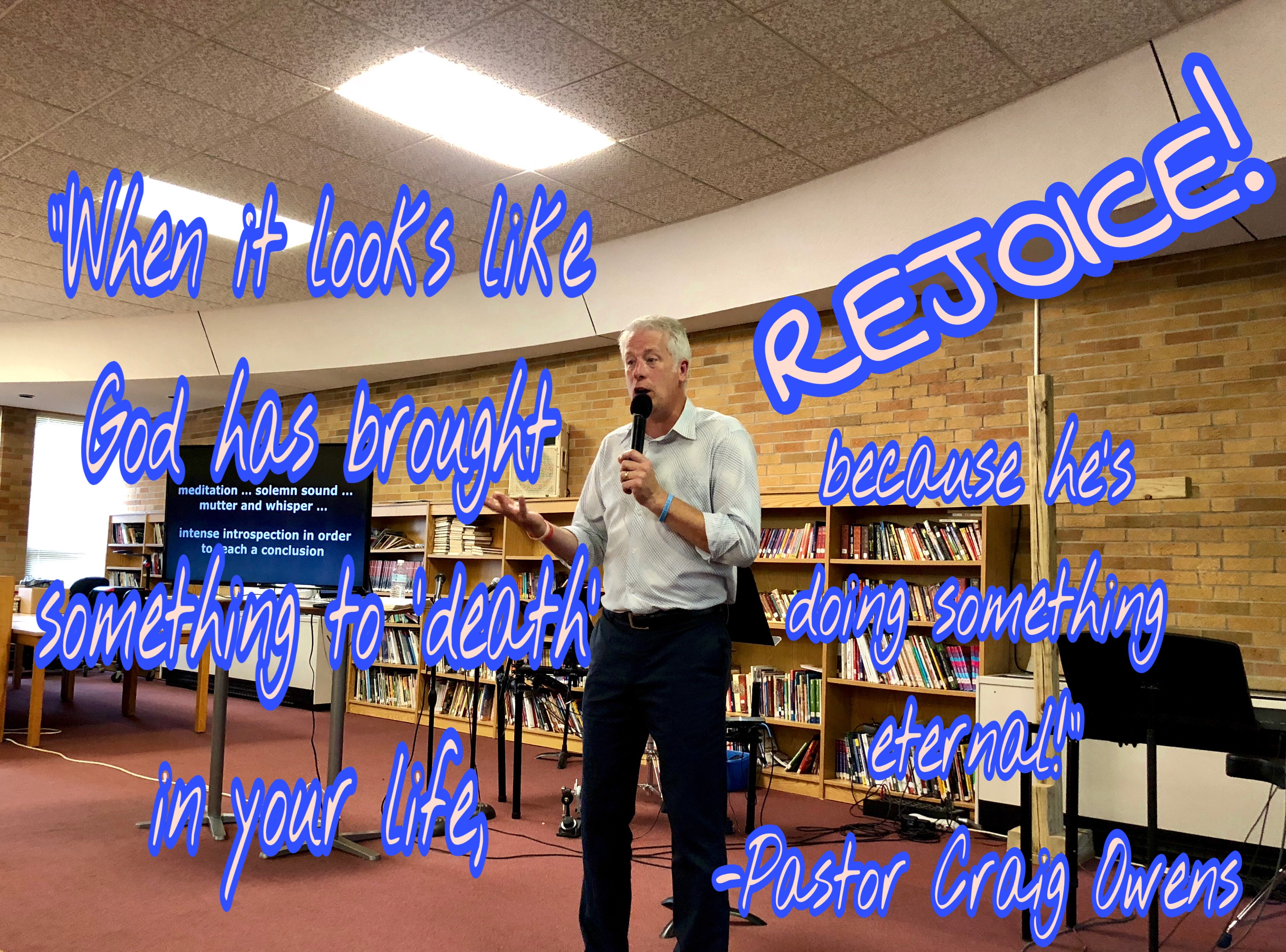
Why this loud, exuberant, unexpected praise? Because David has noticed that whatever has “died” on earth is only a temporary loss, but God is forever! 

There is an unusual word pairing at the end of verse 16: Haggaion and Selah. This is the only time these two words appear like this in all of Scripture, and it’s also the only time Haggaion is used without being translated. 

Haggaion appears just four times in the Bible—(a) in Psalm 19:14 where it is translated meditation; (b) in Psalm 92:3 where it is translated solemn sound; (c) in Lamentations 3:62 where it is translated whisper and mutter; and (d) here in Psalm 9 where it is untranslated. 

By combining Haggaion and Selah, David is wanting us to solemnly meditate on an important contrast: God’s way vs. man’s way. In verses 3-16, David uses huge and eternal terms for God like righteous Judge, reigns forever, refuge, stronghold, merciful, and prayer-answerer. 

Side-by-side with these eternal terms for God, David lists the temporary terms for man like stumble, perish, ruined, forgotten, and trapped. In fact, David ends this Psalm by reminding us evil men who do evil things are “mere men.” Other translations fill in the details: 

  • make them realize their frail nature (AMP)
  • show them how silly they look (MSG)
  • merely human (NLT) 
  • puny men (TLB)

Then David ends with a final Selah—one more call for us to allow this message to resonate with us, especially during the times others may call dark, depressing times. The message that should resonate in our hearts and cause us to throw our hands up in joyful celebration of God is…

these earthly things are temporary and God is eternal. He has never forsaken those who seek Him, and He has never forgotten those who call on Him for help. 

When a dark time—a “death of a son”—tries to rock your world, don’t do what puny mortals expect, but throw your hands up in the air, and sing and roar a praise to the Almighty God Who cares for you! 

Join me this coming Sunday as we continue our looks at the Selahs in the Book of Psalms. You can join me in person or on Facebook Live.

The Selah That Keeps Us From Sinning

There is a very natural emotion that we humans have when someone has hurt us, but if we don’t pause (Selah), that natural emotion can lead us into sin. David has good counsel for angry people in Psalm 4. 

Many scholars think that Psalm 4 is a continuation—or a part 2—of Psalm 3. As you will notice in the preface of Psalm 3, David is on the run from his son Absalom, who is trying to steal the kingdom of Israel from him. 

Look at the swing of David’s emotions:

  • Troubled/sad (v. 1) 
  • Anger (v. 4)
  • Contentment (v. 7)
  • Peace (v. 8)

The first time David tells his readers to Selah pause is between verses 2 and 3. The change is almost an about-face: 

Look at this: look who got picked by God! He listens the split second I call to Him. Complain if you must, but don’t lash out. Keep your mouth shut, and let your heart do the talking. Build your case before God and wait for His verdict (vv. 3-5 in The Message). 

My friend Josh Schram shared these truths: 

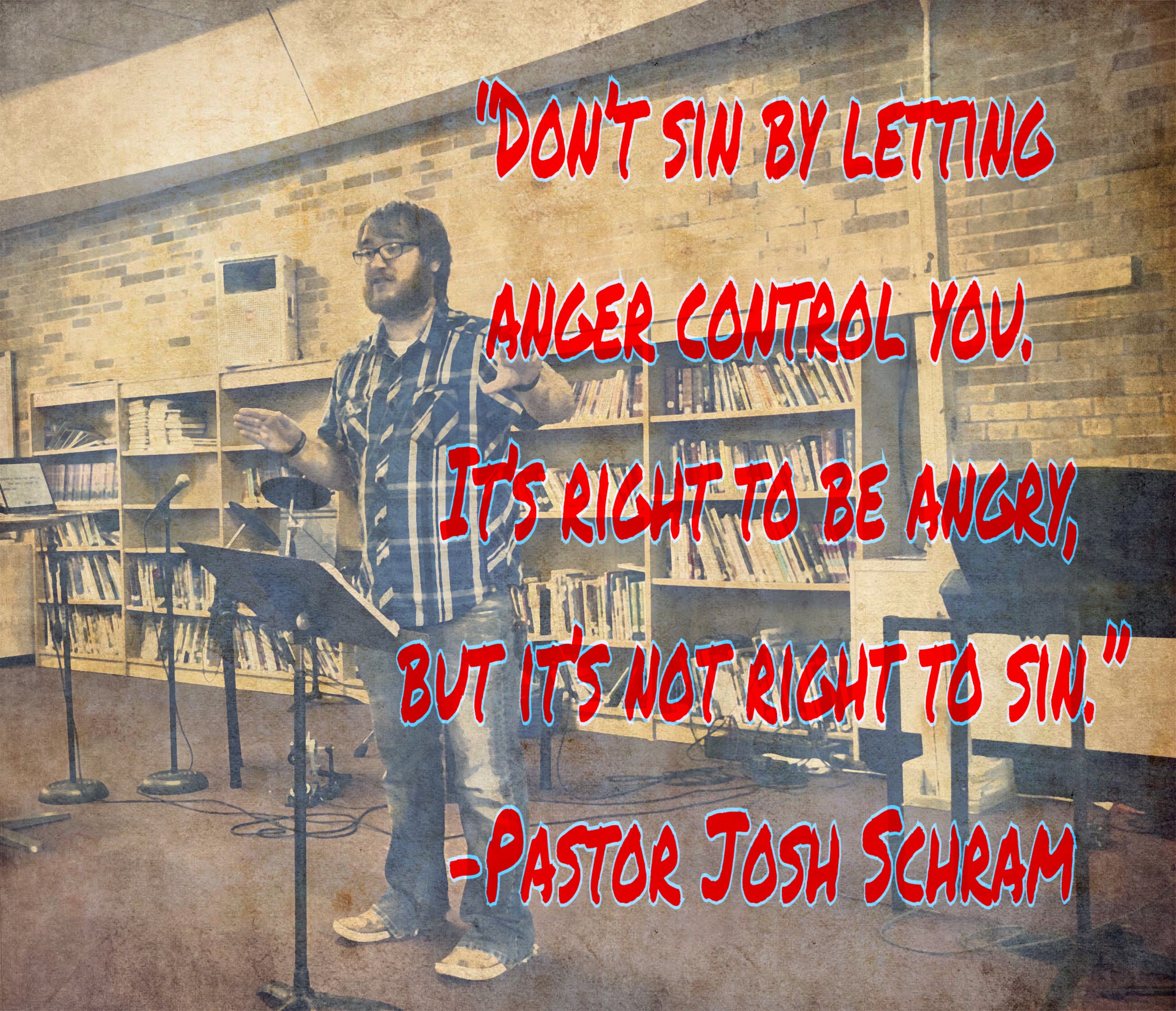
  1. Don’t sin by letting anger control you. 
  2. It’s right to be angry, but it’s not right to sin. 
  3. When someone hurts us, it’s tempting to break God’s law. We can almost justify it, but it is a sin to give in to anger. 

“Search your heart and be silent”Selah. This pause gives us hope that we can “build your case before God and wait for His verdict.” 

In Romans 12:17-21, Paul gives similar counsel when dealing with enemies:  As far as it depends on you…

  • Don’t repay evil for evil. 
  • Do repay evil with doing what’s right. 
  • Don’t take revenge. 
  • Do let God handle it. 
  • Don’t mistreat your enemies. 
  • Do bless your enemies. 
  • Don’t be overcome by evil. 
  • Do overcome evil by doing good. 

Since David let his anger go, that also means he didn’t sin! His clear conscience meant he could lie down and sleep in peace. 

You cannot hold a grudge and peace in the same heart. 

Please join me next week as we continue our look at the Selahs in the Book of Psalms. 

Argument Vs. Experience

There is a curious word that shows up about 70 times in the Bible (almost all of them in the Psalms)—Selah. The best scholars can figure is that this word has some sort of musical meaning: 

  1. Pause / Interlude—to rest in silence. This might even be where the singers stopped while the music continued. 
  1. Accentuation—to lift up or exalt; as in the renewed vigor of the singer or musician after pausing for a deep breath. 
  1. Consideration—the root word for Selah means to weigh on a balance, with the idea of despising the things that are light or trivial, and valuing the things that carry weight or substance. The Amplified Bible uses the phrase “pause and calmly think of that.” 

All three are valid definitions, and all three are used in the Psalms. I think the context of the Psalm makes it clear which one is meant. Sometimes more than one meaning is implied, and sometimes all three meanings are implied. 

Selah first shows up in Psalm 3. This is also one of the few psalms that uses Selah multiple times. We also get a clue to the context in the introduction: A psalm of David. When he fled from his son Absalom [see 2 Samuel 15]. 

David has a lot of enemies ganging up on him? The Message says, “enemies past counting!” And David laments that his enemies are whispering something very negative: “There is no God” or “God is too disinterested or weak to help you” or “You don’t deserve to have God’s help.” 

In the midst of this noise, David pens his first  SELAH—David needs a pause. The enemies past counting have got his thoughts swirling. He needs to pause and calmly think: “I KNOW God can and will help me because He has already helped me in the past. You may have your arguments and reasons, but I have my personal experience with God!” 

Notice the very next word: But (v. 3). You ARE [not were or will be] a shield around me…. To the Lord I CRY aloud [not I used to cry or I will cry], and He ANSWERS [not He answered or He will answer] me… (v. 4).

The second SELAH (v. 4) is the renewed vigor after the pause. The Message says, His answers thunder from the holy mountain. This corresponds with what David wrote when God delivered him previously (see Psalm 18:4-13). Then in the next four verses, David lists all the blessings that come when God answers: 

    • sleep 
    • sustaining power 
    • no fear of the tens of thousands on every side
    • deliverance
    • retribution for enemies 
    • God’s blessing—Real help comes from God. Your blessing clothes Your people! (v. 8 in MSG) 

David concludes this psalm with one final SELAH (v. 8)—to weigh on a balance. On one side: accusations and threats (only words). On the other side: personal experience of past deliverance and confident assurance of God’s present presence and rock-solid hope in God’s future grace. Pause and calmly consider those scales: which side are you on? Do you have only words, or do you have personal experience? 

The one with an experience with God is NEVER at the mercy of the one with only an argument against God. 

Join me next Sunday as we continue our look at the Selahs in the Book of Psalms. You can join me in person or on Facebook Live. 

Selah

The word Selah appears nearly 70 times in the Bible, almost exclusively in the Psalms. Although it is primarily a musical term, it applies beautifully to our new summer series. 

Selah can mean…

  • a pause from the noise to reflect;
  • a preparation for an exciting accent; or 
  • a reflective time of consideration

Throughout the Psalms, Selah appears at the end of a verse, at the end of the psalm, or sometimes even mid-sentence. But each one of them is perfectly placed by the Spirit-inspired authors to get us to take a breath and deeply contemplate what we just read or sang. 

Summertime is typically a time for us to pause from our regular routine. Perhaps it’s a vacation, time with friends and family, driving around with the windows down and the music blasting, or just a quiet walk through woods or along a beach. In any case, whether we realize it or not, we’re actually doing Selah in these break-from-the-routine activities. 

Join me beginning this Sunday for our summertime look at each of the Psalms that ask us to Selah. I think you will find that this Sunday summertime pause will be both refreshing and encouraging. You can join me either in person or on Facebook Live. 

If you missed any of the messages in this series, check them out here:

What Is Church?

All across the world on Sunday morning, people met for church? But what exactly is church? Is it a place we go to? Is it something that only happens on Sundays? 

The Greek word for church is ekklesia. It meant an assembly of citizens. Luke used the term when he recorded a government official saying, “If there is anything further you want to bring up, it must be settled in a legal assembly” (Acts 19:39). But in the New Testament, it came to mean “a community based on a special religious idea and established in a special way” (Dr. Marvin Vincent). It can also mean either a local group of Christians or “the whole body of Christians scattered throughout the earth” (Dr. James Strong). 

Church never means a building. Nowhere does the phrase “go to church” appear in the New Testament. Instead, church carried the idea of a living, growing organism because church was wherever a follower of Jesus was. Sometimes the church met collectively in one location, and sometimes individual believers were out in the community. But wherever the Spirit of God went, church was happening. 

If church is not something we go to, it’s also not something that takes place only one day per week. Look at what Jesus did on the Sabbath day: 

But we also see Jesus doing all of these things EVERY day of the week. 

For Jesus, neither the day of the week nor the location determined the way He lived. Peter summed it up this way, “God anointed Jesus of Nazareth with the Holy Spirit and with power. Then Jesus went around doing good and healing all who were oppressed by the devil, for God was with Him” (Acts 10:38). 

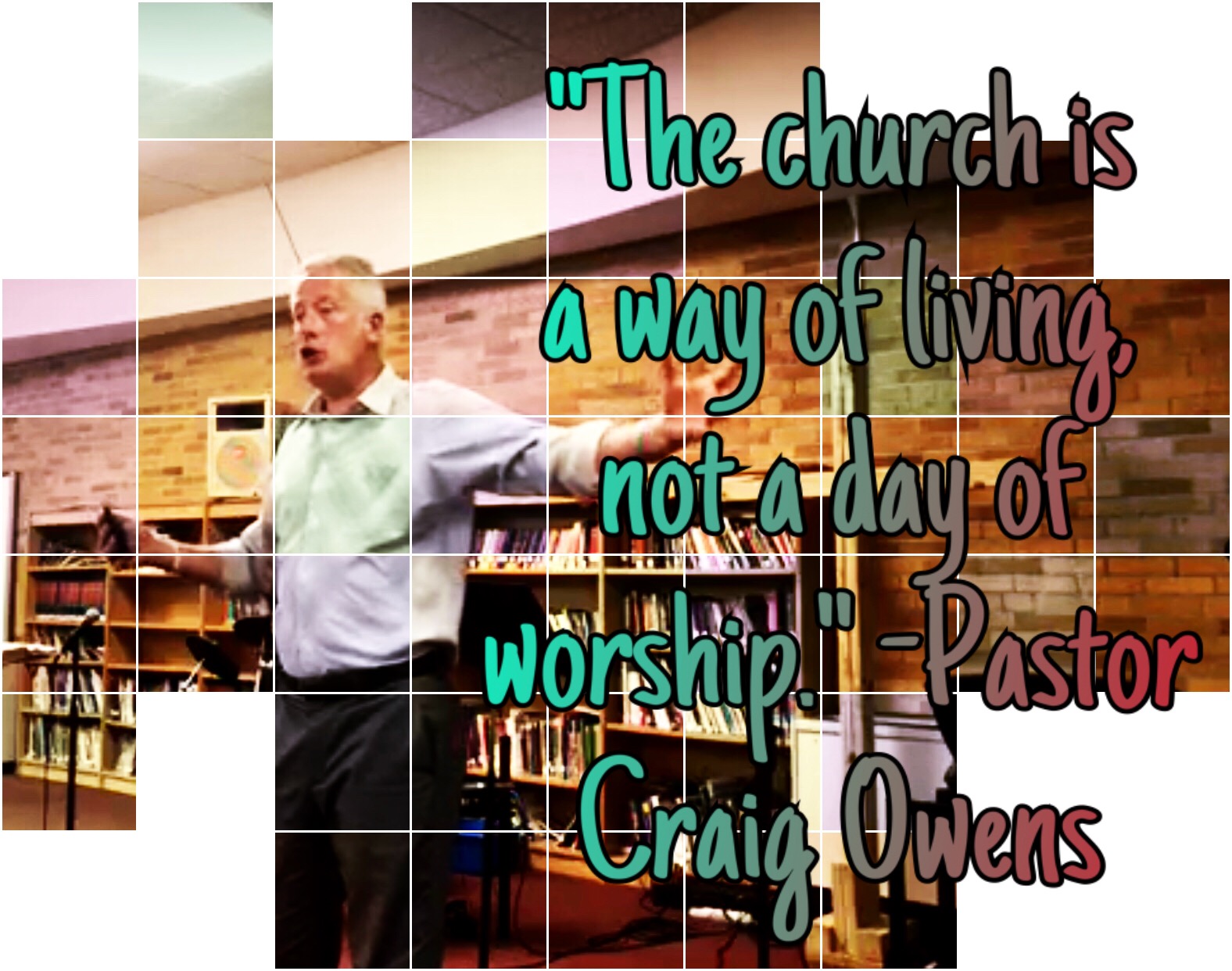
In fact, before they were called Christians the church was simply called “the Way” letting us know that the church was a way of life, not a day of the week. 

Based on how Jesus lived and how the Apostle taught, I think we can see the Church Way like this: 

In other words, EVERY day and in EVERY place the followers of Jesus were being enriched in their own lives so that they could reach out to the hurting so that they could come to know Jesus personally so that their lives could be enriched so that they too could reach out to others, and on, and on, and on it goes! 

Limiting “church” to a specific location or to a specific day of the week is way too small-minded. Church as Jesus intended it was a powerful force that would set people free EVERY day and in EVERY place from the power of the devil and introduce them to God’s eternal life! 

A Warrior For God’s Favor

I love this guy! 

Caleb is a dog. I’m not kidding: his name literally means dog. To be more specific his name actually means a rabid dog. What?! Yeah, but it totally fits his life. 

Caleb first shows up on the scene when the Israelites are getting ready to explore Canaan for the first time. They have just been delivered from Egypt and in about two months have arrived at the border of their promised land. Moses wants to send a representative from each tribe to scout out the land. 

So the first thing we learn about Caleb is that he is a leader of the largest, most powerful tribe in Israel (Numbers 13:1-3, 6). 

After scouting the land for 40 days, these men come back with a report for everyone. Halfway through their report, Caleb interrupts everyone—“We should go take the land right now, for we can certainly do it!” (13:30). Caleb was outspoken for God’s favor. He firmly believed that God was for them. 

Unfortunately, nearly all the other scouts (except Joshua) disagreed with Caleb. They warned that there were giants in the land that would eat them for lunch. In essence, the same people who had seen God deliver them from the Egyptians and part the Red Sea for them now thought that God wasn’t able to defeat giants. This vocal majority turned the entire nation against Moses and wanted to return to Egypt! 

So God promised that none of the adults would enter the promised land, with only two exceptions: Joshua and Caleb. God pointed out that Caleb “has a different spirit and follows Me wholeheartedly” (Numbers 14:24). This is where we first learn that Caleb is rabid. The term rabid means zealous, intense, fanatical, inspired. Caleb is a man who is focused—intensely, wholeheartedly focused—on God. In fact, this word wholehearted is used about Caleb three more times (see Joshua 14: 8, 9, 14). 

Along with the rest of the Israelite community, Caleb wandered in the wilderness for 40 years. He never thought God had forgotten him; he never lost his intense wholeheartedness; he stayed rabid the whole time. He had a trust in God that never diminished. His motto might have been: “God said it; I believe it.” 

After 40 years in the wilderness, and then five more years fighting to claim their promised land, Caleb was still raring to go. He told Joshua, “I am still just as strong as I was 45 years ago. I’m 85 years old and still ready to take on giants. Let me at ‘em!” And he did it! Caleb drove out three giants in order to claim his territory (Judges 1:20).

But Caleb wasn’t done yet. He then used God’s favor to be a blessing to others. The Apostle Paul tell something that Caleb lived out: God will generously provide all you need. Then you will always have everything you need AND plenty left over to share with others (2 Corinthians 9:8). Without a word of complaint, Caleb gladly accepted not only the responsibility of letting the Levities live in the town he had conquered, but he also took on the added duties of making that city of Hebron a “city of refuge.” In this city, Caleb would keep anyone safe from those seeking their lives until a proper trial could be held. 

Caleb was successful for nearly 90 years because he was convinced that God was for him.

Nothing could distract him from wholeheartedly clinging to God’s favor! 

Caleb was a warrior for God’s favor, and he was a successful warrior because of God’s favor. The same can be said of you IF you will decide to cling to God’s favor wholeheartedly.

God’s Gift To The World

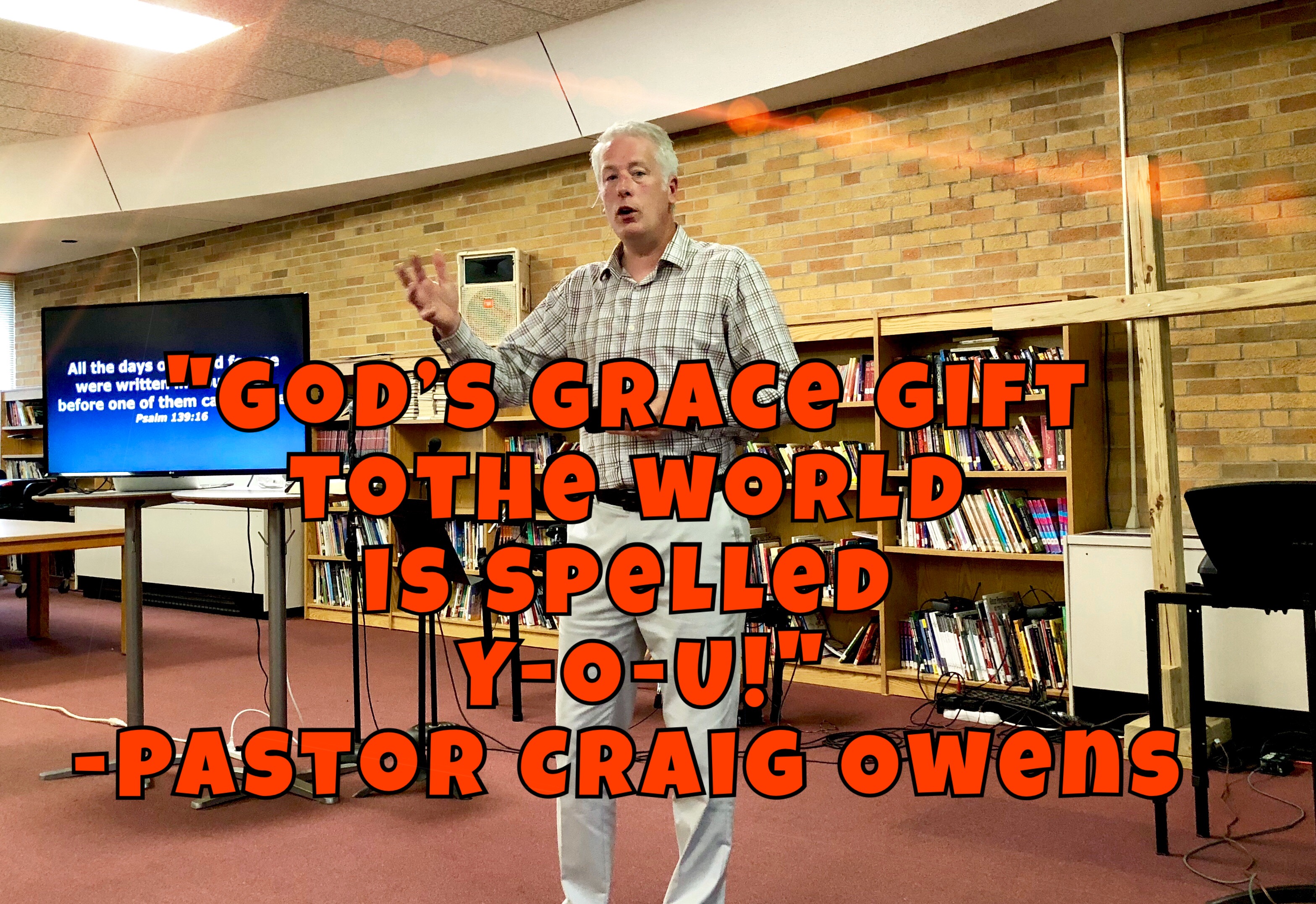
You are a gift. You are God’s grace gift to the world. 

Max Lucado said it this way: “You are you-nique. 

God made you on purpose and for a purpose.

God implanted unique abilities in you from conception (see Psalm 139:13). And check out what God said to Jeremiah, “Before I formed you in the womb I knew and approved of you…” (Jeremiah 1:5). Before you were even conceived, God already knew all about you AND He approved of you! 

Why did God implant these unique abilities in you? Because He knew of the unique opportunities you would face during your lifetime (see Psalm 139:16). Because God is for you, He gave you all that you would need to successfully face every opportunity that came your way. 

Every one of us has been given these grace gifts of unique talents and opportunities. The Bible says, “to each one of us grace has been given as Christ apportioned it” (Ephesians 4:7). If God is for you, and God is for me, then that means that you have been gifted to be a blessing to me and I have been gifted to be a blessing to you (Romans 12:3-6; 1 Corinthians 12:4-7).

Let me state it again: every one of us has been entrusted by God with unique talents in order to successfully face the unique opportunities that He knew we would face. Jon Bloom reminds us, “Some are given more, some are given less, but all are given much.” 

So what do we do with what we’ve been entrusted? There are two possibilities: (1) We can invest our talents and abilities in a way that glorifies God, or (2) We can squander the talents God has given us. 

How do you squander the grace gift of your life? 

  1. Not discovering it—I have a gift?
  2. Devaluing it—I’m nothing special.
  3. Overvaluing it—I’m super-important. I don’t need anyone else.
  4. Laziness—I don’t want to mess it up, so there’s no need for me to invest my gift.
  5. Short-sightedness—My gift is just for me, so it doesn’t matter what I do with it.

I hope we can all say what Erma Bombeck wrote: “When I stand before God at the end of my life, I would hope that I would not have a single bit of talent left but could say, ‘I used everything You gave me.’”

How do you honor God with your you-niqueness? I can tell you in just three simple words—You be you! 

If you will just be who God made you—not downplaying your talents, not wishing you had someone else’s talents—that’s when you will feel fulfilled, and God will be glorified, and the rest of the world will be blessed! So…

YOU BE YOU! 

Is It Really The 11th Hour?

When we’re down to the last minutes before a crucial deadline, we often refer to it as “the eleventh hour.” 

Have you been there? You’re sweating it out, wondering if God is going to come through for you. Or perhaps thinking about what you might need to handle yourself in order to meet the deadline. And then God comes through for us, and we let out a deep sigh of relief and gratitude. 

But why a sigh? Were we worried that God wouldn’t come through? Did we think God’s supply was limited? And what made us think that it was “the eleventh hour” anyhow? 

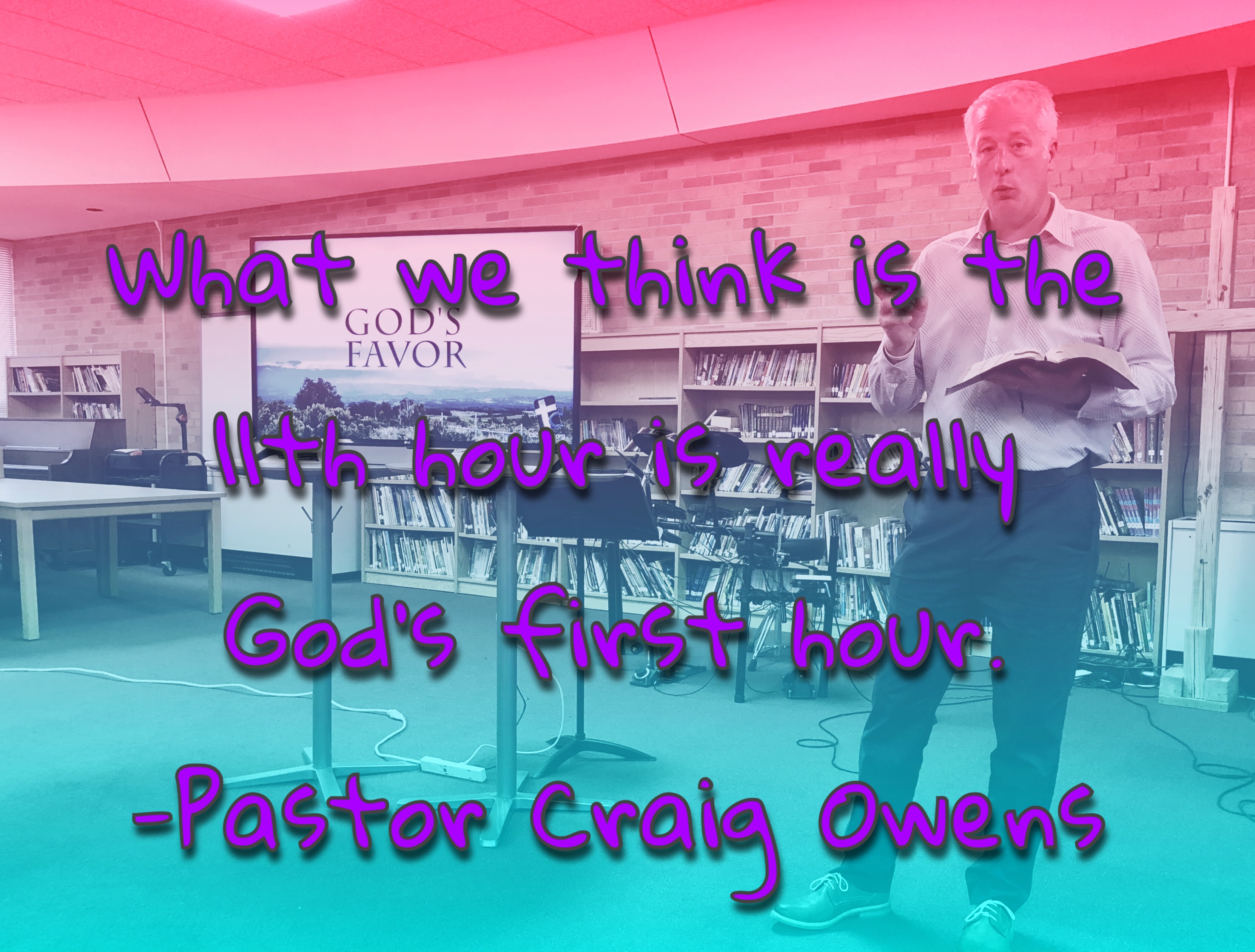
What we often think is the eleventh hour is really God’s first hour! God is never late. He’s never scrambling to come up with what we need. We might be the ones “scrambling,” but God never is. He always has the perfect resources at the perfect moment. 

We should know this because the Bible tells us: God who did not spare His own Son, but gave Him up for us all—how will He not also, along with Him, graciously give us all things? (Romans 8:32) 

Jesus tells a story about an eleventh-hour situation in Matthew’s Gospel. Men were waiting around to work for the day when a landowner came along to hire them. He hired some guys first thing in the morning and agreed to pay them a full day’s pay. He hired some other workers at 9:00 AM and promised to pay them fairly, and then he hired even more workers at noon and at 3:00 PM, also promising to pay them what was fair. Finally, he hired some workers at 5:00 PM—literally at the eleventh hour—without any mention of pay. 

At the end of the day, every single worker was paid a full day’s wage. Every single one of them. Jerry Bridges notes why this is significant: 

“Each worker, regardless of how long he had worked, received a day’s wages. He received not what he had earned on an hourly basis, but what he needed to sustain his family for a day. … Those eleventh-hour workers were hired because they needed to receive a day’s wages. They had been standing all day waiting for someone to hire them so they could earn money to support their families. They needed to work more than the landowner needed their work. He hired them, not because of his need, but because of their need.” (emphasis added)

You see, God knows what you NEED and He generously supplies that NEED right on time.

Jesus taught us to pray, “Give us this day our daily bread.” The problem comes when we start looking down the road wondering what’s going to happen tomorrow, and the next day, and the next day (see Matthew 6:11, 31-34). 

God’s favor toward us is out of all proportion to our work or sacrifice. He gives exactly what we need, exactly when we need it. 

If you’re feeling anxious—like the clock is ticking down to the eleventh hour—perhaps you should recall how God has provided for you in the past. Then discipline your thoughts from running ahead to tomorrow as you pray, “Give me this day what I need.” 

Here’s a prayer I’m praying—

“God, I remember the wonderful deeds You have done for me. They are constantly in my thoughts. I cannot stop thinking about Your mighty works in the past. Therefore, I ask you today for my daily bread. Let my heart be on guard against scrambling as though I were in an eleventh-hour situation. You are my all-loving, all-gracious Father. You know what I have need of even before I ask. May my attitude be one of assured contentment in your abundant, right-on-time supply. May you be glorified as others see this confidence in my attitude.”

Do People Know That You Know That God Is Good?

Listen to the podcast of this post by clicking on the player below, and you can also subscribe on AppleSpotify, or Audible.

If you’ve been reading or watching my series on God’s favor the last few weeks, I hope you truly know this: God is for you! 

But the key question for Christians comes down to this—Do others know that you know that God is for you? 

You see, God is for you because God is joyful and happy, and He wants you to not only know this but to radiate this joy and happiness to those around you. 

Here’s how it works:

(1) Joy is an inside job. The dictionary defines joy as “a feeling of great delight caused by something exceptionally good or satisfying.” When we know by our personal experience with Him how good God is, joy is birthed in our hearts as we see Him as All-Good and All-Satisfying. 

(2) Joy is regardless of my external circumstances. Some people try to pursue happiness apart from joy. Trying to get happy without having the foundation of joy is like having a flower that has been picked from the plant. Happiness may be pretty for a short while, but it is already fading because it is completely dependent on the environment around it. True happiness isn’t dependent on external circumstances because it is rooted in something far greater. 

(3) Knowing God’s favor fuels our joy. There is a Hebrew word for know which means “knowledge through intimate, personal experience.” Psalm 100 describes happy people and their joyful praise. Their joy comes from this: They know that their Lord is God and that He is good. This joy comes from seeing and savoring God’s favor.  

(4) Our internal joy should bubble up into external happiness. All throughout the Bible, we read how those who are filled with joy as they get to know this exceptionally good, all-satisfying God cannot help but burst out in songs of happy praise (see Psalm 28:7 and Luke 10:21).

(5) Our external happiness becomes our testimony. In Psalm 126 we read that God’s people who were full of God’s joy burst out into happy praise. When they did the people around them recognized that God had done great things for them. 

Check this out—

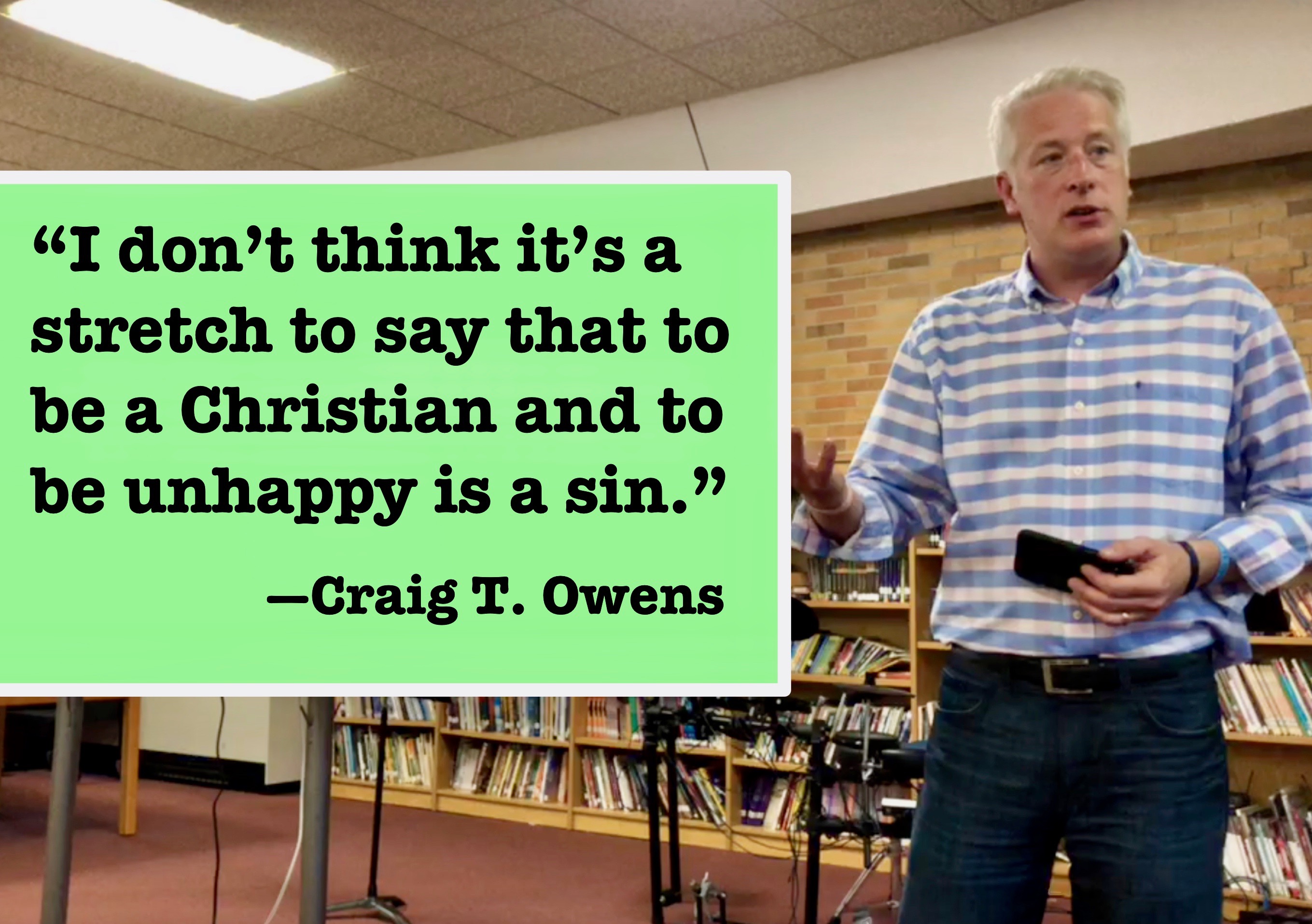
“I don’t think it’s a stretch to say that to be a Christian and to be unhappy is a sin. An unhappy Christian gives God no praise, robs Him of glory, and paints God in a bad light. A happy Christian knows the Lord is his strength, his comfort, his supply. The happy Christian lifts God high and invites others to know this All-Good, All-Happy God too!” —Craig T. Owens 

So let me ask you again: If you call yourself a Christian, do people know that you know that God is for you? Are you making God look All-Good and All-Satisfying by your deeply fueled joy and your face-brightening happiness? 

What a testimony it is when God’s people are happy in Him! 

►► Would you please prayerfully consider supporting this ministry? ◀︎◀︎

If you have missed any of my other posts about God’s favor, you may check them out by clicking here.