
God Loves Wicked People

Listen to the podcast of this post by clicking on the player below, and you can also subscribe on Apple, Spotify, or Audible.
The first two Selah pauses we see in Psalm 140 are pauses to remember two things: 

  1. There, but for the grace of God, go I. 
  2. God is doing something in me through wicked people and evil times. 

But there is one more Selah in this chapter that we need to consider—Do not grant the wicked their desires, O Lord; do not let their plans succeed, or they will become proud. Selah. (v. 8) 

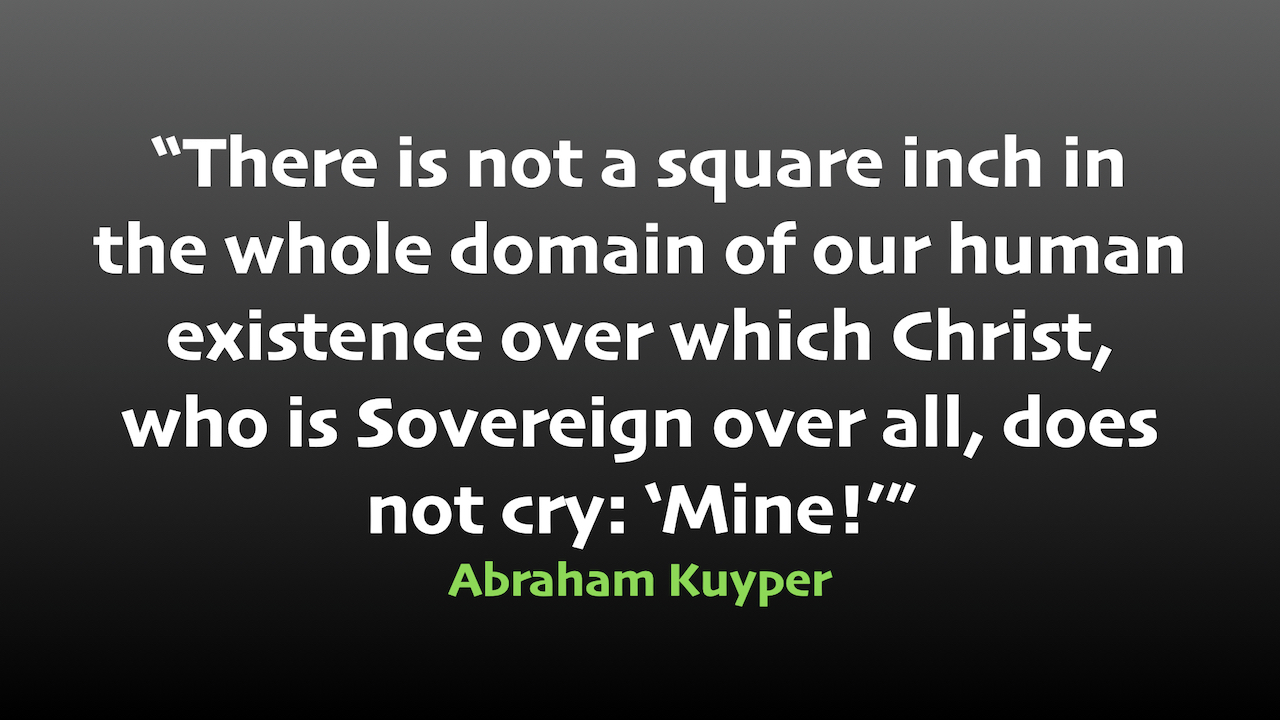
Most of  us would probably agree with Abraham Kuyper who said, “There is not a square inch in the whole domain of our human existence over which Christ, who is Sovereign over all, does not cry: ‘Mine!’” 

But the amazing thing here is that God allows David—and you and me—to call Him mine! “O LORD, I say to You, ‘You are MY God’” (v. 6). David goes on to say that God is my strong deliverer who shields me against evildoers (v. 7). 

But isn’t David’s God also the God of the wicked? Aren’t they a part of “the whole domain of human existence” that is His? Yes! 

So that must mean that God wants even wicked people to call Him, “My God”! 

This is exactly what Jesus told us: For God so loved the world [including wicked people] that He gave His one and only Son, that whoever [including wicked people] believes in Him shall not perish but have eternal life. For God did not send His Son into the world to condemn the world, but to save the world [including wicked people] through Him (John 3:16-17). 

Just before this third Selah in verse 8 David prays that the plans of the wicked might be thwarted so that proud people don’t become even more proud. That seems okay. But after the Selah David seems to be asking God to let everything that wicked people have planned to boomerang back on them (vv. 9-11).  
Isn’t that hateful? Not if we understand “hate” correctly. 

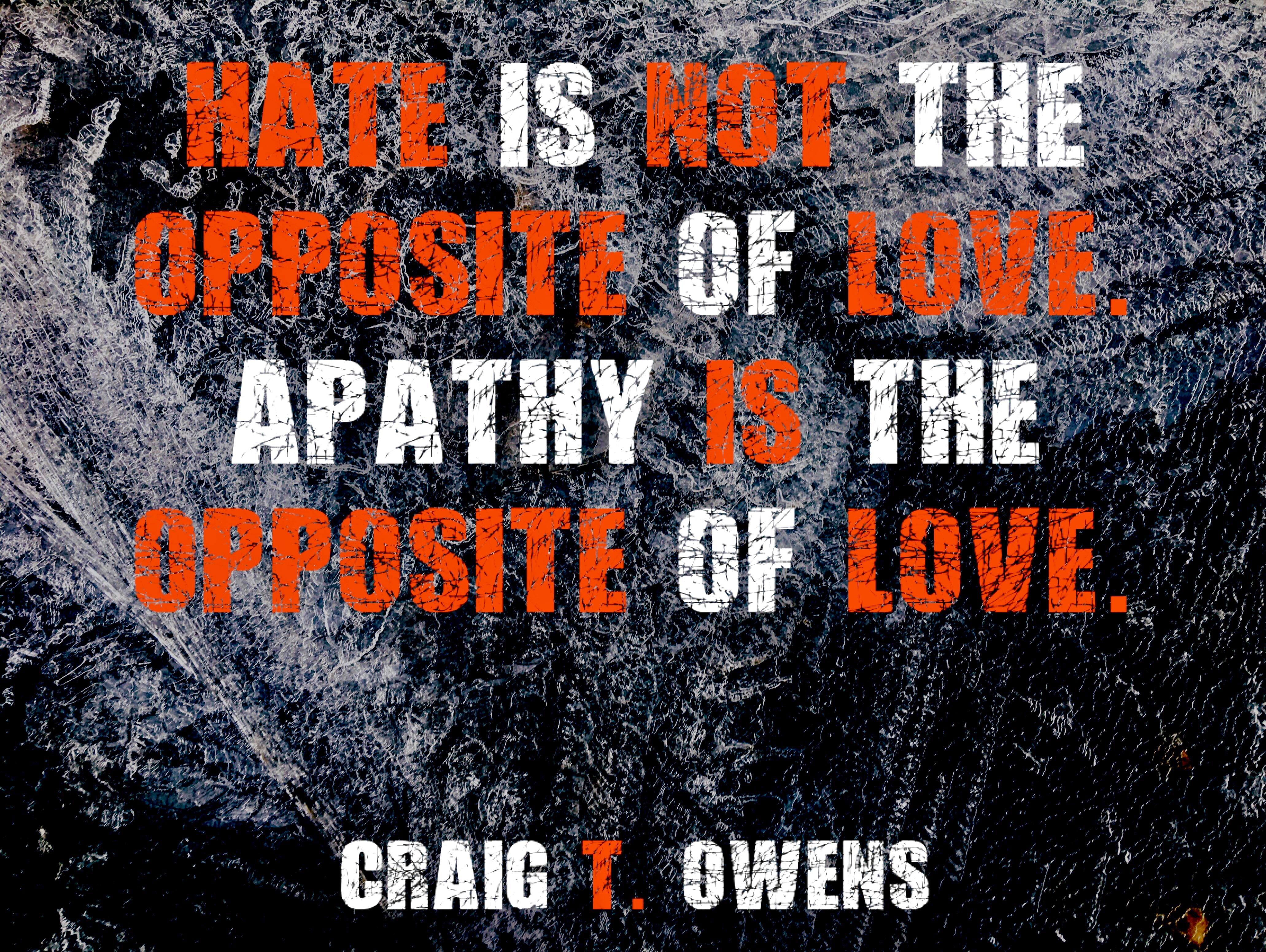
Hate isn’t the opposite of love, but apathy is the opposite of love. Hate is a very strong emotion that usually comes out when something we love or desire is thwarted or kept from us. 

Just as we learned last week that God allows evil people and their slander and wickedness to prune us and make us more fruitful, can’t God give back to evil people exactly what they need to get their attention? Can’t He use their own evil plans for them just as He used them for us? Yes! 

If God loves us—and He does—then He must hate anything that keeps us from Him. 

If God loves wicked people—and He does—then He must also hate anything that keeps them from accepting the atoning work Jesus did for them on the Cross. 

God is love. There is nothing you can do to make God love you any more. There is nothing an evil person can do to make God love them any less. 

David’s third Selah is really his reminder that he must leave evil people to the only One who can discipline them in perfect measure. We have to leave evil people to God’s care—the only One who can rescue them. That’s why Jesus told us to “love your enemies and pray for those who persecute you” (Matthew 5:44). 

David’s prayer in verses 9-13 does leave evil people in God’s hands, and it’s a prayer you and I can personalize for those whom we desire to know Jesus as their Savior. 

It’s not God’s desire that any should perish. So let’s Selah to call God, “My God,” but to also pray that even the wicked people around us will come to the realization that through faith in Jesus, they too can cry out, “My God!” 

God gave me a unique story when I was walking through a challenging time with a friend that I needed to leave to God’s care. I called the story The Parable of the Lifeguard. You can watch it in the video below, or you can read it by clicking here. 

If you have missed any of the messages in our Selah series, you can find a list of all of those messages by clicking here. 

►► Would you please prayerfully consider supporting this ministry? My Patreon supporters get behind-the-scenes access to exclusive materials. ◀︎◀︎
Go Deep—The Operational Gifts Of The Holy Spirit

According to 1 Corinthians 12-14, the Holy Spirit operates in nine different gifts to both evangelize the sinner and edify the saints. The apostle Paul says that these gifts are available to all Christians who will allow the Holy Spirit to operate through them.

This is the introductory lesson in this series. You may download the participant’s notes here → Go Deep – operational gifts introduction

In our previous study, we learned about the motivational gifts listed in Romans 12. You can check out all of those lessons by clicking here.

If you would like to join us in person for this class, here is where you can find us. If you have missed any of the classes in this series, check them out here:

My Unique History

Listen to the podcast of this post by clicking on the player below, and you can also subscribe on Apple, Spotify, or Audible. 

I had a great time on the 200churches podcast with Jeff Keady. 

Jeff and I talked about my unique background and how that contributed to not only the book I wrote but also to the activities in which I am presently involved.

God took me on a long journey before I came to be a shepherd in Cedar Springs, MI. There were times in my younger life when I questioned why my path didn’t look like a straight line that was heading toward a career or vocation, but God showed me the truthfulness of the promise in Romans 8:28—He is using ALL THINGS to accomplish what He needs for me and for His Kingdom. (Check out the short video below where I share a bit of my autobiography.)

I hope this is a word of encouragement for you too. God IS directing every single one of your steps, He IS using all of your education and experiences to accomplish His purpose. Don’t bail out of this process, and don’t ever get discouraged that your path seems different than those around you. God is being as unique with you as He is with everyone else. 

If you are a church leader, I encourage you to pick up a copy of my book Shepherd Leadership: The Metrics That Really Matter. I believe you will find many more encouraging thoughts that will keep you engaged in the work to which God has called you.

I’ll be sharing more clips from this 200churches interview soon, so please stay tuned. Shepherd Leadership: The Metrics That Really Matter is available in print or ebook, and in audiobook through either Audible or Apple. 

►► Would you please prayerfully consider supporting this ministry? My Patreon supporters get behind-the-scenes access to exclusive materials. ◀︎◀︎
Protected To Be Fruitful 

Listen to the podcast of this post by clicking on the player below, and you can also subscribe on Apple, Spotify, or Audible. 

We just finished a 2-week look at Psalm 88 & Psalm 89 which reminded us of the reality of temporary darkness and the certainty of eternal light. We said our dark days are meant to get our attention to rely on God’s covenant promise. 

Something else we should be aware of: Whenever we run to or return to Jesus, the enemy of our souls prepares an attack (1 Samuel 7:3-10; 1 Peter 5:8). 

The next psalm with a Selah is David’s prayer in Psalm 140. Selah appears 3 times in this short, 13-verse psalm. 

We’ve said that Selah can mean a pause to carefully consider, a pause to observe the contrasts, or a pause to prepare for a crescendo. The Selahs after verses 3 and 5 don’t appear to fit the second or third definitions, but why would David ask us to pause to consider what wicked men are doing? I believe it is because we need to pause to contemplate two vital things, which I’ll share with you in a moment. 

But first, notice the wicked men and evil times that David is confronting. He speaks of evildoers, violent people, wicked men, arrogant people, and slanderers (vv. 1, 4-5, 8, 11). 

Surrounding the first two Selahs, check out David’s prayer for God to…

  • …rescue me (v. 1a)—get me out of here, or take the evil away from me  
  • …protect me (v. 1b, 5b)—don’t let me be defeated or even diminished  
  • …keep me (v. 4a)—we might say David is asking God to “watch my six” or guard the places I cannot see (notice the words net and traps in v. 5b) 

The first Selah lesson we should take away is: There, but for the grace of God, go I. 

If I hadn’t accepted Jesus as my Savior and had a new nature imparted to me, I would be doing exactly what these wicked people are doing. Paul tells Timothy what evil people will do, and he tells the Corinthian Christians that they used to be those same kinds of people (2 Timothy 3:1-5; 1 Corinthians 6:11). 

When I see evil men, men of violence, and wicked people who are proud and slandering, I need to Selah to pray that the light and love of Jesus will be revealed to them. 

The second Selah lesson we should take away is: God is doing something in my life through wicked men and evil times. 

The words the Holy Spirit prompted David to pen have a richer definition than what I previously shared with you. Check this out…

  • …rescue me (v. 1a) also means make me strong and well-armed for battle  
  • …protect me (v. 1b, 5b) envisions a gardener carefully watching over his vineyard to bring the plants to fruitful maturity (like in John 15:1-2)  
  • …keep me (v. 4a) can mean “fight for me”  

Sometimes God protects me from violence. Sometimes God protects me through violence. Whatever the case, I can be assured that I will be rescued and He will be glorified. This prayer in Psalm 140 is a prayer for protection so that we can be fruitful for God’s kingdom.

We need to Selah during the evil times we live in and whenever we have to endure wicked attacks. 

  1. Selah to thank God that you have been redeemed from that evil lifestyle by your faith in Jesus, and then pray for your attackers (Matthew 5:44). 
  2. Selah to thank God that He is using even evil people to make you more fruitful, to arm you for battle, and to glorify His name (Mark 13:9). 

If you’ve missed any of the messages in our Selah series, you can check them all out by clicking here. 

►► Would you please prayerfully consider supporting this ministry? My Patreon supporters get behind-the-scenes access to exclusive materials. ◀︎◀︎
Go Deep—Mercy And Wrap-up

According to Romans 12, all Christians have been given a unique gift package by God. We are to use these motivational gifts to make God’s Kingdom more visible and more desirable. 

This week we discuss the gifts of teaching and exhortation. You may download the participant’s notes and the gifts assessment I use in this lesson:

If you missed any of the lessons in this class, you can find them all here.

If you would like to join us in person for this class, here is where you can find us.

…The Certainty Of Eternal Light

Listen to the podcast of this post by clicking on the player below, and you can also subscribe on Apple, Spotify, or Audible.

Even though Jesus explicitly told His followers about His crucifixion, it was clear on that Friday on Golgotha that they didn’t fully grasp what was going on. 

We see the same thing in Heman’s maskil of Psalm 88: The faint hope that his Savior would rescue him from death, but still not fully grasping what was happening. Just as Jesus cried out, “It is finished” and His disciples thought the darkness had fallen, Heman ends his psalm with, “You have taken my companions and loved ones from me; the darkness is my closest friend” (Psalm 88:18). 

There is the reality of darkness in this world—but it is only temporary darkness. This is why I entitled our look at Psalm 88 as “The reality of temporary darkness” because, in the second part of this couplet of maskil psalms, Ethan moves right into the light of Resurrection Sunday: “I will sing of the Lord’s great love forever” (Psalm 89:1). 

Consider this Good Friday-to-Resurrection Sunday thought from Jesus: “…In the world you will have tribulation; BUT be of good cheer, I have overcome the world” (John 16:33). This tells us of both the temporary darkness and the conquering Light. But also notice that Jesus said our peace would come from knowing that both darkness and light are realities: “These things I have spoken to you, that in Me you may have peace.” Whether we are in temporary darkness or looking forward to the eternal light, our peace is only found in Jesus. 

When the followers of Jesus came to His tomb on Sunday morning, the angels asked them a penetrating question, “Why are you looking for a living Person in a place where there are dead people?” Then they began to stimulate their memory to get them to recall Christ’s words. Finally, we read, “THEN they remembered” (Luke 24:5-8). Then they had to choose to obey the word of God. 

Ethan recalls God’s words and uses his “will” three in the opening two verses. 

The disciples also could bank on Christ’s words, just as Ethan chose to bank on Jehovah’s words. The central part of Psalm 89 is God speaking: Check out His assurance in the “I will” statements within the quotation marks in verses 19-37. Then we are called to Selah to let that soak in. 

Notice what radiates out from this foundational assurance:

  • Ethan uses the pronouns You/Your 20 times in reference to God to assure us that God is in sovereign control (vv. 8b-14). Then he tells us of the blessings of God’s favor on our obedience to His word (vv. 15-18). 
  • On the other side of the central quotation from God, Ethan again uses the pronouns You/Your 13 times in vv. 38-45, but then he tells us of the blessing of God’s discipline on our disobedience.
  • Radiating out further, Ethan asks seven questions—much like his brother Heman did in Psalm 88—in verses 5-8 and 46-48. 
  • Finally, we see the psalm both opening and closing with praising God as we remember His covenant word (vv. 1-4, 49-52). 

Remember we said the darkness cannot prevail. The darkness is temporary (Romans 8:18) but Ethan repeatedly reminds us of God’s foreverness (vv. 1, 2, 4, 29, 52). 

  • The Selah after v. 4 is to pause in wonder at God’s words and break into rejoicing!
  • The Selah after v. 37 is again to pause after remembering God’s covenant, and to reflect on our own obedience or disobedience. 
  • The Selah after v. 45 is a pause to mourn and repent from our disobedience. 
  • The Selah after v. 48 is to pause to reflect on the forgiveness purchased on Calvary and the eternal light and life that bought. 
  • Finally, v. 52 harkens back to v. 1 as the praise is restored and the cycle begins all over again. In fact, the praise of God’s light continues forever! 

Heman and Ethan both remind us of this important truth—

My dark days are meant to get my attention. Are they dark because I live in an evil world, or because I have sinned? In either case, my only remedy is to rely on God’s covenant promise fulfilled in the death and resurrection of Jesus. 

If you’ve missed any of the other messages in our Selah series, you can find a complete list by clicking here.

►► Would you please prayerfully consider supporting this ministry? My Patreon supporters get behind-the-scenes access to exclusive materials. ◀︎◀︎
Go Deep—Giving And Leadership

According to Romans 12, all Christians have been given a unique gift package by God. We are to use these motivational gifts to make God’s Kingdom more visible and more desirable. 

This week we discuss the gifts of teaching and exhortation. You may download the participant’s notes and the gifts assessment I use in this lesson:

If you missed any of the lessons in this class, you can find them all here.

If you would like to join us in person for this class, here is where you can find us.

The Reality Of Temporary Darkness…

Listen to the podcast of this post by clicking on the player below, and you can also subscribe on Apple, Spotify, or Audible.

A father came home from work and noticed a note addressed to him taped to his teenage son’s door:

Dear Dad, 

Jason and I borrowed Mom’s car to go to Taco Bell. I know I didn’t have permission, but I thought we’d be back before you and Mom got home. Unfortunately, I hit a pothole and blew out the front right tire. 

We jacked up the car to put on a spare tire, but the jack slipped and the car rolled backward into the ditch. 

Bill came with his pickup to pull us out, but the tow strap pulled off the front bumper and the car rolled further down the hill and sunk in the pond. 

I bought a bus ticket to get out of town and go enlist in the Army. Give Mom a hug and I’ll see you both in about 2 years. 

Love, your son

P.S. None of the above is true. Mom took her car to Aunt Jan’s house and I rode my bike to Jason’s house. However, I hope the fact that none of these bad things actually happened will help you put in perspective the D+ on my report card. 

We like to manage expectations, don’t we? We frequently deliver bad news with the good news close by. 

Psalms 88 and 89 are written by brothers: both of them are called Ezrahite, and both of them were worship leaders in the tabernacle. And until Solomon, these guys were considered the wisest in the land (1 Chronicles 2:6; 15:19; 1 Kings 4:29-34). 

I believe these two psalms form a couplet. They make up the last two psalms of Book III in the Psalter, with Psalm 89 ending with, “Amen and Amen.” Both of them label their psalms a maskil which means “a poem of contemplation” (NKJV). And look how Psalm 88 leaves us in the dark, while Psalm 89 shines a light in the dark.

In Psalm 88, Heman soberly prepares us for his two-Selah psalm in his introductory remarks. He uses a phase mahalath leannoth which means someone who is so physically weak from emotional grief that they are now battling depression. The NLT calls it “the suffering of affliction.”  

Heman is describing a reality: We will all experience pain in this life. Maybe even for our entire earthly life—from my youth I have been afflicted and close to death (v. 15). Heman’s reality is seen in his words in the first five verses of this psalm. 

His first Selah is breathtaking because he wants us to pause to realize that God has allowed all of this (notice the pronoun You in vv. 6-8, 16-18). But still, Heman knows God saves because he has made a decision to continue to praise Him even in the dark times (vv. 1-2, 9, 13).  

Heman’s second Selah comes in the middle of a series of five questions (vv. 10-14) that sound a lot like both questions Jesus asked in Gethsemane and from the Cross, and the reality of the temporary darkness He was facing (Psalm 22:1-2; Luke 22:53; John 19:11). 

Even the way Heman closes his psalm foreshadows the darkness surrounding the death of Jesus: “My God, My God, why have You forsaken Me?” 

Jesus tasted all of this darkness for us so that He could be our perfect and empathetic High Priest (Hebrews 5:7, 4:15-16). 

Psalm 88 shows us the reality of temporary darkness (like Good Friday), but Psalm 89 points us to the certainty of eternal light (like Resurrection Sunday)! 

So when you are battling your dark times, let me give you these assurances: 

  1. This darkness is only temporary (Romans 8:18) 
  2. Jesus walks with us in our dark times (Romans 8:26-39)
  3. The darkness cannot prevail—Jesus tasted all of this temporary darkness for us so that He could be our eternal High Priest!

If you’ve missed any of the messages in our Selah series, you can check them out by clicking here. Please join me on Sunday when we will look at Ethan’s words in Psalm 89 about the certainty of the eternal light. 

►► Would you please prayerfully consider supporting this ministry? My Patreon supporters get behind-the-scenes access to exclusive materials. ◀︎◀︎
Go Deep—Teaching And Exhortation

According to Romans 12, all Christians have been given a unique gift package by God. We are to use these motivational gifts to make God’s Kingdom more visible and more desirable. 

This week we discuss the gifts of teaching and exhortation. You may download the participant’s notes and the gifts assessment I use in this lesson:

If you missed any of the lessons in this class, you can find them all here.

If you would like to join us in person for this class, here is where you can find us.

God Bless America?

Listen to the podcast of this post by clicking on the player below, and you can also subscribe on Apple, Spotify, or Audible. 

On this 4th of July weekend, is it right for us to pray for God’s blessing on America? I have blogged before about being careful with our terms that are biblical, unbiblical, or non-biblical. Clearly, the phrase “God bless America” is non-biblical—that is, this phrase doesn’t explicitly appear in the Scripture. But are there principles in the Bible that can make that phrase biblical? 

Yes, I believe so IF we recognize why we have been blessed by God. 

In God’s perfect timing, the next psalm in our series looking at the Selahs in the Psalms is one that addresses this topic. 

Notice the very first word in Psalm 87 is the personal pronoun “He.” There is an assumption the sons of Korah make that their readers will know that “He” is The Creator and Sustainer of the Universe. In fact, they see God as the Prime Mover in this psalm, putting His words at the very middle of the psalm (v. 4). 

Just before these quotation marks, we are invited to Selah—pause and carefully listen to God. He announces heavenly citizenship for age-old enemies of Israel: Rehab, Babylon, Philistia, Tyre, Cush. Peoples from all of these nations are identified as: “those who acknowledge Me” and three times He says they are “born in Zion” (vv. 4-6). 

God desires that none should perish. He wants people from every nation, tribe, and language to enjoy His presence forever in the eternal Zion. 

The sons of Korah remind us of just how blessed Zion truly is (vv. 1-3) and how God establishes all who have Zion citizenship (v. 5). God does this so that all people will see God’s blessing on those people who acknowledge Him as their Lord and King. 

So let’s return to my earlier question: Is it right and biblical for Christians to pray for God to bless America? 

Let me ask it another way: Has God blessed America? I believe He has and we should be eternally grateful. I believe this nation was founded on biblical principles, and recognized as a place where people could have the freedom to worship God.

Will God continue to bless America? Psalm 87 says the blessing will last only as long as we Americans acknowledge, “All my fountains are in You” (v. 7). This is a call for us to continually recognize God as our Foundation and Source. We also have to remember that the blessing is only to us so that it can flow through us to all peoples, languages, and tribes. 

The blessing stops when we dig our own wells, or we try to hoard the blessing. 

There are two phrases in this psalm that stand out to me as prophetic. 

  1. Selah (listen to this) and then “I will record” (vv. 3-4) 
  2. “The Lord will write in the register” (stop to celebrate) Selah (v. 6)

God keeps perfect records of those who are citizens of Zion because they have acknowledged Jesus as the One who paid the price for their sins to be forgiven. So when John gives us a glimpse of the eternal Zion, he tells us about the rejoicing over those who are there “from every tribe and language and people and nation” (Revelation 5:9-10, 7:9-10, 21:22-27). 

Just as Revelation records spontaneous praise to God, the sons of Korah build in those Selah pauses to worship too:

  • Glorious things are said of God—praise Him! 
  • He has blessed us by His presence in our midst—praise Him! 
  • People from all tribes are entering Zion—praise Him! 

May God continue to bless America so that we can use those blessings to tell the world about His love as we invite them into a personal relationship with Jesus! 

If you’ve missed any of the messages in our Selah series, you can find the full list by clicking here.

►► Would you please prayerfully consider supporting this ministry? My Patreon supporters get behind-the-scenes access to exclusive materials. ◀︎◀︎