Joni On Suffering

Finding GodIf anyone understands suffering, it would be Joni Eareckson Tada. She is paralyzed from the chest down, due to a diving accident she suffered as a teenager. For the past 40+ years she has relied on her husband and others to help her with most of her daily tasks. Yet none of this has slowed down her world-wide ministry, nor has it dampened her trust in God.

I recently read her book Finding God In Hidden Places (you can read my book review by clicking here). These are some quotes about suffering that Joni has learned firsthand.

“Some refuse to believe it. Surely, if we hate suffering, God must hate it worse and could never have founded an institution as horrible as hell. But the same Jesus who gave heaven a five-star rating also described an otherworldly chamber of horrors. ‘[Hell] has long been prepared; it has been made ready… its fire pit has been made deep and wide… the breath of the Lord, like a stream of burning sulphur, sets it ablaze’ (Isaiah 30:33). Stop and listen. Do you feel the rattling? The down-deep rumbling of something gone haywire? Had the Bible not told us otherwise, we might think this life was the only life there is. We’d continue to arrange our days as though rearranging deck chairs on the Titanic. We’d clink our brandy glasses and toast our fate, as though we were only facing a soul-sleep—a dull, gray existence without God, who, as a matter of fact, was a bit of a bore on earth anyway. Don’t misunderstand. God didn’t make hell for people. Jesus said it was ‘prepared for the devil and his angels’ (Matthew 25:41). It’s unnatural for humans to be there—as unnatural as turning our backs on a Creator who loves us. As unseemly as shrugging off the Father’s kind arm while we caress Eden’s serpent, coiled around our hearts. No. God takes no joy in anyone heading for eternal misery. And His Son is the lifeboat—big enough and wide enough to rescue all of the perishing.”

“I was collapsing from a time of interior questioning. Suffering does this. It forces us to be utterly alone with ourselves. Once sequestered, suffering is what tests us most as persons. It examines us, sifting and asking, ‘Who are you, really?’ … Suffering, then, can be our friend. … Suffering goes below the surface, sandblasting us to the core. It brings us into a new relationship with ourselves. It also brings us into a new relationship with God. When pain and problems press us up against a holy God, guess what goes first? You’ve got it. The selfishness that pain unmasks. The pride and pettiness that problems reveal. … The beauty of being stripped down to the basics is that God can then fill us up with Himself. It’s not just that sin is removed; the saint is built up: ‘Christ in you, the hope of glory’ (Colossians 1:27). Think of the Father’s joy when He sees Christ in you. Nothing pleases Him more. When the soul empties itself of pride and pettiness, Christ fills it up. It’s just another way of saying, ‘You died, and your life is now hidden with Christ in God’ (Colossians 3:3). Suffering doesn’t teach me about myself from a textbook; it teaches me from my heart.”

If you would like to check out some other quotes from this book, please click here.

Links & Quotes

link quote

These are links to articles and quotes I found interesting today.

“Be sure you put your feet in the right place, then stand firm.” —Abraham Lincoln

The “settled science” of the origin of the universe is far from settled: Einstein’s Lost Theory Uncovered

“Pastors must be students of God’s Word, continually reviewing and digging deeper into the Scriptures in order to discern what is right and true and essential for the equipping of the saints. The pastor’s study of the Word must be, first, for his own edification and enrichment. From there, he must consider the application of Scripture to the needs of his congregation and the temper of the times. The more we are furnished with the sure Word of God, the more we will grow to be like Jesus, and be equipped to help others in this same calling.” —T.M. Moore

“Jesus observed the law and fulfilled the law. He did not throw the law away, for the sake of love. For the sake of love, He threw Himself away. That’s another counterintuitive lesson He gave to us, as we all proceed together, slouching toward ‘tolerance’ and carrying our consciences along the way ” —Elizabeth Scalia. Read more of her post Jesus Might Bake The Cake, But Would He Perform The Nuptials?

Disgusting! Michigan’s ‘House Of Horrors’

“God wants worshipers before workers; indeed the only acceptable workers are those who have learned the lost art of worship.” —A.W. Tozer

Finding God In Hidden Places (book review)

Finding GodThe life of Joni Eareckson Tada is a marvel! The way she has transparently lived out her disability, with all its challenges and opportunities, has been encouraging to many, including myself. In her book Finding God In Hidden Places I got even more insight into this godly woman’s unique paradigm.

This book is really a collection of short stories in which Joni shares how God has revealed Himself to her through the people she’s met and the experiences she’s had. The title of the book sounds like God is hidden, but as Joni shares, God is actually revealing Himself all the time, if we will only have open eyes and hearts to see Him.

In fact, near the end of the book Joni shared how she has grown through all of her experiences—“God is always revealing Himself to us through His Word and through the works of His hands. He’s an intentional God, brimming over with purpose, infusing meaning into everything around us. But we need to open ‘the eyes of our heart’ before we can see; and that, my friend, begins with a prayer from Ephesians 1:17-18.”

Not too long I ago I realized that most of the books I was reading were authored by men and I determined that I needed to be intentional in getting a feminine perspective in my reading material. Find God is the first book I selected after making this decision, and I don’t think I could have picked anything more eye-opening than these sensitive, thought-provoking insights from Joni.

The Work Of A Preacher

Rev. John Venn was a key member in the Clapham Sect, a group of devout Christian reformers in England, alongside William Wilberforce. These wise words should be well attended to by all pastors—

John Venn“Were the work of a preacher indeed confined to the delivery of a moral discourse, this would not be an arduous task. But a Minister of the Gospel has much more to do. He will endeavor, under Divine Grace, to bring every individual in his congregation to live no longer to himself, but unto Him who died for us. But here the passions, prejudices, and perhaps the temporal interests of men combine to oppose his success. It is not easy to obtain any influence over the mind of another; but to obtain such an influence as to direct it contrary to the natural current of its desires and passions, is a work of the highest difficulty. Yet such is the work of a Minister…. 

“We have to convey unpleasant tidings; to persuade to what is disagreeable; to effect not only a reformation in the conduct of men, and a regulation of their passions, but, what is of still higher difficulty, a change in their good opinion of themselves.  Nay, further we have not merely to ‘wrestle against flesh and blood but against principalities and powers, against the rulers of the darkness of this world, against spiritual wickedness in high places.’ ‘Who is sufficient for these things?’ For this office the Christian Minister may in himself ‘have no resources above those of any of his congregation,’ their weaknesses are his weaknesses, he must therefore undertake his work in weakness, fear and much trembling, but knowing that it may yet be effectual, for it is in weakness that Christ’s strength is always made perfect.” —John Venn (1759-1813)

Amen!

Thursdays With Oswald—Sixth Sense

This is a weekly series with things I’m reading and pondering from Oswald Chambers. You can read the original seed thought here, or type “Thursdays With Oswald” in the search box to read more entries.

Oswald Chambers

Sixth Sense 

     The life of faith is the life of a soul who has given over every other life but the life of faith. Faith is not an action of the mind, nor of the heart, nor of the will, nor of the sentiment, it is the centering of the entire man in God. 

     … The faith of the saints is, as it were, a God-given sixth sense which takes hold on the spiritual facts that are revealed in the Bible. 

From Christian Disciplines 

When we look at the “hall of fame” of faith in Hebrews 11, we see the repeated phrase by faith. These amazing lives were lives not by a belief in a principle, but by belief in a Person. Faith-filled people haven’t worked themselves up into faith, but have centered themselves in the rock-solid assurance that the God of the Bible is their God.

When Christians live this way, we don’t always have “logical” rationale for why we feel a certain way, but we do have, as Chambers put it, a sixth sense. The Holy Spirit in us bears witness with our mind, and heart, and will, and sentiment that we are following God’s way.

Links & Quotes

link quote

These are links to articles and quotes I found interesting today.

“The continued neglect of the Holy Spirit by evangelical Christians is too evident to deny and impossible to justify. … There can be no doubt that there is a huge disparity between the place given to the Spirit in the Holy Scriptures and the place He occupies in popular evangelical Christianity. In the Scriptures the Holy Spirit is necessary. There He works powerfully, creatively; here He is little more than a poetic yearning or at most a benign influence. There He moves in majesty, with all the attributes of the Godhead; here He is a mood, a tender feeling of good will.” —A.W. Tozer

“Talk to me about the truth of religion and I’ll listen gladly. Talk to me about the duty of religion and I’ll listen submissively. But don’t come talking to me about the consolations of religion or I shall suspect that you don’t understand.” —C.S. Lewis

URGENT: United Nations Documents Human Rights Abuses In North Korea, equating the abuses here to those atrocities committed in Nazi Germany.

“Today, the United States is one of only four countries in the world—in the company of China, North Korea, and Canada—in which late-term abortions are allowed for any reason after a child is able to survive outside the womb.” —Heritage Foundation report. [FREE E-BOOK] How To Speak Up For Life

[VIDEO] U2 on The Tonight Show with Jimmy Fallon

Who Knew? 9 Amazing Uses For Aspirin

[INFOGRAPHIC] You need more sleep

Miracles (book review)

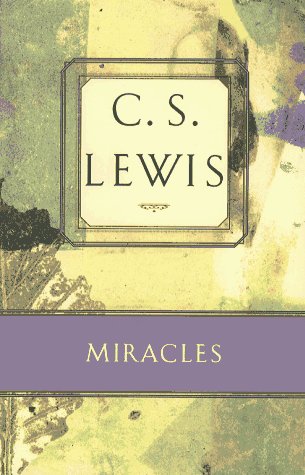
MiraclesReading C.S. Lewis elaborate on theology is no easy task. But for those willing to work through his profound thoughts, a treasure trove of new insights into Scripture await. Miracles: How God Intervenes In Nature And Human Affairs is no exception to this.

“Miracle” is directly mentioned so 30 times in Scripture, but the Bible never explicitly defines miracle. Lewis gives this definition: “I use the word Miracle to mean an interference with Nature by supernatural power.” He then proceeds to explain what philosophers such as Socrates, Plato and Aristotle meant by “nature” and “super-nature” and how those understandings have been dismissed, adapted or corrupted throughout history.

Lewis moves through several chapters without admitting miracles are probable (or even possible) and without ascribing any possible miracles to God. When he finally reveals that there is a God, he states, “From the admission that God exists and is the author of Nature, it by no means follows that miracles must, or even can, occur.” He then moves to the Scripture to show how God could—and indeed, does—work miraculously.

Even after all of Lewis’ brilliant arguments, I appreciate one of his final admissions in this book: “If you find that [these ideas] so distract you, think of them no more. I most fully allow that it is of more importance for you or me today to refrain from one sneer or to extend one charitable thought to an enemy than to know all that angels and archangels know about the mysteries of the New Creation.”

Even for those who accept his arguments, Lewis offers this counsel: “My work ends here. If, after reading it, you now turn to study the historical evidence for yourself, begin with the New Testament and not with the books about it.” Ultimately I recommend this book for this one reason—Miracles creates a hunger to study God’s Word more.

Links & Quotes

link quote

These are links to articles and quotes I found interesting today.

4 Health Dangers Of People-Pleasing

“What is so profoundly disturbing here is that the one person who takes a specific oath to defend the Constitution—to protect the Constitution, to defend the laws of the United States and to enforce the laws—is the one bastardizing them. The rule of law is disintegrating before our eyes.” —Rush Limbaugh. Read this: How Far Can Obama Go?

Amazing story! Miracle Baby Born After Sustains The Life Of His Brain-Dead Wife

“You see, the Lord’s concept of ‘church’ is much different from ours. We think of church as being a ministry to people. It is a place where all the needs of God’s people—spiritual, physical and emotional—are met. Of course, that is all part of what makes up a church. But the true Church, according to Scripture, begins with ministry to Jesus Christ. His concept of the Church is anyplace there is ministry to Him.” —David Wilkerson

Belief in science takes faith: Statistical Errors In The Scientific Method. “Change your statistical philosophy and all of a sudden different things become important. Then ‘laws’ handed down from God are no longer handed down from God. They’re actually handed down to us by ourselves, through the methodology we adopt.” —Dr. Steven Goodman, a physician and statistician at Stanford

The Bible says God has placed eternity in every human heart. Can this be verified? Evidence Of Eternity In Our Hearts?

“With good reason the ancient proverb strongly recommended knowledge of self to man. For if it is considered disgraceful for us not to know all that pertains to the business of human life, even more detestable is our ignorance of ourselves, by which, when making decisions in necessary matters, we miserably deceive and even blind ourselves! But since this precept is so valuable, we ought more diligently to avoid applying it perversely. This, we observe, has happened to certain philosophers, who, while urging man to know himself, propose the goal of recognizing his own worth and excellence. And they would have him contemplate in himself nothing but what swells him with empty assurance and puffs him up with pride. But knowledge of ourselves lies first in considering what we were given at creation and how generously God continues his favor toward us, in order to know how great our natural excellence would be if only it had remained unblemished; yet at the same time to bear in mind that there is in us nothing of our own, but that we hold on sufferance whatever God has bestowed upon us. Hence we are ever dependent on him. Secondly, to call to mind our miserable condition after Adam’s fall; the awareness of which, when all our boasting and self-assurance are laid low, should truly humble us and overwhelm us with shame.” —John Calvin

The dangers of our national debt: America In Debt

Singing Your Prayer

Be honest: have you ever crammed for an exam? You’re up late into the night “cramming” info into your brain, then chugging Coke or Mt. Dew or coffee the next morning to try to wake up.

You get to class and fly through your test, trying to get all of the information out of your brain before it evaporates. Perhaps you do well on the test, but if someone were to quiz you on the same material a week later, you’d probably recall very little of what you studied. If the teacher asks you the next school year what you remember from that exam, your mind might be blank.

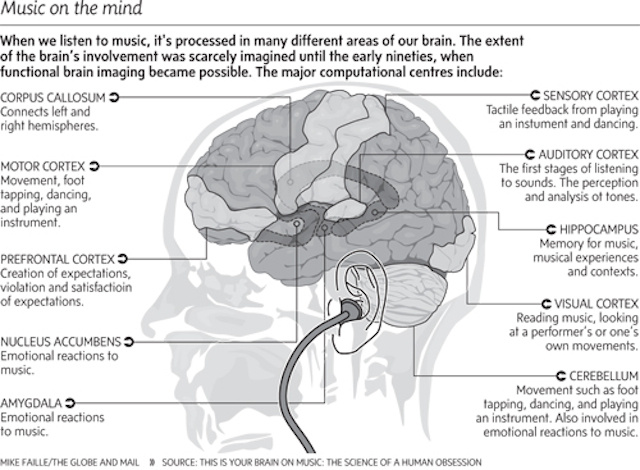
Music & the brainYears later you might be flipping through the radio dial, and a song comes on that you haven’t heard for years. You turn up the volume, and start singing along to the song, recalling that this was the very song you were listening to the night you were cramming for that exam.

Why is it that can you recall everything about this song, and very little about what you studied? The answer is that music engages the whole brain. Both the left hemisphere of your brain (which remembers facts) and the right hemisphere (which remembers music) work together as a powerful memory tool.

Did you know this can be just as powerful in your prayers?

There is a  Hebrew word (tephillah) for prayer which means a prayer set to music; a poetic prayer; a sacred song. This is the word used heavily in the first 72 psalms.

In other words, the psalmists linked words and melodies—left and right brain hemispheres—together to help our songful prayers get locked into our memory banks. The more we remember what God has done for us in answering our prayers, the more likely we are to keep on praying and keep on trusting Him in the future. 

Many times when I am reading Scripture, a song or hymn will come to my mind, and I pause to hum that melody. Maybe God will give you a new song to sing, or perhaps you will write your own personal melody as you pray. There’s no wrong way to sing your prayers.

However you do it, it’s a powerful memory tool when we sing our prayers to our Heavenly Father.

Mere Humanism

I’ve noticed a disturbing trend among many of my pastor colleagues. I’m not sure if it’s an attempt to be “relatable” or unoffensive, but it is dead wrong.

The trend is to tell stories (even Bible stories) without using the Bible. To give people good thoughts from Scripture without actually opening the Scripture. To tell people how they should live but to never show them the passages of God’s Word on which those thoughts are based.

Are we ashamed of the Scripture? How can someone “preach” without pointing their audience to the authority for their preaching?!?

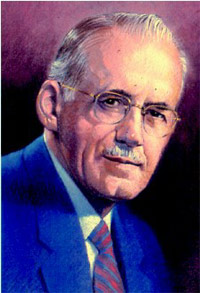
A.W. TozerA.W. Tozer warned us with these words—

“Any appeal to the public in the name of Christ that rises no higher than an invitation to tranquillity must be recognized as mere humanism with a few words of Jesus thrown in to make it appear Christian.”

Don’t just throw in some words of Christ; actually take them to His Word. This inspired Word is powerful, if we will just let people get their hands, and eyes, and hearts on it!