The EGO That God Blesses

Have you ever noticed that it seems a lot easier to say, “God bless you” than it does to say, “God bless me”? Why is that? 

Do I feel unworthy of His blessing? If I am a Christian, I need to remind myself that I am in Christ, and He is in me, and He has brought me into the Father. This means that I am as blessed as the Father blesses the Son (John 14:20; Ephesians 1:3-6). God is blessed by our being blessed! 

Or perhaps I feel that “God bless me” is an arrogant prayer, while saying “God bless you” is a humble prayer. There is an EGO that God always blesses, and He delights to show us what that is!   

In Hebrew literature, the key point is found in the middle of a poem or story. In Psalm 67, that would make the middle verse: May the nations be glad and sing for joy, for You rule the peoples justly and guide the nations of the earth. Selah. (v. 4)

The nations rejoice because God judges fairly and God guides the nations. Selah—pause and take that in. The natural attitude is actually a God-negative attitude—“I prefer to be in charge … I don’t like anyone telling me what to do!” But the unnatural attitude is a God-positive attitude—“I trust God more than I trust me, so I’m glad He is in charge … I trust God to judge justly more than I trust world institutions, so I’m glad He is the final Judge!” 

This is very good news: Only God can rule and judge correctly! Men have biases and agendas; men are selfish and self-seeking; men seek their own glory and their own advancement. So the psalmist wants us to Selah/pause to remember that only God can lead and judge in a way that brings Him glory and brings us blessing. God is blessed by our being blessed! 

Working outward from verse 4, we see verses 3 and 5 are identical, teaching us that our God-honoring desire should be for all peoples in all nations to experience the blessing of an intimate relationship with God. 

A similar theme is sounded in the “bookend” verses of 1-2 and 6-7: We are asking God to bless us so that “all the ends of the earth will fear Him.” Once again we Selah/pause to consider this: Do I have the right EGO to request this blessing? Remember: There is an EGO that God always blesses.  

In his book Lead Like Jesus, Ken Blanchard identifies two types of E.G.O.s in our relationship with God:

  • Negative E.G.O.—Edging God Out 
  • Positive E.G.O.—Exalting God Only

The negative EGO says things like, “Bless me” and “Shine on me.” The positive EGO says, “Bless me so that I can be a blessing to others” and “Shine Your light on me so that others will see You.” 

Jesus told us to not let the light of our life be hidden. We are blessed by God so that we can be a blessing to all of the peoples in all of the nations. We desire that all may know the joy of serving a Righteous King. We want everyone to know the praise that comes from Exalting God Only. 

Oh God, be merciful to me. Cause Your face to shine on me. Bless me indeed so that I may teach others to fear You, so that they may come to know You as their All-Righteous, Good, and Loving King! 

If you have missed any of the messages in this series exploring the Selahs in the Psalms, you can find the full list of messages by clicking here. 

Thursdays With Spurgeon—Seeing God In Jesus

This is a weekly series with things I’m reading and pondering from Charles Spurgeon. You can read the original seed thought here, or type “Thursdays With Spurgeon” in the search box to read more entries.

Seeing God In Jesus 

For it is the God who commanded light to shine out of darkness, who has shone in our hearts to give the light of the knowledge of the glory of God in the face of Jesus Christ. (2 Corinthians 4:6) 

     Paul knew not merely God, but God in Christ Jesus! Not merely ‘the glory of God,’ but ‘the glory of God in the face of Jesus Christ’ (2 Corinthians 4:6). The knowledge dealt with God, but it was Christward knowledge! He pined not for a Christless theism but for God in Christ! This, beloved, is the one thing that you and I should aim to know. …  

     Even when your thought sweeps round the stars and circumnavigates space, you feel that heaven, even the heaven of heavens, cannot contain Him. Everything conceivable falls short of the inconceivable glory of God! When you come, however, to gaze upon the face of Christ Jesus, how different is the feeling! Now you have a mirror equal to the reflection of the eternal Face, ‘in Him dwells in the fullness of the Godhead bodily’ (Colossians 2:9). His name is ‘Wonderful, Counselor, Mighty God’ (Isaiah 9:6). He is the image of God, ‘the brightness of His glory and the express image of His person’ (Hebrews 1:3). If your conception of Christ is truthful, it will coincide with the true idea of God and you will exclaim, ‘This is the true God and eternal life’ (1 John 5:20). Like Thomas, you will salute the wounded Savior with the cry, ‘My Lord and my God!’ (John 20:28). …  

     How softly breaks the divine glory through the human life of Jesus; a babe in grace may gaze upon this brightness without fear! When Moses’ face shone, the people could not look at him, but when Jesus came from His transfiguration, the people ran to Him and saluted Him! Everything is attractive in God in Christ Jesus! In Him we see God to the fullest, but the Deity so mildly beams through the medium of human flesh that mortal man may draw near and look and live. 

From The Glory Of God In The Face Of Jesus Christ

If you would like to know God more intimately, look more closely at Jesus. 

Read through the Gospels slowly, focusing on what Jesus was saying and doing. Let the Holy Spirit transport you to those dusty Israelite roads, where you can walk with Jesus and get a new glimpse of the majestic glory of God.

Trespassers

Psalm 59 is the prequel to David being betrayed by the Ziphites as well as the incident in the cave between himself and King Saul. 

This psalm is also called an imprecatory psalm, which is the theological way of saying, “Get ‘em, God!” Since King Saul has sent assassins to try to kill David, you can understand why David is praying this way. But I sort of wonder why he inserts a Selah pause after two rather angry-sounding sentences in verses 5 and 13. 

When we are reading—or even praying—an imprecatory prayer, here are some important things to keep in mind: 

  • This prayer is inspired by the Holy Spirit. All of the words in the prayer, including the Selah pauses, are directed by the Holy Spirit. Getting our angry thoughts out in God’s presence is the safest place to vent. 
  • This is a prayer for justice because an injustice has been done, not just a prayer because David is upset with someone. 
  • Since this prayer says, “Get ‘em, God,” it’s a prayer that turns matters over to God as the Ultimate Judge, taking the judgment out of my hands. 

Really this is a prayer that seeks to balance something vital: The desire to see evil punished while at the same time desiring to see all evildoers come to salvation. 

Think of it this way: When I sin, do I want to meet a God of justice or a God of mercy? Since we are to treat others the way that we would want to be treated, if I want to receive God’s mercy, I have to desire that for others too. Even those evildoers who have hurt me. 

David’s first Selah pause comes after saying that he is innocent of any offense or wrongdoing. When we pray an imprecatory prayer, we would do well to ask the Holy Spirit to search our hearts to reveal any trespasses we have committed (see Psalm 19:12-13; 139:23-24). 

David’s second Selah pause comes after he says, “Then it will be known to the ends of the earth that God rules over Jacob.” Is my “Get ‘em, God” prayer a desire for me to be seen as the overcomer or for God to be seen as glorious? 

As long as my focus is on my trespassers, my focus is off my God. 

I cannot be consumed by thoughts of “them” because then I rob myself of thoughts of Him! 

So when you get angry enough at someone who has trespassed against you that you want to pray a “Get ‘em, God” prayer, Selah pause and pray, “Holy Spirit… 

  • …show me my trespasses; 
  • …help me forgive my trespassers; and
  • …help me to focus on my God, and not on my trespassers or my forgiven trespasses.” 

If you have missed any of the other messages in our Selah series, you can find links to all of them listed here. 

Thursdays With Spurgeon—Stick To The Revealed Word Of God

This is a weekly series with things I’m reading and pondering from Charles Spurgeon. You can read the original seed thought here, or type “Thursdays With Spurgeon” in the search box to read more entries.

Stick To The Revealed Word Of God

Remember your leaders, who spoke the Word of God to you. Consider the outcome of their way of life and imitate their faith. Jesus Christ is the same yesterday and today and forever. Do not be carried away by all kinds of strange teachings. It is good for our hearts to be strengthened by grace, not by eating ceremonial foods, which is of no benefit to those who do so. (Hebrews 13:7-9) 

     From the connection it is evident that our text refers to the teaching of Christ, who is ‘the same yesterday, today, and forever.’ This is not according to the so-called development folly. Theology, like every other science, is to grow, watered by the splendid wisdom of this enlightened age, fostered by the superlative ability of the gentlemen of light and leading of the present time, so much superior to all who came before them! 

     We think not so, brothers and sisters, for the Lord Jesus Christ was the perfect revelation of God. … In previous ages, God has spoken to us by His prophets, but in these last days He has spoken to us by His Son [Hebrews 1:1-2]. Now as to that which was a complete revelation, it is blasphemous to suppose that there can be any more revealed than has been made known in the Person and work of Jesus Christ, the Son of God! … And as He shuts up the book that contains the written revelation, He bids you never dare to take from it, lest He should take your name out of the Book of Life! And never dare to add to it, lest He should add to you the plagues that are written in this book [Revelation 22:18-19]!

From The Unchangeable Christ 

BEWARE when someone tells you they have discovered some new revelation from God that they—and they alone—have uncovered. God’s Word doesn’t need anyone’s “help.” 

But DO pray before you read the Bible to ask the same Holy Spirit that inspired the Word of God to now illuminate it to your mind as you read and study. 

(P.S. Oswald Chambers had some sobering words about false prophets.)


Thursdays With Spurgeon—Thoughtful Meditation And Application

This is a weekly series with things I’m reading and pondering from Charles Spurgeon. You can read the original seed thought here, or type “Thursdays With Spurgeon” in the search box to read more entries.

Thoughtful Meditation And Application

Remember your leaders, who spoke the word of God to you. Consider the outcome of their way of life and imitate their faith. Jesus Christ is the same yesterday and today and forever. (Hebrews 13:7-8) 

     Observe, then, that God’s people are a thoughtful people. If they are what they are to be, they do a great deal of remembering and considering. … I wish, in these days, that professing Christians remembered and considered a great deal more, but we live in such a flurry, hurry, and worry, that we do not give time for thought. …  

     Our great Master never aimed at originality—He said that He did not even speak His own words, but the words that He had heard of His Father [John 12:49]. He was docile and teachable. As the Son of God and the Servant of God, His ears were open to hear the instructions of the Father, and He could say, ‘I always do those things that please Him’ (John 8:29). … 

     There is no difference whatever in the relationship of the Lord Jesus Christ to His people at this time! He is just as ready to comfort us tonight as He was to comfort those with whom He dwelt when here below! Sister Mary, He is as willing to come down to your Bethany and help you in your sorrow about Lazarus as He was when He came to Martha and Mary whom He loved! Jesus Christ is just as ready to wash your feet, my brother, after another day’s weary travel through the foul ways of this world. He is as willing to take the basin and the towel and to give us a loving cleansing as He was when He washed His disciples’ feet! Just what He was to them, He is to us! Happy is it if you and I can truly say, ‘What He was to Peter, what He was to John, what He was to Magdalene, that is Jesus Christ to me—the same yesterday, today, and forever.’ 

From The Unchangeable Christ 

If Charles Spurgeon thought the 19th century was a time of “flurry, hurry, and worry,” what adjectives might describe the supersonic, multi-tasking, get-everything-done-now 21st century?! 

Today, more than ever, we need to take time to reflect on God’s Word. Read it slowly. Put yourself in the story. What would you have observed if you were there? What would you have felt? Look around at the others who were there: how would they have perceived what was happening? 

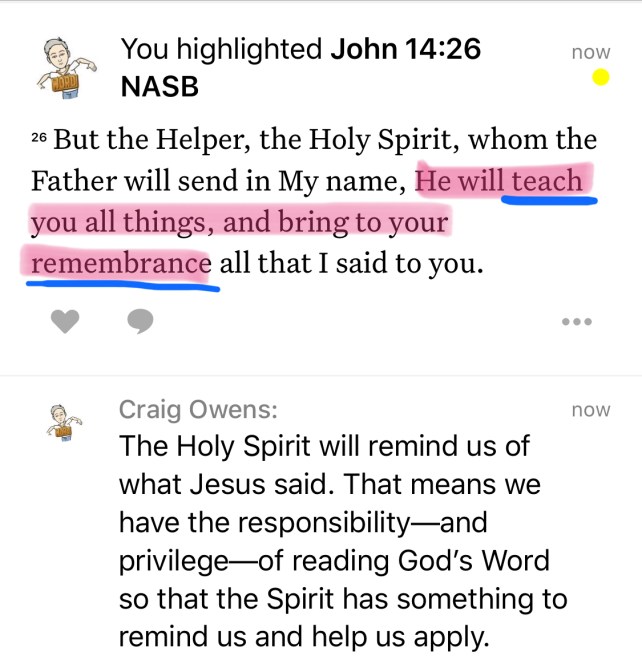
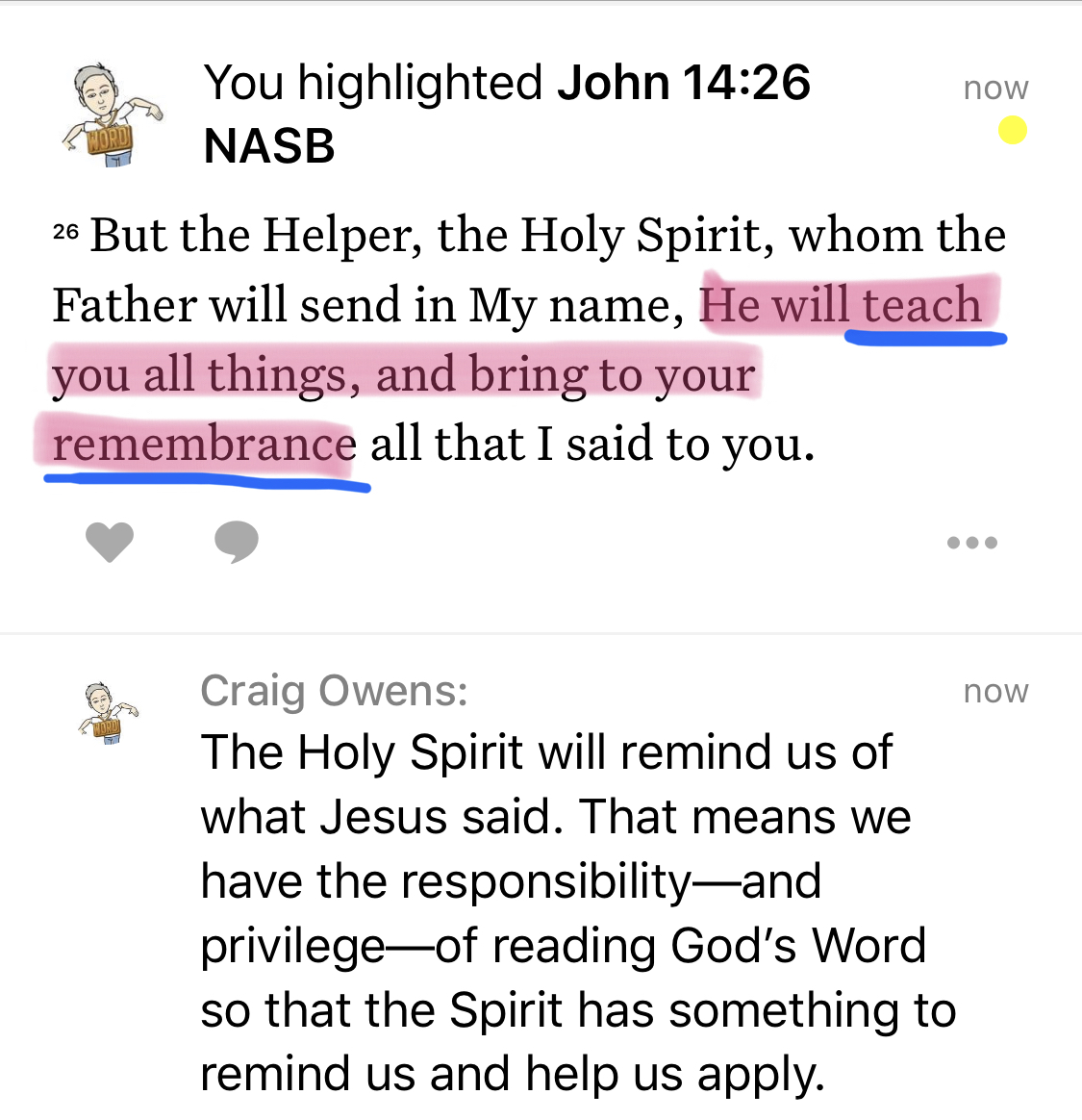
You don’t meditate on God’s Word so that you can find something original, but you meditate so that the Holy Spirit can reveal the original truths that are already there! The Holy Spirit can show you how to apply the Bible to your life, if you will only slow down to give Him time to do so. 

Don’t race through your Bible reading time—slow down and take it all in. Then let the Holy Spirit work out what He has helped you put in your heart and mind.


How To Pray When You’ve Been Stabbed In The Back

Sadly, some of the people who do us the most harm are those whom we least expected to hurt us. They seemed to have our back, but then they are stabbing us in the back! 

It’s sad, but it shouldn’t be totally unexpected. Matthew Henry said it well: “Never let a good man expect to be safe and easy till he comes to heaven. … It is well that God is faithful, for men are not to be trusted. 

David learned that lesson. He rescued the town of Keilah from the Philistines, only to hear that King Saul has called out his army to destroy Keilah and kill David. This prompted David to leave Keilah and flee to the Desert of Ziph. It appears that David has given Saul the slip, but the Ziphites send a message to the king saying, “We know where David is hiding, and we’ll gladly hand him over to you.” 

Here’s the painful part for David: Both Keilah and Ziph were in Judah—David’s tribe! His own family—that should have had his back—stabbed him in the back instead! 

I wish I could say this was a once-in-awhile thing, but we all know that it’s not. In fact, this sort of betrayal probably happens more often than we would care to admit. 

It was during this time of betrayal by the Ziphites that David wrote the 54th Psalm. In the opening verses, David laments the ruthless, Godless men that have betrayed him. And then comes that word of pause: Selah. 

I believe this Selah may have come when “Jonathan went to David at Horesh and helped him find strength in God” (1 Samuel 23:16). One of the definitions of Selah is to weigh things to see what is more valuable. Notice that Jonathan took David’s attention off his evil betrayers and turned it to his loving God. So in the very next phrase after the Selah we read David saying, “Surely God is my help; the Lord is the One who sustains me.” 

Notice four key components of David’s prayer—

  1. David’s motive for praying. In the opening verse, he says, “Your Name…Your might.” To me, that sounds a lot like the opening words to the model prayer Jesus taught us: “Hallowed be Your Name.” 
  2. David’s prayer. He said, “Hear my prayer, O God; listen to the words of my mouth.” It’s interesting to note that David says nothing to the Ziphites themselves, but he only speaks of them when he is alone with God in prayer.  
  3. Prayer’s result. David didn’t have to try to make things right on his own because God took care of it—evil recoiled on those who stabbed David in the back. 
  4. David’s praise. Notice the words “I will praise Your Name…[You] have delivered me.” Again, this praise and focus on God sounds like the end of the model prayer Jesus taught us: “Yours is the kingdom, and the power, and the glory forever!” 

When enemies assail, when you have been stabbed in the back, don’t look to men for help and don’t take matters in your own hands. Instead take a Selah. Consider that God is worthy of your attention, and not the “ruthless men” who hurt you. Turn your pain over to God and say with David: Surely God is my help; the Lord is the One who sustains me. 

Evil will recoil on evildoers, you will be kept safe, and you will be vindicated by God’s might! 

If you missed any of the messages in our Selah series, you can find them all by clicking here. 

God’s Artistic Designs

…God devises ways so that a banished person does not remain banished from Him (2 Samuel 14:14). 

This wise woman from Tekoa captures an important principle about God in a picturesque way. She also makes a graphical contrast that was good for David to hear—and good for me too!

This wise woman uses the same Hebrew word for both David’s plans and God’s plans but shows just how different these two plans actually are. The word is translated “device” (vv. 13, 14), but the Hebrew word chashab is more graphic: It means to weave, fabricate, or plait something that has been well designed. 

Here’s the contrast: David’s “plan” is really not a plan at all; it’s simply passive procrastination, a wistful longing for things to turn out well. David is doing nothing, which means he is squandering his opportunities. This wise woman says, “It’s like you are spilling water on the ground which can never be recovered.” 

God’s device/design is incomparably better! God is both the Designer and the Artisan. He has both the plan of restoration and He is fabricating the plan. His designs are intricate and beautiful. In fact, the same Hebrew word is used for the artisans who fabricated the items that were to be used for worship in God’s tabernacle. 

Even though this woman flatteringly said David was “like an angel,” David’s devices are nothing compared to God’s device! God wants to give us His designs—He wants us to be a part of His masterful artistry!

Notice how this psalmist contrasts man’s designs with God’s designs—

The Lord foils the plans of the nations; He thwarts the purposes of the peoples. But the plans of the Lord stand firm forever, the purposes of His heart through all generations. (Psalm 33:10-11) 

God will share with me His beautifully intricate plans and masterful device IF I will ask Him with a heart that is ready to obediently go to work. Or, I can try to work out my own devices, but they will most likely end up as merely spilled water that comes to nothing and accomplishes nothing.

I think you can see that God’s devises are always THE best option!

Selah

The word Selah appears nearly 70 times in the Bible, almost exclusively in the Psalms. Although it is primarily a musical term, it applies beautifully to our summer series. 

Selah can mean…

  • a pause from the noise to reflect;
  • a preparation for an exciting accent; or 
  • a reflective time of consideration

Throughout the Psalms, Selah appears at the end of a verse, at the end of the psalm, or sometimes even mid-sentence. But each one of them is perfectly placed by the Spirit-inspired authors to get us to take a breath and deeply contemplate what we just read or sang. 

Summertime is typically a time for us to pause from our regular routine. Perhaps it’s a vacation, time with friends and family, driving around with the windows down and the music blasting, or just a quiet walk through woods or along a beach. In any case, whether we realize it or not, we’re actually doing Selah in these break-from-the-routine activities. 

Join me this Sunday as we continue our summertime look at each of the Psalms that ask us to Selah. I think you will find that this Sunday summertime pause will be both refreshing and encouraging. You can join me either in person or on Facebook Live. 

Since this is a continuation of our summer series, you can check out the Selahs we discussed in 2018 by clicking here, and the messages from the summer of 2019 are here.

The messages for this summer are:

Feelings, Facts, and Faith

Confusing times become more stressful—and more confusing!—when the response of people seems to throw more fuel on the fire. Frustration boils up into anger. Confusion gives way to fear. Uncertainty about what to believe or what to do becomes anxiety over what might be coming next. 

You might think I’m describing current events in our country right now. But in times like these we need to remember that there have always been times like these. When I talk about frustration, anger, confusion, fear, uncertainty, and anxiety, I am actually thinking about events that took place over 2000 years ago. 

Like when the residents of Ephesus became Christians and stopped buying idols of Artemis, a huge backlash broke out. “Soon the whole city was in an uproar. … The assembly was in confusion: Some were shouting one thing, some another. Most of the people did not even know why they were there” (Acts 19:29-32). 

Or when some Jews thought Paul had taken some non-Jews into the part of temple restricted to Jews only. “Jews from the province of Asia saw Paul at the temple. They stirred up the whole crowd and seized him, shouting, ‘Fellow Israelites, help us! This is the man who teaches everyone everywhere against our people and our law and this place. And besides, he has brought Greeks into the temple and defiled this holy place.’ (They had previously seen Trophimus the Ephesian in the city with Paul and assumed that Paul had brought him into the temple.) The whole city was aroused, and the people came running from all directions. Seizing Paul, they dragged him from the temple. … Some in the crowd shouted one thing and some another, and the commander could not get at the truth because of the uproar…” (Acts 21:27-34). 

There are three Fs at work here: feelings, facts, and faith. 

Have you heard it said, “Feelings are not facts”? Feeling are a fact to the one experiencing those feelings, so feelings can indeed be facts: subjective facts that are factual to me. 

Facts are not necessarily better than feelings because our facts might come from faulty sources. For example, Trophimos was with Paul, but Paul did not bring him into the restricted area. 

Whether feelings or facts, we need faith in God’s sovereignty. We need to remember: God has a plan, He is in control, nothing takes Him by surprise, nothing derails His purpose, He is intimately aware of everything that is happening. 

The Holy Spirit helps us evaluate both feelings and facts through the filter of truth found in God’s Word. Then the Spirit also gives us faith to stand firm despite the feelings and the facts. 

The Holy Spirit not only helps us pray through these confusing times (Romans 8:27), but He helps us know what’s really behind the confusing times, as well as how we can communicate that truth to others (1 Corinthians 2:10, 13 AMP). 

Probably my favorite promise (which I especially like in the Old English of the King James Version) is this: Ye have an unction from the Holy One, and ye know all things (1 John 2:20).

So I want to encourage you again: Don’t stop at salvation—be baptized in the Holy Spirit and have that unction that will help you with all your feelings and all the facts that are thrown at you. 

If you have missed any messages in this series on Pentecostal Christians, you can find the full list by clicking here. 

Impossible To Empowered

In the Sermon on the Mount, Jesus outlined a “game plan” for His followers. He showed us how to correctly apply the Scripture to our daily lives with this repeated pattern: “You have heard it said [God’s Word], but I tell you [real-life application].”  Smack-dab in the middle of this sermon Jesus drops this on us, “Be perfect, therefore, as your heavenly Father is perfect” (Matthew 5:48). 

You might say, “But ‘perfect’ doesn’t really mean perfect, does it?” 

Actually, it does. The Greek word telios means the end goal of being complete in various applications of labor, growth, mental and moral character. In other words: complete in body, soul, mind, spirit—just like Jesus. 

Think about it: Jesus never misspoke, He never waited too long to act, He never acted too quickly, He never overstepped God’s boundaries, He never needed to apologize. 

Again, you might push back with, “Yes, but He is Jesus. He is God!” 

You are absolutely correct, but—miracle of miracles!—Jesus chose not to use His deity while He was on earth (Hebrews 2:17; Philippians 2:6-7). He lived a perfect life as a human, not playing His “God card,” to show us that it was possible. Jesus demonstrated that He needed to rely on the Holy Spirit (Luke 3:21-22, 4:1, 14; John 5:19-20, 12:49-50). 

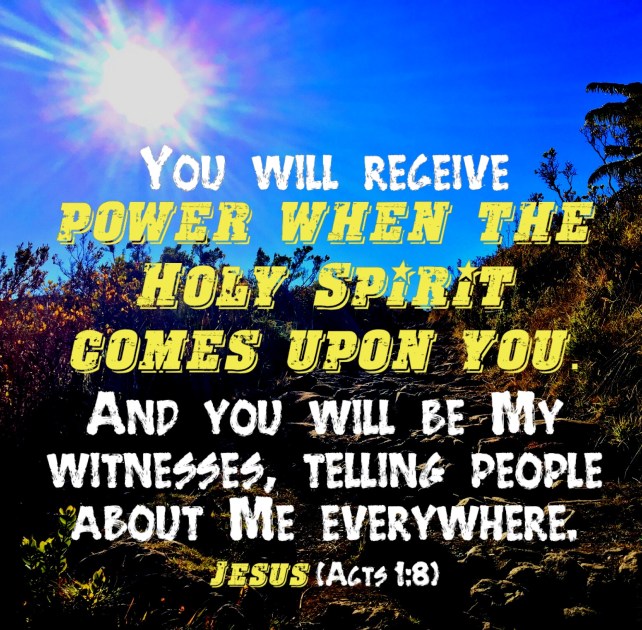
This is what Jesus wants for us as well, which is why He told His disciples to wait for the empowerment that came with the baptism in the Holy Spirit. On our own, perfection is impossible. But when we baptized in the Holy Spirit, we are empowered to live perfectly. 

Remember the definition I gave for perfect (telios): complete in body, soul, mind, spirit. That’s exactly how Dr. Luke described Jesus, and it’s also how Jesus described our perfect love of God (Luke 2:52, 10:27). 

On our own: this is impossible. But with the baptism in the Holy Spirit: we are empowered for perfection. 

Don’t stop at salvation—press on to be baptized in the Holy Spirit. If Jesus was so reliant on the Holy Spirit, what would make us think we could live with anything less?! 

If you missed any of the other posts in this series, you can find them all listed here.