Links & Quotes

On Veterans Day, Greg and I wanted to encourage you to ask a veteran to tell you their stories. Their stories are a vital link to our stories too! Watch this full conversation on The Craig and Greg Show. I have lots of new content every week, which you can check out on my YouTube channel.

“When we are foolish and young, we need more rules. As we mature, we can be trusted with extended boundaries. The wiser we are, the more we appreciate those boundaries and the less they offend us. Offense at law, accountability, hedges, and boundaries is an indicator of immaturity. The wiser we are, the more unafraid and appreciative we are of those who hold us to account.” —Dick Brogden, in Proverbs: Amplified and Applied

“When public policy begins to encroach on the Christian’s freedom and duty to proclaim the Good News, or to bring the benefits of the Gospel to the community, believers must continue our mission nonetheless and be ready to bear whatever punishments those in authority may choose to inflict. Christians do not seek suffering, but we must not shun it, particularly when by our suffering we can work for public policies more in line with the centrality of the Gospel for the wellbeing of all people.” —T.M. Moore

The Golden Rule—treat others as you would want to be treated—applies to the way you treat yourself too. Stop beating yourself up when you make a mistake. You probably don’t beat up others when they stumble, so extend the same grace to yourself. Practice healthy, affirming self-talk. Check out this full conversation from episode 68 of The Craig And Greg Show.

“A thought, a sword, and a spade should never be allowed to rust.” —Irish Proverb

Dr. C. John “Jack” Collins uses some thoughts from C.S. Lewis to help us learn a little better how to read Genesis 1-11. He writes, “We should approach any biblical passage with the conviction that God inspired the Bible to be the right tool for its job. If we can get a good idea of what kind of tool our passage is, we can discern what job God intended it to perform. And that means we need to be willing to adjust what we’re looking for and be willing to find other ways of addressing some questions.”

Sunflowers have an amazing biomechanism called heliotropism that allows them to “see” the sun. They can literally turn their face throughout the day (even a cloudy day) to follow the sun and maximize their photosynthesis potential. What an amazing Creator our God is!

“Failure to pray is simple unbelief. We must repent of our unbelief and take up the work of prayer with greater devotion and dedication. We shall not be able to realize progress in Christ’s Kingdom, or in returning our nation to a greater experience of justice and goodness, apart from prayer. Prayer is the starting point for public policy. Prayer must be the sustaining power of public policy. And prayer in the form of worship will be the outcome of public policies, forged in prayer, which lead to a peaceful, godly, dignified, true, and Gospel-friendly society.” —T.M. Moore

The Goals Of Confrontation

Listen to the podcast of this post by clicking on the player below, and you can also subscribe on AppleSpotify, or Audible. 

Say the word “confrontation” and many people cringe. “I try to avoid confrontations with others,” people will quickly say. 

The origin of the word comes from a derivative of the word for “forehead.” The original intent of confrontation was simply putting the facts in front of someone’s face so that they could acknowledge them. 

The problem for most of us (myself included) is two-fold: 

  1. I don’t like to be confronted with things I may be doing incorrectly or incompletely. 
  2. I don’t like making others defensive when I confront them with the things they may be doing incorrectly or incompletely.

As a result, we usually don’t confront others and they usually don’t confront us. Sadly, this can keep us from maturing in areas where we may be able to soar if we could only make some minor changes. 

Christians should be especially open to confrontation from a brother or sister. After all, Solomon told us, “Wounds from a friend can be trusted, but an enemy only multiplies kisses” (Proverbs 27:6). And Jesus warned us, “Woe to you when all men speak well of you, for so did their fathers to the false prophets” (Luke 6:26 NKJV). 

The best confrontation is self-confrontation in the presence of the Holy Spirit. After we have submitted to that loving spotlight, then we can proceed with our loving confrontation with our brothers and sisters. 

Remember this: 

The goals of Christian confrontation are restoration and maturity. 

We want to see wandering saints return to God’s path, and we want those saints who are immature to blossom into Christ-like maturity that brings glory to God. 

I have prepared a flowchart that can help you with a biblical framework for the work of confrontation. Please work through this flowchart slowly and prayerfully. Don’t rush any step, but make sure you can answer an honest “yes” to each question. When you get to the last step, keep in mind these three Ms:

  1. Maturity—self-confrontation and confrontation of others should always be moving us toward maturity. 
  2. Mutual accountability—agree to stay involved in this process, with each of you remaining accountable to each other. 
  3. Mercymercifully restore the one who has strayed so that the entire Christian body of believers can be strengthened.

Here are some resources to help you:

►► Would you please prayerfully consider supporting this ministry? My Patreon supporters get behind-the-scenes access to exclusive materials. ◀︎◀︎

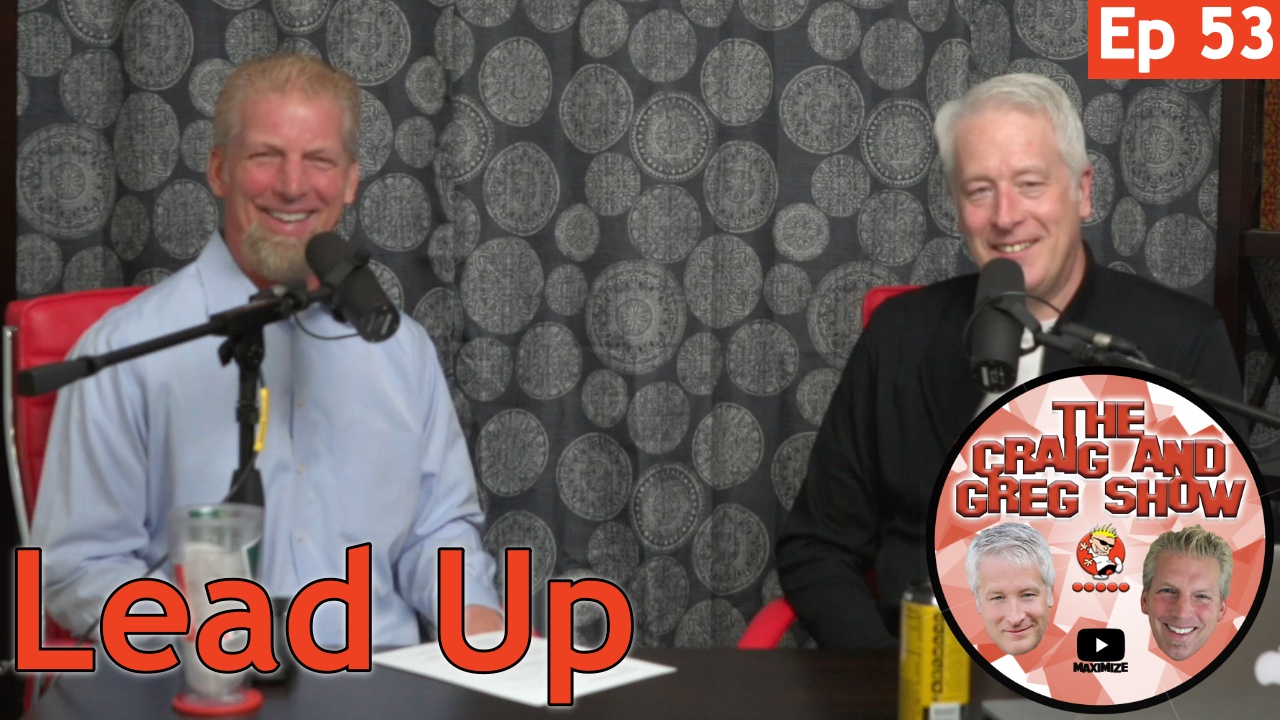
The Craig And Greg Show: Lead Up

Listen to the audio-only version of this podcast by clicking on the player below, or scroll down to watch the video.

When we think about leadership, we often envision the people in organizationally designated leadership roles “leading down” to the people on their team. In this episode of The Craig And Greg Show, we flip the script, discussing how you can “lead up” to those above you and help your team achieve greater levels of success. 

  • [0:30] This is part 1 of a new series of periodic episodes of how to lead at all levels of your organization. 
  • [1:07] What is the real definition of a leader?
  • [1:55] You need different skills to lead up based on how receptive your leader is.
  • [3:31] Do you have the right tools to lead up, or do you need to fill your toolbox first?
  • [5:30] What happens when the leadership above you changes?
  • [6:35] There are two really important words when leading up: stewardship and accountability.
  • [7:59] “I told you so” doesn’t help you lead up, nor does withholding information from your up-leader.
  • [11:55] What are the best ways to talk to your up-leader?
  • [14:35] Everyone in the organization already knows when you have the good ideas, so you don’t have to announce it.
  • [15:05] How do you balance being proactive with being too aggressive?
  • [16:05] What lessons can you learn from working with your difficult up-leader?
  • [17:42] You shouldn’t try to “fix” your up-leader, but help your up-leader.
  • [19:34] I share how I kept my attitude in check with my difficult up-leader.
  • [22:00] Coaches can help you do what you’re already doing better than you’re currently doing it

Check out this episode and subscribe on YouTube so you can watch all of the upcoming episodes. You can also listen to our podcast on Spotify and Apple.

The Self-Aware Leader (book review)

Listen to the podcast of this post by clicking on the player below, and you can also subscribe on AppleSpotify, or Audible. 

Leaders never “arrive” at a place where they have accomplished everything they want to accomplish. John Maxwell helps leaders keep pressing on in their personal growth in his book The Self-Aware Leader. 

This book is largely autobiographical, as Maxwell leads us through lessons that he learned by not being self-aware. His leadership stumbles served as a wake-up call that allowed him to reflect, learn, and then correct his technique. Then after decades of honing these techniques, he shares with his readers the practical steps for them to become self-aware of a potential stumbling point before it actually trips them up. 

I also appreciated the self-aware leader’s questions for reflection at the end of each chapter. To me, this is an ideal place for leaders who are in mutual accountability to focus their discussion as they meet together. My biggest takeaway from this book is that I cannot become self-aware nor correct the things that could derail my leadership solely on my own. Reading The Self-Aware Leader is a good starting point, but I also highly recommend reading this book with another leader that also desires to grow and improve. 

Leaders who want to uncover the things that could be holding them back will really benefit from reading and applying this book. For my Patreon supporters, I have also shared several noteworthy quotes from this book here. 

►► Would you please prayerfully consider supporting this ministry? My Patreon supporters get behind-the-scenes access to exclusive materials. ◀︎◀︎

Links & Quotes

Premier athletes know the value of flexibility for keeping them in the game. I think we would be wise to practice flexibility in our relationships too—this is definitely a game-changing move! Check out my weekly Monday Motivation videos on my YouTube channel

“The bravest are surely those who have the clearest vision of what is before them, glory and danger like, and yet notwithstanding, go out to meet it.” —Thucydides

This week we remember Columbus Day. You probably remember the rhyme: In 1492, Columbus sailed the ocean blue. Many people have thought Columbus set out to prove the world was round, but the History Channel has a mini-biography that debunks this claim.

One of my YouVersion friends (Nikki) commented a great reminder: “God can do way more with my surrender than with my striving.”

Thomas Zimmerman was an influential leader in the early days of the Assembly of God fellowship’s history. “Over a 50-year period, Thomas F. Zimmerman (1912-1991) served the Assemblies of God as pastor, district official, department leader, assistant general superintendent, and general superintendent. His leadership greatly increased the influence of the Pentecostal movement in the evangelical world, as well as in the broader American religious landscape.”

I post quality content nearly every day. If you don’t have time to read all that I share, please let me read it for you. The Craig T. Owens Audio Blog is just like this blog, except you get to hear me read my blog posts. Check it out my podcast on Spotify, Apple, and even Audible.

“The word ‘hell’ is used in the New Testament fourteen times, twelve times by Jesus Himself. It is not a myth created by dismal and angry preachers. It is a solemn warning from the Son of God who died to deliver sinners from its curse. We ignore it at great risk.” —John Piper

Christian apologist and cold-case detective J. Warner Wallace wrote, “the battleground on the abortion issue is beginning to shift, and this shift is going to cause us to rethink our approach to the debate.” Pro-life advocates need to check out Wallace’s post Justifying Homicide: The Future Battleground In The Abortion Debate.

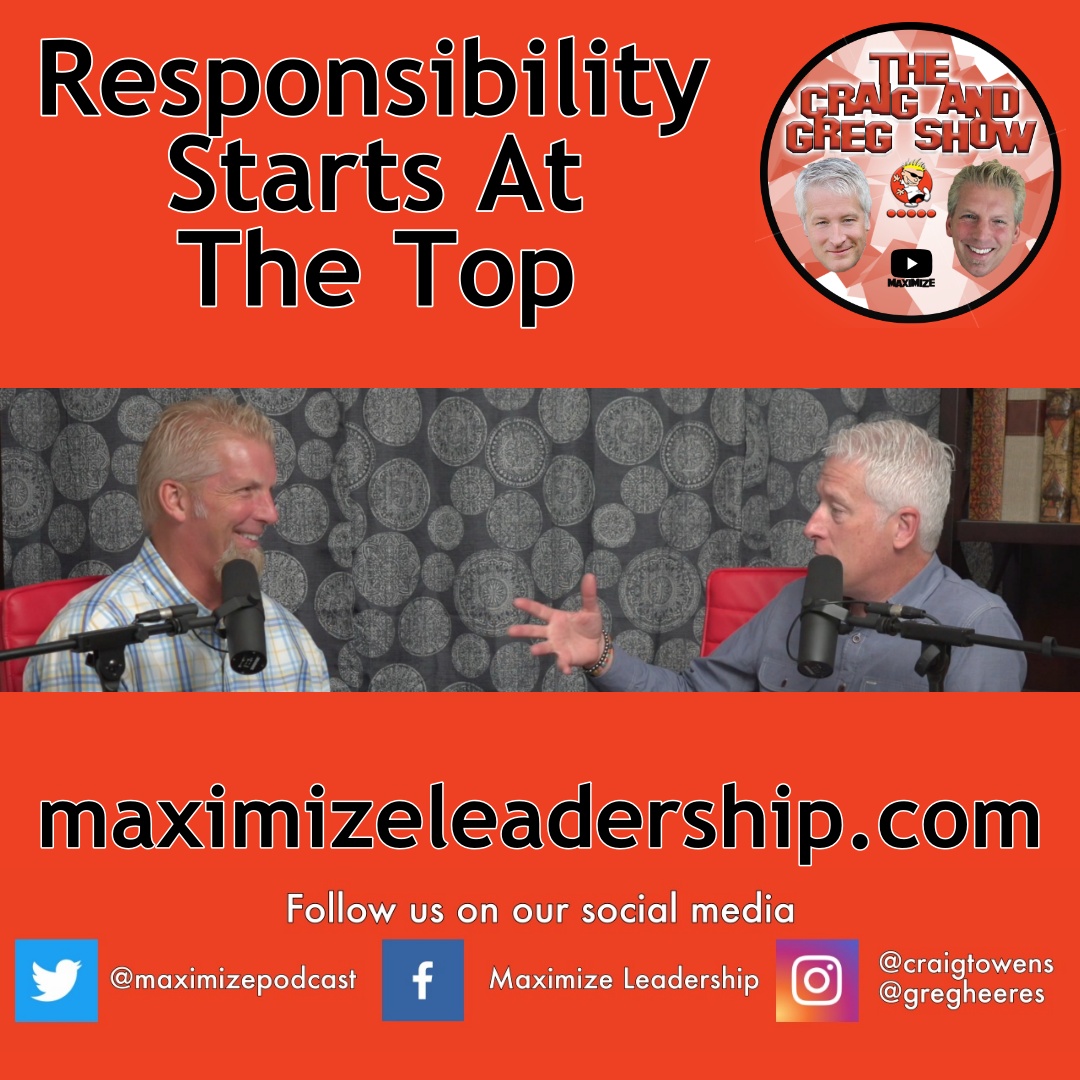
Responsibility isn’t supposed to be fatal! Exceptional leaders accept and promote appropriate responsibility, while weak leaders play the blame game. But accepting responsibility doesn’t mean “falling on your sword”! You can check out the rest of this conversation I had with my podcast partner Greg Heeres on The Craig And Greg Show leadership podcast.

A High And Holy Calling

Listen to the podcast of this post by clicking on the player below, and you can also subscribe on AppleSpotify, or Audible. 

When God spoke to the “princes of Israel,” He was speaking to those in leadership positions. They were men who had wealth, position, and a high level of influence. God called them to live up to their title as “prince” because leadership is a high and holy calling given by God. 

Leaders are to set an example for others. They are to provide what is lacking so that others can live up to their own God-given potential as well. Here’s the way God describes His leaders in Ezekiel 45-46:

They are to be peacemakers, never men of violence nor oppression (45:9). 

They are to be fair, consistent, and impartial in their interactions with others (45:10). 

They are to generously provide for the people under their care (45:15-17, 22; 46:13-14). 

They are to have a “get to do it” attitude toward their duties, not a “have to do it” attitude” (46:5, 7, 11). 

They are to be among their people, not aloof nor isolated from them (46:10). 

They are to provide for their family without impoverishing the people under their care (46:18). 

Since God calls leaders, He will also call them to account. Jesus made it clear that there are only one-of-two assessments that leaders will hear from God:

  1. Well done, good and faithful servant 
  2. You wicked, lazy servant

Let me say it again: Leadership is a high and holy calling. So…

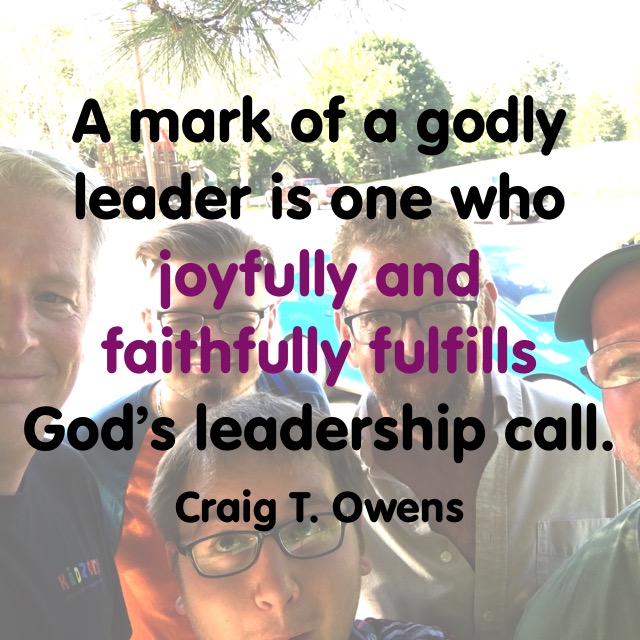
A mark of a godly leader is one who joyfully and faithfully fulfills God’s leadership call. 

This is part 67 in my series on godly leadership. You can check out all of my posts in this series by clicking here.

►► Would you please prayerfully consider supporting this ministry? My Patreon supporters get behind-the-scenes access to exclusive materials. ◀︎◀︎

Optimal Spiritual Health

Listen to the podcast of this post by clicking on the player below, and you can also subscribe on AppleSpotify, or Audible. 

I had a great time on the 200churches podcast with Jeff Keady. 

Jeff and I spent a good chunk of our time talking about the health of pastors. I think it is very important for shepherd leaders to be wholly healthy because we cannot give to our flocks what we don’t possess ourselves. 

One of the things that is very interesting to me is the parallels between maintaining our physical health and maintaining our spiritual health. When it comes right down to it, our physical health can be optimized by getting a handle on four key elements: (1) proper diet, (2) regular exercise, (3) appropriate rest and recovery, and (4) regular times of evaluation and adjustment. 

Our spiritual health is optimized with these same four elements. 

As my friend Josh Schram reminded me, “Health is not just a big one-time choice. Health is small daily choices.” Jesus made these daily choices to eat well, exercise regularly, rest when needed, and make the adjustments His Father spoke to His heart. He set us an example for healthy spiritual growth that will keep us in a place to grow our shepherd leadership capacities. 

I have found that we are much more likely to make and stick to a plan to get physically healthy when we have a workout friend or someone who is holding us accountable. The same is true for our spiritual health. So pastor, don’t try to get and stay healthy on your own, but get a trusted friend or two working out alongside you. 

In my book Shepherd Leadership, I have five chapters that focus on a leader’s mental, physical, spiritual, and relational health. I hope you will pick up a copy to help you operate at peak healthiness. 

If you want to catch up on some of the other clips I’ve already shared from this interview, you can find them here, and I’ll be sharing more clips from this 200churches interview soon, so please stay tuned. Shepherd Leadership: The Metrics That Really Matter is available in print or ebook, and in audiobook through either Audible or Apple. 

►► Would you please prayerfully consider supporting this ministry? My Patreon supporters get behind-the-scenes access to exclusive materials. ◀︎◀︎

The Craig And Greg Show: Responsibility Starts At The Top

Listen to the audio-only version of this podcast by clicking on the player below, or scroll down to watch the video.

On this episode of “The Craig And Greg Show” we talk about: 

  • [0:55] What’s one of the biggest attributes that sets leaders apart from their peers? 
  • [1:56] Check out why Stephen Covey’s definition of responsibility is so important in our discussion
  • [3:02] Why do people like to play “the blame game”?
  • [4:18] Accountability must be a partner with healthy responsibility
  • [4:52] Greg learned the blame game early on with his younger sister
  • [5:57] I worked in an unhealthy organization where the senior leader never accepted personal responsibility
  • [8:04] How do leaders “own it” in a healthy way?
  • [9:22] Exemplary leaders demonstrate how to accept consequences in a healthy way
  • [10:34] Responsibility and coachability strengthen a team and unleash greater potential
  • [11:27] Blame is “so dang easy” and makes the blamer a laughingstock
  • [13:27] What things contribute to blaming?
  • [14:14] How Greg handled the compliments and complaints from his clients
  • [15:11] Blaming is a spreading cancer in your organization
  • [15:44] Being a control freak isn’t the same thing as taking responsibility
  • [17:01] There is a balance for leaders so they don’t “fall on their swords”
  • [18:49] Team sports give us a good analogy of what shared responsibility looks like
  • [21:07] What’s on the other side of responsibility and blame?
  • [21:47] Leaders can enhance the benefits of responsibility through self-reflection
  • [23:51] Greg has a memorable and disarming way of helping people accept responsibility
  • [24:27] Our coaching huddles can help you learn to enhance the benefits of responsibility in your personal leadership

Check out this episode and subscribe on YouTube so you can watch all of the upcoming episodes. You can also listen to our podcast on Spotify and Apple.

Responsibility And Accountability

Listen to the podcast of this post by clicking on the player below, and you can also subscribe on AppleSpotify, or Audible. 

God had a rather simple message for Ezekiel, “The word of the Lord came to me: ‘Son of man, speak to your people’” (Ezekiel 33:1–2). 

I find that pronoun “your“ intriguing because you would think that God would say, “My people.” They are indeed God’s people, but God had set Ezekiel apart as His watchman (vv. 7–20), so Ezekiel had to take personal responsibility for the people. They were to be treated and spoken to as though they were indeed his people. 

This idea of responsibility gets a little tricky for some leaders because, with the responsibility to their people, they usually feel they are accountable to their people as well. 

But in the next few verses, God makes it clear that Ezekiel must be accountable to God alone.

Responsible to his people. Accountable to his God. 

When we start feeling we are accountable to people, we can get distracted, discouraged, or derailed by their unpleasant responses. 

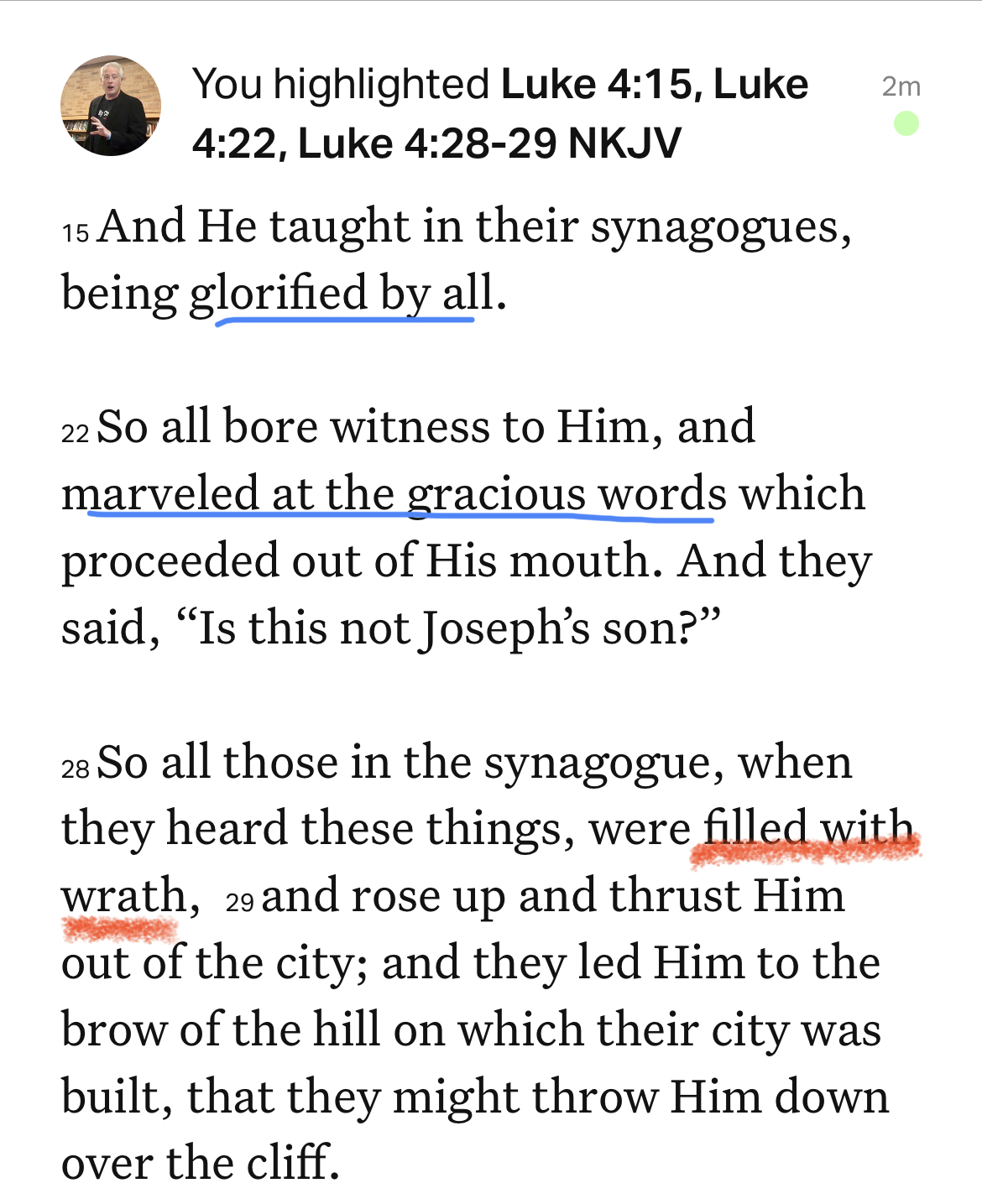
Notice that when Jesus spoke pleasing words to people, everyone spoke well of Him. But when He pointed out to them the words of God they were ignoring, they were ready to kill Him. 

People are fickle—they sing praises when they hear those words they like, and they are ready to attack the messenger when the words are upsetting. 

A mark of a godly leader is one who has a clear understanding of his responsibility and his accountability.

When you are God’s leader, He will entrust people to your care and He will entrust His message for those people to you. You are now responsible to deliver His message to your people. You are then accountable to God alone for delivering His message. Be responsible to people, accountable to God, and be careful not to mix the two. 

This is part 66 in my series on godly leadership. You can check out all of my posts in this series by clicking here.

►► Would you please prayerfully consider supporting this ministry? My Patreon supporters get behind-the-scenes access to exclusive materials. ◀︎◀︎

Soul Friends

Listen to the podcast of this post by clicking on the player below, and you can also subscribe on AppleSpotify, or Audible. 

I had a great time on the Ailbe Podcast with Rusty Rabon. 

Rusty referred to a chapter in my book called ‘Going Farther,’ where I talk about the importance of a shepherd leader having strong, godly friends close by.  

I learned a long time ago that there is a reason that the word “saints” is always in the plural—never in the singular—throughout the New Testament. I also share a couple of notable Old Testament examples of leaders who stumbled when they tried to go alone. 

In Shepherd Leadership: The Metrics That Really Matter I wrote, “You will not only extend your leadership by having other servant-hearted shepherds around you, but you will also have a guard against the aloneness that led to such ugly warts on the biography of otherwise powerful leaders such as David, Elijah, and Peter.” 

I’ll be sharing more clips from this interview soon, so please stay tuned. If you would like to check out the other clips I have already shared from this podcast, please check them out here. Shepherd Leadership: The Metrics That Really Matter is available in print or ebook, and in audiobook through either Audible or Apple. 

►► Would you please prayerfully consider supporting this ministry? My Patreon supporters get behind-the-scenes access to exclusive materials. ◀︎◀︎