Do You Want To Be A (Better) People Pleaser?

I know a lot of people who want to please others. This pursuit, however, can get you into hot water. For instance, when you need to confront a friend on their poor behavior. Or when someone doesn’t properly express their appreciation to you for appreciating them.

The Bible gives us a better way to be a people pleaser. 

Paul wrote: So we make it our goal to please [God]… (2 Corinthians 5:9).

Instead of goal, the King James Version says, “we labor.” If it is labor, then it truly is a labor of love: work that is challenging, but rewarding. In fact, the rewards are so overwhelming, that the sweat of labor is quickly forgotten.

The Greek word for labor/goal means work that is activated by the love of honor, and so it brings forth our very best effort.

I desire to honor God and please Him, and I desire to be honored by God and find my full pleasure in Him. After all, as the Westminster Catechism says, “The chief end of man is to glorify God and enjoy Him forever.”

So my labor of love is activated first by my love for God; and secondarily by my love for others. Isn’t this what Jesus gave us as the Great Commandment (see Luke 10:27)?

It is God Who has made us for this very purpose [to enjoy Him forever] and has given us the Spirit as a deposit, guaranteeing what is to come [honor and eternal pleasure]. (2 Corinthians 5:5)

The Holy Spirit helps activate and direct my labor of love. The Spirit uses my labor of love to draw others to Christ; the Spirit assures me that my labor of love is bringing honor and pleasure to the Father. And in that knowledge, I find my pleasure to continue to labor in love.

So if I want to please people, my goal must be a labor in love that pleases God. Out of the knowledge of His pleasure and honor, I am better prepared to present a labor of love to others.

God pleaser (first) → People pleaser (as an overflow) 

The better we please God, the better we’ll please people.

Gentle Correction

As a parent (and a pastor), delivering correction is one of my least favorite things to do. But it must be done.

The apostle Paul seemed to feel the same way. We get some insight into his heart in his letter to the Corinthians, where he reminds them of why he had to write such a stern letter of correction.

For I wrote to you out of great distress and anguish of heart and with many tears, not to grieve you but to let you know the depth of my love for you. (2 Corinthians 2:4)

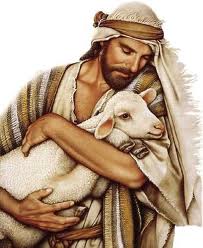
The loving shepherd’s heart longs for the advancement, the betterment, of all the sheep under his care. He is hurt when his sheep are wounded. His approach to discipline is always gentle; not weak, but strength lovingly applied.

The loving shepherd looks at his own life first, before correcting the sheep, to address anything he may have done or failed to do which caused the sheep to stray.

The loving shepherd knows that discipline may be painful for a moment, but it is to bring greater life. Just as a parent will allow a child to suffer the momentary pain of an immunization injection, to spare that child the unbearable pain of a disease later on.

And the loving shepherd always approaches a time of correction with “confidence in all of you, that you would all share my joy” (v. 3). The shepherd doesn’t view them as “dumb sheep” that cannot improve; rather, he is confident and assured that they will receive loving correction and make the change that leads to joy for all.

UPDATE: If you want to dive deeper into the ideas of being a shepherd leader, please check out my book Shepherd Leadership: The Metrics That Really Matter.

Open Door

Listen to the podcast of this post by clicking on the player below, and you can also subscribe on Apple or Spotify.

The phrase open door shows up several times in the New Testament, and it shows up quite a bit in the present-day vocabulary of many Christians too. But I’m not sure we mean the same thing.

I hear Christians saying things like, “I’m praying for God to open a door for a new job,” or “I’m waiting to see what door God will open for my schooling,” or something to that effect. In other words, the open door seems to be for our personal benefit.

The apostle Paul said this:

A great door for effective work has opened to me, and there are many who oppose me (1 Corinthians 16:9).

Let’s get one thing clear: God opens doors (we don’t), and our job is to obediently walk through those open doors (God won’t shove us through them).

Paul knew that the open door was not for his benefit, but for the benefit of those who were presently outside of the Kingdom of God. God opens doors for His people so that those outside His Kingdom can come inside (see Acts 14:27; 2 Corinthians 2:12; Colossians 4:3).

It might look like God opened a door by providing a job, but that job is His means to help you invite others into His Kingdom. The open door (the job, in this case) isn’t primarily for you; it’s for you to invite others in.

That’s why when God opens doors there will be many who oppose you. They are not really opposing you, but they are opposing the opportunity for the kingdom of darkness to be robbed and the Kingdom of God to be enriched.

So when you pray for open doors, remember:

  • When God opens a door, it’s mainly for the benefit of those outside the Kingdom of Heaven
  • You will be opposed by the kingdom of darkness

If you’re ready for both of those, then by all means pray for open doors!

►► Would you please prayerfully consider supporting this ministry? ◀︎◀︎

Keep On Asking

We finished The Q Series yesterday morning, but I hope the questions keep on coming. I always love answering questions, and doing it in the open forum like we did was both challenging and fun (at least I had a good time!).

But I also encouraged the Calvary Assembly of God family to keep on asking questions. It’s fine if the questions are directed to me, but the most important questions are the ones we ask of ourselves.

The Holy Spirit makes all of our lives a work-in-progress. This is what is called sanctification. That word really means to make a saint out of us (think of it as saint-ification).

That means He will constantly challenge us with questions that we are wise to answer. Things like:

  • Why are you thinking that?
  • What does the Bible say about that?
  • Is doing that for your comfort or for God’s glory?
  • Is that the wise thing to do?
  • How would Jesus handle that situation?

Over time the answers to these questions will change, as we should all be growing up in our relationship with God (1 Corinthians 13:11; Ephesians 4:15).

The Apostle Paul tells us that we should take every thought captive (2 Corinthians 10:5), because our minds will either be set on natural desires or set on spiritual truths (Romans 8:5).

So don’t tune out the Holy Spirit. Don’t stop asking those maturing questions. Don’t stop growing in your relationship with your Heavenly Father.

Keep on asking, and you’ll keep on growing!

Torn Veil

Our Where’s God? Easter drama reached its climax when the veil in the temple was torn by Christ’s death on the Cross. All three of the synoptic gospels record this—

At that moment the curtain in the sanctuary of the Temple was torn in two, from top to bottom. (Matthew 27:51; also see Mark 15:38 and Luke 23:45)

This was so significant in answering the question “Where’s God?” The veil prevented anyone from going into God’s presence (except the high priest on the Day of Atonement). This made God’s presence something of a mystery: Does God see me? Does He care about me? How do I get to God? Can I even approach Him? Would He receive me or would He reject me?

The best way to remember the definition for atonement is like this: at-onement.

In one moment, when Jesus said, “It is finished,” all that separated us from God was removed! And we can now live forgiven! We can now be at onement with God!

The veil not only literally and physically hung in the temple, but it figuratively and spiritually hangs in our hearts. This is what the Apostle Paul writes—

But their minds were made dull, for to this day the same veil remains when the old covenant is read. It has not been removed, because only in Christ is it taken away. Even to this day when Moses is read, a veil covers their hearts. But whenever anyone turns to the Lord, the veil is taken away. Now the Lord is the Spirit, and where the Spirit of the Lord is, there is freedom. And we, who with unveiled faces all reflect the Lord’s glory, are being transformed into His likeness with ever-increasing glory, which comes from the Lord, Who is the Spirit. (2 Corinthians 3:14-18)

Jesus Christ’s death on the Cross allowed the Heavenly Father to tear apart the physical veil in the temple. Have you allowed the Holy Spirit to tear apart the spiritual veil in the temple of your heart? Here’s how you can know that the veil has been torn apart—you can notice that you are being transformed more and more into Christ’s likeness.

That’s the significance of the torn veil! That’s the power of Christ’s atonement!

If you missed any of the message in our Where’s God? series, you can find them all here.

Thursdays With Oswald—Serving Like Christ

This is a weekly series with things I’m reading and pondering from Oswald Chambers. You can read the original seed thought here, or type “Thursdays With Oswald” in the search box to read more entries.

Am I Serving Like Christ?

The Son of Man did not come to be served, but to serve… (Matthew 20:28)

     Jesus also said, ‘Yet I am among you as the One who serves’ (Luke 22:27). Paul’s idea of service was the same as our Lord’s—‘…ourselves your bondservants for Jesus’ sake’ (2 Corinthians 4:5). We somehow have the idea that a person called to the ministry is called to be different and above other people. But according to Jesus Christ, he is called to be a ‘doormat’ for others—called to be their spiritual leader, but never their superior. Paul said, ‘I know how to be abased…’ (Philippians 4:12). Paul’s idea of service was to pour his life out to the last drop for others. And whether he received praise or blame made no difference. As long as there was one human being who did not know Jesus, Paul felt a debt of service to that person until he did come to know Him. But the chief motivation behind Paul’s service was not love for others but love for his Lord.

     …The institutional church’s idea of a servant of God is not at all like Jesus Christ’s idea. His idea is that we serve Him by being the servants of others. Jesus Christ actually ‘out-socialized’ the socialists. He said that in His kingdom the greatest one would be the servant of all (see Matthew 23:11). The real test of a saint is not one’s willingness to preach the gospel, but one’s willingness to do something like washing the disciples’ feet—that is, being willing to do those things that seem unimportant in human estimation but count as everything to God.

From My Utmost For His Highest

I cannot add anything to this brilliant observation. But I can tell you the parts that the Holy Spirit is really working in my heart:

  • “…called to be a ‘doormat’ for others—called to be their spiritual leader, but never their superior.” God, help me to keep my pride in check.
  • “The real test of a saint is not one’s willingness to preach the gospel, but one’s willingness to do something like washing the disciples’ feet.” May I never shrink back from willingly serving at the lowest level of society.

UPDATE: This idea of servant-leaders plays prominently in my book Shepherd Leadership: The Metrics That Really Matter.

Thursdays With Oswald—Why Did God Choose Me?

This is a weekly series with things I’m reading and pondering from Oswald Chambers. You can read the original seed thought here, or type “Thursdays With Oswald” in the search box to read more entries.

Why Did God Choose Me?

Oh, the bravery of God in trusting us! Do you say, “But He has been unwise to choose me, because there is nothing good in me and I have no value”? That is exactly why He chose you. As long as you think that you are of value to Him He cannot choose you, because you have purposes of your own to serve. But if you will allow Him to take you to the end of your own self-sufficiency, then He can choose you to go with Him.

From My Utmost For His Highest

If God chose me because I was so special, and if I did something valuable for Him, who would get the glory for that? I would.

But I want to exalt God only

But we have this treasure in earthen vessels, that the excellency of the power may be of God, and not of us. (2 Corinthians 4:7)

Brothers, think of what you were when you were called. Not many of you were wise by human standards; not many were influential; not many were of noble birth. But God chose the foolish things of the world to shame the wise; God chose the weak things of the world to shame the strong. He chose the lowly things of this world and the despised things—and the things that are not—to nullify the things that are, so that no one may boast before Him. It is because of Him that you are in Christ Jesus, who has become for us wisdom from God—that is, our righteousness, holiness and redemption. Therefore, as it is written: “Let him who boasts boast in the Lord.” (1 Corinthians 1:26-31)

I want to go with You, Lord. Please keep me humble!

Thursdays With Oswald—Fasting From Eloquence

This is a weekly series with things I’m reading and pondering from Oswald Chambers. You can read the original seed thought here, or type “Thursdays With Oswald” in the search box to read more entries.

Fasting From Eloquence

     Belief in Jesus is a miracle produced only by the effectiveness of redemption, not by impressive speech, nor by wooing and persuading, but only by the sheer unaided power of God. The creative power of redemption comes through the preaching of the Gospel, but never because of the personality of the preacher.

     Real and effective fasting by a preacher is not fasting from food, but fasting from eloquence, from impressive diction, and from everything else that might hinder the gospel of God being presented. The preacher is there as the representative of God—‘as though God were pleading through us…’ (2 Corinthians 5:20). He is there to present the Gospel of God. If it is only because of my preaching that people desire to be better, they will never get close to Jesus Christ. Anything that flatters me in my preaching of the gospel will result in making me a traitor to Jesus, and I prevent the creative power of His redemption from doing its work.

From My Utmost For His Highest

So much of pastoring focuses on the preaching. And yet Chambers says, “If it is only because of my preaching that people desire to be better, they will never get close to Jesus Christ.”

He’s right: It’s not about me or my preaching. My focus is on what Jesus said: “And I, if  I be lifted up from the earth, will draw all men unto Me” (John 12:32).

Examination

I’m reading Eric Metaxas’ fascinating biography of Dietrich Bonhoeffer.

Here’s something amazing to me: Bonhoeffer had a degree in theology (having studied under some of the most esteemed theologians of the day), taught Sunday School classes, lectured on biblical doctrine, served as an interim pastor for a full year, and even earned his doctoral degree. Yet after all this, people noticed a change in Bonhoeffer.

Listen how he described the change himself:

I plunged into work in a very unchristian way. … Then something happened, something that has changed and transformed my life to the present day. For the first time I discovered the Bible…. I had often preached. I had seen a great deal of the Church, and talked and preached about it—but I had not yet become a Christian. … I know that at that time I turned the doctrine of Jesus Christ into something of personal advantage for myself…. I pray to God that that will never happen again.

If such a man as Dietrich Bonhoeffer discovered that he knew about Jesus without knowing Jesus personally, shouldn’t we, too, “Examine yourselves to see if your faith is genuine. Test yourselves. Surely you know that Jesus Christ is among you; if not, you have failed the test of genuine faith” (2 Corinthians 13:5).

Thursdays With Oswald—A Strong Weakness

This is a weekly series with things I’m reading and pondering from Oswald Chambers. You can read the original seed thought here, or type “Thursdays With Oswald” in the search box to read more entries.

A Strong Weakness

Are not my days few? cease then, and let me alone, that I may take comfort a little, before I go whence I shall not return, even to the land of darkness and the shadow of death. (Job 10:20-21)

     “I see no way out,” says Job. He lies down, not in weakness, but in absolute exhaustion. Job is not talking in a petted mood, but saying that unless God will be a Refuge for him, there is no way out, death is the only thing. In every crisis of life, as represented in the Old Testament as well as in the teaching of Our Lord, this aspect of God is emphasized—“God is our Refuge”; yet until we are hit by sorrow, it is the last thing we seek for God to be. There is a difference between the weakness of refusing to think and the weakness that comes from facing facts as they really are. Job is seeing for the first time that God is the only Refuge, the only way out for him; yet he cannot get at Him through his creed, it is all confusion; the only thing to do is to fling himself on God.

From Baffled To Fight Better

“The only thing to do is to fling [myself] on God.”

Alas, how many times does this become my last resort! Why don’t I learn to fling myself on God my Refuge as my first resort? I must remember this: For when I am weak, then I am strong. (2 Corinthians 12:10)