What’s Your Passion?

Listen to the podcast of this post by clicking on the player below, and you can also subscribe on AppleSpotify, or Audible. 

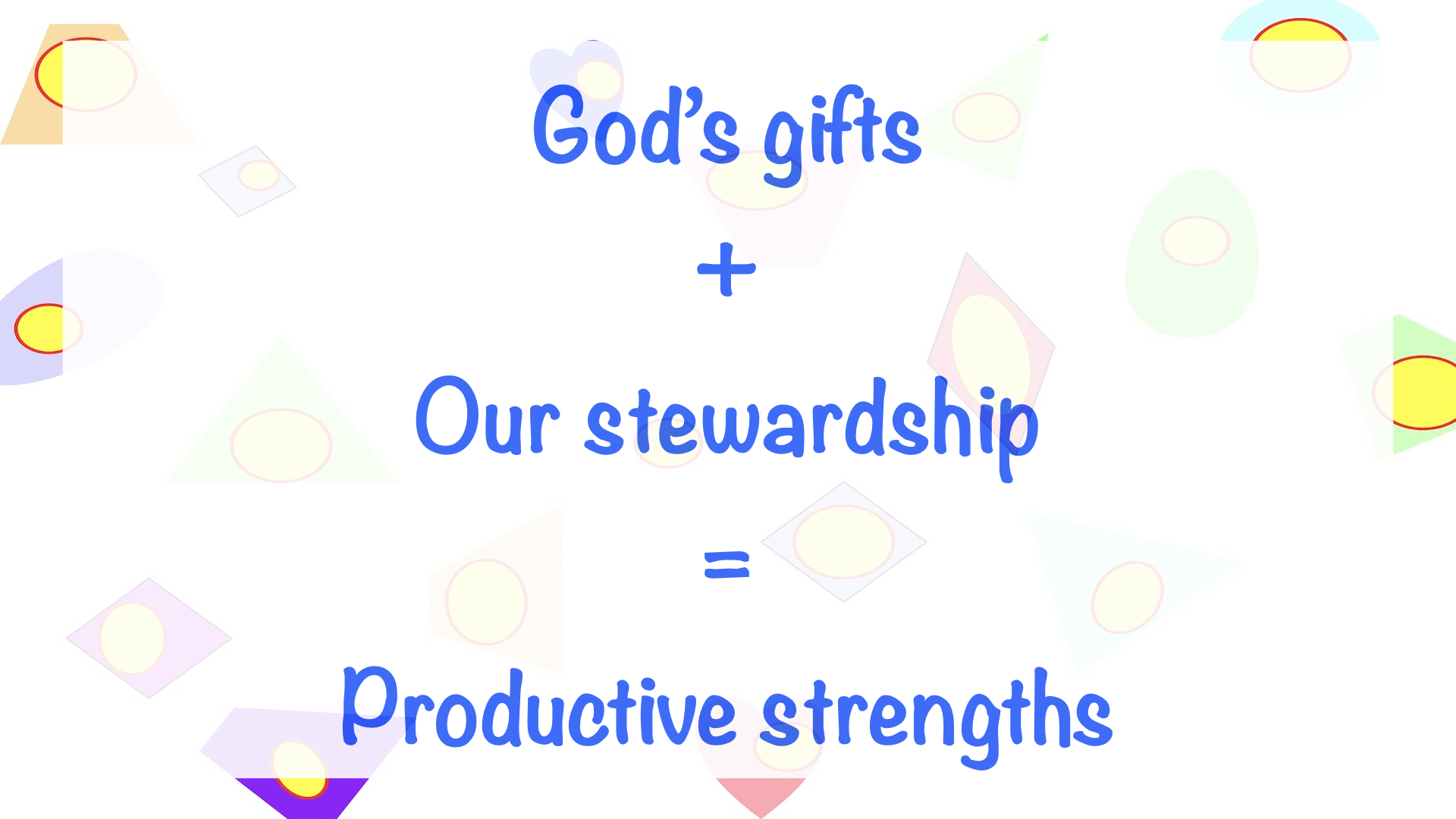
A quick recap: We are all gifted by God, but we typically restrict ourselves to a comfort zone which is much smaller than our God-given gift zone. In order to maximize our impact for the Kingdom of God, we are going to have to get uncomfortable with staying comfortable—we are going to have to trust God as we push out further into our gifts. 

Last week I gave you a homework assignment to think about the things you love to do. Why do we need to know this? Because it is one of the indicators of our areas of giftedness. 

In the whole carrot-versus-stick discussion, you will find that most people are motivated by reward way more than they are by the fear of punishment. Look at how these God-fearing men were motivated by the God’s rewards:

  • David—1 Samuel 17:26-27, 29-30 
  • Paul—1 Corinthians 9:24; 2 Timothy 4:8 
  • Jesus—Hebrews 12:2; Philippians 2:9-11 

(Check out all of the Scriptures in this post by clicking here.)

Who’s more likely to get the reward: the one who loves what they are doing or the one who hates what they are doing? We are more likely to stick with what we love doing, and you are going to love doing what you are gifted by God to do. 

Why we do what we do is much more important that what we do (Isaiah 1:11, 13, 15; Matthew 7:22-23). 

We have been gifted by God to do great things. When we do those great things, we are rewarded and it brings God glory. That realization should answer the question of why we do what we do (Ephesians 2:10). 

The way we see the world, what motivates us, and how we act are all determined by our gifts. We are working on the same Great Commission, but how we live that out will be different because of our different gifts. 

In the Old Testament, the saints wanted Zion to be strong and God-glorifying: 

  • David fought battles and wrote worship songs 
  • Solomon gave wise proverbs 
  • Josiah brought about reforms 
  • Ezra encouraged the Israelite governor and high priest 
  • Daniel encouraged the Babylonian rulers 
  • Nehemiah built the wall

In the New Testament era, the saints should all want the Body of Christ to be strong and God-glorifying. Toward that goal, we still need warriors, worshipers, wisemen, reformers, teachers, counselors, workers. 

Toward that goal, we all have a part to play (Ephesians 4:12). Check out the example of Paul in…

  • …Thessalonica: Paul was in the synagogue on three Sabbaths (Acts 17:1-2; 2 Thessalonians 3:8)  
  • …Corinth: Paul was synagogue on the Sabbath days, but after Silas and Timothy arrived, Paul was able to be preaching every day for 18 months (Acts 18:1-5, 11) 

What’s the difference? Silas and Timothy used their gifts so that Paul could use his. Without the “enzyme” of Silas and Timothy’s gifting, the whole Body of Christ would have been impoverished. 

One of the things that will help your spot your areas of giftedness is noticing what you are passionate about—What do you love to do? 

Let me give you three things to consider:

  1. When can I do this again? vs. When will this be over? 
  2. When I do this, I’m tired but fulfilled vs. When I do this, I’m tired. 
  3. I would do this without pay vs. I would rather find something else to do. 

Our prayer should echo what Paul prayed:

For this reason, since the day we heard about you, we have not stopped praying for you. We continually ask God to fill you with the knowledge of His will through all the wisdom and understanding that the Spirit gives, so that you may live a life worthy of the Lord and please Him in every way: bearing fruit in every good work, growing in the knowledge of God. (Colossians 1:9-12)

If you’ve missed any of the messages in our series Living in Your Gift Zone, you can find them all here. 

►► Would you please prayerfully consider supporting this ministry? My Patreon supporters get behind-the-scenes access to exclusive materials. ◀︎◀︎
We Are All Gifted

Listen to the podcast of this post by clicking on the player below, and you can also subscribe on AppleSpotify, or Audible. 

Last week I concluded by saying I wanted to help all of us discover our God-given gifts so that we could stretch outside of our comfort zone. Remember that your comfort zone is much smaller than your gift zone. 

I’m concerned that some people might be confused about what I mean by “gifts.” Some people look at someone who can preach, or write, or sing, or compose music, or paint, and say, “They are so gifted! I could never do anything like that.” Yes, those are very visible gifts, but let’s not limit “gifts” to just those kinds of things. 

God has designed our physical bodies to do some astounding things! We see some people using their bodies to run fast, jump high, lift heavy things, or catch a ball, and we may marvel at their talents. These amazing feats are only possible because of a thousand other gifts. Even the simplest of tasks is far from simplistic. Isaac Newton noted, “In the absence of any other proof, the thumb alone would convince me of God’s existence.” 

Something that is invisible to the human eye but indispensable to absolutely everything that happens in our physical bodies is the vital functions of enzymes. 

Enzymes are proteins that help facilitate metabolism, or coordinate a chemical reaction. Some enzymes build things up and some break things down. Enzymes help with things like… 

  • turning the food we eat into energy 
  • breathing 
  • building muscle 
  • nerve function 
  • ridding our bodies of toxins 

There are thousands of individual enzymes in the body. Each type of enzyme only has one job. 

For example, consider the enzyme sucrase. If it is deficient in the body, sucrose from food isn’t broken down to glucose and fructose. As a result we would experience dehydration, malnutrition, and developmental delay. 

Every enzyme is vital. It’s not coincidental at all the the New Testament uses the analogy of our physical bodies to portray the Body of Christ (Romans 12:3-6; 1 Corinthians 12:6, 18, 27). 

(Check out all of the verses in this post by clicking here.)

In the New Testament church it’s easy to spot the highly visible gifts like preaching, evangelism, and church leadership, just as it’s easy to spot physical accomplishments like a professional athlete or a world-class pianist. But let’s not overlook the thousands of indispensable “enzymes” in the Church that allow the Body of Christ to function in a healthy way. 

Read through the Book of Acts and you will see gifts in the form of people who…

  • agreed together in prayer 
  • affirmed God-honoring, biblical decisions 
  • organized feeding programs 
  • hosted people in their homes (house churches) 
  • prepared food for others 
  • handed out that food 
  • sewed clothes for those who needed them 
  • faithfully visited the sick and imprisoned 
  • earned a paycheck to pay for ministry expenses 
  • distributed funds to those in need 
  • used their official positions open doors or provide protection 
  • wrote important correspondence

Peter wrote, “God has given each of you a gift from His great variety of spiritual gifts. Use them well to serve one another” (1 Peter 4:10). 

What happens if an “enzyme” is missing? Quite simply: The Church cannot grow to our full potential (1 Corinthians 12:26 AMPC; Ephesians 4:12-13). 

Each of us needs all of us. All of us needs each of us. Jesus hasn’t just saved you from death, He has also saved you to life—an abundant life for you, for the Body of Christ, and for those who don’t know Him as their Lord and Savior yet. 

You are gifted. More precisely said: You ARE a gift! 

If you’ve missed any of the other messages in this series, you can check them all out here. 

►► Would you please prayerfully consider supporting this ministry? My Patreon supporters get behind-the-scenes access to exclusive materials. ◀︎◀︎

Links & Quotes

By it’s very definition, stepping out of your comfort zone is UNcomfortable and sometimes fearful. God promises to be close by while you’re in the Discomfort Zone!

I have lots of new content every week, which you can check out on my YouTube channel. 

Scientists have long endeavored to comprehend the transformations that take place in trees and plants throughout the autumn season. While lacking complete knowledge, they possess sufficient understanding to explain the fundamental aspects of these spectacular displays. Interestingly, the colorful leaves are not only aesthetically pleasing, they also serve a crucial role in the trees’ survival.

“Some believe it is only great power that can hold evil in check, but that is not what I have found. I have found it is the small everyday deeds of ordinary folk that keep the darkness at bay. Small acts of kindness and love.” —J.R.R Tolkien

“It cannot be exaggerated how much God hates our trying to do His work when it comes to vengeance or vindication. Whether it be vengeance or vindication, either is solely the Lord’s sovereign right. He does not like it when you or I try to punish someone, to vindicate ourselves, making ourselves look good or clearing our own names.” —R.T. Kendall

The world’s arguments are a lot of noise and very little substance. Don’t get into a shouting match, but quietly, gently, and respectfully keep returning to God’s Word. Charles Spurgeon was once asked how he could defend the Bible and he responded, “The Bible is like a lion: I let it out and it defends itself!”

Do Not Judge?

Listen to the podcast of this post by clicking on the player below, and you can also subscribe on AppleSpotify, or Audible. 

As we learned last week, we are not the judge, nor the jury, nor the prosecution, nor even the sin police in deciding appropriate retribution. With that in mind, let’s consider Statement #15 in our series—Do not judge. Is that in the Bible? 

Yes, those three words are there, spoken by Jesus, in Matthew 7:1. But then again, we need to say, no, because these words don’t mean we are not to make determination about the rightness or wrongness of something. 

(Check out all of the Scriptures in this post by clicking here.)

Let’s zoom-out a bit get the context of the words Jesus spoke. Who was His audience for these words? This is a part of the Sermon on the Mount (Matthew 5–7). Notice in the opening words, “His disciples came to Him, and He began to teach them” (5:1-2). So Jesus isn’t speaking to the world at-large, but He is talking with His disciples. 

Jesus was very specific in His wording. In talking about the world, He uses words like people (5:11) or men (5:16; 6:1, 5). When talking about His disciples, He uses one word quite frequently: brother (3x in 5:22-24). 

Matthew 7:1 is still in this sermon, and the word brother appears 3x in vv. 3-5. So these are instructions primarily for Christians to use with other Christian brothers and sisters. 

The words judge here in the Greek means, “Those who judge severely (unfairly), finding fault with this or that in others.” To me, “this or that” sounds like a deliberate searching for something wrong, but Jesus assures us that this will boomerang on the judgmental person (v. 2; Luke 6:37). 

In modern psychology, we find terms like:  

  • mirroring = a psychological term the means quickly seeing what’s in others because it’s in me 
  • projection = taking the negative things in me and projecting them onto others

Paul addresses both of these thoughts in Romans 2:1-3, where the word for judging here is the same Greek word Jesus uses in Matthew 7.

Paul concludes his remarks by reminding us that God treats us kindly (Romans 2:4). David echos this same thought in Psalm 103:8-10, 13-14. 

When you read the whole passage in Matthew 7:1-5, please notice the words “brother,”  “first,” and “then.”  

Jesus does not mean that I am not to point out to my brothers and sisters any areas of concern. Jesus did this, as well as nearly every epistle writer. What it does mean is that correction needs to be gentle and never condemning. In other words, I want to lovingly help someone before they have to stand before The Judge. 

That’s why I need to first humbly recognize that what I see in others may be apparent to me because I am afflicted with the same thing. That’s why Jesus says first deal with my own plank. Examine myself  before I try to correct a brother or sister (1 Corinthians 11:28; 2 Corinthians 13:5). 

After I have allowed the Holy Spirit to deal with my plank, I will then have the empathy to help my brother or sister (2 Corinthians 1:3-4). Trying to get someone else to repent of something that still exists in my life is hypocritical. 

If I see something wrong in someone else:

  1. First ask the Holy Spirit to search me. 
  2. If necessary, confess it, repent from it, ask forgiveness, make things right. 
  3. Then lovingly and humbly share with your brother or sister (Ephesians 4:15). 

If someone else sees something wrong in me, I should follow the exact same steps! 

This is not easy, but it is vital for the Body of Christ to grow in a healthy way. 

If you’ve missed any of the other messages in this installment of our series Is That In The Bible?, you can find them all here. 

►► Would you please prayerfully consider supporting this ministry? My Patreon supporters get behind-the-scenes access to exclusive materials. ◀︎◀︎
Links & Quotes

There’s no secret formula to fruitfulness as a Christian. We just stay connected to Jesus and the fruit will grow. This clip is from this sermon.

I have lots of new content every week, which you can check out on my YouTube channel.

The “Ten Commandments” are not explicitly listed or reiterated in the New Testament. Does that mean they are obsolete? No, says David Mathis, it means they are fulfilled. “Jesus Himself says He did not come to destroy the Law and Prophets, but to do something even more striking: fulfill them (Matthew 5:17). That is, fulfill like prophecy. Not simply keep the Ten in place, or remain under them, or leave them untouched, but fulfill them—first in His own person, and then by His Spirit in His church. He came not to cast off Moses, but to fulfill Jeremiah, and in doing so, He accomplished what is even more radical: establishing Himself as the supreme authority, putting God’s law within His people (rather than on tablets), writing it on their hearts (rather than stone), and making all His people to know Him (Jeremiah 31:31–34).” Check out my post The 10 Commandments in the New Testament.

More archeological evidence supporting to the historicity of the Bible. You can check out the full article, but this paragraph is a good summation: “One of the surprising findings was that, according to the results of their tests, the Broad Wall in Jerusalem, also known as Hezekiah’s Wall, was likely built during the reign of Uzziah, who Scripture says built fortifications in Jerusalem (2 Chronicles 26:9). Another finding was that Jerusalem was much more heavily populated and urbanized in the 12th through 10th centuries BC than some scholars previously thought. This would align with the biblical description of Jerusalem, particularly during the days of David and Solomon.”

“There is much of beauty, goodness, and truth to be discovered in the city of man, as Augustine pointed out toward the end of his great treatise, City of God. But all the culture and best intentions of men turn to corruption apart from the power of God to redeem and renew them. We who live also in the heavenly city now possess the mind of Christ (1 Corinthians 2:16); we are able to see the ways that culture can be ‘taken captive’ from the clutches of sin and unbelief and made to serve the purposes of Christ in all things. Thus, for the honor and glory of God, we commit ourselves daily to using all our time, activities, relationships, roles, responsibilities, and culture to furthering His rule on earth as it is in heaven.” —T.M. Moore

“Have movies and most conventional paleontologists got it all wrong? T. rex and other theropod dinosaurs (the meat-eaters) are often portrayed as intelligent predators that can outmuscle and outsmart their opponents. But is that really supported by science?” A very interesting compilation of research can be found here. The conclusion is exactly right: “God designed dinosaur brains that were perfectly suited for their lifestyles and body size when He created dinosaurs on Day 6 of the creation week (Genesis 1:25).” 

Takin’ Him To Rodeo Drive

Listen to the podcast of this post by clicking on the player below, and you can also subscribe on AppleSpotify, or Audible. 

Jesus has sent us on-mission (which means we are missionaries) to every street. We don’t go in our power, but we are empowered by the baptism of the Holy Spirit (see Luke 24:46-49). 

Jesus said our missionary work would take us to every street, starting with Jerusalem—which we have called Main Street. These are people very similar to us. Then our mission will expand into all Judea (Acts 1:8). These are people that have less in common with us. Last week we talked about taking the message of Jesus to Lombard Street: Talking with people who have knowledge of the Bible, but tend to twist and turn with the popular traditions of the day. 

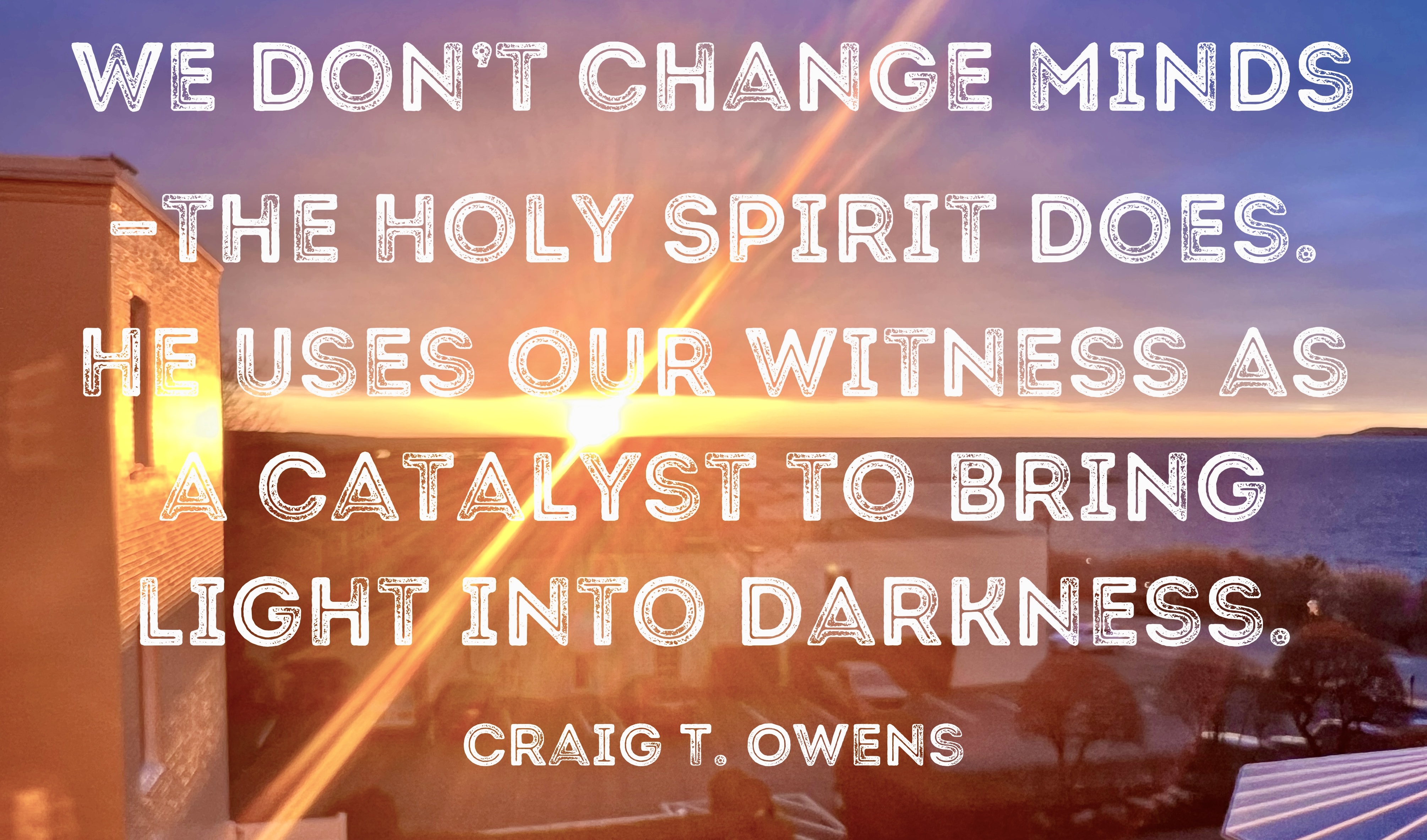
Remember that our mission is to be witnesses—share the Scripture and our personal story. It’s not our responsibility to try to open people’s minds so they can repent, but the Holy Spirit opens minds and calls people to repentance. 

The apostle Paul reminded us that, “The god of this age has blinded the minds of unbelievers” (2 Corinthians 4:4). The Holy Spirit uses our witness as the catalyst to open minds. This clash of light and darkness creates acceptance and anger. Notice these contrasts in one short segment of Paul and Silas’ missionary journey in Acts 16:13-24 and 17:1-13:

  • Acceptance—Acts 16:13-15 
  • Anger—16:16-24 
  • Acceptance—17:1-4 
  • Anger—17:5-6 
  • Acceptance—17:10-12 
  • Anger—17:13 

The opposition in Philippi brought Paul and Silas to Thessalonica, and the opposition in Thessalonica brought them to Athens. 

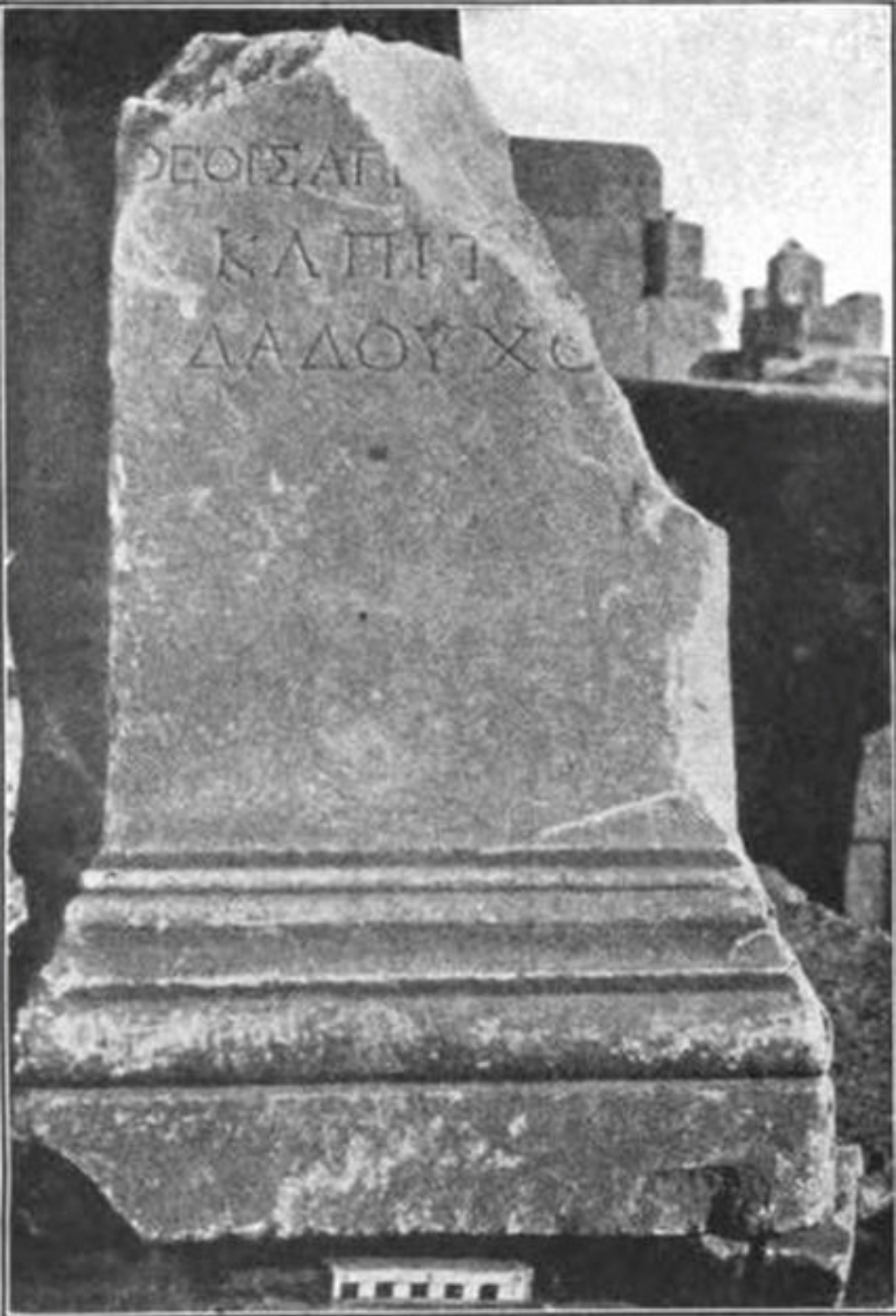
Athens was named for the goddess Athena, and it has been called “the university city of the Roman world.” Philo (a Jewish historian) called the Athenians “keenest in intellect.” It was the center of art, literature, and philosophy 

I’m going to call Athens “Rodeo Drive.” 

Rodeo Drive is called “the intersection of luxury, fashion and entertainment.” Kay Monica Rose, the Rodeo Drive Committee President, said, “There is nothing in the world comparable to Rodeo Drive. The legendary street’s magic continues thanks to the exemplary craftsmanship from today’s greatest fashion houses and brands, the architect-designed boutique spaces, the spectacular window displays, artist collaborations and pop ups, and our unrivaled customer service. At the heart of my vision for Rodeo Drive is the preservation and advancement of an unmatched legacy.”  

A marketing professor once told me, “When advertising, you have to remember that everyone has radio station WIFM playing in their head—What’s in it for me?” The people on Rodeo Drive are self-focused and self-assured. 

How do we take the message of Jesus to those Judeans on Rodeo Drive? Let’s learn from Paul’s time there (Acts 17:16-34). 

  1. Control your anger. Even though Paul was “greatly distressed,” he didn’t let his anger control him, but he kept his distress under control. 
  2. Use measured words. Paul “reasoned” with the people there, which means he engaged in meaningful dialogue with them.  
  3. Don’t argue. Some to the Athenians “disputed with him [Paul]” but he didn’t dispute back. Instead he was preaching the good news about Jesus and the resurrection. 
  4. Start where they are. Paul noted that the Athenians were “very religious.”  He doesn’t condone their idolatry, but he simply uses it as a conversation starter. 
  5. Move to the eternal issue. He then proceeds to point them to Jesus as the “unknown god” that they are worshiping, bringing everything back to His resurrection from the dead.  
  6. Be ready for acceptance and anger. As in Philippi and Thessalonica, there were some who accepted the Gospel message and some who got angry when they heard it.  

Remember: We don’t change minds—the Holy Spirit does by using our words as a catalyst. 

If you’ve missed any of the other “Streets” we have discussed in this series, please click here to get caught up. 

►► Would you please prayerfully consider supporting this ministry? My Patreon supporters get behind-the-scenes access to exclusive materials. ◀︎◀︎

The Catalyst Of Our Witness

Listen to the podcast of this post by clicking on the player below, and you can also subscribe on AppleSpotify, or Audible. 

Jesus fulfilled all of the jots and tittles of prophecy, showing that God is the Promise Maker is God the Promise Keeper. 

We need to be careful of overlooking details we think might be insignificant because we can easily think that our small lives are somehow insignificant. They are not! As Tom Kaastra reminded us last week, we are here on purpose and for a purpose; our lives are eternally significant.  

Immediately after His resurrection, the followers of Jesus struggled to wrap their minds around what they had just experienced. Just before His ascension, Jesus explained to them both what had happened already, and what was about to happen (Luke 24:44-49). 

Jesus said He had already fulfilled the promised about His crucifixion and resurrection. Luke writes that Jesus “opened their minds so they could understand” (v. 45). 

Notice two important things:

  1. The Spirit of Jesus—the Holy Spirit—opens minds 
  2. He opens minds to grasp the truth in Scripture 

Jesus also says that we are still fulfilling the “what is written” (v. 46) in the the proclamation of the death and resurrection of Jesus. We are fulfilling the prophecy that says the message of Jesus will be preached everywhere to all peoples, so that they also can receive the forgiveness Jesus paid for and repent of their Godless ways. 

Who opens minds? The Holy Spirit. 

What does the Spirit use as a catalyst to open minds? Our witness. 

Who empowers our witness? The same Holy Spirit (see Luke 24:47-49; Acts 1:4-8). 

A witness is a truth-teller, who tells their firsthand story and who amplifies their verbal testimony by their Christ-honoring lifestyle. Jesus used two phrases to remind us that witnessing is not something we do, but it is who we are: 

  • you ARE witnesses (Luke 24:48) 
  • you will BE My witnesses (Acts 1:8) 

Holy Spirit-baptized Christians are empowered to take Jesus to every street. God has strategically and purposefully placed us on our “streets” to proclaim our witness. From Easy Street to Skid Row, and everywhere in between, we are to fulfill the prophecy of proclaiming this good news to all nations (see 1 Corinthians 9:20-22).

The Holy Spirit opens minds closed to God. He uses our witness as the catalyst for people to repent from their sin and receive the forgiveness that Jesus made available. 

So don’t stop at just receiving Jesus as your Lord and Savior, but also receive the empowering gift He promised—the baptism in the Holy Spirit! 

Please follow along with all of the messages in this series called Takin’ Him to the streets by clicking here. 

►► Would you please prayerfully consider supporting this ministry? My Patreon supporters get behind-the-scenes access to exclusive materials. ◀︎◀︎

Takin’ Him To The Streets

Just before Jesus ascended to Heaven, He told His followers that they would have the joyful responsibility of taking the good news of forgiveness and eternal life to all the highways and byways of every nation. Later on, Paul would get more specific about all of the groups to which he was taking the message of Jesus (see Luke 24:46-47; 1 Corinthians 9:20-22). 

That commission is still in effect for Christians today: We are to share the gospel with everyone—from easy street to skid row, from Wall Street to Main Street, and every street in between. 

The streets on which you live and work are different from the streets where I travel. In fact, all of us live on different streets, but everyone we meet on every street needs to hear about Jesus. In this new series of messages, we are going to learn how the Holy Spirit can help us be ready to take Jesus to those on each street where God sends us. 

I hope you can join me at Calvary Assembly of God for this highly practical series of messages. If you missed any of the messages, you can find them all here:

So Good!

Listen to the podcast of this post by clicking on the player below, and you can also subscribe on AppleSpotify, or Audible. 

You may have heard it this last weekend. Someone says, “Jesus is risen,” and their friend responds, “He is risen indeed!” Jesus Christ’s resurrection from the dead is the greatest event ever! And yet some people just can’t seem to grasp how good this truly is.

We’ve been trained to believe if something sounds too good to be true, then it probably is. So we are careful to be skeptical of any too-good-to-be-true claims that we may hear. Our heart might get excited at the possibilities, but then our logical mind begins to shout, “Wait!” 

Here’s what a logical argument looks like: P1 + P2 + P3 = C. 

The Ps are premises, and if we put true premises all together, then the C (conclusion) is true as well. All I have to do is invalidate one of the Ps and the whole argument falls apart. Then my logical mind can say, “See! I told you it was too good to be true!” 

People heard the teachings of Jesus, they saw His miracles, thousands of them had even tasted the bread and fish He miraculously multiplied. They had hoped He was the One they had been longing for—the Messiah that would deliver them. But then He was crucified and their excitement was extinguished. 

On the Sunday morning after His crucifixion, rumors began to swirl that Jesus had been resurrected back to life. Others said they had actually seen Him and talked with Him. Hearts began to swell with excitement again. But for many of them, their logical minds began to shout, “Wait! Don’t fall for another too-good-to-be-true story!” 

We meet a couple of men who felt like this in Luke 24:13-24. They so wanted it to be true that Jesus was the Messiah they had longed for, but I notice that they use the word “but” three times. That’s their logical mind trying to invalidate any one of the premises. 

Jesus was indeed resurrected from the dead. There is so much evidence that I don’t have time to go through today, but let me just share one item with you: Paul listed all of the people who had seen Jesus alive (1 Corinthians 15:3-8). Facing persecution and even martyrdom, none of these eyewitnesses recanted their faith. 

Chuck Colson, who was at the center of the Watergate scandal and who was not a Christian at that time, said,  

“I know the resurrection is a fact, and Watergate proved it to me. How? Because twelve men testified they had seen Jesus raised from the dead, then they proclaimed that truth for 40 years, never once denying it. Every one was beaten, tortured, stoned and put in prison. They would not have endured that if it weren’t true. Watergate embroiled twelve of the most powerful men in the world and they couldn’t keep a lie for three weeks. You’re telling me twelve apostles could keep a lie for 40 years? Absolutely impossible.”  

Remember our logical statement: P1 + P2 + P3 = C. 

Jesus gave one of His own in Luke 18:31-33. It would go something like this: 

  • ✔️ P1 (He was turned over to the Romans) 
  • ✔️ P2 (He mocked, flogged, killed) 
  • ✔️ P3 (He was raised from the dead)
  • ✔️ C (Jesus fulfills every promise of God) 

The disciples on their way to Emmaus used the word “but” three times, but Jesus counteracted that by using the word “all” three times (Luke 24:25-27), when He said all of the Scriptures point to Him and are fulfilled in Him! 

The Bible is packed with promises! Promises of courage, assurance, wisdom, healing, direction, provision. And they are all valid promised because of the resurrection of Jesus—

For no matter how many promises God has made, they are “Yes” in Christ. And so through Him the “Amen” is spoken by us to the glory of God. … What, then, shall we say in response to these things? If God is for us, who can be against us? He who did not spare His own Son, but gave Him up for us all—how will He not also, along with Him, graciously give us all things? (2 Corinthians 1:20; Romans 8:31-32)

It may seem like these promises are too-good-to-be-true, but Jesus is so good that He makes all of the promises true! 

If you missed any of the messages in our series looking at how Jesus fulfilled the smallest of details of prophecy, check them out here. 

►► Would you please prayerfully consider supporting this ministry? My Patreon supporters get behind-the-scenes access to exclusive materials. ◀︎◀︎
Links & Quotes

We are to love the sinner but hate the sin. This is hard to do, especially when the sin they are doing is directed at us and making us angry! Jesus gave us a great example in these times of high anger: withdraw. Check out my full message “A Christlike Response to Skeptics.” I have lots of new content every week, which you can check out on my YouTube channel.

“In many pagan religions the purpose of worship is to placate the gods—to keep them happy and to stay on their good side, lest they mess with, you know, the harvest or procreation or whatever. Worship is thus a work pagans do to earn or keep the favor of their deity. Christians don’t worship to placate God or earn His favor. We don’t worship to make God happy or bring Him pleasure. God is all-satisfied, all-happy, and all-pleased in Himself alone. We add nothing to Him when we come together to worship. At the same time, as we worship, God adds Himself to us. He deigns to commune with us, inhabits our praises, and brings us into His presence and joy in ways that transform all we are, think, feel, value, say, and do. … In worship, rightly conceived and conducted, our minds and imaginations expand beyond their everyday thoughts and dreams, stretched and molded to fill up with the glory of the heavenly throne room, to be conformed to the mind of Christ, and to see the world as He does (1 Corinthians 2:16).” —T.M. Moore

J. Warner Wallace shares two reasons why we can still consider the Bible relevant today.

My grandpa had honey bees on his farm, and I’ve been intrigued by them ever since that time. In fact, honey bees were subject of my semester-long research project in my ecology class. So I’m always fascinated to read more discoveries about these amazing insects!

The level of a leader’s strength and courage is directly tied to the leader’s meditation upon God’s word. God’s wisdom transforms a leader’s heart and sharpens his thoughts. This is what gives the leader the necessary courage to lead people in a God-honoring way. I have a whole series of posts on godly leadership where I expand more on these thoughts.