Links & Quotes

Christian parents often experience both a weight and a wait as they pray for their children. Biblical waiting is always active, calling us to continue to pray for our kids—not matter how old they are!

I have a lot of new video content on my YouTube channel every week. Please check it out and subscribe so you don’t miss anything.

The Institute for Creation Research reported: “Perhaps one of the top evidences for creation are the subcellular and incredibly efficient molecular protein machines that clearly function by known engineering principles. They are hardly simple. Determining just a part of their function requires the best science has in twenty-first-century technology: ‘While belonging to the nanoscale, protein machines are so complex that tracing even a small fraction of their cycle requires weeks of calculations on supercomputers.’”

Dr. Thaddeus Williams said, “What do you think is the most repeated phrase in the entire Bible? It’s, ‘Thus says the Lord…’ which clocks in at over 400 occurrences. The God of the Bible is not the stone-cold silent god of the ancient Greeks. Nor is He the stone-cold silent god of the ancient Stoics or Epicureans, too busy enjoying the amenities of divine bliss to bother with humanity. No. The God who exists is a God who speaks.” What does this mean for us? Dr. Williams talks about what happens to people who make time to regularly hear what God has to say to them through His Word.

“Work is the outcome of effort; fruit, of life. A bad man may do good work, but a bad tree cannot bear good fruit.” —Hudson Taylor 
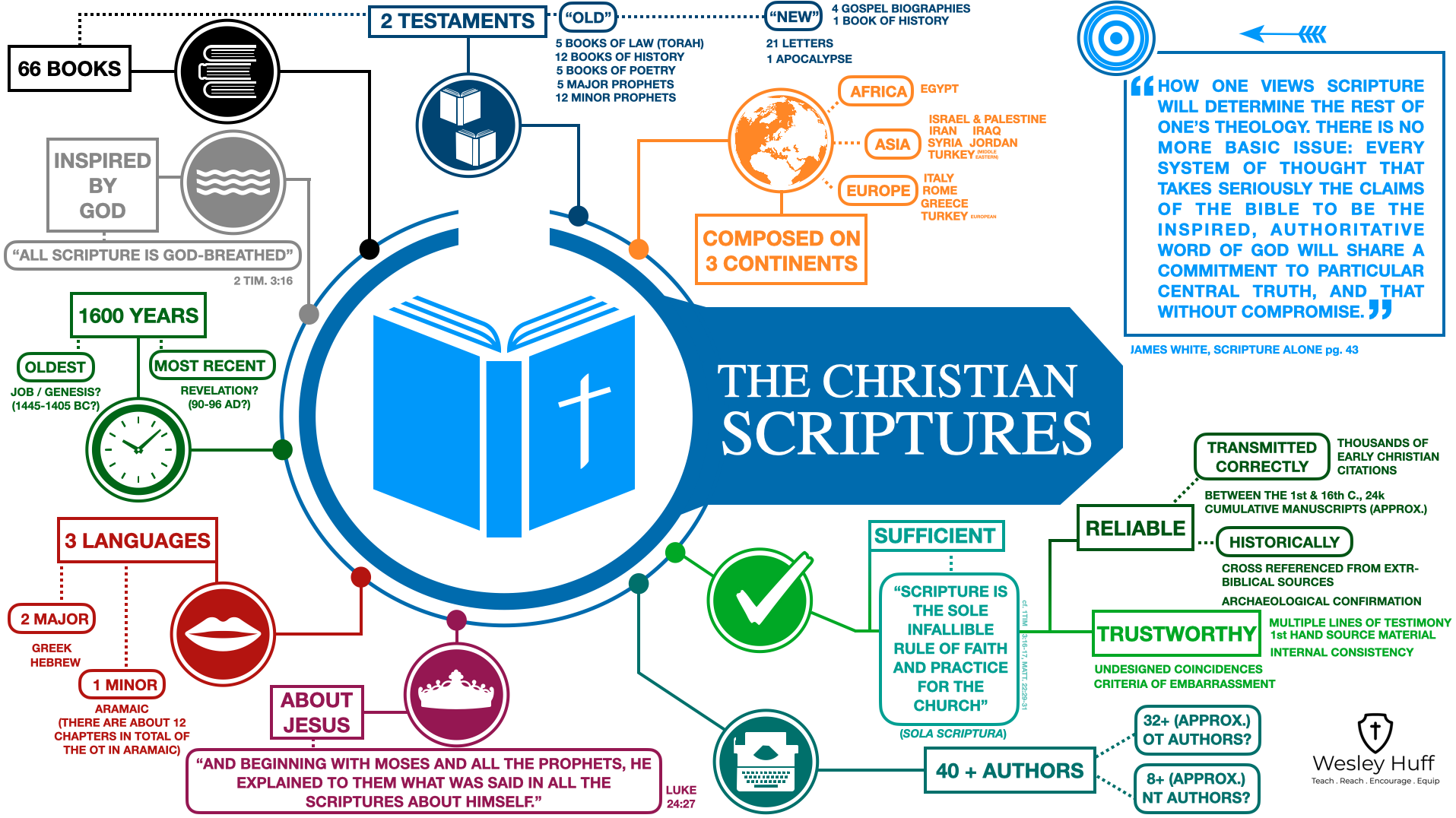
I love studying my Bible, and I also enjoy passing along things that encourage others to begin studying their own Bibles. This is a really cool infographic from Wesley Huff, giving a great overview of the Bible.

Dr. Steve Nichols has an interesting mini-biography of King Louis IX, whom some have called “the greatest king of the Middle Ages.”

J. Warner Wallace leads us all along “the fuse” that led up to the arrival of Jesus as the Messiah, the One to whom the Old Testament prophets predicted.
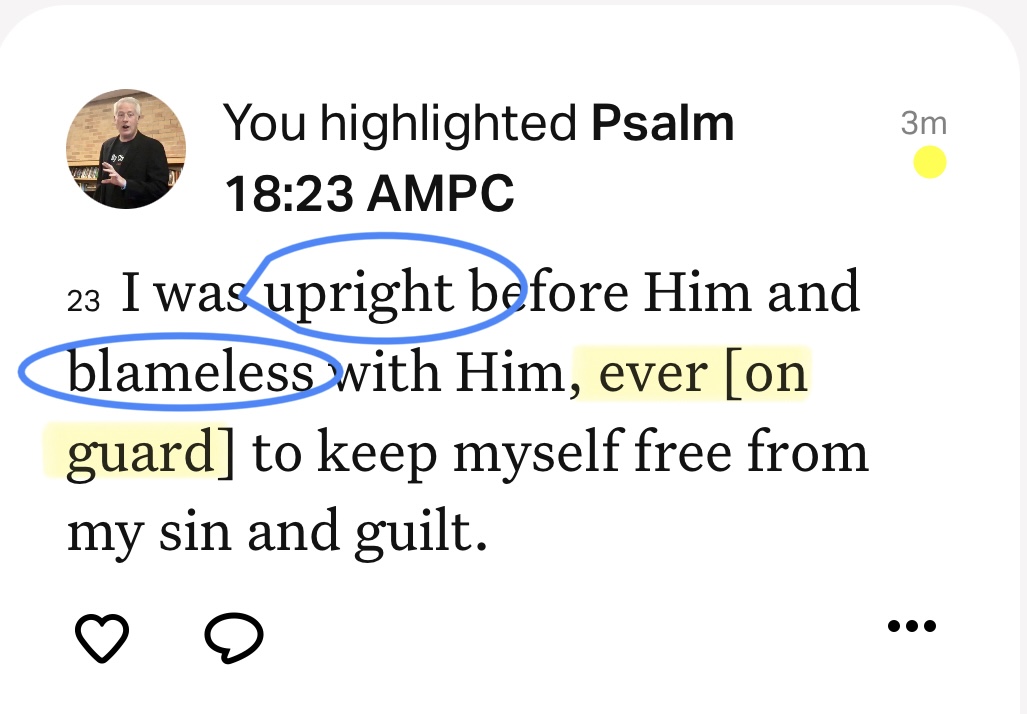

Ever On Guard

For I have kept the ways of the Lord and have not wickedly departed from my God. For all His ordinances were before me, and I put not away His statutes from me. I was upright before Him and blameless with Him, ever on guard to keep myself free from my sin and guilt. (Psalm 18:21-23 AMPC) 

May we always be on guard against drifting away from the truth. 

It is human nature to try to cut corners, to relax standards, to not be as careful as we once were. But we need to listen to the voice of the Holy Spirit that is calling us to blamelessness—being increasingly attentive to the standards shown us in God’s Word and in the example of the life of Jesus. 

Part of being “ever on guard” is to continually raise our standards. Being challenged to meet a higher standard will keep us from the complacency that can lead to us slipping away. 

You may also want to check out my posts Drifting and Soap Opera Drift. 

The Craig And Greg Show: The Silent Killers

Listen to the podcast of this post by clicking on the player below, and you can also subscribe on AppleSpotify, or Audible.

To you the term “silent killer” might conjure visions of a lone assassin from a spy movie, or perhaps more mundane but equally deadly things like high blood pressure or carbon monoxide leaks. In today’s episode Greg and I are discussing toxic behaviors that creep into the workplace. They aren’t quite as deadly as the ones listed above, but can still cause massive anger, frustration, and discord in your organization. Join us as we discuss some of the most prevalent toxins we’ve seen, and highlight how you as the leader are responsible for being the safeguard against them.

  • [0:20] Toxic things can sneak into our workplace unless we proactively look for them.
  • [1:35] Leaders need to be honest with their team so their team feels they can be honest with them in return.
  • [3:43] Greg and I discuss some of the toxic behaviors we have seen that create problems in the workplace.
  • [3:54] -Gossip
  • [4:51] -Office Politics
  • [6:42] -Negative Competition
  • [8:37] -Negativity
  • [10:20] -Bureaucracy
  • [12:46] -Braggadocio
  • [14:12] -Bashing
  • [14:46] Toxicity will come to every organization. We as leaders shine in the way we deal with it.
  • [17:47] When I wrote Shepherd Leadership, I spent two chapters discussing the balance between confidence and humility because of how important it is.
  • [19:08] One of our main jobs as leaders is to develop others, but toxicity squashes that.
  • [20:26] A coach can come alongside you to be the “detector” for the silent killers that might be lurking in your organization.

Check out this episode and subscribe on YouTube so you can watch all of the upcoming episodes. You can also listen to our podcast on Spotify and Apple.

Control What You Can Control

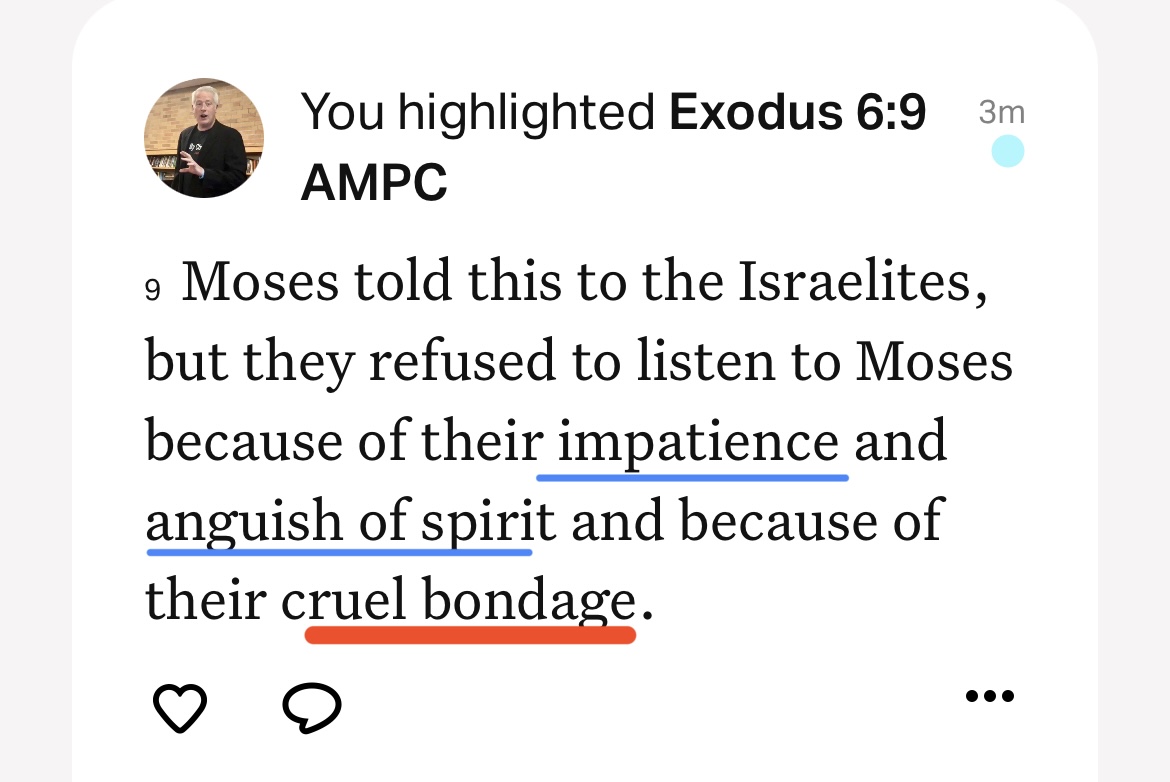
And I will take you to Me for a people, and I will be to you a God; and you shall know that it is I, the Lord your God, Who brings you out from under the burdens of the Egyptians. And I will bring you into the land concerning which I lifted up My hand and swore that I would give it to Abraham, Isaac, and Jacob; and I will give it to you for a heritage. I am the Lord [you have the pledge of My changeless omnipotence and faithfulness]. Moses told this to the Israelites, but they refused to listen to Moses because of their impatience and anguish of spirit and because of their cruel bondage. (Exodus 6:7-9) 

We may not be able to do anything about our external circumstances (“cruel bondage”), but can make sure that we are addressing what we can control. Both “impatience and anguish of spirit” are internal attitudes that we can change.

If we don’t remove these impediments, we will not be able to hear the message God is trying to speak to give us encouragement.

The Maturing Steward

Listen to the podcast of this post by clicking on the player below, and you can also subscribe on AppleSpotify, or Audible.

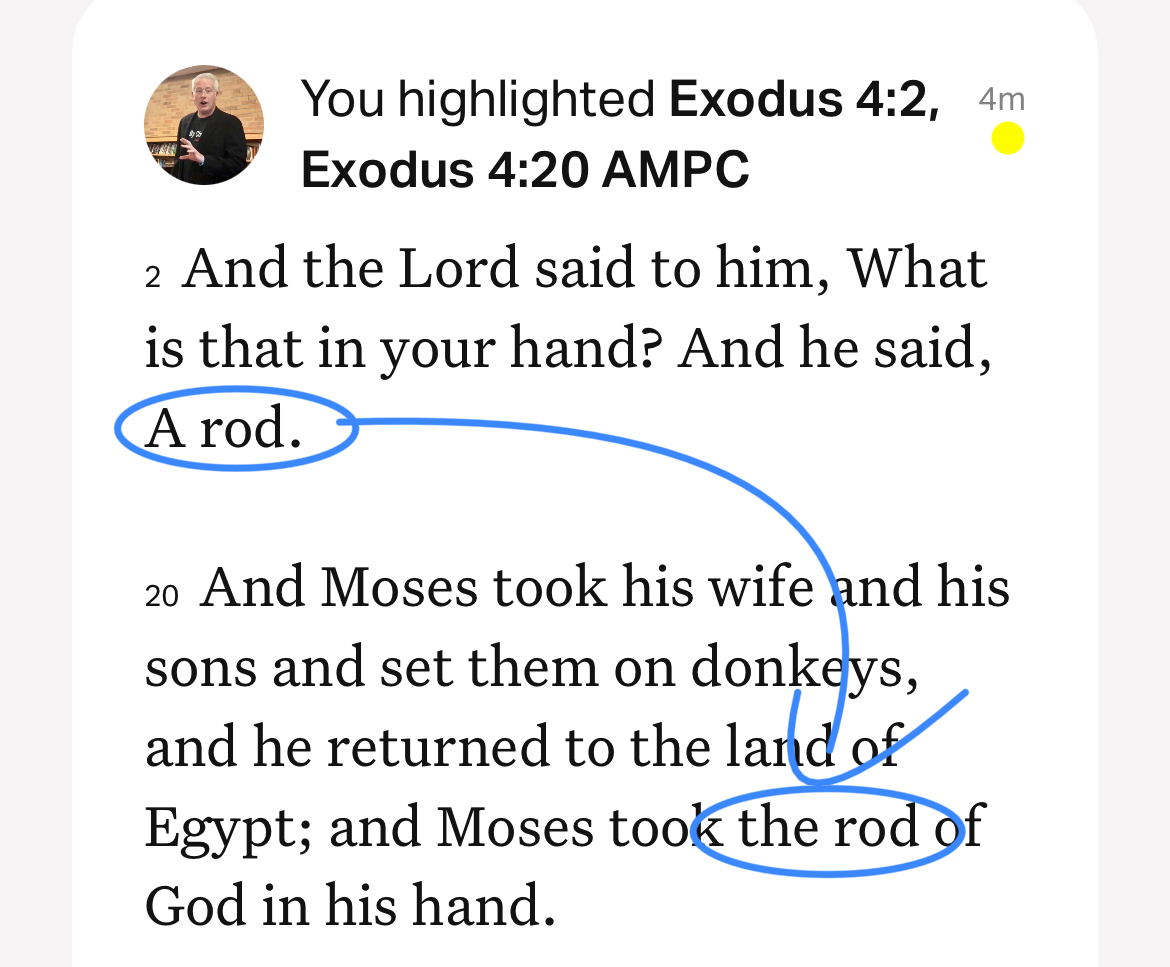
And the Lord said to [Moses], “What is that in your hand?” And he said, “A rod.” … And Moses took his wife and his sons and set them on donkeys, and he returned to the land of Egypt; and Moses took the rod of God in his hand. (Exodus 4:2, 20 AMPC) 

What Moses originally called merely “a rod” he later called “the rod of God.” He recognized that what he thought was his was in actuality what God had given him to use. 

When we recognize that what’s in our hands isn’t our creation, but a God-given talent, it marks a defining moment in both our maturity and our humility. Or to borrow a phrase I elaborate on in my book Shepherd Leadership, this helps us view our God-given talents or positions with confident humility (or, if you like, humble confidence). 

With this shift in Moses’ understanding and language in mind, this is how we should treat every strength God has given us:

• It’s not mine, but God’s 

• I am only a steward of this talent 

I must use this God-given strength only for God’s glory 

• I will have to give an account to God for how I invested or squandered what He entrusted to me

When we realize that we are not self-made men or women, but that any talents, abilities, or opportunities we have are God-appointed, we show a marked maturity in our understanding of our stewardship of God’s gifts. As our maturity grows, our confidence and our humility will grow proportionately. And as we become more confidently humbled in the way we steward God’s gifts, our leadership cannot help but exhibit more of God’s blessing on it. 

All of this growth starts with just the simple recognition that what’s in my hands is there only because God placed it there. 

►► Would you please prayerfully consider supporting this ministry? My Patreon supporters get behind-the-scenes access to exclusive materials. ◀︎◀︎

How Long?

Listen to the podcast of this post by clicking on the player below, and you can also subscribe on AppleSpotify, or Audible. 

Last week we saw that if we make prayer our priority, we can expect that our eyes will be opened to the answers that God has for us. Hagar and Eliezer seemed to get pretty quick answers. Nehemiah had to wait four months for the answer to his prayer. 

We saw in Psalm 5 that David laid his requests before God first thing in the morning, and then he went out of his prayer closet in expectation of an answer (Psalm 5:1-3). But how long did he wait? 

(Check out all of the Scriptures in this post by clicking here.) 

Psalm 6 may not happen historically right after Psalm 5, but listen to David’s heart, “Have mercy on me, LORD, for I am faint; heal me, LORD, for my bones are in agony. My soul is in deep anguish. How long, LORD, how long? (Psalm 6:2-3). And then again in Psalm 13:1-3, David asks, “How long?” four times in the first two verses! 

When we read the training Jesus gave His disciples about prayer in Luke 11:9-10, we see how He implores them (and us) to keep on praying. It becomes even more emphatic in the Amplified Bible—

So I say to you, ask and keep on asking and it shall be given you; seek and keep on seeking and you shall find; knock and keep on knocking and the door shall be opened to you. For everyone who asks and keeps on asking receives; and he who seeks and keeps on seeking finds; and to him who knocks and keeps on knocking, the door shall be opened. 

But once again we have to ask: how long are we to continue asking, seeking, and knocking? This is what Job asked in the middle of his trial (Job 6:8, 11-13). 

Charles Spurgeon said, “God has measured the crosses of all His children: Israel in Egypt, 430 years; Joseph in prison, 3 years; Judah in Babylon, 70 years.” That means that God knows what He is doing, God knows His timing for answering, and that our part is to simply to continue to ask, seek, and knock as we throw our total trust on Him! 

I remember my affliction and my wandering, the bitterness and the gall. I well remember them, and my soul is downcast within me. Yet this I call to mind and therefore I have hope. Because of the LORD’s great love we are not consumed, for His compassions never fail. They are new every morning; great is Your faithfulness. I say to myself, “The LORD is my portion; therefore I will wait for Him.” (Lamentations 3:19-24) 

During these times of waiting, we need to keep recalling what we know:

  1. God’s love is unfathomable—Romans 5:5, 8:38-39 
  2. God’s timing is perfect—Deuteronomy 32:4 
  3. God’s method is flawless—Romans 8:28 
  4. God’s gifts are good—Luke 11:11-13, 12:32  

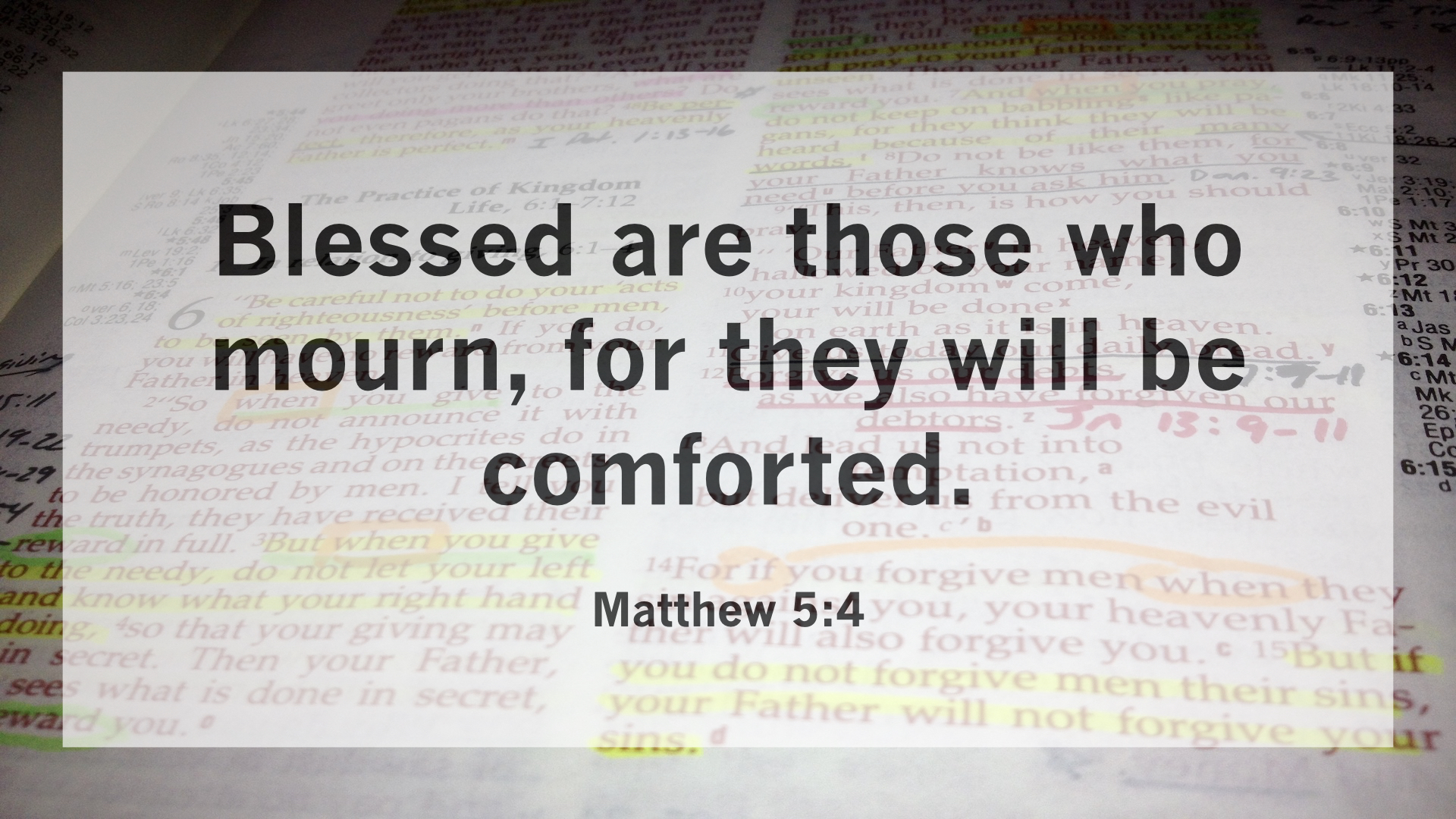
In Psalms 6 & 13, David doesn’t record any answers from God, but listen to this assurance from Jesus, “Blessed are those who mourn, for they will be comforted” (Matthew 5:4). 

Jesus doesn’t tell us how or when God will bring us comfort, but He does assure us that we will be comforted! 

In a couple of the examples from David, you can see this assurance as he continues his prayers (Psalm 6:2-4, 8-10; 13:1-6). Paul also experienced this confidence (2 Corinthians 12:7-10), and so did Jesus (Matthew 26:38-39, 50-54). 

The writer of Hebrews assures us that Jesus was heard in His, “How long?” cries, and therefore He knows exactly how to intercede for us today as we lift up the same cry (Hebrews 5:7-8; 2:10, 14, 17-18)! 

How long? Quite simply stated: Until God answers or until He lifts our burden. 

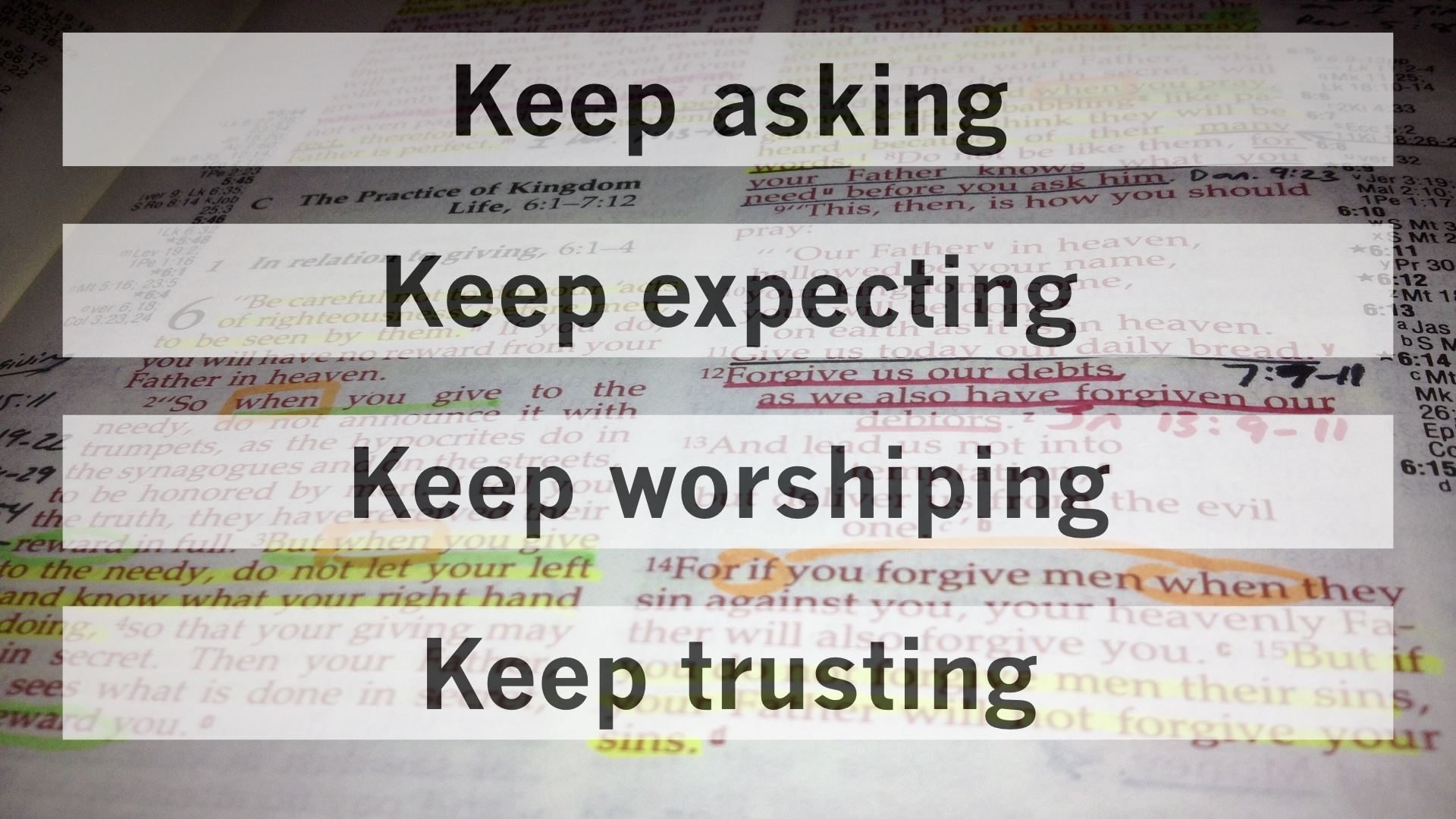
In the meantime, the examples in Scripture and the assurance of Christ’s intercession for us us encourages us to…

  1. Keep asking with full confidence that God hears you 
  2. Keep expecting an answer 
  3. Keep worshiping God for Who He is 
  4. Keep trusting that your Heavenly Father wants to give you the very best!  

If you have missed any of the other messages in our prayer series, you can find them all here. 

►► Would you please prayerfully consider supporting this ministry? My Patreon supporters get behind-the-scenes access to exclusive materials. ◀︎◀︎

Links & Quotes

Whether you call it grit or stick-to-it-iveness, those who don’t give up easily are the ones who will become leaders by their example. Check out the conversation we had on The Craig and Greg Show.

I have a lot of new video content on my YouTube channel every week. Please check it out and subscribe so you don’t miss anything.

I was thrilled to be asked to write an article for Influence Magazine about the biting sheep that every pastor has experienced. I am praying that this article will help pastors recover and thrive in their shepherding ministry.

“Knowing our lowliness and Christ’s worthiness, we neither grovel nor saunter into the presence of God. And we do not go home flippant or weeping. In Christ, we will receive what we ask or what we should have asked.” —David Mathis

In 1 Thessalonians 5:19, the apostle Paul warns us not to quench the Holy Spirit. T.M. Moore asks, “How do we quench the Spirit?” and then gives Christians seven warning signs to avoid this quenching. Check out his post Joy In His Spirit.

I really enjoy these archeological biographies of biblical people and places. The Bible Archeology Report writes, “The Neo-Babylonian king, Amēl-Marduk (biblical Evil-Merodach) is only mentioned twice in Scripture (in 2 Kings 25:27–30 and the parallel passage, Jeremiah 52:31–34), both times in connection with the restoration of Jehoiachin, king of Judah.” In a separate post, John Stonestreet shares an archeological discovery in a Roman cemetery in Frankfurt of an amulet that shows that “the Gospel spread farther and faster than historians thought.”

Kenneth Blanchard shares his novel way of setting personal and business goals for the year in a post ‘Look forward to looking back at your goal success in 2025.’

God’s Two Books

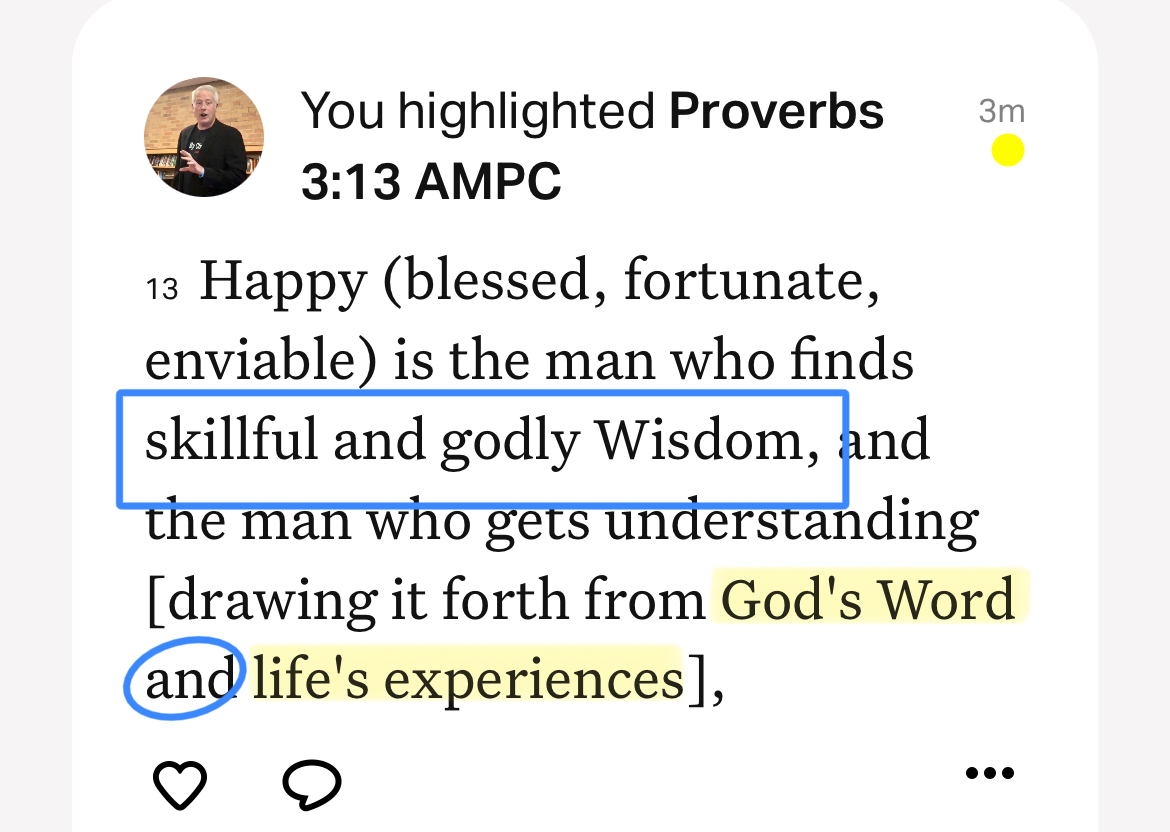
Happy (blessed, fortunate, enviable) is the man who finds skillful and godly Wisdom, and the man who gets understanding [drawing it forth from God’s Word and life’s experiences]. (Proverbs 3:13 AMPC)

Sir Francis Bacon wrote, “God has, in fact, written two books, not just one. Of course, we are all familiar with the first Book He wrote, namely Scripture. But He has written a second book called creation.” 

God’s Word tells us about our life’s experiences, and it tells us about our observations of His creation and our experiences. These observations and experiences should take us back to God’s Book to fully appreciate and apply them in a manner which glories God.

The Testimony Of Our Unified Worship

Listen to the podcast of this post by clicking on the player below, and you can also subscribe on AppleSpotify, or Audible. 

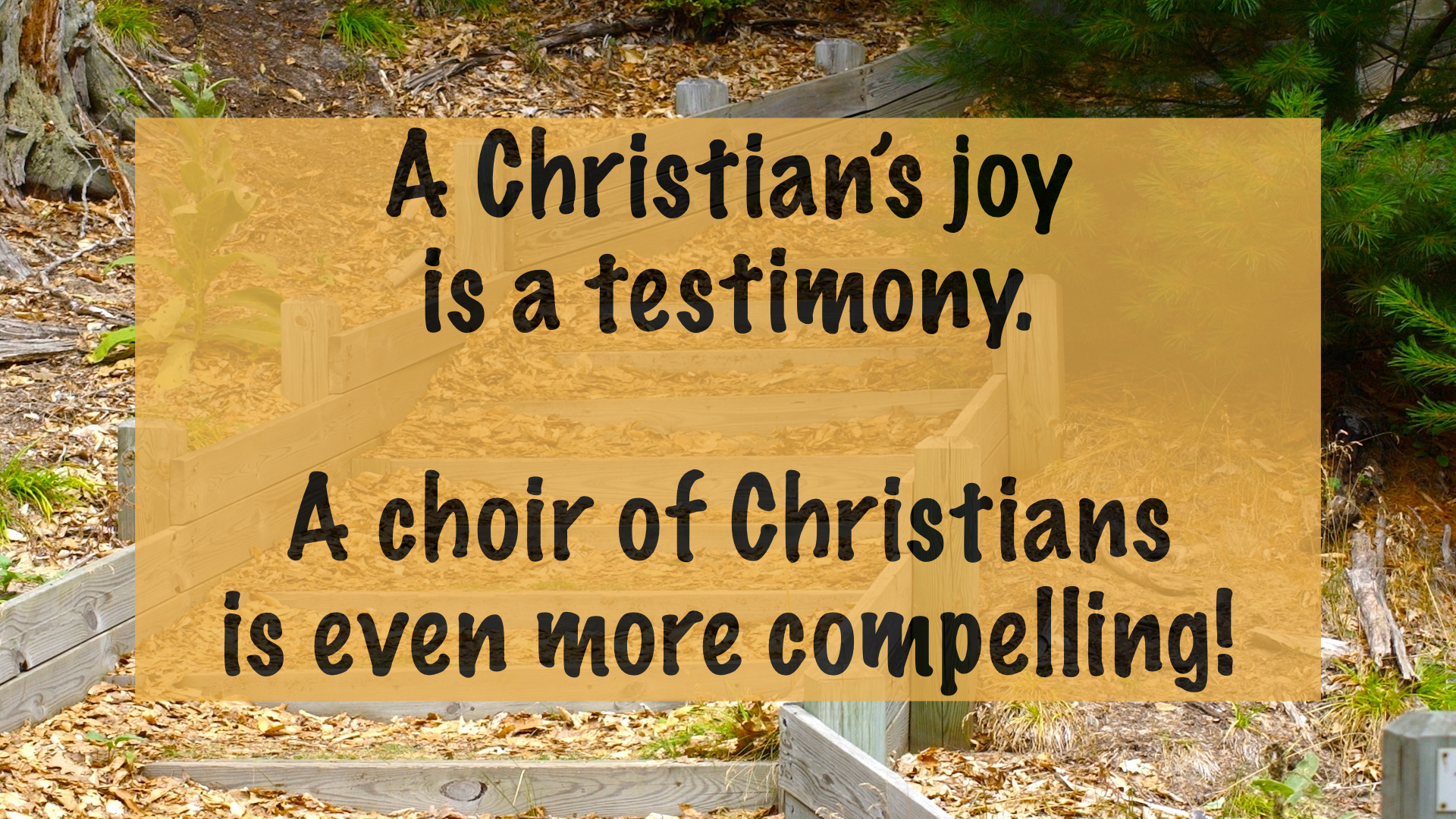
When Christians put aside some of their minor differences and are unified in their worship, it becomes a testimony to a watching world.

This whole series of looking at the Songs of Ascent comes from Psalms 120-134, but I especially notice the unity in Psalm 133.

This unity is seen during the outpouring of the Holy Spirit on the day of Pentecost recorded in Acts 2. But unity is not the same thing as conformity, as I shared in this message.

►► Would you please prayerfully consider supporting this ministry? My Patreon supporters get behind-the-scenes access to exclusive materials. ◀︎◀︎

Lessons From The Playground

Listen to the podcast of this post by clicking on the player below, and you can also subscribe on AppleSpotify, or Audible.

Some time on the playground with some little kids taught me some great lessons about leadership.

The Scriptures I mentioned in this episode—1 Corinthians 1:14-17; 1 Corinthians 11:1; 1 Corinthians 2:4-5; 1 Thessalonians 2:4; Matthew 20:28; Mark 10:45.

Please check out the full post from T.M. Moore here, but these are the three criterion he gives us to consider:

First, they teach the Word of God faithfully (Hebrews 13:7). They aren’t trying to impress anyone with how clever, witty, or visionary they are personally. Their desire is that the Word of Christ might dwell in people richly, and all their teaching is based on that holy and inspired Word (Colossians 3:16).

“Second, their lives exemplify the things they teach (Hebrews 13:7). True leaders are people whom, as you follow them, you begin to become like in ways that reflect full faith in Jesus Christ (John 13:1-15). 

“Third, true leaders care for our souls (Hebrews 13:17; 1 Thessalonians 5:12-13). They are interested in us, want to get to know us, do everything they can to serve and build us up; and they will go the extra mile when necessary to help us become people of full faith in Jesus.”

(Check out all of the biblical references in T.M. Moore’s quote here.)

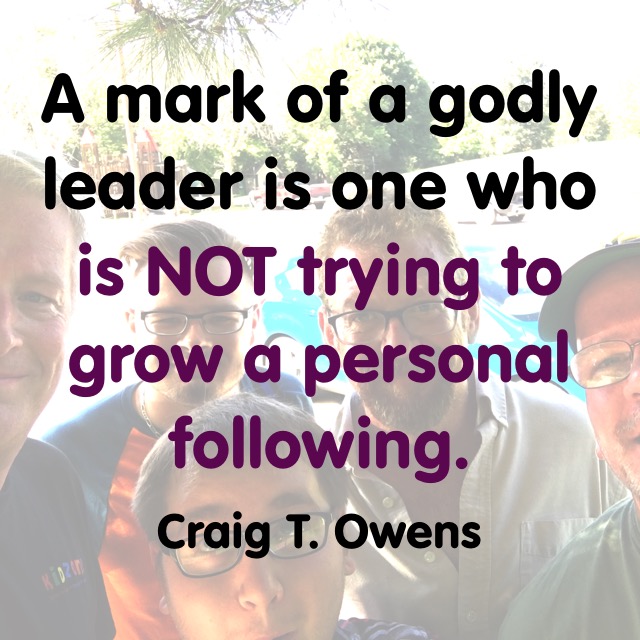
A mark of a godly leader is one who is NOT trying to grow a personal following.

This is part 81 in my series on godly leadership. You can check out all of my posts in this series by clicking here.

►► Would you please prayerfully consider supporting this ministry? My Patreon supporters get behind-the-scenes access to exclusive materials. ◀︎◀︎