Asyougo

Listen to the podcast of this post by clicking on the player below, and you can also subscribe on AppleSpotify, or Audible.

A little habit started for me as a kid. I’d put things on the bottom steps of the stairway, so I’d be sure to see them and grab them as I went upstairs to my bedroom. After a while, everyone in our family had his or her own “step.” I called these asyougos: as you go upstairs, please take these with you. The principle was pretty simple, as I would naturally see these things going about my regular route.

Jesus had a similar idea for His followers: Go into all the world and preach the Good News to all creation (Mark 16:15). The verb tense and definition of the word go literally means that Jesus said, “Asyougo into all the world, preach the Good News.

In fact, this is exactly how Jesus lived His life. As He went about His normal life, His life intersected with people who needed Good News (check out Mark 10:17, 46; Luke 8:4, 42; 17:11; and John 9:1 as examples).

Peter summed up all of Christ’s life like this: God anointed Jesus of Nazareth with the Holy Spirit and power, and how He went around doing good and healing all who were under the power of the devil, because God was with Him (Acts 10:38).

Jesus lived an asyougo lifestyle, He called us to do the same, and He empowered us to live our asyougo lifestyle with the same power He had (Matthew 28:18-19; Acts 1:8).

Here’s the big idea—We don’t need to go anywhere special to find people who need Good News…

  • asyougo to school, you will attend class with them
  • asyougo to work, you will work alongside them
  • asyougo to the grocery store, you will interact with them
  • asyougo to do yard work, you will talk over the backyard fence with them
  • asyougo out to eat, you will sit next to them

People who need the life-changing, disease-healing, sin-forgiving power of Jesus are all around you. ASYOUGO share the Good News of Jesus Christ with them!

►► Would you please prayerfully consider supporting this ministry? My Patreon supporters get behind-the-scenes access to exclusive materials. ◀︎◀︎
The 10 Commandments Of Using Social Media

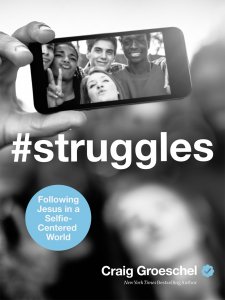
#strugglesI found a ton of great content in Craig Groeschel’s latest book #struggles. This book focuses on the proper balance between technology and personal relationships. Near the end of the book, Craig shared his 10 Commandments for Christians to use social media in a God-honoring way…

  1. Put God first in all you say and post.
  2. Love others as you want to be loved.
  3. Use social media to facilitate, not to replace, real relationships.
  4. Use social media instead of being controlled by it as an idol.
  5. Turn your virtual other cheek to posts that offend you.
  6. Do not post out of emotion.
  7. Always reflect Jesus, loving God whether online or off.
  8. Do not use social media to fuel temptations.
  9. Form your own opinions; do not follow the crowd.
  10. Do not base your identity on what people think.

You can read my book review of #struggles by clicking here.

I also shared some quotes from #struggles here and here. I also shared a special set of quotes from this book directed at online gossip, which you can read here.

Thursdays With Oswald—At Home With Jesus

Oswald ChambersThis is a weekly series with things I’m reading and pondering from Oswald Chambers. You can read the original seed thought here, or type “Thursdays With Oswald” in the search box to read more entries.

At Home With Jesus

     Beware of the people who tell you life is simple. Life is such a mass of complications that no man is safe apart from God. Coming to Jesus does not simplify life, it simplifies my relationship to God. … 

     God’s idea is that individual Christians should become identified with His purpose for the world. When Christianity becomes over-organized and denominational it is incapable of fulfilling our Lord’s commission; it doesn’t “feed His sheep,” it can’t (see John 21:15-17). …  

     If my religion is not based on a personal history with Jesus it becomes something I suffer from, not a joyous thing, but something that keeps me from doing what I want to do. 

From Disciples Indeed

Jesus came to give us life to the full. He didn’t come to help simplify life or organize our religion. The key word for our relationship with Jesus is personal. He wants you, not your religious ideas or religious activities.

Jesus died for you. Jesus lives for you. And Jesus wants to live in and through you. Jesus replied, “All who love Me will do what I say. My Father will love them, and We will come and make Our home with each of them (John 14:23).

Will you let Him be at home with you?

5 Differences Between Wisdom And Folly

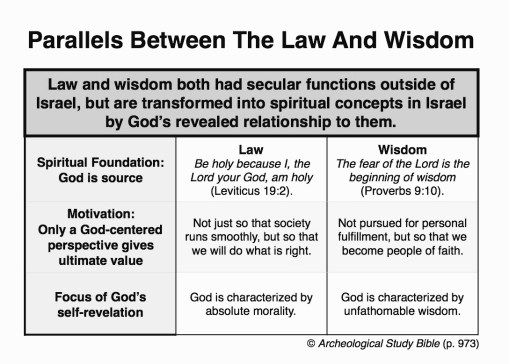
Parallels between law and wisdomIn Proverbs 9, Wisdom and Folly are both personified as women. And both of them call out the same thing to their would-be followers: “Let all who are simple come in here!” (vv. 4, 16). They both claim to have ‘the goods’ for those searching for truth, but here are five things that separate them.

  1. Wisdom has built her own house (v. 1); but Folly merely occupies someone else’s house (v. 14).
  2. Wisdom has like-minded “maids” who support her (v. 3); but Folly has no supporters.
  3. Wisdom serves what she has prepared herself (vv. 2, 5); but Folly steals from others because she has nothing original to offer (v. 17).
  4. Wisdom corrects, and that correction leads to deeper knowledge (vv. 8-10); but Folly lets people do whatever they wish, which only leads to deeper suffering (v. 13).
  5. Wisdom offers life (vv. 6, 11), insight (v. 9), the fear of God (v. 10), and rewards (v. 12); but Folly only offers suffering (v. 12) and death (v. 18).

How ironic that some people respond to Folly’s call, “Let all who are simple come in here,” and yet they act like they know it all already, not wanting to learn anything new.

Bottom line: If you are willing to learn, Wisdom has much to teach you. But if you know it all already, best to just hang out with Folly.

Handling Life’s Pauses

John Ruskin“There is no music during a musical rest, but the rest is part of the making of the music. In the melody of our life, the music is separated here and there by rests. During those rests, we foolishly believe we have come to the end of the song. God sends us times of forced leisure by allowing sickness, disappointed plans, and frustrated efforts. He brings a sudden pause in the choral hymn of our lives, and we lament that our voices must be silent. We grieve that our part is missing in the music that continually rises to the ear of our Creator. Yet how does a musician read the rest? He counts the break with unwavering precision and plays his next note with confidence, as if no pause were ever there. God does not write the music of our lives without a plan. Our part is to learn the tune and not be discouraged during the rest. They are not to be slurred over or omitted, nor used to destroy the melody or to change the key. If we will only look up, God Himself will count the time for us. With our eyes on Him, our next note will be full and clear. If we sorrowfully say to ourselves, ‘There is no music in a rest,’ let us not forget that the rest is part of the making of the music.” —John Ruskin

4 Thoughts To Help Prayer Become A Daily Habit

ImportunityI have shared several strategies about prayer throughout this series (you can read them here, here, here, and here). One danger in putting these steps into practice in our life is what I would call one-and-done. We do it once and think we’ve done all we need to do.

Scientists tell us at a minimum it takes 21 days in a row to make a habit. Jesus went even farther than that in talking about prayer in Matthew 7:7. When we look at the three aspects of the verbs ask, seek, and knock in this verse, it would be better stated like this—

You need to keep on asking, and keep on seeking, and keep on knocking. This is not good advice or a helpful suggestion, but it is vital for your spiritual life. So after you have asked, sought, and knocked, then do it again, and again, and AGAIN.

Matthew Henry said it this way: “Here is a precept in three words to the same purport, Ask, Seek, Knock; that is, in one word, ‘Pray; pray often; pray with sincerity and seriousness; pray, and pray again; make conscience of prayer, and be constant in it; make a business of prayer, and be earnest in it.’”

In the English language the dictionary has a word for this: importunity. This means being urgent and persistent, sometimes annoyingly so!

I believe importunity requires these four characteristics:

  1. Trust. Remember Jesus taught us to begin our prayer with, “Our Father.” We have to come to Him again and again and again trusting that He loves us, that He alone is the Source of our help, and that He wants to help us. We also have to trust that our Father wants to give us the very best (Matthew 6:8, 7:7-11).
  2. Perseverance. I love the story of the persistent widow in Luke 18:1-5. This determined lady kept coming back again and again. Henry Ward Beecher said, “The difference between perseverance and obstinacy is, that one often comes from a strong will, and the other from a strong won’t.”
  3. Creativity. One of my favorite New Testament stories is about a mother who is not only as persistent as the widow in Luke 18, but she is creative in her prayer as well (Mark 7:24-30). This lady bantered with Jesus in a way that I believe caused Christ to throw back His head and laugh! This is not bargaining with God, as Oswald Chambers wrote, “Repetition in intercessory importunity is not bargaining, but the joyous insistence of prayer.”
  4. Action. Paul was looking for an open door to preach the Gospel, but he didn’t sit still while he waited for God to say “yes” (Acts 16:6-10).

Keep these in mind as you make importunity a key part of your prayer life. And check out the full video of my message on importunity in prayer.

Poetry Saturday—He Leads Us On

Count Nicolaus Ludwig von ZinzendorfHe leads us on by paths we did not know;
Upward He leads us, though our steps be slow,
Though oft we faint and falter on the way,
Though storms and darkness oft obscure the day;
Yet when the clouds are gone,
We know He leads us on.

He leads us on through all the unquiet years;
Past all our dreamland hopes, and doubts and fears,
He guides our steps, through all the tangled maze
Of losses, sorrows, and o‘er clouded days;
We know His will is done;
And still He leads us on. —Nicolaus Ludwig Zinzendorf

10 Benefits From Suffering

Horatius BonarCommenting on one of the opening passages in Paul’s second letter to the church at Corinth, Horatius Bonar shares ten benefits to Christians who will cling to God during times of suffering.

“The meaning and use of trial:

  1. It shows God to be in earnest with us. He does not let us alone. He takes great pains with our spiritual education and training. He desires fruit and progress.
  2. It assures us of His love.
  3. It draws us to prayer. When one member suffers all the others suffer with it. As soon as it is said, ‘such a brother or sister is in sorrow,’ all who hear of this begin to pray for the afflicted one. Thus sorrow becomes a magnet which attracts the prayers of the church.
  4. It knits us in sympathy to the whole body.
  5. It teaches us sympathy with brethren.
  6. It brings us into a mood more receptive of blessing. It makes our spirits tender, it softens our hearts, it makes our consciences alive, it empties us of adverse influences.
  7. It makes us prize the Word.
  8. It shuts out the world.
  9. It bids us look up.
  10. It turns our hope to the Lord’s great coming.”

Break Free From Porn—5 Quotes That Will Help You

The Porn CircuitThe Porn Circuit is a great book to make you aware of the dangers of pornography. You can read my full book review of this free downloadable book here, and check out the first set of quotes I shared by clicking here.

Here are some additional quotes specifically to help you break free from the hold pornography has on your life.

Your #1 strategy … LEARN TO HATE PORN!

Hate what it does to you, to your relationships, and to those involved in sex trafficking because of the porn industry.

#2 … Create some positive activities you can do when you’re tempted to look at porn.

“The prefrontal cortex is the decision-making logical part of the brain, and each time that a person resists temptation and each time a positive habit is reinforced, the prefrontal cortex gets stronger. That means a person’s willpower grows and the cues and cravings for porn use grow weaker.”

“This approach (of introducing positive habits) makes plastic sense because it grows a new brain circuit that gives pleasure and triggers dopamine release which, as we have seen, rewards the new activity and consolidates and grows new neural connections. This new circuit can eventually compete with the older one, and according to use it or lose it, the pathological networks will weaken. With this treatment we don’t so much ‘break’ bad habits as replace bad behaviors with better ones.” —Dr. Norman Doidge

“Whatever rewarding activity is pursued, it needs to be an activity that is reoccurring. Building new rewarding neural pathways requires time and ongoing repetition:

  1. Neurons that fire together wire together. Repeating a pleasurable activity instead of the compulsive activity, such as porn use, forms a new circuit that is gradually reinforced instead of the compulsion.
  2. Neurons that fire apart wire apart. When a person refuses to act on a compulsion, like porn and masturbation, it weakens the link between the activity and the idea that it will provide relief.”

#3 … Start using the 3-second rule.

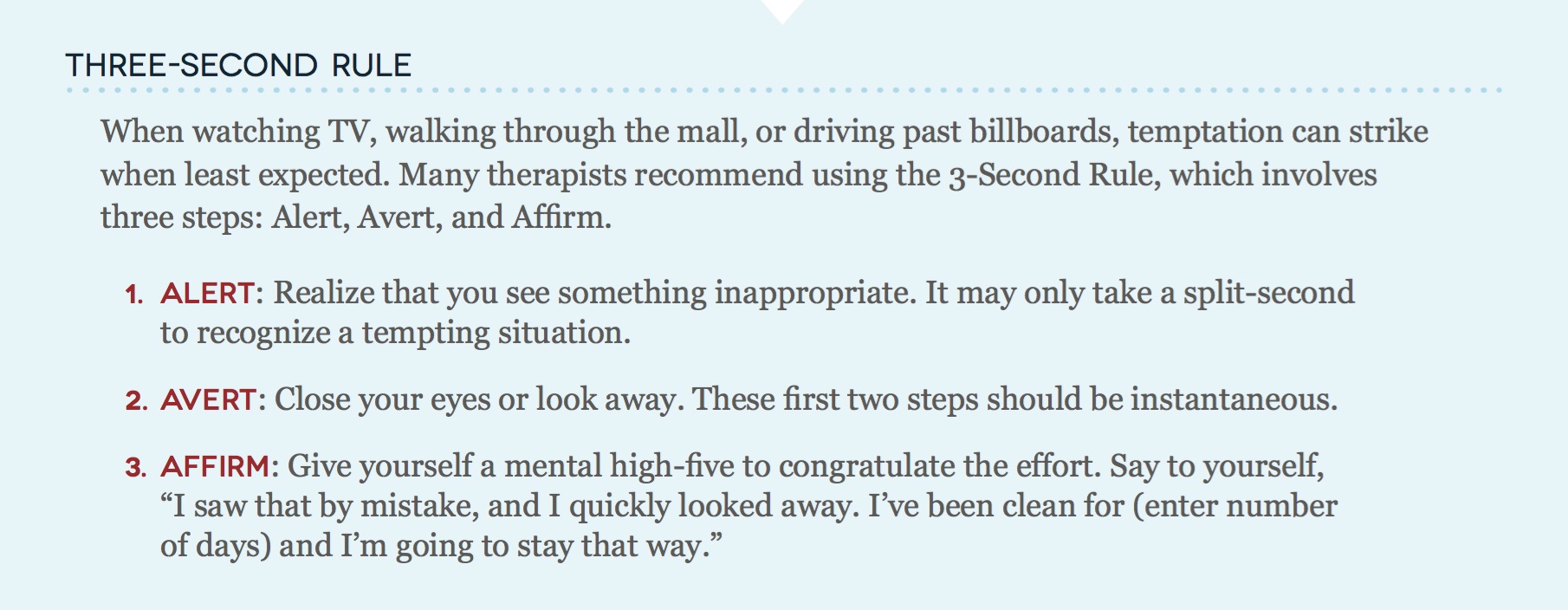
“When watching TV, walking through the mall, or driving past billboards, temptation can strike when least expected. Many therapists recommend using the 3-Second Rule, which involves three steps:

  1. Alert: Realize that you see something inappropriate. It may only take a split-second to recognize a tempting situation.
  2. Avert: Close your eyes or look away. These first two steps should be instantaneous.
  3. Affirm: Give yourself a mental high-five to congratulate the effort. Say to yourself, ‘I saw that by mistake, and I quickly looked away. I’ve been clean for (xx number of days) and I’m going to stay that way.’”

3-Second Rule

#4 … Don’t forget to watch out for H.A.L.T. times.

“Physical care is vital to vigilance. HALT is the acronym often used by therapists to remind people of when they can be most vulnerable it stands for: hungry, angry, lonely, tired. Simply going to bed on a regular schedule to get a good night’s rest can help one’s brain be more focused on positive habits and more alert to fight temptations. Not only eating but also eating well can improve mood and feelings of well-being. Regular exercise keeps the mind more focused, the body feeling great, and improve sleep.”

Craig Groeschel On Online Gossip

#strugglesI love technology! I love how social media and my iPhone can keep me in touch with family and friends. But one of the dark sides to this easy access to technology is the ease with which people can gossip—or even slander!—people publicly online. In his book #struggles, Craig Groeschel has some good counsel for avoiding gossip.

“God is crystal clear on how He feels about gossip. Solomon said, ‘There are six things the Lord hates, seven that are detestable to Him…a false witness who pours out lies and a person who stirs up conflict in the community’ (Proverbs 6:16, 19). What a perfect way to describe a gossip: ‘A false witness who pours out lies,’ and someone who ‘stirs up conflict in the community.’ God hates that.”

“The people being gossiped about hate it, and God hates it. So before you post, comment, or link, consider three sets of questions to keep yourself gossip-free online.

  1. Is what I’m about to say helpful or hurtful? Will this build others up or tear them down? What’s my intention behind what I’m about to type? [Ephesians 4:29]
  2. Am I making private matters public? Am I about to share something that would be better handled privately? [Proverbs 11:12-13]
  3. Am I permitting—maybe even encouraging—others to gossip? It’s not only wrong to dish it out; it’s also wrong to eat it up. Notice that this verse [Proverbs 17:4] doesn’t say that only gossipers are wrongdoers. No, it says wrongdoers are also those who ‘listen to gossip.’ It’s not just wrong to spread gossip; it’s wrong to consume it. Why? Because what you permit, you promote.”

You can read my review of #struggles by clicking here. I have also posted other quotes from this book here and here.