Saturday In The Psalms—Sing A New Song

Oh, sing to the Lord a new song! (Psalm 96:1).

God is so great—His worth is infinite—that He deserves a new song every time we sing to Him. There is no need to copy or duplicate something done before, but we should continually find new ways to praise Him.

Look at the angels encircling God’s throne. They continually sing out, “Holy! Holy! Holy!” as they perceive new dimensions of God’s grace, love, faithfulness, beauty, and majesty.

“Oh! Did you see that? Holy!” 

“Look at that! Amazing!” 

“Wow, I just saw something else breathtaking” Worthy!”

Our praise of God should follow that example: “Holy! Holy! Holy!” This is what Psalm 96 tells us…

Sing!
Bless His name!
Tell how good He is!
Declare His glory everywhere!
He is great!
He is greatly to be praised!
Look at His majesty!
Stand in awe of His beauty!
Give Him the glory due His name!
Worship! 
Thrill at the beauty of His holiness!
Bow before His majesty!
Rejoice!
Be glad!
Listen to creation praising their Creator!
Join creation in their song!
He is coming soon!
Maranatha!
Oh, sing to the Lord a new song!
Sing it now and forever and ever!

A.W. Tozer On How To Try The Spirits

“I make available here a little secret by which I have tested my own spiritual experiences and religious impulses for many years. Briefly stated the test is this: This new doctrine, this new religious habit, this new view of truth, this new spiritual experience—how has it affected my attitude toward and my relationship to God, Christ, the Holy Scriptures, self, other Christians, the world and sin.

“Christless Christianity sounds contradictory but it exists as a real phenomenon in our day. Much that is being done in Christ’s name is false to Christ in that it is conceived by the flesh, incorporates fleshly methods, and seeks fleshly ends. Christ is mentioned from time to time in the same way and for the same reason that a self-seeking politician mentions Lincoln and the flag, to provide a sacred front for carnal activities and to deceive the simplehearted listeners. This giveaway is that Christ is not central: He is not all and in all. …

“Whatever originates outside the Scriptures should for that very reason be suspect until it can be shown to be in accord with them. … However high the emotional content, no experience can be proved to be genuine unless we can find chapter and verse authority for it in the Scriptures. …

“The Bible does not teach that there will be new light and advanced spiritual experiences in the latter days; it teaches the exact opposite.

“A growing acquaintance with the Holy Spirit will always mean an increasing love for the Bible. The Scriptures are in print what Christ is in Person.” —A.W. Tozer, in Man—The Dwelling Place Of God

Thursdays With Oswald—The Hardy Annuals

Oswald ChambersThis is a weekly series with things I’m reading and pondering from Oswald Chambers. You can read the original seed thought here, or type “Thursdays With Oswald” in the search box to read more entries.

The Hardy Annuals

     By “hardy annuals” I mean the healthy-minded sinners. … How are we to get these irreligious people who are quite happy and healthy-minded to the place where they want Jesus? … 

     I want us to look at three types of pagans—Gallio, Herod and Pilate. …. 

     “And Gallio cared for none of those things” [Acts 18:12-15]. He said in effect, “I have nothing whatever to do with your religious quarrels, I am not here to decide questions of your law for you.” The opponents of Christianity are not weak, they are opponents who are able to ignore us; so the first thing to do is to examine and see what kind of Gospel we are preaching. … Have I a pet doctrine I am lifting up? If I have, then these healthy-minded folk will simply heap ridicule on me; but immediately I preach Christ, something happens—the Spirit of God begins to work where I cannot. …

     Herod is a rare type of pagan, he is obscene; he was bad, unmentionably bad, and you will find that when he saw Jesus Christ face to face he was not the slightest bit troubled. Why? He had heard the voice of God before through John the Baptist, and he had ordered that voice to be silent [Mark 6:17-18]. Herod is the presentation of the awful possibility of a fixed character, absolutely fixed in immorality. Jesus Christ did not awaken one tremor of conscience in him….  Did you ever notice what is recorded? “Now when Herod saw Jesus, he was exceeding glad” [Luke 23:8-9]—why? For the same reason that people go to a picture show, they want to see things. We read that Herod questioned Jesus in many words; “but He answered him nothing.” … 

     Pilate represents the type of pagan who always seeks his own interests; that type is known to us all today. People belong to certain churches because it is better for their business; or they shift their membership to other churches because it is more convenient for business. A once-born man, who acts from this point of view is an opportunist. “If it is Jesus Christ’s Gospel that is in the ascendancy, then I will use it to serve my own ends.” You have to bring that man face to face with Christ, not with your experience, but with Jesus Christ Himself. … 

     Rely on the Holy Ghost as the most practical Being you ever knew, and live among the facts of God’s Word and among human facts, and people will recognize Jesus Christ through you. … The next time you come across a ‘hardy annual,’ see that you lay hold of God for that one until Jesus Christ is presented by the power of the Holy Ghost, and then you will see the altered face, the altered attitude, and the altered life. 

From Workmen Of God

Well said!

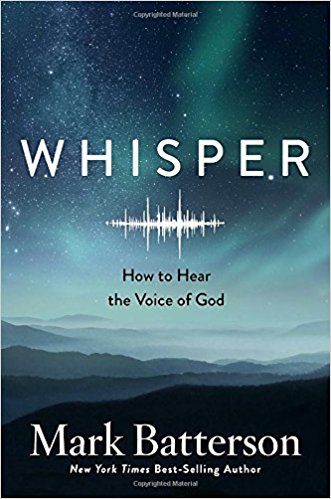
7 Quotes From “Whisper”

Mark Batterson’s newest book—Whisper—is all about learning to hear what God is speaking to you. Check out my review of Whisper by clicking here.

“Is God’s voice the loudest voice in your life? That’s the question. If the answer is no, that’s the problem.”

“If you aren’t willing to listen to everything God has to say, eventually you won’t hear anything He has to say.”

“When someone speaks in a whisper, you have to get very close to hear. … And that’s what God wants.”

“God is great not just because nothing is too big; God is great because nothing is too small. God doesn’t just know you by name; He has a unique name for you. And He speaks a language that is unique to you.”

“We worry way too much about what people think, which is evidence that we don’t worry enough about what God thinks. It’s the fear of people that keeps us from hearing and heeding the voice of God. We let the expectations of others override the desires God has put in our hearts.”

“Every thought that fires across our eighty-six billion neurons is a tribute to the God who knit us together in our mothers’ wombs. But when we have a thought that is better than our best thoughts on our best day, it might be from God. That doesn’t make it equal with Scripture, but it’s a step above a ‘good idea.’ Is it easy differentiating between good ideas and God ideas? No, it’s not. And again, even what we perceive to be God ideas must be screened by Scripture. But when God gives us ideas that we don’t believe originated with us, we must be careful to give credit where credit is due. And it’s our job to take those thoughts captive and make them obedient to Christ.”

“If your life is off-key, maybe it’s because you’ve been deafened by the negative self-talk that doesn’t let God get a word in edgewise. Maybe you’ve listened to the voice of shame so long that you can’t believe anything else about yourself. Or maybe it’s the enemy’s voice of condemnation that speaks lies about who you really are.”

More quotes from Whisper coming soon!

Whisper (book review)

Does God still speak to people today? If He does, how can you learn how to hear His voice? Mark Batterson has some answers to those questions in his newest book Whisper—How to hear the voice of God.

As he usually does, Mark weaves Whisper together with sources from biblical accounts, personal life lessons, modern-day findings in various scientific fields, and insights from other noted authors across the spectrum of literature. One sentence in the opening pages sums up the value of this book: “Learning how to hear the voice of God is the solution to a thousand problems!”

Whisper is divided into two broad sections. In the first section, you will learn the power that is available to anyone who will learn how to listen to God’s voice. In the second section, Mark shares the seven languages God uses as He communicates with us. Some of these “love languages” will resonate more with you than others, depending on how God has hardwired you, but all seven languages together give all of us a comprehensive picture of how to become more tuned-in to what God is saying to us.

If you are longing to hear God speak to you more clearly, Whisper is for you!

I am a Multnomah book reviewer.

Adapting Or Adopting

“Our job is not merely to adopt what’s trending in our culture. Leaders don’t just fit in. Our goal is to adapt, not adopt. …

“The fact is when we merely ‘adopt’ what’s happening, we tend to drift. Cultures do this; schools do this, and families to do this well. Years ago, Lawrence Miller wrote about this topic in Barbarians to Bureaucrats. He observes that companies, organizations and schools ‘evolve’ over time, but actually the evolution usually becomes a ‘drift’ away from the very premise it was built upon.

“The process starts with the ‘prophets.’ They’re the people with a vision for something new. They’re idea people. But they’re usually threatening to the existing order and are often ignored, criticized, frustrated or otherwise rejected.

“Eventually, however, people recognize the need for change. That’s when the ‘barbarians’ step in. They’re the ones with the influence to knock heads together, and again the power to implement the changes the prophets suggested earlier. They are often people like Steve Jobs, Ted Turner, or Oprah Winfrey. They conquer territory that some assumed could never be conquered and foster change.

“Following the ‘barbarians’ come the ‘builders’ and the ‘explorers.’ These people take the empire the ‘barbarians’ conquered and begin to build bridges, chart courses and develop systems that enabled the empire to grow and prosper.

“Next, come the ‘administrators.’ This type of person almost always follows, because the ‘builders’ and ‘explorers’ get bored and need someone who enjoys managing a system. They add no new ideas or wealth, but simply keep things running smoothly.

“Eventually, the ‘administrators’ give way to the ‘bureaucrats.’ These folks not only add no new ideas, but they actually suppress innovation and focus their efforts on maintaining control of the empire. Change is too messy or expensive. To keep money flowing, ‘bureaucrats’ tend to concentrate on cost-cutting and re-organizing, milking what’s left of the old ideas. It’s important to note—one of the chief goals of the bureaucrat is to suppress the rise of any new order of prophets.

“The final phase of this downward spiral is the shift from ‘bureaucrats’ to ‘aristocrats.’ They’re the ones who’ve inherited the wealth of the previous generation and occupy themselves with consuming the last benefits from the old ideas. Fortunately, they don’t last very long in a competitive climate because they get bumped off by new ‘barbarians’ who promote the ideas of outside prophets from other places. In short, change will either happened to us, or because of us.

“Adapting means we shift. Adopting means we drift.” —Tim Elmore, in Marching Off The Map

If you haven’t already, check out my review of Tim Elmore’s book here. I have shared several other quotes from this amazing book, which are all compiled here.

For Crying Out Loud!

There’s a time when David was fainting and had no one to help him—my spirit was overwhelmed and fainted, throwing all its weight on me. I look for someone to come and help me, but no one gives me a passing thought! No one will help me; no one cares a bit what happens to me (Psalm 142:3-4).

Here’s the backdrop to this prayer. King Saul has tried to kill David twice, not including the time Saul sent assassins to David’s house to kill him there. Even Jonathan, Saul’s son, was embarrassed and grieved at his father’s shameful treatment of David.

David runs away from Saul so quickly that he doesn’t take any food or even a weapon. He literally only has the clothes on his back and the sandals on his feet. He’s able to get some day-old bread from Ahimelech the priest, and he also takes Goliath’s sword from the temple.

David is clearly not thinking clearly. He is wearing Goliath’s sword on his side. Remember that David killed Goliath. Goliath is from Gath. And where does David run? To Gath!! He has to pretend he’s gone insane in order to escape from Gath, and he flees to the cave of Adullam.

It’s here that he prays an intense prayer. How intense? David literally shouts this prayer. He uses phrases like:

    • I cry aloud to the Lord
    • I lift up a thundering voice to God to plead for mercy
    • I let my complaint gush out in front of God, not holding anything back
    • He cries to God, “You are all I really want in life” and “You’re my last chance, my only hope for life”
    • After he did all that, he still says, “God, listen to my even louder cry!

Just how desperate is your situation? Just how heavy is your burden? Have you come to the realization that God is your ONLY help? Then, like David, cry out louder and louder to Him until He answers you!

A blind man got the attention of Jesus by yelling at the top of his lungs, “Jesus, Son of David, have mercy on me!!” Jesus said that this man’s faith healed him. What was the demonstration of his faith? It was the persistent calling out to the only One who could help him.

Earlier in this chapter, Jesus says this: So what makes you think God won’t step in and work justice for His chosen people, who continue to cry out for help? Won’t He stick up for them? I assure you, He will. He will not drag His feet. But how much of that kind of persistent faith will the Son of Man find on the earth when He returns? (Luke 18:7-8).

Once again Jesus links a continual cry for help to the definition of persistent faith. 

So I’ll ask again: just how desperate are you for God to answer you? If you will cry out loud to Him, God will see your persistent faith and will step in and work for you.

Please join me on Sunday as we continue to learn more lessons from David’s prayers.

Saturday In The Psalms—No One!

The Lord reigns… (Psalm 93:1).


When biblical authors use repetition or parallelism, it’s important to take note. They are wanting to make sure their message is heard loud and clear. They want what they’re sharing to stand out from everything around it. This is sort of how we would use bold or italics, a different colored font, or even a LARGER FONT to make something stand out.

In this Psalm…

…the Lord is clothed in majesty and strength

…He is established, immovable, everlasting, from time immemorial, firm, unshakeable

…“God is mightier than the thunder of the great waters, mightier than the breakers of the sea—the Lord on high is mighty

…His Word is very sure, lasting forever, holy, unchangeable, endless

The bottom line—

There is no one more sure, strong, reliable, and everlasting than Jehovah God!

The Embers Of Church Contention

“When such embers of contention begin to smoke among Christians, we can be sure satan planted the spark; he is the one great kindle-coal of all strife.

“Whenever there is a storm in the spirits of saints, and the winds of emotions are high and loud, it is easy to see who has stirred up the tempest. The devil practices his black art on unmortified lusts, that enable him to raise easily many storms of division among believers. …

“There is nothing, next to Christ and heaven, which satan begrudges believers more than their peace and mutual love. If he cannot separate them from Christ, and stop them from getting to heaven, he takes sinister pleasure in watching them get there in a storm. …

“Saints who live in strife and contention are sinning against the strong prayers which Christ Himself uttered on their behalf [John 17:11, 21].” —William Gurnall, The Christian In Complete Armor

(I have many more quotes from this classic book posted here, here, here, and here.)

Thursdays With Oswald—Thawing Those ‘Frozen’ Toward God

Oswald ChambersThis is a weekly series with things I’m reading and pondering from Oswald Chambers. You can read the original seed thought here, or type “Thursdays With Oswald” in the search box to read more entries.

Thawing Those ‘Frozen’ Toward God

     The “lost” from the Bible standpoint are not doomed. The lost, Jesus Christ is seeking for… To Jesus Christ, all men are lost, and the worker who is going to work for the cure of souls must have the same outlook. …  

     In Luke 19 we find a specimen of a lost man. “The Son of Man is come to seek and to save that which was lost.” Notice the setting of this statement. Zacchaeus was a chief publican and as such he would be possessed of many ill-gotten gains; he was a man of wealth and position, a dishonorable man, but perfectly content with his dishonor. … This man Zacchaeus was frozen towards God, his conscience did not bother him, he was “lost,” quite contented, quite happy, and quite curious. When Jesus Christ came his way, the man’s nature unfroze, something began to work at once. … 

     Look what happened to Zacchaeus—“Zacchaeus stood up and said to the Lord, ‘Look, Lord! Here and now I give half of my possession to the poor; and if I have cheated anybody out of anything, I will pay back four times the amount.’” Who had been talking to him about his doings? Not a soul. Jesus had never said a word about his evil doings. What awakened him? What suddenly made him know where he was? The presence of Jesus! 

     Wherever a worker for God goes, the same thing will happen if the Spirit of God is getting His way through that man or woman. … The Holy Spirit’s presence through you has brought the atmosphere that Jesus Christ’s presence always brought, and has thawed the ice around their mind in their conscience and they are beginning to be convicted. … 

     Oh, do let us get back to this tremendous confidence in the Lord Jesus Christ’s power! Back to reliance on the Holy Spirit, and to remembering that Jesus came to seek the lost. 

From Workmen Of God

Is this an amazing thought?!

If Christians will just approach their “frozen” friends and loved ones with the knowledge that Jesus Christ loves them and wants to save them—and with the expectation that Jesus can save them—then the Holy Spirit can work through our presence to begin the thaw around their heart.

“Oh, do let us get back to this tremendous confidence in the Lord Jesus Christ’s power! Back to reliance on the Holy Spirit, and to remembering that Jesus came to seek the lost.” Amen!