The Strenuous Life (book review)

I just finished reading Theodore Roosevelt’s Autobiography, so it was quite fascinating to read some of the speeches he was giving during the same periods he covered in his memoirs. TR practiced what he preached, and one of his consistent messages is that anything worthwhile is worth the strenuous effort it takes to get it. This collection of speeches is called The Strenuous Life. 

TR himself described the strenuous life like this: 

“The doctrine of the strenuous life, the life of toil and effort, of labor and strife: to preach that highest form of success which comes, not to the man who desires mere easy peace, but to the man who does not shrink from danger, from hardship, or from bitter toil, and who out of these wins the splendid ultimate triumph. … A life of slothful ease, a life of that peace which springs merely from lack either of desire or of power to strive after great things, is as little worthy of a nation as of an individual.” 

In The Strenuous Life, you will read the consistent message TR delivered to a wide variety of people—from the rough-and-tumble outdoorsmen and women, to the diplomats attending a World’s Fair, to business people—nothing of lasting value ever came to those who sat around and waited for it to come to them. The strenuous life is one of initiative, of hard work, of sacrifice, of perseverance, and ultimately a life rewarded by self-satisfaction in a job well done. 

This book is inspiring as a stand-alone read, but I highly recommend you read it in conjunction with TR’s Autobiography, as it adds an extra level of insight to both works. 

What’s Behind A Church’s ♥able Reputation?

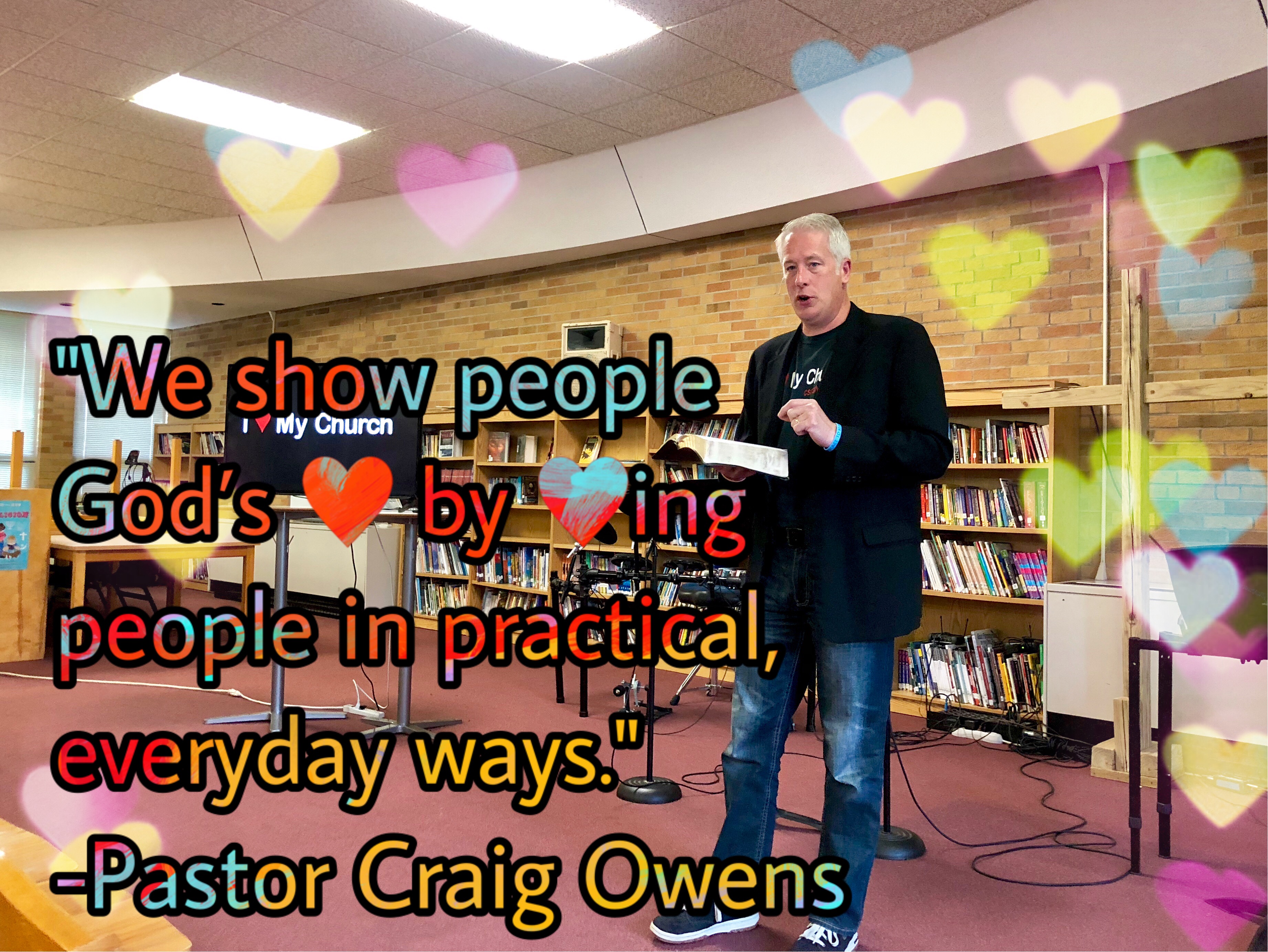
Last week I said if people are going to say “I ♥ That Church!” it has to be a ♥able church. A ♥able church has a ♥able reputation that compromises what Luke captured about the very first Church—internal unity, sincere piety, supernatural results, and practical help.

Once a church has this kind of reputation, how is it sustained? 

First, let me tell you how it’s NOT sustained: A church’s ♥able reputation isn’t sustained by that church focusing on it’s ♥able reputation. 

A ♥able reputation must flow from the constant development of godly character. Otherwise, we substitute what sounds good with what is actually sound, and we substitute what looks good with what is actually good. 

That’s what the Pharisees did—they were more concerned about how their religion looked to others, and not how it aligned with God’s heart. In fact, Jesus told two stories about people that thought they were “in” with God because of their reputation, but God actually says to them, “I don’t know who you are” (see Matthew 7:21-23; 25:1-12). 

Matthew Henry reminded us, “Men may go to hell with a good reputation!” 

But D.L. Moody got the order right when he said, “If I take care of my character, my reputation will take care of itself.”

I believe the first Church shows us three components of a maturing godly character. 

  1. Our source must be pure. The Christians devoted themselves to the apostles’ teaching. In other words, they grew with sound doctrine, not with things that sounded like doctrine (2 Timothy 4:3; Acts 17:11). 
  1. Our daily disciplines must be productive. The Christians saw “church” as an every day thing. They didn’t view studying the Scriptures, prayer, fellowship, and other maturing activities a merely something to be checked off their To Do list. 
  1. Our accountability must be in our fellowship. The Greek word for fellowship (koinonia) means an active involvement with the “one anothers” in the Church. What’s especially important is maintaining the highest levels of accountability with each other so that the growth of godly character can continue (see especially Hebrews 10:24-25; James 5:16). 

“When wealth is lost, nothing is lost. When health is lost, something is lost. When character is lost, everything is lost.” —Billy Graham 

My church’s ♥able reputation will be sustained as I am committed to growing in godly character. 

So… are you committed to that continual growth? 

Saturday In The Proverbs—Lifelong Learning (Proverbs 30)

[Each chapter in the Book of Proverbs contains thoughts that fit into a theme; they are not just random thoughts gathered together. In this “Saturday In The Proverbs” series, I will share a theme that I see in each chapter. But the cool thing about God’s Word is that you may see an entirely different theme. That’s great! If you do, I would love for you to share it in the comments below.]

Surely I am more stupid than any man… (Proverbs 30:2).

That’s what he said, and then Agur records some incredibly wise words for us! I think Agur is a man who is continually learning, and realizing how little he knew before he learned something new. 

He’s learning things like…

…how vast, and powerful, and wise God is (vv. 3-6).

…how frail and dependent on God he is (vv. 7-9). 

…how disrespectful people undermine their own success and happiness (vv. 10-14, 17).

…how destructive greed is (vv. 15, 16).

…how wonderfully God has made things (vv. 18, 19).

…how sin deceives (vv. 20-23). 

…how observing even the littlest of things can teach big lessons ( vv. 24-28).

…how boastful proud people are (vv. 29-33). 

What lessons are you learning? 

When was the last time you learned something new? 

What Do The Good Works Of Jesus Mean?

“Jesus was well-known for His many good works, which were primarily works of restoration. The good works of Jesus restored a measure of the good order God intended when He created the world and all things, and point forward to a day of complete renewal, of heaven and earth and all things. People, who are the image-bearers of God, were not meant to be deaf or blind, bent or beset by demons, riven with diseases, or at one another’s throats. Indeed, they were not even meant to die.

“Good works were an essential component of Jesus’ plan for restoring the goodness of creation, and He promised His followers that they would do many more good works than He had done, as they seek His Kingdom and live in the power of His Spirit (John 14:12). …

“And Jesus told His followers to tune up a similar harmony of words and works in their own lives, to follow Him as His witnesses, living and speaking the truth in love. For it is in such harmony, consistently sung into the world by every follower of Christ, that the Kingdom of God and His goodness advances on earth as it is in heaven.” —T.M. Moore

Thursdays With Oswald—Jeremiah 29

Oswald ChambersThis is a weekly series with things I’m reading and pondering from Oswald Chambers. You can read the original seed thought here, or type “Thursdays With Oswald” in the search box to read more entries.

Jeremiah 29

[These are notes from Oswald Chambers’ lecture on Jeremiah 29.] 

     The great message of the prophets is that evil and tyranny are there by the permissive will of God, there is never any room for thinking that these things happen by chance (cf. Isaiah 45:7). Never tie God up in His own laws; He is never guided by precedence. If a prophet is more concerned with logic than with loyalty to God, he will always mislead. … 

     We have no control whatever over external history; God has, and as saints we have to wait in patience wherever we are placed in the providential order of tyranny. …  

     Build houses and settle down; plant gardens and eat what they produce. Marry and have sons and daughters; find wives for your sons and give your daughters in marriage…. Also, seek the peace and prosperity of the city to which I have carried you into exile. Pray to the Lord for it, because if it prospers, you too will prosper (Jeremiah 29:5-7). Jeremiah commands the people to obey God’s order in the dust and dirt of captivity. When we become rightly related to God we are loosened from everything around us, and the danger is to imagine we have to get out of the world. Our Lord did not pray that His disciples should be taken out of the world, but that they should be kept from the evil. It is nothing but unmitigated cowardice to get out of the world; we have to remain unspotted in the midst of it. “Do you mean to tell me I can live a holy life there?” If you cannot, the grace of God is a fiction. External surroundings make no difference to our inner life, but our inner life makes a telling difference on our surroundings (see Philippians 2:15). … 

     Our problem is not one of proportion: how much worldliness can I live in? but of spiritual insight which will enable me to live a holy life in the midst of worldliness, looking for the fulfillment of God’s promises. 

From Notes On Jeremiah

Christians living here on earth are truly “temporary residents” or “aliens and strangers,” as Peter calls us. As such, we sometimes feel a bit perplexed about the evil all around us and how we’re supposed to respond to it and to the Earthlings who question us about it. 

Chambers reminds us that God is not surprised by the evil, nor is He surprised where we are. All of these things are under His sovereign control. 

We are not to give in to evil, compromise with evil, or even try to pretend that evil doesn’t really exist. We are to live with our eyes fixed on Jesus regardless of our evil surroundings. This is the only way we will shine like stars in our evil world, and point the way for Earthlings to have a relationship with Christ for themselves. 

Shine on! 

9 Quotes From Theodore Roosevelt’s Autobiography

Theodore Roosevelt never pulled his punches! And you could never misunderstand exactly what he was saying. Check out my review of his autobiography by clicking here, and then enjoy some of these straight-shooter quotes from TR. 

“With soul of flame and temper of steel we must act as our coolest judgment bids us. We must exercise the largest charity towards the wrong-doer that is compatible with relentless war against the wrong-doing. We must be just to others, generous to others, and yet we must realize that it is a shameful and a wicked thing not to withstand oppression with high heart and ready hand. With gentleness and tenderness there must go dauntless bravery and grim acceptance of labor and hardship and peril.” 

“The necessity of character as the chief factor in any man’s success—a teaching in which I now believe as sincerely as ever, for all the laws that the wit of man can devise will never make a man a worthy citizen unless he has within himself the right stuff, unless he has self-reliance, energy, courage, the power of insisting on his own rights and the sympathy that makes him regardful of the rights of others.” 

“I never won anything without hard labor and the exercise of my best judgment and careful planning and working long in advance.” 

“For I then held, and now hold, the belief that a man’s first duty is to pull his own weight and to take care of those dependent upon him; and I then believed, and now believe, that the greatest privilege and greatest duty for any man is to be happily married, and that no other form of success or service, for either man or woman, can be wisely accepted as a substitute or alternative.” 

“I did not then believe, and I do not now believe, that any man should ever attempt to make politics his only career. It is a dreadful misfortune for a man to grow to feel that his whole livelihood and whole happiness depend upon his staying in office. Such a feeling prevents him from being of real service to the people while in office, and always puts him under the heaviest strain of pressure to barter his convictions for the sake of holding office.” 

“No man can lead a public career really worth leading, no man can act with rugged independence in serious crises, nor strike at great abuses, nor afford to make powerful and unscrupulous foes, if he is himself vulnerable in his private character. … He must be clean of life, so that he can laugh when his public or his private record is searched; and yet being clean of life will not avail him if he is either foolish or timid. He must walk warily and fearlessly, and while he should never brawl if he can avoid it, he must be ready to hit hard if the need arises. Let him remember, by the way, that the unforgivable crime is soft hitting. Do not hit at all if it can be avoided; but never hit softly.” 

“I am glad to see wrong-doers punished. The punishment is an absolute necessity from the standpoint of society; and I put the reformation of the criminal second to the welfare of society. But I do desire to see the man or woman who has paid the penalty and who wishes to reform given a helping hand—surely every one of us who knows his own heart must know that he too may stumble, and should be anxious to help his brother or sister who has stumbled. When the criminal has been punished, if he then shows a sincere desire to lead a decent and upright life, he should be given the chance, he should be helped and not hindered; and if he makes good, he should receive that respect from others which so often aids in creating self-respect—the most invaluable of all possessions.” 

“My duty was to stand with every one while he was right, and to stand against him when he went wrong.” 

“We must ever judge each individual on his own conduct and merits, and not on his membership in any class, whether that class be based on theological, social, or industrial considerations.” 

More quotes coming soon! You can subscribe to this blog to be notified when more quotes are published, and you can also check out the quotes I publish daily on Tumblr. 

Leading Like A Shepherd

And David shepherded them with integrity of heart; with skillful hands he led them (Psalm 78:72). 

The most powerful king Israel ever had is applauded for leading his people with integrity and skill like a shepherd. Not as a warlord, not as a kingdom builder, not as a musician and songwriter; but a lowly, unassuming shepherd. 

A mark of a godly leader is one who leads like a shepherd.

A shepherd is known for these qualities—

—shepherds don’t see their sheep as a mass, but know each and every individual by name. 

—shepherds lead their flock by walking in the middle of the group so that they can be as close to as many sheep as possible. 

—shepherds are attentive to the particular needs of the young, the sick, and the elderly.

—shepherds lay down in the dirt to protect any places vulnerable to a predator’s attack. 

—shepherds find the best food and water possible for their sheep. 

—shepherds search for any sheep who have strayed away. 

—David shepherded the people of Israel just as he himself had been shepherded by God.

This is an invaluable lesson every leader should learn! 

This is part 30 in my series on godly leadership. You can check out all of my posts in this series by clicking here.

UPDATE: This post was one of the seed thoughts that went into fashioning my book Shepherd Leadership: The Metrics That Really Matter.

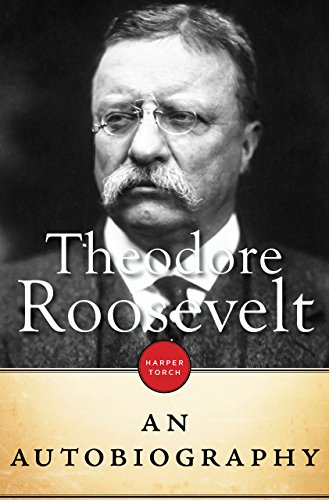
Theodore Roosevelt: An Autobiography (book review)

Without a doubt, Theodore Roosevelt is one of my all-time favorite US Presidents. Not only for the policies he enacted, but for the large life he led—frontiersman, commissioner of police, governor, Vice President, President, explorer, Nobel Peace Prize laureate. This man did it all, and wrote about it in a very straightforward style in Theodore Roosevelt: An Autobiography. 

In telling his life’s story, Theodore Roosevelt (TR) compiles each chapter around a “role” in his life. For instance, a chapter on his childhood, one on his time in the American frontier, one on his work as police commissioner in New York City, and so forth. Not only does he tell what he did, but he explains why he did it and the lessons he learned along the way. 

Other people played important roles in his life, and TR was quick to recognize competent and loyal people, make them his friends for life, and then put them in positions where they could do the most good for the most people. I have a hunch that this was started by the way his father raised him. Very early in the book, TR writes about his father—

“My father, Theodore Roosevelt, was the best man I ever knew. He combined strength and courage with gentleness, tenderness, and great unselfishness. He would not tolerate in us children selfishness or cruelty, idleness, cowardice, or untruthfulness. As we grew older he made us understand that the same standard of clean living was demanded for the boys as for the girls; that what was wrong in a woman could not be right in a man. … I never knew anyone who got greater joy out of living than did my father, or anyone who more whole-heartedly performed every duty.” 

TR truly lived an oversized life and left an indelible stamp on the American landscape that can still be seen and felt today. This is truly an enjoyable book to read! 

A Church With A ♥able Reputation

Demographers report that there are upwards of 70 million people in America that are unchurched. In my own experience, I have found that the unchurched people I have met are really dechurched people. At one time they were a part of a church community, but finding nothing of value there, they left. 

The way the first-century community responded to the Church—the historian Luke says “everyone was filled with awe and enjoying the favor of all the people”—is how people will still respond today to the extent that we resemble that first Church. 

If people are going to say “I That Church!” we have to be a able church!

Here are four qualities that I see in the first Church that gave it such a able reputation— 

  1. Internal unity

Luke uses the word fellowship (Greek: koinonia) which means an intimate, personal involvement in each other’s lives. The historical account lists phrases like devoted, breaking of bread and prayer, together, together with glad and sincere hearts, and one in heart and mind. 

  1. Sincere piety

Church for these first Christians wasn’t a place they went to on a certain day of the week; it wasn’t a set of religious rules they rigorously followed. They didn’t do church because they had to, but because they loved to! Luke says all the believers were together, and every day they continued to meet…with glad and sincere hearts.

  1. Supernatural results

Luke says wonders and miracles, signs, and great power accompanied the Church’s activity. Interestingly, the order is fellowship → awe → miracles, NOT what I would have expected, which is fellowship → miracles → awe. The awe came from the Church’s unified, sincere fellowship, and then the miracles simply confirmed God was there (cf. Mark 16:20). 

  1. Practical helps

Henry Ford said, “You can’t build a reputation on what you’re going to do.” The first Christians saw people in need and they helped: they gave to anyone as he had need and they shared everything they had so that there were no needy persons among them. This is exactly what Jesus told us to do (see Matthew 25:34-40). 

People will the Church when they see real among church people! 

If we want to see dechurched people become rechurched people, we need to return to our Christian roots—we need to make sure we are lovingly unified in heart and mind, allowing God to perform the miraculous among us, and then practically meeting the needs of everyone around us. 

Join me this Sunday as we learn more lessons from this first-century Church. You can join me in person or on Facebook Live.

Saturday In The Proverbs—What A Waste! (Proverbs 29)

[Each chapter in the Book of Proverbs contains thoughts that fit into a theme; they are not just random thoughts gathered together. In this “Saturday In The Proverbs” series, I will share a theme that I see in each chapter. But the cool thing about God’s Word is that you may see an entirely different theme. That’s great! If you do, I would love for you to share it in the comments below.]

He who is often rebuked, and hardens his neck, will suddenly be destroyed, and that without remedy (Proverbs 29:1).

God gives us SO MANY opportunities to experience His blessings, but when we continually flout His laws, we squander what we could have enjoyed. 

We waste things like…

  • …personal growth (vv. 1, 19)
  • …nurturing relationships (vv. 2, 5, 8-11, 24, 27)
  • …wealth (v. 3)
  • …leadership opportunities (vv. 4, 12, 14, 18, 26)
  • …escape from heartache (vv. 6, 15, 17, 20, 21)
  • …relieving others’ suffering (v. 7)
  • …revelation / insight (vv. 13, 19)
  • …growing in righteousness (v. 16)
  • …lasting peace (vv. 22, 23, 25)

Don’t waste what God wants to give you!