Clinging To God’s Words

When it comes right down to it, faith and fear both hinge on our beliefs: Fear believes something bad; faith believes something good. Fear is an invitation for us to evaluate in who or in what we have placed our trust.  

According to the dictionary, fear is a distressing emotion we feel whether the threat is real or imagined. Five hundred years ago, Michel de Montaigne said, “My life has been filled with terrible misfortune; most of which never happened.” Even more recently, an extensive study found that 85 percent of things people feared never happened!

According to the dictionary, faith is trust in something even without proof or evidence. That sounds tremendously close to the biblical definition of faith: Now faith is the assurance—the confirmation, the title deed—of the things we hope for, being the proof of things we do not see and the conviction of their reality—faith perceiving as real fact what is not revealed to the senses. (Hebrews 11:1 AMP) 

Mary is the second person to whom an angel says “Do not be afraid” in the First Advent story. Consider her story alongside Zechariah’s story and especially notice when these words were spoken. The angel Gabriel first tells Mary, “Greetings, you who are highly favored! The Lord is with you.” 

Mary’s initial response is being “greatly troubled.” This Greek word means an internal agitation that today psychologists would call “cognitive dissonance.” In other words, what Mary believed about herself didn’t line up with what God believed about her. Her next response is wondering how she could ever measure up to God’s high standard of her. 

It’s at this point that Gabriel says those key words, “Do not be afraid, Mary, you have already found favor with God.” She didn’t have to make herself worthy of God’s favor because she already had it! Now Mary just had to believe it. 

Fear is overcome by clinging to God’s words instead of the world’s words. 

Mary did indeed choose this. Her song (in vv. 46-55) is loaded with Old Testament references, and she concludes by singing to God, “You have helped Your servant Israel, remembering to be merciful to Abraham and his descendants forever, even as You said to our fathers.” 

Here’s the truth—

  • Your Word, Lord, is eternal; it stands firm in the heavens. (Psalm 119:89) 
  • God is not human, that He should lie, not a human being, that He should change His mind. Does He speak and then not act? Does He promise and not fulfill? (Numbers 23:19) 
  • And Jesus would tell us that clinging to God’s words puts us on the surest of foundations that no storm of life could ever shake (Luke 6:46-49)! 

Clinging to God’s words lets us realize God’s grace toward us. 

If you know Jesus as your Savior, you can insert your name in the same place where Gabriel said to Mary: “Do not be afraid, ____________, you have found favor with God!” 

If you have missed any of the messages in our Advent series Do Not Be Afraid, you can access the full list by clicking here. 
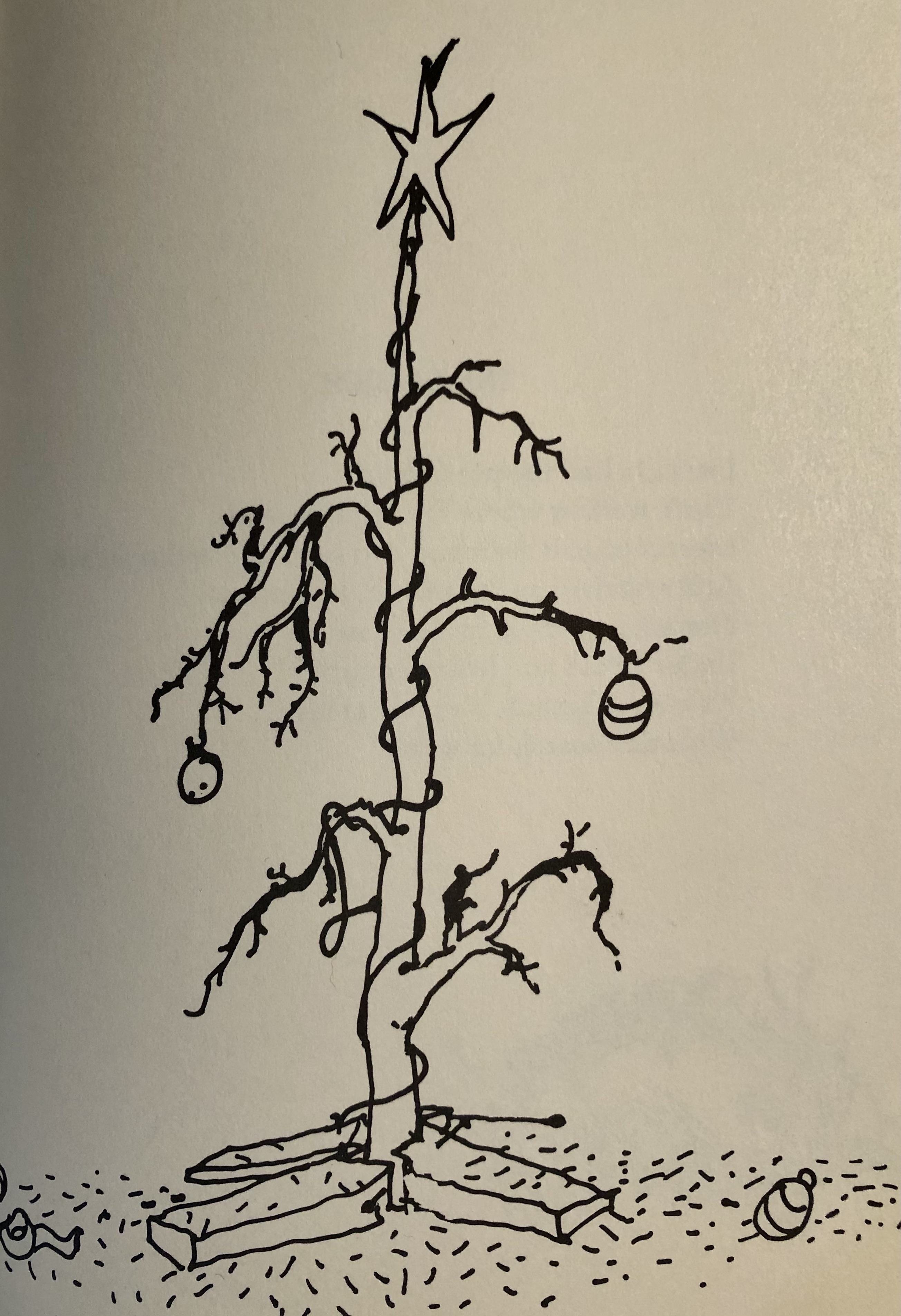
Poetry Saturday—Merry…

No one’s hangin’ stockin’s up,
No one’s bakin’ pie,
No one’s lookin’ up to see
A new star in the sky.
No one’s talkin’ brotherhood,
No one’s givin’ gifts,
And no one loves a Christmas tree
On March the twenty-fifth. —Shel Silverstein

Thursdays With Spurgeon—The Initiation Of Power

This is a weekly series with things I’m reading and pondering from Charles Spurgeon. You can read the original seed thought here, or type “Thursdays With Spurgeon” in the search box to read more entries.

The Initiation Of Power 

     Whatever the Holy Spirit was at the first, He is that now, for as God, He remains forever the same. … We would greatly grieve the Holy Spirit if we supposed that His might was less today than in the beginning. …  

     If at the commencement of the gospel we behold the Holy Spirit working great signs and wonders, may we not expect a continuance of and, if anything, increased displays of His power as the ages roll on? … 

     It ought not to be forgotten that Pentecost was the feast of firstfruits. It was the time when the first ears of ripe corn were offered to God. If, then, at the commencement of the gospel harvest we see so plainly the power of the Holy Spirit, may we not most properly expect infinitely more as the harvest advances and, most of all, when the most numerous sheaves will be gathered? May we not conclude that if the Pentecost was thus marvelous, the actual harvest will be still more wonderful?

From Pentecostal Wind And Fire

When Jesus was approaching the Cross, He gathered His disciples together to tell them what was coming. One of the assurances He gave His followers was this: “I assure you, most solemnly I tell you, if anyone steadfastly believes in Me, he will himself be able to do the things that I do; and he will do even greater things than these, because I go to the Father” (John 14:12). 

The empowering force for these “greater things” would be the Holy Spirit indwelling the Christian (Matthew 3:11; Luke 24:49; Acts 1:8, 2:1-4). 

Pentecost wasn’t the culmination, it was the initiation. 

Pentecost was the launching point for followers of Jesus to be filled with dunamis power that would enable them to go into all the world and preach the gospel, and to have signs and wonders follow to confirm the preaching of the Word. 

As Spurgeon said, we greatly grieve the Holy Spirit when we attempt to put Him in a box as to what He can or can’t do today, or if we try to limit Him to one era of long-past history. The Holy Spirit is as vital for a Christian today as He was on that Pentecost Sunday described in Acts 2! 

Authority To Serve

And David knew the Lord has established him as king over Israel and that his kingdom had been highly exalted for the sake of His people Israel. (1 Chronicles 14:2) 

“David knew” reminds me of “Jesus knew” in John 13:3.

Both knew God had placed them exactly where they were supposed to be. 

Both knew the authority God had given them. 

Both knew the power that was theirs to use.

Both knew they could do self-glorifying, self-promoting things with their power. Yet both used their authority and power to serve others: “for the sake of His people.”

Jesus gave His authority to us (Matthew 28:18). 

Do I know that? 

I mean, really know that? 

If so, am I using His authority to serve others?

A mark of a godly leader is one who uses his God-given authority to serve others. 

This is part 53 in my series on godly leadership. You can check out all of my posts in this series by clicking here.

King And Commoner

In the first year of Cyrus king of Persia, in order to fulfill the word of the Lord spoken by Jeremiah, the Lord moved the heart of Cyrus… (Ezra 1:1). 

Ezra begins as 2 Chronicles ends: with the proclamation of Cyrus allowing the Israelites to return to Jerusalem. 

The Babylonians defeated the Assyrians, who were then defeated by the Medes, who were themselves defeated by the Persians under Cyrus II. This was a powerful man who claimed “all the kingdoms of the earth” as his possession. (v. 2). 

Yet this conquering king who was called Cyrus the Great had his heart directed by God. 

Among the Israelite exiles that returned to Jerusalem were princes, priests, Levites, servants, and common people of every stripe. These exiles were rulers of nothing. 

Yet these people also had their hearts moved by God (v. 5)—42,360 of them, to be precise. 

The same God who moved the heart of the most powerful king on earth also moved the hearts of common people. God had a plan to fulfill and He knew exactly which hearts to move at the precise time to bring about His purpose. God is sovereignly in control. All of history—including all the people in history—is His story. 

The king is not too powerful and the common citizen is not too small to be used by God. 

Let me make that statement more personal: All of the “great” people on earth today are not too powerful to be used by God, nor are you too small to be used by Him. 

Will you say “yes” when He moves your heart to action?

Fear’s Invitation

Have you ever had a really good scare? Maybe in the dark or when you were young? Then in the light or as you got older you thought, “Why was I afraid of that?” Our relief came from the fact that we think we know more. But here’s the problem: there is a difference between a healthy fear and an unhealthy fear, so not every fear is something we should try to alleviate.

Sometimes we treat too lightly the things that are really quite powerful. Consider the arrival of Jesus in Bethlehem. There are more angels sent by God surrounding this one event than anywhere else in all the Bible. Yet all four angelic appearances have the same message: “Do not be afraid.” 

Why would people fear what we now celebrate as such a joyous event? I think it’s because God Himself—the All-Holy Creator of the Universe—is coming near to sinful man (see John 1:9; 1 Timothy 6:15-16). 

God is holy, and His holiness is unapproachable by sin. At the exact same moment, God is love, and His love desires for us to approach Him. We cannot make this happen on our own, which leads to more fear. 

Thankfully for us, God Himself has provided the way for sinful man to approach His awesome, unapproachable holiness!  

In the Greek language of the New Testament phobeō is the main word for “fear.” This word can be defined as either fleeing from a terrible thing or clinging in obedience to an awesomely reverent thing. Jesus said the same things when He told us, “I tell you, my friends, do not be afraid of those who kill the body and after that can do no more. But I will show you whom you should fear: Fear Him who, after your body has been killed, has authority to throw you into hell. Yes, I tell you, fear Him” (Luke 12:4-5). 

In the Advent story, the first appearance of “Do not be afraid” is when an angel appears to Zechariah. Why would Zechariah be so afraid at the approach of God? I think there may have been three reasons: 

  • Herod was king—making the society Zechariah lived in politicized and irreligious 
  • Zechariah was without a priestly heir to carry on his family name 
  • his wife Elizabeth may have sinned—at least that’s what people would have whispered about her barrenness 

All of this added up to Zechariah feeling like God was displeased with them and that He was only coming close to bring fiery judgment. 

The angel told Zechariah not to fear because “your prayer has been heard.” In other words, “I am inviting you to trust in what God HAS already done versus trusting in what you might or might not be able to do on your own.” Phobeō was an invitation to choose reverential obedience (holy fear) of the eternal over the terror of the temporal. 

Sadly, Zechariah initially clung to the negative phobeō. Yet after Elizabeth did conceive and John was born, this was transformed into holy, reverential fear, as heard in the Spirit-inspired song he sang. Notice in Luke 1:67-75 Zechariah’s emphasis on all that God has done: He has come, He has redeemed, He has raised, He said, He has kept His covenant, He has rescued, He has enabled.  

Have you put yourself in the category of “unworthy of God’s favor”? Has fear crippled you—like it had done with Zechariah—from continuing to pray, believe, and try? 

Fear is an invitation to evaluate in who or in what I have placed my trust.

I invite you to accept the invitation to take your eyes off the temporary and put them on the Eternal One. “…The time is coming quickly, and what I show you will come true. It may seem slow in coming, but wait for it; it will certainly take place, and it will not be delayed. (Habakkuk 2:3 GNT) 

Check out the other messages in this Do Not Be Afraid series by clicking here. 

Poetry Saturday—I Can Do Something

I may not do much with all my care,

But I surely may bless a few;
The loving Jesus will give to me
Some work of love to do;
I may wipe the tears from some weeping eyes,
I may bring the smile again
To a face that is weary and worn with care,
To a heart that is full of pain.

I may speak His name to the sorrowful,
As I journey by their side;
To the sinful and despairing ones
I may preach of the Crucified.
I may drop some little gentle word
In the midst of some scene of strife;
I may comfort the sick and the dying
With a thought of eternal life. —Marianne Farningham

Thursdays With Spurgeon—An Exhortation To Preachers

This is a weekly series with things I’m reading and pondering from Charles Spurgeon. You can read the original seed thought here, or type “Thursdays With Spurgeon” in the search box to read more entries.

An Exhortation To Preachers 

He will glorify Me, for He will take of what is Mine and declare it to you. All things that the Father has are Mine. Therefore I said that He will take of Mine and declare it to you. (John 16:14-15) 

     Ah, brothers, the Holy Spirit never comes to glorify us, or to glorify a denomination, or, I think, even to glorify a systematic arrangement of doctrines! He comes to glorify Christ! If we want to be in accord with Him, we must preach in order to glorify Christ. May we never have this thought: ‘I will put that bit in. It will sound well….’  No, no! 

     I would say, ‘Brother, though it is a very delightful piece, strike that out, because if you have had a thought of that kind about it, you had better not put yourself in the way of temptation by using it.’ … 

     Well then, it may be very admirable, and further, it might be a very right thing to give them that precious piece; but if you have that thought about it, strike it out! Strike it out ruthlessly! Say, ‘No, no, no! If it is not distinctly my aim to glorify Christ, I am not in accord with the aim of the Holy Spirit and I cannot expect His help!’ … 

     How then does the Holy Spirit glorify Christ? It is very beautiful to think that He glorifies Christ by showing Christ’s things. If you wanted to do a honor to a man, you would, perhaps, take him a present to decorate his house. But here, if you want to glorify Christ, you must go and take the things out of Christ’s house ‘the things of Christ.’ … 

     Again, I think that the blessed Spirit glorifies Christ by showing us the things of Christ as Christ’s. Oh, to be pardoned! Yes, it is a great thing, but to find that pardon in His wounds, that is a greater thing! Oh, to get peace! Yes, but to find that peace in the blood of His Cross! … That it came from Christ is the best thing about the best thing that ever came from Christ! …  

     He will glorify Me, for He will take of what is Mine and declare it to you.’ Yes, it does glorify Christ for the Holy Spirit to show Christ to us. … Since it is for the honor of Christ for His things to be shown to men, He will show them to us, that we may go and show them to other people.

From Honey In My Mouth

My fellow pastor, I cannot add anything to these wise words except this simple exhortation: Read these words again and ask the Holy Spirit to show you how you can more accurately live this out in your sermon preparation and preaching. 

God bless you, my friend!

“Do Not Be Afraid”

There are more angels sent by God concerning one event than anywhere else in the Bible—the Advent of Jesus. Clearly, this is a big deal: The coming to earth of God Himself! 

You would think this would be an occasion for great joy. But all four of the angelic appearances around the birth of Jesus have the same message: Do not be afraid. 

Why are people so afraid? It’s because fear invites us to make a decision to trust God completely. People remain crippled by fear when they try to deal with fear by themselves. But when they learn to fear God instead, there is an almost inexpressible joy and freedom that explodes in our hearts! 

Join us for this Advent series where we will explore why this “Do not fear” message is still relevant for us today. Please join us either in-person or on Facebook. 

If you have missed any of the messages in this series, check them out here:

It’s Not About Me

Listen to the podcast of this post by clicking on the player below, and you can also subscribe on AppleSpotify, or Audible. 

After all that Hezekiah had so faithfully done… (2 Chronicles 32:1). 

After three very long chapters outlining Hezekiah’s faithfulness to obey God and restore worship in the temple, how would you expect this sentence to be completed: 

“After all that Hezekiah had so faithfully done… 

  • …God gave Hezekiah abundant blessings”? 
  • …Hezekiah never had any problems”?
  • …all of Hezekiah’s enemies were afraid of him”? 

Actually, the full sentence says, “After all that Hezekiah had so faithfully done, Sennacherib king of Assyria came and invaded Judah.” 

What?! That doesn’t seem fair! 

Shouldn’t it be something like, “If I do these good things then God will do good things for me”? Or even, “If bad guys do bad things then God will do bad things to them”? 

But this wasn’t about Hezekiah. It wasn’t even about Sennacherib. It was about God’s glory. 

Jonah had delivered God’s message of judgment on Nineveh and the people had repented. But then they had begun to backslide from that. God was mercifully giving them another chance to repent. Sennacherib felt he was invincible and didn’t need to turn to Yahweh. So God had to demonstrate “with [Sennacherib] is only the arm of flesh” (vv. 8, 10-19). 

God’s judgment fell, Sennacherib was assassinated, Judah was delivered, and God was glorified (vv. 21-23). 

It is shortsighted of me to say, “But God, I did everything faithfully so this bad thing shouldn’t be happening to me.” 

It’s not about me! It never has been. It’s all about God’s glory. 

Yes, Hezekiah reaped the benefit of Sennacherib’s defeat, but it wasn’t because God was “paying Hezekiah back” for the good he had done. God was still being glorified when “many brought offerings to Jerusalem for the Lord and valuable gifts for Hezekiah king of Judah. From then on he was highly regarded by all the nations.”

Sennacherib was defeated and Hezekiah was saved for the same reason: God was glorified in doing so! 

Whenever you walk through a dark time, you too might be tempted to say, “God, this isn’t fair!” But remember, it’s not about you—it’s about God being glorified. Perhaps God gains greater glory and you gain greater rewards by Him delivering you through an enemy’s attack, not delivering you from the attack. Whatever God is doing, He is doing it for His glory. 

Sola Deo gloria!

►► Would you please prayerfully consider supporting this ministry? My Patreon supporters get behind-the-scenes access to exclusive materials. ◀︎◀︎