The Craig And Greg Show: Disagreeing Is Not Disagreeable

Listen to the podcast of this post by clicking on the player below, and you can also subscribe on AppleSpotify, or Audible.

We can all agree that disagreeable people are some of the hardest to work with, constantly shooting down ideas without providing anything constructive in return. These types of people can quickly put a strain on any organization if left unchecked. However, we need to be careful not to lump disagreement into the category of disagreeable. In this episode Greg and I discuss why people in disagreement are actually the exact opposite of disagreeable, and are a valuable asset to your organization.

  • [0:00] Introduction 
  • [1:02] A strong quote about “no men” from Dick Brogden—“Strong leaders respect and need ‘no’ men. It is weak leaders who surround themselves with the ever agreeable. Unity requires honorable disagreement. Otherwise, you don’t have unity; you just have uniformity.”
  • [2:06] Disagreeing people are not necessarily troublemakers.
  • [2:59] What bothers me about disagreeable people?
  • [3:49] Opinions vs facts have to be considered to determine if someone is disagreeable vs disagreeing.
  • [4:36] Leaders are required to listen more to people who disagree with them.
  • [7:00] Many new leaders mistakenly treat disagreeable people as an enemy.
  • [8:44] Greg and I share how we misunderstood disagreeing people early on in our leadership journey.
  • [11:04] Leaders need some thoughtful boundaries for disagreeable people.
  • [13:28] How many times do we call someone disagreeable when they are simply disagreeing with us?
  • [15:53] Make sure disagreeable people don’t dominate the conversation in meetings.
  • [16:48] I apply a proverb from the Bible to disagreeing people.
  • [18:35] Leaders need to guard against defensiveness when people disagree with them.
  • [19:52] Greg shares a great quote to wrap up our discussion.
  • [20:36] A leadership coach can help you sort out the disagreeing from the disagreeable.

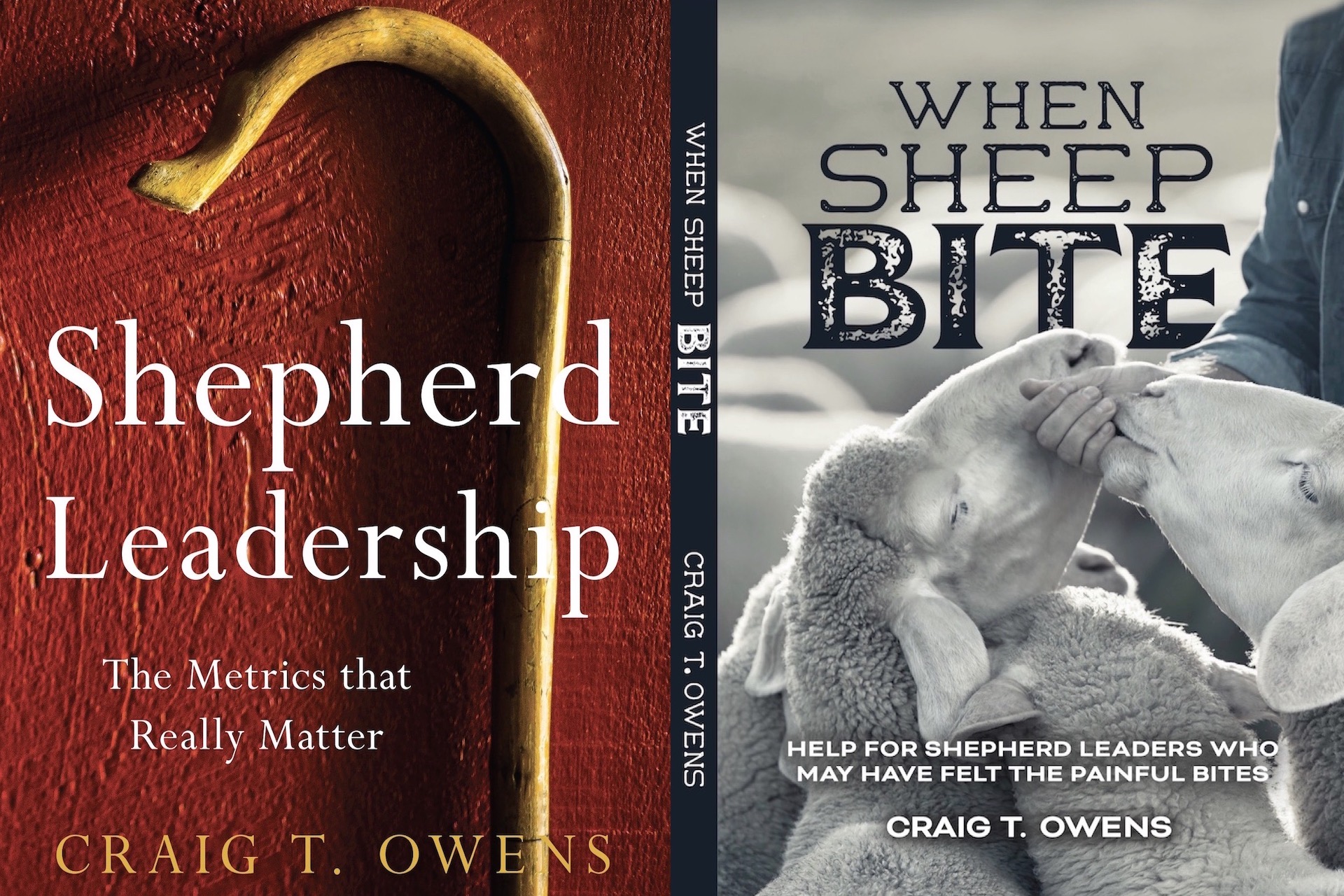
My book When Sheep Bite is a great resource for dealing with people who are disagreeing to the point of becoming disagreeable. Check it out!


The Healing Word

Listen to the podcast of this post by clicking on the player below, and you can also subscribe on AppleSpotify, or Audible. 

If you go to the doctor because you sense that something is wrong, you want your doctor to tell you the truth. A doctor who avoids telling you the truth because it might hurt your feelings doesn’t put you on the road to recovery. 

If this is true for medical doctors, isn’t it more important for soul doctors? After all, even the best doctors cannot keep your physical body alive forever, but your soul will live eternally. 

If God has given you His Word to share, He says, “I will make My words fire in your mouth” (Jeremiah 5:14). Deliver that painful—but absolutely vital—diagnosis to help people recover from the ravages of their sin. 

To soften the words, to water-down the medicine for the sake of people’s feeling or for the desire to be liked by people, is to become a quack, a false prophet. God says of these charlatans, “They dress the wound of My people as though it were not serious. ‘Peace, peace,’ they say, when there is no peace” (Jeremiah 6:14, 8:11). 

Then God says,

The prophets prophesy falsely, and the priests exercise rule at their own hands and by means of the prophets. And My people love to have it so! But what will you do when the end comes? (Jeremiah 5:31) 

The healing word is often a hard word. It might even be considered by those plagued by the ravages of sin to be a harsh and painful word. But the only path to healing is the medicine found in God’s Word—the healing balm that comes from exposing my sin, repenting of my sin, and finally enjoying the healing of God’s forgiveness. 

We must always speak the truthful healing word in love because eternity is at stake! 

►► Would you please prayerfully consider supporting this ministry? My Patreon supporters get behind-the-scenes access to exclusive materials. ◀︎◀︎

7 Images Of The Church

Husbands, love your wives, just as Christ loved the church and gave Himself up for her to make her holy, cleansing her by the washing with water through the Word. (Ephesians 5:25-26)

Dr. Henry Halley points to seven images the Bible portrays of how Jesus interacts with His saints.

“1. The Shepherd and the sheep emphasizes both the warm leadership and protection of Christ and the helplessness and dependency of believers (John 10:1-18). 

2. The vine and the branches points out the necessity for Christians to depend on Christ’s sustaining strength for growth (John 15:1-8).

3. Christ as high priest and the church as a kingdom of priests stress the joyful worship, fellowship, and service which the church can render to God through Christ (Hebrews 5:1-10; 7:1; 8:6; 1 Peter 2:5-9). 

4. The cornerstone and building stones (Matthew 21:42) accents the foundational value of Christ to everything the church is and does, as well as Christ’s value to the unity of believers. Love is to be the mortar which solidly holds the living stones together (1 Corinthians 3:9; 13:1-13; Ephesians 2:19-22; 1 Peter 2:5). 

5. The head and many-membered body, the church, is a vibrant organism, not merely an organization; it draws its vitality and direction from Christ, the Head, and each believer has a unique and necessary place in its growth (1 Corinthians 12:12-13, 27; Ephesians 4:4). 

6. The last Adam and new creation presents Christ as the initiator of a new creation of believers as Adam was of the old creation (1 Corinthians 15:22, 45; 2 Corinthians 5:17). 

7. The bridegroom and bride beautifully emphasizes the intimate fellowship and co-ownership existing between Christ and the church (Ephesians 5:25-33; Revelation 19:7-8; 21:9).

You can read all of the Bible verses listed in this post by clicking here. 

Study To Apply

Listen to the podcast of this post by clicking on the player below, and you can also subscribe on AppleSpotify, or Audible. 

Jude calls Christians to contend for the faith without contention and without compromising the truth. Last week we learned that one of the first disciplines to help us do this is: Study God’s Word and then study it some more. 

What do we mean by using the word “study”? 

Paul counsels his friend and protege to study God’s Word (see 2 Timothy 2:15 in the KJV). But the word study (Greek: spoude) simply means diligence aimed at a goal. So what’s the goal? To contending for the truth (2 Timothy 2:14-18, 22-26). Jude is addressing a similar issue ( see Jude 4).

(Check out all of the Scriptures in this post by clicking here.)

Just as Paul told Timothy to stick with “the Word of truth,” Jude says we need to be reminded of God’s Word (Jude 5). 

Jude is writing to people who probably have first hand—maybe even eyewitness experience—knowledge. They have either heard it from someone who was right there, or perhaps from a friend who heard it from someone who was there. And yet, certain godless men have already slipped in among you and are teaching lies. 

Jude goes back to Scripture (vv. 5-7): 

  • Israelites delivered from Egypt rebelled against God and died in the wilderness 
  • angels who were in God’s presence were expelled from heaven and await an eternity in hell 
  • the residents of Sodom and Gomorrah experienced deliverance from Abraham but chose to debase themselves 

Jude says, “In the very same way, these dreamers pollute their own bodies” (v. 8) by changing “the grace of our God into a license for immorality” (v. 4). 

So we study the Scripture to apply it first to our own lives (James 1:22-25).  

Jude uses four examples of people who knew the Word of God intimately, but in their pride wouldn’t apply it to themselves: Lucifer, Cain, Balaam, and Korah (vv. 9-11).

  1. The devil—pride is what turned Lucifer into satan. 
  2. The way of Cain—God warned him about sin crouching at his door, but he ignored it.
  3. Balaam’s error—he tried to calculate how close to disobeying he could get without actually disobeying because he wanted earthly rewards. 
  4. Korah’s rebellion—the Greek word for “rebellion” is antilogia: literally anti + Logos, or contradicting the Word of God. 

Jesus warned the most learned men of His day against this (John 5:39-40) and we need to humbly receive God’s Word in order apply to our lives. 

If I don’t diligently study the Scripture, I cannot apply it to my life and I am doomed to repeat the same fatal errors. I must study God’s Word diligently so that it can change me. Only then may I teach others (1 Timothy 1:3-7). 

If you’ve missed any of the other messages in this series from the Book of Jude, you can find them all here. 

►► Would you please prayerfully consider supporting this ministry? My Patreon supporters get behind-the-scenes access to exclusive materials. ◀︎◀︎

Links & Quotes

As I was studying the Book of Jude, I came across this phrase, “Though you already know all this, I want to remind you.” This prompted these three quick thoughts that I want to share with my fellow pastors.

I have a lot of new video content on my YouTube channel every week. Please check it out and subscribe so you don’t miss anything.

Using the words from Isaiah 40:10-11, Sarah Young has Jesus speaking these words to us: “Adverse circumstances become growth opportunities when you affirm your trust in Me no matter what.”

Ken Blanchard has long used a challenge for leaders to catch their teammates doing something right. That phrase has now become the title of a biography about Ken. He says, “Great leaders who want to encourage and motivate their people set up a positive cycle:

  1. A great leader catches someone doing something right and praises them. 
  2. The leader’s praise helps the person feel good about themselves. 
  3. People who feel good about themselves produce good results. 
  4. A great leader notices when people produce good results. 
  5. See #1.”

This is a very encouraging read for men! Scott Hubbard writes, “You may not have ability for preaching and teaching, as Timothy did. But the Holy Spirit does not leave any Christian giftless. … You may have a small vision for your life; God does not.”

An amazing series from T.M. Moore on the law in a Kingdom economy. T.M. writes, “Christians don’t keep the Law to be saved; we keep it because we are saved, because it is the path that Jesus walked (1 John 2:1-6); and we recognize its value for helping us realize more of the life of holy, righteous, and good works for which we have been redeemed (Romans 7:12; Ephesians 2:8-10).” 

Geologists have discovered what Creationists already proposed about plate tectonics related to the Flood described in the Bible. “Flood geologists have predicted that plate motion slowed at the end of the Flood year, and now conventional scientists are finding it to be true.”

The Assemblies of God has always responded to popular religious trends with solid biblical exegesis. The “latter day rain” movement in the 1940s is a good example.

“Mature leaders swallow their egos and recognize God as their power source. They walk confidently in His authority, but never assume credit for it. Faith enables them to stretch, while humility enables them to stoop.” —John Maxwell

Micromanagement Stifles Creativity

Listen to the podcast of this post by clicking on the player below, and you can also subscribe on AppleSpotify, or Audible. 

Leaders have an important balancing act to perform every day: remaining in control of their organization without becoming a controlling leader. Over-controlling leaders who micromanage end up stifling creativity that could be unleashed in their teammates. 

Check out the full conversation on The Craig and Greg Show episode The Balance of Control. 

Here’s that quote I shared from Tim Irwin’s book Derailed: “Lack of courage shows up in many organizations as micromanagement, failure to empower others, risk aversion, overcontrol, and perfectionism.”

God Provides For His Servants

Listen to the podcast of this post by clicking on the player below, and you can also subscribe on AppleSpotify, or Audible. 

God promised to provide for Jeremiah if he remained faithful to preach the word God had given him. Jeremiah did deliver a hard message that turned out to be highly unpopular, and as a result those who heard his sermon became quite angry with Jeremiah. 

In what I think is a very human response, Jeremiah began to complain to God—

   Your words were found, and I ate them; and Your words were to me a joy and the rejoicing of my heart, for I am called by Your name, O Lord God of hosts. I sat not in the assembly of those who make merry, nor did I rejoice; I sat alone because Your powerful hand was upon me, for You had filled me with indignation. Why is my pain perpetual and my wound incurable, refusing to be healed? Will You indeed be to me like a deceitful brook, like waters that fail and are uncertain? (Jeremiah 15:16-18 AMPC) 

God had to speak a correcting word to Jeremiah— 

   If you return and give up this mistaken tone of distrust and despair, then I will give you again a settled place of quiet and safety, and you will be My minister; and if you separate the precious from the vile—cleansing your own heart from unworthy and unwarranted suspicions concerning God’s faithfulness—you shall be My mouthpiece. Let them return to you—not you to the people. (v. 19) 

Jeremiah got over his pity party and once again continued to faithfully deliver God’s message, despite what people thought of him or said about him. Jeremiah even remained resolute in his devotion to God when the rulers of the people abused Jeremiah or threw him into prison or threatened to kill him. 

Just as God promised, as the Babylonians pressed in on Jerusalem, the people flocked back to Jeremiah to ask him to intercede before God on their behalf (21:1-2; 37:3; 42:2)

Remember that God had promised to take care of Jeremiah, assuring him of a place of quiet and safety. God also said, 

   Truly your release, affliction, and strengthening will be for good purposes; surely, Jeremiah, I will intercede for you with the enemy and I will cause the enemy to ask for your aid in the time of evil and in the time of affliction. (15:11) 

This promise was fulfilled when Nebuzaradan—the commander of the imperial guard in Nebuchadnezzar’s army—came to Jerusalem:

   Now Nebuchadnezzar king of Babylon had given these orders about Jeremiah through Nebuzaradan commander of the imperial guard: “Take him and look after him; don’t harm him but do for him whatever he asks.” … [Nebuzaradan] had found Jeremiah bound in chains among all the captives from Jerusalem and Judah who were being carried into exile to Babylon. When the commander of the guard found Jeremiah, he said to him, “The Lord your God decreed this disaster for this place. And now the Lord has brought it about; He has done just as He said He would. All this happened because you people sinned against the Lord and did not obey Him. But today I am freeing you from the chains on your wrists.” (39:11-12; 40:1-2) 

God never promises His servants their task will be easy, but He does promise both temporal provision and eternal rewards for His servants who remain faithful to Him and to His calling. 

In my book Shepherd Leadership, I talk about a time God had to correct me when I was throwing myself a pity party. 

And in my book When Sheep Bite, the entire third section contains biblical strategies to help God’s servants not give in to the very natural response of fight-or-flight, but how to tap into the supernatural response of faithfulness. 

If you are a spiritual leader, I would encourage you to pick up a copy of both of these books. And keep in mind that God always provides for His servants. 

►► Would you please prayerfully consider supporting this ministry? My Patreon supporters get behind-the-scenes access to exclusive materials. ◀︎◀︎

Did I Write This Book?

Listen to the podcast of this post by clicking on the player below, and you can also subscribe on AppleSpotify, or Audible. 

I would like to tell you about my newest book which I didn’t really write. On this episode of The Podcast, I’ll tell you all about Amen Indeed.

You can see the clip from the Ailbe Podcast where the idea for Amen Indeed was first sparked by clicking here. 

If you are a pastor—or if you want to give your pastor a special gift—please check out Amen Indeed. 

►► Would you please prayerfully consider supporting this ministry? My Patreon supporters get behind-the-scenes access to exclusive materials. ◀︎◀︎

No Contention, No Compromise

Listen to the podcast of this post by clicking on the player below, and you can also subscribe on AppleSpotify, or Audible. 

As we continue our look at the Book of Jude, let me remind you that Jude calls Christians to contend for the faith with a servant’s attitude and with an all-in attitude that will not give in even when the going gets tough. 

What exactly are we contending for? Jude calls it the faith once for all entrusted to the saints” (Jude 3). 

(Check out all of the Scriptures in this post by clicking here.) 

It might be helpful to look at this phrase in the AMPC: “…to contend for the faith which was once for all handed down to the saints—the faith which is that sum of Christian belief which was delivered verbally to the holy people of God.” 

During the Reformation there was a phrase that became prominent: “Sola Scriptura” which means the Bible is our authoritative guide for everything in our lives. Jesus addressed the religious leaders who added to the Scripture (Mark 7:8-9, 13), and here Jude is now addressing those who took away from Scripture (Jude 4).   

We have to be so careful here. Contending doesn’t meet fighting for our traditions, nor does it mean compromising with the whims of culture. Jesus told us to preach the Gospel, not to argue nor give in to avoid problems. Jude says this Gospel message have been entrusted to us. 

Ronald Reagan was talking about the freedoms in the United States of America, but his warning sounds like it originated with Jude: “Freedom is never more than one generation away from extinction. We didn’t pass it to our children in the bloodstream. It must be fought for, protected, and handed on for them to do the same, or one day we will spend our sunset years telling our children and our children’s children what it was once like in the United States where men were free.” 

We don’t want to spend our sunset years telling our children and grandchildren how it used to be when we contended for the faith that was entrusted to us, but we want to tell them how we are still winsomely and consistently contending for this faith still to this day! 

So how do we contend for this faith the right way?  

(1) Study God’s Word and then study it some more. I like what Charles Spurgeon said of John Bunyan,  “Why, this man is a living Bible! Prick him anywhere—his blood is Bibline, the very essence of the Bible flows from him. He cannot speak without quoting a text, for his very soul is full of the Word of God. I commend his example to you, beloved.” May that be said of us! 

James encourages Christians to receive God’s Word in their hearts. The Amplified Bible says it this way: “the Word which [is] implanted and rooted in your hearts.” But I really love the KJV rendering that calls it “the engrafted word.” We study God’s Word to us so that it can become a living, breathing part of who we are—the very fabric of our thoughts and attitudes. 

(2) Wrestle with the whole counsel of Scripture. This is hard work, but it is the most rewarding work of all! Don’t stick with only passages of the Bible that are enjoyable to read, but consider the whole counsel of God’s Word. Ask yourself things like: What did it mean then? What does it mean now? What does it mean for me? Where can I cross-reference this with another place in Scripture? 

(3) Make your “No” merciful, peaceful, and loving. This is how Jude calls us to live in v. 2, and the apostle Peter said something very similar in 1 Peter 4:1-5. 

(4) Make your “Yes” compelling and attractive. Remember that we want to be known more for what we’re for, not for what we’re against. Again, Peter sounds this same note in 1 Peter 3:13-16. 

As saints entrusted with the faith, we have to learn to contend for this faith without becoming contentious and without compromising the truth. 

If you’ve missed any of the other messages in this series Earnestly Contend, you can find them all here. 

►► Would you please prayerfully consider supporting this ministry? My Patreon supporters get behind-the-scenes access to exclusive materials. ◀︎◀︎

Links & Quotes

Christian saints have the joyful privilege of being able to step up for fellow saints. It’s hard work at times, but if we remember who those saints really are, it’s never heavy work! 

I have a lot of new video content on my YouTube channel every week. Please check it out and subscribe so you don’t miss anything.

“A people that values its privileges above its principles soon loses both.” —Dwight D. Eisenhower 

“[Jesus] draws us to Himself daily, to seek His beauty in Scripture, dwell before the beauty of His glorious face, bask in the beauty of His heavenly throne room, and become, increasingly, His beauty in and to the world. No matter how long we’ve known Him or how careful and earnest our study of Him has been, His fresh beauty remains fresher still.” —T.M. Moore

“Christianity is always out of fashion because it is always sane; and all fashions are mild insanities.” —G.K. Chesterton 

Replace the “sandwich method” of feedback with this: (1) Tell the person why you are giving them feedback, (2) Give them the feedback, and (3) End with a belief statement.