The Malicious Attack

Listen to the podcast of this post by clicking on the player below, and you can also subscribe on AppleSpotify, or Audible.  

You may have noticed that the intensity of the pain of these sheep bites has been escalating—from flattery, to criticism, to gossip. Now we come to probably the most painful of bites: slander. This is the bite that will have the strongest pull toward the natural response, which will require our greatest reliance on the Holy Spirit to respond supernaturally. 

Remember that gossip has a veneer of truth on it; slander has no truth at all. They are outright lies. They are flimsy lies. They are malicious lies. One of the Hebrew words translated slander means scandal-monger: someone who trades in lies (Jeremiah 6:28 NLT; Leviticus 19:16).

(Check out all of the biblical references in this post by clicking here.) 

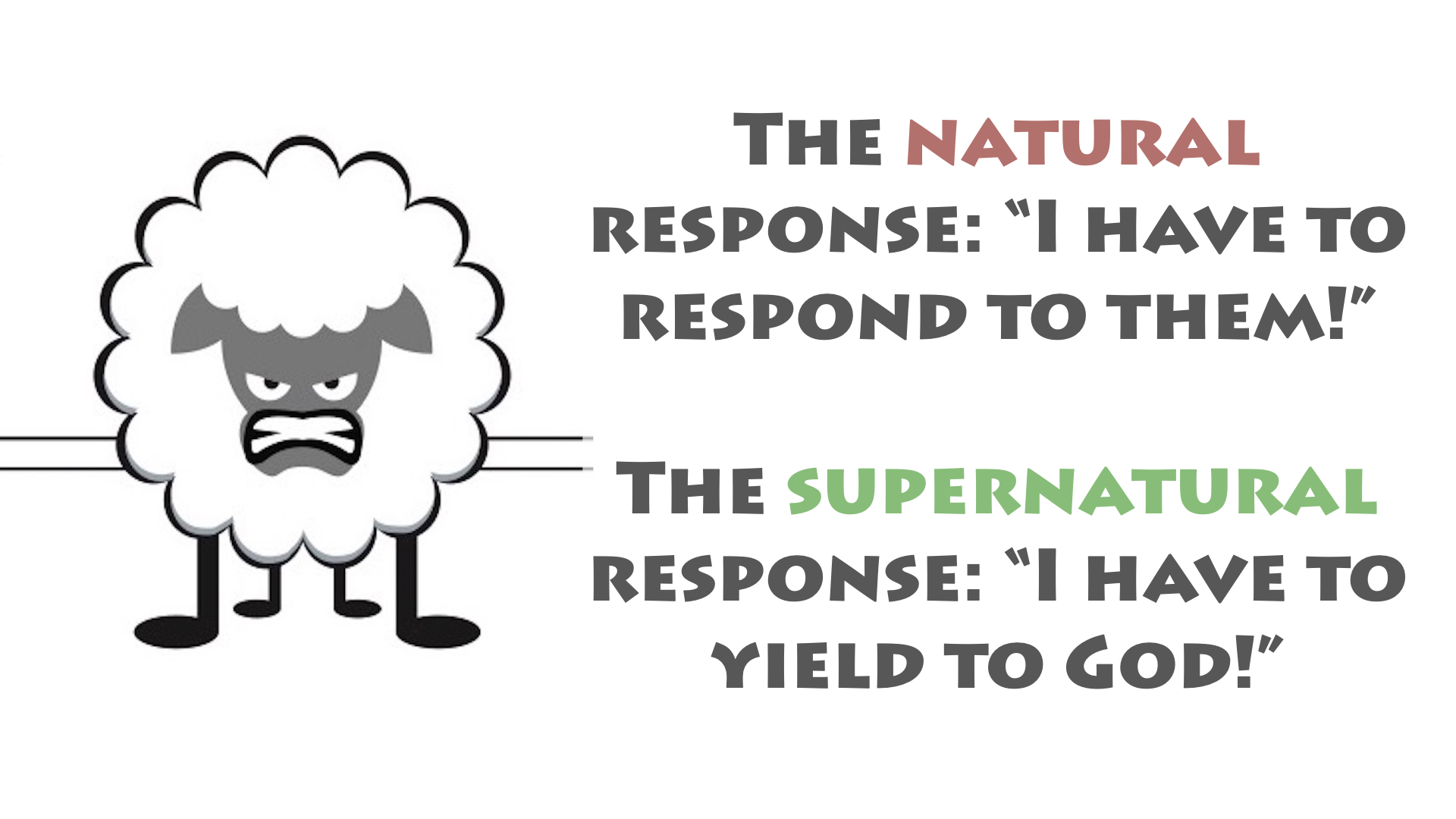
The natural response to slander is, “I have to respond to them!” The supernatural response to slander is, “I have to yield to God!” 

The natural response, however, is fueled by my wounded pride. On the other hand, the supernatural response is fueled by humility toward God. 

Slanderers are arrogant people too (remember Jeremiah said “they are as hard as bronze and iron” [Jeremiah 6:28]). God’s people are learning to humble themselves to wait for God (Psalm 38:12-15). These humble people are the ones who get God’s help, and not His laughter (James 4:6; Proverbs 3:34 NLT). 

Look at how Jesus dealt with the very natural urge to respond to those who slandered Him. After Jesus was arrested by the temple guards, He was hauled before one group after another and each time the slanderous lies were spitefully spit at Him. In front of the Sanhedrin, before Roman governor Pontius Pilate, and in the throne room of King Herod Antipas, angry men unleashed their venomous claims—none of which were true.  

There are two common themes we can notice in all of these settings.

  1. The lies were seen for what they were: complete fabrications without any truth behind them—Mark 14:55. Governor Pilate said “I find no basis for a charge against Him” (Luke 23:4), and he added, “Herod came to the same conclusion and sent Him back to us” (v. 15). 
  2. The silence of Jesus: “Jesus remained silent and gave no answer” (Matthew 27:13-14; Mark 14:61, 15:5). The only red letters in this interaction with both the Sanhedrin and Pilate are when Jesus is asked a direct question. Jesus quickly answers the questions, “Are You the Messiah,” “Are You a King,” and “Don’t You know the power I have?” (Mark 14:61, 15:2; John 19:10), but He never responds to the slander. 
Let me repeat: Our supernatural response can only come from yielding to the Holy Spirit’s influence. 

  1. We cannot treat slanderers as anything less than people created in the image of God (Genesis 1:27; Psalm 15:1, 3). 
  1. We must take our pain into God’s presence. This is what Jesus did (1 Peter 2:21-23). We can help ourselves by praying imprecatory prayers. These are words for God’s ears only (Jude 1:9; Psalm 58:6-8). 
  1. We have to learn to pray for our slanderers. We have to mature from praying against them to praying for them. Look at how Jesus interceded for His slanderers (Luke 23:34), which He calls us to as well (Luke 6:28). 
  1. We have to live as overcomers. We overcome by NOT responding to slander in the natural way (Romans 12:21). But we allow our supernatural response to be used as a powerful testimony (2 Corinthians 6:3-10; Colossians 3:1-2, 8, 12-14). 

We can do this—the Holy Spirit is empowering us to do this. Let’s not get down in the mud with those who slander us, but let’s yield to God and allow Him to handle this painful situation far better than we ever could. 

If you’ve missed any of the messages in this series, you can find them all here. And if you are a pastor, please check out my book When Sheep Bite, which will help you both respond to sheep bites and teach others how to respond as well. 

►► Would you please prayerfully consider supporting this ministry? My Patreon supporters get behind-the-scenes access to exclusive materials. ◀︎◀︎

Links & Quotes

Every “miss” along the journey can be a stepping stone to future success. If you don’t win, at least learn. Check out the full conversation Greg and I had.

I have a lot of new video content on my YouTube channel every week. Please check it out and subscribe so you don’t miss anything.

“One cannot grow fine flowers in a thin soil.” —Virginia Woolf 

I love catching verbal flubs and mistyped signs. I recently saw this sign at my Dad’s apartment complex. And this list from a Ford Motor Company executive is hilarious!

“A leader must embody the strength that inspires others to follow. And yet, this strength must be tempered with humility, for Christ Himself came not as a warrior-king but as a servant-leader, washing the feet of His disciples.” —Lost Kings reading plan on YouVersion 

John Piper identifies the roots of false teaching in his Look at the Book teaching on 1 Timothy 6—

Let God Hear Your Voice Continually

Evening and morning and at noon will I utter my complaint and moan and sigh, and He will hear my voice. (Psalm 55:17) 

Let God hear your voice all day long. You can never weary Him by coming to Him too often—He loves when your eyes are on Him alone and your cries for help are for His ears only. 

As you cast your burden on Him, try to leave your burden with Him. Don’t pick it up again (Psalm 55:22). 

But if you find that you are again fretting over a nagging problem, bring that burden to Him again. He wants to bear your burden for you—He wants to answer your prayer in His perfect way and in His perfect timing. 

You may also want to check out a couple of other posts based on Psalm 55:

The Craig And Greg Show: The Struggle Is Real (But Necessary)

Listen to the podcast of this post by clicking on the player below, and you can also subscribe on AppleSpotify, or Audible.

Do you enjoy struggling? Odds are the answer to that is a resounding “No!” because struggling is difficult, uncomfortable, and frustrating. However, without struggle it is impossible for us to develop to our full potential in our personal and professional lives. In this episode Greg and I encourage you to embrace struggle, and allow your team to struggle as well so that you all can grow to your very best.

  • [0:20] The struggle is real, but leaders help people know that struggling ≠ failing.  
  • [2:07] Failure is not permanent, and leaders need to help people slow down to see this.
  • [3:38] Here’s how leaders can inspire their teammates to reframe failure.
  • [5:54] Greg shares some reflections from his sports background that can help us see our productive struggle in a positive light.
  • [6:40] I talk about using Six Sigma initiatives in one of my organizations to help them learn each time they missed a benchmark.
  • [8:25] The struggle is what helps us ultimately succeed.
  • [11:42] We rob others of the joy of a breakthrough if we don’t allow them to struggle.
  • [14:19] Leaders need to differentiate failures from mistakes.
  • [16:09] Greg pulls out a movie analogy for us.
  • [18:17] The struggle helps us enjoy the future wins.
  • [21:14] Two leadership lessons we need to keep in mind.
  • [25:26] Greg transformed a couple of organizations by asking people what they learned from mistakes.
  • [27:15] Leaders need to change their own mindset about failing before they can change the mindset of their team. If you need help with this, we would love to help coach you to that next level.

Check out this episode and subscribe on YouTube so you can watch all of the upcoming episodes. You can also listen to our podcast on Spotify and Apple.

The Blessing Of Being There

Listen to the podcast of this post by clicking on the player below, and you can also subscribe on AppleSpotify, or Audible. 

Luke had previously spent a little time with the apostle Paul (Acts 16:10-18), but near the end of the historical record in the Book of Acts, we see Luke with Paul almost continually. 

(Check out all of the Scriptures in this post by clicking here.)

The reason we can tell this is because of the pronouns “us” and “we.” From Acts 20:5—21:18, 27:1—28:16, these two pronouns are used over 80 times! 

Luke probably joined Paul in Greece (20:2) and was with him when they arrived in Jerusalem. After Paul’s arrest, transport to Caesarea, and being bound over for his hearing before Caesar, Luke is still there (27:1). Luke remains with Paul throughout the entire journey to Rome, and is still with him as the Book of Acts closes. 

Paul calls Luke a faithful friend (2 Timothy 4:11). Today, people know this man who wrote the Gospel of Luke and the Book of Acts as a preeminent historian. It is God’s perfect provision and timing that links together the lives of Paul and Luke at such a pivotal time. 

Quite simply stated: Paul is blessed by Luke just being with him. 

Not only does Luke preserve the accurate historical record of Paul’s missionary journeys, but it appears that Luke is actively involved in Paul’s letter writing to the churches. Luke uses more unique Greek words in the New Testament than any other writer. But many of the words that appear more than once are found only in the historical works of Luke and the letters of Paul. I can almost imagine Paul dictating a letter, and then pausing to ask his educated friend Luke, “What is the Greek word that means such-and-such?” Luke’s thoughtful, Spirit-inspired reply is then included in these important letters for the early churches. 

This should be a great encouragement to us still today that God has us where we need to be, and with the people that need us in their lives. 

What skills do you have? Who has God put in your life? How can your talents be a blessing to those people? 

Simply doing what God has gifted you to do with those whom He has placed in your life is both a blessing to your companions and is pleasing to your God. 

I pray that you will find a way to use your God-given talents to be a blessing to those around you. Perhaps the blessing will simply be you being there for your friends as they journey through their life. 

►► Would you please prayerfully consider supporting this ministry? My Patreon supporters get behind-the-scenes access to exclusive materials. ◀︎◀︎

Praying While You Work

Listen to the podcast of this post by clicking on the player below, and you can also subscribe on AppleSpotify, or Audible. 

Waiting for God to answer doesn’t mean sitting still and doing nothing. Sometimes we have to work, and plan, and strategize while we are praying. Check out this example from Nehemiah. 

Check out more thoughts about using the Bible as our prayer guide in our series Our Prayer Book. 

I use Nehemiah and another godly leader as prayer examples in my post Persistent and Insistent Prayer. And you can read a little more about Nehemiah’s prayerful planning in my godly leadership series in the post Godly Leaders Prayerfully Plan. 

►► Would you please prayerfully consider supporting this ministry? My Patreon supporters get behind-the-scenes access to exclusive materials. ◀︎◀︎

Exposing The Bitterness Of Gossip

Listen to the podcast of this post by clicking on the player below, and you can also subscribe on AppleSpotify, or Audible. 

A bite we have all experienced is gossip. We called flattery the sneaky bite, but I think gossips believe they are actually being sneaky—that somehow they are getting away with their gossip.  I think gossip is also sneaky because we can be pulled into a gossipy conversation almost without realizing what is happening. 

That’s because gossip usually has a veneer of truth on it. That thin coating of truth may be sugary sweet, but the words hide a bitter poison that is intended to undermine the one that is being talked about. Twice Solomon says, “The words of a gossip are like choice morsels” (Proverbs 18:8, 26:22). The Contemporary English Version translates this verse even more graphically: “There’s nothing so delicious as the taste of gossip! It melts in your mouth.” But Solomon also warns, “A perverse person stirs up conflict, and a gossip separates close friends” (Proverbs 16:28). 

Consider the story in Numbers 12:1-9. 

(Check out all of the Scriptures in this post by clicking here.)

Moses had married a Cushite woman, a marriage that was neither morally nor legally wrong. If someone simply said, “Moses married a woman from Cush” they would have been speaking the truth. The gossips (Miriam and Aaron) want to use a truthful statement for the purpose of making a case to prove their point. These siblings crossed the line when they stopped talking about the idea and start talking about Moses. This is especially true when their conversation about Moses was to make him look inferior or to make themselves look superior. 

I think a label that is very apropos for this is “character assassination.” An assassin gets close enough to strike, but also has an alibi to cover themselves. So, too, the gossip can inject their poison to denigrate someone’s character, but then use the alibi of saying, “What? Did I say something untruthful?” 

There is truth in their questions that God has used all three of them to delver messages and to sing worship songs, but in light of their statement in verse 1 they are clearly asking these questions with poisonous intent. You can especially spot gossip by this characteristic sign: They talk about a person, but they won’t talk to that person. We are not told to whom Miriam and Aaron may have been speaking to in verse 2, but it certainly wasn’t Moses. That means they were trying to get other people to rally to their side. 

When we have been the target of a gossip’s words, we should follow the example that Moses gave us.  

  1. Remember that God has heard the gossip (Numbers 12:2b, 4-8). 
  2. Check your pride (v. 3). If you feel you must address the gossip, you must address the topic without attacking the gossiper (see Romans 12:17-18). 
  3. Be careful of who you are correcting. It’s best to let God do the correcting (Numbers 12:8-9), but if do need to speak to the person, be cautious of adding fuel to the fire (Proverbs 9:7-9). 
  4. Desire restoration. Moses interceded for Miriam’s healing (Numbers 12:13), and Jesus has the idea of restoration and unity in the Church in mind in Matthew 18:15-16. 
  5. Stay away from the unrepentant gossiper. If the gossiper doesn’t acknowledge their sin, we have to limit our interaction with that sheep (Matthew 18:17) . After Miriam was healed of her leprosy, there is no other mention of her until she died which is probably an indication that Moses didn’t have any additional conversations with her. Paul gave Timothy similar counsel about Alexander (1 Timothy 1:19-20; 2 Timothy 4:14-15).

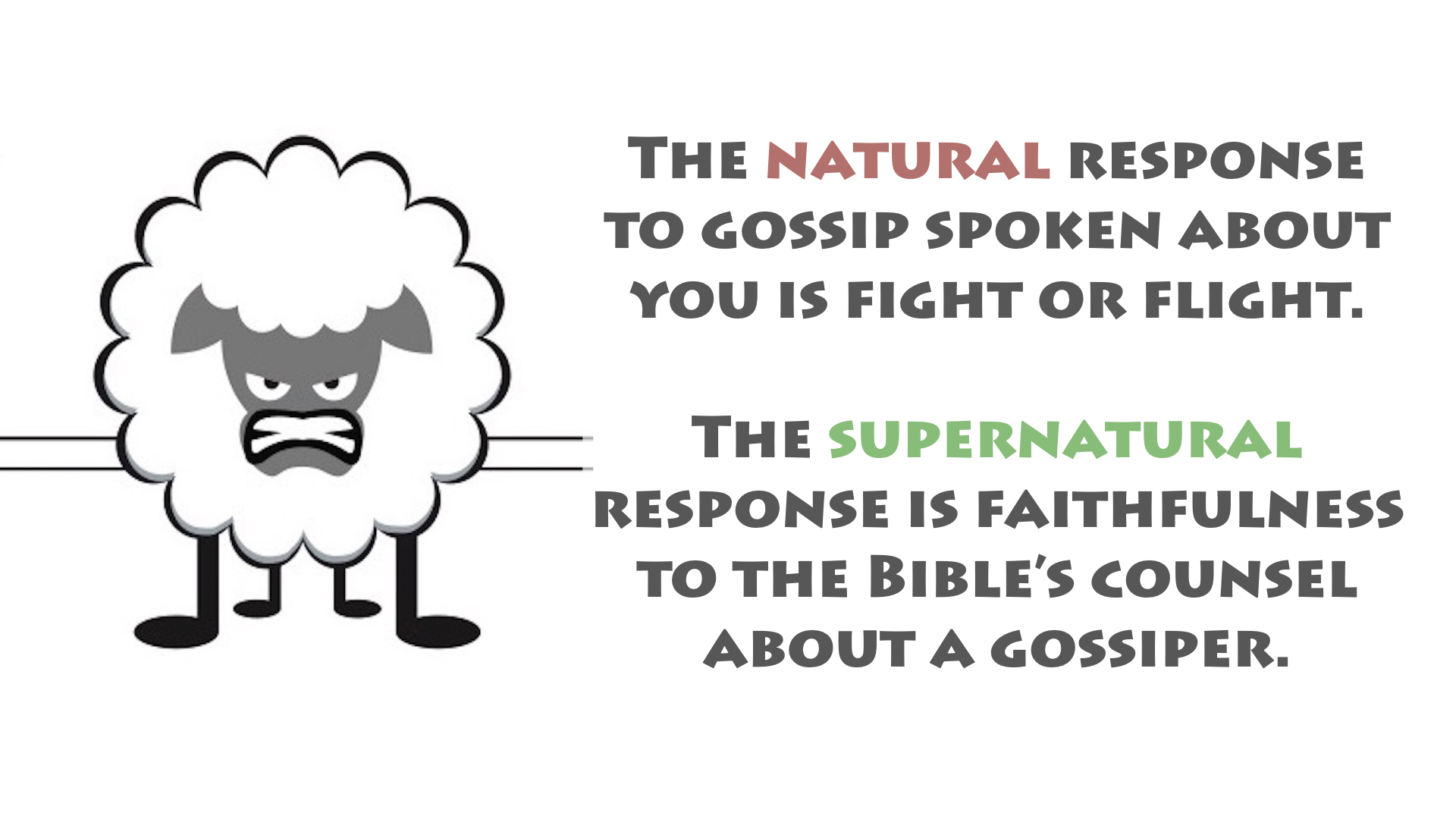
The natural response to gossip spoken about you is fight or flight. The supernatural response is faithfulness to the Bible’s counsel about a gossiper. 

And one final word to all of us: Don’t become a gossip yourself! 

Just as God hears those gossiping about you, He hears you gossiping about others! 

Don’t…

  • …talk about people who aren’t in the room. Remember the Golden Rule of treating others the way you want to be treated (Luke 6:31). 
  • …share information that isn’t yours to share (Proverbs 25:9). 
  • …listen to a gossip. If they gossip to you about others, they will gossip about you to others! 

Gossip, as Solomon warned us, separates even the closest of friends. We must identify it and deal with both the gossip and the gossiper in a God-honoring, biblically-sound way. And we must avoid becoming a gossip ourselves. 

If you’ve missed any of the other sheep bites we’ve talked about in this series, you can find them all by clicking here. And if you are a pastor, check out my book When Sheep Bite, where I address the bites of sheep from a leadership paradigm. 

►► Would you please prayerfully consider supporting this ministry? My Patreon supporters get behind-the-scenes access to exclusive materials. ◀︎◀︎

Links & Quotes

Leaders would help their teams by (1) having shorter meetings, and (2) ensuring their language is clear and concise. Check out the full conversation about “Jargon” on this episode of the Craig and Greg Show. 

I have a lot of new video content on my YouTube channel every week. Please check it out and subscribe so you don’t miss anything.

In a fascinating article about the ways the planet Jupiter protects Earth, the conclusion is spot-on: “Jupiter is more than merely a beautiful planet in the tapestry of the night sky. Its massive size and powerful gravity make it a mighty guardian of Earth. From protecting us from dangerous space debris to helping maintain stable orbits, Jupiter’s influence is essential for life on our planet. Proof of our solar system’s complex design is everywhere around us. It’s easy to see that our world seems purposely made rather than just being a result of random chance causes. From the stars to the tiniest particles, everything in our universe is balanced and works together in a coordinated system. As science progresses and uncovers more about our solar system, scientists keep finding out how perfectly suited our solar system is for life.”

T.M. Moore encourages us to pray for the Church. “The Church is the in-time agency through which the Kingdom comes on earth as it is in heaven. The Kingdom is a spiritual realm; the Church is a physical entity. But is is also a spiritual one; thus it partakes of two worlds at once, and is able to channel the spiritual into the physical to make all things new. The Church is both the sign that the Kingdom has come and the outpost from which the Kingdom advances in the world. Our text is a watershed moment of Jesus’ earthly ministry, and it signals an important focus for every believer’s life and prayers.”

“Celebrate what you’ve accomplished, but raise the bar a little higher each time you succeed.” —Mia Hamm

What Fills Me?

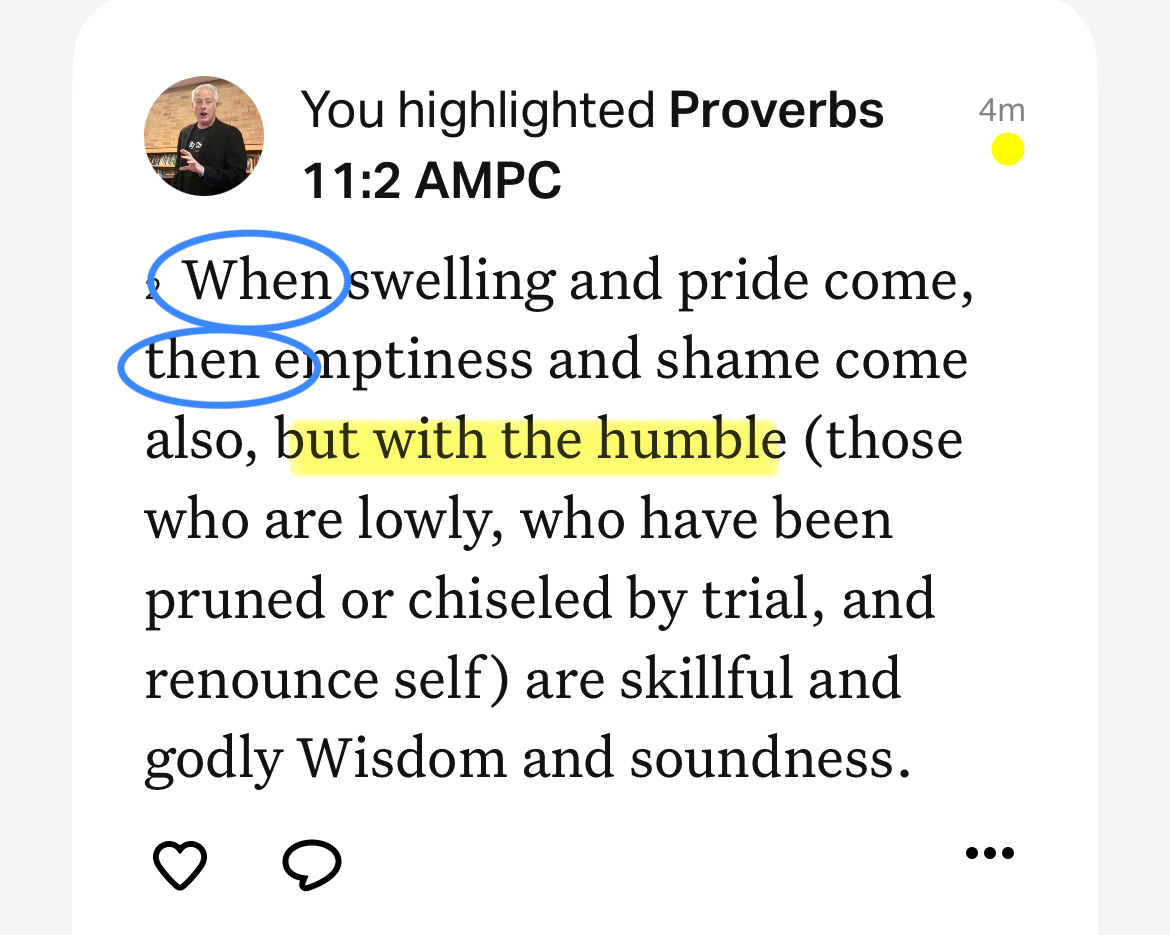
When swelling and pride come, then emptiness and shame come also, but with the humble (those who are lowly, who have been pruned or chiseled by trial, and renounce self) are skillful and godly Wisdom and soundness. (Proverbs 11:2 AMPC) 

The pruning, trials, and discipline the Lord allows us to experience are for an important purpose: To allow ourselves to be emptied of ourselves. This humility that empties us of ourselves makes room for us to be full of the presence of God. 

On the other hand, remaining full of yourself—also called “pride”—will also bring an emptiness. But this emptiness comes with shame and is absent of God’s fulfilling presence. 

You and I must choose one or the other: humility before God or pride in ourselves.

The Power In A Pause

Listen to the podcast of this post by clicking on the player below, and you can also subscribe on AppleSpotify, or Audible. 

If leaders say or do the right thing in the wrong way, it really becomes the wrong thing. This is why leaders—especially those who have been sheep-bitten and want to bring corrections—need to take a pause. 

In that short moment of reflection, the Holy Spirit can help pastoral leaders respond in a way that will bring restoration, not more pain and possibly division. 

I talked about this idea from chapter 2 of my book When Sheep Bite on the Leading From Alignment podcast with John Opalewski and Jim Wiegand. 

Check out more videos from my book here. 

And you can learn more about When Sheep Bite and order your own copy here. 

►► Would you please prayerfully consider supporting this ministry? My Patreon supporters get behind-the-scenes access to exclusive materials. ◀︎◀︎