7 Quotes From “Faith Of Our Founding Fathers”

Parents, please download a FREE copy of this book to help educate your children on the biblical faith that informed the decisions of our Founding Fathers (link in the book review). You can read my complete book review of Faith Of Our Founding Fathers by clicking here. 

“The Bible is the best of all books, for it is the word of God, and teaches us the way to be happy in this world and in the next. Continue therefore to read it, and to regulate your life by its precepts.” —John Jay 

“Only a virtuous people are capable of freedom. As nations become corrupt and vicious, they have more need of masters.” —Benjamin Franklin 

“While we are zealously performing the duties of good Citizens and Soldiers we certainly ought not to be inattentive to the higher duties of Religion. To the distinguished Character of Patriot, it should be our highest Glory to add the more distinguished Character of Christian.” —George Washington 

“In this situation of this assembly, groping as it were in the dark to find political truth, and scarce able to distinguish it when presented to us, how has it happened, sir, that we have not hitherto once thought of humbly applying to the Father of lights, to illuminate our understandings? … I have lived, Sir, a long time; and the longer I live the more convincing Proofs I see of this Truth, That God governs in the Affairs of Men! And if a Sparrow cannot fall to the Ground without His Notice, is it probable than an Empire can rise without His Aid?—We have been assured, Sir, in the Sacred Writings, that ‘except the Lord build the House, they labor in vain that build it.’ I firmly believe this; and I also believe that without His concurring Aid we shall succeed in this political Building no better than the Builders of Babel…. I therefore beg leave to move, That henceforth Prayers, imploring the Assistance of Heaven, and its Blessing on our Deliberations, be held in this Assembly every Morning before we proceed to Business.” —Benjamin Franklin 

“And can the liberties of a nation be thought secure when we have removed their only firm basis, a conviction in the minds of people that these liberties are of the gift of God? That they are not to be violated but with His wrath? Indeed, I tremble for my country when I reflect that God is just; that His justice cannot sleep for ever….” —Thomas Jefferson 

“The diminution of public virtue is usually attended with that of public happiness, and the public liberty will not long survive the total extinction of morals.” —Samuel Adams 

“Neither the wisest constitution nor the wisest laws will secure the liberty and happiness of a people whose manners are universally corrupt.” —Samuel Adams
Faith Of Our Fathers (book review)

I almost want to quote George Santayana every time I post a review about an historical book, but for Faith Of Our Fathers compiled by Eric Buehrer it is especially appropriate. So allow me to quote two sage pieces of wisdom from Santayana—

“Those who do not learn from history are doomed to repeat it.” —AND—  “A child educated only in school is an uneducated child.” 

I am flabbergasted at how little time is spent in public schools educating our kids on the founding of our country. And frequently when it is taught, the lessons seem to go out of their way to not mention the biblical principles that went into crafting our nation’s founding documents. 

I have become a big fan of Gateways To Better Education. The founder of Gateways, Eric Buehrer, has put together a very helpful book for parents to help their children learn about the Christian faith of our Founding Fathers. 

Eric has given us a very short biography of our Founders, a quote attributed to them, Bible verses that undergird that Founder’s quote, and then some discussion questions for the family. Parents, please make full use of this great resource! 

And best of all: You can download the PDF version of this book FREE by clicking this link.

More Of Christ

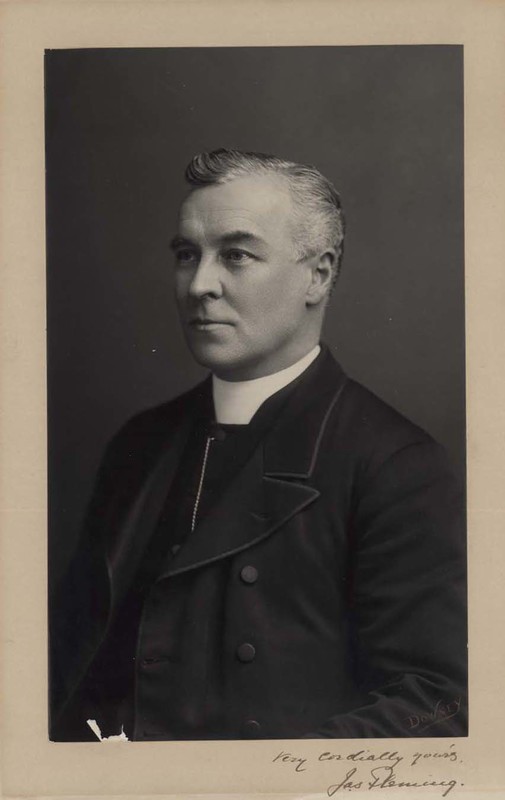
“Preacher and people, we need more of Christ. More of Christ would make that sad home bright, that wavering soul steadfast, that breaking heart happy, that mourning spirit glad, that burdened conscience light, that selfish nature generous, and make those who are parted in enmity stand with clasped and forgiving hands. More of Christ would smite down sectarian walls and win outcasts to the fold. More of Christ is what we all want in our hearts and homes, in our business and politics, in our schools and universities, in our churches and pulpits.” —Canon James Fleming

Doing Justice The Right Way

Once I was asked to teach a class on business ethics but I said, “I can’t because there’s no such thing as ‘business ethics.’ There is only ethics: Either something is right or it’s not.” 

I think the same concept holds true for “social justice.” There is no such thing: Either something is just or it’s not. 

For those situations that are truly unjust, the Bible tells us how to handle them. But first, let’s get a sense of what the Bible actually means by the word “justice.” 

Psalm 50 is a courtroom scene, with God Himself presiding as the Judge, summoning all of creation into His presence (see Psalm 50:1-6). Just before The Judge begins to speak, the psalmist Asaph calls on us to Selah—or pause to consider—after saying, “The heavens proclaim God’s righteousness.” 

The New Living Translation has this verse saying, “The heavens proclaim His justice…” and the Amplified Bible uses both words: “The heavens declare His righteousness (rightness and justice)….” So which word is it: righteousness or justice? 

The Hebrew word (tsedeq) means something that is ethically right. In other words, something for which God sets the objective standard for rightness and wrongness. There is another Hebrew word that is often very closely associated with tsedeq, and that is justice (mishpat): that is the penalty for violating tsedeq. 

But here’s where things get really interesting. We usually associate the idea of justice with retribution (or payback), but God’s justice is usually portrayed as restoration. 

In other words, God’s mercy is so strong and His desire for us to be restored into right standing with Him is so passionate, that His default is restorative mercy. 

God’s response to our acts of unrighteousness wasn’t to rain down retributive justice on us, but to send His Son to earth to make restorative mercy available! 

In his first public sermon, Jesus quoted the prophet Isaiah. The last words Jesus read about His mission on earth were “to proclaim the year of the Lord’s favor.” He left off the last phrase in Isaiah which said, “and the day of vengeance of our God.” Favor (restoration) now; judgment (retribution) later for those who would not accept the restoration Jesus made available. 

Back in the Psalm 50 courtroom, God tells us the wrong way to address injustice: with angry, demeaning words (Psalm 50:19-20).  

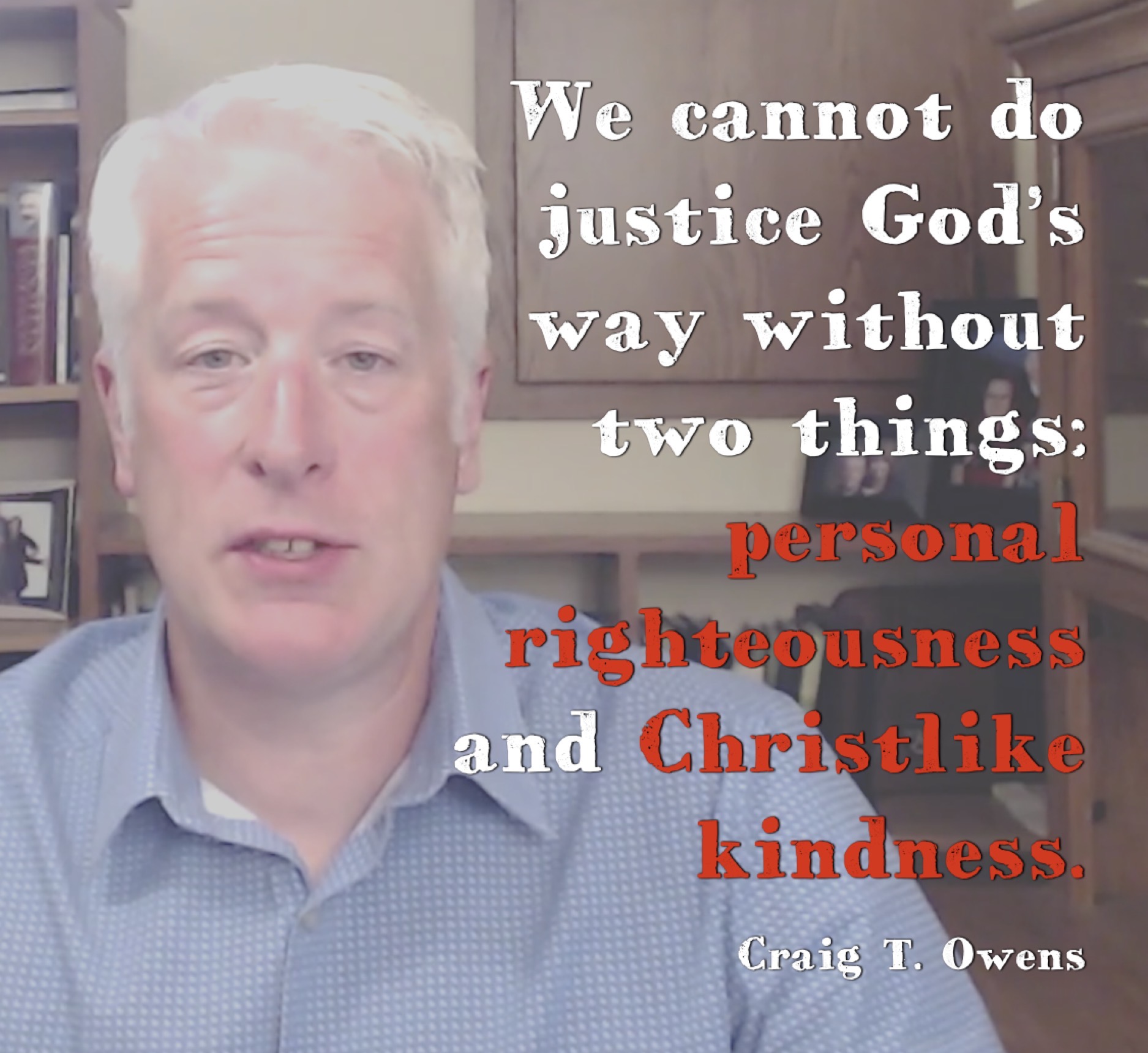
We CANNOT do justice God’s way without two things: 

  1. Personal righteousness which comes from Jesus in us (Romans 5:1); otherwise, we’re just hypocrites pointing out the exact same injustice that’s in ourselves. 
  2. Kindness. “But let the one who boasts boast about this: that they have the understanding to know Me, that I am the Lord, who exercises kindness, justice and righteousness on earth, for in these I delight,” declares the Lord. (Jeremiah 9:24)

And what does the Lord require of you but to do justly, and to love kindness and mercy, and to humble yourself and walk humbly with your God? (Micah 6:8)

The darkness of injustice is the absence of light. Jesus says to us, “You are the light of the world” (Matthew 5:14). 

The hate of injustice is the absence of love. Jesus says to us, “A new command I give you: Love one another. As I have loved you, so you must love one another. By this everyone will know that you are My disciples, if you love one another” (John 13:34-35). 

Here are my takeaways—

  1. Let God be The Judge. 
  2. Make sure I am in right standing with God through my relationship with Jesus Christ. 
  3. If I see injustice, address it with kindness, light, and love.

If you have missed any messages in this current series in the Selahs in the Psalms, you can get caught up by clicking here.

‘Tis I, Be Not Afraid

Tossed with rough winds, and faint with fear, 
Above the tempest, soft and clear, 
What still small accents greet mine ear?
“‘Tis I; be not afraid.”

“‘Tis I who led thy steps aright; 
‘Tis I who gave thy blind eyes sight; 
‘Tis I, thy Lord, thy Life, thy Light. 
‘Tis I; be not afraid.

“This bitter cup fear not to drink; 
I know it well—oh! do not shrink; 
I tasted it o’er Kedron’s brink. 
‘Tis I; be not afraid. 

“Mine eyes are watching by thy bed, 
Mine arms are underneath thy head, 
My blessing is around thee shed. 
‘Tis I; be not afraid.“

When on the other side thy feet 
Shall rest ‘mid thousands welcomes sweet, 
One well known voice thy heart shall greet. 
“‘Tis I; be not afraid.”

From out the dazzling majesty 
Gently He’ll lay His hands on thee, 
Whispering: “Beloved, lov’st thou Me? 
It was not in vain I died for thee,
‘Tis I; be not afraid.” —Anonymous

Thursdays With Spurgeon—Navel-Gazing?

This is a weekly series with things I’m reading and pondering from Charles Spurgeon. You can read the original seed thought here, or type “Thursdays With Spurgeon” in the search box to read more entries.

Navel-Gazing?

They were looking intently up into the sky as He [Jesus] was going, when suddenly two men dressed in white stood beside them. “Men of Galilee,” they said, “why do you stand here looking into the sky? This same Jesus, who has been taken from you into heaven, will come back in the same way you have seen Him go into heaven.” (Acts 1:10-11)

     It can never be wrong to look up; we are often bid to do so, and it is even a holy saying of the psalmist: ‘My voice you shall hear in the morning, O Lord; in the morning I will direct it to You, and I will look up’ (Psalm 5:3). And again, ‘I will lift up my eyes to the hills—from whence comes my help?’ (121:1). If it is right to look up into heaven, it must be still more right to look up while Jesus rises to the place of His glory! …  

     The truth is, there’s nothing wrong in their looking up into heaven. But they went a little further than looking—they stood gazing. A little excess in right may be faulty. … There is a gazing that is not commendable. This is when the look becomes not that of reverent worship but of an overweening curiosity; when there mingles with the desire to know what should not be known, a prying into that which it is for God’s glory to conceal. … 

     Thus certain things that you and I may do appear right and yet we may need to be chided out of them into something better—they may be right in themselves but not appropriate for the occasion, not seasonable or expedient. They may be right up to a point and then may touch the boundary of excess.

From The Ascension And The Second Advent Practically Considered

The word gazing reminds of another word: navel-gazing. The dictionary defines this as “excessive absorption in self-analysis or focus on a single issue.” This “excessive absorption” is, I believe, what caused the angels to chide the disciples of Jesus.  

Jesus was always on the move. Even His times of rest and recovery were strategic so that He could engage in ministry refreshed and refilled to do spiritual warfare effectively. The Gospels never show us a picture of Jesus wondering what to do next, or concerned about what people thought of Him, or even strategizing over His next ministry opportunities. He was empowered by the Holy Spirit to move forward. 

And this same forward momentum is exactly what Jesus commanded His disciples to undertake. “You will move forward into all the world, telling people about Me, baptizing them, and commissioning them to also be forward-looking to their mission field.” This mission was to be preceded by the baptism in the Holy Spirit, which was a 2-mile walk away from were the disciples were now gazing up into the heavens. 

The angels essentially said, “Your curiosity is on the verge of becoming procrastination. It’s time to head back to Jerusalem to wait for the empowerment that you will need to fulfill the mission on which Jesus sent you.” 

What about us? What “looking” can become unhealthy “gazing” for us? What excuses might we be making for our navel-gazing? What’s keeping us from being on-mission for Jesus? Let’s ask the Holy Spirit to show us where we have anything less than forward momentum for the sake of the Kingdom of God! 

Selah

The word Selah appears nearly 70 times in the Bible, almost exclusively in the Psalms. Although it is primarily a musical term, it applies beautifully to our summer series. 

Selah can mean…

  • a pause from the noise to reflect;
  • a preparation for an exciting accent; or 
  • a reflective time of consideration

Throughout the Psalms, Selah appears at the end of a verse, at the end of the psalm, or sometimes even mid-sentence. But each one of them is perfectly placed by the Spirit-inspired authors to get us to take a breath and deeply contemplate what we just read or sang. 

Summertime is typically a time for us to pause from our regular routine. Perhaps it’s a vacation, time with friends and family, driving around with the windows down and the music blasting, or just a quiet walk through woods or along a beach. In any case, whether we realize it or not, we’re actually doing Selah in these break-from-the-routine activities. 

Join me this Sunday as we continue our summertime look at each of the Psalms that ask us to Selah. I think you will find that this Sunday summertime pause will be both refreshing and encouraging. You can join me either in person or on Facebook Live. 

Since this is a continuation of our summer series, you can check out the Selahs we discussed in 2018 by clicking here, and the messages from the summer of 2019 are here.

The messages for this summer are:

7 Quotes From David Livingstone

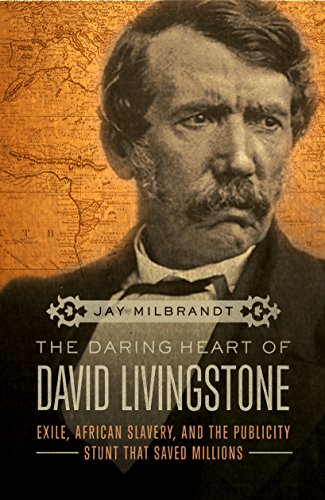
The Daring Heart Of David Livingstone by Jay Milbrandt is an amazing account of this man’s heroic and history-altering life. Check out my full book review by clicking here. Below are a few quotes that Milbrandt shared in his biography. 

“It is something to be a follower, however feeble, in the wake of the great Teacher and only model missionary that ever appeared among men.” —David Livingstone 

“People talk of the sacrifice I have made in spending so much of my life in Africa. Can that be called a sacrifice which is simply paid back as a small part of a great debt owing to our God, which we can never repay? Is that a sacrifice which brings its own blest reward in healthful activity, the consciousness of doing good, peace of mind, and a bright hope of a glorious destiny hereafter? Away with the word in such a view and with such a thought! It is emphatically no sacrifice. Say rather it is a privilege. Anxiety, sickness, suffering, or danger now and then with a foregoing of the common conveniences and charities of this life, may make us pause and cause the spirit to waver and the soul to sink; but let this only be for a moment. All these are nothing when compared with the glory which shall be revealed in and for us. I never made a sacrifice.” —David Livingstone 

“I shall hold myself in readiness to go anywhere, provided it be forward. … Our duty is to go forward … I have observed that people who have sat long waiting have sat long enough before they saw any indication to go.” —David Livingstone 

“As they are experts with the spear I don’t know how it missed, except that he was too sure of his aim and the good hand of God was upon me.” —David Livingstone, after surviving two spears thrown at him during an ambush 

“The Gospels reveal Jesus, the manifestation of the blessed God over all as minute in His care of all. He exercises a vigilance more constant, complete, and comprehensive, every hour and every minute, over each of His people than their utmost selflove could ever attain. His tender love is more exquisite than a mother’s heart can feel.” —David Livingstone 

“If the good Lord permits me to put a stop to the enormous evils of the inland slave-trade, I shall not grudge my hunger and toils. I shall bless His name with all my heart. The Nile sources are valuable to me only as a means of enabling me to open my mouth with power among men. It is this power I hope to apply to remedy an enormous evil [in the East African slave trade]. Men may think I covet fame, but I make it a rule never to read aught written in my praise.” —David Livingstone 

“I am a missionary, heart and soul. God had an only Son, and He was a missionary and a physician. A poor, poor imitation I am or wish to be. In this service I hope to live, in it I wish to die.” —David Livingstone 

The Daring Heart Of David Livingstone (book review)

I’ll be honest: I only knew one small story about David Livingstone prior to reading The Daring Heart Of David Livingstone by Jay Milbrandt, and now I’m kicking myself that I didn’t learn more about this amazing man much earlier! 

Dr. Livingstone was a missionary, a world-renown explorer, and an avid abolitionist. Very rarely have I come across a biography that reads like a novel, but this book is just that! Milbrandt is a brilliant storyteller, and he makes the biography of Livingstone so intriguing that I could scarcely put it down. I love how many of Livingstone’s personal letters and diary entries are included in this book, as it almost makes it feel more like a memoir or autobiography. 

Dr. Livingstone first went to Africa as a missionary but then gained fame as an explorer, becoming the first man to traversing Africa on foot—from the Atlantic coast to the Indian Ocean. He wrote a book about these travels (including the people he met, the animal and plant life he observed, and the stories of the dangers he faced), which gave him celebrity status in England. So much so that when he wanted to return to Africa, both the London Missionary Society and the Royal Geographical Society wanted to be his sending agency. 

Livingstone desperately wanted to see the end of slavery on the African continent, and returned to Africa with that sole focus burning in his heart. Along the way, he met with massive struggles—some self-imposed and some unavoidable in the harsh environment of interior Africa. Yet through all of these hardships, Livingstone repulsed at the idea that anything he ever went through could be called a sacrifice, stating emphatically: “I never made a sacrifice!” 

Milbrandt writes, “Livingstone died perhaps believing he had failed in every aspect. Yet, in the few short years after his death, everything Livingstone had worked for had come to fruition.” Including the complete eradication of the foul slave trade across the African continent. 

What an amazing example for leaders to aspire to follow today! 

(Tomorrow I will share some quotes from David Livingstone that you won’t want to miss!) 

Feelings, Facts, and Faith

Confusing times become more stressful—and more confusing!—when the response of people seems to throw more fuel on the fire. Frustration boils up into anger. Confusion gives way to fear. Uncertainty about what to believe or what to do becomes anxiety over what might be coming next. 

You might think I’m describing current events in our country right now. But in times like these we need to remember that there have always been times like these. When I talk about frustration, anger, confusion, fear, uncertainty, and anxiety, I am actually thinking about events that took place over 2000 years ago. 

Like when the residents of Ephesus became Christians and stopped buying idols of Artemis, a huge backlash broke out. “Soon the whole city was in an uproar. … The assembly was in confusion: Some were shouting one thing, some another. Most of the people did not even know why they were there” (Acts 19:29-32). 

Or when some Jews thought Paul had taken some non-Jews into the part of temple restricted to Jews only. “Jews from the province of Asia saw Paul at the temple. They stirred up the whole crowd and seized him, shouting, ‘Fellow Israelites, help us! This is the man who teaches everyone everywhere against our people and our law and this place. And besides, he has brought Greeks into the temple and defiled this holy place.’ (They had previously seen Trophimus the Ephesian in the city with Paul and assumed that Paul had brought him into the temple.) The whole city was aroused, and the people came running from all directions. Seizing Paul, they dragged him from the temple. … Some in the crowd shouted one thing and some another, and the commander could not get at the truth because of the uproar…” (Acts 21:27-34). 

There are three Fs at work here: feelings, facts, and faith. 

Have you heard it said, “Feelings are not facts”? Feeling are a fact to the one experiencing those feelings, so feelings can indeed be facts: subjective facts that are factual to me. 

Facts are not necessarily better than feelings because our facts might come from faulty sources. For example, Trophimos was with Paul, but Paul did not bring him into the restricted area. 

Whether feelings or facts, we need faith in God’s sovereignty. We need to remember: God has a plan, He is in control, nothing takes Him by surprise, nothing derails His purpose, He is intimately aware of everything that is happening. 

The Holy Spirit helps us evaluate both feelings and facts through the filter of truth found in God’s Word. Then the Spirit also gives us faith to stand firm despite the feelings and the facts. 

The Holy Spirit not only helps us pray through these confusing times (Romans 8:27), but He helps us know what’s really behind the confusing times, as well as how we can communicate that truth to others (1 Corinthians 2:10, 13 AMP). 

Probably my favorite promise (which I especially like in the Old English of the King James Version) is this: Ye have an unction from the Holy One, and ye know all things (1 John 2:20).

So I want to encourage you again: Don’t stop at salvation—be baptized in the Holy Spirit and have that unction that will help you with all your feelings and all the facts that are thrown at you. 

If you have missed any messages in this series on Pentecostal Christians, you can find the full list by clicking here.