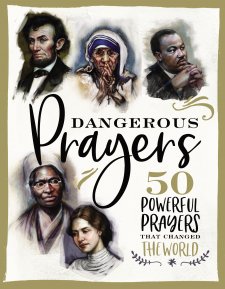
Prayer changes things. That makes prayer dangerous and the pray-ers themselves a danger to anything that opposes the kingdom of God. Dangerous Prayers is a collection of powerful prayers and a brief biography of those who prayed them.
Growing up, a constant refrain rang in my ears from my parents whenever I faced a problem: “Have you prayed about it?” I’m not sure why we make prayer our last resort instead of our first response, but it often seems that some of the most heartfelt, passionate prayers are offered up in the darkest of times.
Dangerous Prayers offers a short biography of some world-changing people who changed the world in large part because of their desperate dependence on God’s help, as seen in the frequent and bold prayers they prayed. Many of these prayers were prayed in dark places—prisons, before the executioner, in the midst of war, in unimaginable poverty, or staring down the evils of slavery. These men and women repeatedly turned to God, and God repeatedly strengthened them to accomplish amazing things. Some of the answers to prayer came in their lifetimes, and some prayers were only answered long after they had died.
Dangerous Prayers is an excellent coffee table book. By that, I mean it’s a great book to leave out in the open as a conversation-starter. Parents could read these short biographies and prayers with their children, and friends could use them as a bridge from past history to current events. But more than anything, keep Dangerous Prayers close at hand will—I sincerely hope—cause you to turn to prayer frequently and boldly.
Allow me to introduce myself in the Aramaic fashion—I am Craig bar Raymond. I am proud of my father and want my name to always be associated with his, so I remember my heritage by telling people I am Craig son of Raymond.
If I wanted to be a little more formal I might introduce myself as Craig Bar Raymond Bar Colson, or even Craig Bar Raymond Bar Colson Bar Walker, to honor my forefathers back four generations.
People took great pride in their family heritage. They wanted to keep their connection to their family and their tribe intact and known to those around them. It’s how they kept their standing in their community.
That’s why it’s odd that Luke—the premier historian that he is—introduces us to a man he simply calls “a blind man” in the city of Jericho. Luke was always so precise in mentioning names throughout both his Gospel and the Book of Acts, and it appears that this man does have a name. In the Gospel of Mark he is called Bartimaeus, and presumably Luke used Mark as one of his source documents. So why would Luke omit this guy’s name?
Keep in mind that “bar” simply means “son of,” so although Mark calls him Bartimaeus, his name is really something like “_________ son of Timaeus.” Is that because he was born blind and his parents didn’t even name him? Or was he thought so little of that people couldn’t remember his first name? Maybe it’s because Timaeus means unclean, defiled, polluted. So this blind beggar is really just the Anonymous son of Filth!
This beggar is looking for alms in Jericho when he hears a commotion. He asks what is happening and is told, that Jesus of Nazareth is passing by.
This man knows the reputation of Jesus, recalling that He has even opened blind eyes. Immediately he shouts, “Jesus, son of David have mercy on me!” Son of David is a title only used twice in the New Testament (also see Matthew 15:22), and both times by desperate people who wouldn’t take “no” for an answer.
Actually, his phrase is in the form of a command, so he really says, “Jesus, son of David, have mercy on me NOW!”
“Who do you think you are, you nameless beggar,” the townspeople rebuke him. “How dare you demand anything of anyone! Shut your mouth, you worthless piece of filth!”
Undeterred, this man now raises his voice to a shriek and repeats, “JESUS, SON OF DAVID, HAVE MERCY ON ME NOW!”
This shriek gets Christ’s attention and He stops dead in His tracks. He commands that this man be brought to him.
Check out the confidence this blind man shows—he throws his cloak aside to get to Jesus. Why is that significant? Because he’s blind! If he can’t see, how is he going to find his cloak again? Who would ever want to help him?
Jesus asks him, “What do you want me to do for you?” He was testing him: did he want a hand-out? did he want revenge on the cruel people in Jericho? did he want to get back at his parents?
He specifically prays, “I want to see.” Jesus is moved by compassion (Matthew 20:34) and says, “Your faith has made you whole.” The blind man immediately is healed!
What was his faith that healed him? It was a loud, insistent, persistent, won’t-take-no-for-an answer, audacious request. The crowd said he was asking too much, but Jesus was moved to compassion by his insistence and boldness and answered his prayer.
That community may have forgotten that man’s name. Maybe the blind man had even forgotten his own name. But God hadn’t!
Jesus is moved by faith-filled, won’t-be-silenced cries for mercy. He wants to answer your specific requests. You aren’t an anonymous son or daughter of filth. You aren’t marginalized, worthless, or overlooked by your Heavenly Father.
God knows your name. He knows your need. He is passing by. Cry out to Him again and again and again! When He answers your prayer, you are made whole and our Heavenly Father is glorified.
Today we honor Sanctity of Human Life Sunday. God, our loving Creator, gave us life, so all life from conception to natural death is sacred.
Scott Klusendorf has an easy-to-remember acrostic for defending the pro-life position. The word to remember is S.L.E.D.—
Size: Does how big you are determine who you are or your level of importance?
Level of development: Are twenty-year-olds more human than ten-year-olds, since they are smarter and stronger?
Environment: Does being inside a house make you more or less of a person than being outside? Does being located in his mother’s body rather than outside make a child less human?
Degree of dependency: Does dependence upon another determine who you are? Is someone with Alzheimer’s or on kidney dialysis less of a person?
Use these questions to engage folks in thoughtful discussions about your pro-life worldview.
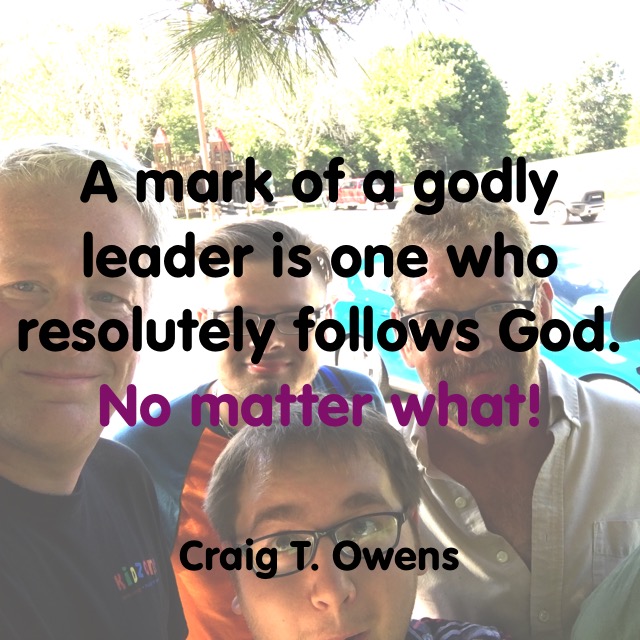
A mark of a godly leader is one who resolutely follows God. No matter what!
Jesus calls His followers to the same path He walked—“No one who puts a hand to the plow and looks back is fit for service in the kingdom of God” (Luke 9:62)
It’s hard because people reject a resolute man.
It’s hard because the accommodations along the way are uncertain.
It’s hard because I have to give up my right to myself.
But the reward is incomparable—Heaven forever with Jesus!
This is part 33 in my series on godly leadership. You can check out all of my posts in this series by clicking here.
This is a weekly series with things I’m reading and pondering from Oswald Chambers. You can read the original seed thought here, or type “Thursdays With Oswald” in the search box to read more entries.
Becoming Carefully Careless
Faith is our personal confidence in a Being Whose character we know, but Whose ways we cannot trace by common sense. … Common sense is mathematical; faith is not mathematical, faith works on illogical lines. …
To have faith tests a man for all he is worth, he has to stand in the common-cents universe in the midst of things which conflict with his faith, and place his confidence in the God Whose character is revealed in Jesus Christ. …
Most of us are pagans in a crisis; we think and act like pagans, only one out of a hundred is daring enough to bank his faith in the character of God. …
Jesus does not say, “Blessed is the man who does not think about anything”; that man is a fool; He says, “Be carefully careless about everything saving one thing—your relationship to God.” … Many people are careless about what they eat and drink, and they suffer for it; they are careless about what they put on, and they look as they have no right to look; they are careless over property, and God holds them responsible for it. Jesus is saying that the great care of the life is to put the relationship to God first and everything else second. Our Lord teaches a complete reversal of all our practical sensible reasonings. Do not make the ruling factor of your life what you shall eat, or what you shall drink, but make zealous concentration on God the one point of your life. … Jesus Christ says, “Reverse the order, get rightly related to Me first, see that you maintain that as the great care of your life, and never put the concentration of your care on the other things.”
From Studies In The Sermon On The Mount
It does seem illogical from our human perspective to not think about the basics of life first and foremost, but Jesus is clear and consistent in His message to us that God should be THE priority. Seek Him first and all the other things fall into place. Be “carefully careless” about everything except your relationship with Jesus!
Don’t be a pagan atheist in a time of trial. Don’t be that 99 out of a hundred that abandons God when times are tough. Instead, be that “one out of a hundred [that] is daring enough to bank his faith in the character of God” no matter what the circumstances are!
For anyone going through a trying time, Stasi Eldredge has given us a timely reminder of how we can tenaciously and defiantly cling to the joy the God gives us. Check out my full book review by clicking here.
“Ignoring reality does not breed joy. Pretending that what is true does not exist is not holy defiance. The seeds of joy can only be firmly planted in the pungent soil of the here and now while at the same time being tethered to eternity. Joy is fully rooted in the truth. Joy embraces all the senses and is fully awake to the laughter, the wonder, and the beauty present in the moment as well as the sorrow, the angst, and the fear. Joy says, ‘Even so, I have a reason to celebrate.’”
“Defiant may not be a word we would normally associate with the living God, but it can actually be quite fitting. Defiance means resistance, opposition, noncompliance, disobedience, dissent, and rebellion. And when it comes to things that would destroy our souls, that is exactly the right response.”
“Joy is not happiness on steroids. It is not happiness squared. … Joy is connected to God and reserved for those who are tapping into His reservoir, who are connected to His life. Joy is rooted in God and His kingdom, in the surety of His goodness, His love for us. It is immovable. Unshakable. Joy is available at all times, day and night, because God and His kingdom are always available to us. … Joy is the heartbeat of heaven, the very light that emanates from Jesus’ heart, so as we grow closer in relationship with God, we’ll also grow in joy.”
“Joy and breakthrough are not opposed to suffering But are available in the midst of it. Suffering is not a failure of faith on our part; its presence does not mean the absence of the presence of God. We can live with suffering and joy simultaneously.”
“Joy is deeply rooted in the availability of God and His kingdom right here, right now. Sometimes we find breakthrough. Sometimes we find a deeper knowing of God in our suffering.”
“Here is the truth we must remember in the middle of this sometimes painful healing process: we matter to the heart of God. He hasn’t taken His eyes off us. He thinks of us constantly. He has hopes and dreams for us. God planned on us before He made the stars, and He planned on us being His. He planned on us sharing our lives with Him on this wild adventure. And His plans are good.”
“God drops things in our laps at just the right time. He puts barriers in our paths that look like roadblocks but are really gifts in disguise, beckoning us to take a closer look at what’s going on inside of us. We can either step over them or choose to pick them up and examine them for the potential they may hold.”
“When the sadness refuses to be silenced and the feelings arise that this is not the life we had signed up for, we can either go to shame or go to God.”
I’ll be sharing more quotes in the near future, so stay tuned…
Steve Martin had a comedy routine where he said, “I will tell you how to have a million dollars and never pay one cent of income tax on it. First, get a million dollars.” 😂
Solomon says something in Proverbs 4 that on the surface sounds just as comical: “I will tell you how to have wisdom and reap all the amazing benefits from it. First, get wisdom.”
Here’s what he wrote: “The beginning of wisdom is: Acquire wisdom; and with all your acquiring, get understanding” (v. 7).
The Hebrew word for “get” means acquire, create, buy, possess. But Solomon uses this verb in the imperative sense—which means it’s not a suggestion, but a command! He doesn’t say, “It’s a good idea to get wisdom,” but, “There is no other way: you must have wisdom.”
Throughout the Proverbs, Solomon personifies wisdom as Lady Wisdom. She is constantly calling out to people, “I have what you need. Come and get it.” James tells us the same thing, “If you need wisdom, ask God for it” (see James 1:5).
So… how does one get wisdom? Simply by wanting to have wisdom, and then going to the right source. In the rest of Proverbs 4, Solomon echoes the same thought—
—“Prize her [Wisdom], and she will exalt you; she will honor you if you embrace her.” (v. 8)
—“Take hold of instruction; do not let go. Guard her, for she is your life.” (v. 13)
—“My son, give attention to my words; incline your ear to my sayings. Do not let them depart from your sight; keep them in the midst of your heart.” (vv. 20, 21)
—“Watch over your heart with all diligence, for from it flow the springs of life.” (v. 23)
How do you get wisdom? You go to Wisdom and get what she has to offer!
I’m always intrigued by oxymorons. You probably know what these are—when two seemingly opposite things are put together to make something memorable. Like a fine mess, or deafening silence, or seriously funny. Or defiant joy.
Usually “joy” is paired with descriptives like pleasurable, or bubbly, or uncontainable. But “defiant”? Stasi Eldredge makes the case that we need to fight to hang on to joy—that our pursuit of joy against all odds should be, as her book is entitled, Defiant Joy.
Stasi shares many of her painful life lessons that led her to the conclusion that joy has to be clung to tenaciously or it can be stripped away quickly. Defiantly clinging to joy doesn’t mean a bury-your-head-in-the-sand denial view of life. It is facing the challenges squarely and honestly, and still recognizing that the joy Jesus gives is greater than those circumstances.
In fact, one of the first quotes Stasi shares in her book is this truism from C.S. Lewis: “Joy is the serious business of Heaven.” Talk about a powerful oxymoron!
I so appreciate the transparency and candor Stasi exhibits as she pulls back the curtains of her own battles for joy. She honestly shares her darker moments with us, tells us where she’s still working, where’s she had breakthroughs, and the applicable lessons we can all use.
I’m sure everyone one of us will have to face joy-threatening circumstances. The principles in Defiant Joy will help you overcome those circumstances while still tenaciously clinging to joy. Read this book for yourself or read it with a friend going through a difficult time. You’ll be glad you did.
Have you ever been in the right place at the right time to experience something wonderful? Maybe you got to meet someone important, or you got the job, or you got the money, or you got to ride in that fancy car.
Some will call you “lucky” or say you “caught a break,” but both of those statements imply that something unexpected happened to you.
Is it still “lucky” to be in the right place at the right time if you knew ahead of time that it was coming? For praying Christians, to be in the right place at the right time when we are expecting God to provide is called “an answer to prayer.”
David prayed, “In the morning, Lord, You hear my voice; in the morning I lay my requests before You and wait expectantly” (Psalm 5:3). The Aramaic word for prayer means “to set a trap.” If we pray, and we live in expectation, then it isn’t luck when we’re in the right place at the right time, but it’s a “trap” that caught the answer to our prayer.
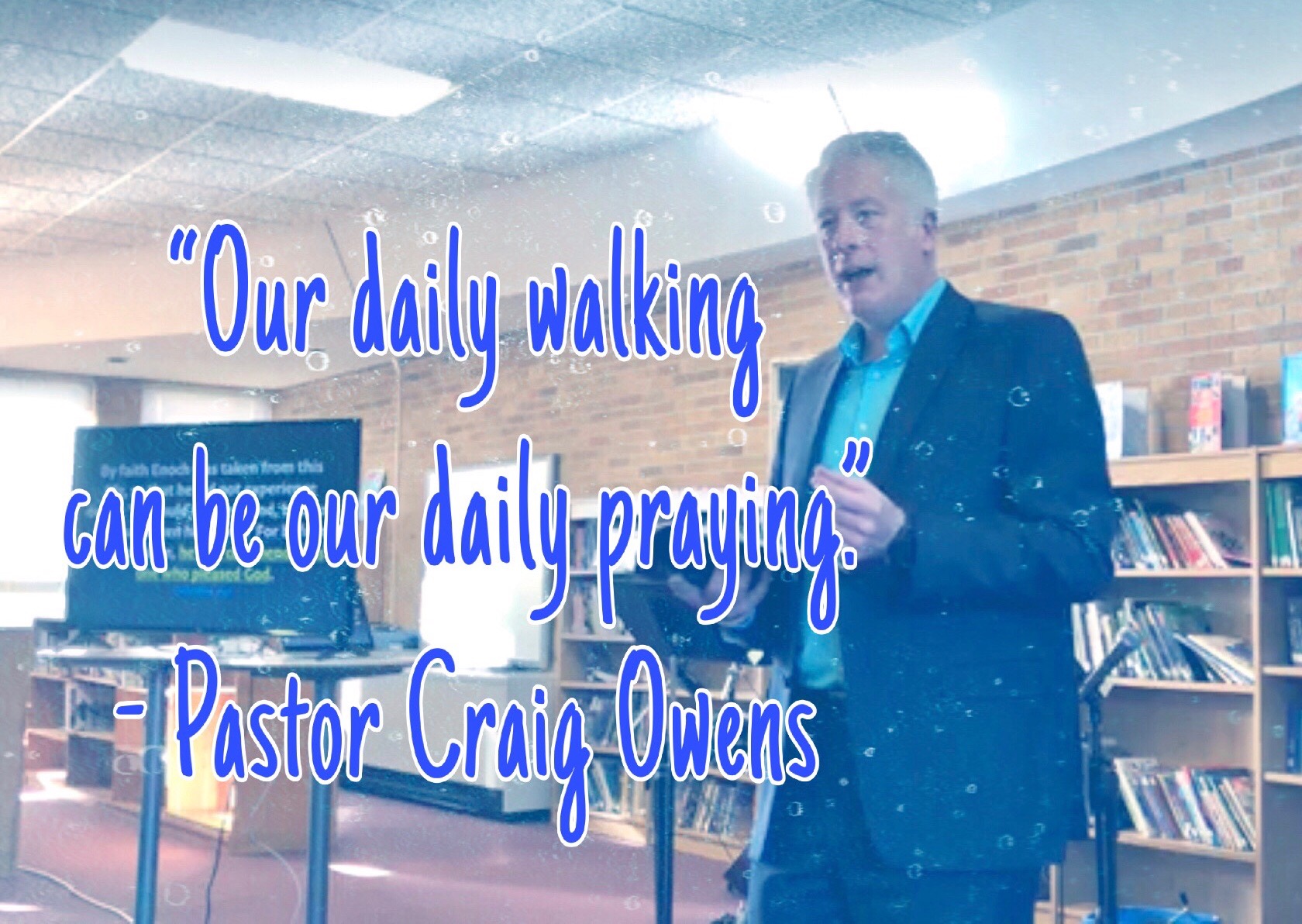
Our daily walking can be our daily praying, as long as we’re walking in faith in the direction God pointed us.
One man who—literally!—walked this principle out was Elisha.
Before we look at Elisha’s expectant, prayerful walking, let’s look at his prayer request—
When they reached the other side, Elijah said to Elisha, “What can I do for you before I’m taken from you? Ask anything.” Elisha said, “Your life repeated in my life. I want to be a holy man just like you” (2 Kings 2:9 MSG).
Elisha was essentially asking to be like Elijah’s firstborn son, to be his spiritual heir. This was the original promise God gave when He told Elijah to anoint Elisha as his successor (1 Kings 19:16). From that point onward, Elisha steadily walked in expectation of God answering this prayer.
Elisha wouldn’t stay in a place of military victory, or in a significantly spiritual place, or even in a place surrounded by godly leaders. Elisha wouldn’t be held back by a lucrative family business, or the warning words of friends or his spiritual mentor, or even the seemingly uncrossable Jordan River. He kept on walking (see 2 Kings 2:1-15).
He kept on walking.
He kept on walking until “suddenly” God showed up and answered his prayer.
But was it really “suddenly”? Elisha knew it was coming. He believed what God had promised. He clung to it even when Elijah told him he had asked “a difficult thing.” Elisha kept on walking until he was in the right place at the right time to receive all that God had planned.
If you have prayed in faith, start walking. Settling anywhere else is robbing yourself of a blessing and robbing God of glory.
Just keep walking! And let your walking be your praying.Don’t get discouraged. Don’t settle. Don’t stop eagerly expecting that the next step you took could be the “suddenly” you’ve been waiting for. Just keep walking!
Join me this Sunday as we learn a valuable lesson from another bold pray-er from the Bible.



 Prayer changes things. That makes prayer dangerous and the pray-ers themselves a danger to anything that opposes the kingdom of God. Dangerous Prayers is a collection of powerful prayers and a brief biography of those who prayed them.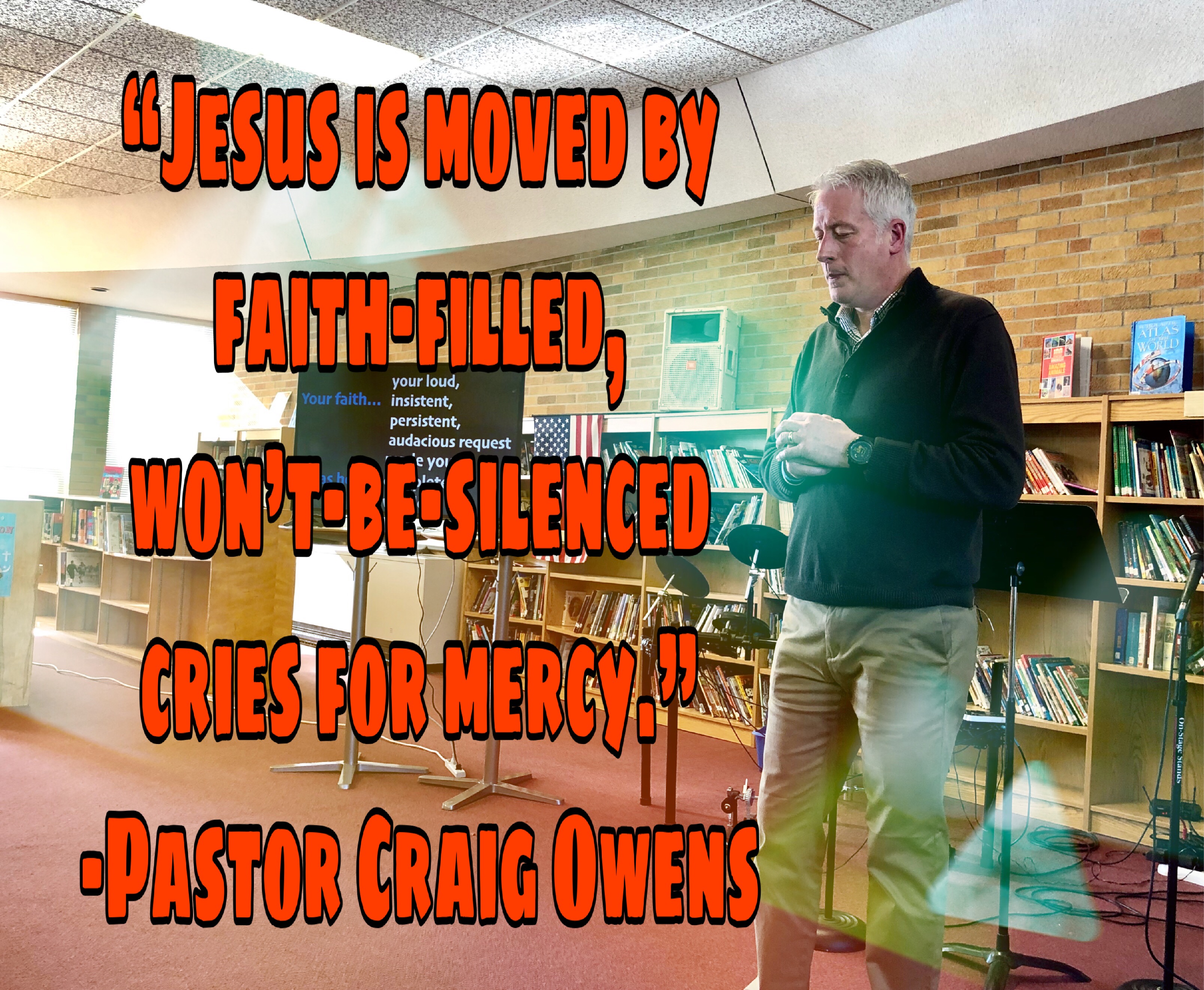







 Craig T. Owens