Commissioned = Struggling

As I like to do on Fridays, this post is especially for my fellow pastors.

I have become [the church’s] servant by the commission God gave me to present to you the Word of God in its fullness. (Colossians 1:25)

Let’s be honest: What pastor wouldn’t say he/she wants to “serve” the church?

But look at Paul’s definition of a servant of the church (Colossians 1:24-2:5):

  • Suffering
  • Rejoicing in that suffering
  • Proclaiming the gospel
  • Admonishing the saints
  • Teaching with all wisdom
  • Maintaining a passion for everyone’s perfection
  • Laboring
  • Struggling

That’s quite a list!

Paul also says, “I want you to know how much I am struggling for you” (2:1). The word here and in 1:29 come from the same root word meaning: A contest (whether sports or a courtroom trial) in which there is a large audience, and in which one contestant is representing a larger group.

It’s like an Olympic athlete competing for his country, or an attorney speaking on behalf of her clients.

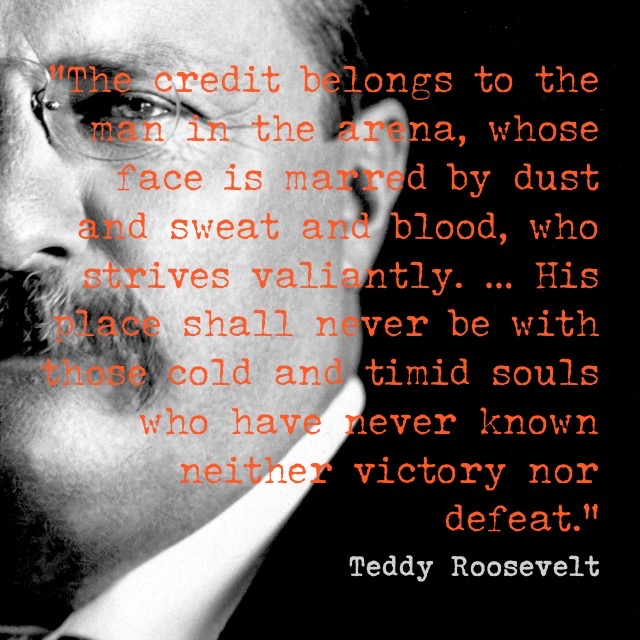
Then Paul adds, “I tell you this so that no one may deceive you by fine-sounding arguments” (2:4). In other words, actions speak louder than words. As Teddy Roosevelt famously said—

“It is not the critic who counts; nor the many who point out how the strong man stumbles, or where the doer of deeds could have done them better. The credit belongs to the man in the arena, whose face is marred by dust and sweat and blood, who strives valiantly…who knows the great enthusiasms, the great devotions, who spends himself in a worthy cause, who at the best knows in the end the triumph of high achievement, and who at the worst, if he fails, at least fails while daring greatly, so that his place shall never be with those cold and timid souls who have never known neither victory nor defeat.”

Pastor, stay in the arena!

Don’t walk away from the struggles!

Persevere through the difficulties!

People are watching you. What people? Specifically those sheep whom God has commissioned you to shepherd in His pasture. So stay in the fight!

I’m praying for you!

Thursdays With Oswald—Christ Exhibited In Me

Listen to the podcast of this post by clicking on the player below, and you can also subscribe on AppleSpotify, or Audible.

This is a weekly series with things I’m reading and pondering from Oswald Chambers. You can read the original seed thought here, or type “Thursdays With Oswald” in the search box to read more entries.

Christ Exhibited In Me 

     The inspiration of God does not patch up my natural virtues; He re-makes the whole of my being until we find that every virtue we possess is His alone. God does not come in and patch up our good works, He puts in the Spirit that was characteristic of Jesus; it is His patience, His love, and His tenderness and gentleness that are exhibited through us. … When God alters a man’s heart and plants His Spirit within, his actions have the inspiration of God behind them; if they have not, they may have the inspiration of satan. 

From Biblical Psychology

This passage reminds me of a story told about Francis of Assisi. While he was hoeing his garden, someone asked him, “What would you do if you knew you would die at the end of the day today?” Francis thoughtfully replied, “I’d finish hoeing this garden.”

Francis’ view should be ours as well: Every thought, every word, every action is directed by the Spirit of Christ in me. What I am doing now, I’m doing because the Holy Spirit inspired me to do it.

It’s encouraging to know that Christ can be exhibited in everything I think, say, and do. But it’s also very sobering to realize that I need to be constantly tuned in to the influence of the Holy Spirit.

I never want to be out-of-step with the Holy Spirit, but I want all my thoughts, words, and actions to be Christ exhibited in me.

►► Would you please prayerfully consider supporting this ministry? My Patreon supporters get behind-the-scenes access to exclusive materials. ◀︎◀︎

A Checklist For Influencers

Listen to the podcast of this post by clicking on the player below, and you can also subscribe on AppleSpotify, or Audible.

As the apostle Paul is wrapping up his letter to his friends in the Church at Philippi, he encourages them to be people others want to be around. After all…

The #1 Rule of Influence: You can only influence people who are close to you.

The #2 Rule of Influence: People won’t get close to you unless you are approachable.

So here’s a quick checklist from Paul to Christians who want to be influencers from Philippians 4:4-9:

  • Rejoice in God. Always.
  • Be gentlemen and gentlewomen. Manners matter.
  • Understand God is always with you.
  • Don’t be anxious or fretful.
  • Pray about everything.
  • Be a thank-full person.
  • Be discerning of what goes in your eyes and ears.
  • Continue to learn and practice godly, biblical principles.

A short list, but a lifetime of growth opportunities.

The more you exhibit these qualities, the more approachable you will be. And the more approachable you are, the more you can influence people to learn about the life-changing power of a personal relationship with Jesus.

►► Would you please prayerfully consider supporting this ministry? My Patreon supporters get behind-the-scenes access to exclusive materials. ◀︎◀︎

23 Quotes From “The Inner Chamber & The Inner Life”

I only recently discovered the writings of Andrew Murray, but I’m making up for lost time and reading a lot more of his brilliant insights. Here are 23 quotes from The Inner Chamber and The Inner Life. You can read my full book review by clicking here.

“Personal devotional time is to serve as a means to an end. And that end is—to secure the presence of Christ for the whole day.” 

“Christian! there is a terrible danger to which you stand exposed in your inner chamber. You are in danger of substituting Prayer and Bible Study for living fellowship with God, the living interchange of giving Him your love, your heart, and your life, and receiving from Him His love, His life, and His Spirit. Your needs and their expression, your desire to pray humbly and earnestly and believingly, may so occupy you, that the light of His countenance and the joy of His love cannot enter you. Your Bible Study may so interest you, and so waken pleasing religious sentiment, that—yes—the very Word of God may become a substitute for God Himself, the greatest hindrance to fellowship because it keeps the soul occupied instead of leading it to God.”

“What strength would be imparted by the consciousness: God has taken charge of me; He is going with me Himself; I am going to do His will all day in His strength; I am ready for all that may come. Yes, what a nobility would come into life, if secret prayer were not only an asking for some new sense of comfort, or light, or strength, but the giving away of life just for one day into the sure and safe keeping of a mighty and faithful God.”

“Many are so occupied with the much or the little they have to say in their prayers, that the Voice of One speaking off the mercy seat is never heard, because it is not expected or waited for.”

“Prayer seeks God: the Word reveals God. In prayer man asks God: in the Word God answers man. In prayer man rises to heaven to dwell with God: in the Word God comes to dwell with man. In prayer man gives himself to God: in the Word God gives Himself to man.”

“And where a man gives himself up wholly to the presence of the Holy Spirit, not only as a power working in him, but as God dwelling in him (John 14:16, 20, 23; 1 John 4) he may become, in the deepest meaning of the word, a man of God!”

“God will refuse to unlock the real meaning and blessing of His Word to any but those whose will is definitely set upon doing it.” 

“Keeping Christ’s commandments is the indispensable condition of all true spiritual blessing.”

“The knowledge of the intellect cannot quicken. ‘Though I understand all mysteries and all knowledge, and have not love, I am nothing.’ It is in our daily Bible reading that this danger meets us; it is there it must be met and conquered. We need the intellect to hear and understand God’s Word in its human meaning. But we need to know that the possession of the truth by the intellect cannot profit but as the Holy Spirit makes it life and truth in the heart. We need to yield our heart, and wait on God in quiet submission and faith to work in us by that Spirit. As this becomes a holy habit, we shall learn the art of intellect and heart working in perfect harmony, and each movement of the mind being ever accompanied by the corresponding movement of the heart, waiting on and listening for the teaching of the Spirit.”

“Let a deep sense of our ignorance, a deep distrust of our own power of understanding the things of God even, mark our Bible study. Then, the deeper our despair of entering aright into the thoughts of God, the greater the confidence of expectancy may be. God wants to make His Word true in us.”

“The first and chief mark of being a child of God, of being like Jesus Christ, is an absolute dependence upon God for every blessing, and specially for any real knowledge of spiritual things.”

“Beware of trying to assume this state of mind only when you want to study Scripture. It must be the permanent habit of your mind, the state of your heart. Then alone can you enjoy the continual guidance of the Holy Spirit.”

“The written Word is powerless, except as it helps us to the Living Word.”

“I, nevertheless, urge all Bible students, thoughtfully and prayerfully to enquire whether the very first question to be settled in the inner chamber is not this: Is my heart in the state in which my Teacher desires it to be?”

“The fact of being occupied with, and possessing good wholesome corn, will not nourish a man. The fact of being deeply interested in the knowledge of God’s Word will not of itself nourish the soul.”

“It is not the amount of truth I gather from God’s Word; it is not the interest or success of my Bible study; it is not the increased clearness of view or largeness of grasp I am obtaining, that secure the health and growth of the spiritual life. By no means. All this often leaves the nature very much unsanctified and unspiritual with very little of the holiness or humility of Christ Jesus: something else is needed. Jesus said: My meat is TO DO the will of Him that sent me. Taking a small portion of God’s Word, some definite command or duty of the new life, quietly receiving it into the will and the love of the heart, yielding the whole being to its rule, and vowing, in the power of the Lord Jesus, to perform it: this, and then GOING TO DO IT, this is eating the Word, taking it so into our inmost being, that it becomes a constituent part of our very life.”

“Above all, realize that the world is needing you and depending on you to be its light. Christ is waiting for you as a member of His body, day by day, to do His saving work through you. Neither He, nor the world, nor you, can afford to lose a single day.”

“What can the daily Bible study and prayer profit, unless we set our heart on what God has set His on: the new man being renewed day by day after the image of Him that created him.”

“By nature we are of this world. When renewed by grace we are still in the world, subject to the subtle all-pervading influence from which we cannot withdraw ourselves. And what is more, the world is still in us, as the leaven of the nature which nothing can purge out but the mighty power of the Holy Spirit, filling us with the life of heaven.”

“No diligence or success in Bible study will really profit us unless it makes us humbler, holier men.”

“The Word, separate from God and His direct operation, cannot avail. The Word is an instrument: God Himself must use it. God is the alone Holy One. He alone can make holy. The unspeakable value of God’s Word is that it is God’s means of holiness. The terrible mistake of many is that they forget that God alone can use it or make it effectual. It is not enough that I have access to the dispensary of a physician. I need him to prescribe. Without him my use of his medicines might be fatal. It was so with the scribes. They made their boast of God’s law; they delighted in their study of Scripture and yet remained unsanctified. The Word did not sanctify them, because they did not seek for this in the Word, and did not yield to God to do it for them.” 

“Do not spend your chief time in prayer in reiterating your petition, but in humbly, quietly, confidently claiming your place in Christ, your perfect union with Him, your access to God in Him.”

“Praying and working go together.” 

My Great Desire

From Oswald Chambers—

I want to ask a very personal question—How much do you want to be delivered from? You say, “I want to be delivered from wrong-doing”—then you don’t need to come to Jesus Christ. “I want to walk in the right way according to the judgment of men”—then you don’t need Jesus Christ. But some heart cries out—“I want, God knows I want, that Jesus Christ should do in me all He said He would do.”

How many of us “want” like that?

God grant that this “want” may increase until it swamps every other desire of heart and life.

Do you want, more than you want your food, more than you want your sleep, more than you want anything under heaven, or in heaven, that Jesus Christ might so identify you with Himself that you are His first and last and forever?

God grant that the great longing desire of your heart may begin to awaken as it has never done, not only the desire for the forgiveness of sins, but for identification with Jesus Himself until you say, “I live; yet not I, but Christ liveth in me.”

I want Jesus more than anything! I want Him to have all of me!

God, grant that the great desire of my heart may begin to awaken as it have never done before!

The Inner Chamber & The Inner Life (book review)

Andrew Murray is a brilliantly straightforward author. There aren’t hidden meanings, or complex phrases, or deep theology to wade through; instead, he takes you right to the heart of the matter. And the heart of the matter in The Inner Chamber & The Inner Life is our daily personal devotional time with God.

Never before have I read a book like this that taught me how to prepare myself to have my personal quiet time with God each morning. I have made it a habit to pray before I open my Bible, asking the Holy Spirit to illuminate the Word to my heart. But Andrew Murray has given us 36 short chapters on how and why we should spend more time preparing ourselves even before we open the Bible.

I am a morning person, so I love to get up early to spend my quiet time with God before my day gets started. Whether you are a morning person or not, Andrew Murray makes a pretty good case for why the morning hour with God is indispensable. (I know my “night owl” friends may groan at this, but you really should check this out!)

If you would like to see your personal devotional time become a richer time with God, you will do well to read The Inner Chamber & The Inner Life.

(Check out some quotes I shared from this book by clicking here.)

It’s Not Anger Management

Listen to the podcast of this post by clicking on the player below, and you can also subscribe on AppleSpotify, or Audible.

Aristotle had an insightful quote that was almost accurate—

“Anybody can become angry—that is easy; but to be angry with the right person, and to the right degree, and at the right time, and for the right purpose, and in the right way—that is not within everybody’s power and is not easy.”

I agree with most of this, but I would argue that it’s not within anybody’s power to express their anger in the right way.

The Bible says that our challenge is to not sin when we are angry (Ephesians 4:26). But most anger is selfishly provoked. That means, I’m angry because I have been offended, or my “rights” have been violated, or someone injured me.

If my anger has been selfishly provoked, how can I be expected to express my anger in any other fashion but selfishly?!

Instead of me trying to manage my anger, I need to listen to the Holy Spirit’s voice. There is one important question the Spirit asks us (which comes from Jonah 4:9)—

Do you do well to be angry?

  • Is it good for me to be angry with this? or should I let this go?
  • Is my anger righteously provoked? or is it selfishly provoked?
  • Does this grieve the Holy Spirit (Isaiah 63:10)?

God’s Spirit within you is never silent. He will either confirm that your anger is righteously provoked (as it was with Jesus in John 2:13-17), or it’s selfishly provoked (as it was with Jonah). That’s why you must ask yourself that question and allow the Holy Spirit to help you answer it: Do I do well to be angry?

If you answer “yes,” and the Holy Spirit confirms this in your heart, then He will help you to be angry with the right person, and to the right degree, and at the right time, and for the right purpose, and in the right way (as Aristotle said).

And if you answer “no,” the Holy Spirit is the only one who can help put out the flames of your anger in a healthy way.

So don’t try to manage your temper. Listen to the Holy Spirit asking you, “Do you do well to be angry?” And let Him guide you from there.

If you want to check out the other messages in our series called Ticked Off! you may click here.

►► Would you please prayerfully consider supporting this ministry? My Patreon supporters get behind-the-scenes access to exclusive materials. ◀︎◀︎

4 Myths About Your Temper

This morning I shared with my congregation—in part one of our Ticked Off! series—three myths about anger. I want to add a fourth here…

1.  Anger is a sin. 

God is angry numerous times; in fact, the Old Testament alone has hundreds of verses that mention God’s anger. In the New Testament, Ephesians 4:26 says, “…in your anger do not sin….” It doesn’t say, “don’t get angry,” but “when you’re angry, don’t sin.”

2.  Anger is always destructive. 

Some great advances have been brought about by people who got angry. For instance, Martin Luther, the father of the reformation, wrote, “When I am angry I can write, pray, and preach well, for then my whole temperament is quickened, my understanding sharpened, and all mundane vexations and temptations gone.”

3.  Anger doesn’t affect me.

Anger affects you physically. In one medical study researchers found that people who had strokes were more likely to have experienced anger in the two hours prior to having their stroke. It also affects your relationships. After you blow up, people close to you are injured and began to distance themselves from you.

4.  I can manage my anger.

Anger has a tendency to completely seize you, making it next to impossible to manage the furnace of emotions that is raging inside you. You cannot manage your anger! Instead, you need God’s help.

Check out the messages in this series by clicking here.

Spiritual Sword Play

Pastor, consider these words from Charles Spurgeon—

“We pastors depend entirely upon the Spirit of God to produce actual effect from the gospel, and at this effect we must always aim. We do not stand up in our pulpits to display our skill in spiritual sword play, but we come to actual fighting: our object is to drive the sword of the Spirit through men’s hearts.”

In order to effectively drive the sword of the Spirit through men’s hearts we must be well-trained in spiritual warfare. That training takes place in the secret chamber alone with God. Eugene Peterson gives this warning to pastors—

“Three pastoral acts—praying, reading Scripture and giving spiritual direction—are so basic, so critical, that they determine the shape of everything else in ministry. Besides being basic, these three acts are quiet and done mostly out of the spotlight of public ministry. Because they do not call attention to themselves, they are so often neglected. …Because almost never does anyone notice whether we do these things or not, and only occasionally does someone ask if we do them, these real acts of ministry suffer widespread neglect.”

You cannot give to others what you do not possess yourself!

Pastor, get alone with God. Everyday. Sharpen your sword through private prayer and personal devotion. Everyday!

Going Up, Please

I’m leading a fun discussion at the En Gedi Youth Center with a bunch of excited 6th graders. Our class is called “An Elevation, A Mirror, And A Guy Called Bob” which is based on John Maxwell’s book Winning With People.

In Winning With People, Dr. Maxwell shares 25 principles for improving our interpersonal skills. In my class at the youth center, we’ve already covered the lens principle and the elevator principle.

The elevator principle basically says that we can only take people up or take them down in our interactions with them. There are no “neutral” interactions. I’m encouraging our students to always take people up.

One way we do that is by pausing to T.H.I.N.K before we speak. Before speaking, ask yourself, “Is what I’m about to say…

  • True
  • Helpful
  • Inspiring
  • Necessary
  • Kind?”

This isn’t just good advice for 6th graders. We all would do well to remember to T.H.I.N.K. As Winston Churchill said,

“By swallowing evil words unsaid, no one has ever harmed his stomach.”